
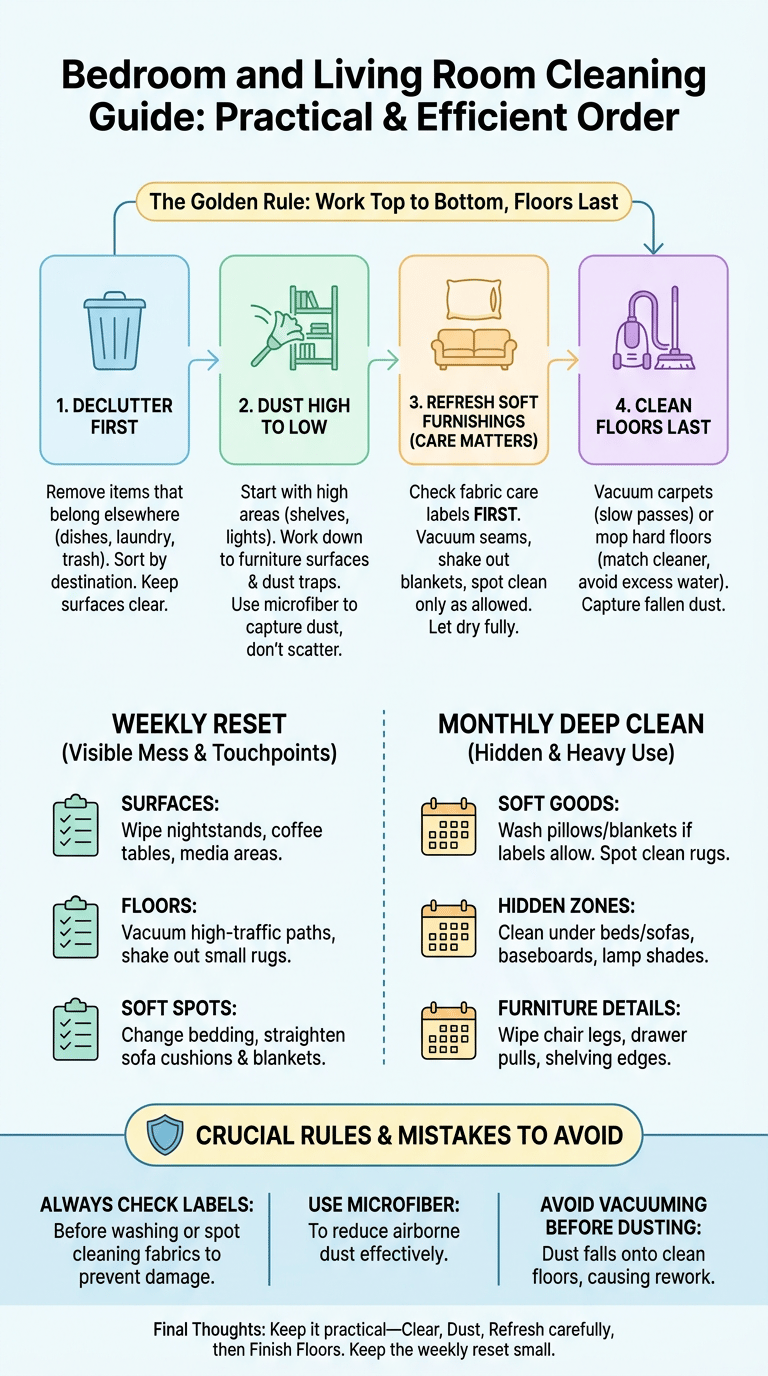
Bedroom and Living Room Cleaning Guide is easiest when the room has a clear cleaning order. This guide keeps the work practical: clear what does not belong, remove dust without spreading it, respect fabric and surface limits, and finish with the floor.

For extra caution, compare fabric care labels and product labels with trusted home cleaning guidance before using stronger methods.
The focus is clutter, surfaces, soft furnishings, furniture, rugs, bedding touchpoints, and floors. You will get enough detail to clean confidently without drifting into unrelated deep-cleaning projects or internal link planning.
For a related walkthrough, see our guide to how to clean throw blankets.
For a related walkthrough, see our guide to how to clean pillows.
For a related walkthrough, see our guide to how to clean a living room step by step.
For a related walkthrough, see our guide to how to clean a bedroom fast.
Quick Answer: The Best Way to Clean Bedrooms and Living Rooms
The best method is to clear clutter, work high to low, refresh fabrics only as labels allow, and clean floors last. This order keeps bedrooms and living rooms manageable and prevents rework. See trusted cleaning guidance when safety or health-sensitive details matter.
The best cleaning order
For the best cleaning order, choose the simplest action that solves the visible problem. Avoid turning a quick reset into a full storage project.
Clear clutter first
Move this item to trash, laundry, storage, or the correct room before cleaning begins.
Dust high and dry surfaces
Dry this area fully before use so odor, texture problems, and moisture marks are less likely.
Clean soft furnishings
Handle this detail lightly, then check the result before moving to the next task.
Vacuum or mop floors last
Capture dust with microfiber or a vacuum attachment instead of scattering it across nearby surfaces.
What to clean every week
For what to clean every week, choose the simplest action that solves the visible problem. Avoid turning a quick reset into a full storage project.
Surfaces
Handle this detail lightly, then check the result before moving to the next task.
Floors
Clean floors after dusting, then avoid excess water around rugs, seams, backing, or wood.
Bedding touchpoints
Handle this detail lightly, then check the result before moving to the next task.
Sofa and chair areas
Handle this detail lightly, then check the result before moving to the next task.
What to deep clean monthly
For what to deep clean monthly, choose the simplest action that solves the visible problem. Avoid turning a quick reset into a full storage project. For hidden dust, furniture edges, vents, and seasonal buildup, use the guide to deep clean a bedroom.
Pillows
Handle this detail lightly, then check the result before moving to the next task. For cushion wells, furniture backs, rug edges, and other hidden buildup, use the guide to deep clean a living room.
Throw blankets
Handle this detail lightly, then check the result before moving to the next task.
Area rugs
Clean floors after dusting, then avoid excess water around rugs, seams, backing, or wood.
Furniture dust traps
Capture dust with microfiber or a vacuum attachment instead of scattering it across nearby surfaces.
Before You Start: Living-Space Cleaning Rules

This step handles before you start: living-space cleaning rules within the larger job of cleaning bedrooms and living rooms. Keep the work focused on visible progress, material care, and a clean finish.
Work from top to bottom
For work from top to bottom, choose the simplest action that solves the visible problem. Avoid turning a quick reset into a full storage project.
Dust falls downward
Capture dust with microfiber or a vacuum attachment instead of scattering it across nearby surfaces.
Floors should be last
Clean floors after dusting, then avoid excess water around rugs, seams, backing, or wood.
Reduce airborne dust
For reduce airborne dust, choose the simplest action that solves the visible problem. Avoid turning a quick reset into a full storage project.
Use microfiber
Capture dust with microfiber or a vacuum attachment instead of scattering it across nearby surfaces.
Avoid dry dusting everything aggressively
This shortcut can create extra work, residue, fabric damage, or a slower drying problem.
Vacuum with good filtration if available
Capture dust with microfiber or a vacuum attachment instead of scattering it across nearby surfaces.
Check fabric care labels
For check fabric care labels, choose the simplest action that solves the visible problem. Avoid turning a quick reset into a full storage project.
Pillow labels
Check the label first, then follow its limits for water, heat, detergent, bleach, or dry cleaning.
Throw blanket labels
Check the label first, then follow its limits for water, heat, detergent, bleach, or dry cleaning.
Rug tags
Check the label first, then follow its limits for water, heat, detergent, bleach, or dry cleaning.
Supplies You Need
Use a simple kit: microfiber cloths, a vacuum with attachments, a soft brush, mild cleaner, laundry supplies when labels allow washing, and dry towels. Match products to clutter, surfaces, soft furnishings, furniture, rugs, bedding touchpoints, and floors.
Basic tools
For basic tools, choose the simplest action that solves the visible problem. Avoid turning a quick reset into a full storage project.
Microfiber cloths
Capture dust with microfiber or a vacuum attachment instead of scattering it across nearby surfaces.
Vacuum
Capture dust with microfiber or a vacuum attachment instead of scattering it across nearby surfaces.
Soft brush
Handle this detail lightly, then check the result before moving to the next task.
Laundry basket
Dry this area fully before use so odor, texture problems, and moisture marks are less likely.
Mop or floor cloth
Clean floors after dusting, then avoid excess water around rugs, seams, backing, or wood.
Cleaning products
For cleaning products, choose the simplest action that solves the visible problem. Avoid turning a quick reset into a full storage project.
Mild all-purpose cleaner
Handle this detail lightly, then check the result before moving to the next task.
Wood-safe cleaner if needed
Handle this detail lightly, then check the result before moving to the next task.
Upholstery-safe spot cleaner
Handle this detail lightly, then check the result before moving to the next task.
Laundry detergent
Dry this area fully before use so odor, texture problems, and moisture marks are less likely.
Optional tools
For optional tools, choose the simplest action that solves the visible problem. Avoid turning a quick reset into a full storage project.
Lint roller
Handle this detail lightly, then check the result before moving to the next task.
Crevice tool
Handle this detail lightly, then check the result before moving to the next task.
Fabric shaver
Handle this detail lightly, then check the result before moving to the next task.
Rug beater or outdoor shake-out area
Clean floors after dusting, then avoid excess water around rugs, seams, backing, or wood.
Step 1: Declutter the Room
This step handles step 1: declutter the room within the larger job of cleaning bedrooms and living rooms. Keep the work focused on visible progress, material care, and a clean finish.
Remove items that belong elsewhere
For remove items that belong elsewhere, choose the simplest action that solves the visible problem. Avoid turning a quick reset into a full storage project.
Dishes
Move this item to trash, laundry, storage, or the correct room before cleaning begins.
Laundry
Dry this area fully before use so odor, texture problems, and moisture marks are less likely.
Mail and paper
Handle this detail lightly, then check the result before moving to the next task.
Toys and small objects
Handle this detail lightly, then check the result before moving to the next task.
Sort by destination
For sort by destination, choose the simplest action that solves the visible problem. Avoid turning a quick reset into a full storage project.
Trash
Move this item to trash, laundry, storage, or the correct room before cleaning begins.
Laundry
Dry this area fully before use so odor, texture problems, and moisture marks are less likely.
Return to storage
Handle this detail lightly, then check the result before moving to the next task.
Keep surfaces easy to clean
For keep surfaces easy to clean, choose the simplest action that solves the visible problem. Avoid turning a quick reset into a full storage project.
Nightstands
Handle this detail lightly, then check the result before moving to the next task.
Coffee tables
Handle this detail lightly, then check the result before moving to the next task.
TV stands
Handle this detail lightly, then check the result before moving to the next task.
Step 2: Dust Surfaces and Furniture
This step handles step 2: dust surfaces and furniture within the larger job of cleaning bedrooms and living rooms. Keep the work focused on visible progress, material care, and a clean finish.
Start with high areas
For start with high areas, choose the simplest action that solves the visible problem. Avoid turning a quick reset into a full storage project. Delicate paper, fabric, glass, and mixed-material shades need different methods, so use the guide to clean lampshades by material.
Shelves
Handle this detail lightly, then check the result before moving to the next task.
Picture frames
Handle this detail lightly, then check the result before moving to the next task.
Light fixtures
Handle this detail lightly, then check the result before moving to the next task.
Clean furniture surfaces
For clean furniture surfaces, choose the simplest action that solves the visible problem. Avoid turning a quick reset into a full storage project.
Wood
Handle this detail lightly, then check the result before moving to the next task.
Painted surfaces
Handle this detail lightly, then check the result before moving to the next task.
Glass tops
Handle this detail lightly, then check the result before moving to the next task.
Target dust traps
For target dust traps, choose the simplest action that solves the visible problem. Avoid turning a quick reset into a full storage project.
TV stands
Handle this detail lightly, then check the result before moving to the next task.
Headboards
Handle this detail lightly, then check the result before moving to the next task.
Table legs
Handle this detail lightly, then check the result before moving to the next task.
Behind decor
Handle this detail lightly, then check the result before moving to the next task.
Step 3: Clean Soft Furnishings

This step handles step 3: clean soft furnishings within the larger job of cleaning bedrooms and living rooms. Keep the work focused on visible progress, material care, and a clean finish.
Refresh pillows
For refresh pillows, choose the simplest action that solves the visible problem. Avoid turning a quick reset into a full storage project.
Check care labels
Check the label first, then follow its limits for water, heat, detergent, bleach, or dry cleaning.
Spot clean or wash if allowed
Use mild detergent, gentle handling, thorough rinsing, and complete drying if washing is allowed.
Refresh throw blankets
For refresh throw blankets, choose the simplest action that solves the visible problem. Avoid turning a quick reset into a full storage project.
Shake out loose dust
Capture dust with microfiber or a vacuum attachment instead of scattering it across nearby surfaces.
Wash by material
Use mild detergent, gentle handling, thorough rinsing, and complete drying if washing is allowed.
Clean upholstered seating
For clean upholstered seating, choose the simplest action that solves the visible problem. Avoid turning a quick reset into a full storage project. For care-code decisions, controlled spot treatment, and full drying, see how to clean upholstered chairs.
Vacuum seams
Capture dust with microfiber or a vacuum attachment instead of scattering it across nearby surfaces.
Spot clean only as label allows
Check the label first, then follow its limits for water, heat, detergent, bleach, or dry cleaning.
Let fabric dry fully
Dry this area fully before use so odor, texture problems, and moisture marks are less likely.
Step 4: Clean Floors and Rugs
This step handles step 4: clean floors and rugs within the larger job of cleaning bedrooms and living rooms. Keep the work focused on visible progress, material care, and a clean finish.
Vacuum wall-to-wall carpet
For vacuum wall-to-wall carpet, choose the simplest action that solves the visible problem. Avoid turning a quick reset into a full storage project.
Use slow passes
Handle this detail lightly, then check the result before moving to the next task.
Focus under furniture edges
Handle this detail lightly, then check the result before moving to the next task.
Clean area rugs
For clean area rugs, choose the simplest action that solves the visible problem. Avoid turning a quick reset into a full storage project.
Shake small rugs outside
Clean floors after dusting, then avoid excess water around rugs, seams, backing, or wood.
Vacuum both sides if suitable
Capture dust with microfiber or a vacuum attachment instead of scattering it across nearby surfaces.
Spot clean stains carefully
Handle this detail lightly, then check the result before moving to the next task.
Mop hard floors
For mop hard floors, choose the simplest action that solves the visible problem. Avoid turning a quick reset into a full storage project.
Match cleaner to floor type
Clean floors after dusting, then avoid excess water around rugs, seams, backing, or wood.
Avoid over-wetting
This shortcut can create extra work, residue, fabric damage, or a slower drying problem.
Dry before replacing rugs
Dry this area fully before use so odor, texture problems, and moisture marks are less likely.
Bedroom Cleaning Focus Areas
This step handles bedroom cleaning focus areas within the larger job of cleaning bedrooms and living rooms. Keep the work focused on visible progress, material care, and a clean finish.
Bed area
For bed area, choose the simplest action that solves the visible problem. Avoid turning a quick reset into a full storage project. Because headboards may be wood, upholstery, leather, metal, or mixed material, use the guide to clean a headboard by material.
Make or strip the bed
Handle this detail lightly, then check the result before moving to the next task.
Dust the headboard
Capture dust with microfiber or a vacuum attachment instead of scattering it across nearby surfaces.
Vacuum around the bed
Capture dust with microfiber or a vacuum attachment instead of scattering it across nearby surfaces.
Nightstands
For nightstands, choose the simplest action that solves the visible problem. Avoid turning a quick reset into a full storage project. For finish-safe care of tops, drawers, hardware, and hidden edges, see how to clean a nightstand and dresser.
Clear cups and clutter
Move this item to trash, laundry, storage, or the correct room before cleaning begins.
Wipe top and handles
Handle this detail lightly, then check the result before moving to the next task.
Closet and laundry zones
For closet and laundry zones, choose the simplest action that solves the visible problem. Avoid turning a quick reset into a full storage project.
Put away clean clothes
Handle this detail lightly, then check the result before moving to the next task.
Remove dirty laundry
Dry this area fully before use so odor, texture problems, and moisture marks are less likely.
Keep floors clear
Clean floors after dusting, then avoid excess water around rugs, seams, backing, or wood.
Living Room Cleaning Focus Areas
This step handles living room cleaning focus areas within the larger job of cleaning bedrooms and living rooms. Keep the work focused on visible progress, material care, and a clean finish.
Sofa and chairs
For sofa and chairs, choose the simplest action that solves the visible problem. Avoid turning a quick reset into a full storage project.
Vacuum cushions
Capture dust with microfiber or a vacuum attachment instead of scattering it across nearby surfaces.
Clean under cushions
Handle this detail lightly, then check the result before moving to the next task.
Spot clean carefully
Handle this detail lightly, then check the result before moving to the next task.
Coffee table and media area
For coffee table and media area, choose the simplest action that solves the visible problem. Avoid turning a quick reset into a full storage project.
Dust electronics safely
Capture dust with microfiber or a vacuum attachment instead of scattering it across nearby surfaces.
Wipe remotes
Handle this detail lightly, then check the result before moving to the next task.
Organize cords
Handle this detail lightly, then check the result before moving to the next task.
Entry from living spaces
For entry from living spaces, choose the simplest action that solves the visible problem. Avoid turning a quick reset into a full storage project.
Shoes and bags
Handle this detail lightly, then check the result before moving to the next task.
Pet hair zones
Handle this detail lightly, then check the result before moving to the next task.
High-traffic floor paths
Clean floors after dusting, then avoid excess water around rugs, seams, backing, or wood.
Weekly Cleaning Checklist

This step handles weekly cleaning checklist within the larger job of cleaning bedrooms and living rooms. Keep the work focused on visible progress, material care, and a clean finish.
Bedroom checklist
For bedroom checklist, choose the simplest action that solves the visible problem. Avoid turning a quick reset into a full storage project. For the complete routine sequence, follow how to clean a bedroom step by step.
Change or straighten bedding
Handle this detail lightly, then check the result before moving to the next task. Before overnight visitors arrive, use the guest room cleaning checklist to check access, bedding, surfaces, lighting, air, and the floor.
Dust surfaces
Capture dust with microfiber or a vacuum attachment instead of scattering it across nearby surfaces.
Vacuum floor
Capture dust with microfiber or a vacuum attachment instead of scattering it across nearby surfaces.
Remove laundry
Dry this area fully before use so odor, texture problems, and moisture marks are less likely.
Living room checklist
For living room checklist, choose the simplest action that solves the visible problem. Avoid turning a quick reset into a full storage project.
Clear surfaces
Move this item to trash, laundry, storage, or the correct room before cleaning begins.
Dust furniture
Capture dust with microfiber or a vacuum attachment instead of scattering it across nearby surfaces.
Vacuum seating and floors
Capture dust with microfiber or a vacuum attachment instead of scattering it across nearby surfaces.
Refresh blankets and pillows
Handle this detail lightly, then check the result before moving to the next task.
Shared maintenance
For shared maintenance, choose the simplest action that solves the visible problem. Avoid turning a quick reset into a full storage project.
Empty trash
Move this item to trash, laundry, storage, or the correct room before cleaning begins.
Open windows if appropriate
Handle this detail lightly, then check the result before moving to the next task.
Reset storage baskets
Handle this detail lightly, then check the result before moving to the next task.
Monthly Deep Cleaning Checklist
This step handles monthly deep cleaning checklist within the larger job of cleaning bedrooms and living rooms. Keep the work focused on visible progress, material care, and a clean finish.
Soft goods
For soft goods, choose the simplest action that solves the visible problem. Avoid turning a quick reset into a full storage project.
Wash pillows if washable
Use mild detergent, gentle handling, thorough rinsing, and complete drying if washing is allowed.
Wash throw blankets
Use mild detergent, gentle handling, thorough rinsing, and complete drying if washing is allowed.
Spot clean rugs
Clean floors after dusting, then avoid excess water around rugs, seams, backing, or wood.
Hidden dust zones
For hidden dust zones, choose the simplest action that solves the visible problem. Avoid turning a quick reset into a full storage project. The dedicated guide to clean under a bed explains how to reach the space without scattering dust or trapping moisture.
Under beds
Handle this detail lightly, then check the result before moving to the next task.
Behind sofas
Handle this detail lightly, then check the result before moving to the next task.
Baseboards
Handle this detail lightly, then check the result before moving to the next task.
Lamp shades
Handle this detail lightly, then check the result before moving to the next task.
Furniture detail work
For furniture detail work, choose the simplest action that solves the visible problem. Avoid turning a quick reset into a full storage project.
Chair legs
Handle this detail lightly, then check the result before moving to the next task.
Drawer pulls
Handle this detail lightly, then check the result before moving to the next task.
Shelving edges
Handle this detail lightly, then check the result before moving to the next task.
Mistakes to Avoid
Most mistakes come from rushing, using too much liquid, or treating every material alike. Start gently, read labels, and let items dry fully before putting the room back together.
Vacuuming before dusting
For vacuuming before dusting, choose the simplest action that solves the visible problem. Avoid turning a quick reset into a full storage project.
Dust falls onto clean floors
Capture dust with microfiber or a vacuum attachment instead of scattering it across nearby surfaces.
Save floors for last
Clean floors after dusting, then avoid excess water around rugs, seams, backing, or wood.
Washing fabrics without checking labels
For washing fabrics without checking labels, choose the simplest action that solves the visible problem. Avoid turning a quick reset into a full storage project.
Shrinkage risk
Handle this detail lightly, then check the result before moving to the next task.
Fill and fabric damage
Handle this detail lightly, then check the result before moving to the next task.
Using too much cleaner on furniture
For using too much cleaner on furniture, choose the simplest action that solves the visible problem. Avoid turning a quick reset into a full storage project.
Residue buildup
Handle this detail lightly, then check the result before moving to the next task.
Finish damage
Handle this detail lightly, then check the result before moving to the next task.
Over-wetting rugs or upholstery
For over-wetting rugs or upholstery, choose the simplest action that solves the visible problem. Avoid turning a quick reset into a full storage project.
Slow drying
Dry this area fully before use so odor, texture problems, and moisture marks are less likely.
Odor or mildew risk
Dry this area fully before use so odor, texture problems, and moisture marks are less likely.
Frequently Asked Questions
These quick answers cover common decisions before you start. Use the detailed sections above for delicate, heavily soiled, or label-restricted items.
How often should I clean bedrooms and living rooms?
Clean bedrooms and living rooms weekly for visible mess and schedule deeper care monthly or when dust, odor, stains, or heavy use make it necessary.
What is the fastest way to clean a bedroom?
Start with trash, laundry, the largest visible surface, and the floor path. Stop when the room is functional.
What order should I clean a living room in?
Start with clutter, then dust high surfaces, clean soft items as allowed, and finish with floors.
How do I reduce dust in bedrooms and living rooms?
Use microfiber, vacuum slowly, wash washable soft goods regularly, and reduce clutter that collects particles.
How often should I wash pillows and throw blankets?
Clean bedrooms and living rooms weekly for visible mess and schedule deeper care monthly or when dust, odor, stains, or heavy use make it necessary.
Should I vacuum or dust first?
Start with clutter, then dust high surfaces, clean soft items as allowed, and finish with floors.
If the room still feels messy after the main pass, choose one visible zone and reset it completely. A made bed, cleared table, clean sofa area, or open floor path changes the room faster than sorting every hidden drawer.
Keep maintenance realistic. A short weekly reset for bedrooms and living rooms, plus monthly attention to hidden dust and washable soft goods, prevents the next cleanup from becoming a long recovery session.
When a stain, odor, or fabric problem does not improve with gentle care, stop escalating. Stronger products, hot water, and aggressive scrubbing can set stains, roughen fibers, or harm finishes.
If the room still feels messy after the main pass, choose one visible zone and reset it completely. A made bed, cleared table, clean sofa area, or open floor path changes the room faster than sorting every hidden drawer.
Keep maintenance realistic. A short weekly reset for bedrooms and living rooms, plus monthly attention to hidden dust and washable soft goods, prevents the next cleanup from becoming a long recovery session.
When a stain, odor, or fabric problem does not improve with gentle care, stop escalating. Stronger products, hot water, and aggressive scrubbing can set stains, roughen fibers, or harm finishes.
If the room still feels messy after the main pass, choose one visible zone and reset it completely. A made bed, cleared table, clean sofa area, or open floor path changes the room faster than sorting every hidden drawer.
Keep maintenance realistic. A short weekly reset for bedrooms and living rooms, plus monthly attention to hidden dust and washable soft goods, prevents the next cleanup from becoming a long recovery session.
Final Thoughts
Clean living spaces are easier to maintain when the order is repeatable. Clear, dust, refresh fabrics carefully, finish floors, then keep the weekly reset small.

Ethan Carter is the Founder & Editor of HomeCleanSecrets. Based in the United States, he has 5 years of experience creating practical home cleaning, laundry care, stain removal, decluttering, and home organization content. His goal is to help everyday households clean smarter and build simple routines that are easier to maintain.
Read more about Ethan Carter on his author page: https://homecleansecrets.com/ethan-carter/