
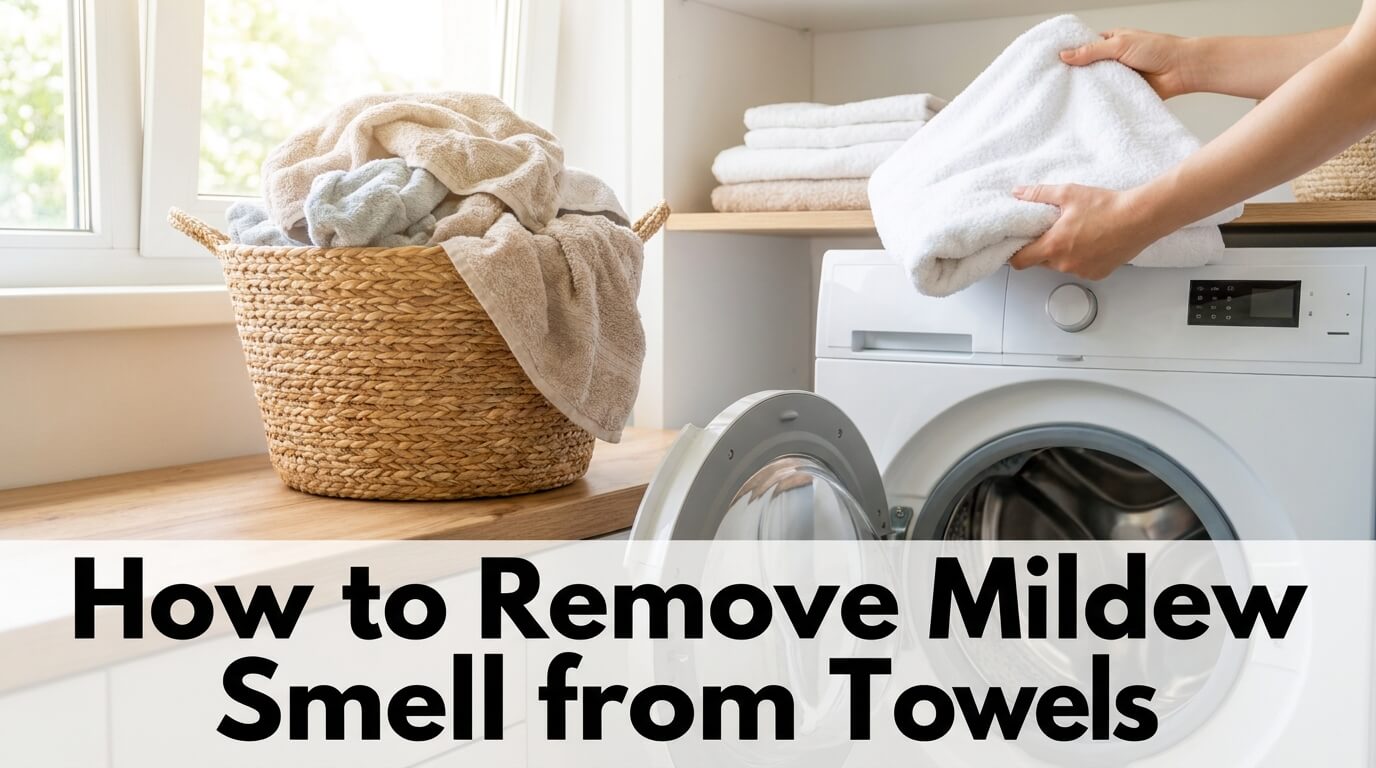
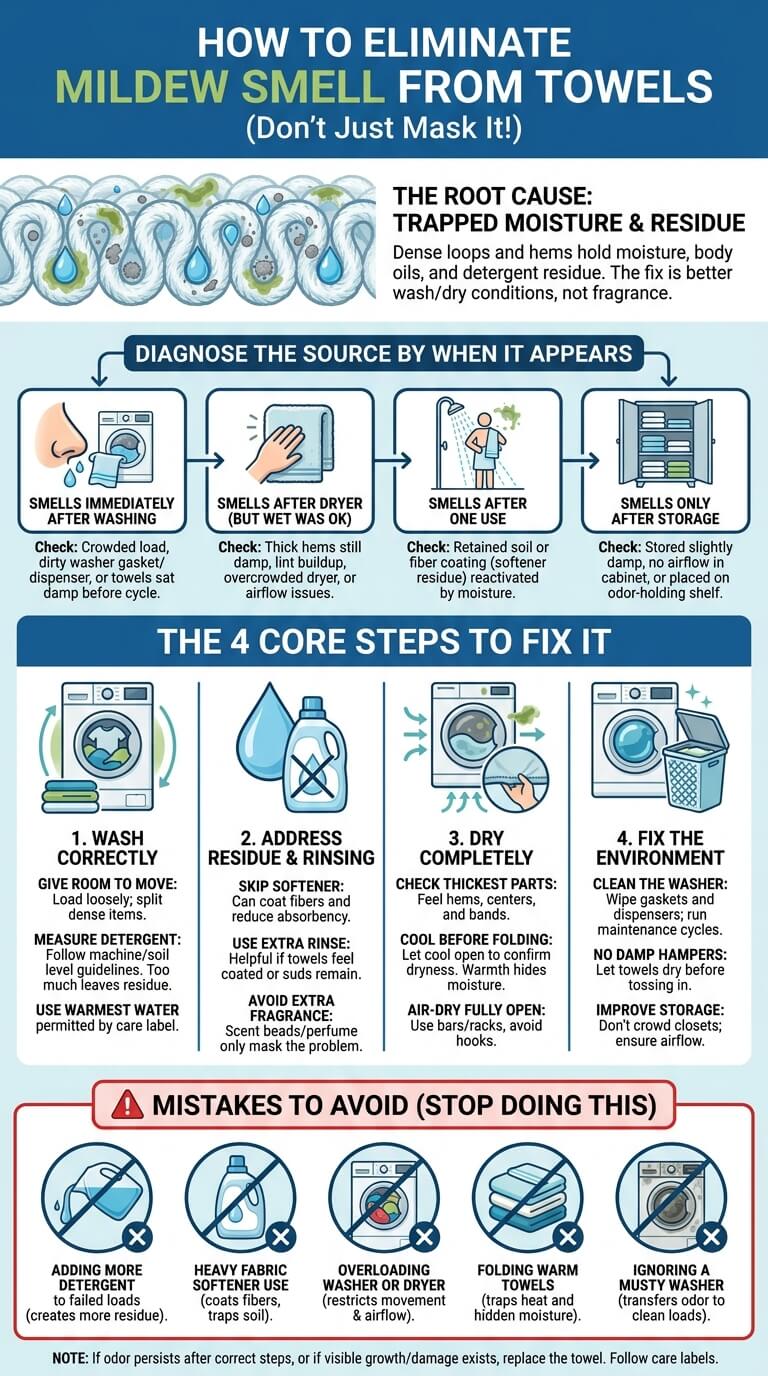
Musty towels usually hold moisture, body oils, or laundry residue in dense loops and hems. Fix the wash, rinse, drying, and storage conditions instead of covering the smell with fragrance.
Follow the care label and appliance manuals. Stop routine laundering for visible growth, hazardous contamination, or damage that makes safe cleaning uncertain.
Quick Answer: Rewash with Space, Rinse Well, and Dry the Thickest Parts Completely
Start with one compatible, uncrowded load and verify complete dryness.
What to check first
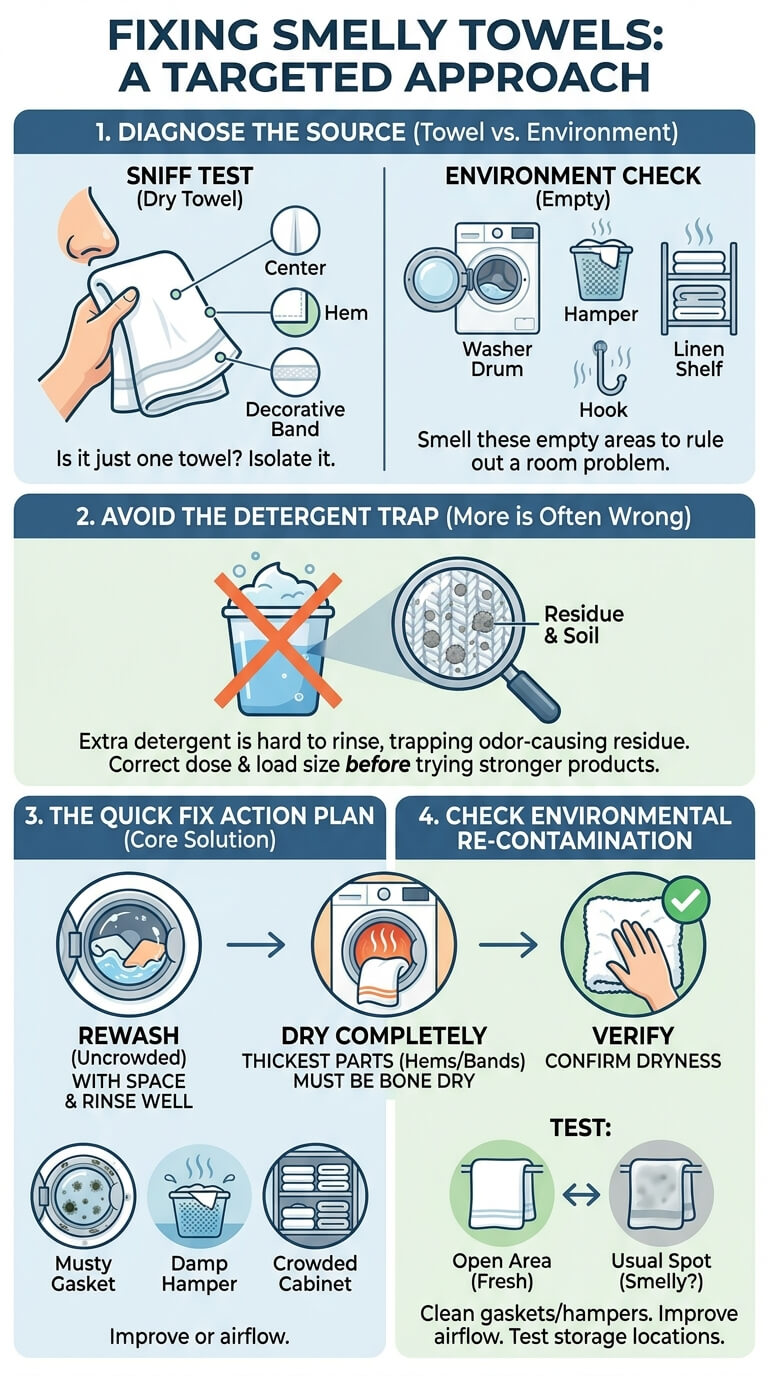
Smell one dry towel at the center, hem, and any decorative band. Then smell the empty washer, hamper, hook, and linen shelf. This separates a towel problem from a machine or room problem. If only one towel smells, isolate it instead of rewashing every towel in the house.
Why more detergent is often the wrong move
Extra detergent can be difficult to rinse from dense loops, especially in a crowded or low-water load. Residue holds soil and fragrance, and the towel may smell sour as soon as it becomes damp again. Correct the dose and load size before trying a stronger product.
When the washer or bathroom is the source
A towel can leave the dryer fresh and pick up odor from a musty washer gasket, damp hamper, folded hook, or crowded cabinet. A good test is to place one fully dry towel in a clean, open area and another in the usual storage spot, then compare them later.
Why Towels Develop a Mildew or Musty Smell
Absorbent construction can also trap moisture and laundry residue.
Thick loops and slow-drying hems
Bath towels contain loops, dense hems, and woven bands. The surface may feel dry while the center remains cool and damp. Folding or stacking the towel before those areas dry traps moisture and encourages odor.
Detergent and softener residue
Too much detergent, a blocked dispenser, or repeated softener use can leave a coating on fibers. The towel may feel slick, stiff, waxy, or less absorbent. Residue is not always visible, but it can trap body oils and make a freshly washed towel smell unpleasant after one shower.
Overloaded washer or dryer
A packed washer limits movement and leaves folds under-rinsed. A crowded dryer restricts tumbling and airflow, so heavy towels dry unevenly. Split loads when bath sheets, mats, and smaller towels cannot unfold freely.
Towels left damp in a hamper or machine
A wet towel compressed under laundry can smell before wash day. The same happens when a finished load sits in the washer. Let wet towels dry or wash them promptly instead of leaving them bundled.
Storage before fully dry
Warm towels can feel dry when removed from a dryer even though moisture remains in thick seams. Folding them immediately traps heat and moisture inside the stack. Let a heavy towel cool open, then press and smell the hem before placing it in a drawer or linen closet.
Diagnose the Odor by When It Appears

The timing of the smell usually reveals the failed stage.
Smells immediately after washing
Odor straight from the washer suggests the load did not clean or rinse well, the machine itself smells, or towels sat damp before the cycle began. Check for a crowded drum, incorrect detergent, a dirty gasket or dispenser, and a cycle that was too short for the soil level.
Smells after the dryer
If wet towels smell acceptable but dried towels do not, inspect the dryer and the towel thickness. Lint buildup, restricted airflow, an oversized load, or a low setting unsuitable for the fabric may leave damp centers. Stop if the dryer has a burning, electrical, or overheating smell and arrange service. Compare a thin washcloth with the thickest bath towel from the same load. If the washcloth is neutral but the bath towel smells or feels cool at the hem, drying time or airflow is the more likely problem. When the same odor affects shirts, activewear, denim, or other garments, use the broader fabric guide to remove musty smell from clothes.
Smells after one shower or use
Odor that appears as soon as a towel becomes damp often indicates retained soil or a fiber coating. The towel may also have dried too slowly between uses. Rewash with a measured dose and good rinsing, then hang the towel fully open where air reaches both sides.
Smells only after storage
A clean towel that becomes musty in a cabinet may have been stored slightly damp, placed against an odor-holding shelf, or packed without airflow. Remove the stack and check the empty storage area. Do not return towels until both the fabric and the cabinet are dry and neutral-smelling.
Only some towels smell
Thickness, age, trim, usage, and storage position can make one towel fail while others remain fresh. Isolate affected items and inspect worn hems, coated fibers, and decorative sections before rewashing the full collection.
Before Rewashing the Towels
Check care limits, the washer, and towel construction first.
Read care labels and sort by material, color, and use
Follow the sewn label for washing, bleaching, and drying limits. The FTC explains that care instructions tell consumers how an item can be cleaned without damage in its care-label guidance. Sort dark from light when color transfer is possible, and keep heavily soiled cleaning towels apart from bath towels.
Smell the empty washer
Smell the drum, gasket, lid, dispenser, and drain area without placing your face inside the machine. A stale washer can transfer odor to every load. Follow the manual for an empty cleaning cycle and accessible parts.
Inspect thick hems and decorative trim
Press the hem, border, pockets, and embroidered areas. Look for stiffness, trapped debris, loose backing, or areas that stay damp longer than the main fabric. Decorative towels may include adhesives, metallic thread, or trims that limit heat, soaking, or stain products, so the main towel method may not be suitable.
Avoid mixing incompatible laundry products
Use one label-approved approach at a time. Never combine chlorine bleach with ammonia, acids, vinegar, or unknown cleaners, and do not pour products directly onto fabric unless the label instructs it. Rinse out any pretreatment before adding a different product when the directions require separation.
Step 1: Rewash Towels with the Correct Load Size

Movement, correct dosing, and rinsing matter more than extra products.
Give towels room to move
Load towels loosely rather than pressing them into the drum. They become much heavier when wet. Follow the washer capacity limit, and split bath sheets or dense mats when they keep smaller towels from circulating.
Measure detergent for the machine and soil level
Use the detergent label, washer type, load size, water conditions, and soil level to choose the dose. The American Cleaning Institute notes that both too much and too little detergent can reduce cleaning performance in its laundry product guidance. Do not estimate by filling the dispenser automatically.
Choose cycle and temperature from the care label
Select a cycle that gives compatible towels enough wash action and rinse time. Use the warmest water permitted by the towel label, not a universal temperature. Whirlpool likewise advises matching water and cycle choices to the fabric in its towel washing guidance. Protect dark colors and specialty fibers from unnecessary heat.
Use an additional rinse when residue is likely
An extra rinse may help when towels feel coated, a previous load used excess detergent, or suds remain. It cannot correct severe overloading, poor drainage, or a blocked machine. Fix those conditions first.
Step 2: Address Stubborn Residue Safely
Identify the likely coating before adding another laundry product.
When a label-approved laundry booster may help
A compatible oxygen-based or enzyme laundry booster may help with retained organic soil when the towel label, product label, and washer manual allow it. Use the listed dose and placement. Spot-test colored or decorated towels, and do not assume a booster is safe for wool, silk, special finishes, or every microfiber cloth.
Why extra fragrance does not solve residue
Scent beads, perfume-heavy detergent, and dryer sheets can change the smell while residue remains. The odor often returns when the towel gets wet. Judge the cooled, dry towel without masking scent.
Fabric-softener buildup
Liquid softener and dryer sheets deposit conditioning ingredients on fibers. On some towels, repeated use can reduce absorbency or create a slick feel. Follow both the towel and product labels. If buildup is suspected, omit softener during the corrective wash and rely on proper rinsing and tumbling rather than adding another coating. A simple absorbency check can help: place a few drops of clean water on a dry, cooled towel. Water that beads or moves slowly may suggest a coating, although fiber type and special finishes also affect the result.
Microfiber and specialty towel restrictions
Microfiber cleaning towels may lose performance when washed with lint-producing cotton, high heat, softener, or incompatible products. Towels with antimicrobial finishes, waterproof layers, decorative trim, or sports coatings may have additional restrictions. Treat the care label and maker instructions as the controlling method, even when ordinary cotton towels tolerate more.
Step 3: Dry Towels Completely
Check the slowest-drying area, not only the surface.
Dryer load size and airflow
Towels need room to lift and fall through moving air. Split a load if items remain rolled together. Clean the lint screen as directed. Repeated long drying or overheating can signal an airflow problem needing service.
Air-drying towels fully open
Spread each towel across a line or wide rack instead of folding it over a hook. Leave space between items and keep wet fabric away from walls or furniture. Bring outdoor-dried towels inside only when fully dry.
Check centers, hems, folds, and pockets
Feel the center and both ends, then squeeze the thick hem. A damp area often feels cooler and heavier than the rest. Washcloth pockets, hooded towels, decorative bands, and layered edges require special attention. Continue label-approved drying rather than stacking a towel with one cool, damp section.
Do not fold warm towels before confirming dryness
Let a heavy towel cool open after the dryer stops. Warmth can hide moisture and cleaner scent. Press and smell the thickest areas, then fold only when the towel is dry and neutral.
Step 4: Fix the Environment That Recontaminates Towels
Check the washer, hamper, hook, cabinet, and travel bag.
Dirty washer gasket or dispenser
Remove lint, hair, and product buildup only from accessible parts identified in the manual. Wipe the gasket folds and dispenser components as directed, then dry them. Do not dismantle panels or pour improvised cleaners into the machine. Persistent drainage odor, leakage, or standing water requires troubleshooting or repair. After cleaning, run the machine procedure specified in the manual and smell the empty drum again once it is dry. If the odor returns before another load, investigate retained water, drainage, or inaccessible buildup instead of sacrificing more towels to test cycles.
Damp hamper
A closed hamper with wet towels creates a concentrated damp zone. Let used towels dry before placing them inside, or choose a ventilated container appropriate for the room. Clean the hamper according to its material and dry it completely. Fabric liners also need regular laundering when they retain sour odor. When the washer, hamper, bathroom, linen closet, or another room may be recontaminating the towels, use the home odor checklist by room to compare each location.
Bathroom hooks that keep towels folded
A small hook holds a towel in thick layers and leaves the center damp. Use a bar or wide rack. Avoid locations pressed behind a door or against a cold wall where airflow is poor. When fully cleaned towels smell again only in the bathroom, use the room-focused guide to remove bathroom odors.
Crowded linen closet
Compressed stacks hold heat and hide one damp towel. Leave room to remove items without dragging the whole stack forward. Check the shelf and exterior wall for dampness or odor before returning clean towels.
Kitchen or gym-bag storage
Kitchen towels stay wet beside sinks, while gym towels may remain sealed in bags. Hang them open promptly. Keep food-contact towels separate from cloths used for bathrooms, chemicals, floors, or pet messes.
Towel Types That Need Different Care

Fiber, construction, soil, and use change the safe method.
Cotton bath towels
Cotton usually tolerates substantial agitation, but weight and thickness make load size and drying especially important. Wash similar colors and weights when possible. Avoid assuming every white cotton towel can be bleached, since colored borders, elastic, embroidery, and special finishes may have stricter care instructions.
Microfiber cleaning towels
Wash microfiber separately from lint-producing cotton and items contaminated with grease that the cloth was not designed to handle. Skip softener when the maker prohibits it, since coatings can interfere with pickup. Use the specified heat limit, because excessive heat can damage synthetic fibers even when the towel appears intact.
Kitchen towels
Sort kitchen towels by use. Cloths used for dishes and food-contact surfaces should not share a load with bathroom cleaning rags or towels carrying harsh chemicals. Remove heavy grease or food debris before washing, follow label-approved temperature and product guidance, and replace towels that remain contaminated or damaged.
Decorative or embellished towels
Embroidery, fringe, sequins, glued decorations, contrasting borders, and metallic thread can limit agitation, bleach, soaking, or dryer heat. Use a mesh bag when the label recommends it and avoid rubbing trim aggressively. If the odor is trapped in a nonwashable decoration, professional care or replacement may be safer.
Gym and pool towels
These towels may carry sunscreen, body oils, pool chemicals, or soil while sitting damp in bags. Remove them promptly and wash by label. Do not wrap a wet towel around swimwear or shoes.
Prevent Mildew Smell from Returning
Control moisture, measure products, maintain the washer, and store dry.
Hang towels open after use
Spread bath and hand towels so air can reach a broad surface. Avoid hanging two wet towels on top of each other. The American Cleaning Institute recommends allowing bath towels to dry between uses in its bath towel care advice. Replace a narrow hook when it consistently leaves the center damp.
Let wet towels dry before the hamper
Do not leave a used towel balled up and wet. Drape it over a suitable bar or hamper edge until dry enough for the laundry container, away from children, pets, and moisture-sensitive surfaces.
Use the correct product amount
Measure detergent according to the product and machine instructions. More scent is not proof of better cleaning. If towels feel coated or produce excess suds, review the dose, dispenser, water conditions, and load size.
Maintain the washer
Clean accessible dispensers and seals and run the specified maintenance cycle. Follow manufacturer advice between loads, especially around children or pets. A machine that retains water, leaks, or smells like sewage needs assessment.
Store only fully dry towels
Cool the load, test thick hems, and keep the shelf dry. If odor develops only in one cabinet, clean and dry that space before washing towels again. Storage cannot correct incomplete drying.
Towel-Odor Mistakes to Avoid
Correct the failed stage instead of adding scent or chemicals.
Adding more detergent to a failed load
A strong odor can make extra detergent seem logical, but a dense load may retain even more residue. Return to the label dose, reduce the load, and add a rinse only when the machine and care instructions allow it. Check whether the washer itself smells before blaming the towels.
Heavy fabric softener
Softener can leave towels scented and smooth while reducing the clean, absorbent feel some users expect. Repeated coating may complicate odor diagnosis. Do not pour it directly onto towels, and follow the product dispenser instructions. Omit it during troubleshooting when coating or poor absorbency is suspected.
Overloading
A packed washer prevents towels from unfolding, while a packed dryer leaves the center damp. Split the load before increasing heat or cycle time. Towels need free movement in both machines.
Combining laundry chemicals
Do not create homemade combinations or add a second cleaner because the first cycle failed. Product mixtures can produce harmful fumes, damage fibers, or interfere with machine components. Rinse and start over only according to label directions, and contact Poison Control or emergency services after a concerning exposure.
Folding while the center is damp
A dry surface can hide moisture in a hem or center. Stacking transfers that moisture and blocks airflow. Cool the towel open, press dense areas, and continue drying when needed.
Ignoring a musty washer
Repeatedly rewashing towels in an odor-holding machine wastes water and can spread the smell to otherwise clean fabric. Clean the accessible parts and run the maintenance procedure in the manual. If odor returns with standing water, slow drainage, or leakage, stop repeating cycles and arrange appropriate service.
When Towels May Need Replacement or Special Handling
Damage, contamination, or care restrictions can limit home laundering.
Persistent odor after correct washing and complete drying
Repeat the process only after confirming correct load size, detergent dose, rinsing, full drying, and a neutral washer and storage area. A towel that still smells when cooled and dry may hold deep residue or damaged fibers. Compare the cost and risk of more treatment with replacing the item. Keep one corrected towel outside the usual bathroom and cabinet for a comparison. If that towel stays neutral while the stored towel changes, the environment is reintroducing moisture or odor. If both fail, the fabric or wash process still needs attention.
Fabric damage, coating, or loss of absorbency
Thin patches, unraveling loops, stiff or waxy areas, cracking decorations, and poor absorbency indicate the towel is no longer performing normally. Strong stripping treatments can worsen damage. Follow the maker guidance, use the towel for a less demanding purpose only when hygienically appropriate, or discard it responsibly.
Visible growth or contamination
Do not shake towels exposed to visible growth, sewage, floodwater, fecal matter, chemicals, or unknown residue. Isolate them and follow guidance for that contamination. CDC home cleaning guidance supports detergent, the recommended water temperature, and complete drying for ordinary washable laundry.
Care-label restrictions
A towel marked hand wash, line dry, no bleach, or professional clean should not be forced through a standard corrective cycle. Contact the manufacturer or a qualified textile cleaner when the label is unclear. Replacement may be the practical choice when the permitted care method cannot remove persistent odor safely.
Frequently Asked Questions
Use these answers with the towel label and appliance manuals.
Why do my towels smell musty after washing?
The load may have been crowded, under-rinsed, left in the washer, or washed in a musty machine. Residue from too much detergent or softener can also hold odor. Rewash compatible towels with room to move, the measured product dose, and complete drying, then check the empty washer.
Why do towels smell after only one use?
Moisture can reactivate retained body oils, detergent residue, or odor in thick fibers. The towel may also stay folded and damp on a small hook. Correct the wash and rinse, verify the hem is dry, and hang the towel open where both sides receive airflow.
Does fabric softener make towel odor worse?
It can contribute when repeated use leaves a coating that reduces absorbency or holds residue, although products and towels vary. Follow both labels. During troubleshooting, omit softener for a compatible load and judge whether the cooled towel feels cleaner, rinses better, and absorbs water normally.
Should I use more detergent on smelly towels?
Not automatically. Too much detergent can remain in dense fabric when the load is large or rinsing is limited. Measure for the machine, soil, water conditions, and detergent concentration. If the towel feels coated or the washer shows lingering suds, reduce the load and correct the dose.
How do I know towels are fully dry?
Let the towel cool open, then press the center, thick hem, decorative band, pockets, and layered edges. Damp sections often feel cool, heavy, or slightly clammy. The towel should smell neutral without heat masking the result. Continue label-approved drying if any dense area remains damp.
Why do only some towels smell?
Affected towels may be thicker, older, coated, stored at the bottom of a stack, or used in a wetter location. Inspect them separately. A damaged hem or decorative band can stay damp after the rest of the load dries.
When should a smelly towel be replaced?
Replace it when odor persists after a correct wash, full rinse, complete drying, and a clean storage check, or when fibers are damaged, coated, nonabsorbent, or contaminated beyond safe household laundering. Do not keep repeating aggressive treatments that conflict with the care label or weaken the fabric.
Final Thoughts
Correct the stage that is failing: washing, rinsing, drying, or storage.
A neutral-smelling towel should remain neutral after it cools, after it is stored, and when it becomes damp during normal use. Stop routine treatment when there is visible growth, hazardous contamination, appliance trouble, or care instructions that do not support the proposed method. For the broader source-first sequence across rooms and materials, use the odor removal guide.

Ethan Carter is the Founder & Editor of HomeCleanSecrets. Based in the United States, he has 5 years of experience creating practical home cleaning, laundry care, stain removal, decluttering, and home organization content. His goal is to help everyday households clean smarter and build simple routines that are easier to maintain.
Read more about Ethan Carter on his author page: https://homecleansecrets.com/ethan-carter/