
Sorting laundry is not about creating a dozen perfect piles. It is about keeping incompatible items out of the same wash load. A white T-shirt, new red sweatshirt, lace camisole, bath towel, and muddy work pants may all be washable, but they do not necessarily need the same color protection, movement, or wash setting.
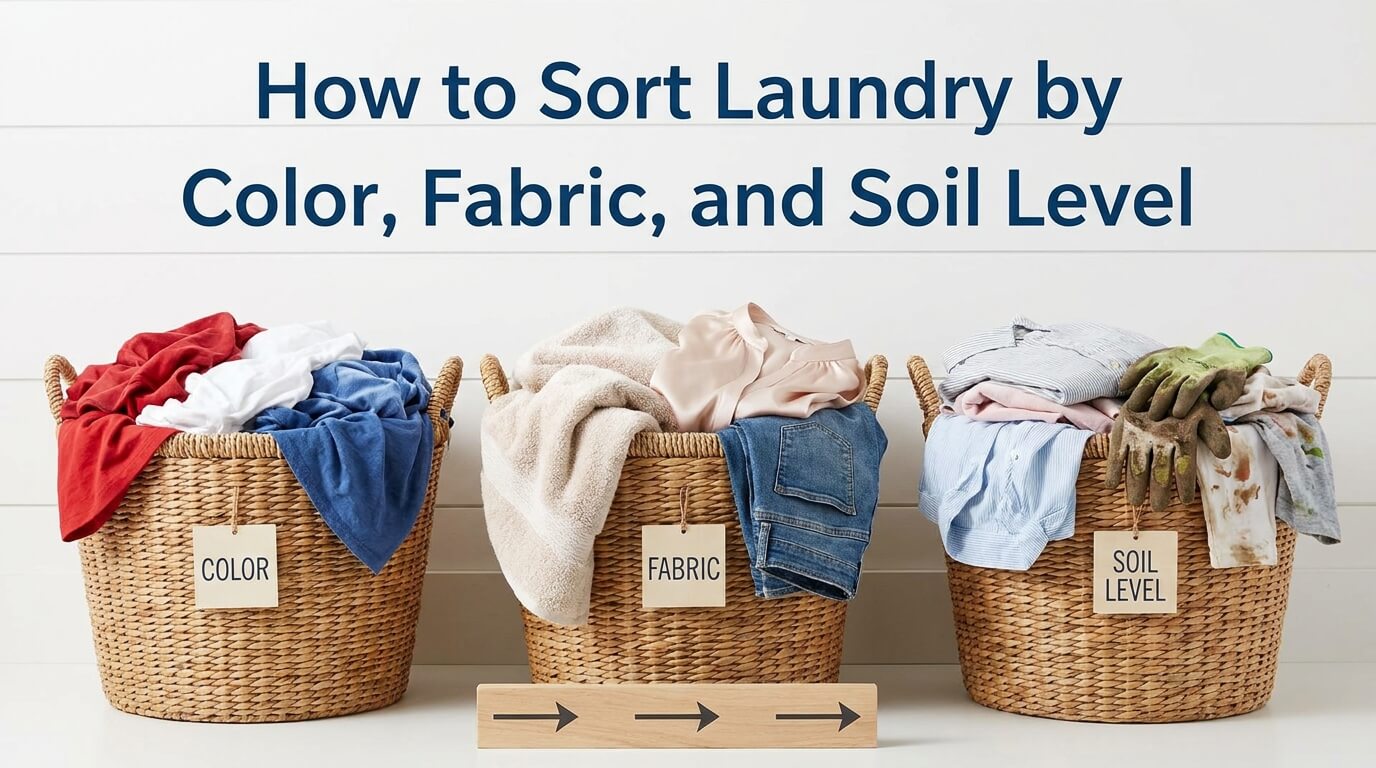
The reliable order is simple: check care instructions, separate risky colors, compare fabric weight and construction, separate lint givers from lint attractors, then divide by soil level. Set aside any garment that does not fit safely with the rest.
The American Cleaning Institute’s laundry basics also recommend sorting by color, fabric type, washing instructions, and soil before washing. Those four checks are enough to prevent many common problems without making laundry day unnecessarily complicated.
Quick Answer: The Safest Order for Sorting Laundry

Work from the strictest limitation to the most flexible one. A garment that cannot enter a normal machine-wash load should be removed before you spend time arranging colors.
Start with care-label exceptions
Read the label on unfamiliar, delicate, structured, lined, coated, embellished, or expensive garments. Pull out anything marked hand wash, professional clean only, wash separately, wash with like colors, or use a special cycle. Also remove items with leather or suede trim, loose beads, damaged seams, or padding that may shift when wet.
Separate by color stability, fabric risk, lint, and soil
Once exceptions are out, sort the remaining items through four filters. First consider whether dye could transfer. Next compare fabric weight and surface texture. Then separate fabrics that shed lint from fabrics that collect it. Finally, keep heavily soiled textiles away from lightly worn clothing.
Build practical loads rather than perfect piles
A small household may not produce a full load of every category. Wait for similar items, use a suitable small-load option, or combine only garments with compatible colors, care limits, fabric strength, and soil levels. The least tolerant item determines the shared conditions.
Why Sorting Laundry Matters
A washer cannot protect one item from every other item in the drum. Water, movement, dissolved soil, loose fibers, fasteners, and dye all circulate through the load. Sorting reduces the number of conflicts the washer must manage.
Color transfer and unstable dyes
New or strongly saturated garments may release dye during early washes. White and pale fabrics make even slight transfer visible. Deep red, black, navy, purple, and vivid colors deserve caution until their wash history shows stability. A wash-separately label should always be followed.
Abrasion, snagging, and weight differences
Heavy denim, canvas, bath towels, and thick sweatshirts can rub against lightweight knits or delicate surfaces. Hooks, exposed zippers, rough fasteners, and decorative hardware can catch lace, open weaves, straps, or loose threads. Sorting by construction protects garments that would otherwise share the same color pile.
Lint transfer and uneven cleaning
Towels, fleece, flannel, chenille, and some new cotton items release visible fibers. Dark synthetics, corduroy, velvet-like surfaces, and smooth black clothing show that lint clearly, especially around cuffs, fasteners, and textured areas.
Soil transfer and incompatible wash needs
Lightly worn office clothes do not need to share wash water with muddy workwear, greasy cleaning cloths, or heavily used sports gear. The dirtier load may need different detergent guidance, a longer or stronger label-compatible cycle, and more room to move. Separating soil levels also prevents mild loads from picking up suspended dirt.
The Five-Layer Laundry Sorting Framework

Think of sorting as five quick decisions made in sequence. Each layer can remove an item from the main pile before the next layer is considered.
Layer 1: Care-label restrictions
Look for machine-wash permission, hand-wash instructions, professional-care wording, temperature limits, delicate-cycle directions, and separate-wash warnings. In the United States, the FTC care-labeling rule covers regular care instructions for many textile garments. Labels in other countries may use different wording or symbols, so follow the instructions attached to the specific item.
Layer 2: Color and dye stability
Divide items into whites, pale colors, established darks, and uncertain or vivid colors. Color stability matters more than the name of the color. An older red cotton shirt that has washed safely many times may be less risky than a brand-new dark teal garment with a separate-wash warning.
Layer 3: Fabric type and weight
Compare light, medium, and heavy fabrics, then check for stretch, loose knits, snag-prone surfaces, structure, or embellishment. A thin polyester blouse and heavy cotton towel may match in color but conflict in friction and lint.
Layer 4: Lint behavior
Identify lint givers such as terry towels, fleece, flannel, and shedding blankets. Keep them away from lint-attracting fabrics, and check pockets because one tissue can cover an otherwise compatible dark load.
Layer 5: Soil level and use case
Separate lightly worn clothing, ordinary household laundry, body-soil-heavy workout items, and heavily soiled textiles when their wash needs differ. Use case is a clue, not an automatic rule. A clean bath towel may still need separation because of weight and lint, while a lightly worn cotton workout shirt may fit with similar technical fabrics.
Step 1: Check Labels and Empty Every Pocket
Preparation catches the items most likely to damage themselves, damage other clothing, or make the entire load harder to clean.
Items that must leave the normal machine-wash workflow
Set aside professional-clean-only garments, hand-wash-only pieces, structured jackets, heavily embellished clothing, and items with leather or suede components. Stop if a label is missing and the garment is valuable, sentimental, unusually constructed, or made from a material you cannot identify. The safest next step may be manufacturer guidance or professional care.
Fasteners, loose objects, tissues, pens, and sharp items
Empty every pocket and check deep corners. Remove tissues, receipts, coins, pens, lip balm, screws, and other objects. Close snagging zippers, protect hooks or delicate hardware in a mesh bag when permitted, and secure loose drawstrings.
Stain inspection as a pretreatment decision only
Check collars, cuffs, knees, underarms, pockets, and food-contact areas. Put stained garments in a small review pile so they are not forgotten. Decide whether the mark needs a label-compatible pretreatment, but do not turn sorting into a full stain-removal session. Check the garment again before dryer heat because some marks become harder to address after heating.
Step 2: Sort by Color and Dye Stability
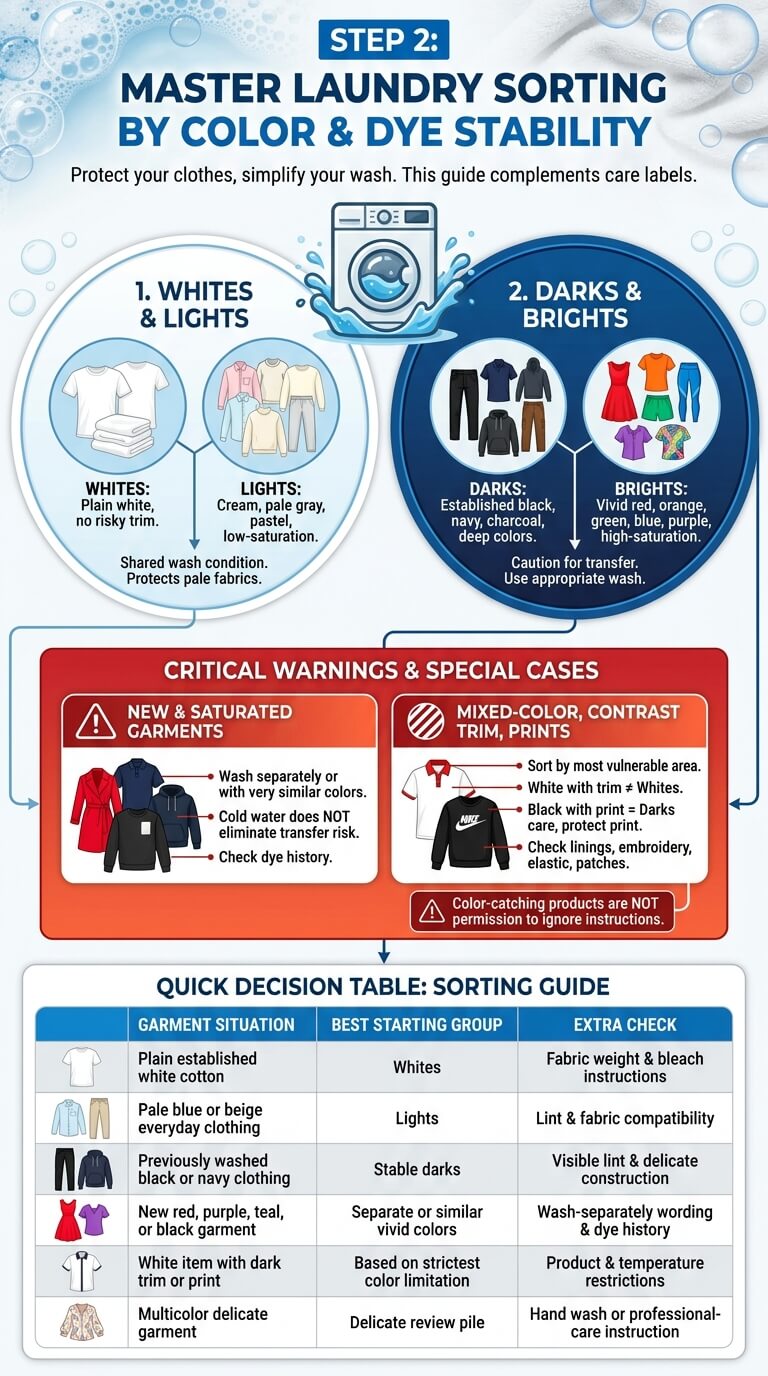
Color sorting protects pale fabrics and helps you choose a shared wash condition. It does not replace checking fabric or care instructions.
Whites, lights, darks, and bright colors
A practical color system uses four groups. Whites include plain white items without risky colored trim. Lights include cream, pale gray, pastel, and other low-saturation colors. Darks include established black, navy, charcoal, brown, and deep colors. Brights include vivid red, orange, green, blue, purple, and highly saturated prints that may deserve extra caution.
New black, navy, red, and saturated garments
Wash a new strongly colored garment separately or with very similar colors if the label allows. Do not assume cold water eliminates transfer risk. A good test is the garment’s history: if it is new, has bled before, or carries a wash-separately warning, keep it away from pale items. Color-catching products should not be treated as permission to ignore garment instructions.
Mixed-color garments, contrast trim, and printed pieces
Sort mixed-color clothing according to its most vulnerable area. A white shirt with red trim may not belong with plain whites. A black sweatshirt with a pale print may need dark-clothing care while avoiding products that could affect the print. Check linings, embroidery, elastic, patches, and decorative panels before choosing the pile.
A color-sorting decision table
| Garment situation | Best starting group | Extra check |
|---|---|---|
| Plain established white cotton | Whites | Fabric weight and bleach instructions |
| Pale blue or beige everyday clothing | Lights | Lint and fabric compatibility |
| Previously washed black or navy clothing | Stable darks | Visible lint and delicate construction |
| New red, purple, teal, or black garment | Separate or similar vivid colors | Wash-separately wording and dye history |
| White item with dark trim or print | Based on the strictest color limitation | Product and temperature restrictions |
| Multicolor delicate garment | Delicate review pile | Hand wash or professional-care instruction |
Step 3: Sort by Fabric Type, Weight, and Construction
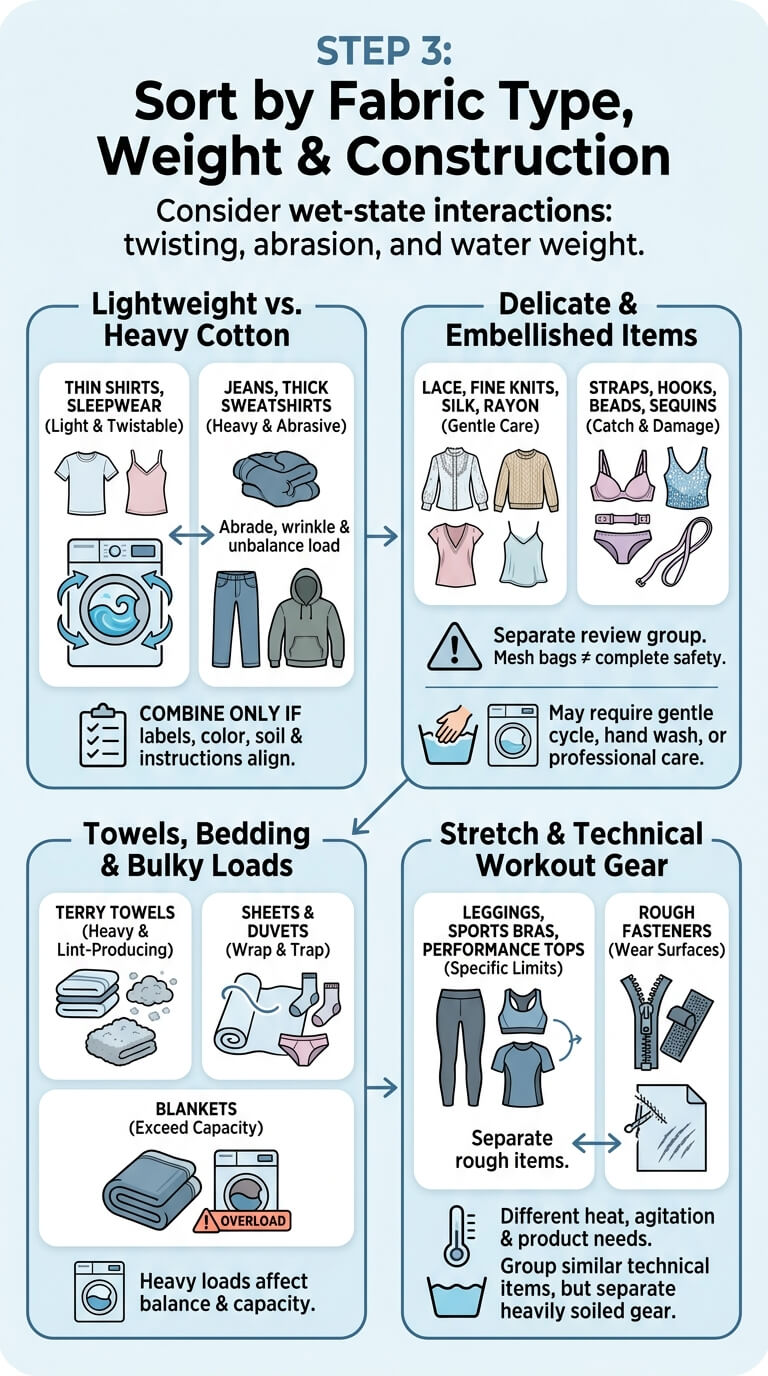
After color, ask what will happen when the items become wet and move against one another. Weight and surface texture often matter more than fiber name alone.
Lightweight shirts versus jeans and heavy cotton
Thin shirts, underwear, and lightweight sleepwear can twist, wrinkle, or abrade when washed with heavy jeans, canvas pants, or thick sweatshirts. Heavy pieces also hold more water and can affect load balance. Combine them only when the garment labels, color stability, soil level, and washer instructions all support the same conditions.
Delicate fabrics, knits, lace, straps, hooks, and embellishments
Create a separate review group for lace, fine knits, lingerie, silk, rayon or viscose, wool, loose weaves, long straps, beads, sequins, embroidery, and delicate trim. Some may be machine washable on a gentle setting, while others need hand washing or professional care. Do not assume a mesh bag makes every delicate item safe for the washer.
Towels and bedding as bulky or high-friction loads
Terry towels are heavy, absorbent, and lint-producing. Sheets and duvet covers can wrap around smaller garments, while blankets may exceed the machine’s capacity even when the drum appears to have space. The Whirlpool laundry sorting guide advises comparing fabric type and following the most conservative care instruction when compatible items are combined.
Stretch fabrics and technical workout clothing
Leggings, compression garments, sports bras, and performance tops may have different heat, agitation, and product limits from cotton clothing. Separate rough fasteners and heavy fabrics that can wear their surfaces. Group similar technical items when their labels agree, but separate heavily soiled gear if it needs a different wash approach.
Step 4: Separate Lint Givers from Lint Attractors
Lint sorting is especially useful for dark wardrobes and smooth synthetic fabrics. It takes only a few seconds once you know which surfaces cause problems.
Towels, fleece, flannel, and shedding fabrics
Terry cloth, fleece, flannel, chenille, fuzzy socks, and some new cotton items can release fibers. Wash new shedding pieces with similar fabrics until the shedding decreases. Do not combine a lint-heavy load with clothing that needs a smooth, clean appearance.
Dark synthetics, corduroy, and smooth surfaces that show lint
Black polyester, nylon, stretch blends, corduroy, and velvet-like fabrics often display pale fibers clearly. Turn garments inside out only when the label and construction allow, and keep tissues out of pockets. Sorting prevents most lint problems more effectively than trying to remove fibers after drying.
Practical compromises when loads are small
If separate lint loads would be too small, wait for more items or combine only low-shedding garments with similar colors and fabrics. A smooth dark T-shirt may wash acceptably with dark jeans, but it is a poor match for a new white towel. When unsure, rub the dry surface gently with a contrasting cloth to see whether it sheds easily.
Step 5: Sort by Soil Level and Laundry Use
The final filter is how dirty the items are and what kind of soil they carry. This decision affects the load size, detergent guidance, cycle choice, and whether pretreatment is needed.
Lightly worn everyday clothing
Office shirts, casual clothing worn briefly, and sleepwear with no visible soil often fit a normal household load when colors and fabrics are compatible. Avoid washing them with muddy, greasy, or heavily perspired items simply to fill the machine.
Workout clothes and body-soil-heavy items
Workout tops, leggings, socks, and uniforms may hold more body soil than they show. Group technical fabrics by care instructions, keep them away from lint-heavy towels, and check whether they need prompt washing or a different label-compatible setting.
Heavily soiled workwear, cleaning cloths, and household textiles
Muddy pants, greasy work clothes, reusable cleaning cloths, and heavily used household textiles can release substantial soil. Separate them from lightly worn garments. Items exposed to hazardous chemicals, fuel, solvents, pesticides, bodily fluids, or other unusual contamination may require workplace, product-label, local safety, or disposal guidance rather than ordinary home laundering.
Why soil level affects detergent and cycle decisions
Heavier soil does not automatically mean pouring in an arbitrary extra amount of detergent. The product label, washer type, load size, water conditions, and garment limits still apply. Sorting lets you choose an appropriate range and cycle for the entire load instead of trying to clean one very dirty item inside a mild load.
Special Categories That Often Need Their Own Decision
These groups are not automatic rules, but they often differ enough in color, weight, construction, lint, or soil to deserve a separate check.
Whites
Plain whites may be separated to reduce dye transfer and allow label-compatible brightness care. Do not place every white item together automatically. White lace, white activewear, white towels, and a white shirt with colored trim may require different loads because of construction, lint, or product limits.
Dark and newly dyed garments
Established darks can often share a load when fabrics and soil levels agree. New or unstable colors need more caution. Keep dark clothing away from lint-heavy pale towels, and do not promise that any single temperature or preparation step will prevent all fading.
Delicates
Delicates should be sorted by risk, not merely placed in one large gentle load. Fine knits, lingerie, silk, wool, lace, rayon or viscose, and embellished garments may have different washing and drying requirements. The care label decides whether machine washing is even an option.
Towels, bedding, and bulky items
Towels may need their own load because of lint and weight. Sheets can often wash together when colors and labels match, but they should not be packed tightly. Bulky blankets, comforters, and mattress covers need a capacity check. The Whirlpool laundry instructions emphasize loose, even loading and checking garment care tags before selecting machine settings.
Baby, pet, or unusually contaminated items
Do not separate these items based on fear alone. Sort by care instructions, fabric, soil, and any relevant official safety direction. Keep pet bedding that sheds heavily away from clothing that attracts hair. For illness, chemical exposure, or other unusual contamination, follow current health, veterinary, workplace, or product guidance instead of inventing a stronger home wash routine.
Small-Load Decision Tree: Separate or Combine

Small households need a flexible system. The goal is not to run many nearly empty loads, but it is also not to sacrifice a garment to make the drum look full.
When waiting for a larger load is safest
Wait when an item has unstable dye, heavy lint, unusual soil, delicate construction, a special care instruction, or a large weight difference from the available clothing. Store damp or heavily soiled items according to safe handling guidance rather than leaving them compressed for long periods.
When similar colors and fabrics can be combined
Combining is reasonable when colors are stable, fabrics have similar strength and weight, surfaces do not create a lint conflict, soil levels are close, and every care label permits the same machine conditions. A mixed load of established dark cotton T-shirts and lightweight cotton sleepwear may be more compatible than a color-perfect load containing dark towels, lace, and jeans.
How to choose the gentlest shared label limit
Compare the instructions for every item. Select a cycle, water setting, spin, and drying method that stays within the strictest limit. If one garment requires gentle handling while the rest need stronger action for heavy soil, the garments do not belong together.
When hand washing one item is more practical
Hand washing can make sense for one eligible garment when the label permits it and the item does not need professional care. Support the garment while wet, avoid twisting, and follow its drying instructions. Do not use hand washing as a workaround for a professional-clean-only label or uncertain structured construction.
A Minimal Sorting System for Small Homes
You do not need a large laundry room or several permanent hampers. A simple holding system can reduce mistakes as long as you inspect again at washer time.
A two- or three-category temporary system
One practical setup uses a light-color container, a dark-color container, and a small separate bag or basket for delicates, stain review, or special-care items. Towels, bedding, and heavily soiled pieces can remain in their normal household locations until wash day, provided they are kept dry and handled safely.
Using hampers without overcomplicating the space
Choose breathable containers that are easy to carry and do not encourage damp textiles to remain compressed. Labels such as lights, darks, and check first are often more useful than many narrow categories. The system should save decisions, not create a storage project.
Re-sorting at washer time
A hamper is only a first pass. Before loading, recheck labels, pockets, stains, fabric weight, lint, and soil. Family members may place an item in the wrong container, and a new garment may need separate handling even if its color matches the pile.
Common Sorting Mistakes
Most sorting failures come from using one visible feature, such as color, while ignoring a less obvious risk.
Sorting by color only
A pale lace top and a pale bath towel match by color but conflict in weight, lint, and abrasion. After creating color groups, always make a second pass for fabric and construction.
Treating all darks or all whites as the same fabric
Color does not reveal whether an item is delicate, stretchy, heavily soiled, lint-producing, or compatible with whitening products. Separate white delicates from durable white towels and dark activewear from rough dark work clothing when their needs differ.
Washing lint-heavy towels with dark clothing
This combination often leaves visible fibers on black or navy surfaces. Keep terry cloth and other shedding fabrics with similar textiles whenever possible. Check pockets for paper before closing the washer door.
Letting a nearly empty category justify an unsafe combination
A half load is not automatically wasteful if it protects a high-risk garment and the machine has an appropriate setting. You can also wait, hand wash an eligible item, or wash similar garments less frequently when hygiene and care needs allow. Do not combine incompatible items only to reach a visual fill line.
Edge Cases and When to Stop
Sorting cannot make every item safe for home washing. Some problems need garment-specific advice, appliance troubleshooting, or professional care.
Missing labels, unstable dye, damaged seams, and special trim
Stop if you cannot identify the fabric or care limits and damage would be costly. Loose dye, open seams, cracked coatings, leather or suede trim, bonded layers, and shifting padding can worsen in water. A hidden-area color test may provide limited information, but it does not guarantee the whole garment is washable.
Expensive, sentimental, structured, or embellished garments
Formalwear, tailored jackets, heirloom textiles, beaded pieces, lined garments, and items with built-in shaping may need professional care even when the outer fabric seems familiar. Construction, not just fiber, determines the risk.
When a stain, odor, or washer problem needs a different process
Sorting prevents many problems, but it does not remove established stains, rescue smoke-affected clothing, correct persistent musty odor, or fix a washer that is not draining or spinning. Separate the affected items, avoid heat when a mark remains, and address the actual problem before returning them to a normal load.
Laundry Sorting FAQ
These answers cover the decisions that most often cause uncertainty at the washer.
Do lights and whites need separate loads?
Usually, separating plain whites from lights lowers the chance of visible dye transfer and allows different care decisions. They may be combined when every item has stable color, compatible fabric and soil, and matching label limits. A white item with colored trim should be judged by its most restrictive component.
Can towels be washed with clothes?
Sometimes, but towels are often heavier, more abrasive, and more lint-producing than everyday clothing. They are poor partners for delicate garments, dark lint-attracting fabrics, and lightweight shirts. Combine only when color, weight, lint, soil, and care instructions are compatible.
Should jeans be washed separately?
Jeans do not always need a dedicated load, but new dark denim may release dye and heavy denim can abrade lighter fabrics. Group established jeans with similar sturdy, color-compatible garments. Keep them away from lace, fine knits, and lightweight pieces.
What if there is only one red or delicate item?
Wait for a compatible load, use a suitable small-load setting, or hand wash the item only if its label permits. A new red garment may need separation because of dye risk. A delicate garment may need a mesh bag, hand washing, or professional care depending on its full instructions and construction.
Is sorting by fabric more important than sorting by color?
Neither replaces the other. Color protects against dye transfer, while fabric sorting reduces abrasion, snagging, lint, distortion, and incompatible settings. The safest load passes both checks, along with care-label and soil-level checks.
Final Thoughts
A useful sorting routine takes less time than fixing faded whites, lint-covered black clothing, snagged lace, or poorly cleaned workwear. Begin with label exceptions, then check color stability, fabric weight and construction, lint behavior, and soil level. Keep the categories broad enough to manage, but never let convenience override a clear care restriction.
When a load is uncertain, remove the highest-risk garment and reassess what remains. That single habit makes small-household laundry easier because it replaces rigid rules with a practical question: can every item in this load safely share the same washing conditions?

Ethan Carter is the Founder & Editor of HomeCleanSecrets. Based in the United States, he has 5 years of experience creating practical home cleaning, laundry care, stain removal, decluttering, and home organization content. His goal is to help everyday households clean smarter and build simple routines that are easier to maintain.
Read more about Ethan Carter on his author page: https://homecleansecrets.com/ethan-carter/