
A bathroom that still smells after routine cleaning usually has a missed odor-holding area, excess moisture, or a plumbing clue. Classify the smell, find the strongest zone, remove damp textiles and trash, clean the affected surfaces, and let the room dry before judging the result.

Do not start with air freshener. Fragrance can hide the location long enough for damp towels, residue around a toilet, a leaking cabinet, or a drain problem to continue. A calm inspection gives you a better answer than cleaning every fixture with stronger products.
Quick Answer: Identify the Odor Type and Strongest Zone
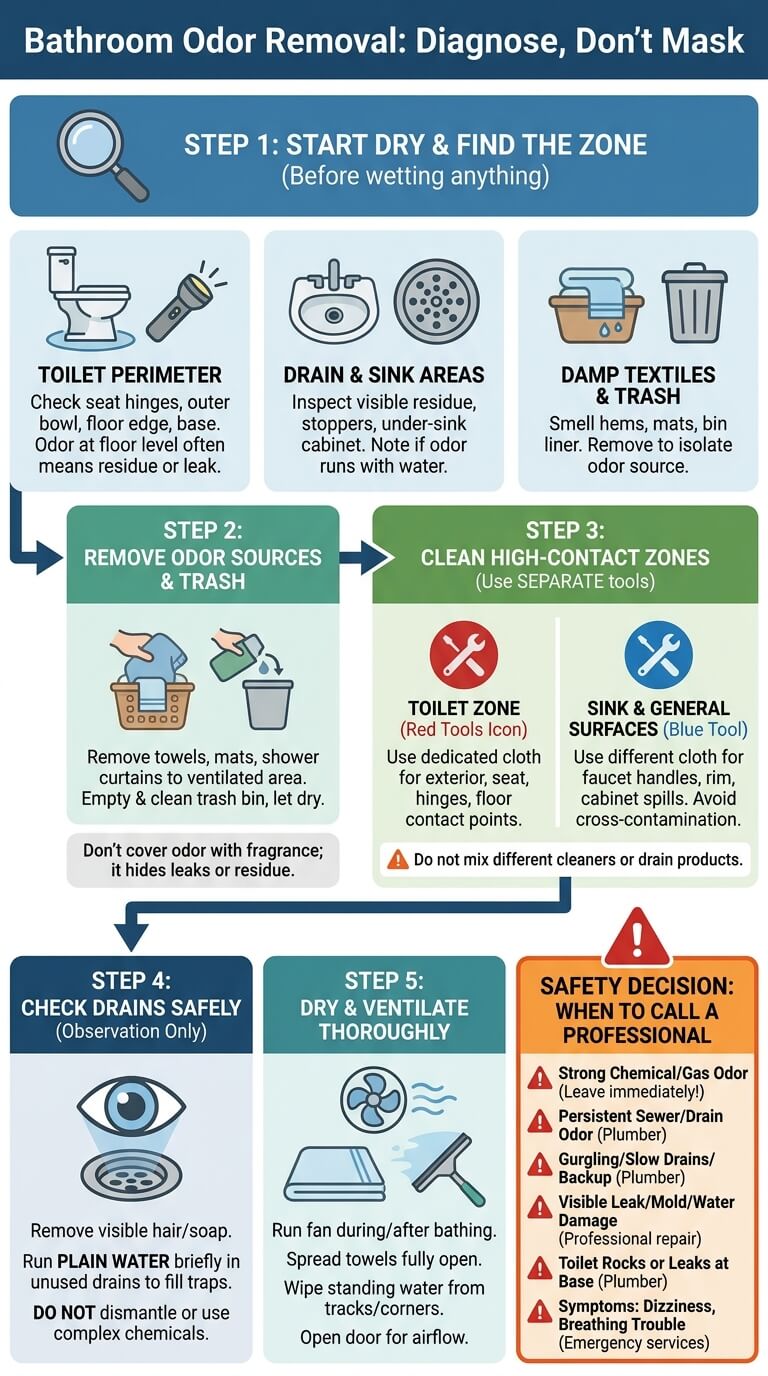
Close the dry, unused bathroom briefly, then enter and note where the odor becomes strongest. Check beside the toilet, near each drain, inside the vanity, around damp fabrics, and near the fan cover. Stop when the smell is sharp, gas-like, or irritating.
Musty or damp
A musty smell often grows stronger after a shower or when the room stays closed. Check folded towels, wet mat backing, condensation, slow-drying caulk, cabinet leaks, and corners with little airflow. Moisture can create odor before obvious damage appears.
Urine or ammonia-like
Check the seat hinges, underside of the seat, outer bowl, floor beside and behind the toilet, and the base edge. Dried splashes can remain in narrow gaps. Also inspect the bin, brush holder, training seat, and nearby mat before blaming the plumbing.
Sewer or drain-like
Compare the sink, shower, tub, floor drain, and toilet area without leaning over an opening. Note whether odor appears after water runs, the fan starts, or a rarely used fixture sits dry. Repeated sewage odor, bubbling, leakage, or slow drainage needs plumbing evaluation.
Sour textile or trash odor
Damp towels, makeup pads, wipes, bath mats, wet cloths, and personal-care packaging can sour a small room. Remove them and check whether the air improves. A towel can look clean while thick hems or folded layers remain smelly.
Chemical or gas-like odor
Leave if the odor is sharp, burning, solvent-like, or irritating. Do not test another cleaner or operate switches when fuel gas may be present. Contact the appropriate emergency, utility, building-management, poison, or fire service for the situation.
Bathroom Odor Safety Decision Tree
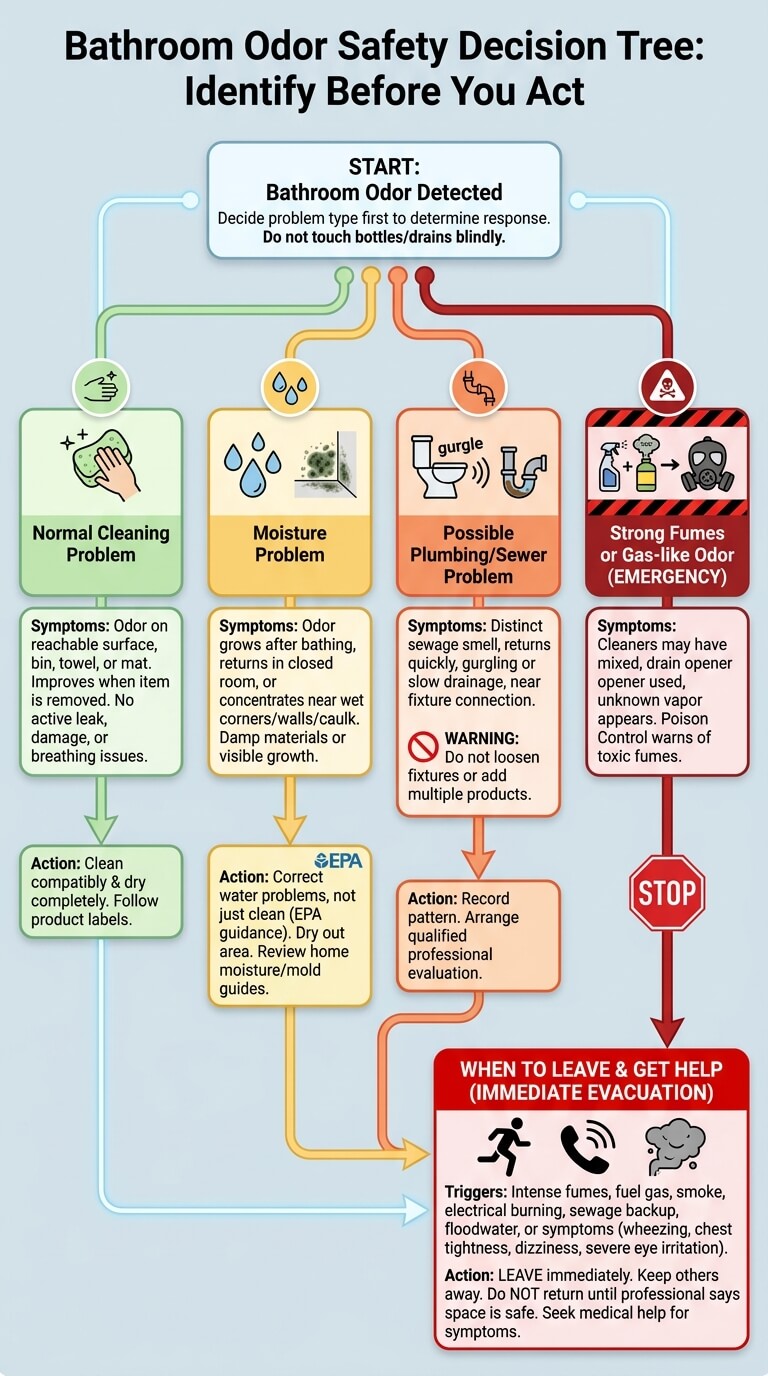
Decide what kind of problem you have before touching a bottle or drain. The correct response may be a simple wash and dry cycle, a leak investigation, a plumbing visit, or immediate evacuation.
Normal cleaning problem
Ordinary residue is likely when the odor stays on a reachable surface, bin, towel, mat, or removable item and improves when that item leaves. There should be no active leak, damage, breathing discomfort, or strong sewage character. Clean compatibly and dry completely.
Moisture problem
Suspect excess moisture when odor grows after bathing, returns in a closed room, or concentrates near wet corners, caulk, walls, ceilings, or cabinets. The EPA emphasizes correcting water problems, not merely cleaning. Review its home moisture and mold guidance when damp materials or visible growth are involved.
Possible plumbing or sewer problem
A plumbing issue is more likely when the odor is distinctly sewage-like, returns quickly after cleaning, appears with gurgling or slow drainage, or concentrates around a fixture connection. Do not loosen fixtures or add multiple products. Record the pattern and arrange qualified evaluation.
Strong fumes or gas-like odor
Stop using the room when cleaners may have mixed, a drain opener was recently used, or an unknown vapor appears. Poison Control warns that household cleaner combinations can create toxic fumes. Follow its household cleaning-product safety guidance and seek help for breathing difficulty or significant exposure.
When to leave the area and get help
Leave for intense fumes, suspected fuel gas, smoke, electrical burning, sewage backup, floodwater, or symptoms such as wheezing, chest tightness, dizziness, or severe eye irritation. Keep children and pets away. Do not return to continue cleaning until the hazard has been identified and the responsible professional says the space is safe.
Start with a Dry Source Check
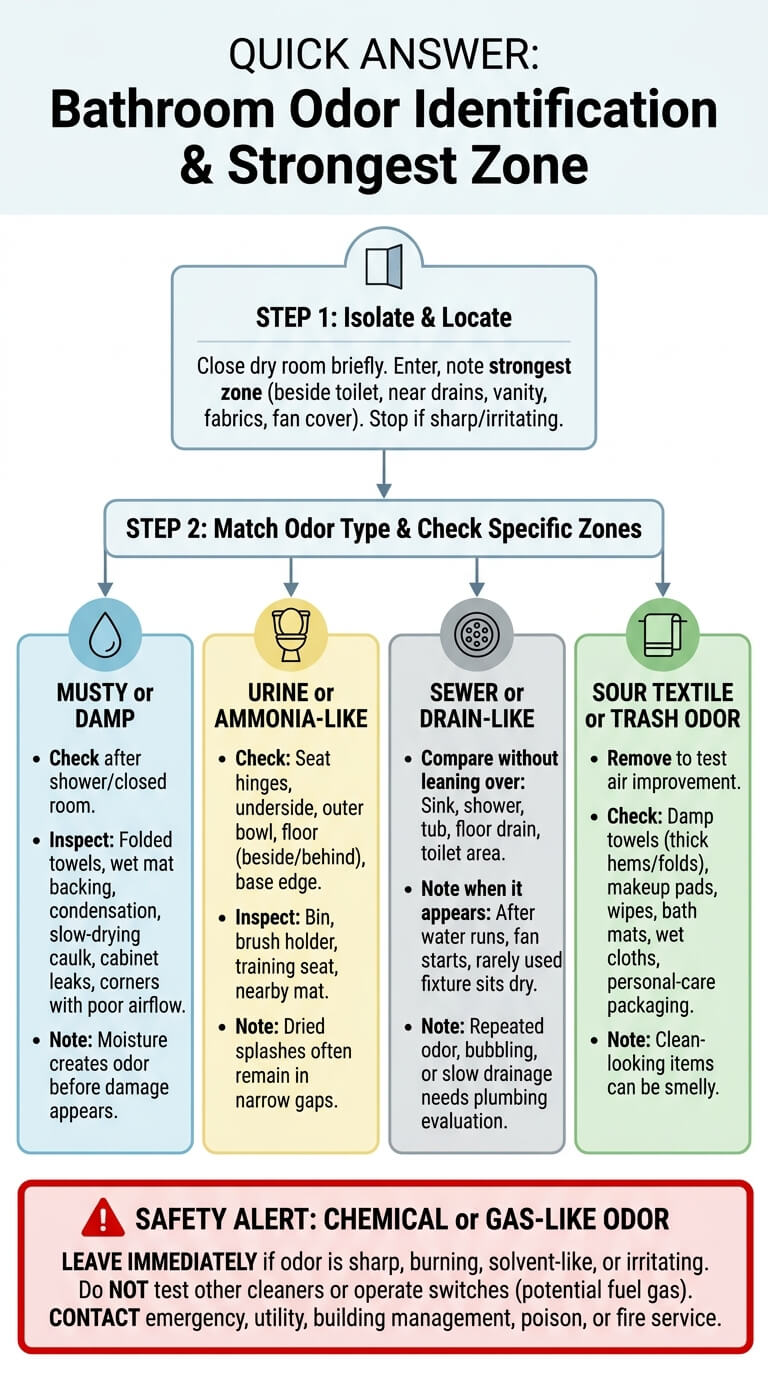
Inspect before you wet any surface. Water and scented products can temporarily change the odor and make the strongest zone harder to find. Use good light, disposable gloves when needed, and separate cloths for toilet and non-toilet areas.
Towels and bath mats
Smell the thickest hems, folded edges, elastic backing, and the underside of each mat. Check whether towels touch the wall or bunch on a hook. Move damp pieces to a washable container and keep them out of the bathroom until cleaned and completely dry.
Trash and personal-care residue
Empty the bin and inspect beneath the liner, rim, lid, hinges, and floor below. Leaked mouthwash, cosmetic residue, wipes, floss, and damp packaging may smell stronger than dry trash. Clean by material instructions and dry before relining.
Toilet perimeter
Use a flashlight to inspect seat attachments, the rear ledge, shutoff area, floor edge, and both sides of the base. Do not use a cloth to test movement or leakage. If the toilet rocks, stays wet, or develops recurring stains, arrange qualified service.
Sink and shower drains
Look for visible hair, soap film, toothpaste, standing water, or a stopper that traps residue. Check the overflow opening without inserting tools or cleaner. Surface buildup, a dry water seal, and deeper plumbing problems require different responses.
Under-sink cabinet
Remove stored products and check the cabinet liner with a gloved hand or dry towel. Inspect pipe joints, the back wall, and the floor for dampness, swelling, stains, or rust marks. Keep chemicals in original containers and wet tools elsewhere.
Fan cover and closed corners
A dusty fan grille can hold humidity and fragrance, while weak airflow leaves the room damp. Look without touching electrical parts. Check behind the door, beside the curtain, above tall storage, and along cool walls where air moves slowly.
Diagnose Odor by Bathroom Zone
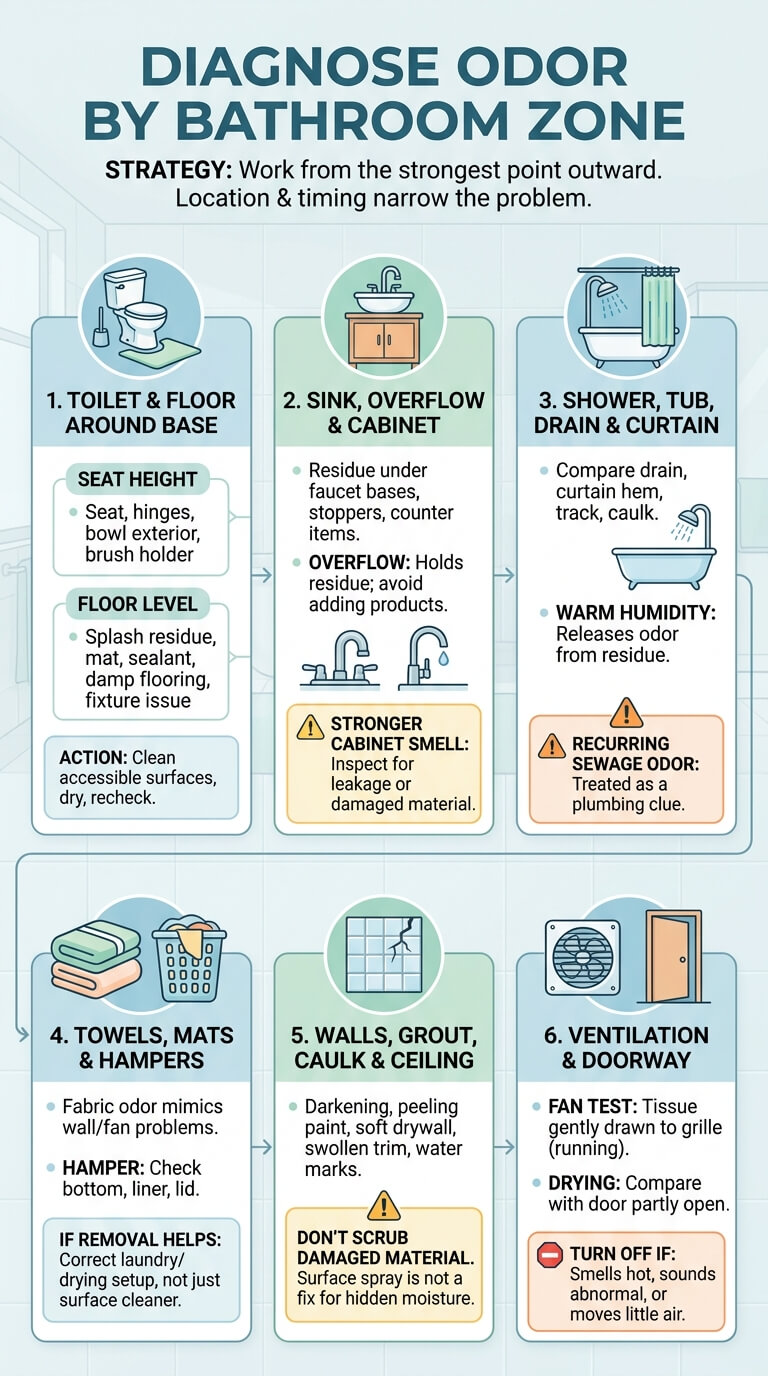
Work from the strongest point outward. A small room can make every surface seem responsible, but the timing and exact location usually narrow the problem.
Toilet and floor around the base
Odor at seat height often comes from the seat, hinges, bowl exterior, or brush holder. Odor at floor level may come from splash residue, a mat, sealant, damp flooring, or a fixture issue. Clean accessible surfaces, dry them, and recheck.
Sink, overflow, and cabinet
Toothpaste, soap, shaving residue, and water collect beneath faucet bases, around stoppers, and under counter items. The overflow may hold residue, but do not fill it with random products. If the cabinet smells stronger than the basin, inspect for leakage or damaged material.
Shower, tub, drain, and curtain
Compare the drain, curtain hem, door track, bottle bottoms, caulk, and wall outside the wet area. Warm humidity can release odor from residue and damp material. Clean reachable surface buildup, but treat recurring sewage odor as a plumbing clue.
Towels, mats, and hampers
Fabric odor may spread upward and seem like a wall or fan problem. Open the hamper and check its bottom, liner, and lid. If the bathroom improves when fabrics are removed, correct the laundry and drying setup before applying more cleaner to hard surfaces. When the smell may be entering from a laundry area, closet, hallway, HVAC path, or another room, use the home odor checklist by room before repeating bathroom cleaning.
Walls, grout, caulk, and ceiling
Look for recurring darkening, peeling paint, soft drywall, swollen trim, cracked caulk, or water marks. Do not scrub damaged material aggressively or promise that a surface spray will solve hidden moisture. Small surface residue and structural dampness are different problems, even when both smell musty.
Ventilation and doorway
Run the fan and see whether lightweight tissue is gently drawn toward the grille, without removing the cover or reaching inside. Compare drying with the door partly open. Turn off a fan that smells hot, sounds abnormal, or moves little air and check its manual.
Step 1: Remove Odor-Holding Textiles and Trash
Start with movable items because they are easy to isolate and can quickly reveal whether the room itself is the problem. Keep clean replacements outside until wet work is complete.
Separate damp towels and mats
Place damp fabrics in a ventilated hamper or take them directly to the laundry area. Do not compress wet towels in a sealed basket for long storage. Wash by the care label, use a load size that allows rinsing, and dry thick hems and backing fully before returning them.
Empty and inspect the bin
Remove the liner, then check for liquid beneath it and residue around lid hinges. Use a cleaner compatible with the bin material and avoid soaking sensor lids or metal parts. Dry the base, lid, and hinge area before installing a new liner.
Air washable items before laundering
If a towel or mat is wet and strongly sour, spread it open in a suitable ventilated location rather than leaving it folded until wash time. Do not shake visibly contaminated material through the home. Airing reduces trapped moisture but does not replace laundering.
Keep clean textiles outside the work zone
Store fresh towels, toilet paper, bathrobes, and clean mats in another room while you clean. Otherwise, spray, damp air, or residue from a toilet cloth can reach them. Return only the number of textiles that the bathroom can dry between uses. When the bathroom improves after the bin leaves but the container still smells, use the guide to remove trash can odor.
Step 2: Clean High-Contact Bathroom Sources
Use separate tools for the toilet zone, sink zone, and general surfaces. Read every product and surface label. Routine cleaning usually needs soap or detergent and physical wiping, not several overlapping chemicals.
Toilet exterior and floor contact points
Clean the flush control, lid, seat surfaces, hinges, outer bowl, and reachable floor with a toilet-only cloth. Follow the product label for application and wiping. Do not flood the base or force liquid beneath flooring.
Sink rim, overflow area, and handles
Remove items from the counter and clean the faucet handles, basin rim, stopper surface, and the accessible edge of the overflow opening. Use a small disposable or washable brush only where the manufacturer permits it. Keep water away from electrical outlets, lighted mirrors, and powered grooming tools.
Bin lid and under-sink spills
Wipe dried spills before returning products to the cabinet. Dispose of leaking containers according to their labels and local rules. Clean the cabinet only with a method suitable for its finish, then leave the doors open until every surface is dry.
Surface compatibility and cross-contamination controls
Natural stone, coated metal, painted wood, acrylic, and specialty seats can be damaged by acids, abrasives, or strong disinfectants. The CDC advises cleaning visible dirt before deciding whether disinfection is needed. Its home cleaning and disinfecting guidance also supports following product directions.
Step 3: Check Drains Without Turning This into a Plumbing Tutorial
Limit this step to visible, reachable residue and simple observation. Do not dismantle plumbing or use chemical combinations. One drain product can remain in a pipe long after you stop smelling it.
Visible hair and residue
Remove a reachable hair screen or stopper only when its normal user instructions allow it. Wear gloves, lift out hair and soap residue, and wash the removable part with a compatible cleaner. Do not force a tool deeper into the pipe or scrape a plated finish.
Dry or infrequently used drains
A water seal can dry in a fixture that is rarely used. Run plain water briefly in the unused sink, shower, tub, or floor drain, then wait and recheck. If the smell returns quickly, affects several fixtures, or appears with drainage problems, contact building management or a plumber.
Odor after water runs
Record whether the smell begins immediately, after the basin empties, or only when another fixture operates. Check for visible leaks beneath the sink without tightening fittings. Timing information helps a professional distinguish surface residue from a venting, seal, or drain-line issue.
When repeated sewer odor needs plumbing evaluation
Arrange evaluation for persistent sewer-like odor, bubbling, slow drainage, recurring dry seals, moisture around a toilet base, or odor that moves between fixtures. Stop using the affected fixture if wastewater backs up. Do not try to overpower the smell with bleach, acid, drain opener, or fragrance.
Step 4: Dry and Ventilate the Bathroom
Cleaning is incomplete while walls, fabrics, tracks, and cabinet surfaces remain wet. Reduce moisture at the time it is produced and give wet areas enough air movement to dry.
Fan use and open-door drying
Run a working exhaust fan during bathing and as directed by its manual or building guidance. The EPA recommends exhausting bathroom moisture outdoors, not into an attic or enclosed space. Its home moisture-control recommendations explain why ventilation and leak correction matter more than fragrance.
Hanging towels fully open
Spread towels across a bar or rack instead of folding several layers over one hook. Leave space between household members’ towels. When a bathroom cannot dry thick fabrics between uses, move them to a better ventilated location rather than adding stronger fragrance.
Wiping persistent wet zones
After bathing, remove standing water from a door track, tub edge, counter seam, or puddle-prone floor using a clean absorbent cloth. Hang the cloth to dry outside the bathroom or launder it. Persistent water in the same place calls for a splash, grading, seal, or leak check.
Closed-room recheck after cleaner scent fades
Let the bathroom dry, remove supplies, and wait for cleaner scent to fade. Close the door briefly, then check the same zones in the same order. Improvement supports the areas you treated; an immediate return points to unresolved moisture or plumbing.
Solve Common Bathroom Odor Patterns
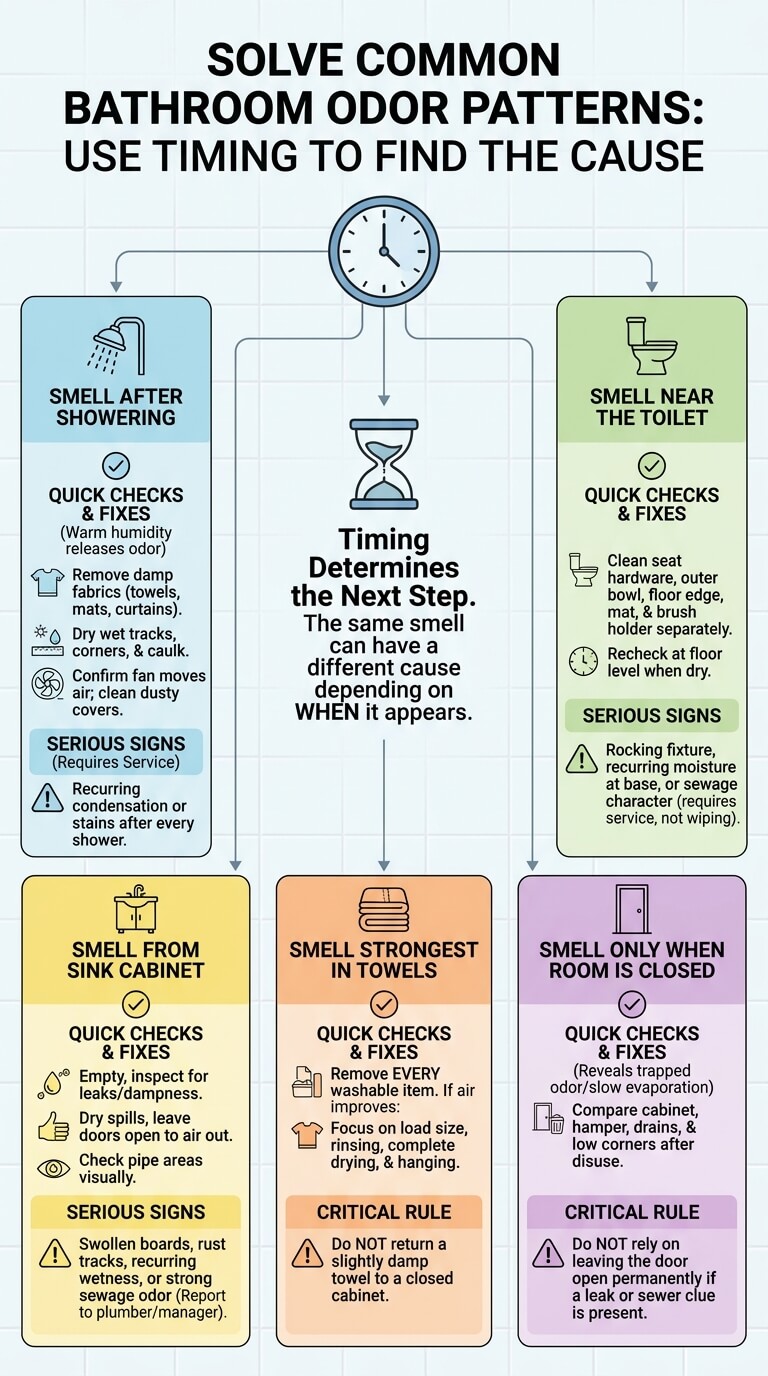
Use timing to choose the next step. The same smell can have a different cause depending on when it appears.
Smell after showering
Warm humidity can release odor from towels, curtains, mats, caulk, and dusty fan covers. Remove damp fabrics, dry wet tracks and corners, and confirm that the fan moves air. Check for condensation or recurring stains when the odor returns after every shower.
Smell near the toilet
Clean the seat hardware, outer bowl, brush holder, floor edge, and nearby mat separately. Recheck at floor level when dry. A rocking fixture, recurring moisture, or sewage character near the base requires service rather than repeated wiping.
Smell from the sink cabinet
Empty the cabinet, inspect for leaking bottles and damp material, then check pipe areas visually. Dry spills and leave the doors open. Swollen boards, rust tracks, recurring wetness, or a strong sewage odor should be reported to a plumber, landlord, or property manager.
Smell strongest in towels
Remove every towel, mat, and washable curtain from the room. If the air improves, focus on load size, rinsing, complete drying, and the way fabrics hang between uses. Do not return a slightly damp towel to a closed cabinet. When towels remain the strongest source outside the bathroom, use the laundry-specific guide to remove mildew smell from towels.
Smell only when the room has been closed
Closed-room odor often reveals slow evaporation, damp storage, trapped drain odor, or weak air exchange. Compare the cabinet, hamper, drains, and low corners after the room has been unused. Do not rely on leaving the door open permanently if a leak or sewer clue is present.
Bathroom Odor Mistakes to Avoid
Most setbacks come from hiding the smell, spreading contamination, or treating moisture and plumbing problems as if they were dirty surfaces.
Fragrance before source removal
Sprays, candles, plug-ins, and scented cleaners can make a small bathroom uncomfortable while giving no proof that residue or dampness is gone. Locate and remove the odor-holding item first. Use fragrance only when it is suitable for the household and never as a leak or sewer remedy.
Mixing drain and surface cleaners
Do not combine bleach, ammonia, vinegar, acids, drain openers, toilet products, or unknown residues. Never pour a second product into a drain when you do not know what is already there. Ventilate, leave the room for strong fumes, and call Poison Control or emergency services when exposure is suspected.
Reusing toilet cloths elsewhere
A cloth used on the toilet base or seat should not move to the sink, handles, counter, fan cover, or towel rack. Use clearly separated tools and launder or dispose of them appropriately. Wash hands after removing gloves and before handling clean textiles.
Closing the room while textiles are damp
A closed bathroom can hold moisture around thick towels, mat backing, shower curtains, and hampers. Spread fabrics open and keep the fan or approved ventilation running long enough for surfaces to dry. Do not store bath mats in a folded pile immediately after use.
Ignoring recurring moisture or sewer clues
Odor that returns within hours after careful cleaning is useful information. Record wet spots, gurgling, slow drains, loose fixtures, condensation, and the time of day. Repeating the same cleaning process can delay the repair and damage finishes.
When Normal Bathroom Cleaning Is Not Enough
Stop routine cleaning when the problem involves hidden water, plumbing connections, damaged materials, hazardous fumes, or a pattern that does not respond to limited surface care.
Persistent sewer-like odor
Get plumbing help when plain water in an infrequently used drain does not correct the odor, when several drains are involved, or when there is bubbling, backup, or slow flow. Keep notes about which fixtures were running. Do not cover the opening or add chemicals without professional direction.
Visible water damage or recurring growth
Peeling paint, soft drywall, swollen cabinetry, discolored ceilings, repeated caulk growth, or damp flooring indicates a moisture condition beyond odor removal. Fix the water entry and assess damaged material. Cleaning without correcting the wet condition is unlikely to provide a lasting result.
Loose toilet, leaking plumbing, or damp cabinet
A toilet that moves, water around the base, a wet shutoff area, or a cabinet that becomes damp again should be taken out of normal use when necessary and evaluated. Renters should document the condition and notify the responsible property contact promptly.
Strong chemical or gas-like odor
Leave for strong fumes, suspected cleaner mixing, fuel gas, electrical burning, or symptoms. Do not search for the leak with a flame or operate switches when fuel gas may be present. Use emergency, utility, fire, poison, or building-management channels appropriate to the hazard.
Odor returning immediately after professional-level cleaning
When a thoroughly cleaned, dry bathroom smells the same almost immediately, the problem is probably not ordinary surface residue. Ask the cleaner what areas were treated, then have ventilation, plumbing, fixtures, cabinets, and adjoining building materials assessed in a logical order.
Frequently Asked Questions
Use odor type, location, timing, and moisture clues together rather than relying on one quick sniff.
Why does my bathroom smell bad even after cleaning?
The odor may be in damp towels, a bath mat, bin hinge, toilet attachment, drain surface, vanity cabinet, or a moisture-damaged material that routine wiping missed. Cleaner scent can also hide the smell until the room closes. Let everything dry and recheck each zone without fragrance.
How do I tell whether the smell is from the toilet or drain?
Check at floor level around the toilet, then compare each drain separately. Toilet-zone odor often concentrates at hinges, the outer bowl, brush holder, mat, or base. Drain odor is usually strongest at an opening and may change when water runs. Leakage, rocking, gurgling, or sewage character needs professional assessment.
Why does the bathroom smell musty after a shower?
Heat and humidity can release odor from damp fabrics, residue, caulk, dust, and slow-drying corners. Remove textiles, run effective ventilation, wipe standing water, and look for condensation or recurring damage. A musty pattern after every shower points to drying and moisture control, not simply a need for more fragrance.
Can damp towels make the whole bathroom smell?
Yes. Thick hems, layered hooks, packed hampers, and bath-mat backing can remain wet long enough to create a sour or musty smell. Remove the fabrics and air the room as a test. Launder them by label and return them only when every thick area is dry.
What should I do about a sewer-like bathroom smell?
Check whether an infrequently used drain needs plain water, then note any gurgling, slow drainage, backup, toilet movement, or recurring odor. Do not mix drain products. Persistent sewage-like odor or a pattern involving several fixtures needs a plumber or building manager.
Should I pour cleaning products down a smelly drain?
Not as a first step. Remove only visible reachable residue and use plain water for a rarely used fixture. A drain may already contain another product, and mixing chemicals can create dangerous fumes. Follow the fixture and product instructions or ask a plumber when the odor repeats.
How do I keep bathroom odor from returning?
Keep towels open while drying, empty wet trash promptly, clean high-contact areas with separate tools, dry puddle-prone zones, run effective ventilation, and repair leaks. Recheck the room after cleaner scent fades so recurring moisture or plumbing clues are addressed early.
Final Thoughts
Bathroom odor removal works best as a diagnosis, not a race to use the strongest cleaner. Classify the smell, locate the strongest zone, remove damp fabrics and trash, clean compatible surfaces with separate tools, inspect drains without mixing products, and let the room dry completely. For the broader source-first sequence across rooms and materials, use the odor removal guide.
Stop when the evidence points to sewage, leakage, damaged material, strong fumes, or symptoms. The next step may involve a plumber, property manager, ventilation technician, restoration professional, utility, or emergency service. Aim for a bathroom that stays dry, functions normally, and is safe to use.

Ethan Carter is the Founder & Editor of HomeCleanSecrets. Based in the United States, he has 5 years of experience creating practical home cleaning, laundry care, stain removal, decluttering, and home organization content. His goal is to help everyday households clean smarter and build simple routines that are easier to maintain.
Read more about Ethan Carter on his author page: https://homecleansecrets.com/ethan-carter/