
How to Clean Area Rugs at Home is easiest when the room has a clear cleaning order. This guide keeps the work practical: clear what does not belong, remove dust without spreading it, respect fabric and surface limits, and finish with the floor.
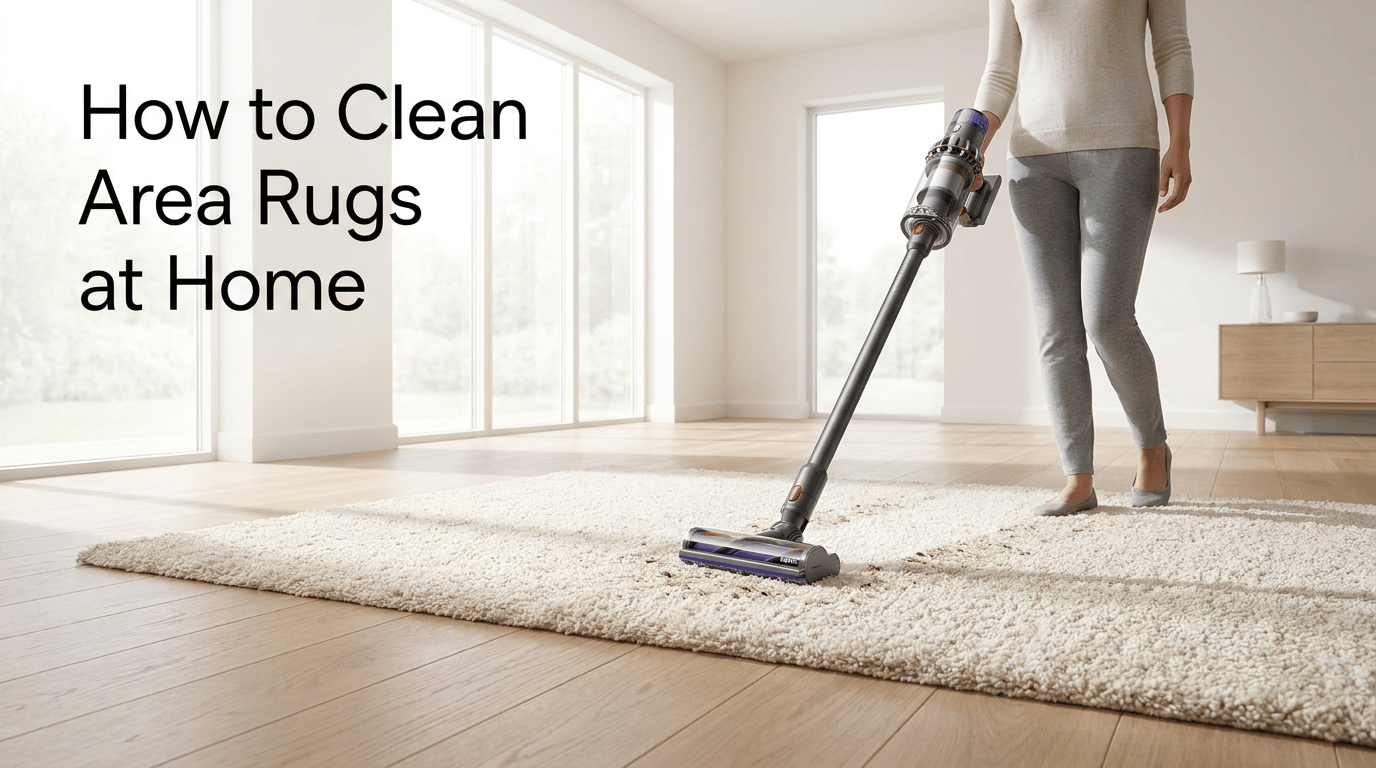
For extra caution, compare fabric care labels and product labels with trusted home cleaning guidance before using stronger methods.
The focus is fiber, backing, dyes, stains, odor, pet hair, and drying. You will get enough detail to clean confidently without drifting into unrelated deep-cleaning projects or internal link planning.
For a related walkthrough, see our guide to how to clean a living room step by step.
For a related walkthrough, see our guide to bedroom and living room cleaning guide.
Quick Answer: The Best Way to Clean Area Rugs at Home
The best method is to clear clutter, work high to low, refresh fabrics only as labels allow, and clean floors last. This order keeps area rugs manageable and prevents rework. See trusted cleaning guidance when safety or health-sensitive details matter.
The safest basic method
For the safest basic method, choose the simplest action that solves the visible problem. Avoid turning a quick reset into a full storage project.
Check the rug tag
Check the label first, then follow its limits for water, heat, detergent, bleach, or dry cleaning.
Vacuum both sides if suitable
Capture dust with microfiber or a vacuum attachment instead of scattering it across nearby surfaces.
Spot clean stains
Handle this detail lightly, then check the result before moving to the next task.
Dry completely
Dry this area fully before use so odor, texture problems, and moisture marks are less likely.
What changes by rug type
For what changes by rug type, choose the simplest action that solves the visible problem. Avoid turning a quick reset into a full storage project.
Wool
Handle this detail lightly, then check the result before moving to the next task.
Cotton
Handle this detail lightly, then check the result before moving to the next task.
Synthetic
Handle this detail lightly, then check the result before moving to the next task.
Jute or natural fiber
Handle this detail lightly, then check the result before moving to the next task.
What to avoid
For what to avoid, choose the simplest action that solves the visible problem. Avoid turning a quick reset into a full storage project.
Soaking unknown rugs
Clean floors after dusting, then avoid excess water around rugs, seams, backing, or wood.
Hot water on unstable dyes
Handle this detail lightly, then check the result before moving to the next task.
Leaving rug backing wet
Clean floors after dusting, then avoid excess water around rugs, seams, backing, or wood.
Before You Clean an Area Rug

This step handles before you clean an area rug within the larger job of cleaning area rugs. Keep the work focused on visible progress, material care, and a clean finish.
Check the care tag
For check the care tag, choose the simplest action that solves the visible problem. Avoid turning a quick reset into a full storage project.
Material
Handle this detail lightly, then check the result before moving to the next task.
Backing
Handle this detail lightly, then check the result before moving to the next task.
Cleaning restrictions
Handle this detail lightly, then check the result before moving to the next task.
Test for colorfastness
For test for colorfastness, choose the simplest action that solves the visible problem. Avoid turning a quick reset into a full storage project.
Hidden corner
Handle this detail lightly, then check the result before moving to the next task.
White cloth test
Handle this detail lightly, then check the result before moving to the next task.
Stop if dye transfers
Handle this detail lightly, then check the result before moving to the next task.
Inspect the rug
For inspect the rug, choose the simplest action that solves the visible problem. Avoid turning a quick reset into a full storage project.
Loose edges
Handle this detail lightly, then check the result before moving to the next task.
Fringe damage
Handle this detail lightly, then check the result before moving to the next task.
Rubber backing
Handle this detail lightly, then check the result before moving to the next task.
Supplies You Need
Use a simple kit: microfiber cloths, a vacuum with attachments, a soft brush, mild cleaner, laundry supplies when labels allow washing, and dry towels. Match products to fiber, backing, dyes, stains, odor, pet hair, and drying.
Basic tools
For basic tools, choose the simplest action that solves the visible problem. Avoid turning a quick reset into a full storage project.
Vacuum
Capture dust with microfiber or a vacuum attachment instead of scattering it across nearby surfaces.
Soft brush
Handle this detail lightly, then check the result before moving to the next task.
White cloths
Handle this detail lightly, then check the result before moving to the next task.
Bucket
Handle this detail lightly, then check the result before moving to the next task.
Cleaner options
For cleaner options, choose the simplest action that solves the visible problem. Avoid turning a quick reset into a full storage project.
Mild detergent
Use mild detergent, gentle handling, thorough rinsing, and complete drying if washing is allowed.
Rug-safe cleaner
Clean floors after dusting, then avoid excess water around rugs, seams, backing, or wood.
Enzyme cleaner for pet stains if material-safe
Handle this detail lightly, then check the result before moving to the next task.
Drying tools
For drying tools, choose the simplest action that solves the visible problem. Avoid turning a quick reset into a full storage project.
Towels
Handle this detail lightly, then check the result before moving to the next task.
Fan
Handle this detail lightly, then check the result before moving to the next task.
Dry outdoor shade if suitable
Dry this area fully before use so odor, texture problems, and moisture marks are less likely.
Step 1: Remove Dust and Loose Dirt
This step handles step 1: remove dust and loose dirt within the larger job of cleaning area rugs. Keep the work focused on visible progress, material care, and a clean finish.
Shake small rugs outside
For shake small rugs outside, choose the simplest action that solves the visible problem. Avoid turning a quick reset into a full storage project.
Hold securely
Handle this detail lightly, then check the result before moving to the next task.
Avoid beating delicate rugs
This shortcut can create extra work, residue, fabric damage, or a slower drying problem.
Vacuum the top
For vacuum the top, choose the simplest action that solves the visible problem. Avoid turning a quick reset into a full storage project.
Slow passes
Handle this detail lightly, then check the result before moving to the next task.
Avoid fringe
This shortcut can create extra work, residue, fabric damage, or a slower drying problem.
Vacuum the underside if suitable
For vacuum the underside if suitable, choose the simplest action that solves the visible problem. Avoid turning a quick reset into a full storage project.
Remove grit
Move this item to trash, laundry, storage, or the correct room before cleaning begins.
Protect floors underneath
Clean floors after dusting, then avoid excess water around rugs, seams, backing, or wood.
Step 2: Spot Clean Stains

This step handles step 2: spot clean stains within the larger job of cleaning area rugs. Keep the work focused on visible progress, material care, and a clean finish.
Blot fresh spills
For blot fresh spills, choose the simplest action that solves the visible problem. Avoid turning a quick reset into a full storage project.
Do not rub
Handle this detail lightly, then check the result before moving to the next task.
Work from outside inward
Handle this detail lightly, then check the result before moving to the next task.
Apply cleaner carefully
For apply cleaner carefully, choose the simplest action that solves the visible problem. Avoid turning a quick reset into a full storage project.
Use a small amount
Handle this detail lightly, then check the result before moving to the next task.
Test first
Handle this detail lightly, then check the result before moving to the next task.
Avoid soaking backing
This shortcut can create extra work, residue, fabric damage, or a slower drying problem.
Rinse the spot
For rinse the spot, choose the simplest action that solves the visible problem. Avoid turning a quick reset into a full storage project.
Blot with clean water
Handle this detail lightly, then check the result before moving to the next task.
Remove detergent residue
Use mild detergent, gentle handling, thorough rinsing, and complete drying if washing is allowed.
Dry with towels
Dry this area fully before use so odor, texture problems, and moisture marks are less likely.
Step 3: Deep Clean Washable Area Rugs
This step handles step 3: deep clean washable area rugs within the larger job of cleaning area rugs. Keep the work focused on visible progress, material care, and a clean finish.
Decide if washing is safe
For decide if washing is safe, choose the simplest action that solves the visible problem. Avoid turning a quick reset into a full storage project.
Machine washable rugs
Use mild detergent, gentle handling, thorough rinsing, and complete drying if washing is allowed.
Hose-safe outdoor cleaning
Handle this detail lightly, then check the result before moving to the next task.
Professional-only rugs
Clean floors after dusting, then avoid excess water around rugs, seams, backing, or wood.
Wash gently
For wash gently, choose the simplest action that solves the visible problem. Avoid turning a quick reset into a full storage project.
Mild detergent
Use mild detergent, gentle handling, thorough rinsing, and complete drying if washing is allowed.
Cool water
Handle this detail lightly, then check the result before moving to the next task.
Light agitation
Handle this detail lightly, then check the result before moving to the next task.
Rinse thoroughly
For rinse thoroughly, choose the simplest action that solves the visible problem. Avoid turning a quick reset into a full storage project.
Detergent residue attracts dirt
Use mild detergent, gentle handling, thorough rinsing, and complete drying if washing is allowed.
Rinse until water is clear
Move this item to trash, laundry, storage, or the correct room before cleaning begins.
Step 4: Dry the Rug Completely
This step handles step 4: dry the rug completely within the larger job of cleaning area rugs. Keep the work focused on visible progress, material care, and a clean finish.
Remove extra water
For remove extra water, choose the simplest action that solves the visible problem. Avoid turning a quick reset into a full storage project.
Press with towels
Handle this detail lightly, then check the result before moving to the next task.
Avoid twisting
This shortcut can create extra work, residue, fabric damage, or a slower drying problem.
Dry flat when possible
For dry flat when possible, choose the simplest action that solves the visible problem. Avoid turning a quick reset into a full storage project.
Prevent stretching
Handle this detail lightly, then check the result before moving to the next task.
Keep shape
Handle this detail lightly, then check the result before moving to the next task.
Use airflow
For use airflow, choose the simplest action that solves the visible problem. Avoid turning a quick reset into a full storage project.
Fan
Handle this detail lightly, then check the result before moving to the next task.
Ventilation
Handle this detail lightly, then check the result before moving to the next task.
Flip when partly dry
Dry this area fully before use so odor, texture problems, and moisture marks are less likely.
How to Clean Area Rugs by Material

This step handles how to clean area rugs by material within the larger job of cleaning area rugs. Keep the work focused on visible progress, material care, and a clean finish.
Wool rugs
For wool rugs, choose the simplest action that solves the visible problem. Avoid turning a quick reset into a full storage project.
Use gentle cleaner
Handle this detail lightly, then check the result before moving to the next task.
Avoid hot water
This shortcut can create extra work, residue, fabric damage, or a slower drying problem.
Consider professional cleaning
Handle this detail lightly, then check the result before moving to the next task.
Cotton rugs
For cotton rugs, choose the simplest action that solves the visible problem. Avoid turning a quick reset into a full storage project.
Check machine wash label
Check the label first, then follow its limits for water, heat, detergent, bleach, or dry cleaning.
Watch for shrinkage
Handle this detail lightly, then check the result before moving to the next task.
Synthetic rugs
For synthetic rugs, choose the simplest action that solves the visible problem. Avoid turning a quick reset into a full storage project.
Usually more tolerant
Handle this detail lightly, then check the result before moving to the next task.
Still test cleaner
Handle this detail lightly, then check the result before moving to the next task.
Jute or sisal rugs
For jute or sisal rugs, choose the simplest action that solves the visible problem. Avoid turning a quick reset into a full storage project.
Avoid soaking
This shortcut can create extra work, residue, fabric damage, or a slower drying problem.
Dry cleaning approach
Dry this area fully before use so odor, texture problems, and moisture marks are less likely.
Spot clean carefully
Handle this detail lightly, then check the result before moving to the next task.
How to Handle Common Rug Problems
This step handles how to handle common rug problems within the larger job of cleaning area rugs. Keep the work focused on visible progress, material care, and a clean finish.
Pet hair
For pet hair, choose the simplest action that solves the visible problem. Avoid turning a quick reset into a full storage project.
Vacuum slowly
Capture dust with microfiber or a vacuum attachment instead of scattering it across nearby surfaces.
Use rubber glove or brush
Handle this detail lightly, then check the result before moving to the next task.
Odor
For odor, choose the simplest action that solves the visible problem. Avoid turning a quick reset into a full storage project.
Find the source
Handle this detail lightly, then check the result before moving to the next task.
Dry fully
Dry this area fully before use so odor, texture problems, and moisture marks are less likely.
Avoid masking smells
This shortcut can create extra work, residue, fabric damage, or a slower drying problem.
Mud
For mud, choose the simplest action that solves the visible problem. Avoid turning a quick reset into a full storage project.
Let dry first
Dry this area fully before use so odor, texture problems, and moisture marks are less likely.
Vacuum before wet cleaning
Capture dust with microfiber or a vacuum attachment instead of scattering it across nearby surfaces.
Curling edges
For curling edges, choose the simplest action that solves the visible problem. Avoid turning a quick reset into a full storage project.
Check backing condition
Handle this detail lightly, then check the result before moving to the next task.
Avoid heat damage
This shortcut can create extra work, residue, fabric damage, or a slower drying problem.
Area Rug Cleaning Mistakes to Avoid
Most mistakes come from rushing, using too much liquid, or treating every material alike. Start gently, read labels, and let items dry fully before putting the room back together.
Soaking the rug
For soaking the rug, choose the simplest action that solves the visible problem. Avoid turning a quick reset into a full storage project.
Backing damage
Handle this detail lightly, then check the result before moving to the next task.
Long drying time
Dry this area fully before use so odor, texture problems, and moisture marks are less likely.
Skipping color test
For skipping color test, choose the simplest action that solves the visible problem. Avoid turning a quick reset into a full storage project.
Dye bleed
Handle this detail lightly, then check the result before moving to the next task.
Permanent marks
Handle this detail lightly, then check the result before moving to the next task.
Using too much detergent
For using too much detergent, choose the simplest action that solves the visible problem. Avoid turning a quick reset into a full storage project.
Sticky residue
Handle this detail lightly, then check the result before moving to the next task.
Faster resoiling
Handle this detail lightly, then check the result before moving to the next task.
Putting the rug back damp
For putting the rug back damp, choose the simplest action that solves the visible problem. Avoid turning a quick reset into a full storage project.
Odor risk
Dry this area fully before use so odor, texture problems, and moisture marks are less likely.
Floor damage risk
Clean floors after dusting, then avoid excess water around rugs, seams, backing, or wood.
Frequently Asked Questions

These quick answers cover common decisions before you start. Use the detailed sections above for delicate, heavily soiled, or label-restricted items.
Can I wash an area rug at home?
Wash only when the care label allows it, use a gentle method, and dry completely before use.
How do I clean an area rug without a carpet cleaner?
The safest answer is to use a gentle method, check labels, avoid soaking, and let area rugs dry fully.
How do I dry an area rug quickly?
The safest answer is to use a gentle method, check labels, avoid soaking, and let area rugs dry fully.
How often should I clean area rugs?
Clean area rugs weekly for visible mess and schedule deeper care monthly or when dust, odor, stains, or heavy use make it necessary.
How do I clean pet stains from an area rug?
The safest answer is to use a gentle method, check labels, avoid soaking, and let area rugs dry fully.
When should I get an area rug professionally cleaned?
Choose professional cleaning for delicate fiber, unstable dye, large rugs, heavy odor, or damage that may worsen with water.
If the room still feels messy after the main pass, choose one visible zone and reset it completely. A made bed, cleared table, clean sofa area, or open floor path changes the room faster than sorting every hidden drawer.
Keep maintenance realistic. A short weekly reset for area rugs, plus monthly attention to hidden dust and washable soft goods, prevents the next cleanup from becoming a long recovery session.
When a stain, odor, or fabric problem does not improve with gentle care, stop escalating. Stronger products, hot water, and aggressive scrubbing can set stains, roughen fibers, or harm finishes.
If the room still feels messy after the main pass, choose one visible zone and reset it completely. A made bed, cleared table, clean sofa area, or open floor path changes the room faster than sorting every hidden drawer.
Keep maintenance realistic. A short weekly reset for area rugs, plus monthly attention to hidden dust and washable soft goods, prevents the next cleanup from becoming a long recovery session.
When a stain, odor, or fabric problem does not improve with gentle care, stop escalating. Stronger products, hot water, and aggressive scrubbing can set stains, roughen fibers, or harm finishes.
If the room still feels messy after the main pass, choose one visible zone and reset it completely. A made bed, cleared table, clean sofa area, or open floor path changes the room faster than sorting every hidden drawer.
Keep maintenance realistic. A short weekly reset for area rugs, plus monthly attention to hidden dust and washable soft goods, prevents the next cleanup from becoming a long recovery session.
When a stain, odor, or fabric problem does not improve with gentle care, stop escalating. Stronger products, hot water, and aggressive scrubbing can set stains, roughen fibers, or harm finishes.
If the room still feels messy after the main pass, choose one visible zone and reset it completely. A made bed, cleared table, clean sofa area, or open floor path changes the room faster than sorting every hidden drawer.
Keep maintenance realistic. A short weekly reset for area rugs, plus monthly attention to hidden dust and washable soft goods, prevents the next cleanup from becoming a long recovery session.
When a stain, odor, or fabric problem does not improve with gentle care, stop escalating. Stronger products, hot water, and aggressive scrubbing can set stains, roughen fibers, or harm finishes.
If the room still feels messy after the main pass, choose one visible zone and reset it completely. A made bed, cleared table, clean sofa area, or open floor path changes the room faster than sorting every hidden drawer.
Keep maintenance realistic. A short weekly reset for area rugs, plus monthly attention to hidden dust and washable soft goods, prevents the next cleanup from becoming a long recovery session.
When a stain, odor, or fabric problem does not improve with gentle care, stop escalating. Stronger products, hot water, and aggressive scrubbing can set stains, roughen fibers, or harm finishes.
Final Thoughts
Clean living spaces are easier to maintain when the order is repeatable. Clear, dust, refresh fabrics carefully, finish floors, then keep the weekly reset small.

Ethan Carter is the Founder & Editor of HomeCleanSecrets. Based in the United States, he has 5 years of experience creating practical home cleaning, laundry care, stain removal, decluttering, and home organization content. His goal is to help everyday households clean smarter and build simple routines that are easier to maintain.
Read more about Ethan Carter on his author page: https://homecleansecrets.com/ethan-carter/