

A clean bedroom starts with order, not speed. Begin by removing what blocks movement, then handle laundry and bedding, clear accessible surfaces, dust from high to low, clean touch points carefully, and finish with the floor. That sequence keeps dust and debris from landing on work you already finished.
This guide is for routine bedroom cleaning. It does not try to solve every storage project, mattress issue, curtain wash, stain, odor, or seasonal reset at once. Keep the job focused on the visible room, and move deeper tasks into a separate plan when they need more time, special products, or furniture movement.
Use product labels, fabric care tags, furniture instructions, and electronics manuals whenever a surface is delicate or unfamiliar. Bedroom cleaning should improve the space without soaking materials, scratching finishes, mixing products, or turning a normal reset into a deep-cleaning project.

Quick Answer: How to Clean a Bedroom Step by Step
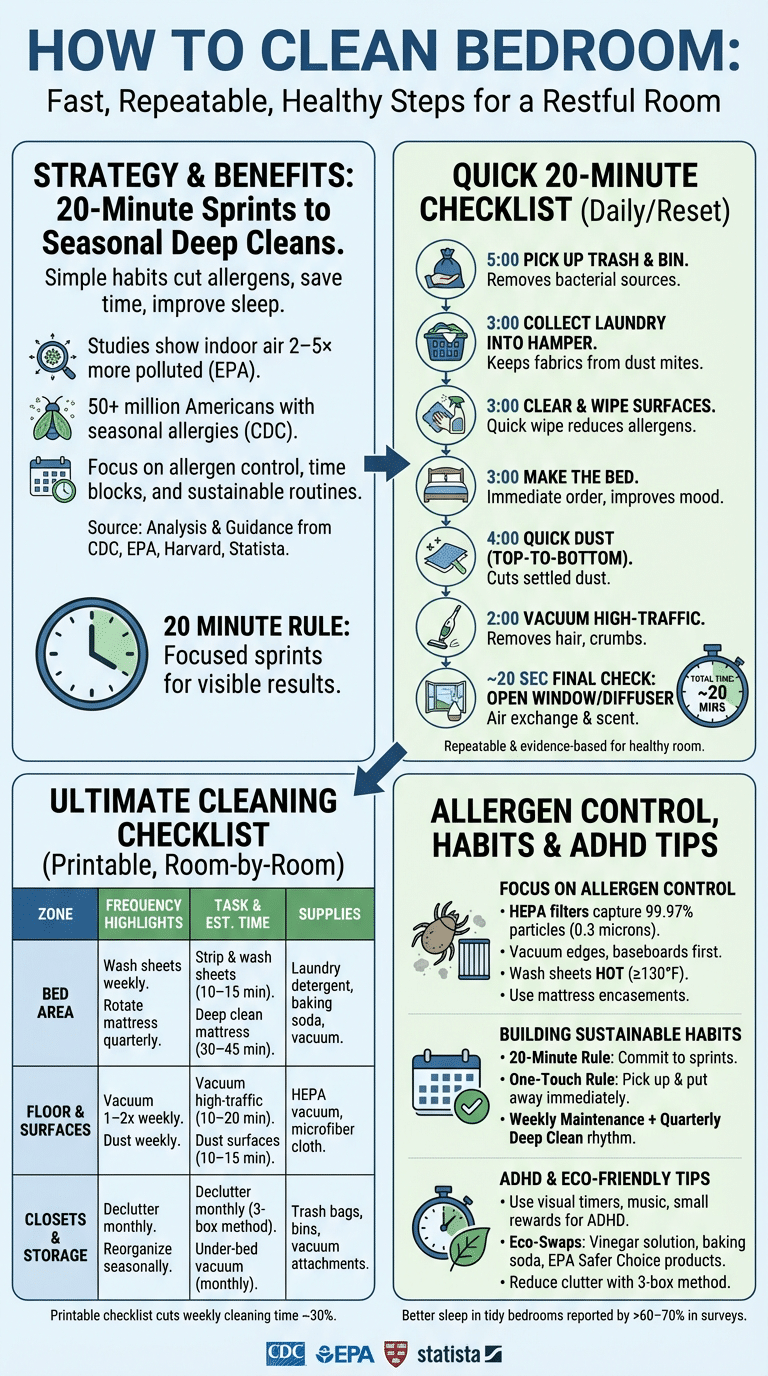
For a normal bedroom, the best order is simple: remove trash and dishes, collect laundry, decide whether linens are being washed, clear surfaces, dust from high to low, clean high-touch items, refresh the bed, vacuum or sweep, then reset supplies. Keep each step narrow so routine cleaning restores the room you use every day without turning into a full closet sort, mattress treatment, under-bed excavation, or seasonal project. For the broader cleaning order and the relationship between routine, deep, furniture, floor, and textile tasks, use the bedroom and living room cleaning guide.
Older versions of this article linked broad background references such as EPA, CDC, CDC, EPA, Harvard, and Statista. Keep those as general context only. They should not replace product labels, fabric tags, furniture instructions, or the actual condition of the bedroom in front of you.
Think of the routine as a visible-room reset. You are making the bed usable, the floor safe to walk on, the surfaces clear enough to wipe, and the air around the room less dusty because loose debris has been removed. That is different from solving every hidden problem. If a task requires moving heavy furniture, soaking fabric, washing curtains, treating a mattress, or sorting storage, write it down and keep the routine moving.
Before You Start
Open a Clear Path and Gather a Small Kit
Open a walking path around the bed, door, closet, and laundry area first. Gather a trash bag, hamper, a few clean cloths, a vacuum or broom, a surface-appropriate cleaner, and a small basket for items that belong elsewhere. Keep the kit small enough to carry from one side of the room to the other, and leave specialty products out unless a specific surface or spill calls for them.
Check Fabric, Furniture, and Electronics Instructions
Before wiping wood, painted furniture, stone tops, upholstered pieces, lamps, screens, or chargers, check care instructions. Use a dry cloth or lightly damp cloth only when the material allows it. General room-cleaning references such as Tidy Upped, wikiHow, and mattress or textile references such as John Ryan By Design can give context, but the safest practical choice still comes from the label, tag, manual, or manufacturer guidance for the item.
Decide Whether Bedding Is Being Changed Today
Changing linens is part of many bedroom routines, but it is not required every time you pick up the room. Decide before dusting so clean sheets do not sit exposed while you work. If laundry is not scheduled, protect the made bed from dust and spray instead of stripping it automatically.
This decision also controls the order of the room. When bedding is being washed, start that laundry early so it can run while you clean surfaces and floors. When bedding is staying put, keep products and dusty objects away from pillows and sheets, then refresh the bed near the end.
Step 1: Remove Trash, Dishes, and Items That Belong Elsewhere
Clear the Floor and Main Surfaces
Start with items that make the room harder to clean: wrappers, tissues, packaging, cups, plates, loose papers, and anything on the floor that could block vacuuming. Clear the nightstand, dresser top, desk, and chair enough to expose the surfaces. Avoid opening drawers or storage bins unless something there is preventing the routine clean.
Use a Temporary Return Basket Without Starting a Full Declutter
Put items from other rooms into one temporary basket and return them after the bedroom is clean. This keeps the reset moving without becoming a decluttering system. If an item needs a storage decision, set it aside for later rather than stopping the cleaning order.
Step 2: Collect Laundry and Handle Bedding
Put Dirty Clothes in the Hamper
Collect clothes, towels, and washable soft items from the floor, chair, bed, and door hooks. Put clearly dirty laundry in the hamper and keep clean items separate. A simple laundry pass is enough here; detailed hamper systems and wardrobe decisions belong in a separate organization task.
Strip the Bed Only When Linens Are Scheduled for Washing
If sheets or pillowcases are being washed today, strip the bed before dusty work begins. If they are not scheduled, leave the bed covered and avoid placing dusty items on it. Mattress rotation, stain treatment, and deep bedding care are separate tasks because they need more time, drying space, and care instructions than a routine room reset.
Keep Clean Bedding Away From Dust and Spray
Fold clean bedding away from the work zone, or place it in a clean basket until dusting and surface cleaning are done. Do not spray cleaners near pillows, sheets, throws, or upholstered pieces unless the care label and product label both support that use.
Step 3: Clear and Clean Accessible Surfaces
Nightstand and Dresser Tops
Remove loose items, wipe the exposed surface with a method that fits the finish, and return only the items that belong there. For wood, painted, lacquered, stone, glass, or coated surfaces, use care guidance before adding moisture or stronger products. For drawer interiors, hardware, finish testing, and residue beyond routine wiping, see how to clean a nightstand and dresser.
Desk, Shelves, and Small Decor
Clear enough space to dust and wipe without dismantling the room. Lift small decor, books, and desk items when practical, then put them back after the surface is dry. If a shelf is overloaded, clean the visible accessible areas now and leave the storage edit for another session.
For a desk, separate cleaning from paperwork. Stack active papers neatly, remove trash, and wipe the reachable surface without reorganizing every file. For shelves, work one shelf at a time so fragile decor, books, and framed items are not scattered across the bed or floor.
Mirrors and Glass Areas
Clean mirrors and glass with a product suitable for that surface, applied to a cloth when overspray could reach wood, electronics, art, or fabric. Dry edges and frames so moisture does not sit in seams.
Step 4: Dust From High to Low
Upper Corners, Fixtures, and High Shelves
Dust upper corners, reachable fixture areas, high shelves, and the tops of tall furniture before lower surfaces. Work gently around delicate finishes and avoid unstable climbing. The goal is to move dust downward before floors are cleaned.
Furniture, Frames, and Baseboards
Move next to picture frames, headboard edges, nightstands, dressers, desks, chair rails, and visible baseboards. Use a clean cloth often enough that you are not spreading dust from one surface to another. When the headboard needs more than routine dusting, use the material-specific guide to clean a headboard.
Keep Dust Away From Clean Bedding
If the bed is already made, dust away from pillows and folded linens. If bedding has been stripped, finish dusty work before clean sheets return. This order is more useful than trying to finish every textile task at once.
Step 5: Clean High-Touch Items and Electronics Carefully
Switches, Handles, and Remotes
Clean door handles, drawer pulls, light switches, remotes, and other touch points after dusting. Cleaning visible soil is often enough for a routine bedroom reset. If someone is sick or a product claims sanitizing or disinfecting performance, follow the product label for surface type, contact time, ventilation, and rinsing.
Screens, Chargers, and Lamps
For screens, chargers, cords, lamps, and bedside electronics, check the manual or manufacturer instructions. Usually that means powering items down when appropriate, using minimal moisture, and applying cleaner to a cloth rather than spraying the device.
When Cleaning Is Enough
Most bedroom surfaces do not need daily disinfecting. General references from organizers such as Kristin MacRae and Aimee Payne may help with personal workflow, while broader pages such as EPA, CDC, and EPA should not be treated as bedroom-specific instructions. Clean visible soil first, then use stronger products only when the situation and label call for them.
Step 6: Refresh the Bed and Accessible Textiles
Make the Bed With Fully Dry Linens
Return sheets, pillowcases, blankets, or covers only when they are fully dry. Damp bedding can create odor, transfer moisture to the mattress, or make the room feel unfinished. Keep clean linens off the floor while floors are still waiting to be cleaned.
Surface Dust Only When Care Instructions Allow
For fabric headboards, throw pillows, blankets, and curtains, use only the light routine care allowed by the tag or manufacturer guidance. A lint roller, gentle vacuum attachment, or light shake may be enough for visible dust when the item allows it.
Leave Deep Pillow, Blanket, Mattress, and Curtain Care for Separate Tasks
Routine bedroom cleaning should not become a full textile project. Pillow washing, heavy blankets, mattress treatment, curtain removal, and deep headboard cleaning need their own care instructions, drying time, and workspace.
Step 7: Vacuum or Sweep the Floor
Edges and Open Floor Paths
Vacuum or sweep after dusting so fallen dust, hair, crumbs, and lint are removed last. Start with open walking paths, visible edges, and areas around the door, bed, desk, closet, and hamper. Use attachments only where they can reach without forcing furniture.
Around the Bed Without Moving Heavy Furniture
Clean around the bed frame and reachable under-bed edge without moving heavy furniture during a routine pass. Heavy hidden buildup, storage removal, or furniture movement belongs in a separate deep clean. During a normal pass, the aim is to remove visible lint, crumbs, hair, and dust from reachable floor areas without dragging the whole room apart. For a controlled method that reaches the far edge without spreading dust, see how to clean under a bed.
Floor-Type and Moisture Limits
Follow floor-care instructions before using moisture. Wood, laminate, carpet, rugs, vinyl, tile, and stone have different limits. If mopping is appropriate, use the least moisture needed and let the floor dry before replacing baskets, rugs, or stored items.
| Task | Time | Supplies |
|---|---|---|
| Pick up trash | 5 min | Trash bag |
| Strip bed & start laundry | 10–15 min | Laundry detergent, hamper |
| Dust surfaces (top to bottom) | 10–15 min | Microfiber/electrostatic cloth |
| Vacuum (high-traffic) | 10–20 min | HEPA vacuum |
| Deep clean mattress | 30–45 min | Baking soda, spot cleaner, vacuum |
Step 8: Reset the Room
Return Only Items That Belong
Return the items that clearly belong in the bedroom and take the temporary basket to the rooms where those items live. Leave uncertain storage decisions for later so the clean room does not become a sorting zone again.
Clean Reusable Tools
Shake or rinse tools where appropriate, launder reusable cloths, empty the vacuum if needed, and close product containers. Store cleaners in their original containers and away from children, pets, and open textiles.
Let Damp Surfaces Dry
Let furniture tops, mirrors, floors, and touch points dry before replacing papers, electronics, rugs, baskets, or bedding. Dry time prevents residue transfer and helps you see whether a surface needs one more gentle pass.
A Simple Bedroom Cleaning Rhythm
Small Daily Resets
Daily bedroom work should stay small: remove dishes, toss trash, put laundry in the hamper, clear the floor path, and return obvious items. This keeps the room usable without creating a detailed schedule or a speed-cleaning system. For a timer-based reset that deliberately skips detailed work, follow the guide to clean a bedroom fast.
Standard Weekly Routine
A weekly routine can include surfaces, dusting, bedding if scheduled, touch points, and floors. Adjust for pets, open windows, heavy use, or the materials in the room. If the bedroom doubles as an office, nursery, guest room, or storage zone, choose the parts that affect daily use first and move the less visible details into a monthly or deep-clean slot.
The weekly version should feel repeatable. If it regularly takes over the day, remove deep tasks from the list and keep only the work that restores the room for normal use: clear surfaces, clean dust, manage laundry, refresh the bed when scheduled, and finish the floor.
Signs a Separate Deep Clean Is Needed
Plan a separate deep clean when you notice heavy under-bed buildup, persistent odors, moisture, stained textiles, dusty vents, overloaded storage, or areas that require furniture movement. Keep those tasks outside the routine sequence so they can be done safely and completely. When hidden edges, vents, furniture backs, or under-bed buildup need attention, switch to the guide on how to deep clean a bedroom.
Common Bedroom Cleaning Mistakes
Making the Bed Before Dusty Work
Making the bed too early can leave clean linens exposed while dust is still falling. Dust first, or keep bedding protected until upper surfaces and nearby furniture are finished.
Directly Spraying Electronics or Finished Furniture
Overspray can reach screens, seams, cords, unfinished edges, and delicate coatings. Apply cleaner to a cloth when the care instructions allow moisture, and keep products away from electronics unless the manual says otherwise.
Turning Routine Cleaning Into Storage Projects
Opening every bin, closet shelf, and drawer can stall a normal bedroom clean. If storage needs attention, note it and schedule a separate organizing session.
Too Much Water
Excess moisture can harm wood, laminate, fabric, paper, electronics, and some finishes. Use the least moisture needed, dry the surface when appropriate, and stop if a material swells, dulls, darkens, or softens.
Cleaning Floors Before Dusting
Floors should usually come after dusting, surface cleaning, and bedding decisions. If you clean floors first, dust and lint from higher surfaces can land on them again.
When Routine Cleaning Is Not Enough
Persistent Moisture, Odor, or Visible Growth
Recurring dampness, musty odor, or visible growth is not solved by routine wiping. Reduce exposure where you can, avoid disturbing questionable material unnecessarily, and look for appropriate repair or professional guidance when the source is unclear.
Large Stains or Material Damage
Large stains, damaged wood, swollen furniture, torn upholstery, or unknown materials need more caution than a normal reset. Cleaning does not guarantee stain removal, odor removal, or damage repair.
Heavy Hidden Buildup
Heavy buildup under the bed, behind furniture, or inside storage areas may need a separate plan with more time, better access, and careful lifting. Do not rush heavy moving during a routine bedroom clean.
Illness or Contamination Requiring Specific Guidance
If illness, body fluids, pests, or other contamination are involved, follow relevant product labels and current guidance instead of guessing. Product programs such as EPA Safer Choice, disinfectant references such as EPA List N, and public guidance such as CDC should still be matched to the surface and product label. A second EPA Safer Choice reference, the old 20-minute rule, or a broad health page such as Harvard does not change that practical rule.
| Action | Purpose | When to use |
|---|---|---|
| Cleaning | Remove dirt and organic matter | Daily/weekly surface maintenance |
| Sanitizing | Reduce microbes to safe levels | After illness or spills |
| Disinfecting | Kill specific pathogens | When someone is sick; follow product label |
Frequently Asked Questions
What Should I Clean First in a Bedroom?
Start with trash, dishes, laundry, and anything blocking the floor or main surfaces. Those items make every later step easier because you can reach furniture, bedding, and floors without constantly moving around clutter.
Should I Make the Bed Before or After Dusting?
If linens are clean and staying on the bed, protect them while you dust nearby surfaces. If linens are being changed, strip the bed first and make it again after dusty work is finished.
How Often Should I Clean My Bedroom?
Handle small messes as they appear, reset obvious items daily or as needed, and do a fuller routine clean weekly or when surfaces, laundry, and floors show visible use. Adjust for pets, open windows, allergies, illness, and household traffic without relying on a fixed universal schedule.
Should I Vacuum Under the Bed Every Time?
No. Vacuum the reachable edge and open paths during a routine clean. Save full under-bed cleaning, stored-item removal, and furniture movement for a deeper session when you have enough time and safe access.
Can I Use One Cleaner on All Bedroom Surfaces?
No single cleaner fits every bedroom surface. Finished wood, painted furniture, glass, mirrors, electronics, stone, fabric, and flooring may need different methods. Check labels and care instructions before using one product across the room.
What Is Routine Versus Deep Bedroom Cleaning?
Routine cleaning handles visible mess, surfaces, laundry, bedding decisions, dust, touch points, and floors. Deep cleaning handles heavy buildup, furniture movement, mattress or textile care, vents, storage areas, stains, odors, or problems that need more time and guidance.
Final Thoughts
A bedroom is easier to clean when you follow a steady order: remove obstacles, handle laundry, clear surfaces, dust high to low, clean touch points carefully, refresh bedding, and finish with floors. Keep routine cleaning narrow enough to repeat.
When a task needs special products, heavy lifting, long drying time, fabric care, mattress work, moisture investigation, or repair judgment, move it out of the routine pass. That keeps this guide focused on cleaning the bedroom you use every day while protecting surfaces and materials.

Ethan Carter is the Founder & Editor of HomeCleanSecrets. Based in the United States, he has 5 years of experience creating practical home cleaning, laundry care, stain removal, decluttering, and home organization content. His goal is to help everyday households clean smarter and build simple routines that are easier to maintain.
Read more about Ethan Carter on his author page: https://homecleansecrets.com/ethan-carter/