
Smoke can cling to shirts, jackets, uniforms, and other wearable fabrics long after the air clears. Do not cover it with fragrance. Separate affected garments, identify the exposure, follow each care label, wash only compatible items together, and reassess them after drying.
A campfire jacket is different from clothing covered with wildfire ash or building-fire soot. Light cooking or fireplace odor may respond to ordinary care. Visible residue, oily deposits, chemical smoke, or irritation requires caution and may need professional textile cleaning.
Quick Answer: Separate, Air, Wash by Label, and Recheck
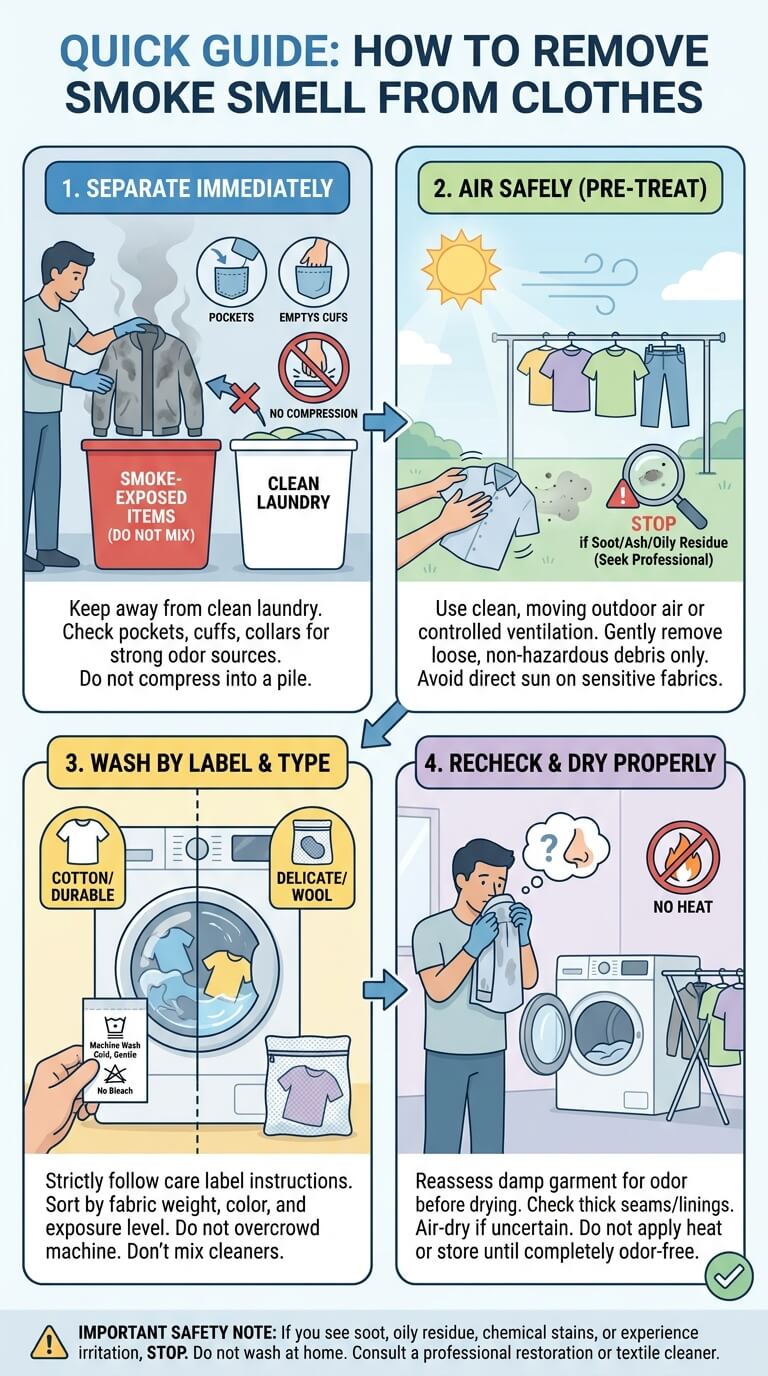
Use the least aggressive step that fits the garment. Separate smoky items, air them safely, inspect for residue, and clean them according to the label. Do not apply heat or store them until the odor has been checked again.
What to do immediately
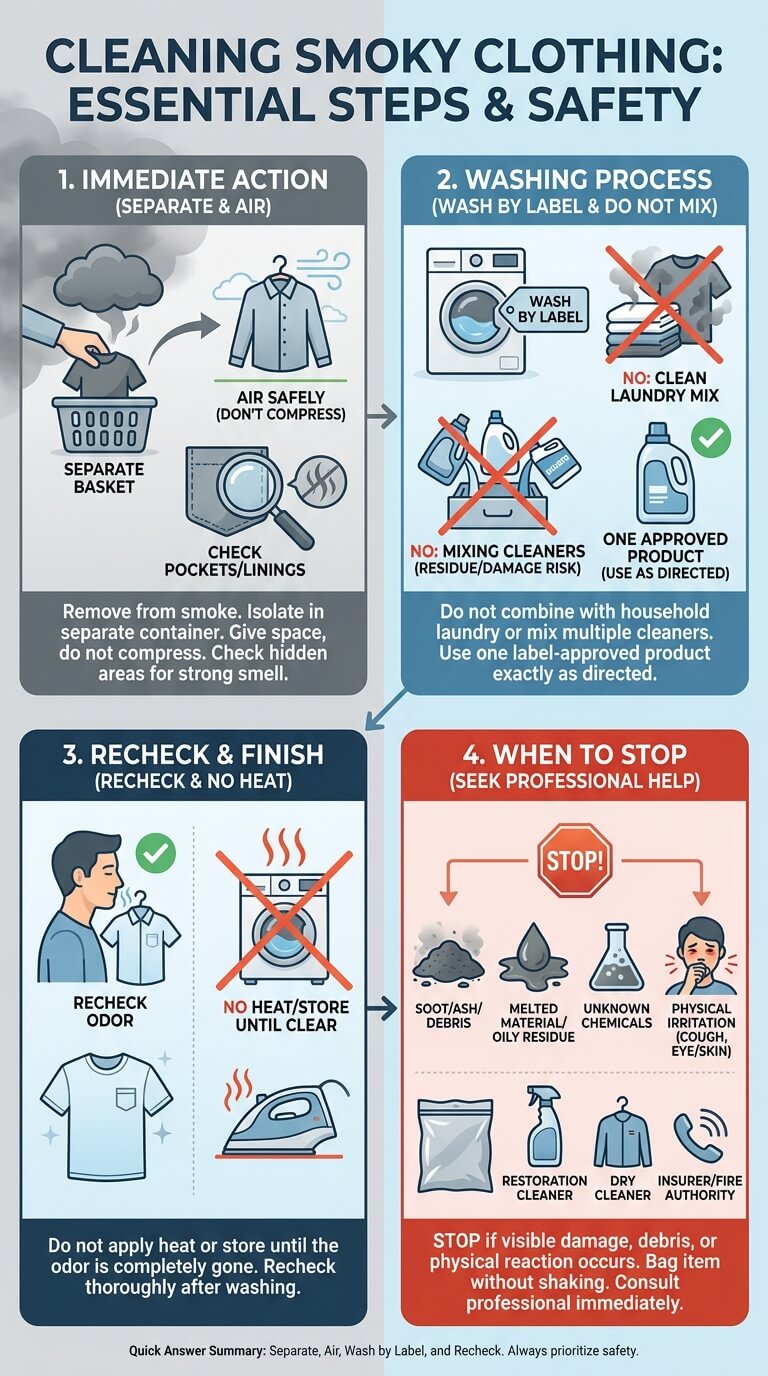
Remove the clothing from the smoky room and place it in a separate basket, washable bag, or clean container. If the garment has only an odor and no visible ash, give it space instead of compressing it into a pile. Check pockets, cuffs, collars, and linings because those areas often hold the strongest smell.
What not to mix into the load
Do not combine smoky clothing with clean household laundry, and do not pour several cleaners or boosters into the same machine. Choose one detergent or one label-approved laundry aid and use it exactly as directed. More products can create residue, fading, fiber damage, excess suds, or an unsafe chemical reaction.
When ordinary laundering may not be enough
Stop before washing if you see soot, ash, melted material, oily residue, fire debris, or unknown chemical deposits. The same limit applies when the garment causes coughing, eye irritation, or skin discomfort during handling. Bag the item without shaking it indoors and ask a restoration cleaner, dry cleaner, insurer, or local fire-recovery authority what to do next.
Identify the Smoke Source and Fabric Risk
Odor alone does not show how contaminated a garment is. Consider what burned, distance, exposure time, visible particles, and whether the item contains lining, insulation, coatings, leather, or trim.
Cooking smoke
Cooking smoke commonly leaves a greasy or food-like odor on aprons, shirts, and nearby coats. A garment worn during frying may also have small oil spots that need label-safe pretreatment. Remove food particles first, keep oily pieces away from delicate fabrics, and clean the kitchen source so freshly washed clothes do not absorb the odor again. When the garment odor comes from an ongoing kitchen source, clean the room and grease path with the guide to remove cooking smells from the house.
Campfire and fireplace smoke
Wood smoke can settle into fleece, denim, cotton, wool blends, and insulated jackets. Light exposure without ash is usually a laundry or professional-care problem. Check for sparks, resin, scorch marks, and smoky insulation before choosing a method. A small burn hole or melted synthetic area should be repaired or assessed before the item goes into a machine.
Cigarette smoke
Cigarette smoke may build up gradually in outerwear, uniforms, closet contents, and vintage clothing. Long exposure can leave a stronger film than one evening in a smoky place, so one wash may not be enough. Treat heavily affected garments as a separate group and remove the ongoing indoor smoke exposure, or the odor will return after cleaning. When clean garments pick up odor again because the room, HVAC path, walls, carpet, or contents remain affected, use the guide to remove smoke smell from the house.
Wildfire, soot, or fire-related contamination
Wildfire and structure-fire residue should not be handled like ordinary campfire odor. The EPA advises limiting exposure to ash and keeping ash-contaminated clothing contained so particles are not carried into clean areas. Review its wildfire smoke and ash precautions before moving or cleaning visibly affected garments.
Light odor versus visible residue
A light odor with no discoloration, dust, oily feel, or irritation is a reasonable candidate for careful airing and label-directed cleaning. Visible gray or black material changes the decision. Do not test soot by rubbing it, because pressure can drive residue deeper into fibers and spread it across a larger area.
Sort Clothes Before Treatment

Sorting limits damage and odor transfer. Group items by care method, color, fabric weight, and exposure level. Photograph faded or difficult labels before treatment.
Washable everyday clothing
Machine-washable cotton shirts, jeans, socks, and similar garments can usually be grouped when their colors and label instructions match. Do not crowd the drum. Smoke-exposed fabric needs room to move through the wash water, and thick items should not be packed around lighter pieces that need a gentler cycle.
Delicate or dry-clean-only garments
Silk, rayon, wool tailoring, embellished clothing, and items marked dry-clean-only should be separated immediately. Do not assume a hand wash is automatically gentler. The FTC explanation of clothing care instructions notes that warnings account for the complete garment, including linings, trim, buttons, and other components.
Coated, leather, suede, or structured items
Rainwear coatings, leather panels, suede, shoulder pads, bonded layers, and structured brims may react badly to soaking, detergent, agitation, or heat. Keep these items out of a general wash load. Check the manufacturer’s instructions or take them to a cleaner experienced with that specific material and smoke exposure.
Heavily exposed items kept separate
Clothing from a smoke-filled room, a fire cleanup area, or repeated indoor smoking should not be mixed with lightly exposed garments. Seal heavily affected pieces for transport if particles may transfer. Label the container so nobody unknowingly opens it in a bedroom, laundry room, or vehicle.
Step 1: Air Clothes Without Spreading Odor Indoors
Moving air can reduce light odor and help you judge whether washing is needed. Airing is preparation, not proof of cleanliness. Choose a location that does not expose people, pets, or clean textiles.
Outdoor conditions and ventilation
Hang clothing outdoors only when the air is clean, dry enough for the fabric, and free from active smoke, heavy pollen, rain, or high humidity. During a wildfire event, keep windows closed if local air guidance recommends it. An indoor room with controlled ventilation may be safer than bringing more smoke onto the clothing.
Hanging garments with space
Use sturdy hangers or a drying rack and leave gaps between pieces. Turn pockets out when the construction allows, open zippers, and loosen removable hoods so trapped areas receive airflow. Avoid laying smoky garments on upholstered furniture, bedding, carpet, or clean towels while they air.
Avoiding direct sun or weather damage
Sun and wind can fade dyes, dry leather, distort knitwear, and strain wet or heavy garments. Place color-sensitive clothes in bright shade and support sweaters flat when their labels require it. Bring everything inside before dew or rain creates a second odor problem.
Why fragrance is not a substitute for cleaning
A fabric spray, scented bead, or dryer sheet can make it difficult to tell whether smoke residue remains. Strong fragrance may also bother someone already sensitive to smoke. Reassess the garment without adding perfume first, then use only a fabric-compatible product when there is a clear reason.
Step 2: Remove Loose Particles and Surface Residue
This step is only for light, non-hazardous debris. If clothing came from a fire scene or has visible ash or soot, stop and follow fire-recovery guidance instead of brushing or vacuuming it.
Shake or brush when appropriate
For a campfire jacket with a few dry wood flecks and no soot, take it outside and gently remove the loose pieces. Use a soft garment brush only when the fabric tolerates brushing. Work away from your face and stop if dark residue smears, dust rises, or the surface changes color.
Vacuuming structured textiles carefully
A low-suction upholstery tool may be suitable for a clean, structured textile with ordinary dust, provided the manufacturer permits it and there is no ash or soot. Cover the nozzle with a clean screen when loose trim could be pulled in. Never use an ordinary household vacuum on wildfire ash.
Empty pockets and inspect seams
Remove tissues, receipts, food wrappers, and other odor-holding contents. Examine pocket corners, waistbands, cuffs, lapels, and hood channels under good light. A good test is to compare the smell at an exposed sleeve with the smell inside a thick seam or lining.
Stop conditions for soot or oily residue
Stop if a white cloth picks up black, brown, or oily material during a very light touch test on an inconspicuous area. Do not scrub, steam, or add water. Soot chemistry varies with what burned, and an incorrect treatment can spread the stain, set residue, or expose you to irritating material.
Step 3: Pre-Treat Washable Clothes Safely
Pretreatment can help collars, cuffs, underarms, or greasy cooking spots. Follow the label and use a laundry product suitable for the garment’s color and fiber.
Read the care label
Confirm whether the item can be machine washed or hand washed, which temperature range is permitted, what drying method is allowed, and whether bleach or other treatments are prohibited. Read detachable liners separately. When the label is missing, choose professional advice rather than guessing with a valuable or delicate garment.
Choose a compatible detergent or label-approved booster
Use a detergent formulated for your washer type and measure it for the load size, soil level, and water conditions. The American Cleaning Institute laundry basics emphasizes following both garment labels and detergent directions because extra detergent is not automatically better.
Spot-test colorfastness
Apply the chosen pretreatment to a hidden seam or inside hem and wait for the time stated on the product label. Blot with a clean white cloth. Stop if color transfers, the finish becomes dull, the fabric stiffens, or the trim changes. Rinse the test area as directed before deciding whether to continue.
Avoid combining laundry chemicals
Do not combine bleach, ammonia, vinegar, acids, solvents, or unknown odor products. Do not assume that two products are compatible because each is sold for laundry. Use one treatment system at a time, follow ventilation directions, and rinse as instructed before switching to a different product in a later attempt.
Step 4: Wash Smoke-Exposed Clothing

After inspection and pretreatment, wash a separate, compatible load. Aim for effective detergent contact and rinsing, not the strongest cycle. Note the method when treating several garment groups.
Load size and water movement
Fill the machine loosely enough for garments to circulate. A tightly packed drum can leave detergent and loosened residue trapped in folds. Wash bulky jackets separately from thin shirts when their movement is restricted. Close fasteners that can snag, but open pockets and removable vents as the garment instructions allow.
Cycle and temperature based on the label
Choose the wash cycle and temperature from the most restrictive item in the load. Hotter water is not a universal smoke remedy and can shrink fibers, set some stains, damage coatings, or cause dye transfer. A longer or heavier cycle is also inappropriate when the fabric calls for gentle handling.
Extra rinse when appropriate
An extra rinse can help when the garment feels slippery, carries a strong detergent scent, or was washed in a concentrated load. Use the machine option rather than manually adding unrelated products. If your washer does not offer an extra rinse, consult its manual for the approved way to run one.
When a second wash is more useful than more product
After a normal wash, smell the damp clothing in a clean area. If the smoke odor is reduced but still present and there is no damage, a second label-directed wash with the correctly measured detergent may work better than increasing the dose. Stop repeated washing if color, shape, coating, or texture begins to change.
Step 5: Dry and Recheck Before Storage
Drying is part of the diagnosis because heat, fragrance, and dampness alter what you smell. Follow the label, dry completely, and reassess away from the laundry room and smoke area.
Air-drying versus machine drying
Air-dry when the care label requires it or when you want to reassess a lightly smoky garment before applying dryer heat. Machine-dry only at an allowed setting and only after confirming there is no oily or unknown residue. Manufacturer advice for smoke odor in clothing also recommends checking the smell before drying.
Checking collars, cuffs, linings, and thick seams
Do not judge the whole garment by the center of a thin panel. Smell thick cuffs, padded shoulders, collars, waistbands, pocket bags, and lining folds. Press insulated sections gently between clean hands and release them. Odor that returns from padding may need another wash or professional treatment.
Rechecking after product scent fades
Allow the clean garment to rest in fresh indoor air after it is fully dry. Detergent perfume can dominate the first check, especially near the machine. Reassess later with clean hands and an unscented room. Ask another person to check when your nose has become accustomed to the smell.
Keeping smoky items out of clean closets
Do not hang an uncertain jacket among clean coats. Use a separate rack or breathable temporary location until the odor test is complete. Clean the hamper, garment bag, or shelf that held the smoky clothes, and confirm the closet itself is not absorbing smoke from another room.
Handle Non-Washable and Delicate Garments

Safe care for non-washable clothing depends on its full construction. Avoid soaking, steaming, or spraying unless the maker permits it. Tell the cleaner what type of smoke caused the odor.
Dry-clean-only clothing
Bag dry-clean-only garments separately and contact a cleaner before dropping them off. Explain whether the exposure came from cigarettes, cooking, a campfire, wildfire ash, or a building fire. The cleaner may need to inspect for residue and choose a modified process rather than treating the item as routine seasonal cleaning.
Leather and suede limits
Water, detergent, alcohol, acids, and heat can alter leather color, oils, softness, and shape. Suede can mat or spot easily. Air the item in a protected location if the maker allows, then use a leather specialist for persistent odor. Stop immediately if the surface feels tacky, powdery, or discolored.
Coats, suits, and structured garments
Coats and suits may contain interfacing, shoulder pads, adhesives, canvas, foam, or a lining that responds differently from the outer fabric. A washable shell does not guarantee the whole garment can be soaked. Check every label, including removable liners, and avoid crushing the item in a sealed bag unless containment is needed for residue.
When professional textile cleaning is the safer choice
Choose professional care for valuable garments, heirlooms, uniforms with special finishes, wedding clothing, complex costumes, and anything affected by soot or fire debris. Bring photographs of the exposure when useful. Ask whether the cleaner handles smoke restoration and whether treatment could change color, texture, waterproofing, or decorative components.
Troubleshoot Smoke Smell That Returns
When odor returns after washing, check the surroundings before repeating the cycle. Note when it returns and which part of the garment smells first.
Washer or dryer already carries odor
Smell the empty washer drum, gasket, dispenser, dryer drum, and lint area. If they smell smoky, clean them only by the appliance manual and remove contaminated lint safely. Do not improvise with solvents or mixed cleaners. Run a test load of washable rags before putting delicate clothing back into the machines.
Closet or hamper recontamination
A clean shirt can absorb odor from a smoky hamper, coat closet, suitcase, or garment bag. Empty and inspect the storage area, wash removable containers where appropriate, and let the space air under safe conditions. Keep clean and untreated clothing in separate zones until the room no longer smells smoky. When the odor is earthy or damp rather than smoky, switch to the separate workflow to remove musty smell from clothes.
Odor in lining, insulation, or padding
Thick materials release odor slowly. A puffer jacket may smell acceptable while cool, then release smoke as it warms during wear. Check care instructions for repeated washing and complete drying. If the fill clumps, the lining stains, or the smell remains concentrated inside, use a qualified cleaner.
House source still active
Clothes will not stay fresh if smoking, fireplace leakage, cooking smoke, or outdoor smoke continues to enter the storage area. Move clean clothing to a protected room while the household issue is addressed. Garment cleaning should not substitute for fixing a persistent indoor smoke condition.
Smoke-Odor Laundry Mistakes to Avoid
Damage often follows when every smoky garment receives the same treatment or a stronger dose. Check these limits before another cycle.
Washing all fabrics together
Mixed loads can transfer dye, residue, and odor while forcing delicate items through a cycle meant for durable cotton. Sort by label, color, construction, and exposure. A smoky wool sweater, an oily apron, and a washable cotton shirt do not belong in one treatment group.
Adding excessive detergent or fragrance
Too much detergent can leave fabric stiff or heavily scented and may make rinsing more difficult. Fragrance hides the result rather than proving that smoke deposits are gone. Measure accurately, allow enough water movement, and judge the clothing again after the perfume has faded.
Applying heat before assessing residue
Do not put a garment with unknown oily residue, solvent, melted material, or chemical smoke into a dryer. Heat can damage fabric and may create a fire or fume hazard. Even with ordinary odor, use only the drying method and temperature allowed by the label.
Mixing vinegar, bleach, ammonia, or unknown products
Never combine these materials or layer them without complete rinsing and explicit product directions. Dangerous fumes can result from some combinations, while others damage dyes, elastic, coatings, and machine parts. A single compatible laundry product used correctly is safer than an improvised mixture.
Storing before the odor is reassessed
A slightly damp or still-smoky garment can affect a drawer or closet full of clean clothing. Dry every thick area, wait for added scent to fade, and perform a final check. Store only after the item passes the check in a room that does not already carry smoke.
When to Stop DIY Treatment
Household laundering suits only ordinary exposure and fabric-care limits. Stop when contamination is uncertain, the garment changes, or handling causes symptoms.
Soot, fire debris, or chemical smoke
Do not launder clothing covered with structure-fire soot, melted material, firefighting residue, or unknown chemical smoke without expert direction. Keep it contained and describe the incident accurately to the cleaner or restoration professional. Local disposal guidance may be necessary when an item cannot be safely recovered.
Valuable garments
Do not experiment on a wedding dress, vintage textile, tailored suit, collectible jacket, or sentimental item. Photograph the condition, keep original labels and receipts, and consult a textile conservator or specialist cleaner. Early restraint is often safer than trying several home treatments that complicate restoration.
Persistent irritation or strong residue
Stop handling the clothes if they trigger coughing, wheezing, burning eyes, headache, nausea, or skin irritation. Move away from the area and seek appropriate medical or poison advice when symptoms are significant. Do not ask a sensitive household member to perform the smell test.
Fabric damage after a test
Rinsing, pretreatment, or a hidden-area test should not cause dye transfer, puckering, peeling, stiffness, cracking, or loss of finish. If it does, stop and document the change. Further washing may make the damage permanent or affect other components of the garment.
Frequently Asked Questions
Care labels, smoke type, and visible residue determine the safest answer in each situation.
Can smoke smell come out of clothes?
Often, yes. Light cigarette, cooking, campfire, or fireplace odor can improve with separation, airflow, correct washing, complete drying, and a second assessment. Recovery is less predictable after long exposure, soot, wildfire ash, structure fires, oily deposits, or contamination inside padding and lining.
Why do clothes still smell smoky after washing?
The load may have been crowded, detergent may not have rinsed well, odor may remain in thick seams or lining, or the washer, dryer, hamper, and closet may be recontaminating the clothes. Check the damp garment before drying and compare thin areas with cuffs, collars, and padded sections.
Can I wash cigarette-smoke clothes with regular laundry?
Keep smoky clothing separate until it no longer transfers odor. Wash only items with compatible care instructions, colors, and exposure levels. Mixing them with clean clothes can spread odor and makes it harder to judge whether the treatment worked.
How do I remove campfire smell from a jacket?
Check for sparks, resin, scorch marks, ash, and material damage. Air a lightly smoky jacket under safe conditions, remove only loose non-hazardous debris, and clean it by the full care label. Insulated, waterproof, leather-trimmed, or structured jackets may need manufacturer instructions or professional care.
Can dry-clean-only clothes be deodorized at home?
Airing may reduce light odor when the garment maker allows it, but home washing, soaking, spraying, or steaming can damage dry-clean-only clothing. Contact a cleaner and explain the smoke type. Visible soot, fire debris, or chemical residue requires a cleaner experienced in smoke restoration.
Should I use heat to dry smoke-smelling clothes?
Use heat only when the care label permits it and the garment has no soot, oil, solvent, melted material, or unknown residue. Air-drying can make reassessment easier. If the odor remains after drying, do not raise the temperature beyond the label in an attempt to force it out.
When should smoke-exposed clothing be professionally cleaned?
Choose professional cleaning for dry-clean-only, leather, suede, tailored, valuable, heavily padded, or visibly contaminated items. It is also appropriate when odor persists after safe washing, the garment causes irritation, or the exposure involved wildfire ash, building-fire soot, or unknown burned materials.
Final Thoughts
Match the response to both the exposure and the garment. Separate smoky items, inspect before washing, follow the full care label, use one compatible laundry system, and allow enough room for thorough washing and drying. For the broader source-first sequence across rooms and materials, use the odor removal guide.
Recheck collars, linings, padding, storage containers, and appliances. Light odor may need a second careful wash, but soot, chemical smoke, fire debris, irritation, or damage is a reason to stop and seek professional advice.

Ethan Carter is the Founder & Editor of HomeCleanSecrets. Based in the United States, he has 5 years of experience creating practical home cleaning, laundry care, stain removal, decluttering, and home organization content. His goal is to help everyday households clean smarter and build simple routines that are easier to maintain.
Read more about Ethan Carter on his author page: https://homecleansecrets.com/ethan-carter/