
A living room can look presentable while crumbs, pet hair, dust, and sticky residue remain inside cushion wells, behind the sofa, beneath a media console, and along rug edges. A thorough reset reaches those hidden areas without soaking upholstery, scratching finishes, or spraying electronics. The most reliable order is high to low, dry soil before moisture, seating before floors, and complete drying before the room goes back into use.

This guide is for a seasonal clean, a heavily used family room, or a neglected lounge that still feels dusty after ordinary tidying. It covers safe preparation, detailed seating care, decor, electronics, movable furniture, rugs, hard flooring, moisture warning signs, and the point at which a professional is the safer choice.
Quick Answer: When a Living Room Needs Deep Cleaning
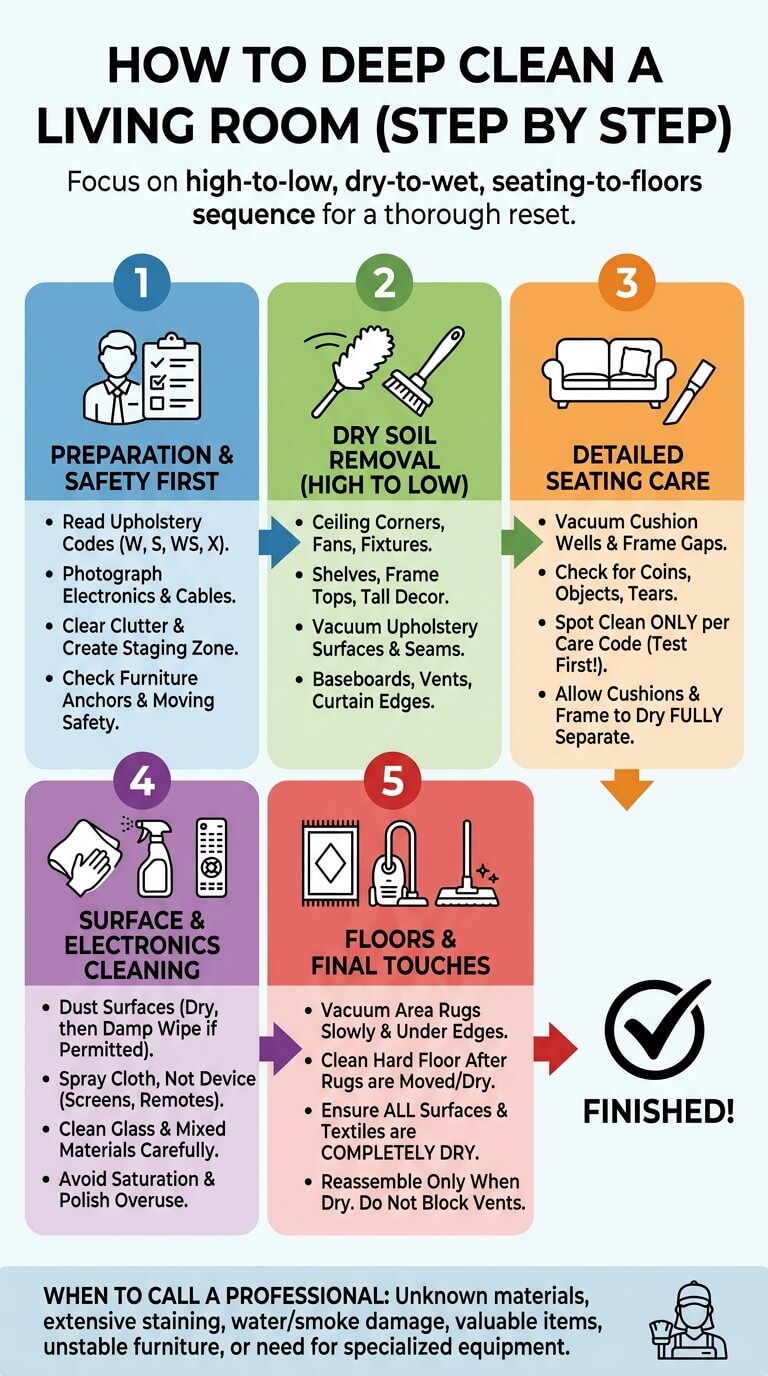
A deep clean goes beyond visible surfaces. It includes upper ledges, fixture dust, shelf contents, cushion seams, accessible furniture frames, baseboards, vent faces, window coverings, rug edges, and the floor beneath furniture that can be moved safely. It is a controlled catch-up process, not a weekly routine repeated with more product. For the broader cleaning order and the relationship between routine, deep, furniture, floor, and textile tasks, use the bedroom and living room cleaning guide.
Routine cleaning versus deep cleaning
Routine cleaning handles dishes, obvious clutter, reachable dust, high-touch points, and the open floor. A deeper reset is appropriate when the room needs furniture access, cushion removal, detailed decor cleaning, edge vacuuming, or closer inspection of stains and dampness. It is how many hidden zones you reach and how carefully you match the method to each material. For weekly reachable surfaces, seating, and open floors, return to the routine guide on how to clean a living room step by step.
Signs hidden soil is building up
Look for crumbs that reappear after vacuuming, pet hair along the sofa base, gray dust on lamp shades, sticky remote buttons, dark carpet lines at the wall, or a stale odor that improves only briefly after airing. Dust behind a television, debris beneath cushions, marks around drawer pulls, and lint around floor vents also show that the room needs more than a quick pass.
Set a finish line before starting
Decide what “finished†means for this session. A realistic goal is a clean seating zone, detailed reachable surfaces, cleared hidden floor areas, and fully dry textiles. Do not combine the job with emptying every cabinet, sorting all family photos, reorganizing books, and repairing furniture.
Prepare the Room Safely
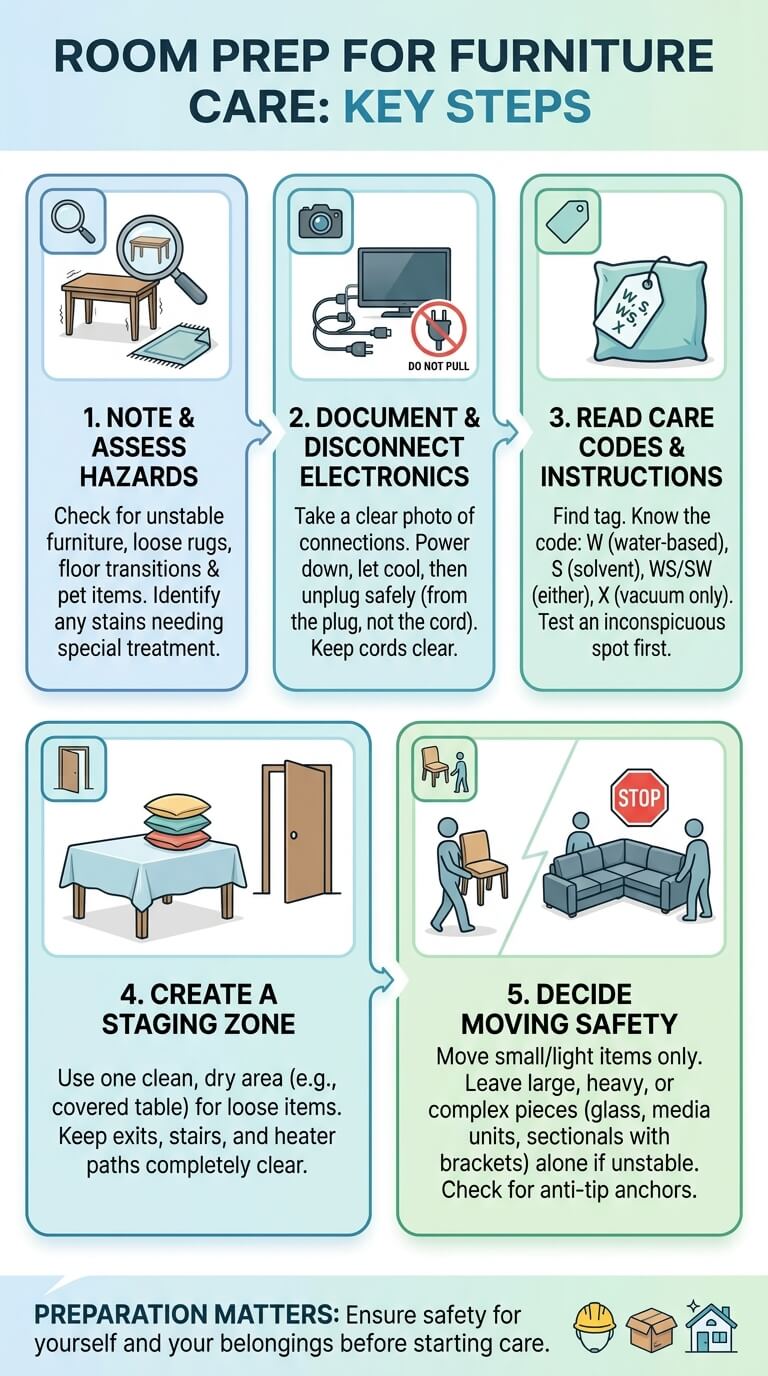
Preparation matters because living rooms often combine heavy furniture, fragile decor, powered seating, televisions, lamps, cables, and several different finishes. Note unstable pieces, wall anchors, floor transitions, loose rug corners, pet items, and any stain that may need special treatment.
Photograph or note electronics and cable placement
Take a clear photo of the television, soundbar, game console, router, speakers, and cable connections before unplugging anything. Power devices down according to their instructions, let warm electronics cool, and unplug only when the plug is easy to reach. Never pull a device forward by its cable or place disconnected cords where someone can trip over them.
Read upholstery codes and furniture-care instructions
Find the care tag beneath cushions, under the frame, or in the paperwork. A W code generally permits a water-based upholstery product, S calls for a water-free solvent method, WS or SW permits a suitable water-based or solvent option, and X usually limits care to vacuuming or light brushing. Follow the furniture maker’s exact instructions, test an inconspicuous spot, and stop if color transfers or the texture changes.
Create a staging zone without blocking exits
Choose one clean, dry place for removable cushions, throws, books, and decor. A dining table covered with a clean sheet may work better than piling items in the doorway. Keep stairs, exits, heater clearances, and the route to the laundry area open.
Decide which furniture can be moved safely
Small side tables and lightweight chairs may be moved after drawers and loose parts are removed. Large sectionals, reclining sofas, media cabinets, glass units, and loaded bookcases may require two people or professional equipment. Check for anti-tip straps, floor anchors, electrical connections, interlocking sectional brackets, and hidden casters. If a piece tilts, twists, or resists unexpectedly, return it to a stable position and clean only the accessible edges.
The Best Deep-Cleaning Order

Working in the right order prevents fresh dust from landing on finished floors and keeps damp items away from debris. Complete each stage across the whole room before moving down to the next level.
Remove trash, dishes, and items that belong elsewhere
Collect cups, food wrappers, tissues, mail, toys, and objects that clearly belong in another room. Use one basket for misplaced items instead of leaving the living room repeatedly. Do not begin sorting a full cabinet or memory box. The purpose is to expose the surfaces and floor needed for cleaning while keeping the task contained.
Capture ceiling, fixture, shelf, frame, and upper-wall dust
Begin at ceiling corners, fan blades, accessible light fixtures, curtain rods, tall shelving, picture-frame tops, and the upper edges of doors. Use an extendable duster or a vacuum with a soft brush rather than standing on the sofa. Leave electrical fixture disassembly and high ladder work for someone with suitable equipment.
Detail decor and display surfaces without soaking finishes
Remove a small group of objects at a time and photograph the arrangement when placement matters. Vacuum or dry-dust textured pieces first, then wipe only surfaces that tolerate moisture. The American Cleaning Institute’s hard-surface guidance recommends checking the label for the correct surface, amount, and method. Spray the cloth rather than the object when overspray could reach books, frames, speakers, or unfinished edges.
Clean electronics and high-touch controls with device-safe methods
Turn devices off and unplug them when the manufacturer directs. Use a soft, clean, lint-free cloth on screens and casings, keeping liquid away from vents, ports, speaker mesh, and seams. Samsung’s current television-screen care instructions begin with a dry microfiber cloth and warn against unapproved fluids. Clean remote-control exteriors with a lightly dampened cloth only when the device instructions allow it, and never flood button gaps.
Vacuum seating, seams, cushion wells, and accessible frames
Check the seat for coins, sharp objects, crumbs, and damp areas before inserting a tool into the seams. Use the upholstery attachment over the main fabric and a crevice tool along piping, under arms, and inside cushion wells. Reduce suction on delicate fabric. Vacuum both sides of removable cushions when allowed, but do not unzip or wash covers merely because they have zippers. Many covers are fitted and are not intended for home laundering.
Clean tables, consoles, and lower shelves by material
For sealed wood or laminate, use a barely damp cloth and dry promptly, especially at seams and chipped edges. Clean glass with a method that keeps runoff away from wood, metal joints, and stone bases. On painted furniture, test first because strong cleaners can dull the sheen. Do not apply oil, polish, or conditioner unless the maker recommends it for that exact finish.
Reach behind and under movable furniture
Move one piece at a time after checking cords, anchors, and floor protection. Vacuum the exposed wall edge, baseboard, outlet face, furniture back, and floor. Use a long flat tool for low-clearance areas when moving the sofa is unsafe. If you find moisture marks, pest evidence, damaged wiring, or a hot outlet, stop and deal with the underlying problem before returning the furniture.
Finish rugs and floors after dry soil is removed
Vacuum area rugs slowly in overlapping passes, including edges and the accessible underside only when the rug can be handled safely. Clean the exposed floor beneath it before replacement. Keep mop water away from rug backing, electrical cords, unfinished furniture feet, laminate joints, and wood gaps. Return the rug only when both surfaces are dry.
Seating and Soft Furnishings

Add moisture only when the care information clearly permits it and you can provide enough airflow for complete drying. When the tag is missing, a careful vacuum-only pass is usually the safer starting point. For a complete chair-specific workflow, use the guide to clean upholstered chairs without soaking padding or damaging the fabric.
Read upholstery care codes before adding moisture
The furniture-care code guide from Ashley shows why W, S, WS, and X require different approaches and repeatedly cautions against saturation. If the tag is missing, contact the maker with the model number or limit the work to gentle vacuuming until the material is identified.
Remove crumbs and dry debris from seams
Work slowly around piping, tufting, buttons, zippers, recliner mechanisms, and the gap between the seat and back. Hold the crevice tool just above fragile fabric instead of dragging it across loose threads. A soft brush can lift dry particles from textured cloth, but avoid stiff bristles on velvet, chenille, leather, or fabric that snags.
Spot-test before treating marks
Test the permitted product on a hidden area and allow it to dry fully before judging the result. Check for dye transfer, rings, stiffness, pile distortion, darkening, or a change in sheen. Blot spills from the outside toward the center with a clean white cloth rather than scrubbing. Stop if the mark spreads, the cloth picks up color, or the filling feels wet beneath the surface.
Refresh removable pillows and throws by care label
Shake dry debris outdoors where appropriate, vacuum permitted fabrics, and wash only when the care label allows it. Decorative pillow covers can shrink or distort, and some inserts require professional care. Keep washed items out of the room until seams, corners, and filling are dry, not merely cool to the touch. When a throw needs full washing rather than surface refreshing, follow the guide on how to clean throw blankets.
Dry every layer before replacing cushions
Stand removable cushions on an edge in a well-ventilated area, leaving space between them. Press a dry white towel against the treated area to check for remaining moisture or color transfer. Reassembling a sofa while the cushion well, cover, or padding is damp can trap odor and create new staining.
Hidden Zones That Routine Cleaning Misses

A flashlight helps reveal hair, dust trails, spills, and objects that could damage the vacuum. Inspect the gap before inserting a tool so coins, glass, or loose hardware can be removed by hand.
Behind sofas and media consoles
Expect dust mats, dropped food, pet toys, and tangled cords. Disconnect electronics only after documenting the setup. Vacuum the wall edge and the rear vent openings of equipment only as the manual permits. Leave enough clearance when replacing furniture so cables are not pinched and ventilation openings remain unobstructed.
Under cushions and furniture edges
Remove cushions in order so they return to the same positions. Check the seat deck for tears, exposed staples, coins, and wet residue before vacuuming. Use a crevice tool along the frame, but keep fingers and tools away from powered recliner mechanisms.
Baseboards, floor vents, and corners
Vacuum baseboard tops and corners before wiping washable trim. Remove vent covers only when they are designed for homeowner removal and the heating or cooling system is off as directed. Do not push debris into the duct. If you see rust, water staining, damaged insulation, heavy contamination, or an object inside the system, stop and arrange an appropriate inspection.
Lampshades, lamp bases, and framed decor
Unplug lamps and let bulbs cool. Use a clean soft brush, lint roller approved for the fabric, or low-suction vacuum method according to the shade material. Paper, pleated silk, glued trim, and painted shades can be damaged by water. Support framed art from the bottom while cleaning the top edge. The material-specific guide to clean lampshades covers paper, fabric, plastic, glass, metal, glue, and trim limits.
Curtain edges, blinds, and window sills
Vacuum curtain hems and leading edges with reduced suction when the fabric permits. Dust blinds from top to bottom while supporting slats so they do not bend. Vacuum loose soil from the sill and track before using a damp cloth. Avoid flooding painted wood, metal hardware, and wall joints. Condensation, peeling paint, or repeated dampness needs investigation rather than stronger cleaner.
Material and Surface Decision Guide

Identify the material first, then choose the least aggressive method that can remove the soil. Use separate cloths for screens, wood, glass, and upholstery so residue is not transferred between surfaces.
Upholstery and care-code limits
Use the code and maker’s directions as the boundary. X-coded fabric should not receive a liquid spot treatment. S-coded fabric needs a suitable water-free solvent process, which may be better left to a trained cleaner. W and WS do not mean “soak.†They permit specific products used sparingly. Leather, suede, microfiber, velvet, and performance fabrics may have additional requirements that override a general code chart.
Sealed wood, painted furniture, and laminate
Begin with a dry microfiber cloth or soft vacuum brush. Follow with a slightly damp cloth only if the finish permits, then dry immediately. Keep liquid out of joints, veneer damage, chipped paint, drawer slides, and particleboard edges. Repeated scrubbing can make the finish worse, so stop when the cloth begins lifting color or sheen.
Glass, metal, stone, and mixed-material tables
Protect adjacent materials before cleaning glass. Apply product to the cloth so it cannot run into wood trim or a metal frame. Dry chrome and steel to reduce spotting. Natural stone may react to acidic products, while coated metal can scratch under abrasive pads.
Screens, speakers, remotes, and cable areas
Power down, unplug when instructed, and work with a dry or barely damp lint-free cloth. Do not spray a screen, speaker grille, remote, power strip, router, game console, or cable connection directly. Keep vacuum tools from striking ports and fan openings. Replace damaged batteries or cords safely instead of cleaning around corrosion, swelling, exposed wire, or heat damage.
Area rugs, carpet, and hard floors
Check the rug label, fiber, backing, and floor beneath it before wet treatment. Vacuum dry soil first and test spot products. Avoid saturating rug backing because dyes, adhesives, and the floor below may be affected. Carpet edges need slow crevice vacuuming, not flooding. For hardwood, laminate, vinyl, or tile, follow the flooring maker’s moisture and product limits and dry any pooled liquid immediately.
Real-World Living Room Scenarios
Keep the response specific to the soil, the material, and the safety risk rather than adding more product or force. Preserve a clear walking path while adjusting the sequence for pets, children, fireplaces, or oversized furniture.
Pet hair concentrated on one seating zone
Remove washable pet blankets first, then vacuum the upholstery, cushion seams, sofa base, and nearby floor. A rubber hair tool may help on durable fabric if the maker allows it, but test for pulling or pilling. Repeated urine odor, parasites, or damaged fabric needs a separate treatment plan.
Children, snacks, and sticky residue
Search cushion wells for food before it is crushed deeper. Remove dry crumbs, identify the upholstery code, and treat only the sticky area with the permitted method. Keep children away until products are stored and every treated surface is dry. Check that tall furniture and televisions remain secured after any movement.
Fireplace ash or soot near the room
Do not use an ordinary household vacuum on warm ash or fine fireplace residue unless the appliance is specifically designed for it. Confirm that ash is completely cold, avoid stirring it into the room, and follow the fireplace maker’s instructions. Soot on walls, ceilings, upholstery, or HVAC openings can smear and spread.
Heavy sectional furniture
Look for connecting brackets, powered sections, hidden feet, and wall clearances before attempting movement. Clean accessible cushion wells and use long-reach tools beneath the front edge. If full access is necessary, disconnect power according to the manual and use enough people or rated moving equipment.
Musty odor or recurring dampness
Pause fragrance products and look for condensation, wall staining, wet rug backing, damp upholstery, plumbing leaks, and moisture behind furniture on exterior walls. The EPA guide to mold and moisture emphasizes correcting the moisture cause and drying wet materials promptly. A recurring odor, visible growth, or water-damaged porous material should not be treated as a normal cleaning problem.
Mistakes to Avoid
These errors can turn an ordinary deep clean into damaged upholstery, a scratched floor, or an electrical hazard. Pause whenever the next step requires more moisture, force, or disassembly than the care instructions allow.
Starting with the floor
Cleaning the floor first guarantees rework because dust from shelves, lamp shades, cushions, and furniture backs will fall onto it. Remove high dust and dry debris before vacuuming rugs and mopping hard surfaces.
Spraying electronics or unfinished materials directly
Put the approved product on a cloth, use very little, and keep another dry cloth ready. If liquid reaches an electrical component, disconnect power only when safe and follow the device maker’s instructions before reuse.
Over-wetting upholstery or rug backing
Liquid can move soil into padding, create rings, affect adhesive, or remain trapped below a surface that feels dry. Use small amounts, blot rather than scrub, and improve airflow. Stop adding moisture when the stain spreads, the backing becomes wet, or drying is taking longer than expected.
Moving heavy furniture without a plan
Do not rock a tall cabinet, drag a sectional over hard flooring, or slide a television stand while equipment remains connected. The CPSC Anchor It information explains the serious risk of furniture and television tip-overs. Check anchors, remove loose contents, protect the floor, use help, and keep children and pets out of the movement path.
Returning damp textiles too soon
Let items dry separately with airflow on all sides. Do not stack cushions, close damp throws in a basket, or place a rug over a wet floor, even when the room needs to be used that evening.
When to Stop or Call a Professional
A professional is appropriate when the material is unknown or valuable, contamination is extensive, the room has water or smoke damage, or safe access requires equipment you do not have.
Upholstery with unknown codes or color transfer
Limit the work to careful vacuuming when the care tag is missing and the maker cannot identify the fabric. Stop immediately if a white test cloth picks up dye, the pile changes direction permanently, a ring forms, or the fabric becomes stiff.
Large stains, smoke residue, or persistent odor
A large spill can reach cushion filling and the frame even when the surface mark looks small. Smoke residue may cover walls, textiles, electronics, and ventilation pathways. Professional equipment and material-specific treatment may be needed instead of another surface application.
Water damage or recurring moisture
Stop routine cleaning when carpet, rug padding, drywall, baseboards, upholstery, or wood remains damp. Identify and correct the leak or condensation problem first. Water from sewage, flooding, or an unknown contaminated origin requires additional precautions.
Valuable rugs, antiques, or powered furniture
Hand-knotted rugs, unstable dyes, gilded frames, antique finishes, delicate lamps, and collectible furniture can lose value through ordinary household methods. Powered recliners and adjustable seating add wiring, motors, and pinch points. Contact the maker, a qualified textile cleaner, a conservator, or an experienced service technician before disassembly or wet treatment.
Frequently Asked Questions
These answers clarify the scope, order, and safety limits of a thorough living-room reset. Use them to decide what belongs in the current session and what needs separate material-specific care.
How is a living room deep clean different from weekly cleaning?
Weekly cleaning focuses on visible clutter, reachable dust, high-touch areas, and the open floor. A deep clean reaches cushion seams, furniture backs, baseboards, fixture dust, decor details, rug edges, and safe areas beneath movable furniture.
Should I move the sofa every time?
No. Move it when the furniture can be handled safely and the hidden floor needs access, but do not take a lifting or tip-over risk for the sake of a checklist. Use crevice tools and flat dusting tools for routine edge access. Plan a two-person move for heavy pieces, powered seating, or sofas connected to wall anchors and cables.
Can I deep clean upholstery myself?
You can vacuum and treat small spots when the care code and maker’s instructions clearly permit the method. Test first, use little moisture, and allow full drying. Do not improvise when the tag is missing, the fabric transfers color, the stain is large, the filling is wet, or the item is valuable. Those conditions justify professional advice.
What should I clean first in a very dusty living room?
Remove dishes and loose clutter, then capture high dust from ceiling corners, fixture surfaces, frame tops, rods, and tall shelving. Continue downward through decor, electronics, tables, seating, furniture backs, baseboards, rugs, and floors.
How do I clean behind a heavy sectional?
Document cable and power connections, identify sectional brackets, and check the manual. Clean the accessible front and side edges with long-reach tools first. For full movement, disconnect power as directed, remove loose cushions, protect the floor, and use enough people or rated moving equipment. Stop if the sections twist, tip, or remain attached.
How often should a high-use living room be deep cleaned?
Inspect the hidden zones every few months and schedule a deeper reset when hair, crumbs, dust, sticky residue, or stale textiles build up. Homes with children, pets, frequent guests, open windows, or food in the room may need it more often. Use visible conditions and care needs rather than a rigid calendar, and address spills or moisture immediately instead of waiting for the next full clean.
Final Thoughts
A successful living-room deep clean depends on a controlled order and respect for material limits. Remove high dust and dry debris first, document electronics, read upholstery codes, move only furniture that can be handled safely, and save rugs and floors for last. Let every textile and floor layer dry completely. Stop when you find unstable furniture, damaged electrical parts, spreading stains, smoke residue, or recurring moisture that ordinary household cleaning cannot safely resolve.

Ethan Carter is the Founder & Editor of HomeCleanSecrets. Based in the United States, he has 5 years of experience creating practical home cleaning, laundry care, stain removal, decluttering, and home organization content. His goal is to help everyday households clean smarter and build simple routines that are easier to maintain.
Read more about Ethan Carter on his author page: https://homecleansecrets.com/ethan-carter/