
A musty basement smell is usually a moisture clue, not an air-freshening problem. It may come from damp cardboard, old carpet, condensation, a drain area, or materials that stayed wet after a leak. Find where the smell is strongest, remove odor-holding items, clean compatible surfaces, dry the room, and test it again after closing it.

Quick Answer: Treat Musty Odor as a Moisture Clue
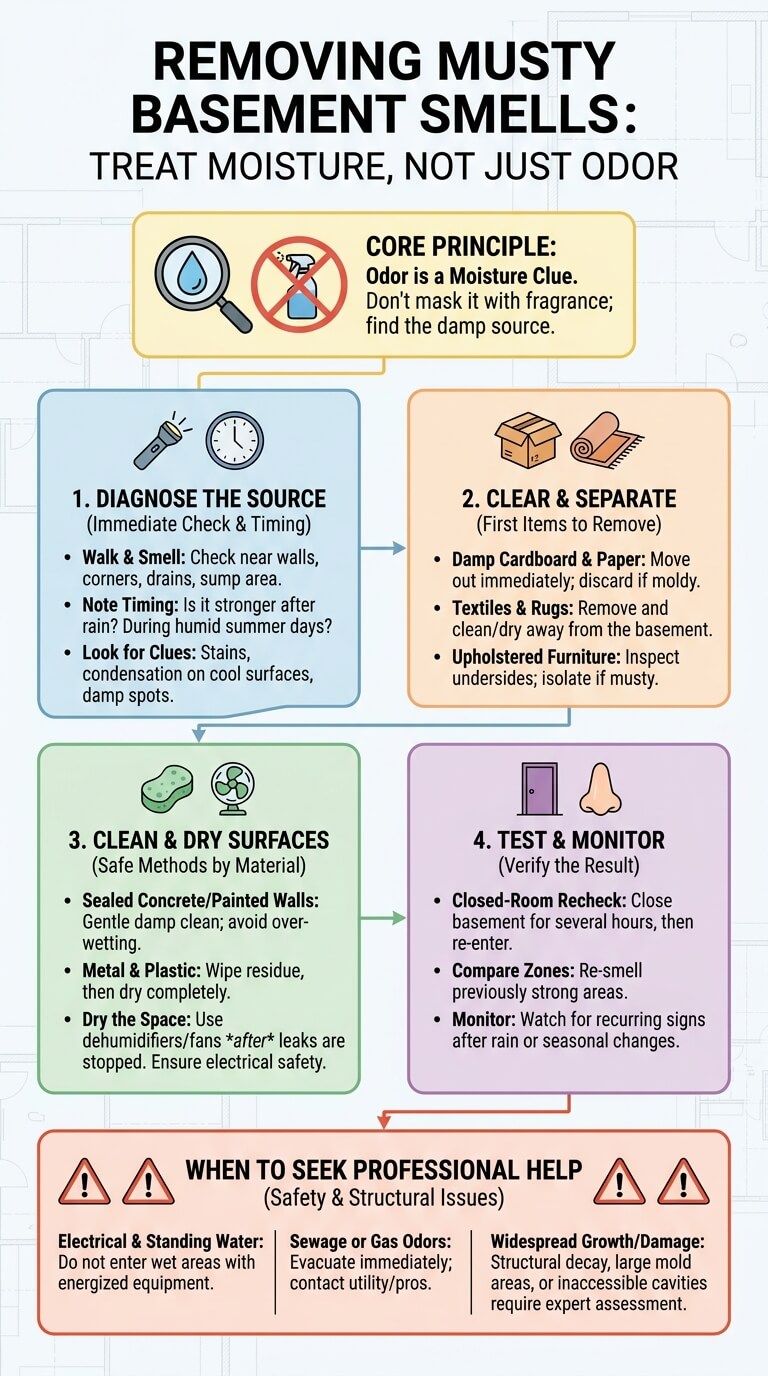
The fastest useful approach is to separate movable odor carriers from conditions affecting the room itself. Do not begin by spraying fragrance across the basement. That can hide the strongest odor point and make diagnosis harder.
Immediate source check
Walk the basement before moving anything. Smell near exterior walls, floor edges, drains, the sump area, laundry equipment, carpet, fabrics, and boxes. Note whether one corner is cooler, stained, or noticeably stronger. Check recent weather, plumbing use, laundry activity, and leak history. These clues help separate a damp object from recurring water entry or condensation.
First items to remove
Move out wet cardboard, damp rugs, musty textiles, soft-sided luggage, upholstered pieces, and items sitting on a cool floor. Keep them away from clean living areas and do not shake dusty or visibly contaminated materials indoors. Use a washable bin, tray, or plastic sheet. Photograph the original location when placement may explain the odor.
When ventilation alone is not enough
Opening a window may improve the smell while air moves, but it does not prove the moisture problem is gone. If odor returns after the basement is closed, a material or surface is still holding it. Warm, humid outdoor air can also condense on cool basement surfaces. Pair drying with removal of wet materials and correction of continuing water entry.
Why Basements Smell Musty
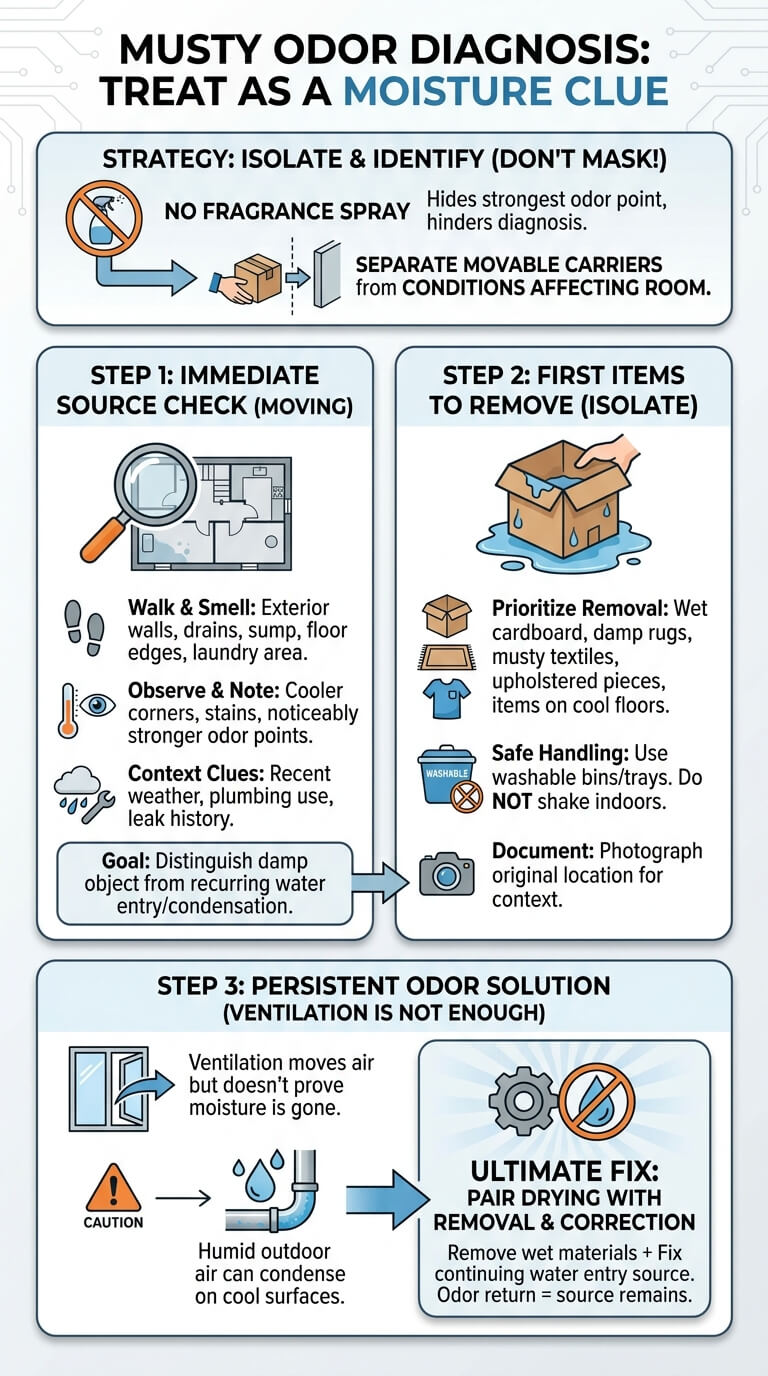
Basements are partly or fully below ground, so they commonly contain cooler surfaces, utility penetrations, floor drains, and storage zones. Moisture may enter as liquid water, move through foundation materials, condense from humid air, or remain trapped in porous belongings.
Ground and wall moisture
Water can enter through cracks, joints, penetrations, or poor exterior drainage. Moisture may also move through concrete or masonry without a visible puddle. University of Minnesota Extension explains liquid flow, capillary movement, and water vapor in its guidance on basement moisture causes and solutions. A recurring smell along one wall or floor edge deserves more attention than general staleness.
Condensation on cool surfaces
Warm, humid air can condense on cooler pipes, concrete, masonry, metal shelving, or floors. This is common in summer when humid air meets lower basement temperatures. Look for droplets, rust, darkened dust, damp labels, or a clammy feel near cold materials. Check timing and location before assuming the wall leaks.
Damp cardboard, textiles, and stored furniture
Cardboard, paper, carpet, fabric, unfinished wood, and upholstered furniture can absorb moisture and retain odor after room air feels normal. Boxes may smell mustier on the back than the front. Furniture legs can wick moisture from a floor, while carpet padding may stay damp below a dry-feeling surface. Test each porous item away from the room.
Floor drains, sump areas, and utility zones
A drain or sump area may smell different from general mustiness. Check near the opening without leaning into a confined area. A dry trap, standing water, residue, or plumbing problem should not be treated with carpet deodorizer or fragrance. Gas-like, sewage-like, or chemical smells call for prompt professional or utility guidance.
Past leaks or flooding
Water can remain behind baseboards, under flooring, inside wall cavities, or in insulation after visible surfaces dry. A basement may contain damaged porous materials even when no drip is visible. Ask what got wet, how long it stayed wet, what was removed, and when the odor began.
Basement Odor Diagnosis by Timing
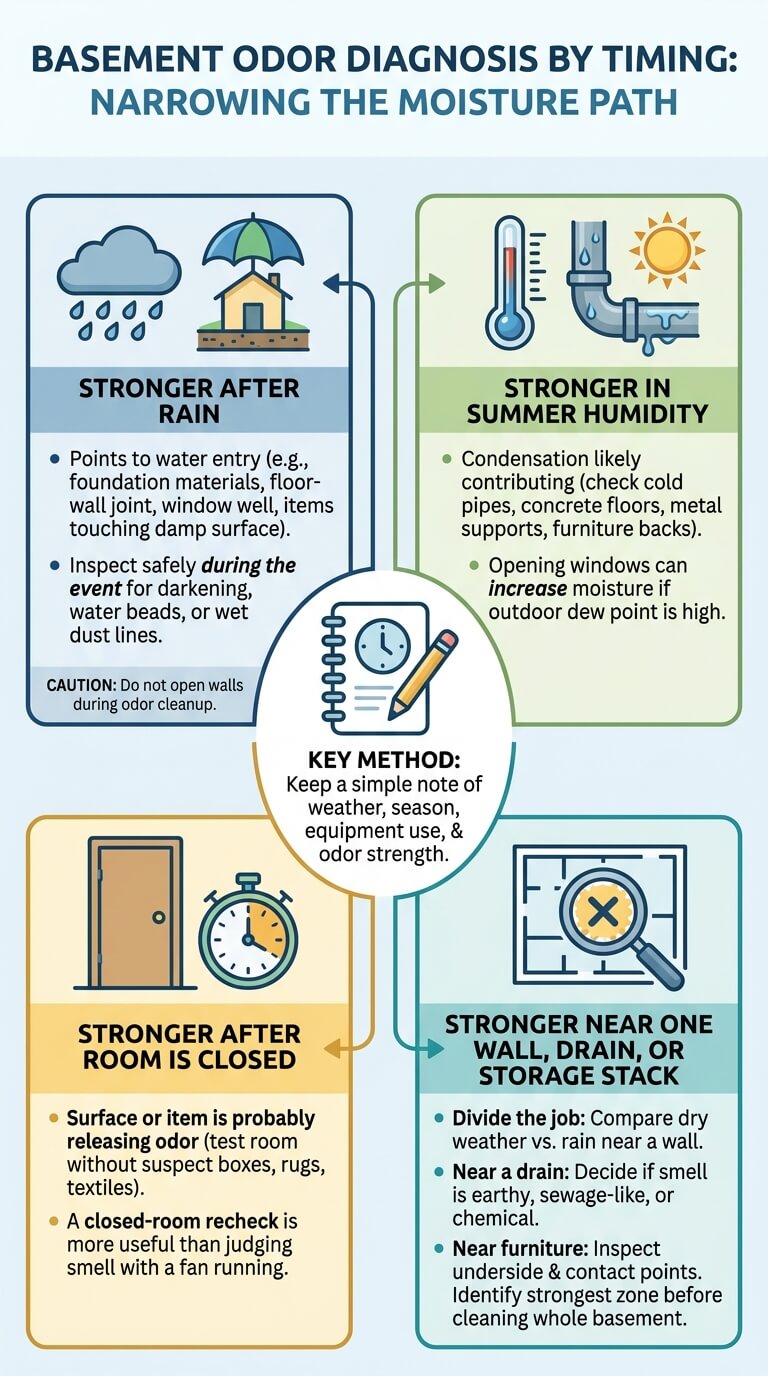
Timing narrows the likely moisture path. Keep a simple note of weather, season, equipment use, and odor strength rather than relying on memory.
Stronger after rain
A smell that intensifies after rain may point to water entry, damp foundation materials, a floor-wall joint, a window well, or items touching a damp surface. Inspect during the event when safe. Look for darkening, beads of water, wet dust lines, or an expanding stain. Do not open walls or attempt structural repairs during odor cleanup.
Stronger in summer humidity
When the odor worsens on hot, humid days, condensation may be contributing. Check cold pipes, concrete floors, metal supports, and the backs of furniture. Opening windows can increase moisture if the outdoor dew point is high. A controlled drying method may help, but still check for leaks and wet belongings.
Stronger after the room is closed
If the basement improves with doors or windows open but smells musty again after several hours closed, a surface or item is probably releasing odor. Test the room without suspect boxes, rugs, and textiles. A closed-room recheck is more useful than judging the smell while a fan runs.
Stronger near one wall, drain, or storage stack
A localized odor lets you divide the job. Remove the storage stack and compare the wall, floor, and belongings separately. Near a drain, decide whether the smell is earthy, sewage-like, or chemical. Near a wall, compare dry weather with rain. Near furniture, inspect the underside and contact points. Identify the strongest zone before cleaning the whole basement. When the smell may be moving from a laundry area, drain, HVAC path, garage, or another room, compare those zones with the home odor checklist by room.
Safety Check Before Cleaning
Basements combine moisture with electrical panels, outlets, appliances, fuel-burning equipment, and sometimes contaminated water. Safety decisions come before deodorizing.
Electrical and standing-water limits
Do not enter standing water when outlets, cords, appliances, the electrical panel, or energized equipment may be involved. Do not handle plugs or operate fans from a wet area. FEMA advises using qualified help when electrical systems may have been affected. Its flood cleanup safety guidance also emphasizes removing damaged materials, cleaning, and thorough drying.
Sewage-like or gas-like odor
Leave the area if the smell resembles natural gas, fuel, solvents, or strong sewage. Avoid flames, switches, and equipment that could create a spark when a fuel-gas problem is possible. Contact the appropriate utility, property manager, plumber, or emergency service from a safe location. A musty-earthy odor is different from rotten-egg, petroleum, or sharply chemical odors.
Visible growth and damaged materials
Do not scrape, sand, brush, or aggressively vacuum widespread visible growth. Stop when drywall is soft, insulation is wet, wood is decayed, ceiling material sags, or flooring lifts. The EPA’s home mold and moisture guide explains why wet materials and the moisture cause must be addressed together.
Protective equipment and ventilation limits
For a small cleaning job, use gloves suited to the product, eye protection when splashing is possible, and washable clothing. Follow labels and never mix cleaners. Ventilate without directing dusty air into occupied rooms. People with asthma, significant allergies, immune suppression, or other health concerns should avoid disturbing suspect materials and may need professional or medical guidance.
Step 1: Divide the Basement into Source Zones
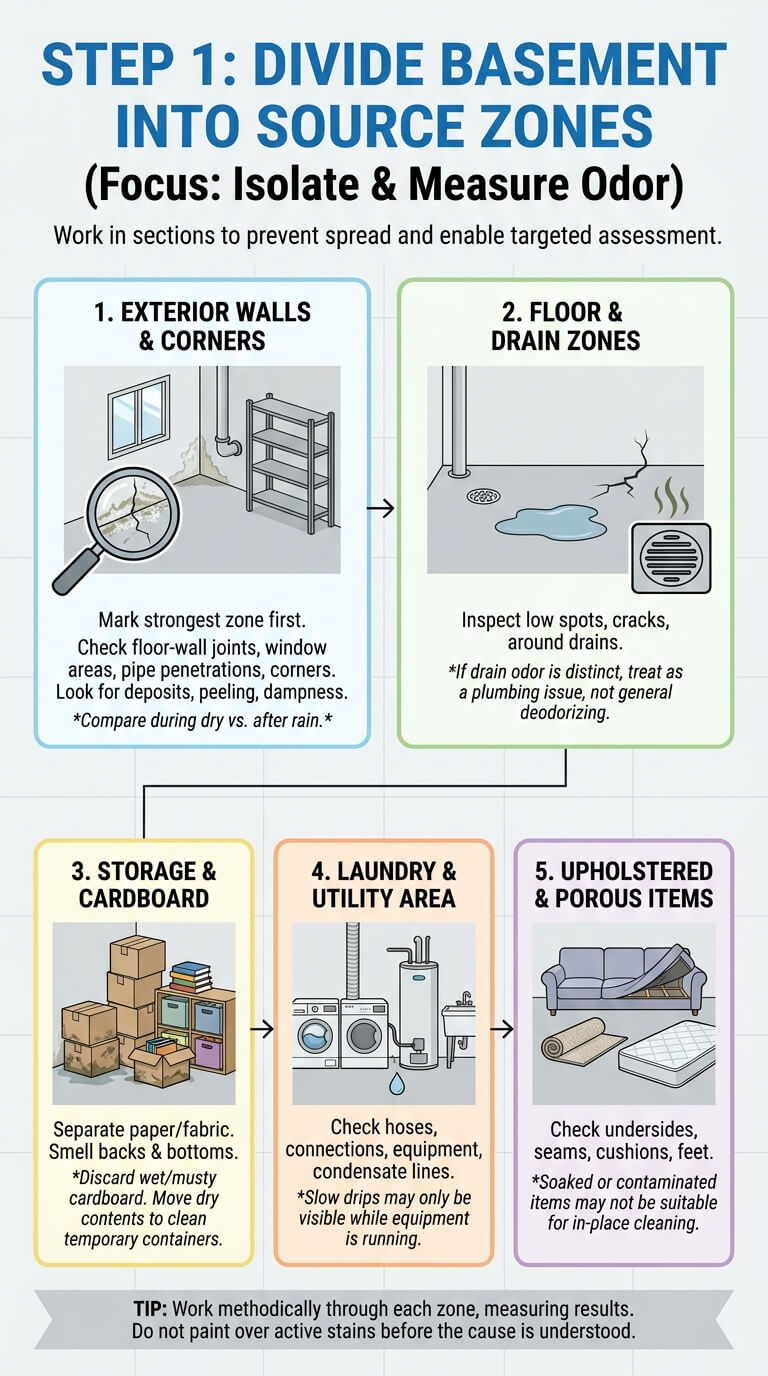
Work in sections so that odor does not get spread across the room and so each result can be measured. Mark the strongest zone first.
Exterior walls and corners
Clear a narrow inspection path along exterior walls. Check the floor-wall joint, window areas, pipe penetrations, and corners hidden by shelving. Look for mineral deposits, peeling paint, damp dust, rusted fasteners, or swollen trim. Compare the same area during dry weather and after rain. Do not paint over an active stain before its cause is understood.
Floor and drain zones
Inspect the floor for low spots, wet seams, carpet edges, cracks, and residue around drains. Keep cleaners out of drains unless the label specifically allows that use. If the drain odor is distinct from the rest of the room, address it as a plumbing issue rather than applying deodorizer across the basement.
Storage and cardboard
Separate cardboard, paper files, books, fabric bins, holiday decorations, and stored clothing. Smell the backs and bottoms because those faces are closest to walls and floors. Discard wet, softened, or persistently musty cardboard when local disposal rules allow. Move dry contents into clean temporary containers while the room is being evaluated.
Laundry and utility area
Check washing-machine hoses, drain connections, utility sinks, dryer vent connections, water heaters, condensate lines, and nearby flooring. Do not dismantle or service equipment unless you are qualified and the manual permits it. A slow drip may be obvious only during a wash cycle or when equipment is running.
Upholstered or porous items
Inspect sofas, mattresses, padded chairs, carpet remnants, acoustic panels, and unfinished wood. Pressing or smelling the outer surface is not enough. Check undersides, seams, dust covers, cushions, and feet. Items that were soaked, contaminated, or stayed wet for an unknown period may not be suitable for in-place cleaning.
Step 2: Remove Damp and Odor-Holding Items
Removing porous odor carriers often produces the biggest immediate improvement. Keep a record of what came from each zone so the pattern remains clear.
Cardboard and paper
Prioritize boxes that touch the floor or wall. Transfer dry, unaffected contents to clean bins in another dry area. Paper records, photographs, and books may require conservation advice if they are valuable or water-damaged. Do not seal damp paper in plastic for ordinary storage. Replace musty boxes rather than repeatedly spraying them.
Rugs, fabric, and upholstered storage
Roll or fold only when the item is dry enough to move without dripping or spreading residue. Follow care labels for washable rugs and textiles. Large rugs, pads, and upholstered items that were saturated may need professional evaluation. Drying the visible face while the backing remains wet can leave the basement smelling unchanged.
Wood and composite furniture
Move furniture away from walls and inspect its base. Sealed solid wood may tolerate gentle cleaning according to the finish instructions, but particleboard and fiberboard can swell, crumble, or retain odor after wetting. Do not soak joints or unfinished edges. If the piece is unstable, stop moving it until it can be handled safely.
Items that should not be cleaned in place
Remove wet cardboard, washable textiles, small rugs, and portable bins before cleaning the room. Do not clean valuable electronics, contaminated keepsakes, fuel-soaked items, or heavily damaged upholstery as ordinary household odor projects. Isolate them and obtain appropriate service, restoration, or disposal guidance.
Step 3: Clean Basement Surfaces by Material
Clean after active water has stopped and loose items have been removed. Use the mildest compatible method and keep added water to a minimum.
Sealed concrete
Vacuum dry debris with suitable equipment when there is no visible growth or contaminated dust. Wash a small area with a cleaner approved for sealed concrete, using a damp rather than flooding application. Rinse only when required and remove moisture promptly. Unsealed or deteriorating concrete can absorb cleaning water and needs caution.
Painted walls and masonry
Dust gently, then spot-test a mild cleaner in an inconspicuous area. Avoid saturating drywall, masonry joints, peeling paint, and cracked surfaces. Stop if paint lifts, chalks, blisters, or reveals softness underneath. Cleaning a stain is not a substitute for correcting the moisture that caused it.
Finished flooring and baseboards
Follow the flooring manufacturer’s care instructions. Use minimal moisture around laminate seams, wood edges, resilient-tile joints, and baseboards. Carpet requires attention to the backing and pad, not only the pile. If flooring is loose, swollen, stained from below, or damp after surface drying, arrange a deeper inspection.
Metal shelving and plastic bins
Remove dust and residue with a compatible cleaner, then dry joints, feet, and hollow sections. Check metal for rust that could transfer to stored items. Wash plastic bins inside and out, including lid channels and handles. Do not refill them until both the container and contents are fully dry.
Avoiding over-wetting porous surfaces
More liquid does not mean more odor removal. Excess cleaner can soak into drywall paper, unfinished wood, carpet pad, masonry, and composite shelving. Apply cleaner to a cloth or mop when the label allows, work in small sections, and extract or wipe away moisture. Stop if the material darkens deeply or stays wet.
Step 4: Dry the Space and Measure the Result
Drying is successful only when materials stay dry and the odor does not return under normal closed-room conditions.
Airflow and outdoor-humidity conditions
Use outdoor air only when it is likely to help. Warm humid air entering a cool basement can add condensation. Keep interior doors open when that safely connects the basement to drier conditioned air. Do not direct questionable basement air into bedrooms or living spaces.
Fans and appliance safety
Operate fans, air conditioners, or dehumidifiers only from dry, safe electrical locations and according to their manuals. Keep cords away from wet floors and do not use damaged equipment. Position airflow across damp surfaces without blowing visible growth or contaminated dust through the room. Empty and clean water-collection parts as directed.
Closed-room odor recheck
After surfaces and belongings are dry, stop fragrance products and close the basement for several hours. Reenter and check the previously strongest points first. If the odor returns only near one zone, continue investigating there. If it returns throughout the room, reconsider carpet, stored furniture, wall cavities, and continuing humidity.
Touch and moisture clues
Compare suspicious surfaces with nearby dry ones. Look for a clammy feel, new condensation, soft trim, darkening dust, peeling labels, or rust. A handheld moisture meter may be useful when used according to its instructions, but readings vary by material and do not replace diagnosis of leaks or structural conditions.
Handle Common Basement Odor Sources
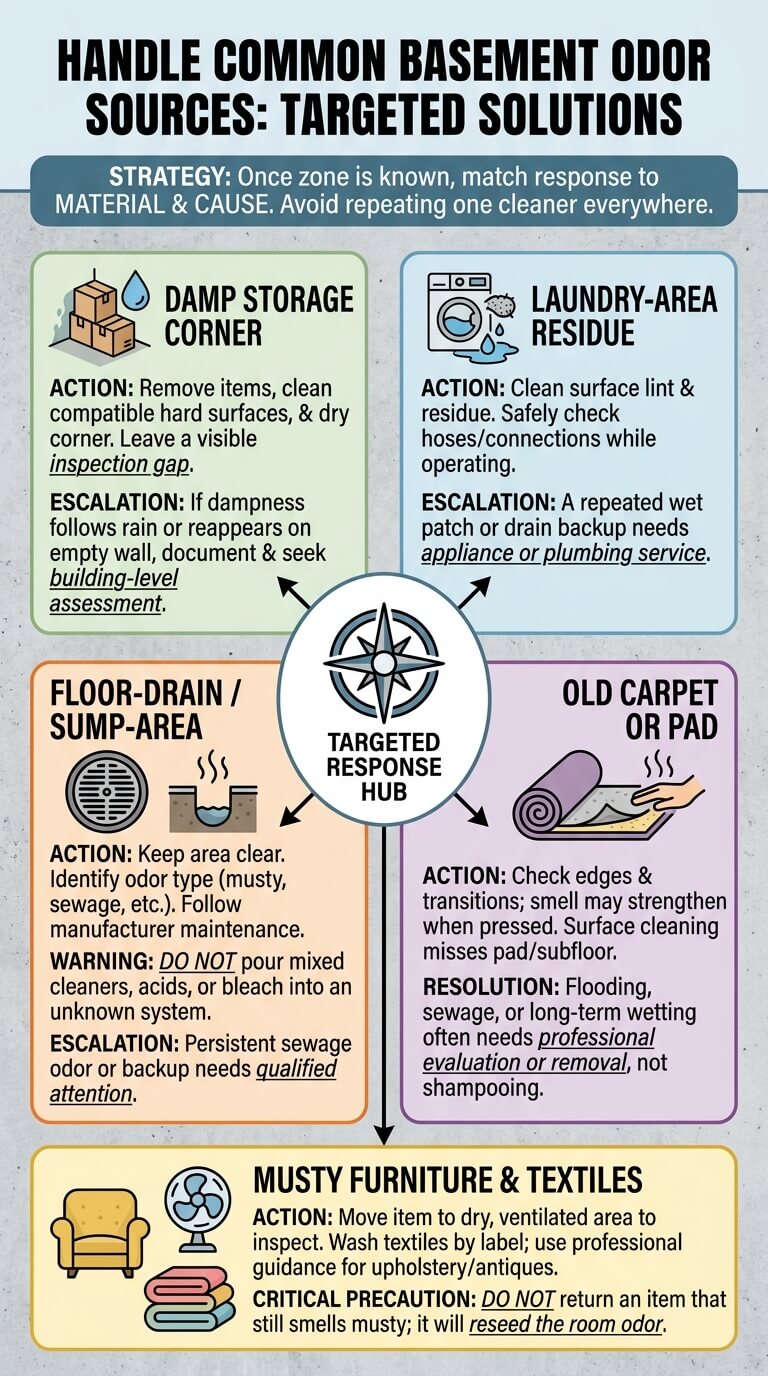
Once the main zone is known, use a response that matches the material and cause rather than repeating one cleaner everywhere.
Damp storage corner
Remove boxes and shelving from the wall, discard damaged cardboard, clean compatible hard surfaces, and dry the corner. Leave a visible inspection gap when storage returns. If dampness follows rain or reappears on the empty wall, document it and seek a building-level assessment.
Laundry-area residue
Clean lint, detergent drips, and residue around machines without moving or opening equipment beyond the manual’s instructions. Check hoses and connections while the machine operates from a safe distance. A repeated wet patch or drain backup needs appliance or plumbing service.
Floor-drain or sump-area odor
Keep the area clear and identify whether the smell is musty, sewage-like, oily, or chemical. Follow the drain or sump manufacturer’s maintenance directions where available. Do not pour mixed cleaners, acids, bleach, or fragrance into an unknown system. Persistent sewage odor, backup, or abnormal sump operation needs qualified attention.
Old carpet or pad
Smell near edges and transitions, and check whether the odor becomes stronger when the carpet is pressed. Surface cleaning may not reach a damp pad or contaminated subfloor. Carpet affected by flooding, sewage, repeated water entry, or long-term wetting often needs professional evaluation or removal rather than repeated shampooing. When installed carpet, backing, or pad remains the strongest source, use the dedicated guide on how to remove odors from carpet.
Musty furniture and stored textiles
Move the item into a dry, ventilated inspection area and recheck the basement without it. Wash textiles according to care labels. For upholstery, leather, antiques, or composite furniture, use manufacturer or professional guidance. Do not return an item that still smells musty after it has dried because it can reseed the room odor. Washable garments that remain musty after leaving the basement need the fabric-specific guide to remove musty smell from clothes.
What Humidity-Control Products Can and Cannot Do
Drying equipment can support cleanup, but it does not replace removal of wet materials or correction of water entry.
When room drying supports cleanup
A dehumidifier or air conditioner can help after leaks stop and wet belongings are removed. Use it within the rated temperature range, provide safe drainage or empty the tank, and keep filters and coils clean. Measure progress by dry materials and a successful closed-room test, not only by water collected.
Why product sizing belongs in a separate decision
Capacity depends on room conditions, temperature, drainage, and the severity of moisture. Do not choose equipment solely because a basement smells musty. First determine whether the room has active water entry, saturated materials, or a localized problem that requires repair.
Why a dehumidifier cannot fix water entry
A machine can remove water vapor from air, but it cannot seal a crack, repair a plumbing leak, redirect exterior drainage, or remove wet insulation. If the tank fills rapidly and the same wall or floor stays damp, treat that pattern as evidence that more investigation is needed.
Maintenance to prevent the appliance becoming an odor source
Clean the filter, bucket, drain hose, and accessible air passages according to the manual. Stagnant water, slime, dust, or a blocked drain can create its own odor. Unplug the unit before permitted maintenance and stop using it if the cord, plug, fan, or drainage system is damaged.
Basement Odor Mistakes to Avoid
The most common setbacks come from masking the smell, leaving wet materials in place, or adding more moisture during cleaning.
Masking the smell with fragrance
Air fresheners, candles, incense, and scented powders can cover the location clue and add irritation. Avoid combustion products in utility spaces. Diagnose the odor without fragrance, then clean and dry the actual materials carrying it.
Running equipment without removing wet materials
A dehumidifier may lower room humidity while soaked carpet pad, cardboard, or furniture continues releasing odor. Remove or isolate the wet material first. Equipment should support drying, not make a damaged item seem acceptable.
Keeping cardboard against walls
Boxes can hide stains, reduce airflow, and absorb moisture from cool surfaces. Move them off the floor and leave a small inspection gap at walls. Replace boxes that are soft, stained, or persistently musty.
Adding water to already damp surfaces
Flooding concrete, soaking carpet, or heavily spraying walls can drive moisture deeper and lengthen drying time. Use small amounts of a compatible cleaner and remove moisture promptly. Stop when a surface absorbs liquid faster than it can be wiped away.
Painting or sealing over residue without diagnosis
Coatings may peel or trap moisture when applied over a damp, dirty, or unstable surface. Do not treat paint as odor removal. Identify water entry, dry the material, and follow the coating manufacturer’s preparation requirements or obtain professional advice.
When the Basement Needs Professional Evaluation
Routine cleaning should stop when the condition involves recurring water, contaminated materials, extensive damage, or inaccessible areas.
Recurring water entry
Arrange an assessment when water appears after rain, the floor-wall joint repeatedly darkens, a crack leaks, or a wet patch returns despite drying. Record dates, rainfall, photographs, and affected zones. Renters should notify the property owner or manager in writing.
Sewage, floodwater, or large contamination
Do not treat sewage or floodwater as ordinary household dirt. Contaminants may remain in porous materials, appliances, wall cavities, and flooring. Follow local public-health and disaster guidance and use trained help where needed.
Widespread visible growth
Escalate when visible growth is widespread, returns after cleaning, appears inside HVAC components, or affects large areas of porous material. HUD’s Healthy Homes information can help homeowners and renters understand housing hazards and locate appropriate program contacts.
Damaged drywall, insulation, flooring, or wood
Soft drywall, wet insulation, buckled flooring, decayed wood, sagging ceilings, and crumbling composite material are not deodorizing tasks. These materials may be structurally weak or wet beyond the visible face. Avoid disturbing them until the area has been assessed.
Odor connected to HVAC or inaccessible cavities
Seek qualified help when the smell starts during HVAC operation, comes from a wall or ceiling cavity, or cannot be reached without demolition. Do not insert cleaners, ozone devices, or improvised tools into ducts or enclosed assemblies.
Frequently Asked Questions
These answers apply after urgent electrical, gas, sewage, and standing-water hazards have been ruled out.
Why does my basement smell musty after rain?
Rain can increase soil moisture and expose leaks, seepage, damp foundation joints, or poorly protected window areas. Inspect during and after rain for new stains, wet dust lines, darkening concrete, or moisture behind storage. A repeat pattern usually needs more than ventilation.
Will a dehumidifier remove musty basement odor?
It may help dry room air after wet materials and water entry have been addressed. It will not remove odor trapped in cardboard, carpet pad, drywall, or furniture, and it cannot repair a leak. Clean the unit and verify that the room stays dry when it is not running continuously.
Can concrete hold a musty smell?
Concrete and masonry can stay cool, absorb moisture, and collect residue on their surfaces. Odor may also be coming from cracks, joints, items sitting on the concrete, or materials beneath a coating. Clean only compatible surfaces and avoid soaking unsealed or deteriorating concrete.
Should I remove cardboard from a damp basement?
Yes, especially boxes that are soft, stained, musty, or touching floors and walls. Transfer dry contents to clean containers in a dry area. Cardboard that continues to smell after airing is usually better replaced than repeatedly treated.
Why does the basement smell better with windows open but musty again later?
Moving air dilutes odor while the window is open, but a damp item or surface may continue releasing it. Humid outdoor air can also condense on cool basement materials. Perform a closed-room test after suspect items are removed and the space is dry.
When is a musty basement more than a cleaning problem?
It exceeds ordinary cleaning when there is recurring water entry, standing water near electricity, sewage or fuel odor, widespread visible growth, damaged building material, wet insulation, a sagging ceiling, or odor from inaccessible cavities or HVAC equipment.
Final Thoughts
To remove a musty smell from a basement, use the odor to locate moisture. Check timing, divide the room into zones, remove porous odor carriers, clean by material, dry safely, and test the closed basement. If the empty room becomes musty again, or rain, damage, drains, electricity, sewage, or hidden cavities are involved, arrange the appropriate evaluation. For the broader source-first sequence across rooms and materials, use the odor removal guide.

Ethan Carter is the Founder & Editor of HomeCleanSecrets. Based in the United States, he has 5 years of experience creating practical home cleaning, laundry care, stain removal, decluttering, and home organization content. His goal is to help everyday households clean smarter and build simple routines that are easier to maintain.
Read more about Ethan Carter on his author page: https://homecleansecrets.com/ethan-carter/