
A musty closet smell usually means moisture has lingered in the enclosed space or in something stored inside it. Fragrance may cover the odor, but it will not correct damp shoes, wet fabric, odor-holding cardboard, condensation, or a leak. Empty the closet in controlled groups, find where the smell is strongest, clean compatible surfaces, dry the area fully, and test it again with the door closed.

Quick Answer: Find the Musty Source Before Deodorizing

Start by treating the odor as a clue rather than a problem that can be sprayed away. Work from movable items toward the closet shell. This keeps a single damp object from being confused with a wall, floor, or ventilation problem.
What to remove first
Take out anything damp, recently worn, or slow to dry first, including coats, towels, gym bags, umbrellas, shoes, laundry, and fabric storage cubes. Place strong-smelling items in a washable container or on an easy-to-clean surface outside the closet. Then remove cardboard, paper bags, and tightly packed textiles. Keep clean clothing away from the inspection area.
What to inspect before cleaning
With the closet empty, smell near the floor, corners, baseboards, shelf undersides, door track, and any wall shared with the outdoors, a bathroom, a laundry area, or plumbing. Look for staining, peeling paint, swollen shelf edges, rust, cool damp patches, softened drywall, or condensation marks. A flashlight held sideways can reveal surface changes that overhead lighting misses.
When not to return stored items
Do not refill the closet while shelves or flooring feel cool and damp, while cleaned surfaces are still drying, or while the odor quickly returns after the door has been closed. Also pause if you find visible growth, crumbling material, active dripping, or a stain that is spreading. Returning belongings too soon can transfer odor back to clean fabric and conceal the original problem.
Why Closets Start to Smell Musty
Closets combine several conditions that allow odors to build: low air movement, dense storage, dark corners, and materials that absorb water vapor. The smell may come from one item, but it can also reflect moisture entering the space faster than it can dry.
Damp clothing, towels, and shoes
A coat hung up after rain, a towel folded before its thick edges dry, or shoes stored immediately after wear can release moisture into a small enclosure. Natural fibers and padded footwear may feel dry on the surface while seams, linings, cuffs, and insoles remain damp. Check the thickest parts, not just the exposed face. A good test is to smell each item away from the closet after it has rested in fresh air for several minutes.
Cardboard, fabric bins, and packed storage
Cardboard and unfinished paper products readily take on damp odors, especially when placed on a cool floor or pressed against a wall. Fabric bins can hold moisture in seams and rigid inserts. Dense stacks also reduce the air space around shelves and walls. When boxes smell stronger than their contents, replacing the boxes is often more effective than trying to perfume or repeatedly wipe them.
Condensation on exterior walls
Warm indoor air can release moisture on a colder surface, especially behind boxes or clothes along an exterior wall. University of Minnesota Extension lists mold in a closet corner among signs of excess home moisture and recommends identifying the cause before relying on ventilation or drying equipment. Its guidance on controlling moisture problems in a home explains why cold surfaces deserve attention.
Poor airflow versus an active moisture source
Limited airflow can make a mild odor more noticeable, but airflow alone does not create water. If opening the door clears the smell and all materials stay dry, dense storage may be the main issue. If the odor returns quickly, a wall feels damp, or staining changes after rain, bathing, or laundry, investigate the moisture path. A fan can speed drying after cleaning, but it cannot repair a leaking pipe or wet building material.
Closet Odor Decision Tree

Use where and when the odor appears to narrow the next step. Avoid cleaning every surface at once before you know which area or item is carrying the strongest smell.
Odor is strongest on one item
Move the item to a separate room and close the closet for several hours. If the closet improves, handle that item according to its care label. Washable textiles may need laundering, while leather, structured bags, and delicate garments may require manufacturer care or professional cleaning. Inspect the shelf or floor beneath the item for a spill, damp mark, or color transfer before returning anything.
Odor is strongest at the wall or floor
Remove everything touching that area and check for a temperature difference, moisture, staining, warped trim, loose flooring, or a line that follows a pipe or baseboard. Stop if pressing the material makes it flex, crumble, or release water. A renter should document the location and notify the property owner or manager when the condition appears connected to the building rather than a movable item.
Odor appears only after the door is closed
This pattern often points to trapped odor from dense storage, shoes, a fabric bin, or a mildly damp surface. Clean and dry the empty closet, then perform a closed-door test before returning items. If the empty closet stays fresh but the smell returns after refilling, add belongings back in small groups until the odor-carrying group becomes clear.
Shelves feel dry but the smell returns
Check hidden faces: shelf undersides, wall contact points, the back of removable organizers, carpet edges, and door tracks. Dryness at the front does not rule out moisture behind stored items. Also smell cardboard, wicker, unfinished wood, suitcase linings, and shoe insoles separately. Persistent odor in an empty closet may require a broader moisture inspection even when no surface feels wet by hand. When the odor path may involve a bathroom, laundry area, entryway, or another room, use the home odor checklist by room to compare adjacent sources before cleaning more surfaces.
Step 1: Empty the Closet Without Spreading Odor

An organized removal process prevents clean items from being mixed with damp or questionable ones. It also preserves clues about where each item was stored.
Create clean, inspect, wash, and discard zones
Set up four areas outside the closet: clean and dry, inspect, wash, and discard. Reserve the last area for wet cardboard, badly damaged paper goods, or materials that cannot be cleaned safely. Photograph the original layout when item location may help identify a cold wall or floor contact point.
Keep damp or strong-smelling items separate
Do not pile damp items with dry clothing. Use a washable basket, tray, or plastic sheet for temporary handling, and keep the area away from beds and upholstered furniture. Do not seal wet textiles in a plastic bag for extended storage because trapped moisture can make the problem worse. If an item has visible growth or heavy water damage, limit handling and consider professional advice rather than shaking or brushing it indoors.
Protect delicate clothing and finishes
Use a clean sheet-covered surface for delicate garments and suitable hangers for structured pieces. Keep metal accessories away from wet cleaners. Before moving an insert, organizer, or garment, check whether dye, rust, adhesive, or finish could transfer.
Step 2: Inspect the Closet Shell

Once empty, inspect from top to bottom before applying cleaner. This sequence helps distinguish dust and ordinary marks from moisture-related changes.
Shelves and hanging rods
Run a dry white cloth over shelf tops, edges, brackets, and rod supports to reveal grime, rust, or residue without wetting the surface. Look for swollen seams, cloudy finish, dark screw holes, and lifted shelf paper. Remove liners only if they lift without damaging the finish, then inspect beneath them.
Baseboards, corners, and flooring
Use a flashlight to inspect the joint between wall and floor. On carpet, separate the pile gently near the edge and smell close to the backing without pulling installed carpet loose. On hard flooring, check seams and transitions. A stain that extends under trim, a soft baseboard, or persistent dampness suggests more than routine closet cleaning.
Exterior walls and ceiling edges
Feel for unusually cold areas with the back of your hand, then compare them with an interior wall. Look behind nail-free organizers and at the upper corners where air may stagnate. Repeated condensation, peeling paint, or staining should be documented. The U.S. Department of Housing and Urban Development maintains Healthy Homes information centered on housing hazards, including unsafe moisture and mold conditions that may need property-level correction.
Door, track, and ventilation gaps
Dust and fibers can build up in sliding-door tracks and around louvered openings. Vacuum loose debris with an appropriate attachment before wiping. Confirm that a louver, undercut, or transfer opening has not been blocked by boxes or hanging fabric. Do not cut new openings or alter a fire-rated door without property approval and appropriate guidance.
Step 3: Clean Hard Closet Surfaces Safely
Clean only after the area has been inspected and any active water entry has stopped. Use the least aggressive method that fits the surface. Never mix household cleaners, and do not combine bleach with ammonia, acids, vinegar, or unknown residues.
Painted and laminate shelves
Remove loose dust, then use a well-wrung microfiber cloth with mild detergent diluted according to its label. Work in sections so liquid does not sit on seams or exposed particleboard. Rinse only if directed and dry immediately. Stop if paint becomes tacky, color transfers, or laminate edges swell.
Sealed wood and metal components
For sealed wood, confirm the finish-care instructions and spot-test an inconspicuous area. Avoid soaking joints and screw holes. Wipe metal rods and brackets with a compatible cleaner on the cloth rather than spraying overhead. Dry metal promptly to reduce spotting or corrosion. Unfinished, waxed, oiled, antique, or damaged wood may need specialized care because water-based cleaning can change the surface.
Flooring by material
Vacuum carpet slowly and inspect for dampness or odor at the backing. Do not saturate installed carpet in a closet where airflow is limited. For sealed hard flooring, follow the flooring maker’s directions and keep moisture away from seams. If sheet flooring is lifting, wood is cupped, or carpet padding is wet, ordinary surface cleaning is unlikely to solve the underlying condition.
Product-label and spot-test limits
Read the cleaner label, shelf or flooring instructions, and garment care labels before treatment. Test both appearance and texture, then allow the spot to dry before judging it. More product is not necessarily more effective. Heavy fragrance can also interfere with the closed-door odor check, so choose an unscented or low-odor method when practical.
Step 4: Handle Odor-Carrying Stored Items
The closet cannot stay fresh if damp or odor-holding belongings are returned untreated. Handle each material according to what it can safely tolerate.
Washable clothing and linens
Follow the care label and wash strong-smelling items separately from clean laundry. Give the load room to move and dry every piece completely, especially cuffs, pockets, hems, and layered seams. Garments that remain musty after laundering need a fabric-specific diagnosis.
Shoes and bags
Remove loose dirt, open closures, and take out removable insoles when the manufacturer permits. Air items in a dry, shaded location. Clean only with methods approved for the material, since leather, suede, foam, coated fabric, and glued construction respond differently. Do not place damp shoes back on a shelf simply because the exterior feels dry.
Cardboard and paper storage
Replace boxes that are soft, stained, or strongly musty. Moving dry contents into clean containers is usually safer than wet-cleaning cardboard. Review books, documents, and photographs individually. Valuable or irreplaceable paper with water damage or visible growth may require a conservator rather than household treatment.
Fabric bins and seasonal items
Check whether fabric bins are washable and whether they contain cardboard inserts that must not be soaked. Open seasonal bedding, costumes, and luggage so trapped air can escape. Smell the interior linings and pockets. Dry-clean-only pieces should be handled according to their labels, not treated with improvised sprays.
Step 5: Dry, Ventilate, and Recheck
Drying is part of cleaning, not an optional final touch. The U.S. Environmental Protection Agency explains in its home mold and moisture guide that moisture control is central to preventing recurring problems.
Airflow without trapping outdoor humidity
Open the closet and room door, and use normal room ventilation or a fan positioned to move air past the opening. Do not aim a powerful fan at visible growth or heavily contaminated material. Opening windows may help when outdoor air is reasonably dry, but it can slow drying in very humid weather. Use the room’s air conditioning or dehumidification only as directed and only after stopping active water entry.
How long to leave the closet open
Leave the closet open until wiped surfaces, seams, carpet edges, and the coldest wall area are dry and no longer smell stronger at close range. Carpet, unfinished wood, and humid weather can extend drying. Do not use elapsed time alone as proof.
The closed-door recheck
When the empty closet seems dry, close the door for several hours under room conditions. Reopen it and smell near the previous problem points. A returning earthy or damp odor means the investigation is not finished. Test once before adding belongings and again as groups return.
Signs the source is still present
Watch for renewed condensation, a cool wet patch, darkening seams, a stain that grows, odor concentrated at one wall, or a smell that returns within a day. The EPA’s broader indoor air quality guidance emphasizes source control and appropriate ventilation rather than relying on air freshening alone.
When Moisture Absorbers May Help
A moisture absorber can be a limited finishing measure in a small space that is clean, dry, and free of leaks. It should not be the first response to a wet wall or recurring stain.
Mild residual humidity after cleaning
An absorber may help buffer minor humidity in a closet that occasionally feels stuffy, especially after the source items have been removed. Follow the product’s room-size, temperature, replacement, and disposal directions. If the container fills unusually quickly, treat that as a clue to investigate room humidity or moisture entry rather than continually replacing cartridges.
Safe placement and spill risk
Place the unit upright on a stable tray where children and pets cannot reach it and where clothing cannot knock it over. Some products collect liquid that can damage wood, metal, fabric, or flooring. Never place one above valuable garments or directly on an unprotected shelf. Check it often enough to prevent overflow.
Why an absorber cannot repair a leak or wet wall
Absorbers remove a limited amount of water vapor from nearby air. They do not stop rain entry, plumbing leaks, condensation caused by a persistently cold surface, or moisture trapped inside building materials. If dampness returns in the same location, correct the cause or arrange an inspection instead of treating the container as a repair.
How to Return Items Without Recreating the Smell
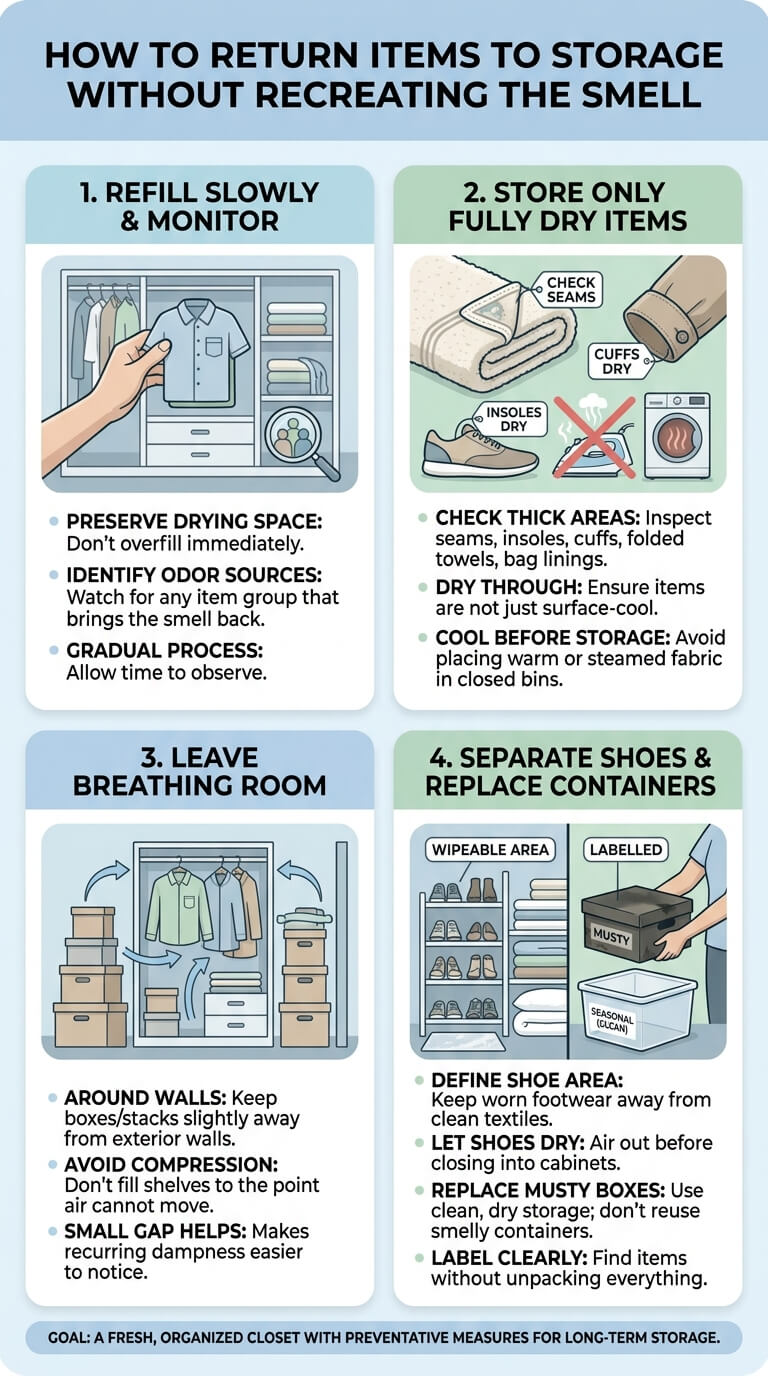
Refill the closet slowly. The goal is to preserve drying space and identify any item group that brings the odor back.
Store only fully dry items
Check thick seams, shoe insoles, coat cuffs, folded towels, and bag linings before storage. Items should be dry all the way through, not merely cool on the surface. Avoid placing freshly ironed, steamed, or warm-from-the-dryer fabric into a closed bin until it has cooled and any remaining moisture has dispersed.
Leave breathing room around walls
Keep boxes and dense fabric stacks slightly away from exterior walls and avoid filling shelves to the point that air cannot move around them. This is not a call for a full closet redesign. A small gap and less compression can make recurring condensation or dampness easier to notice before it affects many items.
Separate shoes from clean textiles
Give worn footwear a defined, wipeable area away from towels, bedding, and rarely worn formal clothing. Let shoes dry before closing them into a cabinet or bin. Clean the shelf or tray when soil, moisture, or odor builds rather than allowing it to spread through the closet.
Replace odor-holding cardboard when needed
Use clean, dry storage that suits the contents and the room conditions. Do not reuse a box that still smells musty after being emptied and aired. Label replacement containers so seasonal items can be found without unpacking the entire closet, which reduces unnecessary disturbance and makes future checks easier.
Musty Closet Mistakes to Avoid
Most repeat problems come from hiding the odor, returning belongings too early, or overlooking the part of the closet that remains damp.
Adding fragrance before finding the source
Sprays, scented sachets, and strongly perfumed cleaners can make it harder to locate the strongest odor point. They may also leave residue on fabric or finishes. Complete the empty-closet recheck without added fragrance first.
Returning items before the closet is dry
Closed doors and dense storage slow evaporation. Even a slightly damp shelf edge or carpet corner can transfer odor to boxes and textiles. Wait for the coldest and thickest materials to dry, not just the most visible surface.
Cleaning clothing while ignoring the closet
Freshly washed garments can smell musty again if they return to damp shelving, old cardboard, or a wet carpet edge. Clean and test the storage space separately from the clothing.
Packing storage against a cold wall
Boxes and hanging clothes can block room air from reaching an exterior wall. Leave a small inspection gap and check that area during seasonal weather changes, especially if the odor is worse in winter, during humid periods, or after rain.
Treating visible growth as an ordinary odor problem
Do not scrub an unknown or widespread growth simply to make the smell disappear. The size, material, moisture cause, and occupant sensitivities matter. Limit disturbance, correct water entry, and seek qualified help when the situation is beyond a small, straightforward household cleanup.
When to Stop and Escalate
Closet cleaning has clear limits. Stop when the evidence points to damaged building materials, continuing water entry, or conditions that make inspection unsafe.
Damp walls, staining, or repeated condensation
Request property maintenance or a qualified moisture assessment when a wall repeatedly becomes wet, paint blisters, trim swells, or stains return after drying. Record dates, weather, nearby plumbing use, and photographs. These details can help identify whether the pattern relates to rain, a pipe, indoor humidity, or a cold surface.
Odor after a leak or flood
A closet affected by a roof leak, plumbing release, sewage, or floodwater may contain moisture beyond the visible surface. Porous materials and wall cavities can remain wet. Do not assume that wiping the shelf and running a fan has made the area safe or dry.
Visible growth or damaged materials
Escalate when growth covers more than a small isolated area, returns after cleaning, appears inside wall or flooring systems, or affects absorbent materials that are deteriorating. Also stop if drywall is soft, wood is decayed, carpet padding is wet, or ceiling material is sagging. When the same musty pattern affects below-grade storage, foundation surfaces, drains, or utility areas, use the separate guide to remove musty smell from a basement.
Symptoms or strong irritation during inspection
Leave the area and get fresh air if inspection causes strong eye, throat, or breathing irritation, dizziness, or worsening asthma symptoms. People with significant respiratory conditions, allergies, immune suppression, or other health concerns may need medical guidance and should avoid disturbing suspect materials.
Frequently Asked Questions
Use these answers after the inspection and drying test.
Why does my closet smell musty when everything feels dry?
The odor may be held in cardboard, shoes, fabric-bin inserts, carpet backing, shelf undersides, or a cold wall hidden behind storage. Empty the closet, inspect concealed contact points, and perform a closed-door test. A surface can also feel dry at the front while moisture remains behind trim or under flooring.
Can a dehumidifier or moisture absorber remove the smell?
It may reduce humidity after the actual damp item or moisture path has been corrected. It will not clean odor residue, dry a hidden leak by itself, or repair a cold wet wall. Unusually rapid water collection is a reason to investigate, not proof that the problem is solved.
How do I remove musty odor from a closet without damaging clothes?
Move clothing to a clean, dry area before cleaning the closet. Separate affected garments, follow each care label, and avoid spraying closet cleaners near fabric. Let the empty closet dry and pass a closed-door test before returning clean clothes.
Should I wash everything in a musty closet?
Not necessarily. Smell items individually away from the closet and check for dampness. Wash pieces that carry odor and are safely washable. Air or professionally clean delicate items according to their labels. Clean, dry items that remained protected may not need laundering.
Why does the smell return after the closet door is closed?
Closing the door concentrates odor from a remaining item, porous material, or damp surface. Test the closet while empty. If it stays fresh, return belongings in small groups. If the empty space becomes musty again, recheck walls, flooring, trim, and nearby moisture conditions.
Can cardboard boxes make a closet smell musty?
Yes. Cardboard can absorb moisture and odor, especially on cool floors or against exterior walls. Replace boxes that are soft, stained, or persistently musty, and move only fully dry contents into clean storage.
Final Thoughts
To remove a musty smell from a closet, work in a sequence that preserves the clues: remove damp and porous items, inspect the empty shell, clean compatible hard surfaces, dry every seam and edge, then test the closed closet before refilling it. A fresh-smelling closet that stays dry after items return is a useful result. A smell that comes back in an empty space, especially with staining or dampness, is a sign to stop masking it and address the moisture condition. For the broader source-first sequence across rooms and materials, use the odor removal guide.

Ethan Carter is the Founder & Editor of HomeCleanSecrets. Based in the United States, he has 5 years of experience creating practical home cleaning, laundry care, stain removal, decluttering, and home organization content. His goal is to help everyday households clean smarter and build simple routines that are easier to maintain.
Read more about Ethan Carter on his author page: https://homecleansecrets.com/ethan-carter/