
A guest room does not need to look like a hotel, but it should feel clean, safe, easy to use, and ready for someone who does not know the room as well as you do. The best approach is to work in a practical order: clear access first, prepare the bed, remove dust, clean the floor, then test comfort and safety details. This guest room cleaning checklist includes a full reset, a one-hour version, a 15-minute final check, and simple care between visits.

Quick Answer: Prepare the Room in the Right Order

Clear access first, prepare the bed, clean downward, and finish with safety details. For the broader cleaning order and the relationship between routine, deep, furniture, floor, and textile tasks, use the bedroom and living room cleaning guide.
Remove storage overflow and obvious clutter
Take laundry baskets, unopened packages, hobby supplies, and household overflow out of the room instead of stacking them in a corner. Empty the wastebasket and remove used cups or dishes. Leave a clear route from the doorway to the bed, closet, window, and bathroom exit.
Check the bed, air, lighting, surfaces, and floor
Inspect the room as a guest would encounter it. Look at the bed from pillow height, switch on every usable lamp, smell the air after the door has been closed, run a hand over the nightstand, and check the floor for grit, cords, or unstable rugs.
Finish early enough for washed items and damp surfaces to dry
Begin one or two days ahead when possible. Sheets, mattress protectors, blankets, curtains, and freshly mopped floors may need more drying time than expected. A good test is to press a dry hand against seams, hems, and floor edges before making the bed or closing the room.
Decide Which Guest-Room Plan You Need
Match the work to the room condition and the time before arrival. For regular upkeep between visits, follow the standard guide on how to clean a bedroom step by step.
Full reset 24-48 hours before arrival
Choose a full reset when the spare bedroom has been closed for weeks, used for storage, or shows visible dust. Plan time for laundry, ventilation, furniture dusting, floor cleaning, and a safety walk-through. This window also gives you time to address a musty smell or replace damaged bedding. If the room has doubled as an office or storage area, allow extra time to return borrowed furniture and supplies to their proper locations instead of hiding them nearby. If the room has hidden dust, blocked edges, stale buildup, or long-unused storage, schedule time to deep clean the bedroom before the final checklist.
One-hour guest-room preparation
Use the one-hour plan when the room is basically functional but needs fresh linens, dust removal, a clean floor, and a few comfort items. Set four 15-minute blocks and keep moving. Skip decorative rearranging until the bed, walkway, lighting, and usable surfaces are ready.
Fifteen-minute final check
This is for a room that was already cleaned and only needs a last inspection. Straighten the bed, remove new clutter, dust the lamp and nightstand, empty trash, test the light, and confirm a comfortable temperature. Do not begin washing bulky items when arrival is minutes away.
Between-guest turnover
After a visitor leaves, collect used linens, check for spills, air the room, empty trash, and return borrowed items to their normal places. Turnover is easier when completed promptly, before stains dry, odors settle, or used bedding becomes mixed with clean spare linens.
Unused-room maintenance
An unused room still gathers dust and can develop moisture or insect problems. Open it regularly, inspect the floor and windows, dust exposed surfaces, and test lighting.
Before Cleaning
Inspect first so the room is prepared for the actual visitor.
Ask about children, pets, mobility, fragrance sensitivity, or allergies without making medical promises
Ask whether the visitor needs a clear side of the bed, space for a mobility aid, a pet-free room, or minimal fragrance. For children, ask about age and sleeping arrangements. These details guide practical choices, but cleaning cannot guarantee an allergen-free or symptom-free stay. Confirm whether the visitor needs a firmer pillow, a chair for dressing, or access on a particular side of the bed so those needs are not discovered after luggage is unpacked.
Check for musty odor, moisture, pests, and damage
Close the door for a few minutes, then re-enter and notice the air before adding fragrance. Look around windows, exterior walls, the mattress platform, closet corners, and under the bed for dampness, droppings, insects, staining, or damaged materials. Stop if a condition appears unsafe or widespread.
Gather clean linens and material-safe supplies
Bring clean sheets, pillowcases, a mattress protector if used, microfiber cloths, a vacuum with suitable attachments, trash bags, and products approved for the furniture and floor. Read care labels before washing.
Remove personal or unsafe items
Put away medication, documents, valuables, sharp tools, firearms, vaping supplies, and private belongings. Move breakable decor from unstable surfaces. If children or pets will visit, inspect reachable drawers, cords, blind loops, small objects, and furniture that could be climbed or pulled.
Bed and Bedding Checklist

Inspect every sleeping layer before spending time on decoration. When a guest pillow insert needs more than inspection or a fresh case, use the guide on how to clean pillows.
Inspect the mattress surface and protector
Strip the bed and check the mattress top, sides, seams, and protector for moisture, odor, tears, pests, or stains. Vacuum only if the mattress maker allows it. Do not soak the mattress or cover a damp area with fresh bedding. Replace a damaged protector before the guest arrives. Also press gently along the bed edge and frame to confirm that ordinary entry and exit do not cause unexpected shifting, noise, or loose support. For spare throws and decorative blankets, follow the label-based guide on how to clean throw blankets.
Launder sheets and pillowcases by care label
Wash used linens and any set that smells stale, has visible dust, or was stored without protection. Sort by color and fabric, measure detergent, and follow the care tag. The American Cleaning Institute’s laundry basics explain why fabric instructions, sorting, and correct product use matter.
Check pillows and spare blankets for odor, damage, and dryness
Remove pillows that are stained, lumpy, torn, or musty. Inspect blanket edges and folds where dust or insects can hide. Wash only according to the label, because foam, down, wool, and decorative fills have different limits.
Make the bed only after every layer is dry
Moisture trapped beneath sheets can create odor and make the bed feel clammy. Feel the mattress protector, pillow seams, blanket binding, and fitted-sheet corners. If anything is cool or damp, continue air drying.
Provide a clear place for decorative pillows and extra bedding
Guests should not have to put decorative pillows on the floor. Clear a chair, bench, shelf, or clean basket for unused items. Keep one extra blanket accessible without burying it under storage.
Dust and Surface Checklist

Work from upper areas toward guest touchpoints, then clean the floor.
Headboard, nightstands, dresser, and shelves
Vacuum or dust the headboard according to its material, then wipe hard furniture with a product approved for its finish. Clean drawer pulls and shelf edges.
Lampshades, frames, vents, and upper corners
Disconnect portable lamps before dusting shades or bases, and use a soft tool suited to the shade material. Dust picture frames without spraying the wall or artwork. Vacuum reachable vent covers and upper corners gently. Leave high, unstable, or hardwired fixtures alone if safe access is uncertain.
Switches, handles, remotes, and charging areas
Clean visible soil from frequently handled items using a method safe for each surface. Routine cleaning is usually appropriate in most homes; the CDC advises cleaning first and reserving disinfection for situations where it is needed, while following product directions. Its home cleaning guidance also distinguishes cleaning from disinfecting.
Mirrors and glass without overspray
Apply glass cleaner to a cloth rather than spraying toward bedding, wood, electronics, or wall finishes. Wipe the mirror from the top down and dry the edges. For framed glass, keep liquid out of backing and seams.
Keep one usable surface clear for the guest
Leave enough space on the nightstand or dresser for a phone, glasses, medication, and a drink. A small lamp and tissues are useful; a crowded arrangement of books, candles, plants, and ornaments is not.
Storage and Access Checklist
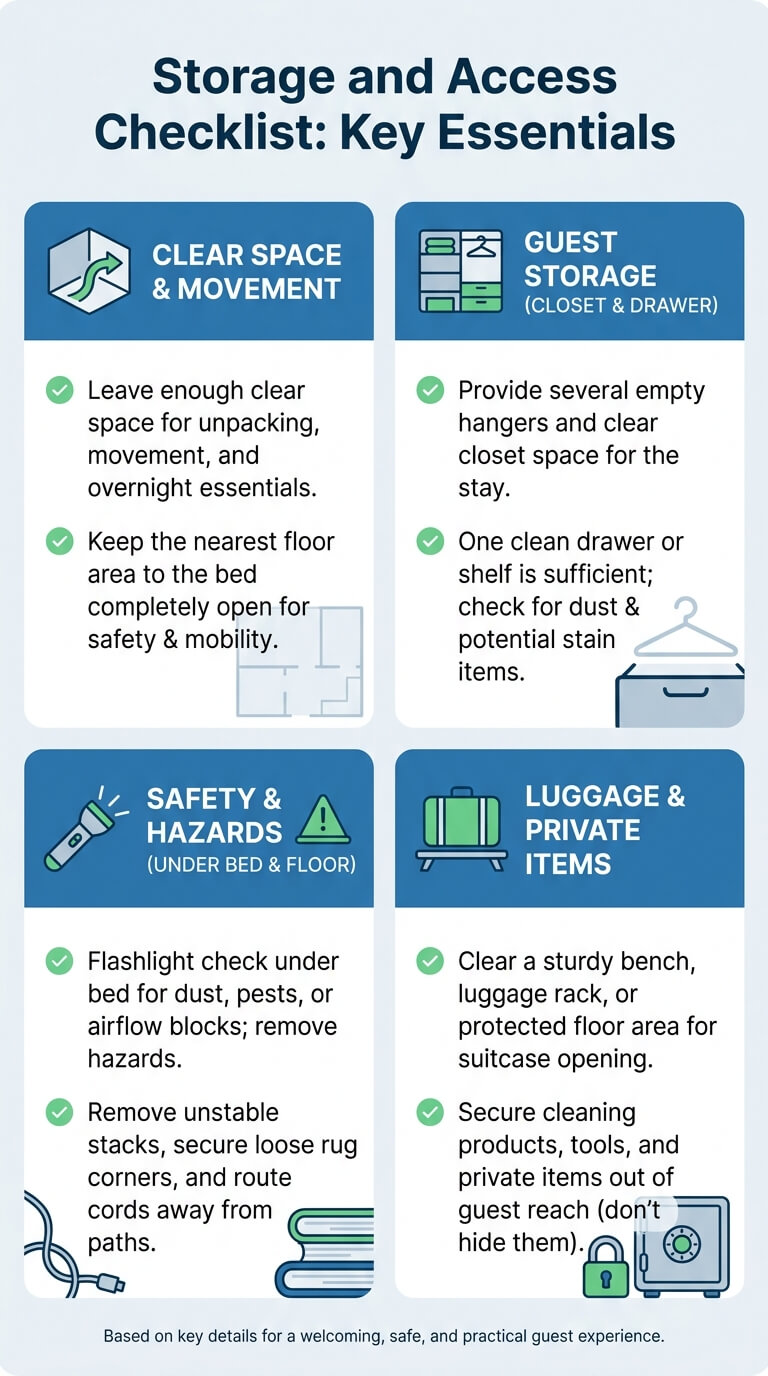
Leave enough clear space for unpacking, movement, and overnight essentials. For dust control, storage containers, and floor-specific care, see how to clean under a bed.
Clear a practical amount of closet or drawer space
Provide several empty hangers and enough clear space for the length of the stay. One clean drawer or shelf may be sufficient for a short visit. Check for dust, scent sachets, loose hardware, and items that could stain clothing.
Check under the bed without starting a full storage project
Use a flashlight to look for dust, pet toys, damp boxes, insects, or objects protruding into the foot area. Remove anything that smells, leaks, or blocks airflow. Neatly contained storage can remain if it is clean, stable, and does not prevent the guest from placing shoes or luggage safely. If the guest may use a mobility aid or need help getting out of bed, keep the nearest floor area completely open rather than reserving it for bins.
Remove unstable stacks and trip hazards
Take down boxes balanced on wardrobes, books piled beside the bed, and decor that wobbles when touched. Secure loose rug corners and route cords away from walking paths.
Make luggage placement easy
Clear a bench, sturdy luggage rack, or protected floor area where a suitcase can open without blocking the door. Check the weight rating and stability of folding racks.
Keep cleaning products and private items out of reach
Remove spray bottles, laundry pods, pest products, tools, and spare medications from guest-accessible drawers. Store them in their normal secured location. Do not hide them behind curtains or under the bed.
Floor, Window, and Air Checklist
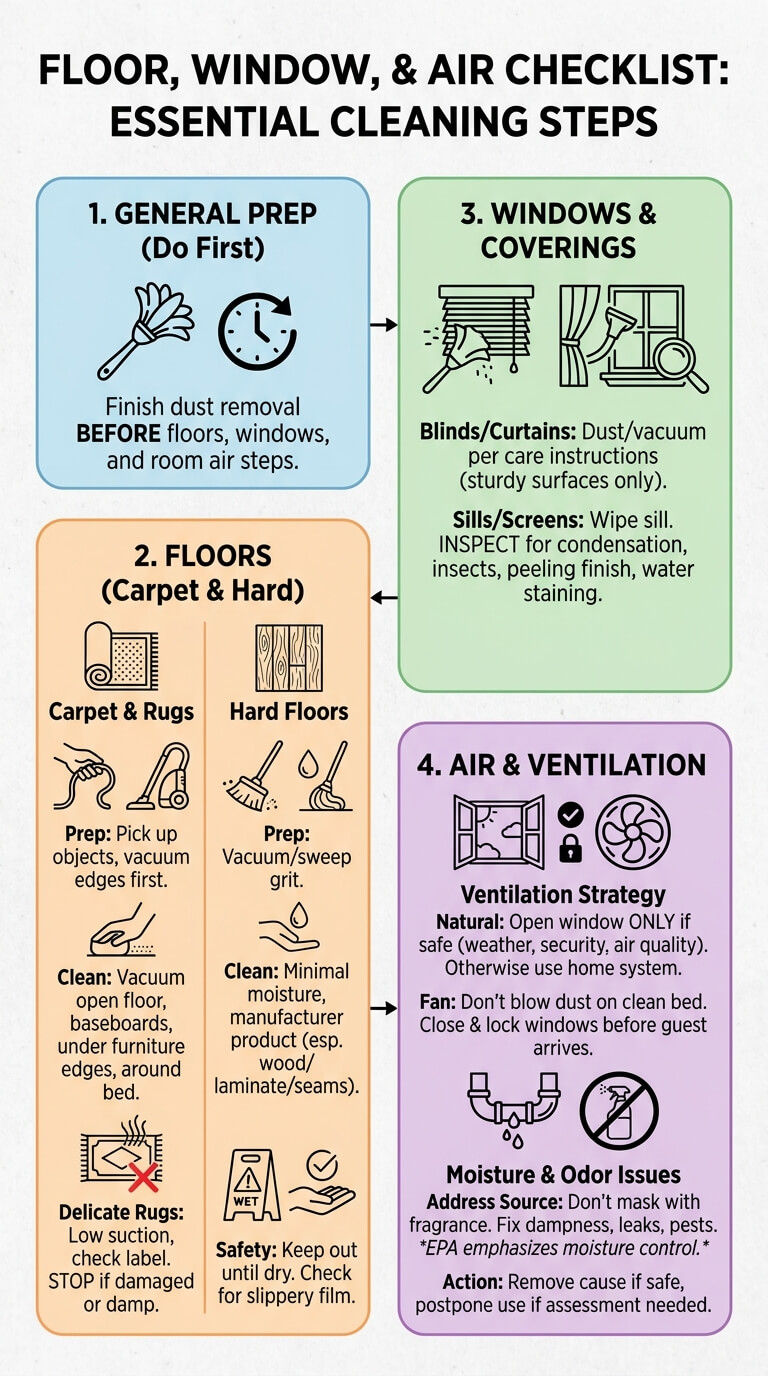
Finish dust removal before cleaning floors, windows, and room air.
Vacuum carpet and rug edges
Pick up cords and small objects first. Vacuum the open floor, along baseboards, beneath reachable furniture edges, and around the bed. Use lower suction on delicate rugs and check the rug label before treating spots. Stop if fibers pull, backing crumbles, or a hidden area feels damp.
Clean hard floors with minimal appropriate moisture
Vacuum or sweep loose grit before wiping. Use the floor maker’s recommended product and the least moisture needed, especially on wood, laminate, and seams. Keep guests out until the floor is dry. Check that cleaner has not left a slippery film near the bed or doorway.
Check curtains, blinds, sills, and screens
Dust blinds or shades using their care instructions, and vacuum sturdy curtain surfaces only when permitted. Wipe the sill and inspect for condensation, insects, peeling finish, or water staining.
Ventilate when outdoor conditions are suitable
Open a window only when weather, outdoor air quality, security, and screens make it sensible. Otherwise, use the home’s normal ventilation or climate-control system. Avoid placing a fan where it blows loose dust across the clean bed. Close and lock windows before the guest settles in.
Address moisture or odor sources instead of masking them
Fragrance does not correct a damp wall, wet carpet, leaking window, spoiled item, or pest problem. The EPA’s mold and moisture guide emphasizes moisture control. Remove the cause when safely possible and postpone room use if dampness or visible growth needs proper assessment.
Guest Comfort and Safety Check
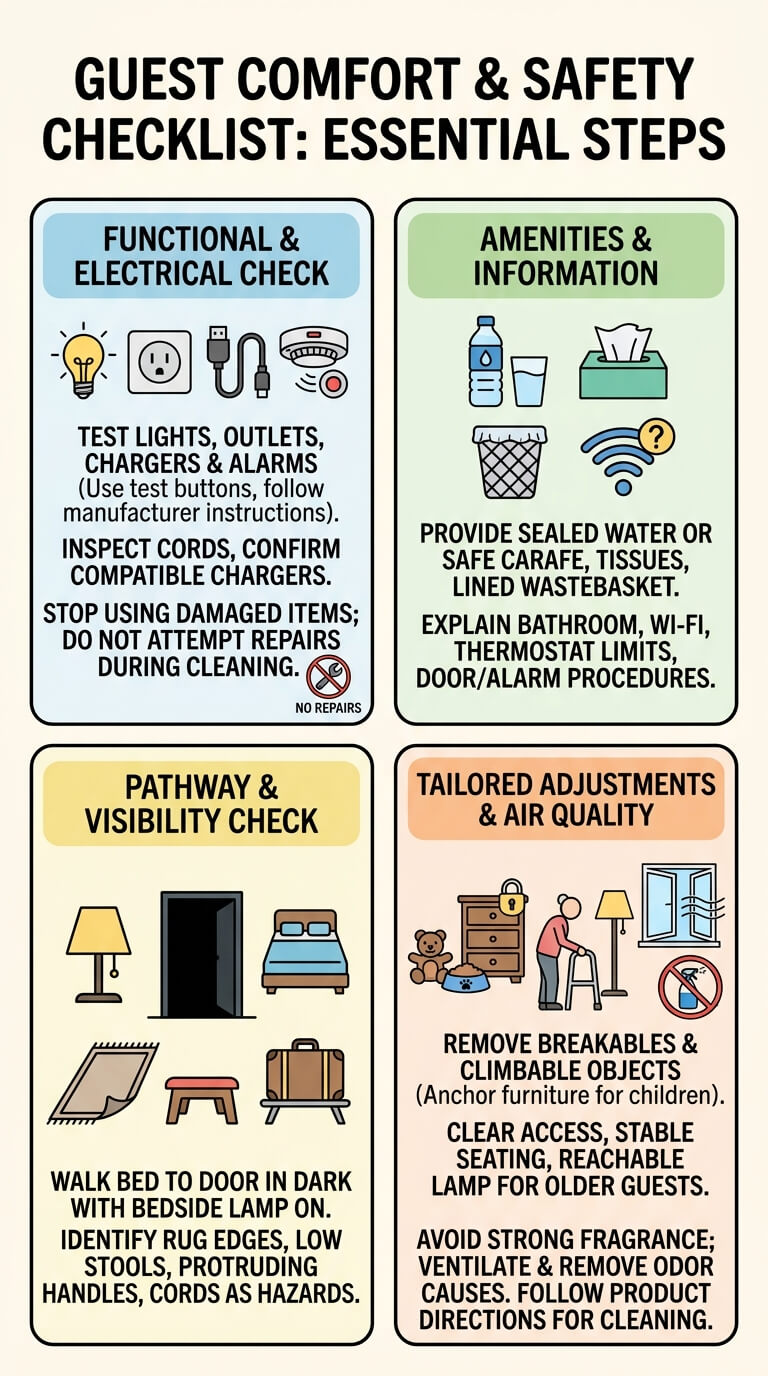
Test how the room works after dark and during normal use.
Confirm lights, outlets, chargers, and smoke/CO alarms are functional without performing repairs
Turn on lamps, inspect cords, and confirm that provided chargers are intact and compatible. Test alarms using their test buttons and follow their manufacturer instructions. CPSC guidance recommends monthly alarm testing and proper placement; review its smoke and carbon monoxide alarm guidance. Stop using damaged electrical items rather than attempting repair during cleaning.
Provide water, tissues, wastebasket, and basic instructions
Set out sealed water or a clean carafe arrangement you can maintain safely, tissues, and an empty lined wastebasket. Explain bathroom location, Wi-Fi access, thermostat limits, and any door or alarm procedures.
Check pathways and nighttime visibility
Walk from the bed to the door with the main light off and the bedside lamp on. Look for rug edges, low stools, protruding handles, open luggage racks, and cords.
Adjust for children, older guests, or pets
Remove tempting climbable objects, sharp decor, unstable stools, and breakables from reachable areas. The CPSC’s furniture tip-over information explains anchoring concerns, especially around children. For older guests, prioritize clear access, stable seating, and a lamp reachable from bed. Keep pet bowls, crates, and bedding away from cords and the nighttime path.
Avoid strong fragrance and unnecessary chemical residue
Do not spray perfume, fabric refresher, or air freshener simply to make the room smell cleaned. Ventilate when appropriate and remove actual odor causes. Wipe or rinse surfaces as product directions require, then let them dry.
One-Hour Guest Room Reset
Use four timed blocks so essential work is never skipped.
First 15 minutes: clutter, trash, and bedding
Open the room, collect trash and dishes, remove storage overflow, and strip visibly used bedding. Start a laundry load only if it can finish and dry in time; otherwise use a clean backup set. Put items that belong elsewhere into one carry-out container, then remove that container from the room before the next timed block begins.
Next 15 minutes: dust and high-touch surfaces
Dust from the headboard and lamp area toward the nightstand and dresser. Clean switches, handles, and the remote with methods safe for their materials. Wipe the mirror if needed.
Next 15 minutes: floor and visible details
Vacuum carpet or clean the hard floor, concentrating on the route around the bed and door. Remove visible cobwebs, dust the sill, and straighten the window covering. Do not drag heavy furniture or start wet upholstery work.
Final 15 minutes: comfort, safety, and supply check
Make the bed with clean dry linens, test lamps and alarms, set out tissues and water, empty the bin, and check temperature. Stand in the doorway for a final scan.
Fifteen-Minute Last-Minute Checklist
Prioritize fresh essentials, safe access, visible cleanliness, and working lights.
Clear the bed and floor path
Move bags, folded laundry, and storage items out of the room. Straighten the bed and ensure the guest can reach both the door and sleeping area without stepping around boxes.
Replace visibly used linens if clean backups are available
Change pillowcases and sheets that were slept in, stained, or handled during storage. Use a clean prepared set rather than starting a wash cycle that cannot dry. If no clean bedding is available, be honest and arrange another sleeping space instead of covering used linens with a blanket.
Dust the nightstand and lamp area
Use a clean dry or slightly damp cloth appropriate for the finish, then dry the surface. Dust the lamp only after disconnecting it. Leave room for a phone and drink.
Empty trash and remove odor sources
Take out food packaging, used tissues, pet items, damp towels, and forgotten cups. Check the closet and under the bed for the obvious cause of an odor. Open the room briefly when conditions permit.
Check lighting and room temperature
Turn on the bedside light, confirm the main light works, and remove any damaged lamp or cord from service. Adjust heating or cooling to a reasonable starting point.
Between Guests and Unused-Room Maintenance
Prompt turnover prevents used items and hidden problems from accumulating.
Launder used linens promptly
Collect sheets, pillowcases, towels, and washable protectors after departure. Treat stains according to the textile label before drying, because heat may make some marks harder to remove.
Air and dry the room before closing it
Check for damp towels, wet bathroom items, spills, or condensation. Ventilate or use normal climate control until cleaned surfaces and textiles are dry.
Check monthly for dust, insects, moisture, and dead batteries
Visit the room even when no guest is expected. Look at the window, floor edges, alarm status, lamp, bedding storage, and under-bed area. Remove new dust and insects before they accumulate. Record recurring problems, such as condensation at the same window or an alarm that repeatedly chirps, so the underlying maintenance issue is not forgotten between visits.
Store clean linens protected from dust
Fold fully dry linens and place them in a clean drawer, closed shelf, or breathable protective container appropriate for the fabric. Label sets if sizes are easy to confuse.
Do a seasonal deeper reset when needed
Several times a year, or before a longer visit, move light accessible items, clean floor edges, inspect the mattress and furniture, dust vents and upper areas, and wash suitable window textiles. Choose tasks based on actual soil and care limits rather than repeating a fixed heavy routine.
Guest Room Mistakes to Avoid
Poor timing and hidden clutter create most last-minute guest-room problems.
Waiting until arrival day to wash everything
Bulky blankets and protectors may take hours to dry, and an overloaded washer may not clean them well. Start early or keep a clean backup set.
Hiding storage under the bed without checking it
Pushing loose bags and boxes under the frame can block airflow, collect dust, smell musty, or interfere with luggage. Inspect the area first.
Masking musty odor with fragrance
A strong spray can make the room less comfortable and may delay discovery of moisture, old textiles, pests, or spoiled items. Find the cause, remove it when safe, and allow the room to air. Persistent mustiness deserves inspection before anyone sleeps there.
Overloading the room with decor or personal items
Too many pillows, framed photos, candles, books, and baskets leave nowhere for the visitor’s belongings. Reduce decor around the bed and clear one surface, one luggage zone, and some hanging or drawer space.
Forgetting lighting, outlets, and a clear luggage zone
A spotless room still feels inconvenient when the bedside lamp fails, outlets are hidden, or the suitcase blocks the door. Test the room at night and plan where charging and luggage will happen.
When a Basic Guest-Room Clean Is Not Enough
Pause room use when ordinary cleaning cannot resolve the condition safely.
Persistent musty odor or visible moisture
Do not place a guest in a room with an active leak, wet carpet, damp wall, recurring condensation, or unexplained visible growth. Remove access if needed and address the moisture problem. A room that smells musty again after airing may require building, plumbing, or environmental assessment.
Pest evidence
Droppings, shed skins, live insects, gnawing, nesting material, or repeated bites call for more than a quick vacuum. Isolate affected textiles, avoid moving pests into other rooms, and identify the problem before treatment. Use qualified pest help when the extent or safe method is uncertain.
Damaged bed, unstable furniture, or electrical concerns
Do not use a bed with cracked supports, loose slats, or a shifting frame. Remove a leaning dresser, unstable shelf, sparking outlet, frayed cord, hot plug, or flickering fixture from use. Cleaning is not a repair. Arrange qualified help and provide another room until safety is confirmed.
Soiled mattress, widespread stains, or contaminated textiles
A mattress with extensive bodily-fluid contamination, deep odor, pest activity, or moisture damage may need professional assessment or replacement. The same applies to heavily contaminated carpets, curtains, and upholstered furniture. Avoid soaking, mixing chemicals, or covering the problem with clean linens.
Frequently Asked Questions
These answers cover common timing, bedding, and room-readiness decisions.
How far in advance should I clean a guest room?
Start 24 to 48 hours before arrival when laundry, floor cleaning, or ventilation is needed. That allows time for bedding and damp surfaces to dry. Add another day when the room needs bulky laundry, stain treatment, pest inspection, or repair coordination rather than ordinary surface cleaning.
What should I clean first in a spare bedroom?
Remove trash, storage overflow, and anything blocking access. Then strip and inspect the bed so laundry can begin early. Dust from higher areas toward furniture, clean the floor last, and finish with fresh bedding, lighting, temperature, water, tissues, and a clear place for luggage.
Do I need to wash unused guest bedding again?
Wash it when it smells stale, has visible dust, was stored uncovered, was handled by pets, or may have become damp. Bedding stored clean, fully dry, and protected may only need inspection and airing.
What should be left on a guest-room nightstand?
Keep it simple: a working lamp, tissues, water in a clean arrangement, and enough open space for a phone, glasses, or medication. Add brief household instructions only when useful.
How do I freshen a guest room without strong fragrance?
Remove trash and damp textiles, wash stale bedding, vacuum dust, and clean the floor with suitable products. Ventilate when weather and outdoor air permit, or use normal climate control. Persistent odor needs investigation.
How often should an unused guest room be checked?
A monthly walk-through is a practical starting point for many homes, with more frequent checks in humid seasons, after storms, or where pests are common. Inspect windows, bedding, floor edges, alarms, lights, and under-bed storage.
Final Thoughts
A comfortable guest room comes from timing and clear priorities. Remove storage overflow, inspect the bed, clean surfaces and floors with material-safe methods, and leave space for luggage and personal items. Test lighting, alarms, pathways, temperature, and nighttime access. Between visits, wash used linens promptly, let the room dry, and check for dust, pests, moisture, or damage. Pause room use when unstable furniture, electrical trouble, active dampness, widespread contamination, or pests require appropriate help.

Ethan Carter is the Founder & Editor of HomeCleanSecrets. Based in the United States, he has 5 years of experience creating practical home cleaning, laundry care, stain removal, decluttering, and home organization content. His goal is to help everyday households clean smarter and build simple routines that are easier to maintain.
Read more about Ethan Carter on his author page: https://homecleansecrets.com/ethan-carter/