
Cooking smells linger when food, oil, steam, or lightly burned residue remains after the meal. Clear the air, remove food and waste, clean the grease zone, check washable textiles, and recheck after fresh scents fade.
Treat gas-like odor, hot electrical smell, melting plastic, soot, or continuing smoke as a safety problem. Leave when necessary and contact the appropriate emergency, utility, repair, or fire service.
Quick Answer: Ventilate, Remove the Food Source, Clean Grease Zones, and Recheck
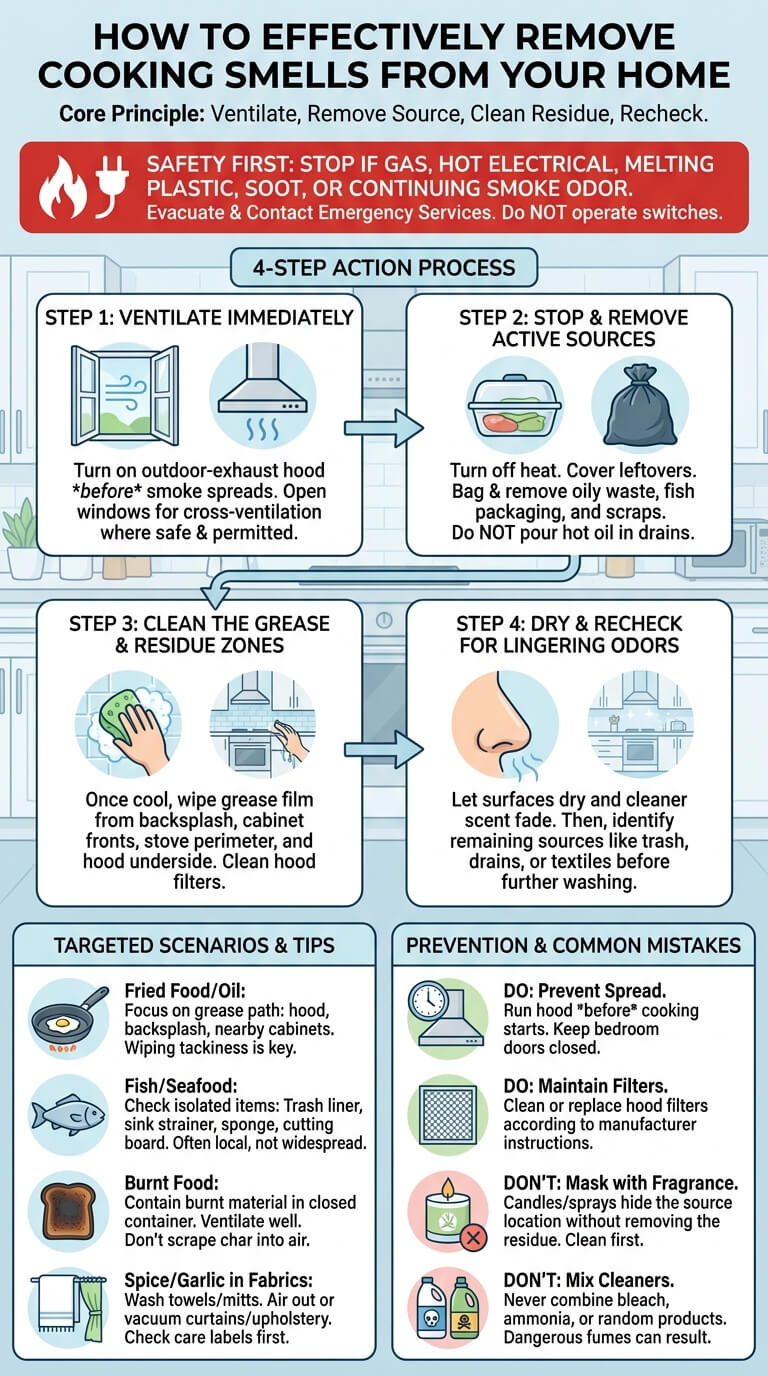
Use air movement, source removal, targeted cleaning, drying, and a delayed odor check. Treat the strongest odor path instead of washing the entire house.
Immediate actions
Turn off the cooking appliance, move the finished food into covered containers, and remove any safely handled scraps or oily packaging. Run a hood that exhausts outdoors, or create cross-ventilation when outside conditions are suitable. Close bedroom and closet doors to limit spread into stored fabric.
What fragrance cannot fix
Candles, sprays, incense, and scented cleaners can combine with food odor without removing oil film or residue. They also obscure where the smell returns first. Keep the room neutral until the source is cleaned and air exchanged.
Safety stop for gas, electrical, or fire odor
Stop if the smell resembles unburned gas, melting insulation, hot plastic, wiring, soot, or an active fire. Do not switch electrical equipment on or off around a suspected gas leak. Move people to safety and follow local emergency or utility instructions before any cleaning begins.
Why Cooking Smells Linger
Cooking odor can remain in the air, settle as oily residue, or transfer to absorbent materials. That is why it may return after windows close.
Airborne moisture and particles
Boiling, frying, searing, and baking release moisture and tiny particles that move with warm air. Open-plan layouts, stairwells, and central air returns can carry them beyond the kitchen. Air exchange reduces what is suspended, but it cannot remove residue that has already landed on a surface.
Grease film on nearby surfaces
Frying and high-heat cooking can leave a thin film on the backsplash, cabinet fronts, counters, handles, and the wall beside the range. The film may feel only slightly tacky, yet it releases odor whenever the room warms. A clean-looking kitchen can still have a narrow greasy odor zone.
Range-hood and filter buildup
A hood captures air only as well as its design, airflow, placement, and maintenance allow. A loaded metal filter or dirty hood surface can hold old cooking residue near the stove. A recirculating unit may also depend on a replaceable filter that cannot be restored by washing.
Trash, dishes, drains, and cookware
Fish packaging, onion skins, oily paper, pan drippings, soaking dishes, a damp strainer, and residue around a sink can continue smelling after the room air improves. Check each separately. The pan may smell stronger than the stove after cooling.
Curtains, upholstery, rugs, and clothing
Soft materials hold odor longer when they are close to the cooking area or repeatedly exposed. Kitchen towels, oven mitts, washable rugs, and the cook’s clothing are common carriers. Curtains and upholstered seating need a care check before wet treatment because water can cause rings, shrinkage, or slow drying.
Identify the Odor Type

Odor type and timing narrow the cleanup. After the appliance is off and food is covered, follow the strongest point.
Fried-food or oil odor
A fried-food smell often follows the path of airborne oil from the pan to the hood, backsplash, upper cabinet fronts, and nearby textiles. Look for tackiness around the range. If the smell is strongest in warm afternoon conditions, settled grease film is more likely than trapped room air alone.
Fish and seafood odor
Fish odor can remain in packaging, a cutting board, pan seam, trash liner, sink strainer, sponge, or refrigerator spill. Remove and wash one item at a time. If the air clears but the smell returns near the sink or trash, the remaining source is probably local rather than throughout the house.
Onion, garlic, curry, and spice odor
Aromatic ingredients can remain on cutting tools, blender gaskets, container lids, towels, and absorbent furnishings. Strong spices may also cling to an oily surface film. Check the cooking zone before laundering large textiles, since fabric treatment will not help if the cabinets and hood are still carrying residue.
Burnt food without a fire
A scorched pan, toaster crumb, oven spill, or burned sauce can create a sharp odor without structural fire damage. Once the appliance is safely off and cool, remove the burned material without scraping it into the air. Clean the affected cookware or appliance only according to its instructions.
Gas-like, electrical, soot, or fire odor that needs a different response
Do not assume every unusual smell after cooking came from food. A sulfur-like gas odor, hot outlet, arcing sound, melted cord, smoke from a control panel, or soot beyond the cookware requires a safety response. Leave cleaning until the appliance and building have been declared safe.
Step 1: Stop and Remove the Active Source

Stop continued odor release first, then work outward after hot cookware and surfaces are safe to handle.
Turn off heat safely
Turn off the burner, oven, toaster, fryer, or countertop appliance using its normal control. Do not move a pan of hot oil through the house. Stay nearby while high-heat cookware cools, keep combustibles away, and use a lid only when it is safe and appropriate for the situation.
Contain food and oily waste
Transfer leftovers into containers with secure lids. Tie fish packaging, oily paper, and strongly scented scraps in a suitable bag before moving them to the correct waste location. Do not pour hot oil into a trash liner or drain. Let grease cool and follow local disposal guidance.
Clean cookware residue after it is safe to handle
Soak or wash compatible pans, trays, lids, utensils, and cutting boards after they have cooled. Pay attention to rolled rims, handles, gasket channels, and pan undersides. Follow the cookware maker’s instructions for nonstick, cast iron, enameled, aluminum, or specialty surfaces.
Remove burnt material without spreading smoke
Place cooled burned food in a closed bag or container rather than carrying an uncovered pan through multiple rooms. Avoid vigorous dry scraping that releases char into the air. The NFPA’s cooking safety guidance emphasizes staying with active stovetop cooking and keeping an eye on frying.
Step 2: Ventilate Based on Outdoor Conditions
Ventilation works best during and just after cooking, provided outdoor air, weather, security, and building rules allow it.
Range hood and exhaust fan
Start the hood before smoke or steam spreads, use a setting that captures the plume, and let it run briefly after cooking. An outdoor-venting hood removes air from the room. A recirculating unit filters and returns air, so its odor performance depends heavily on clean, correct filters.
Windows and cross-ventilation
Open two safe openings to create cross-ventilation. A fan can direct air outward when kept away from heat, water, and walkways. EPA guidance for indoor air while cooking recommends outdoor exhaust and safe fresh-air ventilation when conditions permit.
Apartment and shared-building limitations
In an apartment, opening a corridor door can push odor into common space or bring another unit’s air inside. Use the kitchen exhaust, approved windows, and interior doors instead. Report a hood that does not operate, vents back into the room unexpectedly, or appears connected to a building problem.
Avoiding fragrance during diagnosis
Do not light scented candles or spray perfume while trying to judge progress. Fragrance can cause irritation and hide whether the food odor has actually weakened. Use neutral air movement, remove the source, and wait until the room is dry before making the final check.
Step 3: Clean the Grease and Touch Zones
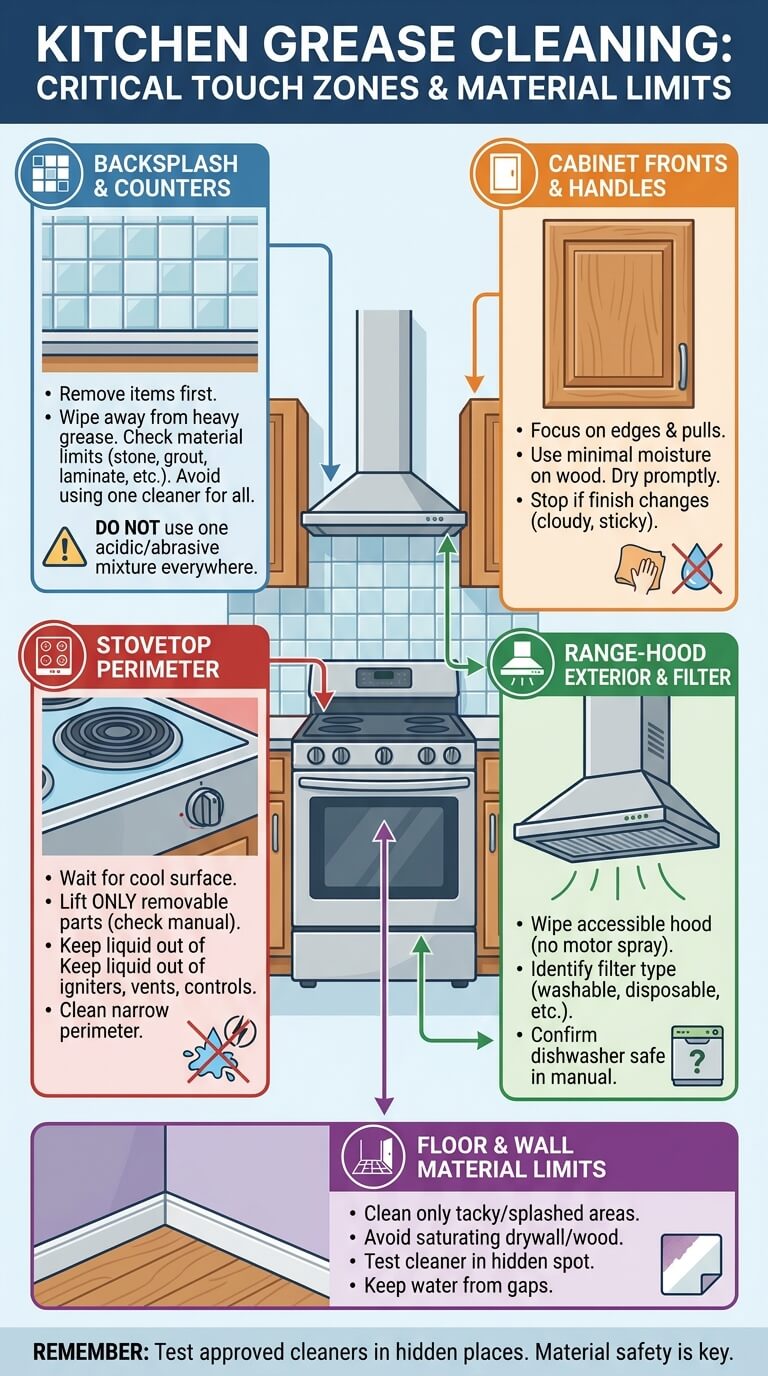
Clean the smallest confirmed area with a material-safe product. Control overspray near seams and controls, then remove residue as directed.
Backsplash and nearby counters
Remove food and small appliances, then wipe the backsplash and the counter strip nearest the stove. Work from less greasy areas toward the heaviest film. Stone, grout, laminate, painted wall panels, glass, and metal can have different cleaner limits, so do not use one acidic or abrasive mixture everywhere.
Cabinet fronts and handles
Check the cabinets above and beside the range, especially lower edges, pulls, and the first door touched while cooking. Use minimal moisture on wood and finished surfaces. Dry promptly. Stop if the finish becomes cloudy, sticky, softened, or transfers color to the cloth.
Stovetop perimeter
Wait until the surface is cool. Lift only removable parts identified in the manual, and keep liquid out of igniters, vents, control shafts, and electrical openings. Clean the narrow perimeter where oil and sauce collect. Replace parts only after they are clean, dry, and correctly seated.
Range-hood exterior and filter decision
Wipe the accessible hood without spraying the motor or controls. Identify whether the filter is washable metal, disposable charcoal, or another type. Broan-NuTone’s filter cleaning instructions use warm water and mild detergent for compatible grease filters while directing owners to confirm dishwasher suitability in the manual.
Floor and wall material limits
Clean only the splashed or tacky area unless odor evidence points farther away. Painted drywall should not be saturated. Unsealed wood, natural stone, wallpaper, and some flooring can stain or swell. Test the approved cleaner in a hidden place and keep wash water away from baseboard gaps.
Step 4: Check Secondary Odor Sources
If the cooking zone is clean, check residue-holding and absorbent items from nearest to farthest.
Trash can and liner
Remove food packaging and inspect beneath the liner for leaks. Wipe the lid, rim, pedal, and cabinet floor if they were touched during cooking. A clean bag placed over fish liquid or oily residue will not solve the smell. Wash and dry the bin separately when needed. When the strongest remaining point is the bin, lid, liner ring, or leaked liquid beneath the bag, use the guide to remove trash can odor.
Sink, drain, and disposal area
Clear the strainer, wash the sink, and remove food residue around the stopper and splash zone. Do not pour random chemical mixtures into a drain. If a disposal is present, follow its manual. A sewage-like smell, slow drainage, or recurring backup needs plumbing attention rather than repeated deodorizing.
Towels, oven mitts, and sponges
Smell each item after it cools and dries. Wash towels and washable mitts according to their labels, with enough space to rinse well. Replace a sponge that remains oily or sour after appropriate cleaning. Do not return damp textiles to a closed drawer or hook.
Curtains, upholstered seating, and rugs
Vacuum dry loose material first when the care instructions permit. Wash removable covers and curtains only by label. For fixed upholstery or rugs, test any treatment and avoid soaking. A good check is to compare the fabric closest to the kitchen with the same material farther away.
Food containers and refrigerator spills
Check lid seals, lunch containers, takeout boxes, and refrigerator shelves used for leftovers. Wipe an exterior spill immediately and wash removable food-contact parts as directed. Keep the task limited to the identified spill or container rather than emptying the entire refrigerator without evidence.
Step 5: Dry the Room and Recheck Later
Dry treated areas and perform a neutral recheck after cleaner scent and open-window effects fade.
Wait for cleaner scent to fade
Rinse or wipe as directed, remove used cloths from the room, and let surfaces dry. Wait until detergent and fragrance are no longer dominant. Judging too early can lead to unnecessary repeated washing or the use of stronger products on an already clean surface.
Close the room briefly
After ventilation and drying, close the kitchen or adjacent area for a short period that is safe for the home. Then enter and notice the first odor before walking around. Do not use this technique when there is any concern about gas, smoke, electrical overheating, or harmful fumes.
Follow the first odor point
Move slowly toward the stove, hood, sink, trash, textiles, and adjoining doorway. The first strong point is more useful than the general impression after several minutes. Check at nose level and near the actual surface without touching hot, electrical, or contaminated areas.
Decide whether the source is air, film, trash, drain, or fabric
If the smell improves rapidly with ventilation, air concentration was important. If it returns when the room warms, inspect grease film. A localized smell at the bin, drain, or curtain points to that item. This decision prevents cleaning the wrong material again. When the odor has moved beyond the kitchen or the strongest material is unclear, use the home odor checklist by room to compare the rest of the house.
Handle Common Cooking Odor Scenarios
Match the cleanup to the residue path, then reassess after the room returns to normal temperature.
Fried food throughout an open-plan home
Run the outdoor-venting hood, open safe windows, and close doors to bedrooms and closets. Remove the oil and food waste, then clean the stovetop perimeter, backsplash, hood underside, and nearest cabinet fronts. Wash nearby towels and the cook’s clothing before treating distant furniture.
Fish smell after dishes are washed
Check packaging, the trash liner, sink strainer, cutting board, pan handle, lid rim, sponge, and refrigerator shelf. Dry each cleaned item before judging it. If one object remains strong after safe washing, isolate it rather than repeatedly scenting the whole room.
Spice odor in curtains or upholstery
First remove oily film from the range and cabinets so the fabric is not re-exposed. Air the room, vacuum compatible fabric, and follow the care label for removable pieces. Use a professional cleaner when delicate upholstery, dye instability, or slow drying makes home wet-cleaning risky.
Burnt pan odor
Turn off the heat, keep the pan stable, ventilate, and let it cool. Remove the burned contents in a closed container. Clean the cookware by its material instructions. Inspect the burner area for overflow, but do not disassemble a stove or wet electrical components. When smoke, soot, or burnt residue has spread beyond an ordinary kitchen cleanup, use the broader guide to remove smoke smell from the house.
Neighbor or shared-building cooking odor
Notice whether the odor enters through a window, corridor, wall opening, shared shaft, or return vent. Avoid blocking required ventilation. Use permitted windows and exhaust, close the entry path when safe, and document timing for the property manager if the issue is frequent or unusually strong.
Prevent Lingering Cooking Smells
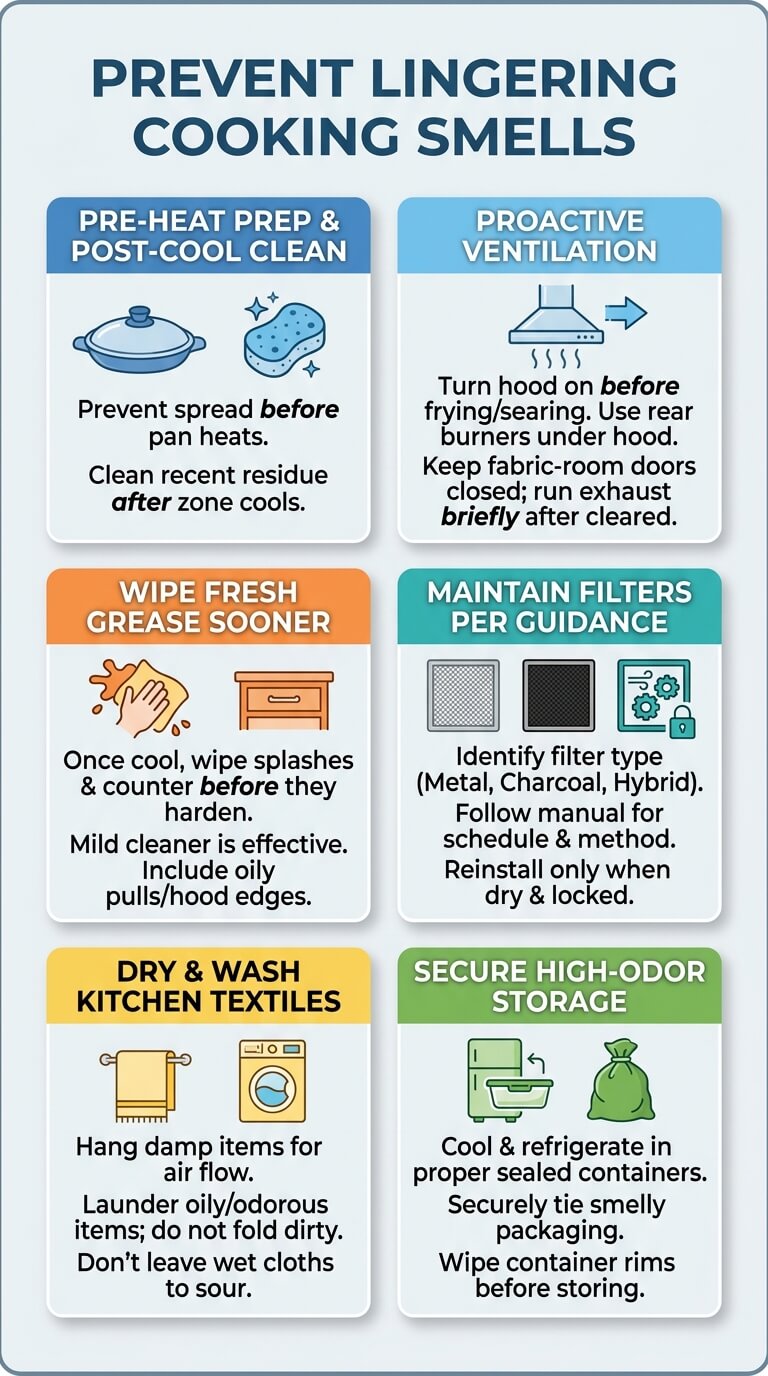
Prevent spread before the pan heats, then clean recent residue after the cooking zone cools.
Use ventilation before odor spreads
Turn on the hood before frying, searing, or cooking strongly aromatic food. Use rear burners under the hood when the appliance instructions and recipe allow. Keep doors to fabric-heavy rooms closed, and continue exhaust briefly after the visible steam or light smoke has cleared.
Maintain filters by manufacturer guidance
Identify the filter type and follow the hood manual for cleaning, replacement, and safe removal. A metal grease filter, charcoal filter, and hybrid unit do not share one schedule or method. Reinstall only when parts are dry and locked into their correct position.
Clean fresh grease film sooner
Once the stove is cool, wipe recent splashes and the nearby counter before they harden. A small amount of mild cleaner on the correct material is usually more effective than heavy scrubbing later. Include cabinet pulls and the lower hood edge when they were touched with oily hands.
Dry and wash kitchen textiles
Hang damp towels and mitts where air can reach both sides. Launder items that picked up oil or food odor instead of folding them into a drawer. Do not leave wet cloths in a sink, washer, or closed hamper, where a second sour odor can develop.
Store high-odor leftovers and waste securely
Cool and refrigerate food using safe food-handling practices, with containers that close properly. Tie or remove strongly scented packaging based on local waste arrangements. Wipe container rims before storage so odor does not transfer to shelves, hands, or nearby food packages.
Cooking-Odor Mistakes to Avoid
Avoid methods that add scent, spread residue, or damage materials. Follow the evidence you find.
Boiling or mixing random deodorizing ingredients
Simmering a pleasant ingredient may add scent, but it does not remove grease film or dirty cookware. Never combine household cleaners, acids, bleach, ammonia, drain products, or unknown residues. Use one labeled product at a time on a compatible surface with suitable ventilation.
Covering grease film with fragrance
Perfume settles on the same cabinets, walls, and fabric that already hold cooking residue. The mixed smell can become heavier as the room warms. Clean the confirmed film first and use unscented air exchange for the recheck.
Ignoring the hood filter
A dirty filter can keep old oil near the cooking zone and reduce performance. Do not assume every filter is washable. Check the model instructions, disconnect power when required, and replace disposable media instead of soaking it. Stop if the filter is damaged or will not seat correctly.
Wet-cleaning upholstery without a care check
Too much water can leave rings, shrink fabric, affect dye, or create a new damp odor inside cushions. Read the care information and test an approved method in a hidden area. Use professional help for delicate fabric, fixed padding, or odor that seems deep within the furniture.
Treating fire or gas odor as ordinary food smell
Do not remain inside for a suspected gas leak or continuing fire odor. A hot plug, warm outlet, flickering power, or burning-plastic smell can indicate an electrical hazard. CPSC electrical safety advice says not to use unusually hot outlets or switches and to have them checked by a qualified electrician.
When to Stop and Escalate
Ordinary food odor should improve after its residue path is addressed. Escalate fuel, electrical, fire, mechanical, or unidentified persistent problems.
Gas-like odor
Leave the area and follow local gas-utility or emergency instructions. Do not light flames, smoke, use a phone inside, or operate switches when a gas leak is suspected. Cleaning and ventilation decisions should wait until trained personnel say the space is safe.
Electrical or melting-plastic odor
Stop using the appliance. If it can be disconnected without touching heat, smoke, damage, or water, follow the manufacturer or emergency guidance. Keep people away from a hot outlet, cord, control panel, or breaker problem and arrange qualified electrical or appliance service.
Soot, fire, or widespread smoke
Visible soot beyond a pan, continuing smoke, scorched cabinetry, or a fire that affected the room is outside ordinary cooking-odor cleanup. Call emergency services for an active event. Afterward, follow insurer and qualified restoration guidance before wiping surfaces or operating HVAC equipment.
HVAC involvement
If odor appears whenever heating or cooling starts, or smoke entered returns and ducts during an incident, stop guessing at filters and duct treatments. Check the system manual and arrange inspection when appropriate. Do not spray fragrance or liquid cleaner into vents or equipment.
Persistent odor after source removal and cleaning
If the smell returns after a neutral recheck, document its location, timing, weather, appliance use, and temperature. A property manager, appliance technician, electrician, plumber, or indoor-air professional may need that pattern. Persistent odor without a clear source should not be chased with repeated chemicals.
Frequently Asked Questions
These answers apply only to ordinary food odor, not gas, electrical, soot, or fire conditions.
Why does cooking smell stay in the house overnight?
The odor may remain in closed room air, but it often also sits on a thin grease film, dirty hood filter, trash, cookware, or nearby fabric. Ventilate, remove waste, clean the confirmed cooking zone, wash affected textiles, let everything dry, and recheck the closed room.
How do I remove fried-food smell quickly?
Turn on outdoor exhaust, open safe windows, cover the food, contain the oil and waste, and close doors to bedrooms. After the range cools, wipe the backsplash, stovetop perimeter, hood underside, and nearest cabinet fronts. Remove oily towels and clothing for laundering.
How do I get fish smell out of the house?
Check the fish packaging, trash liner, cutting board, pan, lid, sink strainer, sponge, and refrigerator shelf. Wash each compatible item and dry it fully. Ventilate while cleaning. Do not assume the walls or furniture need treatment until these concentrated sources are removed.
Can cooking odor soak into curtains and furniture?
Yes, repeated exposure or heavy frying can leave odor on absorbent fabric, especially near an open kitchen. Clean the grease source first. Then follow the care label for curtains, covers, rugs, or upholstery, using minimal moisture and professional care when the material is delicate.
Should I use candles or air freshener after cooking?
They may add fragrance but do not remove food residue, grease, or dirty textiles. Flames also add a safety concern around active cooking. Clear the air and remove the source first. Use fragrance only later, if desired, after the room passes an unscented recheck.
Why does the kitchen smell after the stove is clean?
The odor may remain on the hood filter, cabinet fronts, backsplash, trash can, sink strainer, pan, sponge, towel, curtain, or nearby rug. Check the first odor point after ventilation and drying. A spotless cooktop does not prove that the surrounding residue path is clean.
When is a burnt smell a safety problem?
Treat it as a safety problem when smoke continues, soot extends beyond the food, an appliance control panel smells hot, a cord or outlet is warm, plastic is melting, power flickers, or the odor appears without burned food. Stop use and obtain the appropriate emergency or qualified service.
Final Thoughts
Stop the heat, contain food and oily waste, exhaust the air, clean the narrow grease zone, and check the trash, sink, cookware, and nearby textiles. Let everything dry before judging the result.
A delayed recheck tells you whether the remaining odor is in the air, on a film, or inside one item. Avoid masking products and random mixtures while diagnosing. Gas-like odor, hot electrical smell, melting plastic, soot, continuing smoke, or fire damage always takes priority over ordinary kitchen cleanup. For the broader source-first sequence across rooms and materials, use the odor removal guide.

Ethan Carter is the Founder & Editor of HomeCleanSecrets. Based in the United States, he has 5 years of experience creating practical home cleaning, laundry care, stain removal, decluttering, and home organization content. His goal is to help everyday households clean smarter and build simple routines that are easier to maintain.
Read more about Ethan Carter on his author page: https://homecleansecrets.com/ethan-carter/