
An unexplained house smell is easier to trace when you inspect one room and one material at a time. Use this checklist to record where the odor is strongest, when it returns, and what changes after a suspect item is removed or dried.

Quick Answer: How to Use This Checklist
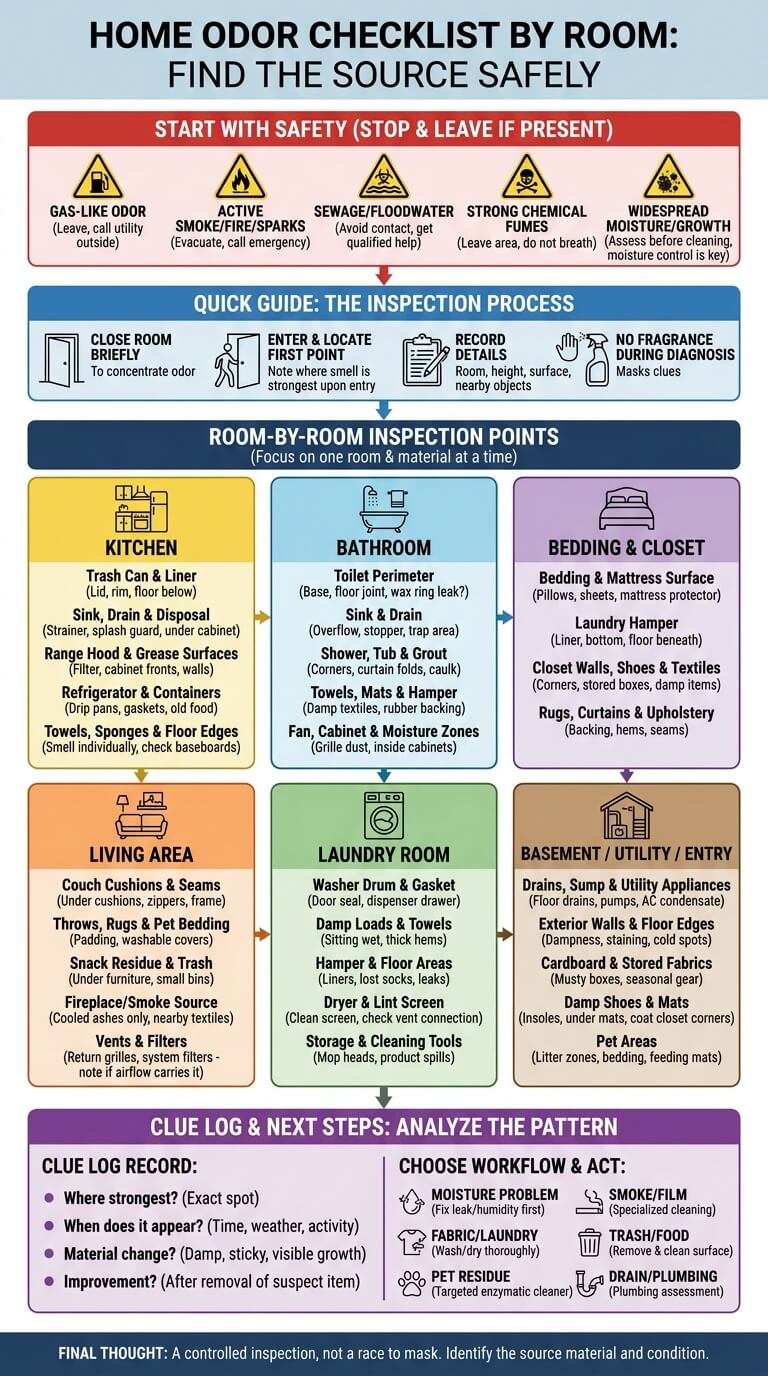
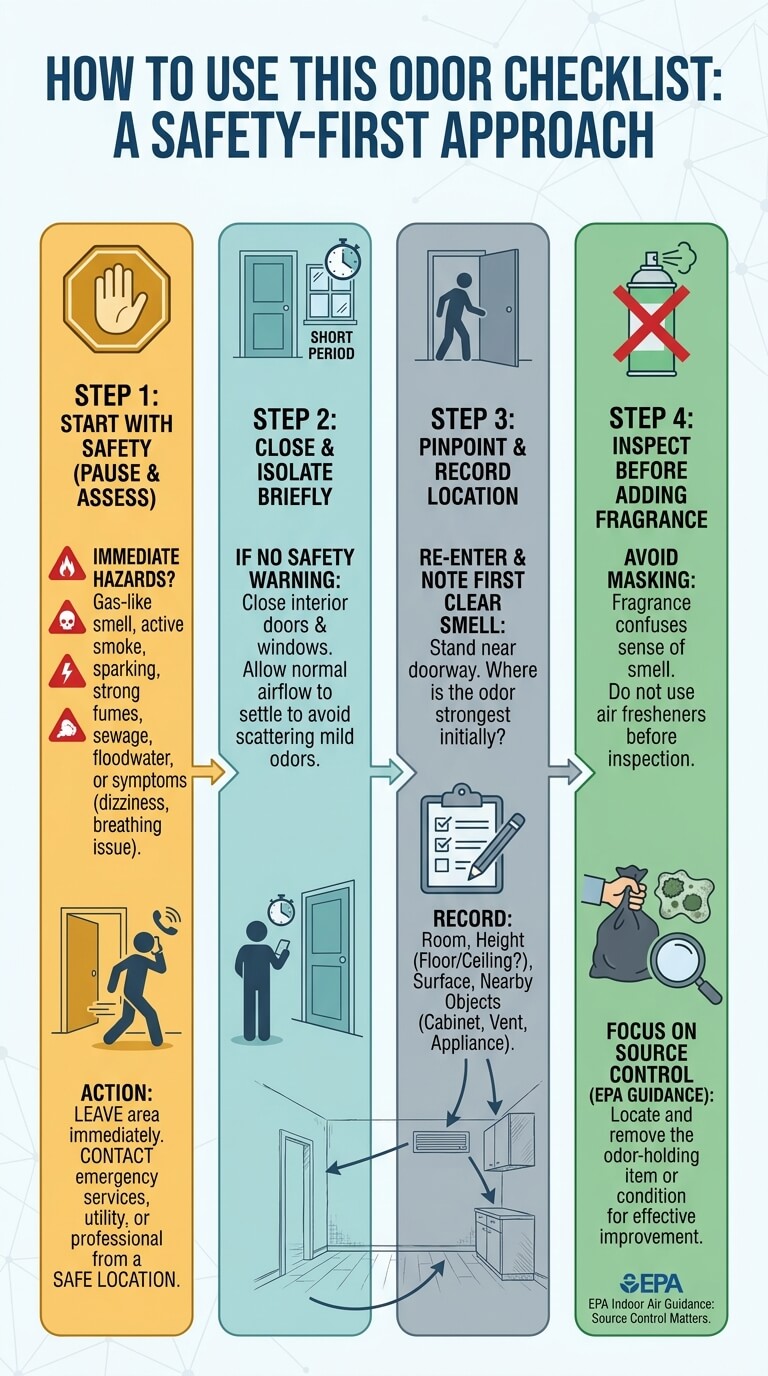
Start with safety
Pause before entering a room with a gas-like smell, active smoke, sparking, strong chemical fumes, sewage overflow, floodwater, or symptoms such as dizziness or breathing difficulty. Leave the area and contact the appropriate emergency service, utility, property manager, or qualified professional from a safe location.
Close the room briefly before checking
When no safety warning is present, close interior doors and windows for a short period so normal airflow does not scatter a mild odor. Re-enter, stand near the doorway, and note the first place where the smell becomes clear.
Record the first and strongest odor point
Write down the room, height, surface, and nearby objects. A smell strongest at floor level suggests different suspects than one strongest near a cabinet, vent, ceiling, or appliance.
Inspect before adding fragrance
Fragrance can temporarily confuse your sense of smell and make weak clues harder to compare. EPA guidance describes source control as a central way to improve indoor air, so locate and remove the odor-holding item or condition before relying on ventilation or air fresheners alone. EPA indoor air guidance explains why controlling the indoor source matters.
Whole-Home Odor Safety Screen
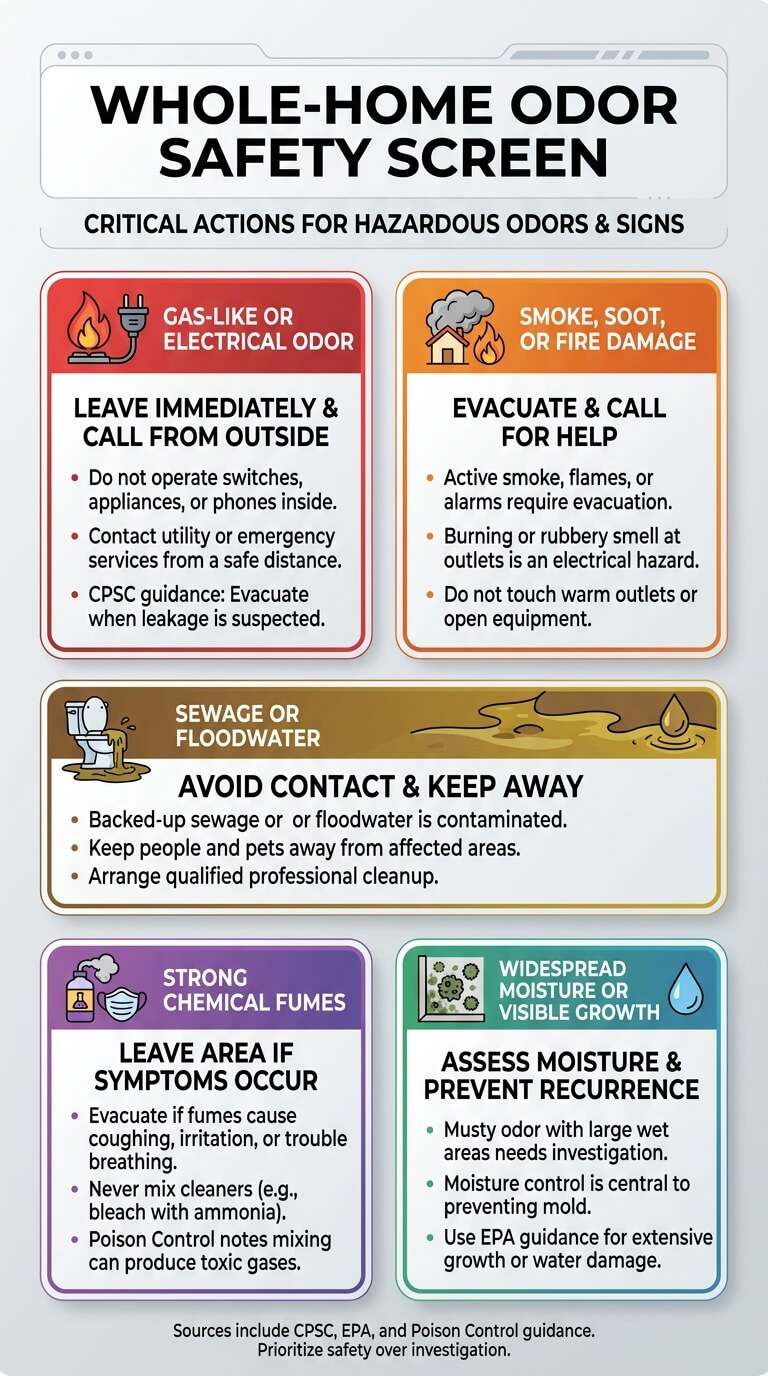
Gas-like or electrical odor
If you smell or hear leaking gas, leave immediately without operating switches, appliances, or phones inside. Contact the gas utility or emergency services from outside. CPSC safety guidance instructs occupants to leave when gas leakage is suspected rather than investigating appliances themselves. CPSC gas-leak precautions provide the same stop-and-leave direction.
Smoke, soot, or fire damage
Active smoke, heat, flames, fresh soot, or a smoke alarm requires evacuation and emergency help. A burning or rubbery smell near an outlet or appliance can indicate an electrical hazard. Do not open equipment, touch warm outlets, or continue an odor inspection around a suspected electrical fault.
Sewage or floodwater
Backed-up sewage, contaminated standing water, or flood-soaked porous materials are not ordinary odor issues. Keep people and pets away, avoid contact with the water, and arrange qualified cleanup. Wet electrical equipment and unstable flooring add hazards that smell alone cannot reveal.
Strong chemical fumes
Leave an area when fumes cause coughing, eye irritation, headache, nausea, or breathing trouble. Do not test unknown liquids by smelling containers closely. Never mix cleaners, especially bleach with ammonia or acids. Poison Control guidance on unknown fumes notes that cleaner mixtures can produce toxic gases.
Widespread moisture or visible growth
A musty odor with large wet areas, repeated leaks, softened materials, or extensive visible growth needs moisture assessment before cosmetic cleaning. EPA states that a moldy odor should be investigated and that moisture control is central to preventing recurrence. Use EPA mold and moisture guidance to judge when the problem exceeds a small household task.
Classify the Odor Before Choosing a Room
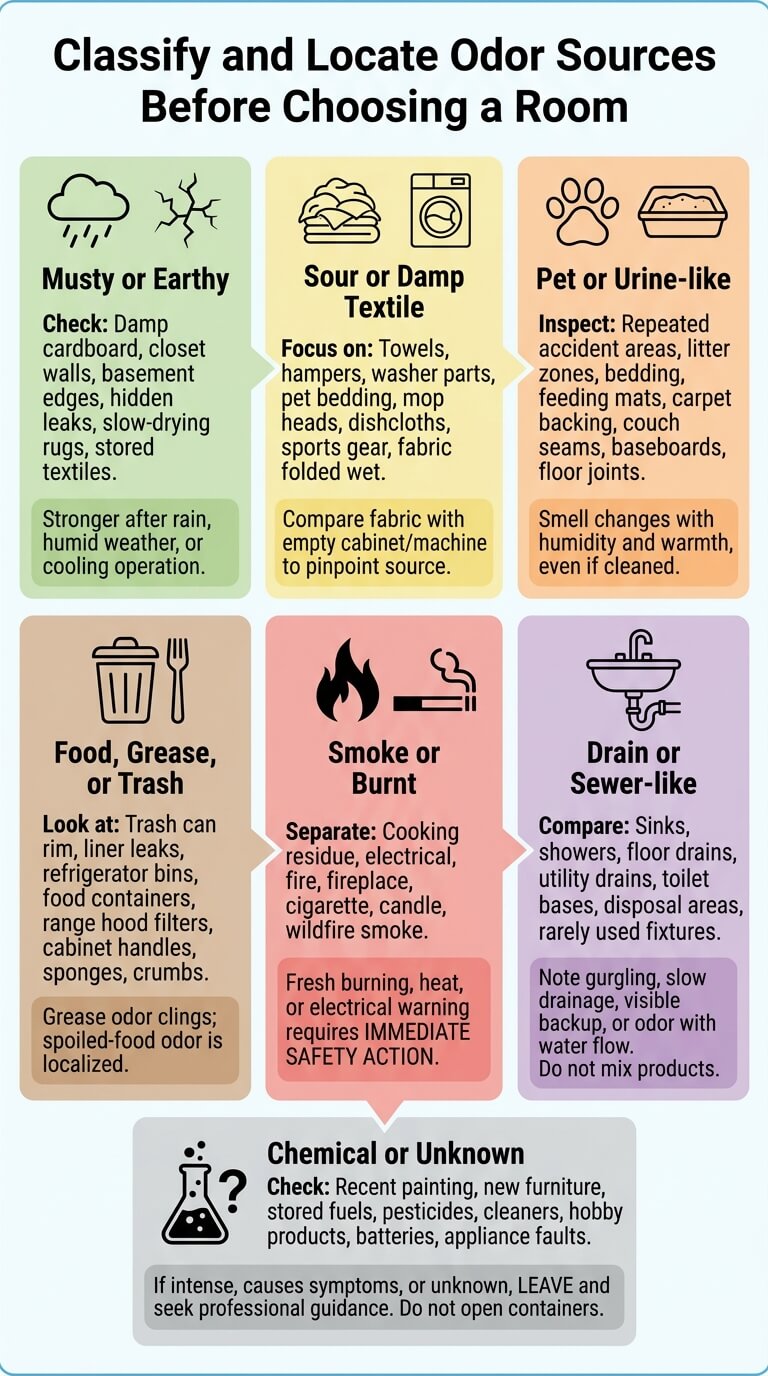
Musty or earthy
Check for damp cardboard, closet walls, basement edges, window condensation, hidden leaks, slow-drying rugs, and stored textiles. Note whether the smell grows stronger after rain, overnight closure, humid weather, or operation of cooling equipment.
Sour or damp textile
Focus on towels, hampers, washer parts, pet bedding, mop heads, dishcloths, sports gear, and fabric left folded before fully dry. Compare the fabric with the empty cabinet or machine so you do not blame the wrong item.
Pet or urine-like
Inspect repeated accident areas, litter zones, bedding, feeding mats, carpet backing, couch seams, baseboards, and floor joints. Smell changes with humidity and warmth, so a previously cleaned spot may become noticeable again even when the surface looks clean.
Food, grease, or trash
Look at the trash can rim, liner leaks, refrigerator bins, food containers, range hood filters, cabinet handles, floor edges, sponges, and hidden crumbs. Grease odor often clings to surfaces beyond the stove, while spoiled-food odor is usually strongest near one container or appliance.
Smoke or burnt
Separate ordinary cooking residue from electrical, fire, fireplace, cigarette, candle, or wildfire smoke. A mild old smoke smell may sit in fabrics and dust, but any fresh burning odor, heat, or electrical warning sign ends the checklist and requires immediate safety action.
Drain or sewer-like
Compare sinks, showers, floor drains, utility drains, toilet bases, disposal areas, and rarely used fixtures. Note gurgling, slow drainage, visible backup, or odor that changes when water runs. Do not pour multiple drain products into the same opening.
Chemical or unknown
Check recent painting, new furniture, stored fuels, pesticides, cleaners, hobby products, batteries, and appliance faults without opening or combining containers. If the smell is intense, causes symptoms, or cannot be safely tied to a normal labeled product, leave and seek professional guidance.
Kitchen Odor Checklist
Trash can and liner
Remove the bag, then smell the empty can at the lid, rim, hinge, bottom, and floor beneath it. Look for punctures, drips, food trapped under the liner, moisture inside a cabinet, and residue around sensor mechanisms.
Sink, drain, and disposal zone
Check the strainer, splash guard, sink overflow, disposal opening, drain connection, cabinet floor, and nearby cleaning tools. Record whether odor appears only when water runs or after the sink sits unused. Stop for leaks, sewage backup, or damaged plumbing.
Range hood, filter, and grease surfaces
Smell the hood filter, cabinet fronts, backsplash, light covers, and the wall above the cooking area after everything is cool. A tacky film usually indicates captured grease. Confirm that the hood vents as designed rather than simply recirculating air through a dirty filter.
Refrigerator and food containers
Inspect produce drawers, door gaskets, drip areas named in the manual, forgotten leftovers, leaking packages, reusable containers, and the floor beneath the appliance. Compare odor with the refrigerator off-limits: do not dismantle electrical or refrigerant components.
Towels, sponges, and floor edges
Smell dishcloths and sponges individually, then check mop heads, reusable bags, baseboards, toe kicks, and gaps where spills travel. Remove one suspect item at a time and close the kitchen briefly to see whether the room smell changes.
Bathroom Odor Checklist
Toilet perimeter
Inspect the bowl exterior, seat hinges, base, floor joint, wall behind the toilet, and nearby mats. Note rocking, seepage, staining, or odor concentrated at the base. Plumbing movement or leakage needs repair rather than repeated surface deodorizing.
Sink and drain
Smell around the drain opening, overflow channel, stopper, faucet base, vanity pipes, and cabinet floor. Check for a slow drip or damp stored product. An odor linked to gurgling, backup, or persistent sewer smell points to plumbing assessment.
Shower, tub, grout, and caulk
Look at lower corners, door tracks, curtain folds, bottle bottoms, caulk edges, grout, bath toys, and any access panel. Press gently for softness only where safe. Repeated dampness behind finishes is more important than surface discoloration alone.
Towels, mats, and hamper
Compare each towel, the folded hem, bath mat backing, hamper bottom, and hook or bar. A towel may smell neutral while dry and turn sour when damp. Remove textiles from the room to determine whether the odor remains in the building materials.
Fan, cabinet, and moisture zones
Check whether the fan operates, whether the grille is dusty, and whether mirrors or walls stay wet long after bathing. Smell closed cabinets and the wall behind stored products. Do not open electrical fan housings unless the power is safely isolated and the task is within your skill.
Bedroom and Closet Odor Checklist
Bedding, pillows, and mattress surface
Strip the bed and smell sheets, pillowcases, protectors, pillows, and the mattress surface separately. Check for spills, body-oil buildup, pet contact, dampness, and odor strongest near one side. Do not soak a mattress during diagnosis.
Laundry hamper
Remove all contents and inspect the liner, handles, lid, bottom, and floor below. Damp workout clothes, towels, socks, and cleaning cloths can make the whole room smell even when the hamper appears empty.
Closet walls, shoes, and stored textiles
Open the closet after it has been closed and compare the air at the doorway, floor, upper shelf, shoes, boxes, and walls. Pay close attention to exterior-wall corners, crowded floor areas, leather, cardboard, and rarely used fabrics.
Rugs, curtains, and upholstered headboards
Smell the rug face and backing, curtain hems, window area, and upholstery seams. Look for condensation, pet residue, spilled drinks, and dust trapped behind furniture.
Closed-room versus open-window clues
Record how the room smells after normal closure and after safe ventilation. Improvement with fresh air suggests accumulation, but it does not identify the cause. Odor that quickly returns points to an item or condition still inside the room.
Living Room Odor Checklist
Couch cushions and seams
Remove cushions when the furniture design allows it. Smell each side, seams, zipper areas, frame gaps, and the floor beneath. Look for food, drink spills, pet accidents, damp cleaning residue, and changes in foam or backing.
Throws, rugs, and pet bedding
Bag or move one textile group at a time, then close the room briefly and compare. Check rug pads and pet-bed inserts, not only washable covers. Dense padding can keep odor after the visible surface has dried.
Snack residue and trash
Inspect under furniture, between cushions, side tables, toy bins, plant saucers, cups, and small wastebaskets. Sweet or sour smells often come from a small spill that reached wood joints, carpet edges, or upholstery rather than an obvious pile of food.
Fireplace or smoke source
Check cooled ashes, fireplace doors, nearby textiles, candles, incense, and smoking areas. Do not investigate an active chimney, hot appliance, smoke event, or suspected flue problem as a cleaning task. Use a qualified chimney or fire-safety professional when operation seems abnormal.
Vents and filters
Note whether odor appears when heating or cooling starts. Inspect accessible return grilles and replaceable filters according to the system manual, but do not assume the ductwork is the cause. A nearby room source can be carried by normal airflow.
Laundry Area Odor Checklist
Washer drum, gasket, and dispenser
Smell the empty drum, door gasket, lid, detergent dispenser, and any accessible filter named in the manual. Look for trapped lint, residue, standing water, and small items. Do not remove panels or reach into inaccessible drain components.
Damp loads and towels
Check whether finished laundry sat in the washer, whether towels were bundled before washing, and whether thick hems remain cool after drying. Separate one affected load from the room to see whether the appliance area still smells.
Hamper and floor
Inspect hamper liners, the floor beneath baskets, wall edges, lost socks, and leaks behind appliances. A slow supply or drain leak may create a musty room odor that seems like a washer problem.
Dryer and lint areas
Check the lint screen and accessible areas described in the manual. Stop using the dryer for burning, electrical, overheating, or unusual mechanical odors. Do not operate it with a suspected blocked vent or damaged cord.
Storage shelves and cleaning tools
Smell mop heads, rags, brushes, ironing covers, product drips, and shelves. Keep cleaners in original containers with readable labels. Dispose of damaged or leaking products according to local instructions rather than transferring them to unmarked bottles.
Basement, Utility, and Storage Odor Checklist
Exterior walls and floor edges
Walk the perimeter after rain and during dry weather. Note cool damp areas, staining, peeling finishes, mineral deposits, softened trim, and odor strongest where walls meet floors.
Cardboard and stored fabrics
Inspect box bottoms, paper, luggage, seasonal clothes, upholstered items, and wood furniture. Move suspect storage away from walls and compare each item outdoors or in a neutral area. Cardboard can spread musty odor without being the original moisture source.
Drains, sump, and utility appliances
Check floor drains, sump covers, water heaters, furnaces, freezers, and utility sinks from a safe distance. Record water, rust, leaks, gurgling, alarms, or odor changes during operation. Fuel-burning and electrical equipment require qualified service when anything seems abnormal.
Condensation and water-entry clues
Look at pipes, windows, ducts, foundation edges, and stored objects touching cold surfaces. Record whether the odor increases after storms, snowmelt, humid days, or equipment cycles.
Garage and chemical-storage limits
Do not treat fuel, solvent, pesticide, battery, exhaust, or unknown chemical odor as a normal room smell. Keep the connecting door closed, avoid ignition sources, and ventilate only when it can be done safely. Seek fire, utility, poison, or hazardous-waste guidance as appropriate.
Pet-Area Odor Checklist
Beds and blankets
Smell covers, inserts, seams, foam, crate pads, and the floor beneath. A washable cover can hide an odor-holding insert. Check for dampness, saliva, urine, skin oils, and materials that no longer dry completely.
Feeding areas
Inspect bowl rims, rubber bases, feeding mats, food-storage containers, wall splashes, and floor joints. Wet food and trapped water can create sour odor, while damaged containers may hold old residue in scratches or seals.
Litter and waste zones
Check the box exterior, mat, scoop holder, nearby trash can, wall, and floor seams. Do not combine cleaners in a litter area, and keep pets away from wet products until labels say the surface is safe.
Carpet, couch, and floor seams
Use location history and close inspection rather than relying only on smell from standing height. Check carpet backing, pad edges, upholstery seams, baseboards, and gaps between floorboards. A small surface mark may cover a wider absorbed area.
Repeated accident locations
Mark each known spot and compare it on dry and humid days. If an odor keeps returning after appropriate cleaning, residue may remain in backing, subfloor, padding, or damaged material. Persistent marking or urinary changes also warrant veterinary advice.
Entryway, Shoes, and Small Closed-Space Checklist
Damp shoes and coats
Separate wet footwear, insoles, umbrellas, coats, gloves, and hats. Smell each item after it dries in an open area. Check shoe trays and wall hooks for trapped water instead of returning damp gear to a closed cabinet.
Mats and floor edges
Lift mats and inspect both sides, the floor below, thresholds, baseboards, and door weatherstripping. Rainwater, snowmelt, pet residue, and cleaning moisture can remain under a mat after its top feels dry.
Coat closets and cabinets
Empty the lowest shelf and floor, then check wall corners, cardboard, reusable bags, and stored cleaning supplies. Odor strongest on an exterior wall or after rain may indicate moisture rather than clothing alone.
Sports gear and bags
Open gym bags, helmets, pads, lunch bags, and reusable shopping bags in a ventilated area. Remove washable liners and check foam, straps, pockets, and forgotten food. Do not place still-damp gear back into the same closed space.
Airflow and storage density
Note whether items are packed tightly against walls or doors. Overcrowding slows drying and hides leaks or spills. Create enough space to inspect surfaces and let damp-prone items dry before storage, but do not treat airflow as a substitute for fixing moisture.
Odor Clue Log
Where it is strongest
Record the room, exact object or surface, height, and distance from drains, vents, exterior walls, plumbing, and appliances.
When it appears
Note time of day, weather, room closure, appliance cycles, showering, cooking, laundry, pet activity, and trash day. A pattern that follows rain, heat, humidity, or equipment operation narrows the likely category.
Which material feels damp, sticky, or changed
Write down coolness, moisture, tacky film, swelling, discoloration, crumbling, rust, softness, or reduced absorbency. Do not damage a surface to test it. Changed material often deserves attention even when the odor is weak.
What improves after removal or drying
Remove one safe, portable suspect at a time. Record whether the room improves after a liner, towel, pet bed, box, sponge, or food container leaves. This controlled comparison is more informative than cleaning several areas at once.
What returns after the room is closed
After safe ventilation and removal of obvious suspects, return the room to normal use and check again later. Fast recurrence suggests the main source remains. Record the same location instead of following the strongest moving air current.
Choose the Correct Next Workflow

Moisture-source problem
Choose this path when odor follows rain or humidity, materials feel damp, condensation appears, or a leak is present. Stop cosmetic cleaning until the water source and drying conditions are addressed. Escalate widespread, hidden, repeated, or structurally damaging moisture.
Fabric or laundry problem
Choose this path when towels, clothing, rugs, bedding, curtains, or washable covers carry the odor outside the room. Follow care labels, separate incompatible materials, inspect the washer and drying process, and verify that thick areas are dry before storage.
Pet residue problem
Choose this path when the same accident location, bed, litter zone, feeding area, carpet edge, or upholstery seam tests strongest. Match the method to the material and contamination. Persistent pet health or marking changes should be discussed with a veterinarian.
Smoke or cooking-film problem
Choose this path only after ruling out active fire and electrical hazards. Identify whether residue is mainly on washable textiles, hard grease-coated surfaces, fireplace materials, or smoke-affected porous items. Severe fire or soot damage needs specialized assessment.
Trash or food problem
Choose this path when removal of waste, spoiled food, a leaking container, or a dirty can clearly improves the area. Inspect the surface below and any cabinet seams so liquid residue is not left behind.
Drain, plumbing, or contamination problem
Choose this path when odor centers on a drain, toilet base, leak, backup, sump, or standing water. Routine accessible cleaning may help ordinary residue, but sewage, recurring sewer odor, hidden leakage, or contaminated water requires plumbing or professional cleanup.
Checklist Mistakes to Avoid
Cleaning the whole room before locating the source
Whole-room cleaning removes clues and makes it unclear which action helped. Begin with the strongest point and one removable item. Clean broadly only after you have identified the material or condition most likely to hold the odor.
Using fragrance during diagnosis
Sprays, candles, plug-ins, and scented powders can mask changes, irritate sensitive occupants, or add a second smell. Keep the air neutral until the check is complete. Ventilation can reduce accumulation, but it should not hide a continuing source.
Testing multiple products at once
Multiple cleaners make results hard to interpret and can create dangerous reactions. Read every label, use one compatible product at a time, and clean ordinary dirt before deciding whether disinfection is needed. CDC home guidance also recommends cleaning surfaces before sanitizing or disinfecting them. CDC cleaning guidance explains this sequence.
Ignoring damp backing, seams, and containers
Odor often remains in rug pads, upholstery foam, box bottoms, hamper liners, towel hems, cabinet joints, and trash-can rims after the visible face is cleaned. Inspect the construction of the item instead of assuming the top surface represents the whole material.
Continuing after a safety stop
Do not keep searching because the odor seems weak or because you want to finish the checklist. Gas, electrical, fire, sewage, chemical-fume, flood, and widespread moisture warnings require distance and qualified help. Safety takes priority over identifying the exact smell.
Frequently Asked Questions
How do I find where a bad smell is coming from?
Rule out hazards, close one safe room briefly, enter at the doorway, and record where the odor first becomes clear. Move from the room to a zone, then to individual materials, seams, containers, drains, or appliances. Remove one safe suspect at a time and compare the room again.
Why does my house smell only after the windows are closed?
Closing windows reduces dilution and may reveal an indoor source that was present all along. Common possibilities include damp materials, cooking film, pet residue, stored textiles, drains, or low-airflow spaces. Improvement with open windows does not prove that ventilation alone solves the cause.
Why does an odor move after I clean one area?
Air currents can carry odor away from its origin, and one strong source may have hidden a second weaker one. Cleaning can also add moisture or fragrance that changes perception. Return to the clue log and compare fixed locations after the room returns to normal.
Should I use baking soda while searching for the source?
Wait until diagnosis is complete. An absorber may reduce a mild smell without showing which material caused it, and powder may be unsuitable for some surfaces, appliances, pets, or children. First isolate the suspect item and follow its care or product instructions.
How do I tell whether an odor is in the air or a material?
Move a safe portable item to a neutral area and smell it separately. Then check the emptied room after brief ventilation and normal closure. If the item carries the odor with it, the material is involved. If the room remains strong, continue checking fixed surfaces and systems.
When should I call a professional about a house odor?
Call for help when there is suspected gas, electrical trouble, fire damage, sewage, floodwater, strong chemical fumes, repeated plumbing odor, widespread moisture, structural damage, symptoms, or a smell that returns without a safely accessible cause. Choose the professional that matches the evidence, such as a utility, electrician, plumber, fire service, moisture specialist, or qualified remediation company.
Final Thoughts
A useful home odor check is not a race to make every room smell scented. It is a controlled inspection that identifies the strongest location, the affected material, the timing pattern, and the condition that makes the odor return.
Start with safety, record clues before cleaning, and change one factor at a time. Once the evidence points to moisture, laundry, pets, smoke, food, trash, drains, or contamination, move to the focused method or qualified professional that fits that problem.

Ethan Carter is the Founder & Editor of HomeCleanSecrets. Based in the United States, he has 5 years of experience creating practical home cleaning, laundry care, stain removal, decluttering, and home organization content. His goal is to help everyday households clean smarter and build simple routines that are easier to maintain.
Read more about Ethan Carter on his author page: https://homecleansecrets.com/ethan-carter/