
Smoke odor can remain in loose particles, sticky film, paint, cabinets, floors, curtains, upholstery, carpet, paper, filters, and other porous materials. A whole-house plan begins with the source and severity, then separates dry residue removal, compatible surface cleaning, soft-material care, airflow checks, and a neutral recheck.
Light incidental smoke is different from long-term tobacco residue, fireplace draft problems, wildfire exposure, visible soot, or fire damage. EPA guidance on indoor particulate matter explains particulate sources, but the presence of odor alone cannot determine which materials are contaminated or whether a structure is safe to clean.
Leave and seek emergency, utility, fire, or professional guidance for active fire, gas-like or electrical odor, melting plastic, strong irritation, chemical smoke, visible soot after a fire, or an unknown source. Do not operate HVAC, fans, switches, or cleaning equipment when doing so could spread contamination or create an ignition risk.
Quick Answer: Remove the Source, Work Dry Before Wet, and Clean in Layers
The Whole-House Smoke Sequence
Confirm the source has stopped and conditions are safe. Remove burned material, ash, and smoky trash appropriately. Work dry before wet where loose residue or soot is possible, clean compatible hard surfaces from high to low, isolate soft materials, check serviceable filters, then recheck after the house rests.
What Ventilation Can and Cannot Do
Suitable outdoor air can dilute airborne odor and support drying, but ventilation does not remove smoke film from walls, cabinets, textiles, carpet, or contents. It can also spread residue into clean rooms or bring in wildfire smoke, humidity, or outdoor pollution. Ventilate only after a safety and outdoor-air check.
Safety Stops Before Cleaning
Stop for visible soot, charred or melted material, damaged electrical equipment, structural damage, persistent irritation, or widespread wildfire or fire residue. Avoid dry dusting and ordinary vacuuming of soot. Do not mix cleaners, use homemade bleach ratios, or run ozone generators as a household DIY treatment. CDC household cleaning guidance helps keep routine cleaning and disinfecting decisions separate.
Identify the Smoke Source and Severity
Light Incidental Smoke
A brief, contained event without soot or damage may affect one room, nearby hard surfaces, and a few washable textiles. Remove the source, ventilate when outdoor conditions are suitable, inspect for film, and clean the smallest affected area first. Confirm that electrical and combustion equipment are operating normally.
Ordinary Cooking Smoke as a Separate Specialized Case
Normal frying, fish, spices, and cooking grease need a kitchen-focused workflow involving the source, range hood, grease film, kitchen textiles, and adjacent rooms. This page covers cooking smoke only as a classification branch. Burned food can be removed here, but routine cooking odor should not become a fire-remediation project. When the source is routine cooking, frying, grease film, cookware, or kitchen textiles rather than wider smoke contamination, use the guide to remove cooking smells from the house.
Cigarette or Long-Term Tobacco Smoke
Repeated tobacco smoke can create sticky film across ceilings, walls, cabinets, trim, carpet, upholstery, paper, and ventilation paths. Surface cleaning may reveal deeper odor in porous materials. Do not promise complete removal, and do not paint over residue before cleaning and material assessment.
Fireplace Smoke and Draft Problems
Fireplace odor can come from ash, soot, a cold flue, downdraft, damaged components, or combustion problems. Stop use if smoke enters the room unexpectedly. Do not diagnose or repair the chimney through cleaning advice; arrange inspection by an appropriate fireplace or chimney professional.
Wildfire Smoke Without Visible Soot
Wildfire smoke can enter through open windows, gaps, ventilation, and clothing even when no soot is visible. Follow current local public-health and air-quality guidance before ventilating. Clean accessible residue conservatively, service filters as directed, and escalate persistent or widespread contamination rather than assuming odor equals a light event.
Soot, Burned Material, or Fire Damage
Soot can smear, become airborne, and contain residues that ordinary cleaning methods are not designed to control. Do not use a household vacuum, wet rag, or broad fan on unknown soot. Fire-damaged structures and contents need fire officials, insurers, restoration specialists, and material-specific handling.
Electrical, Melting-Plastic, or Gas-Like Odor
Treat these as potential hazards, not odor-removal tasks. Leave the area when appropriate, avoid switches or ignition sources around suspected gas, and contact emergency services, the utility, electrician, or equipment service provider. Do not mask the smell, run HVAC, or search inside powered equipment.
Build the Cleanup Plan by Contamination Level
One Room and Short Exposure
Contain the source room, protect clean areas, remove disposable smoky material, and inspect high horizontal surfaces before wet cleaning. Work from high to low and keep soft items separate. A short event may still affect filters or adjacent textiles, so recheck after drying.
Multiple Rooms or Repeated Exposure
Stage the house into affected, transition, and cleaner zones. Prevent tools, cloths, shoes, and textiles from carrying residue between them. Clean one logical zone at a time and change supplies frequently.
Sticky Film or Visible Staining
Sticky residue on a white test cloth, yellowing near walls, or visible film calls for a material-compatible cleaning plan. Dry dust removal alone will not lift oil-bound residue. Test finishes, use controlled solution, follow label rinsing directions, and stop if paint, coating, dye, or texture changes.
Porous-Material and HVAC Concerns
Carpet pad, insulation, unfinished wood, paper, ceiling tile, cushion fill, and HVAC interiors can hold residue beyond a surface wipe. Do not open assemblies or ducts without appropriate expertise. Document where odor strengthens and whether equipment operation changes the location.
Conditions That Exceed Routine DIY Cleaning
Visible soot, wildfire contamination, fire damage, prolonged tobacco saturation, chemical smoke, damaged electrical equipment, structural changes, strong irritation, or odor inside walls and HVAC exceed a routine freshness job. Limit disturbance and obtain qualified assessment before cleaning spreads residue or removes evidence.
Step 1: Stop the Source and Remove Loose Residue
Burnt Food, Ash, Cigarette Waste, and Smoky Trash
After confirming items are cool and safe, remove burned food, ash containers, cigarette waste, packaging, and smoky trash according to local disposal rules. Use fire-safe containers where required. Do not place warm ash or smoking material in ordinary trash, and keep residue from crossing clean rooms.
Dry Removal Before Any Wet Cleaning
Remove appropriate loose dust and debris before introducing liquid. Use equipment specified for the residue and surface. Ordinary vacuums may be unsuitable for soot or fine fire residue. When the material is unknown, avoid brushing, blowing, or vacuuming until a professional method is established.
Soot-Smear Risk
A damp cloth can turn soot into a larger smear and drive it into porous paint, fabric, grout, or unfinished material. Do not test visible soot with a household cleaner. Protect the area from contact and airflow, photograph the condition, and seek restoration guidance.
Protect Clean Rooms and Stored Items
Close or cover clean storage as appropriate, keep smoky textiles bagged or contained temporarily, and dedicate tools to affected zones. Do not use loose plastic over damp materials or carry residue on shoes, gloves, carts, or cloths.
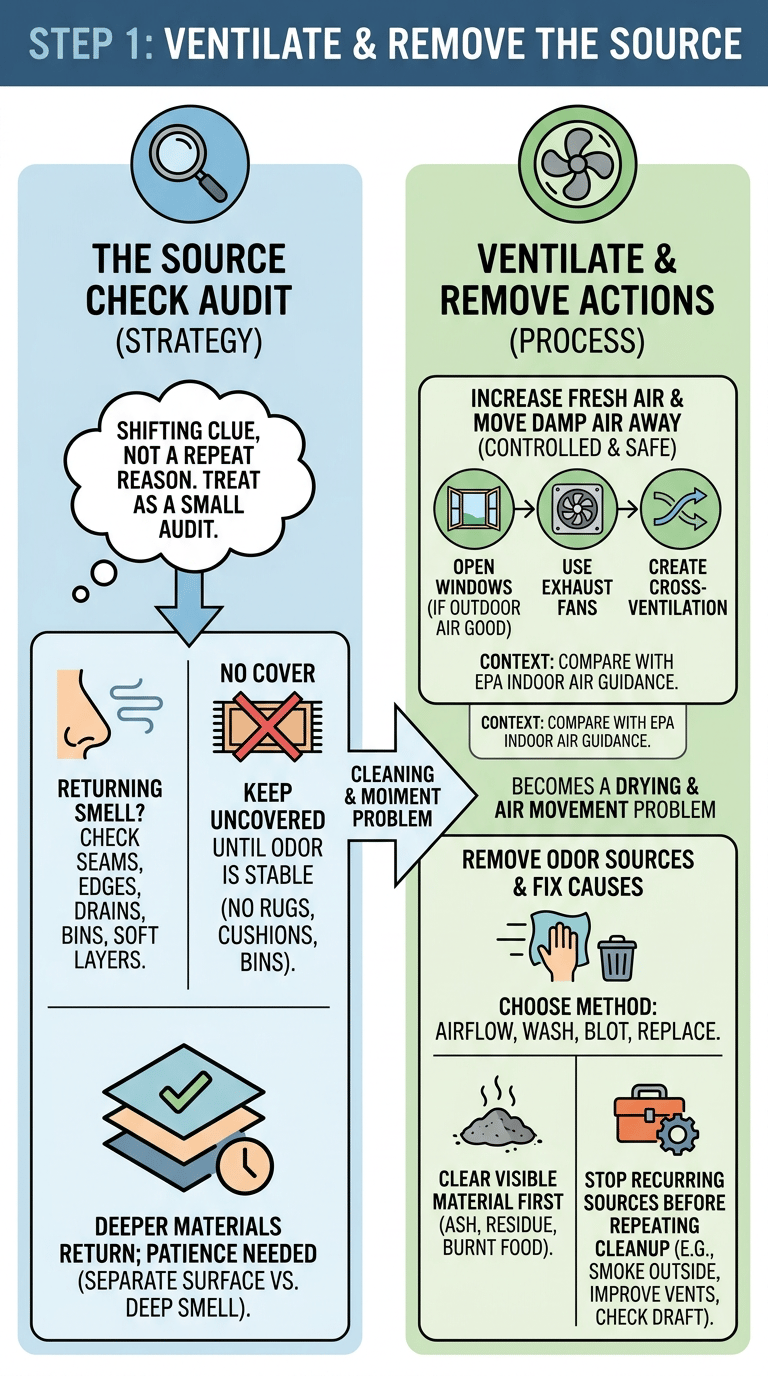
Step 2: Ventilate Only When Conditions Are Suitable
Outdoor Air Quality and Weather
Check local air quality, smoke conditions, humidity, rain, temperature, and wind before opening windows. Wildfire smoke or humid outdoor air can worsen indoor conditions. Follow current authority guidance. improving indoor air quality provides general context, but it does not override local emergency instructions.
Exhaust Direction and Cross-Ventilation
When the source is stopped and conditions are safe, direct airflow from cleaner air toward an exterior exhaust rather than through unaffected rooms. Secure fans and cords away from wet areas. Do not create negative pressure around combustion appliances or operate equipment contrary to building or professional guidance.
Keep Contaminated Air from Moving into Clean Rooms
Close interior doors, use defined work paths, and avoid running portable fans that blow residue across the house. HVAC operation may spread odor or particles when a system is affected. Keep it off until operation is confirmed safe when fire, soot, wildfire, or system contamination is suspected.
Why Fragrance Makes Diagnosis Harder
Candles, sprays, plug-ins, incense, essential oils, and scented powders compete with smoke odor and can add particles or residues. They do not remove film. Pause fragrance during cleanup and recheck so the strongest remaining room, surface, textile, or airflow path can be identified accurately.
Step 3: Clean Hard Surfaces in a Controlled Order
Ceilings and Upper Walls
Inspect high surfaces first because smoke rises and residue can settle above eye level. Do not work overhead beneath unknown soot or damaged ceilings. For light compatible film, follow paint and cleaner instructions, test a hidden area, and control drips. Use stable access equipment.
Painted Walls and Finish Testing
Identify paint sheen and condition before cleaning. Test a low-visibility area with a white cloth, let it dry, and check color, gloss, tackiness, and streaking. Use only a compatible cleaner in small sections. Stop if the finish softens, transfers, or develops uneven patches.
Cabinets, Doors, Trim, Handles, and Switches
Residue collects on vertical edges, cabinet tops, door frames, handles, and switch plates. Turn off power only through safe, approved procedures when required and never spray electrical components. Follow the material and product instructions for wood, laminate, paint, metal, and plastic.
Hard Floors
Finish floors after higher surfaces so fallen dry soil and drips are collected last. Vacuum or sweep compatible dry debris first, then clean with the floor manufacturer’s method. Limit water on wood, laminate, seams, and damaged finishes.
Change Cloths and Cleaning Solution Often
A cloth loaded with smoke film redistributes residue. Fold to a clean face, replace cloths as they soil, and refresh solution according to its label. Keep clean and used tools separate. Smoke odor alone does not require disinfecting every surface, and stronger chemistry does not replace film removal.
Electronics and Specialty-Finish Limits
Do not spray screens, controls, vents, speakers, artwork, unsealed stone, antiques, specialty coatings, or powered equipment. Follow the manufacturer or conservator. Smoke inside electronics, motors, or valuable objects requires qualified service, especially after fire, soot, overheating, or liquid exposure.
Step 4: Handle Soft and Porous Materials Separately
Curtains, Bedding, Throws, and Removable Covers
Separate washable household textiles by care label, color, weight, and contamination. Remove dry residue carefully, wash only as allowed, and dry completely before returning them. Do not overload machines or combine laundry chemicals. Smoke-exposed garments need their own sorting and laundry workflow.
Upholstery
Vacuum compatible dry debris with an approved tool, locate the strongest area, and read the upholstery code before moisture. Smoke can sit in fabric, batting, and cushion fill. Broad wetting may drive residue deeper or leave rings.
Carpet and Rugs
Carpet odor can involve fibers, backing, pad, and subfloor. Surface cleaning should not be used to flood lower layers. Material-specific depth, moisture, and drying decisions belong in how to remove odors from carpet. Visible soot, floodwater, or fire residue should not be vacuumed or extracted with ordinary household equipment.
Clothing as a Separate Laundry Workflow
Keep clothing separate from curtains, rugs, and cleaning cloths. Read each care label and do not apply a room-cleaning product to garments. Laundry troubleshooting such as how to remove musty smell from clothes may help distinguish damp-storage odor, but cigarette, campfire, cooking-smoke, and wildfire residue require smoke-specific garment decisions.
Paper, Cardboard, Insulation, and Deeply Porous Materials
Books, documents, cardboard, ceiling tile, insulation, and unfinished materials can hold odor beyond a surface wipe. Avoid spraying them with household cleaner or fragrance. Valuable paper needs conservation guidance; contaminated disposable material and building products may require controlled removal or replacement.
When Cleaning, Sealing, Removal, or Replacement Requires Professional Judgment
The decision depends on residue type, exposure duration, porosity, damage, value, fire history, and whether material can be accessed and dried safely. Do not jump to primer or sealant. Surface preparation, product compatibility, encapsulation, removal, and replacement should follow professional and manufacturer assessment.
Step 5: Check Filters and Airflow Paths
Smoky HVAC Filters
Inspect and replace serviceable filters only as the system manual and current safety guidance direct. Use the correct size and rating for the equipment. Bag a smoky filter if appropriate. Do not run the system merely to test it when soot, fire residue, damaged equipment, or duct contamination is suspected.
Vent Covers and Return Areas
Dry dust may collect on accessible grilles and nearby walls. Turn equipment off through approved controls before service when the manual requires it. Do not spray into returns, ducts, motors, coils, sensors, or electrical components.
Portable Air Cleaners and Particle Limits
A correctly selected and operated air cleaner may reduce some airborne particles, but it does not wash smoke film from surfaces or guarantee odor removal. Follow the manufacturer’s room-size, placement, filter, and safety instructions. This article does not recommend brands or provide a buying guide.
Why Air Cleaning Does Not Remove Surface Film
Particles and oily residue already attached to walls, cabinets, fabric, carpet, and contents remain after air moves through a filter. Air cleaning can support the plan but cannot replace material-safe surface work. Ozone generators are not recommended here as a DIY odor treatment.
HVAC Odor as an Escalation Clue
Odor that appears at startup, travels between rooms, or comes strongly from a return may indicate a nearby source or system involvement. Do not open ducts or apply fragrance. Record which mode, vent, and room trigger the smell and seek qualified HVAC or restoration inspection.
Step 6: Recheck the House After It Rests
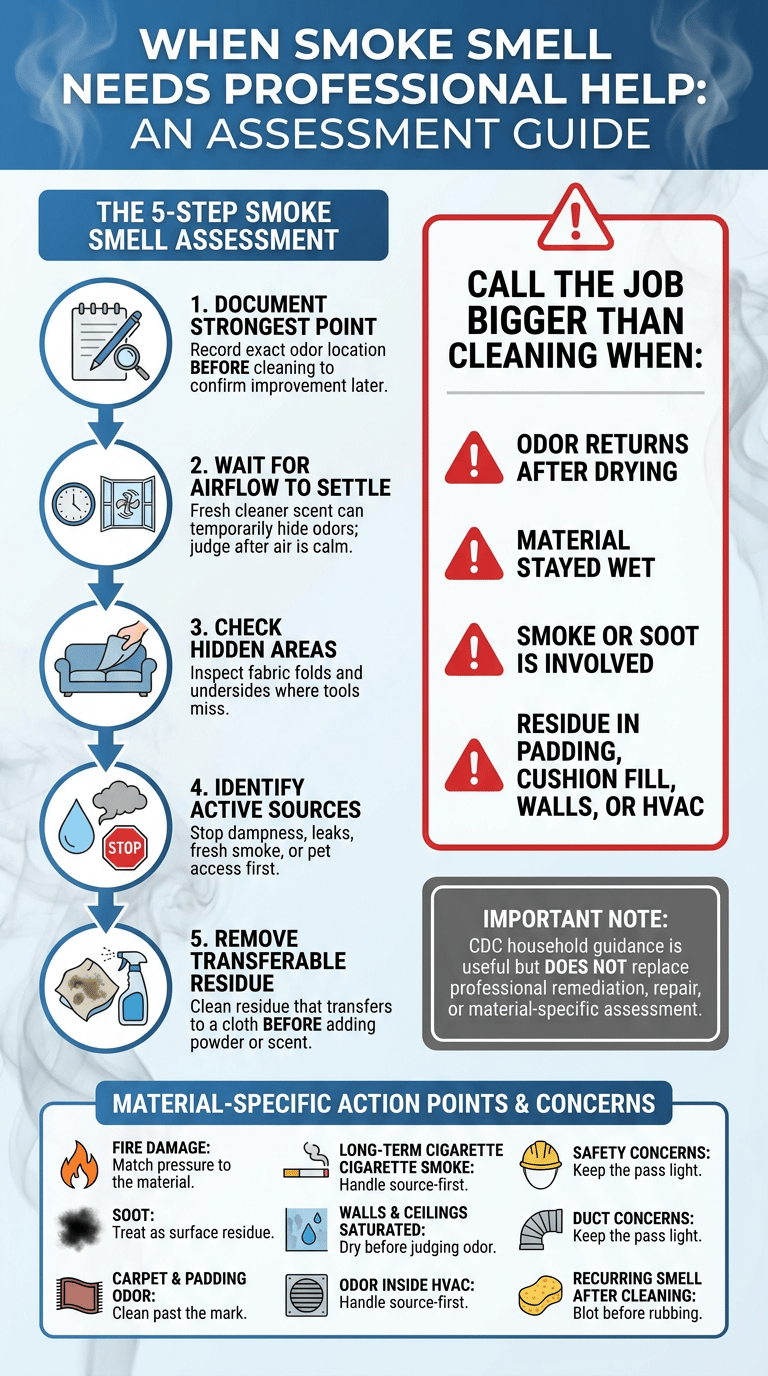
Wait for Cleaner Scent to Fade
Let cleaned surfaces and textiles dry and allow product scent to fade. More fragrance during this period hides the remaining smoke pattern. Do not return cleaned fabrics to smoky rooms, and do not apply another cleaner until the first product’s instructions and drying requirements are complete. After source removal, how to make a room smell fresh naturally can support comfort without being mistaken for remediation.
Close-and-Reenter Test
When no hazard or active contamination is suspected, leave for neutral air and reenter after the house or one room rests briefly. Note the first room and material you smell. Do not close a space to concentrate chemical smoke, gas-like odor, electrical odor, soot, or fire residue.
Locate the Strongest Remaining Room or Material
Compare upper walls, cabinets, carpet edges, upholstery, closets, paper storage, and textiles instead of recleaning every room. A shift in location can mean the first layer improved and another porous material is now clearer. Mark that source and choose a material-specific next step. When the strongest remaining room or material is unclear, use the home odor checklist by room to compare soft materials, walls, carpet, vents, storage, and adjacent rooms.
Compare HVAC Off and On Only When Safe
Compare system states only when the equipment and building have been cleared for normal operation. If odor intensifies at startup or moves through returns, stop the test and document it. Do not continue circulating air through suspected soot, fire, wildfire, or damaged-equipment contamination.
What It Means When Hard Surfaces Improve but Soft Materials Still Smell
Walls and cabinets may release less odor after film is removed while carpet, curtains, upholstery, paper, or insulation continue to emit it. This does not justify soaking soft materials. Separate washable items, follow care labels, and assess deep or fixed porous materials individually.
Troubleshoot by Smoke Scenario
Long-Term Cigarette Odor Near Walls and Carpet
Test compatible wall finishes for sticky residue and compare the carpet edge with the room center. Repeated tobacco exposure can affect paint, pad, trim, cabinets, and HVAC together. Porous-material decisions may require professional assessment.
Fireplace Odor That Returns on Cold Nights
A weather-linked return can indicate draft or pressure conditions rather than dirty furniture. Stop using the fireplace when smoke enters the room and obtain chimney or combustion-system inspection. Cleaning ash and nearby compatible surfaces does not correct a flue, damper, or building-pressure problem.
Smoky HVAC Startup
If odor appears only when the system starts, turn it off when safe and record the affected rooms, vents, and modes. Check only the serviceable filter as directed. Avoid duct sprays, scented filters, or DIY duct cleaning. System contamination, damaged equipment, or an external source needs qualified diagnosis.
Carpeted Room Holds Odor After Walls Improve
The carpet surface, backing, pad, nearby rug, baseboard, or upholstered contents may still hold residue. Vacuum only compatible dry debris and avoid broad wetting. If odor strengthens at an edge, under pressure, or with humidity, investigate lower layers instead of repeatedly cleaning the walls.
Painted Walls Smell Smoky Up Close
A close surface odor or dirty white-cloth transfer suggests film remains. Test the finish and use a compatible cleaner in controlled sections. Stop for paint transfer, tackiness, streaking, or softened finish. Painting and primer selection come after cleaning and professional assessment, not before.
Visible Soot or Burned Material
Do not rub, wet, blow, or vacuum visible soot with ordinary equipment. Keep people and pets away, protect unaffected areas, photograph conditions, and contact appropriate fire, insurer, restoration, or environmental professionals. Burned structural or electrical material requires safety assessment before odor work.
Smoke-Odor Cleaning Mistakes
Wet-Cleaning Soot Like Ordinary Dust
Water and household cleaner can smear soot into paint, fabric, grout, and porous materials. Unknown soot may also require exposure controls. Pause cleaning and identify the residue. Use a restoration method and equipment suited to the fire source and surface rather than an ordinary wet cloth.
Cleaning Soft Materials Before Removing Surface Film
Clean textiles can absorb odor again when returned to rooms with smoky walls, cabinets, floors, or HVAC paths. Stage hard-surface work first where appropriate, keep cleaned soft items isolated, and return them only after the room is dry and the recheck shows the main film has improved.
Painting Before Cleaning and Assessment
Paint can fail, discolor, or allow odor to return when smoke residue, moisture, or damage remains underneath. Clean and assess the substrate first. Do not use this guide as a primer tutorial; coatings, preparation, ventilation, and fire-damaged materials require manufacturer and professional decisions.
Spraying Fragrance into Vents
Fragrance does not remove residue and can contaminate filters, ducts, motors, sensors, or occupied rooms. Never spray cleaner, oil, disinfectant, or deodorizer into HVAC. If vents smell, inspect accessible covers and filters as directed, then escalate persistent system-related odor.
Reusing Dirty Cloths or Water
Smoke film builds quickly on cloths and in cleaning solution. Reusing them spreads residue across already cleaned areas. Fold cloths to fresh faces, replace them when soiled, refresh solution as labeled, and keep tools assigned to affected zones until washed and fully dried.
Returning Clean Fabrics Too Early
Curtains, bedding, covers, and throws can reabsorb smoke from untreated rooms or return moisture if not fully dry. Store cleaned textiles in a clean, dry area until hard surfaces and airflow paths are addressed. Follow each care label and avoid sealing warm or damp fabric in plastic.
Treating Wildfire, Fire Damage, or Long-Term Tobacco Residue Like Light Cooking Odor
These exposures differ in particle load, film, material depth, possible hazards, and cleanup scale. A kitchen wipe-down is not a fire-restoration plan. Follow public guidance and obtain qualified assessment when contamination is widespread, visible, long-term, or linked to damaged building materials.
When to Call a Professional
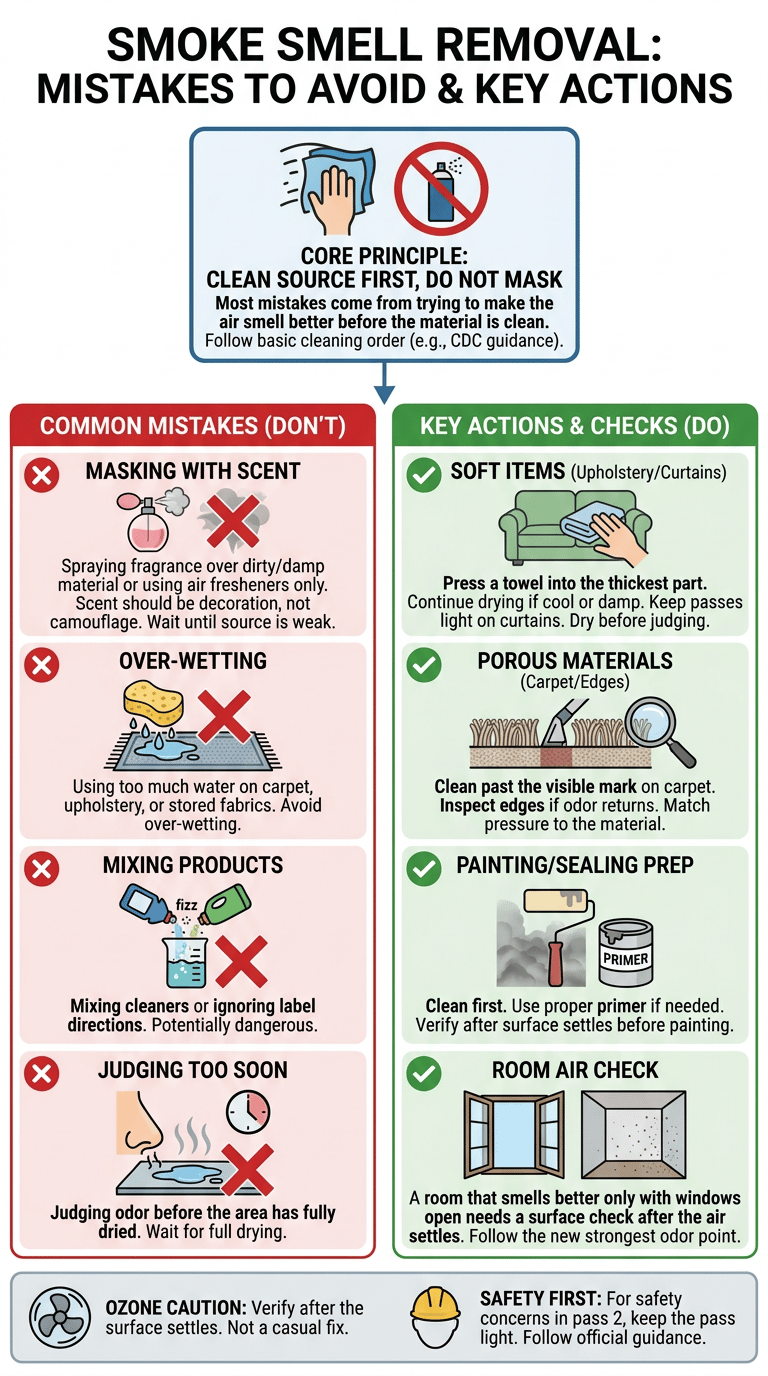
Visible Soot, Fire Damage, or Burned Materials
Professionals can identify residue, establish containment, select equipment, and coordinate structural and contents work. Contact fire services, insurer, electrician, restoration company, or other qualified trade as appropriate. Do not disturb charred, melted, or soot-covered material to test whether the odor improves.
Wildfire Contamination or Widespread Residue
Widespread wildfire residue can affect indoor air, HVAC, attics, insulation, contents, and outdoor-air decisions. Follow local authorities and public-health guidance. Professional assessment is appropriate when odor persists, particles are visible, sensitive contents are involved, or safe cleaning and filter service cannot be completed.
HVAC Spreads Odor
Odor distributed through multiple vents, released at startup, or associated with visible residue calls for qualified HVAC and restoration review. Do not run the system to prove the pattern repeatedly, open ducts, or use fragrance. Provide the professional with the source history and rooms affected.
Long-Term Cigarette Saturation
Years of repeated smoke can affect coatings, cabinetry, carpet pad, subfloor, insulation, and HVAC. A professional scope can identify what is cleanable, what may need sealing under an approved system, and what may require removal. No household method can promise complete removal from every porous layer.
Odor in Padding, Insulation, Walls, or Other Inaccessible Materials
Do not drill, open walls, lift carpet, or remove insulation without knowing utilities, contaminants, structure, and containment needs. Odor that tracks with humidity, pressure, or one cavity can guide inspection, but it does not identify the material or justify uncontrolled demolition.
Strong Irritation, Chemical Smoke, or Unknown Source
Leave the area and seek emergency, Poison Control, utility, fire, workplace, or public-health guidance based on the event. Do not neutralize chemical smoke with another product, operate equipment, or reenter because fragrance has faded. Medical concerns require qualified healthcare advice, not cleaning instructions.
Frequently Asked Questions
What Removes Smoke Smell from a House?
Stop the source, remove loose residue safely, clean compatible hard-surface film, separate soft materials, service accessible filters as directed, and recheck after drying. The correct plan depends on smoke type, exposure, materials, and severity. A broad odor removal guide supports diagnosis, while this guide owns whole-house smoke staging.
Can Smoke Smell Be Removed Completely?
Light, short exposure may improve substantially after source removal and compatible cleaning. Long-term tobacco, wildfire residue, soot, fire damage, and deeply porous materials cannot be promised complete removal. Some contents or building materials may need professional cleaning, sealing under an approved system, removal, or replacement.
How Do I Tell Whether Smoke Is in the Air or on Surfaces?
Ventilate only when safe, then let the room rest without fragrance. Wipe a compatible hidden hard surface with a white cloth and compare soft materials separately. Odor close to walls, cabinets, carpet, textiles, or paper after airborne smoke clears suggests deposited residue.
Do Air Purifiers Remove Smoke Odor?
A suitable air cleaner may reduce some airborne particles when operated according to its manual, but it cannot wash smoke film from surfaces or guarantee odor removal. Filter type, room conditions, placement, and maintenance matter. Avoid treating ozone generation as a household DIY solution.
Should I Wash Walls Before Painting?
Smoke residue and surface condition should be cleaned and assessed before coating decisions. Test the finish and use a compatible method. Painting over film can lead to adhesion, staining, or odor problems. Primer, sealing, and repainting choices belong with paint manufacturers and qualified professionals.
How Should I Handle Smoke-Smelling Clothes and Fabrics?
Separate garments from household textiles, read care labels, remove compatible dry residue, wash only as allowed, and dry fully. Non-washable, soot-exposed, wildfire-exposed, valuable, or chemically contaminated items need specialized advice. Do not use room cleaners or one universal laundry formula on every fabric.
When Is Smoke Odor Too Severe for DIY Cleaning?
Escalate visible soot, burned or melted material, fire damage, widespread wildfire residue, HVAC distribution, long-term tobacco saturation, inaccessible contamination, structural changes, strong irritation, chemical smoke, and unknown sources. Also stop when materials react or cleaning cannot be contained and dried safely.
Final Thoughts
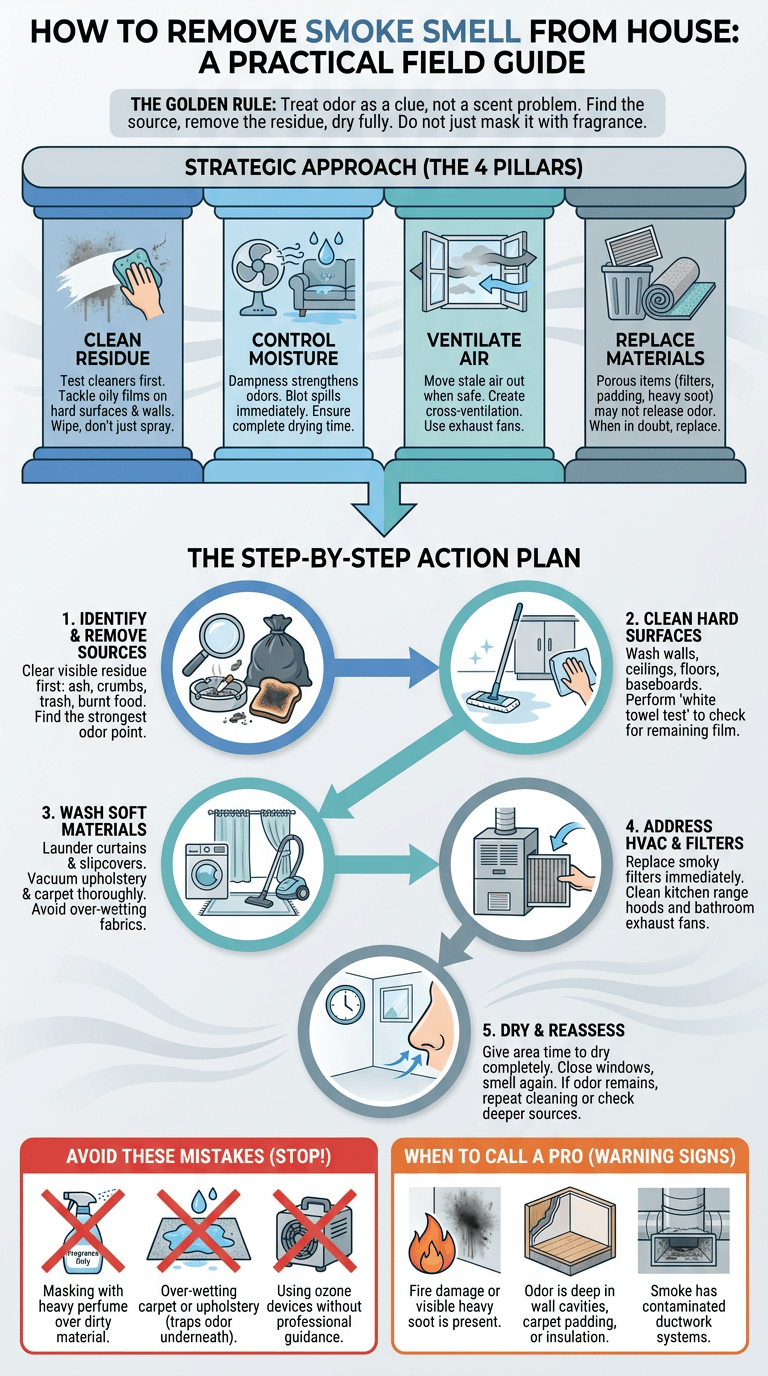
Whole-house smoke cleanup succeeds through order: identify the source and severity, work dry before wet, protect clean zones, clean compatible hard surfaces high to low, separate soft and porous materials, check filters and airflow paths, and recheck only after product scent fades.
Keep ordinary cooking odor and garment laundering in their specialized workflows. Do not promise complete removal from long-term tobacco residue, wildfire contamination, soot, fire damage, HVAC interiors, or inaccessible porous materials. Fragrance is never the remediation step, and professional assessment is the correct limit when the source, residue, or building condition exceeds routine cleaning.

Ethan Carter is the Founder & Editor of HomeCleanSecrets. Based in the United States, he has 5 years of experience creating practical home cleaning, laundry care, stain removal, decluttering, and home organization content. His goal is to help everyday households clean smarter and build simple routines that are easier to maintain.
Read more about Ethan Carter on his author page: https://homecleansecrets.com/ethan-carter/