
Pet odor on a couch can sit in loose fur, a washable blanket, body-oil film, upholstery fabric, seams, a removable cover, cushion batting, or deeper fill. Start by separating movable pet textiles and dry debris from the sofa so you can identify which layer actually releases the smell.
Before adding moisture, read the upholstery tag and manufacturer instructions, identify whether covers are removable, and map the strongest location. Spot-clean only with a method allowed for the fabric and product, then dry the thickest cushion layer before returning covers, people, or pets.
Never mix cleaners or improvise a bleach ratio. If products create strong fumes or accidental exposure, move to fresh air and follow poison control guidance on household cleaners. Mold-like odor, sewage, floodwater, soot, fire damage, electrical or gas-like odor, and inaccessible contamination are outside routine pet-couch cleaning.
Quick Answer: Separate the Source, Check the Fabric, Clean Shallowly, and Dry
The Five-Step Pet-Couch Plan
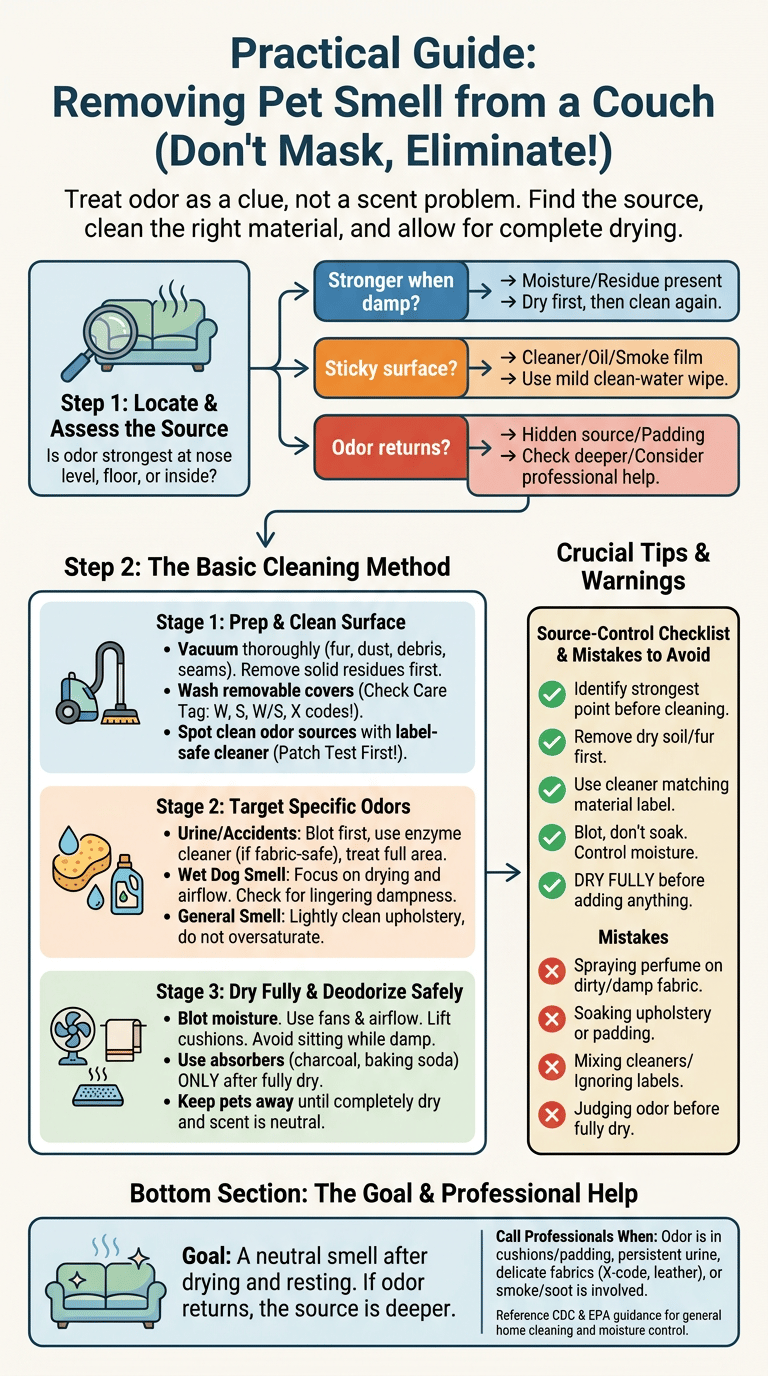
Remove pet blankets and dry debris, check the care code and construction, locate the strongest couch spot, apply a compatible treatment in a controlled amount, and dry every affected layer before rechecking. If compression brings the odor back, surface cleaning may have missed batting or cushion fill.
What to Remove Before Touching the Upholstery
Take away washable covers, throws, pet beds, toys, food debris, hair, and removable protectors one at a time. Keep dirty items contained and smell the bare couch afterward. This prevents a pet blanket from being mistaken for contaminated upholstery and reduces unnecessary wet treatment.
Signs the Odor Is Inside the Cushion
Odor released when someone sits, presses an edge, or opens a zipper area can indicate a deeper layer. A repeated accident, slow-drying cushion, or smell that returns after the fabric is dry adds concern. Do not pour more cleaner through the cover to reach unknown fill.
Identify What Is Making the Couch Smell
Fur, Dander, and Dry Debris
Loose fur, dander, crumbs, dust, and tracked soil can create a stale pet-contact smell and interfere with spot treatment. Vacuum compatible dry debris slowly with an upholstery attachment, following the couch and vacuum manuals. Do not vacuum wet accidents, unknown powder, soot, or hazardous contamination.
Body Oil and Favorite Resting Spots
A favorite cushion, arm, headrest, or back edge can collect body oil from both pets and people. The area may feel slightly different or attract more soil without showing a clear stain. Use a fabric-compatible method and controlled moisture rather than treating the entire sofa as equally affected.
Damp Pet Odor
A wet coat can transfer moisture and outdoor residue into fabric, seams, or a pet blanket. Remove and dry washable textiles first, then check whether upholstery remains cool or damp. Do not close the room, replace covers, or let the pet settle back until the couch is dry.
Urine or Another Accident
Blot a fresh accident promptly with clean absorbent material and limit the footprint. Wear protection appropriate to the source and keep pets and children away. Repeated accidents, liquid at a cushion edge, or odor from compression may mean the residue reached batting or fill.
Pet Blankets, Throws, and Covers
Smell movable textiles separately from the bare couch. Wash only according to each care label, washer capacity, product directions, and drying limits. This is a source-isolation step, not a complete throw-blanket laundry tutorial. Return the textile only after both it and the upholstery are fully dry.
Old Cushion Fill or Contaminated Lower Layers
Aging foam, batting, feathers, liner fabric, or wood beneath a cushion can hold odor that surface fabric does not. If odor returns under pressure or from a zipper opening after complete drying, inspection, professional treatment, or replacement may be more realistic than repeated surface application.
Check Upholstery Construction and Care Instructions
W, S, W/S, and X Codes
A W code generally permits an approved water-based upholstery method; S points toward an approved solvent method; W/S allows either category within instructions; X generally limits routine care to vacuuming or brushing. Codes do not authorize every product, amount, machine, or stain treatment. Follow the sofa manufacturer first.
Missing or Unclear Care Tags
Search the frame, cushion undersides, decking, and manufacturer documentation without tearing lining or opening sealed areas. If the code is missing or ambiguous, avoid wet or solvent treatment. Record the brand, model, fabric description, and construction, then seek manufacturer or qualified upholstery guidance.
Removable Versus Fixed Covers
A zipper does not automatically mean a cover is washable. Some covers are removable only for service or replacement and can shrink or distort in a washer. Check the care tag and manual before removal. Mark cushion orientation and keep clean covers away from treatment spray and damp fill.
Leather, Suede, Wool, Silk, Vintage, and Specialty Materials
These materials can react to water, solvents, enzymes, powders, heat, and agitation in ways ordinary synthetic upholstery does not. Do not adapt a fabric-sofa recipe. Use the manufacturer, retailer, textile specialist, leather professional, or conservator appropriate to the material and value.
White-Cloth Hidden-Area Test
When both the care instructions and product label allow treatment, test a hidden area with a clean white cloth. Let it dry before checking dye transfer, rings, stiffness, sheen, texture, and odor. A successful small test reduces risk but does not prove that soaking or broad treatment is safe.
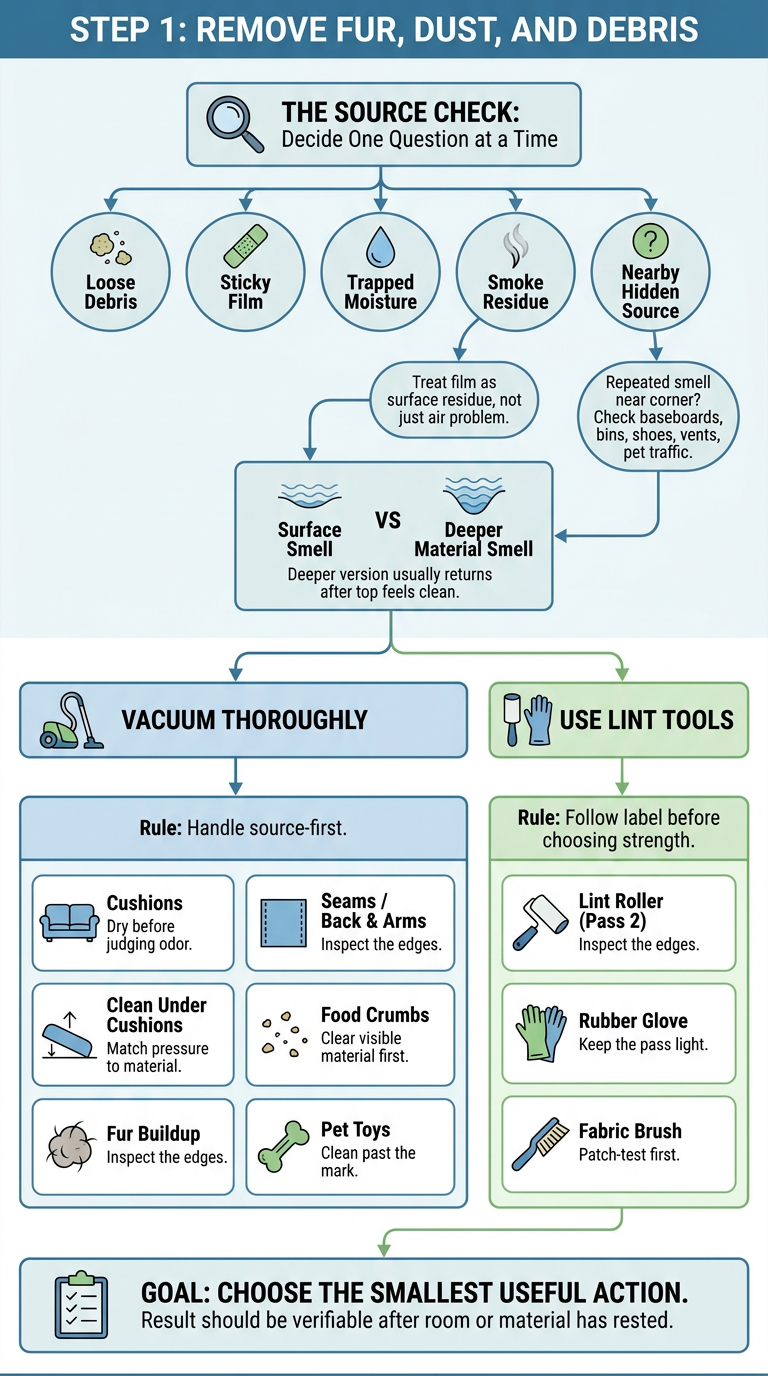
Step 1: Remove Pet Textiles and Dry Debris
Washable Covers, Throws, and Pet Blankets
Remove only items the instructions permit you to remove. Keep washable pet textiles separate from clean household laundry until their care method is confirmed. If one blanket carries most of the odor, clean and dry it independently before deciding that the couch fabric also needs wet treatment.
Vacuum Cushion Faces, Backs, Seams, and Gaps
Use an upholstery attachment and suction setting suitable for the fabric. Vacuum faces, backs, seams, welting, and accessible gaps slowly, supporting loose fabric so it is not pulled into the tool. Check the vacuum manual for delicate pile, loose threads, feathers, and fine debris.
Remove Fur Without Damaging the Nap
Lift remaining fur with a fabric-safe brush, lint tool, or slightly damp glove only when the upholstery instructions allow it. Work with the nap and stop if fibers pill, pull, or change direction permanently. Avoid aggressive rubber tools on delicate, looped, velvet, or specialty surfaces.
Smell the Bare Couch Before Wet Cleaning
After dry removal, leave the sofa free of blankets and cushions arranged as the manufacturer allows. Smell each component from a safe distance and note the strongest spot. This separates airborne fragrance and pet textiles from fabric, seam, edge, and fill odors before moisture changes the evidence.
Step 2: Map the Strongest Couch Odor
Favorite Cushion or Arm
A favorite resting place often combines fur, body oil, saliva, damp paws, and repeated compression. Compare it with an unused cushion or arm. Treat only the affected surface after dry cleaning and code checks; do not assume every cushion needs the same wet method.
Seam or Crevice
Seams and crevices trap crumbs, hair, small accidents, and residue that a flat surface pass misses. Vacuum compatible dry material first and inspect stitching. Use minimal labeled treatment near seams because liquid can wick into batting or travel along piping and zipper tape.
Cushion Edge and Zipper Area
Odor at an edge or zipper can indicate liquid traveled around the cover or into the insert. Do not unzip a cushion unless the manufacturer allows access, and do not spray through the opening. Document the location and compare the cover with the insert separately when safe.
Odor Released by Sitting or Compression
Compression pushes air from foam, batting, feathers, seams, and frame cavities. If the couch smells neutral until someone sits, a lower layer may be releasing odor. Repeated surface blotting is unlikely to reach that layer safely and can make slow-drying fill wetter.
Odor Stronger in Humid Weather
Humidity can make porous residues and damp fill more noticeable. Check nearby windows, walls, floors, and room moisture without turning this into a basement or whole-home inspection. EPA indoor air quality guidance offers broader context. Persistent moisture or mold-like odor needs building and upholstery assessment.
Step 3: Spot-Clean the Correct Source
General Body-Oil and Pet-Contact Areas
After vacuuming, apply only a code-compatible upholstery product as labeled. Work in a small controlled area and keep clean cloth faces moving so oil and soil transfer away. Avoid broad spraying, aggressive brushing, and household degreasers that the upholstery maker has not approved.
Damp-Pet Residue
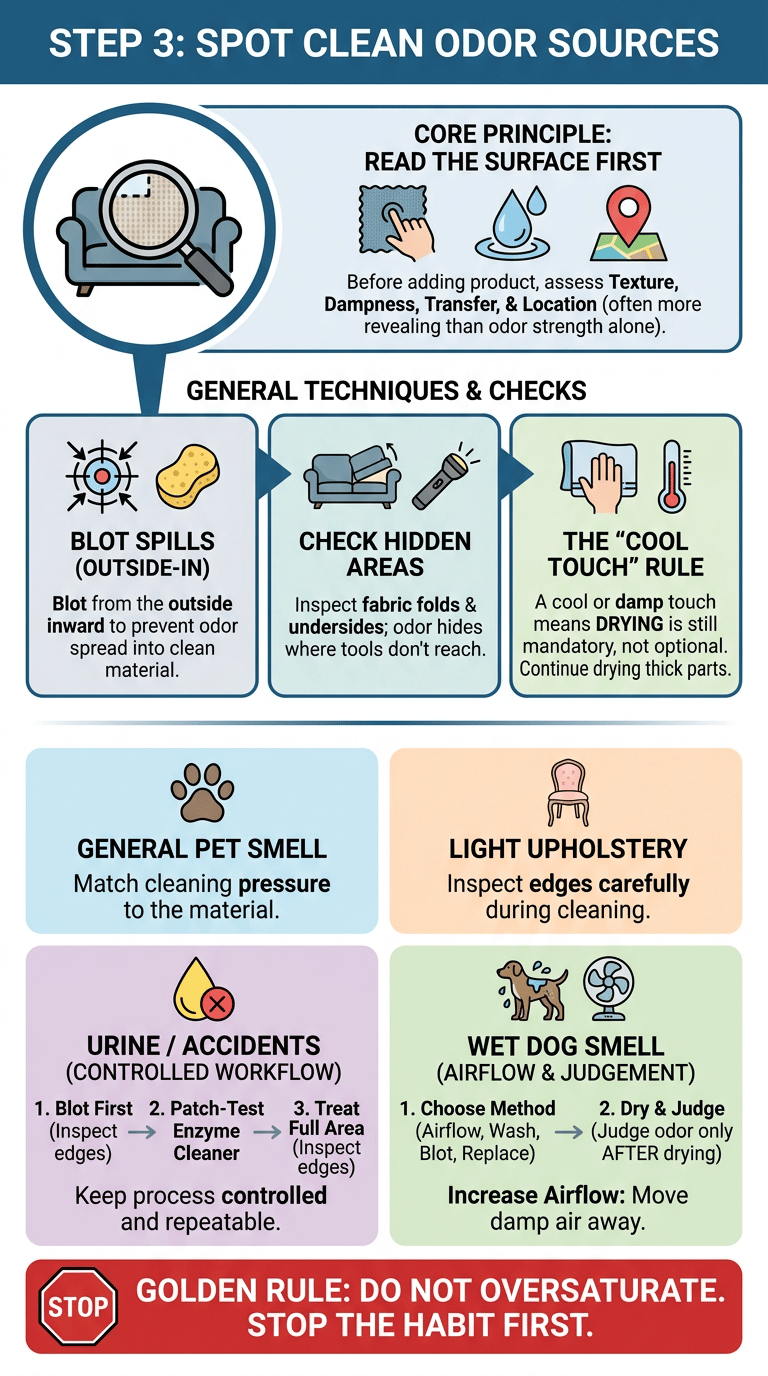
Blot moisture before cleaner and compare the couch with the pet textile removed. A label-approved upholstery method may address shallow residue, but the area must be dried through the seam and padding. Stop if moisture spreads, backing feels wet, or color and texture change.
Fresh Accident
Lift solids and blot liquid from the outside inward without pressing it deeper. Use gloves when appropriate and keep the area isolated. Choose a product only after checking the couch code and label. Disinfection is not automatic; CDC home cleaning guidance helps separate routine cleaning from situations needing a labeled disinfectant.
Old or Repeated Accident
Old or repeated residue may extend beyond the visible ring and into batting, foam, feathers, or the frame. Do not keep adding liquid to chase odor downward. Mark the footprint, note compression response, and consider professional inspection or insert replacement when surface cleaning repeatedly fails.
Enzyme Cleaner and Upholstery-Code Limits
An enzyme cleaner is not automatically safe for upholstery. Its label must permit the material, source, household, and application, while the sofa code and manufacturer must allow that chemistry and moisture. Hidden-area testing is still required when directed. Never combine it with another cleaner.
Blotting, Dwell Time, and Pet Exclusion Based on the Label
Follow the product label for application, dwell time, blotting, removal, ventilation, and how long people and pets must stay away. Do not invent a soak time or keep the area wet longer. Use absorbent white cloths and stop when transfer, texture, or moisture suggests the method is unsuitable.
Step 4: Dry the Couch Through the Thickest Layer
Lift or Separate Cushions When Construction Allows
When the manufacturer permits, position removable cushions so air reaches more than one face without distorting them. Support heavy or wet inserts and keep their orientation clear. Do not remove fixed upholstery, unzip service-only covers, or expose fill that the design does not make user-accessible.
Airflow Across Rather Than Into the Fabric
Move clean, dry air across the surface instead of forcing dust or moisture deeper with high pressure. Secure fans away from wet electrical risks and follow equipment instructions. Open windows only when outdoor humidity, smoke, pollen, or contamination will not complicate drying.
Keep People and Pets Off the Area
Pressure can drive moisture into fill, flatten treated fibers, transfer product, and slow evaporation. Block access until the label’s exclusion period has passed and the thickest layer is dry. Do not cover the spot with a blanket or plastic to make the sofa usable sooner.
Check Seams, Edges, and Fill
Feel near the treated area and compare it with an unaffected cushion. Coolness, weight, towel transfer, or dampness at seams and edges means drying is incomplete. Check accessible fill only when the manufacturer allows it. Avoid repeated handling when contamination is possible.
Why Sitting Too Soon Can Bring Odor Back
Sitting compresses cushion layers and pushes air from damp or contaminated fill through the cover. It can also move residue beyond the original spot. A temporary return after use does not necessarily mean the product failed; it may reveal that the deeper layer never dried or was never reached safely.
Step 5: Recheck Without Fragrance
Smell After the Cleaner Scent Fades
Wait until the treatment is dry and its scent has faded before judging the pet odor. Candles, sprays, fragrance beads, essential oils, and scented powders make comparison harder and may be unsuitable around pets or upholstery. Reenter from a neutral room and note the first location.
Compare the Couch With Pet Textiles Removed
Keep blankets, covers, pet beds, and nearby washable items out during the recheck. If the bare couch is neutral but odor returns with one textile, that item is the likely source. If the sofa remains strong without them, continue the fabric-and-depth diagnosis rather than rewashing every accessory.
Compression Test
After complete drying and only when no contamination or material risk is suspected, apply light normal pressure and notice whether odor releases. Do not press your face into the cushion. A strong compression response suggests batting or fill may be involved and repeated surface wetting should stop.
Odor Returns Only After the Pet Uses the Couch
If the couch stays neutral until the pet returns, check damp fur, paws, bedding, favorite posture, and repeated marking. Use a washable barrier and dry the pet before access. This is source control for upholstery, not a whole-home pet cleaning or behavioral treatment plan.
Odor Returns from the Fill
Odor at a zipper edge, under pressure, or after humidity can indicate affected fill. Stop pouring treatment through the cover. Ask the manufacturer or upholstery professional whether the insert can be opened, cleaned, dried, rebuilt, or replaced without damaging the cover or warranty.
Troubleshoot Common Pet-Couch Scenarios
One Favorite Spot Smells Strongest
Remove the pet blanket, vacuum dry debris, compare nearby cushions, and inspect the favorite spot’s seams and edge. Treat only after checking the code. A washable barrier can protect the area afterward, but it should not cover damp upholstery or replace cleaning the true source. When the couch improves but the room still smells, use the home odor checklist by room to compare carpet, pet bedding, floor seams, vents, and waste areas.
Wet-Dog Smell After Rain
Dry the pet and remove damp blankets before touching the couch. Check whether moisture reached upholstery or only a washable cover. Increase safe airflow and keep access blocked until dry. Repeated wet contact may require a better barrier and pet-drying routine rather than stronger couch chemistry.
Urine Reached a Cushion Edge
Blot accessible liquid and avoid squeezing it through the seam. Check whether the cover is service-removable and whether the insert can be assessed under manufacturer instructions. Odor at the edge after drying suggests lower layers may need professional treatment or replacement.
Couch Smells Better Until Someone Sits Down
Compression-related odor strongly points toward cushion layers, seams, or the frame cavity. Confirm the cover is dry, remove movable textiles, and stop repeated surface applications. Document which cushion and pressure point trigger the smell so an upholstery professional can assess the correct component.
Pet Blankets Smell Worse Than the Sofa
Keep the blankets separate and follow their care labels. Recheck the bare couch after dry debris removal and full airing. If it remains neutral, focus on the washable textile and prevention barrier. Do not wet-clean upholstery simply because a blanket used on it carries odor.
Care Tag Is Missing
Avoid water, solvent, enzyme, powder, or machine treatment until the material and construction are identified. Look for manufacturer documentation and record the model, fabric, and cushion type. Dry vacuuming may be appropriate for some fabrics, but even that should respect loose weave, nap, trim, and specialty finishes.
Prevention That Protects the Upholstery
Washable Barriers on Favorite Spots
Choose a washable, care-label-compatible cover that fits without trapping moisture or damaging the fabric. Clean it based on actual pet use, odor, visible soil, and label directions. Keep more than one barrier if needed so a damp replacement is never returned to the sofa.
Dry Pets Before Couch Contact
Dry wet coats, paws, and collars before couch access, especially after rain, bathing, or outdoor play. Keep the drying towel separate from couch textiles and let it dry fully. This reduces repeated moisture at seams and favorite spots without claiming to prevent every odor.
Condition-Based Dry Vacuuming
Vacuum when fur, dander, crumbs, or dry soil is visible or household use makes buildup likely. Pets that shed heavily or use one cushion often may require attention sooner than occasional-use sofas. Follow the upholstery and vacuum instructions instead of applying one weekly schedule to every household.
Clean Pet Bedding and Nearby Rugs
Nearby bedding and rugs can transfer odor back to clean upholstery. Isolate and clean them according to their own material instructions. Carpet-specific depth and drying decisions belong in how to remove odors from carpet; do not use a carpet machine or hard-floor accident method on sofa cushions.
Respond to New Accidents Promptly
Remove solids, blot compatible fresh liquid, and map the footprint before it spreads. Check the upholstery code and product label before treatment. Prompt action can limit depth, but it does not guarantee complete removal when liquid reaches a seam, insert, batting, or frame.
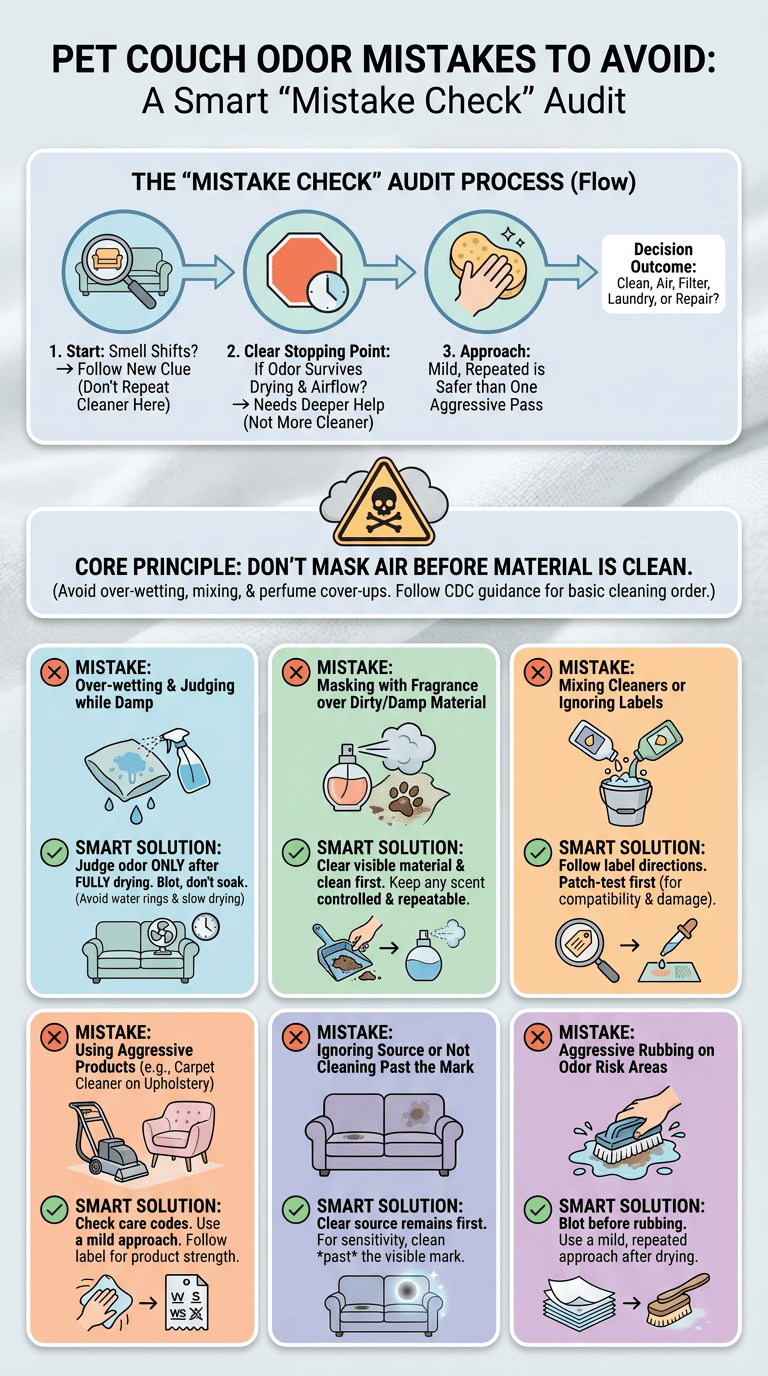
Pet-Couch Cleaning Mistakes
Treating Upholstery Like Carpet
Couch fabric, backing, batting, foam, feathers, adhesives, and frame materials differ from installed carpet. Do not use carpet machines, floor products, or extraction assumptions on upholstery unless the sofa and equipment manufacturers explicitly allow that exact method.
Wetting the Entire Sofa for a Local Source
Broad wet cleaning adds moisture to unaffected cushions and can hide the original source. Mark the strongest spot and keep treatment controlled. Whole-sofa cleaning is a separate upholstery service decision based on fabric, construction, equipment, warranty, and drying capability.
Scrubbing Instead of Blotting
Scrubbing can spread residue, distort nap, move dye, create fuzz, and push liquid through the cover. Blot with clean white material and use only label-approved agitation. Stop if the cloth picks up color or the surface changes texture, sheen, or stiffness.
Using Powders on Damp Fabric
Powder can clump in damp fibers, seams, zippers, batting, and vacuum components. It may be difficult to recover and cannot remove liquid from fill. Skip powders unless the couch manufacturer, product, and vacuum instructions allow use on completely dry upholstery.
Combining Cleaners
Never combine enzyme products, disinfectants, bleach, ammonia, acids, solvents, detergents, or unknown cleaners. Mixing can create fumes, damage fabric, and leave unpredictable residue. Finish one label-approved method, remove or rinse only as directed, dry fully, and reassess before any later treatment.
Returning Covers or Cushions Before Fully Dry
A dry cover placed over damp fill traps moisture, while a damp cover can transfer odor back to a clean insert. Check both separately, including seams and thick edges. Do not reassemble, stack, or sit on cushions until every layer is dry and the label’s exclusion period has passed.
Repeating Surface Treatment When Fill Is Involved
Repeated application from above can make foam or batting wetter without removing deep residue. Compression odor, zipper-edge odor, and a returning accident footprint are reasons to stop. Seek guidance on insert access, professional treatment, or replacement rather than increasing product volume.
When DIY Is Not Enough
X-Code or Specialty Fabric
An X code, missing tag, unstable dye, velvet, suede, silk, wool, vintage textile, leather, or specialty finish can make home spot treatment risky. Limit handling, keep the source isolated, and contact the manufacturer or a specialist with experience in that exact material.
Repeated Accidents in the Same Cushion
Repeated liquid exposure can contaminate the cover, liner, batting, fill, support deck, and frame. Surface odor reduction does not confirm deeper layers are clean. A professional can assess whether the insert is serviceable, while recurring accidents may make replacement the practical material decision.
Odor Released by Compression
Strong odor released by normal sitting indicates air is moving through an affected inner layer. Do not keep wetting the cover. Document the cushion, edge, and pressure point, then ask whether the insert can be inspected and dried without damaging upholstery or creating contamination exposure.
Water Rings, Dye Transfer, Stiffness, or Texture Change
These changes mean the material or treatment is reacting. Stop applying product and follow its label for any removal step. Do not correct a ring with more water or a second cleaner. Protect the area from traffic and obtain fabric-specific professional advice.
Mold-Like Odor or Slow-Drying Fill
Persistent mustiness, visible growth, repeated dampness, or fill that cannot dry safely needs assessment beyond deodorizing. Smell alone cannot diagnose growth. Keep people and pets away from affected material, avoid disturbing unknown contamination, and investigate both upholstery and the room’s moisture source.
Replacement Cover or Cushion Fill May Be More Realistic
Replacement can be more realistic when an insert is deeply contaminated, permanently damaged, repeatedly wet, or impossible to clean and dry under manufacturer instructions. Confirm dimensions, fire-safety requirements, density, support, and cover compatibility rather than substituting an arbitrary foam or liner.
Frequently Asked Questions
What Removes Pet Smell from a Couch?
Remove pet textiles and dry debris, identify the strongest couch layer, check the upholstery code, then use a compatible spot treatment in a controlled amount. Dry the cover and fill fully. A broad odor removal guide supports source-first diagnosis, but cushion depth and fabric instructions control this task.
Can I Use Baking Soda on a Couch?
Only when the couch manufacturer, product, and vacuum instructions allow it on completely dry upholstery. Powder can remain in seams, nap, batting, and equipment. It cannot remove urine from cushion fill, moisture, body-oil film, or contamination, so it should not be the core treatment.
Can I Use an Enzyme Cleaner on Upholstery?
Only if the upholstery code and manufacturer permit the product category, the enzyme label names the material and source, and a hidden-area test passes when required. Follow dwell, removal, ventilation, and pet-exclusion directions. Never assume an enzyme product is universally fabric-safe.
Why Does the Couch Smell Again When Someone Sits Down?
Sitting compresses foam, batting, feathers, seams, and frame spaces, releasing air from deeper layers. If the cover is fully dry but odor returns under pressure, the insert or lower construction may be affected. Stop repeated surface wetting and seek an upholstery-depth assessment.
How Do I Tell Whether the Pet Blanket or Couch Is the Source?
Remove blankets, covers, and pet beds, then vacuum compatible dry debris and smell the bare sofa after airing. Check each textile separately. If the couch is neutral until one item returns, that item is likely the source. If odor persists under compression, inspect couch depth.
How Long Should a Couch Dry After Spot Cleaning?
Dry until the fabric, seams, edges, backing, and accessible fill are no longer cool, damp, heavy, or transferring moisture, and the product’s exclusion period has passed. There is no universal duration because construction, product amount, humidity, airflow, and cushion thickness vary.
When Should I Call a Professional Upholstery Cleaner?
Call for help with X-code or specialty fabric, missing instructions, repeated accidents, compression odor, wet fill, dye transfer, water rings, texture change, valuable upholstery, or odor that returns after correct surface cleaning and complete drying. Contamination, fire, floodwater, sewage, or mold-like conditions may require broader specialists.
Final Thoughts
Pet-couch odor removal works when the source and depth stay clear: separate washable pet textiles, remove dry debris, read the fabric code, map the strongest cushion area, spot-treat within label limits, dry the thickest layer, and recheck after fragrance fades.
Do not turn a local couch problem into whole-home pet cleaning, carpet extraction, hard-floor treatment, or a general upholstery project. Stop when compression, repeated accidents, specialty fabric, contamination, moisture, or material changes show that professional inspection or component replacement is safer than another surface pass.

Ethan Carter is the Founder & Editor of HomeCleanSecrets. Based in the United States, he has 5 years of experience creating practical home cleaning, laundry care, stain removal, decluttering, and home organization content. His goal is to help everyday households clean smarter and build simple routines that are easier to maintain.
Read more about Ethan Carter on his author page: https://homecleansecrets.com/ethan-carter/