
Carpet odor should be treated as a location-and-depth problem. Find the strongest point, remove dry soil and loose residue, identify what caused the smell, treat only the affected area with a carpet-compatible method, and dry the fibers and backing before judging the result.
The visible pile is only the top layer. Liquid can reach the backing, pad, or subfloor, while smoke film and dry soil can remain closer to the fibers. Pet odor on carpet therefore needs a different depth check from how to remove pet smell from couch, and a broad odor removal guide should not replace carpet-manufacturer instructions.
Stop routine cleaning for sewage, floodwater, soot, fire damage, widespread moisture, strong chemical fumes, electrical or gas-like odor, or contamination below an inaccessible layer. Do not mix products, improvise a bleach ratio, or use extraction equipment unless its manual and the carpet situation make that method appropriate.
Quick Answer: Find the Source, Protect the Backing, and Dry Completely
The Five-Step Carpet Odor Plan
Diagnose the odor and location, remove dry soil, choose a cleaner approved for the source and carpet, treat a controlled area without flooding it, then dry and recheck. If the same spot returns after complete drying, stop repeating the surface method and consider whether backing, pad, subfloor, baseboard, or nearby fabric is involved.
The Biggest Risk: Over-Wetting
Too much liquid can spread residue beyond the original spot, carry it into lower layers, disturb adhesives, create water marks, and extend drying. More solution does not mean deeper removal. Follow the carpet and product directions, work in small amounts, and stop when safe moisture recovery is uncertain.
When Surface Cleaning Is Unlikely to Be Enough
Surface cleaning is unlikely to be enough when odor strengthens under pressure, returns with humidity, follows a repeated accident footprint, or remains after the pile and backing are dry. Staining at edges, changed subfloor, prolonged wetting, or contamination also points beyond a routine spot treatment.
Diagnose Carpet Odor Before Cleaning
Odor by Type: Musty, Pet, Sour, Food, Smoke, or Unknown
Musty odor suggests moisture; pet odor suggests residue that may have traveled downward; sour odor after cleaning may indicate residue or slow drying; food odor often begins with a removable spill; smoke can coat broad porous areas. Unknown, chemical, gas-like, electrical, sewage, or burnt odors require a safety screen first.
Odor by Location: Edge, Doorway, Traffic Lane, Under Furniture, or One Spot
An edge can collect spills or receive moisture from a wall. Doorways and traffic lanes hold soil and transferred residue. Furniture can trap humidity or hide a spill, while one concentrated spot often indicates a specific event. Mark the strongest footprint before moving items or applying cleaner.
Odor by Timing: After Humidity, After Cleaning, When HVAC Runs, or When the Room Is Closed
Timing helps separate causes. Humidity can reveal damp padding or porous residue. Odor after cleaning can mean over-wetting or product left behind. HVAC changes may move odor from an edge or another room. A smell noticed only after closure may come from a slow-releasing material rather than open air.
Remove Rugs, Mats, and Movable Sources Before Blaming Installed Carpet
Take away removable rugs, mats, pet bedding, damp shoes, bins, and nearby textiles one at a time, then recheck. Keep them contained so residue does not transfer. This simple isolation step can prevent unnecessary wet cleaning of installed carpet when the actual source is washable or disposable. When the odor moves to a wall edge, couch, vent, pet area, or another room after the carpet is cleaned, use the home odor checklist by room to compare the remaining sources.
Understand the Carpet Layers
Fiber Surface
The visible fibers hold dry soil, hair, crumbs, light film, and some surface spills. Vacuuming and controlled spot treatment can work here when the carpet construction allows. Fiber type, dye stability, texture, and manufacturer care requirements still determine which brush, cleaner, agitation, and drying method are safe.
Backing
Backing supports the pile and can absorb liquid through a spill or over-wet cleaning pass. It may dry more slowly than the surface and can be difficult to inspect without lifting carpet, which should not be done casually. Coolness, pressure-released odor, or a returning footprint can be clues.
Pad
Pad can hold urine, food liquid, floodwater, or cleaning solution even after the surface looks normal. It is not reached reliably by sprinkling powder on the pile. Repeated accidents, broad wetting, or odor that returns after drying may require professional inspection and a decision about pad treatment or replacement.
Subfloor
Liquid that passes through carpet and pad can reach wood, concrete, seams, tack strips, and wall edges. Subfloor odor often returns from the same location and may change with humidity. Do not saturate the area from above to reach it; deeper materials need controlled access and material-specific assessment.
Why Odor Returns When a Lower Layer Is Involved
Dry fibers can release less odor while damp backing or pad continues to hold residue. Pressure, warmth, humidity, and air movement can bring that odor upward again. Repeating a surface product may temporarily alter the smell while adding more moisture to the layer that actually needs attention.
Step 1: Remove Dry Soil and Loose Residue
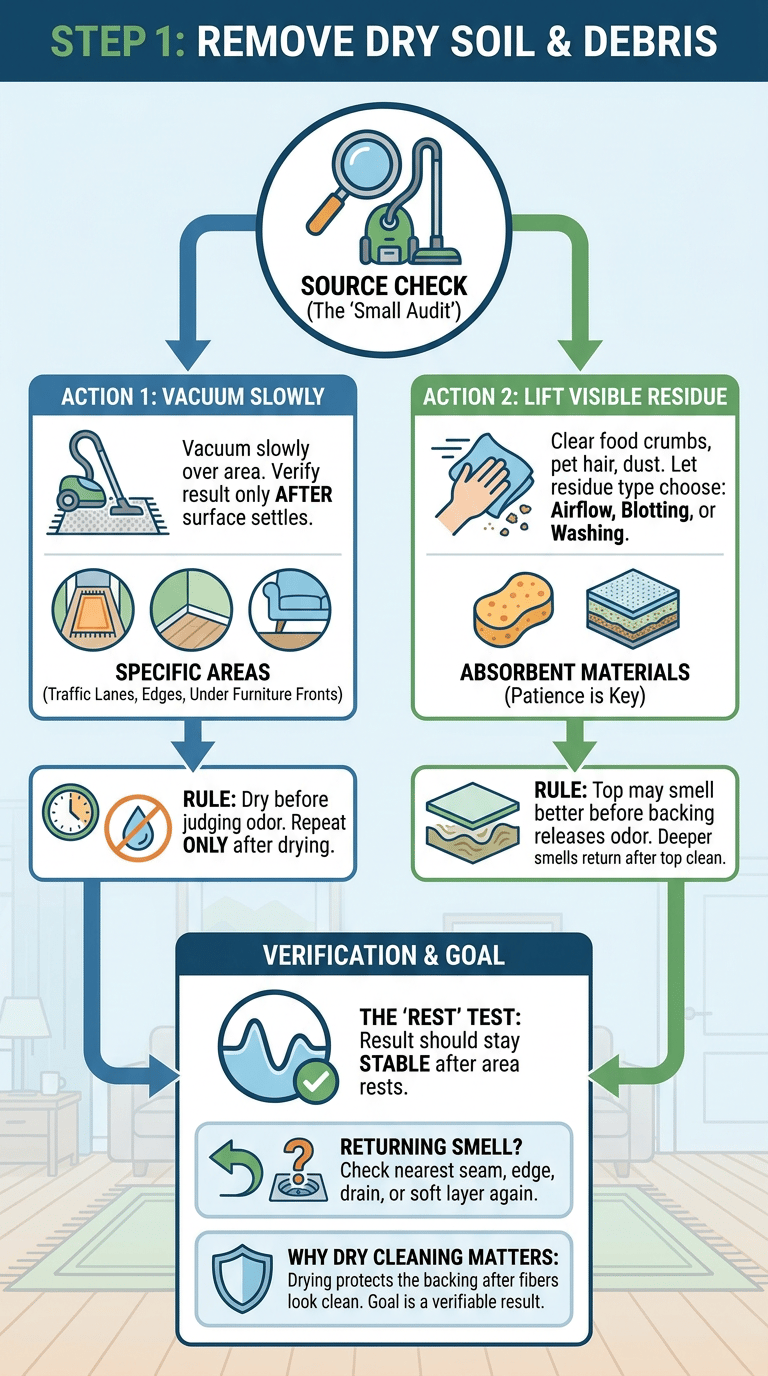
Vacuum Traffic Lanes and Edges Slowly
Vacuum dry carpet slowly with equipment and settings allowed for the pile. Make deliberate passes over traffic lanes and edges instead of rushing the whole room. Do not vacuum wet material, unknown powder, soot, pest waste, hot debris, or hazardous contamination with an ordinary household machine.
Use Attachments Around Baseboards and Furniture
A crevice or upholstery attachment can collect compatible dry debris where the floor head cannot reach. Avoid striking baseboards, pulling loops, or forcing a tool under furniture. Move only light, safe items and follow equipment guidance; heavy furniture and hidden contamination belong in a planned deeper service.
Lift Solids and Blot Liquids Before Cleaner
Lift food, packaging, pet residue, or other solids without grinding them into the pile. Blot suitable fresh liquid with clean absorbent cloths, working from the outside inward. Wear protection appropriate to the source, and do not handle sewage, floodwater, unknown chemicals, or biological contamination as a routine spill.
Clean the Vacuum If It Already Smells
A full bag, dirty bin, damp filter, brush roll, hose, or attachment can return odor while you clean. Service only accessible parts as the vacuum manual directs and let washable components dry before reassembly. Replace filters or bags according to the manufacturer and actual condition, not an invented fixed schedule.
Step 2: Match the Cleaner to the Odor Source
Food and Drink Residue
Remove solids and blot liquid before treatment. Choose a carpet-approved product that matches the spill and fiber, then follow dilution, application, dwell, rinsing, extraction, and drying directions. Avoid heat or aggressive rubbing unless the manufacturer allows it, because both can set residue or alter texture.
Pet Residue and Enzyme-Product Limits
An enzyme product may help with a compatible organic source only when its label permits the carpet, dye, household, and application. It does not guarantee treatment of pad or subfloor. Keep people and pets away as directed, do not layer products, and stop when repeated accidents or deep wetting are likely.
Sour Cleaner Residue
A sour smell after carpet cleaning can come from slow drying, too much product, incomplete removal, a dirty machine, or disturbed soil. Do not add fragrance or a second chemistry immediately. Let the area dry, inspect equipment, and follow the first product’s directions for any allowed rinse or residue removal.
Musty Odor and Moisture Investigation
Musty odor calls for a moisture check before deodorizing. Look for recent spills, wet cleaning, leaks, condensation, damp walls, or humidity changes. CDC home cleaning guidance helps distinguish routine cleaning from stronger product use, while EPA mold and moisture guidance provides context for mold-like odor without diagnosing the carpet by smell alone.
Smoke Odor and Porous-Material Limits
Smoke particles and film can affect carpet, pad, walls, contents, and HVAC at the same time. A carpet-only pass may not solve whole-room smoke. Do not vacuum soot with ordinary equipment or wet fire residue without guidance. Long-term exposure and fire damage need broader restoration decisions.
Manufacturer and Spot-Test Requirements
Check carpet warranty and care instructions before applying a product or machine. Test a hidden area when directions allow, then let it dry before assessing dye, texture, backing, and residue. A spot test reduces risk but does not prove that broad saturation, scrubbing, or extraction is safe.
Step 3: Treat a Controlled Area Without Soaking
Work from the Outside In
Define the affected footprint and begin at its outer edge so residue is less likely to spread. Apply product only as directed and keep clean cloths separate from used ones. Expand the area only when transfer, odor, or visible residue shows that the original boundary was too small.
Blot Rather Than Scrub
Blotting transfers liquid and residue into an absorbent cloth without driving the spot sideways. Scrubbing can distort pile, fuzz fibers, spread dye, and push material downward. Press, lift, rotate to a clean cloth face, and follow any manufacturer-approved grooming direction after the area is clean.
Use the Smallest Effective Amount
Use enough product to follow its label, not enough to flood the carpet. Controlled application makes drying and evaluation easier. A deeper odor is not permission to pour more from above. If treatment must reach backing or pad, confirm the method, equipment, recovery, and drying plan first.
Press Out Moisture and Residue
Use clean absorbent cloths to press out compatible moisture after treatment, changing them as they become wet or soiled. Use extraction equipment only when its manual, the carpet manufacturer, the product, and the contamination type permit it. A wet-dry vacuum is not a universal carpet-cleaning tool.
Stop for Color Transfer, Texture Change, or Wet Backing
Stop if dye transfers to a white cloth, fibers become sticky or rough, pile changes shape, adhesive odor appears, or backing feels wet. Do not correct one reaction with another product. Follow the label for removal or rinsing, protect the area from traffic, and seek carpet-specific advice.
Step 4: Dry the Carpet and Backing
Airflow Across the Surface
Move clean, dry air across the carpet when conditions and equipment are safe. Ventilate only when outdoor air will not add moisture, smoke, or contamination. Position fans securely away from wet electrical hazards and follow equipment instructions. Air movement supports drying but cannot correct liquid trapped deep below.
Outdoor-Humidity and Room-Moisture Limits
Open windows are not always helpful. Humid, rainy, smoky, or contaminated outdoor air can slow drying or complicate odor. Check indoor moisture, leaks, and ventilation instead of relying on fragrance. EPA indoor air quality guidance offers broader context when room air and moisture conditions affect the carpet.
Keep Furniture and Rug Pads Off the Area
Do not replace furniture, mats, or rug pads until carpet and backing are dry. Weight can trap moisture and transfer rust, dye, wood finish, or odor. Protect furniture separately according to its material instructions, and avoid improvised foil or plastic contact when the carpet manufacturer does not approve it.
Check Coolness, Dampness, and Towel Transfer
Feel near, not only on, the treated spot. Persistent coolness, compression moisture, or transfer to a clean dry towel suggests drying is incomplete. Compare with unaffected carpet in the same room. Avoid repeated touching when biological residue or unknown contamination is possible.
Wait Until the Next Day for the Useful Smell Test
Judge odor after the carpet is fully dry, the product scent has faded, and the room has returned to normal use. The next day is often a useful checkpoint, but it is not a drying promise. Thick carpet, backing, humidity, temperature, treatment amount, and airflow can require a different interval.
Step 5: Recheck the Location and Depth
Close-and-Reenter Test
Once no hazard is suspected and the area is dry, remove fragrance, leave for neutral air, then reenter after the room has been closed briefly. Note the first location you detect. Do not concentrate chemical, sewage, gas-like, electrical, or fire-related odor in a closed room for testing.
Odor Returns in the Same Spot
A return to the exact footprint suggests remaining residue, incomplete drying, or lower-layer involvement. Mark the boundary and stop repeating the same surface application. Review the source, pressure response, edges, and wetting history, then decide whether professional inspection of backing, pad, or subfloor is warranted.
Odor Moves to an Edge or Nearby Textile
If the strongest point moves, the first area may have improved or airflow may reveal another source. Check baseboards, rug pads, curtains, pet bedding, furniture skirts, and removable mats without wetting them automatically. Isolate one movable suspect at a time and recheck.
Odor Increases When Pressure or HVAC Changes
Odor released by stepping, sitting furniture, or pressing the carpet can point toward backing or pad. Odor that changes with HVAC may be carried from elsewhere or released near a vent. Do not dismantle flooring or ducts; document the pattern for an appropriate carpet, HVAC, or building professional.
Signs the Pad or Subfloor May Be Involved
Repeated accidents, broad spills, prolonged wetting, edge staining, tack-strip corrosion, swelling, or odor that survives complete surface drying are important clues. They do not prove which layer is affected, but they justify stopping surface experiments and evaluating access, contamination, drying, and replacement options.
Odor-Specific Carpet Troubleshooting
Musty Smell After Humid Weather
A musty smell that rises with humidity suggests carpet, pad, subfloor, baseboard, or nearby porous material is holding moisture or residue. Check the room for leaks, condensation, exterior-wall changes, and previous wetting. Do not treat this as a basement or whole-room moisture workflow; focus on the carpet footprint and escalate broader clues. When carpet odor is part of a broader below-grade moisture or storage problem, use the guide to remove musty smell from a basement.
Pet Odor After the Surface Looks Clean
Pet residue can remain below the fibers or extend beyond the visible spot. Use a carpet-compatible labeled product in a controlled area and dry fully. If odor returns with pressure or from the same footprint, pad or subfloor may need professional access rather than repeated enzyme application from above.
Sour Smell After Carpet Cleaning
Sour odor after cleaning often points to moisture, residue, dirty equipment, or soil lifted but not recovered. Stop adding products and increase safe drying. Check the cleaner and machine instructions for residue removal. If the backing remains damp or odor worsens, arrange qualified inspection before another wet pass.
Stale Traffic-Lane Odor
Traffic lanes collect dry soil, body oil, outdoor residue, and transfer from shoes or pets. Vacuum slowly first and treat film only with a carpet-approved method. A broad stale lane is different from one urine or food spot, so keep the method focused on compatible surface soil and controlled drying.
Odor Trapped Under Furniture
Furniture can restrict airflow, hide spills, and transfer finish or rust when placed on damp carpet. Move only what can be handled safely and protect both carpet and furniture. If odor is strongest beneath a heavy item, document the location and use professional moving or carpet service rather than dragging it.
Smoke Odor After Other Surfaces Improve
Carpet and pad can retain smoke after washable textiles and hard surfaces improve. Carpet-only cleaning may still be insufficient when walls, HVAC, insulation, or contents remain affected. A full smoke workflow covers broader source and restoration decisions; soot or fire exposure should not be treated as routine deodorizing.
Odor Absorbers as a Limited Finishing Step
Only on Completely Dry Carpet
A dry absorber may be considered only after residue is removed, carpet and backing are fully dry, and the manufacturer allows it. It is a finishing option for faint residual odor, not the first treatment. Keep people and pets away as the product directs and remove it completely.
Vacuum-Removal and Residue Risks
Powder can settle into dense pile, seams, backing, edges, and vacuum components. Fine residue may be difficult to recover and can affect warranty or equipment. Check both carpet and vacuum instructions before use. Skip powder if the machine cannot safely collect it or the carpet traps particles.
Why Absorbers Cannot Treat Padding, Urine, Moisture, or Smoke Film
A surface powder cannot remove liquid in pad, urine in subfloor, recurring moisture, grease film, or smoke deposits on multiple materials. Temporary improvement does not prove the source is gone. Diagnose depth and residue first, then decide whether any dry finishing step adds value.
When to Skip Powders Entirely
Skip powder on damp carpet, delicate or valuable fibers, unclear warranty conditions, inaccessible residue, pet- or child-accessible areas where containment is uncertain, and around equipment that prohibits fine particles. Also skip it when the odor points to pad, subfloor, floodwater, sewage, soot, or active moisture.
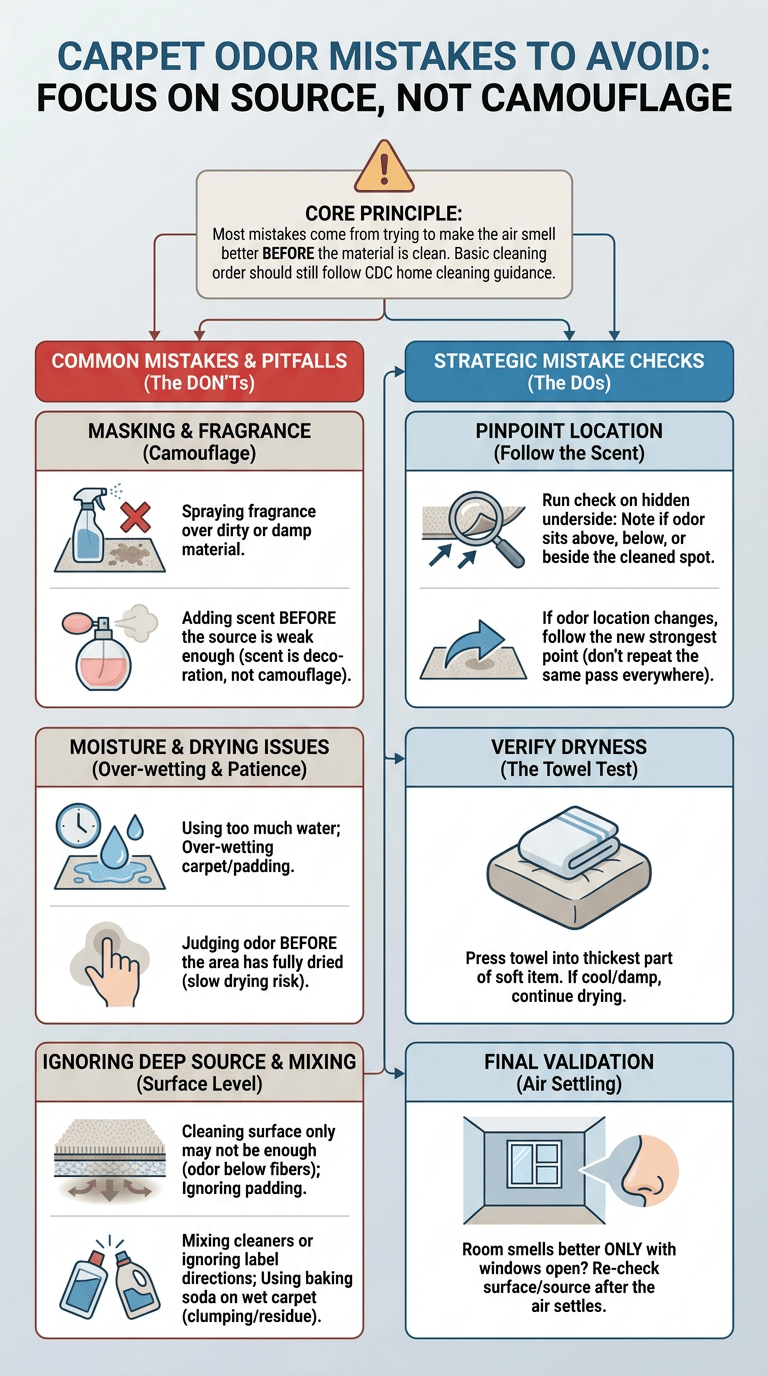
Carpet-Odor Mistakes to Avoid
Wet-Cleaning the Whole Room for One Spot
A whole-room wet pass adds moisture to unaffected carpet and can hide the original footprint. Mark and treat the actual source first. Expand only when broad film or soil is confirmed and the carpet, equipment, product, recovery method, and drying conditions support a larger cleaning project.
Repeating Product Before the First Pass Dries
A second product applied to a damp first treatment can create unknown residue, excess moisture, or unsafe chemistry. Let the first pass finish according to its label and dry fully before evaluating. Never mix or layer cleaners to neutralize a smell or speed a reaction.
Rubbing or Scrubbing Fibers
Hard rubbing can spread the spot, distort pile, move dye, and push residue downward. Blot with clean material and use only manufacturer-approved agitation. If the source cannot transfer without aggressive force, stop and reassess the cleaner, fiber, and depth rather than damaging the carpet face.
Replacing Furniture Too Soon
Furniture placed on damp carpet blocks airflow and may transfer color, finish, rust, or odor. Keep weight off until fibers and backing are dry. Follow furniture and carpet instructions for any protective tabs or moving method, and do not leave unstable items raised on improvised supports.
Using Fragrance to Judge Success
Fragrance can dominate the room while product scent is fresh. Judge the original odor only after drying and scent fade, using a close-and-reenter check. Candles, sprays, essential oils, and scented powders do not prove that urine, food residue, moisture, or smoke film was removed.
Ignoring the Pad, Baseboard, Subfloor, or Nearby Rug
The strongest odor may sit next to, not on, the visible fibers. Check edges, removable rugs, furniture fabric, baseboards, and the wetting history. Avoid prying up carpet or opening walls without understanding tack strips, adhesives, utilities, warranty, and contamination risks.
Using a Product Without Carpet-Manufacturer Approval
A household cleaner, natural ingredient, disinfectant, enzyme product, or solvent may alter dye, backing, adhesive, stain protection, or warranty. Read carpet and product directions and spot-test when allowed. Do not assume a method is safe because it worked on a rug, upholstery, hard floor, or another carpet.
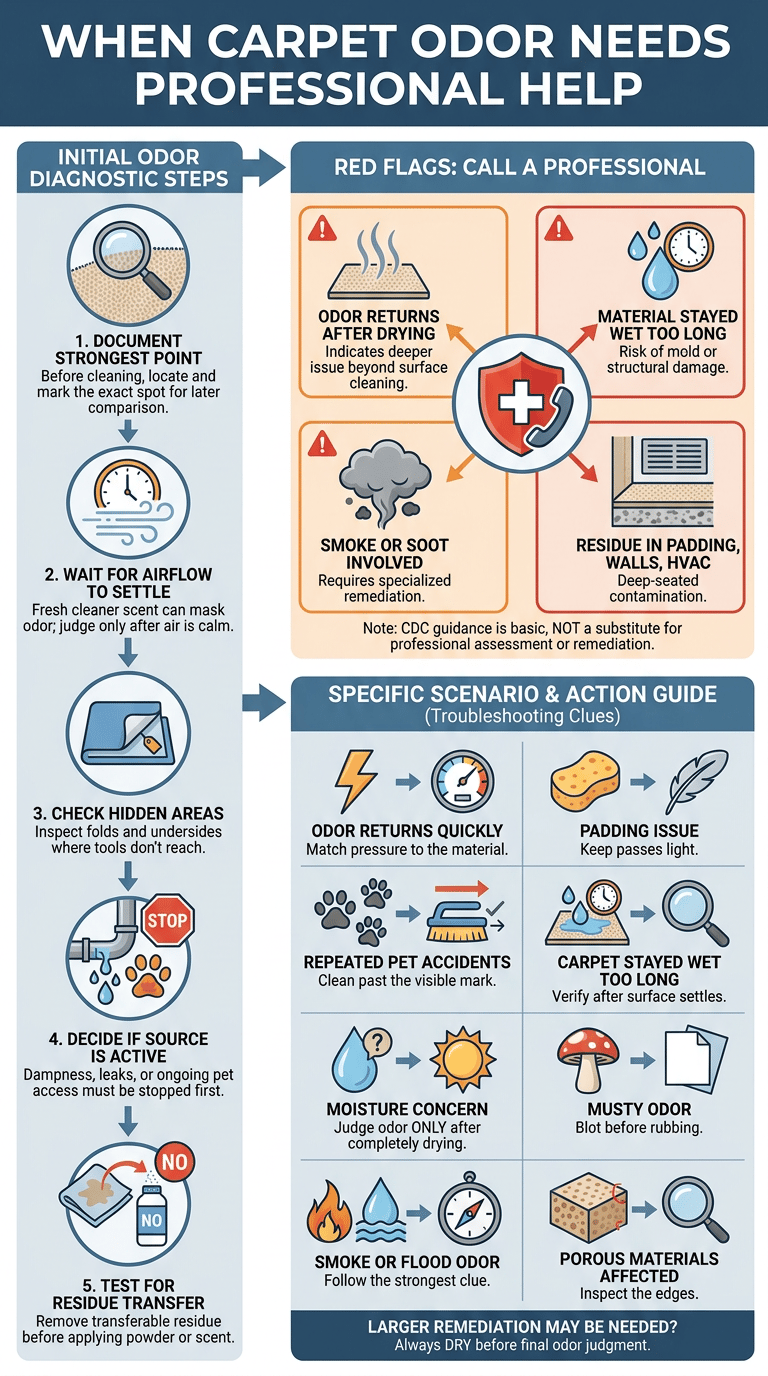
When to Get Professional Help
Repeated Pet Accidents in One Location
Repeated accidents can saturate backing, pad, tack strips, and subfloor beyond a surface footprint. Document the location and treatments already used. A carpet professional can assess access and material condition; broader pet behavior or hard-floor cleanup belongs outside this carpet-specific workflow.
Long Wetting, Floodwater, or Sewage
Carpet wet for an extended period or exposed to floodwater or sewage needs contamination and material assessment, not ordinary extraction. Keep people and pets away, limit handling, and follow public-health, building, insurer, and qualified restoration guidance. Replacement may be required depending on exposure and construction.
Persistent Musty or Mold-Like Odor
Persistent mustiness after full drying can point to pad, subfloor, wall edges, or another moisture source. Smell cannot identify growth. Do not keep adding powder or wet treatment. Arrange moisture investigation and material assessment, especially when staining, swelling, recurring dampness, or visible growth is present.
Smoke, Soot, or Fire Exposure
Soot and fire residue require methods that control particles and protect workers and occupants. Ordinary vacuuming or wetting can spread contamination. Contact fire, insurer, restoration, or indoor-environment professionals as appropriate. Carpet may be one affected material among walls, contents, insulation, and HVAC.
Odor in Padding or Subfloor
When pressure releases odor, the same footprint returns, or liquid clearly reached lower layers, professional access may be the safest next step. Treatment, sealing, pad replacement, subfloor repair, and carpet reinstallation require decisions based on source, material, contamination, warranty, and structural condition.
Delicate, Valuable, or Warranty-Covered Carpet
Wool, natural fiber, specialty dye, handmade installation, valuable carpet, and warranty-covered materials need documented care requirements. Contact the manufacturer, retailer, installer, or qualified carpet specialist before applying household chemistry or rental equipment. Preserve labels, receipts, and records of the spill and prior treatment.
Frequently Asked Questions
What Is the Best Way to Remove Odor from Carpet?
Locate the strongest source, identify the odor and affected layers, remove dry soil, then use a manufacturer-approved spot treatment without soaking. Dry fibers and backing completely and recheck without fragrance. If the same footprint returns, investigate padding or subfloor instead of repeating surface product.
Why Does Carpet Smell Worse After Cleaning?
Cleaning can add moisture, activate residue, disturb soil, or expose odor from backing and pad. Too much product, dirty equipment, poor recovery, and slow drying can also contribute. Stop adding chemistry, improve safe drying, and reassess after product scent fades. Persistent wetness needs professional attention.
Can Baking Soda Remove Carpet Odor?
Baking soda may serve as a limited finishing absorber on completely dry, compatible carpet when manufacturer and vacuum instructions allow it. It cannot remove urine from pad, moisture from backing, smoke film, sewage, or food residue. Powder can also remain in fibers and equipment.
How Do I Know Whether Odor Reached the Padding?
Clues include a large or repeated spill, odor released by pressure, a footprint that returns after full surface drying, edge staining, and prolonged wetness. These clues do not prove pad condition. A professional may need controlled access to inspect depth without damaging carpet or spreading contamination.
Can Pet Odor Be Removed Without Soaking the Carpet?
A fresh, limited surface spot may respond to a carpet-compatible product used exactly as labeled. Soaking is not the goal. Repeated accidents or odor from backing, pad, or subfloor require a depth assessment. Do not keep pouring enzyme product through the pile when recovery and drying are uncertain.
How Long Should Carpet Dry Before I Judge the Result?
Judge only after fibers and backing are dry and product scent has faded. There is no universal duration because pile, backing, treatment amount, humidity, temperature, airflow, and lower-layer wetting vary. Check coolness and towel transfer, then perform a neutral smell test under normal room conditions.
When Should Carpet Padding Be Replaced?
Replacement may be considered after sewage or flood contamination, repeated saturation, persistent odor, material breakdown, or a source that cannot be cleaned and dried safely. The decision depends on exposure, pad type, subfloor, carpet condition, warranty, and professional assessment rather than odor alone.
Final Thoughts
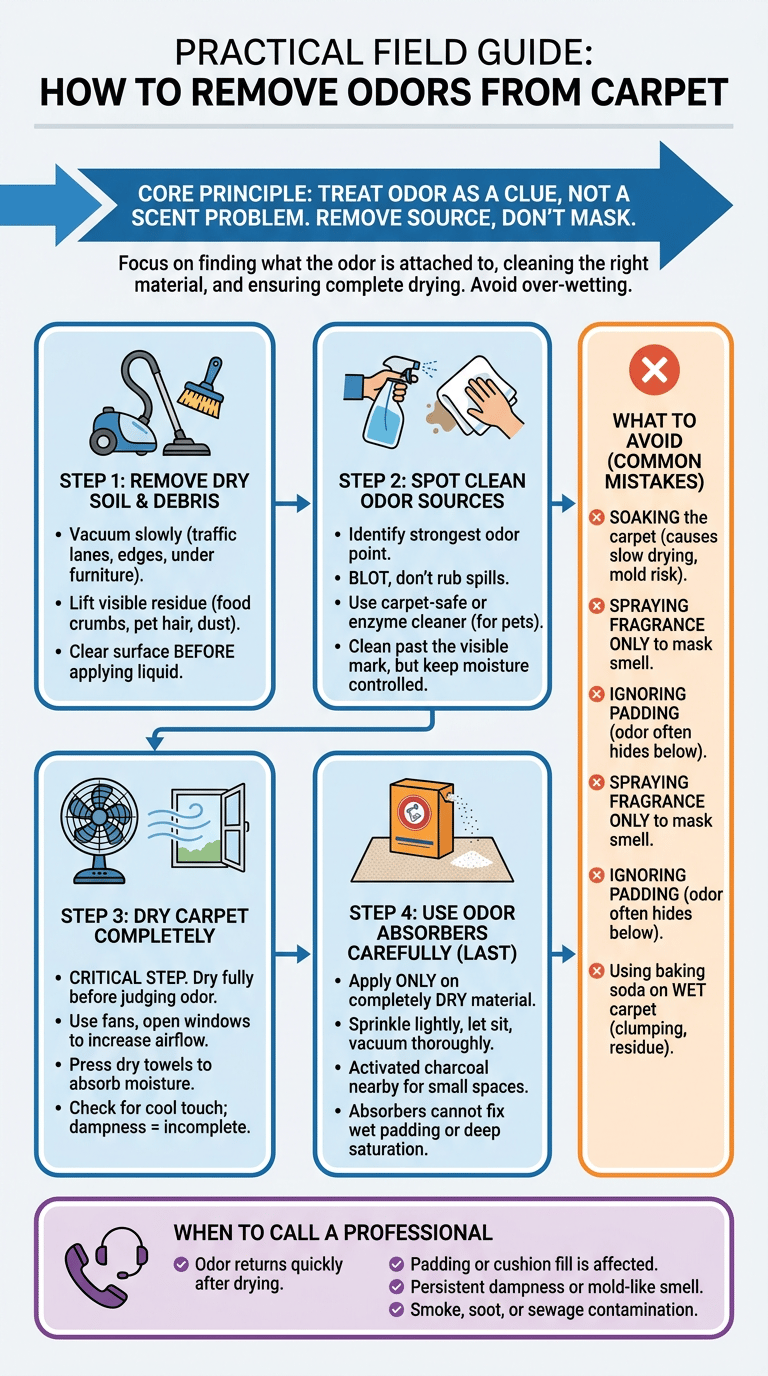
Reliable carpet-odor removal follows the layers: identify the source and location, vacuum suitable dry soil, match treatment to the carpet and residue, control moisture, dry the backing, and recheck after fragrance fades. Powders are optional finishing tools, not substitutes for residue removal or lower-layer diagnosis.
Stop routine DIY work when odor points to padding, subfloor, prolonged wetting, repeated pet accidents, floodwater, sewage, smoke, soot, fire damage, widespread moisture, valuable carpet, or an unknown hazard. Those conditions need appropriate professional, manufacturer, building, or public-safety guidance.

Ethan Carter is the Founder & Editor of HomeCleanSecrets. Based in the United States, he has 5 years of experience creating practical home cleaning, laundry care, stain removal, decluttering, and home organization content. His goal is to help everyday households clean smarter and build simple routines that are easier to maintain.
Read more about Ethan Carter on his author page: https://homecleansecrets.com/ethan-carter/