
Musty clothes usually point to one of four conditions: soil or detergent did not rinse away, the washer transferred odor, thick fabric stayed damp, or clean garments absorbed odor in storage. The recovery method should follow that evidence rather than adding more detergent, fragrance, heat, or an unapproved laundry chemical.
For washable everyday clothing, begin with the care label, separate garments by fabric weight and construction, use a load size that can move and rinse, and dry every seam and pocket completely. Athletic synthetics, denim, hoodies, seasonal clothing, delicate pieces, and structured garments may need different handling.
A musty or earthy odor can also be a moisture clue. EPA mold odor guidance provides context, but smell alone cannot identify growth or tell you whether an item is safe to launder. Stop routine washing for visible growth, sewage or flood exposure, chemical contamination, fire residue, or broad moisture damage. For accidental product exposure or fumes, follow poison control cleaning-product guidance rather than adding another cleaner.
Quick Answer: Rewash, Rinse, Dry, and Check the Source
The Four-Part Recovery Plan
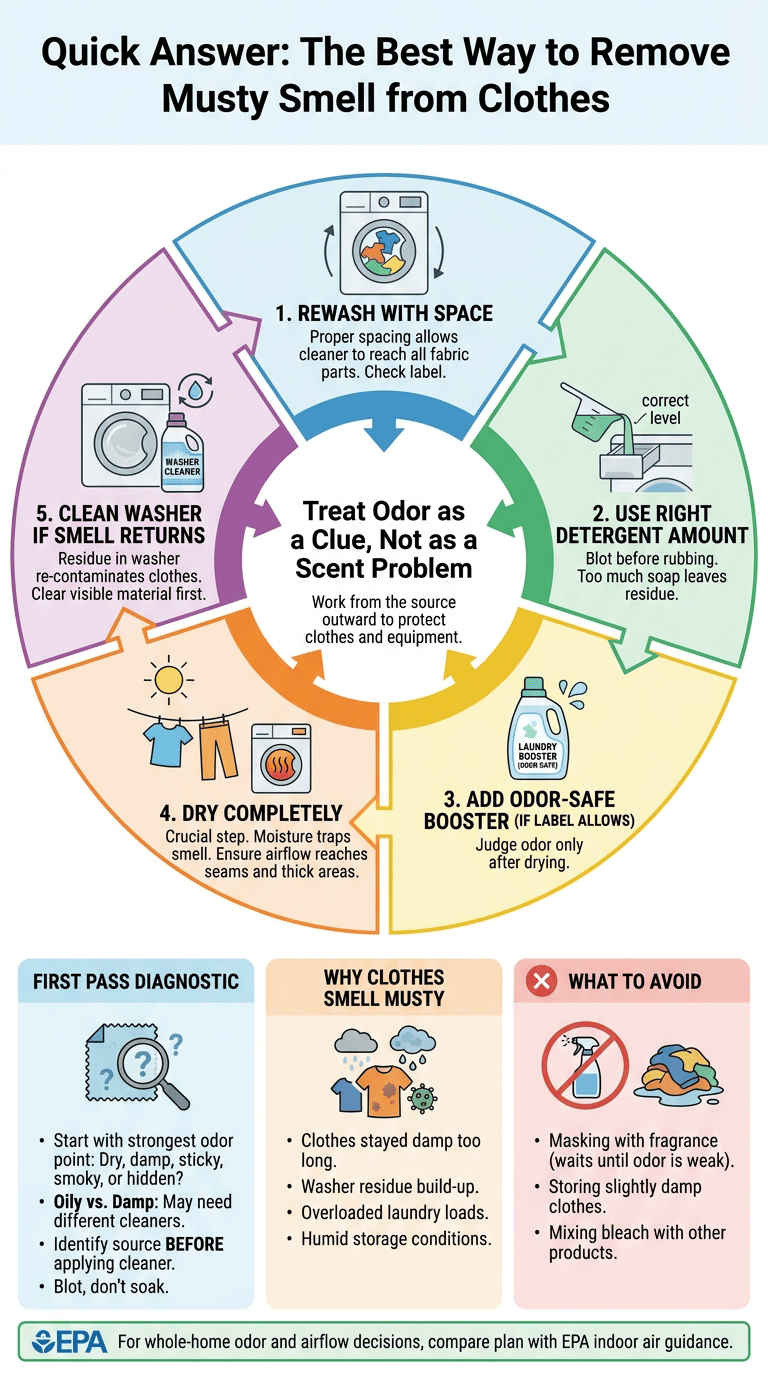
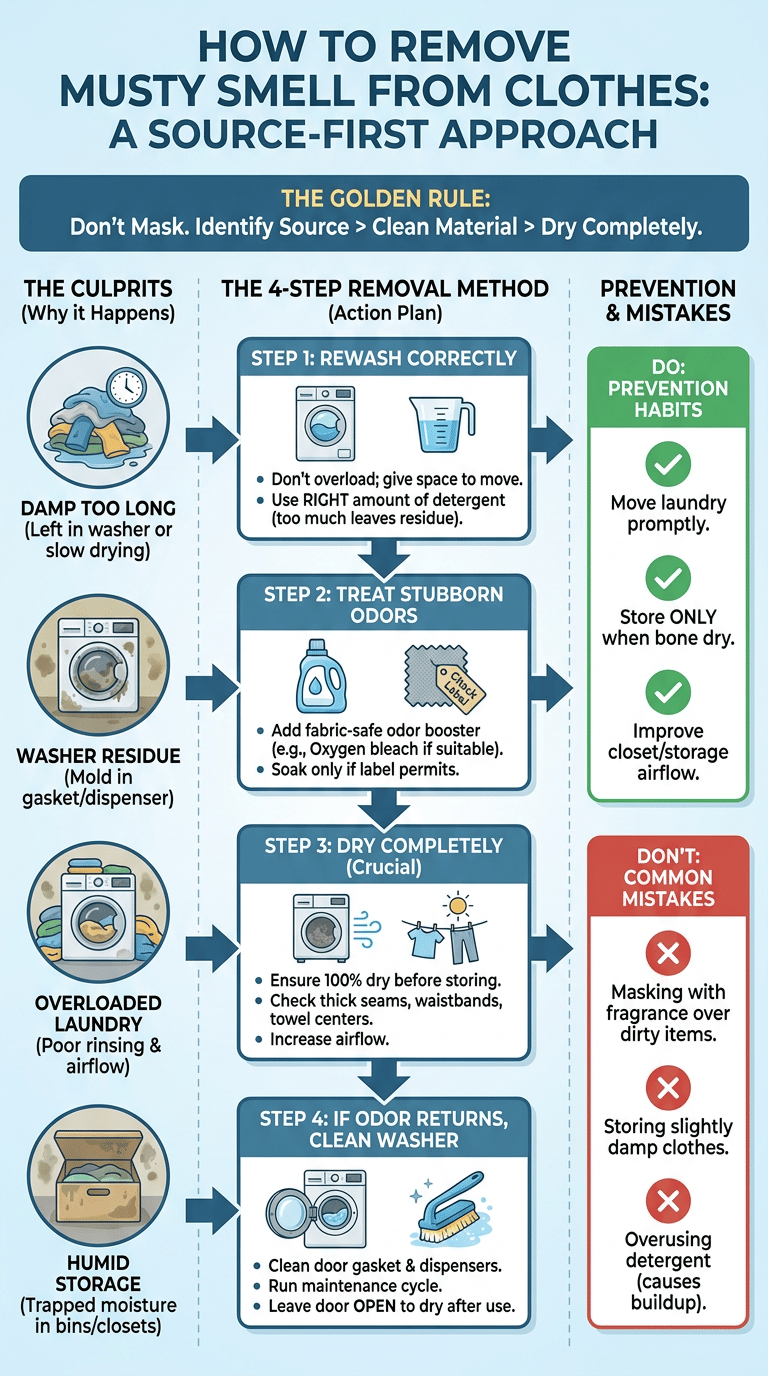
First, identify when the smell appears. Second, rewash compatible garments with enough room, a measured amount of label-approved detergent, and settings allowed by the care tag. Third, rinse away likely residue and dry the thickest parts completely. Finally, smell the cooled garments away from the washer and storage area.
When the Washer Is the Source
Suspect the washer when several unrelated loads smell musty immediately after washing, the empty drum or gasket smells, or residue is visible around the dispenser, lid, door, or seal. Do not improvise a cleaning formula. Follow the machine manual for accessible parts, its maintenance cycle, and approved cleaner.
When the Closet or Container Is the Source
Suspect storage when garments smell neutral after cooling but become musty after time in one drawer, bin, garment bag, or closet. Remove the clothes and compare them with items stored elsewhere. Damp shelving, crowded fabric, cardboard, shoes, or a moisture problem needs separate investigation before clean clothing returns. EPA indoor air quality guidance provides broader context when ventilation or indoor moisture is part of the pattern.
Diagnose When the Musty Smell Appears
Immediately After Washing
Odor present while clothes are still wet may come from the washer, an overloaded load, trapped soil, excess detergent, or laundry that sat wet before or after the cycle. Smell the empty machine and a few garments separately. Do not add another product until you know whether the load or machine is the common source.
Only After Drying
If clothes smell musty only after drying, check whether thick areas remained damp, the dryer was overloaded, or the drying rack had limited airflow. Let garments cool before judging them. Warm fabric and dryer scent can hide dampness in waistbands, cuffs, pockets, linings, hoods, and layered seams. When the odor comes from cigarette, campfire, cooking, fireplace, or other smoke exposure, use the separate guide to remove smoke smell from clothes.
After Several Days in Storage
Odor that develops in storage points toward residual dampness, a contaminated container, crowded airflow, or moisture in the storage area. Compare one freshly washed garment stored elsewhere. Do not keep rewashing clothes and returning them to the same drawer or bin without checking the environment.
Only in Thick Areas or Certain Fabrics
Heavy cotton, denim, fleece-lined garments, elastic waistbands, padded sections, and multilayer seams dry more slowly than thin fabric. Athletic synthetics can also retain body-oil residue even when they feel dry. Sort these garments from lighter items so washing, rinsing, and drying can match their construction.
Only Towels Smell
When ordinary clothes smell neutral but towels do not, treat towels as a separate case. Dense loops, hems, repeated damp use, detergent or softener residue, and slow drying can create a towel-specific pattern. Keep the diagnosis here brief and use a dedicated towel method rather than applying one towel routine to mixed clothing. When the problem is limited to dense towel loops, hems, softener residue, or repeated slow drying, use the guide to remove mildew smell from towels.
Odor Is Smoky Rather Than Musty
Cigarette, campfire, cooking, wildfire, and fire-related residue are not the same as damp-laundry odor. Clothing exposed to smoke needs a residue- and fabric-specific workflow. Soot, fire damage, strong chemical odor, or unknown exposure should not go into a household washer without appropriate safety guidance.
Before Rewashing Musty Clothes
Read Care Labels and Sort by Fabric Weight
Check every care label before choosing water temperature, cycle, detergent, treatment, dryer setting, or air-drying method. Sort light garments from denim, hoodies, and other heavy pieces so the load can move evenly. Also separate lint-producing fabrics, dark colors, and items that could snag or abrade delicate surfaces.
Smell and Inspect the Empty Washer
Open the empty machine and check the drum, accessible gasket, dispenser, lid, door, and nearby drain area without dismantling anything. Look for retained water, residue, or a musty smell. If the washer itself is affected, complete manufacturer-approved maintenance before putting the same clothes through another cycle.
Separate Delicates, Structured Garments, and Dry-Clean-Only Items
Set aside wool, silk, embellished items, tailored jackets, lined garments, leather details, and anything marked dry-clean only or spot-clean only. Repeated washing can distort structure, transfer dye, shrink fibers, or damage coatings. Follow the label or consult a qualified cleaner instead of treating every musty item as ordinary laundry.
Do Not Combine Laundry Chemicals
Never mix or layer bleach, ammonia, acids, vinegar, stain treatments, sanitizers, detergents, or unknown products. Follow each label and the washer manual, including ventilation and protective measures. Move to fresh air and seek appropriate poison-safety or emergency guidance after fumes, accidental mixing, swallowing, or skin exposure.
Step 1: Rewash with Enough Movement and Rinsing
Reduce Load Size
Clothing needs space to move through wash water and rinse without remaining packed into one dense mass. Split a large load, especially when it contains hoodies, denim, athletic wear, or layered garments. Follow the machine’s capacity guidance rather than forcing in one more item or relying on a longer cycle to compensate.
Measure Detergent for the Load and Machine
Measure detergent according to its label, the washer type, load size, soil level, and local water conditions. More detergent can leave residue that holds soil and fragrance. Do not pour directly onto a garment unless the product directions permit it, and use the correct dispenser when the manual specifies one.
Choose Cycle and Temperature from the Care Label
There is no universal cycle or temperature for musty clothing. Use the care label, fabric construction, washer manual, and detergent directions together. A setting suitable for durable cotton may damage elastic, coatings, dyes, synthetics, wool, or structured pieces. When labels conflict, use the more restrictive material instruction.
Use an Extra Rinse When Residue Is Likely
An extra rinse may help when the washer manual and garment labels allow it and detergent residue is a reasonable cause. It is not a substitute for correct dosing or enough load movement. If suds, slipperiness, or fragrance remain after rinsing, reassess detergent amount and load size before adding another treatment.
Step 2: Treat Persistent Odor Without Guessing
When a Label-Approved Booster May Help
A laundry booster may be appropriate only when its label permits the garment type, washer, detergent, and intended soil. Use the labeled amount and compartment. Do not assume oxygen products, sanitizers, acids, or odor products are compatible with every dye, finish, elastic, coated fabric, or machine.
Spot-Test Colorfastness
Test a treatment on a hidden area when the product and care label allow it. Use a white cloth to check color transfer and inspect for texture, gloss, stiffness, or coating changes after drying. Stop if the garment reacts. A small test cannot guarantee a full garment will tolerate soaking or machine agitation.
Why More Fragrance or Detergent Can Make Diagnosis Harder
Strong fragrance can cover mustiness while fabric is warm, and excess detergent can add residue that complicates the next wash. Keep the recovery load simple enough to evaluate. After complete drying and cooling, smell thick areas and compare them with an untreated clean garment in a neutral room.
Delicate and Non-Washable Limits
Do not soak, scrub, steam, or machine wash a delicate or non-washable item because a general method worked on cotton. Missing labels, unstable dye, glued construction, leather trim, interfacing, embroidery, or valuable fabric increase the risk. Isolate the item and seek manufacturer or professional textile guidance.
Step 3: Dry Clothes Completely
Check Waistbands, Pockets, Cuffs, Linings, and Seams
Feel the thickest and most layered parts, not just the garment face. Turn pockets out when the label and construction allow, separate bunched linings, and check hoods, drawstring channels, elastic, cuffs, collars, and waistbands. A cool or heavy section may still contain moisture even when the outside feels dry.
Air-Dry with Space on Both Sides
When air-drying is allowed, leave space between garments and expose both sides to moving air. Support knits or heavy items as their labels require so wet weight does not stretch them. Avoid folding garments over a narrow bar in thick layers that trap moisture at the center.
Avoid Overloading the Dryer
A crowded dryer can leave heavy pieces tangled around lighter items and slow drying in hidden folds. Follow the dryer manual and garment labels for capacity, cycle, and heat. Separate items when needed, and do not raise heat beyond the care limit simply to finish a dense load faster.
Cool the Garment Before the Final Smell Check
Remove garments as directed, spread them out, and let them cool in a neutral area. Warmth and scented products can make a load seem fresher than it is. Smell pockets, waistbands, seams, and underarm areas only after cooling, then compare with the empty washer and storage space.
Do Not Store Warm or Damp Fabric
Do not fold clothing straight into a closed drawer or plastic bin while it is warm or uncertain at the center. Let residual heat and moisture escape. Store only when every layer is dry, and keep the garment out of a musty container until that storage source has been investigated.
Step 4: Check the Washer and Laundry Environment
Gasket, Dispenser, Drum, Lid, and Door Area
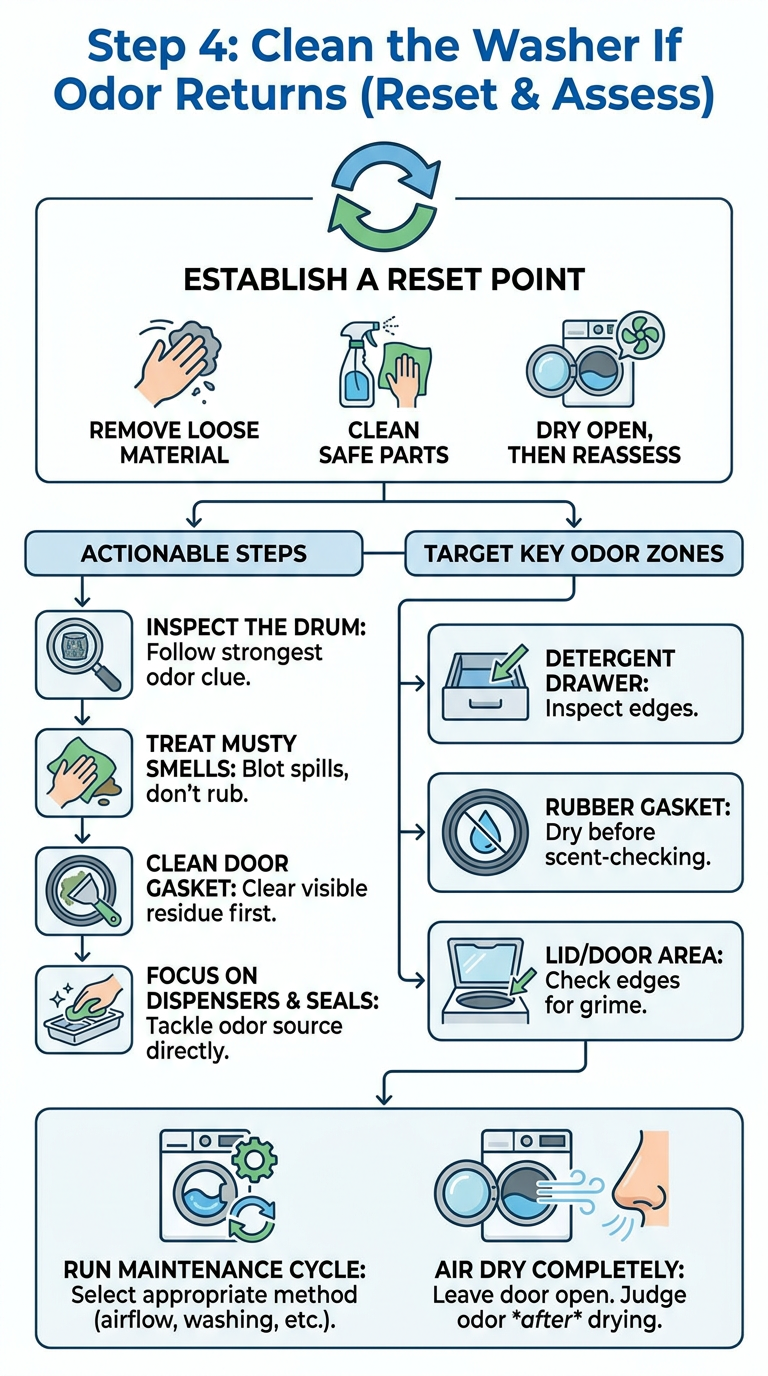
Inspect only accessible parts named in the washer manual. Wipe or remove a dispenser only when instructions allow, and check folds in a front-load gasket without using sharp tools. Retained water, lint, detergent film, or debris can transfer odor. Do not dismantle panels, hoses, pumps, or electrical parts.
Use Only the Manufacturer Maintenance Cycle and Approved Cleaner
Run the washer’s maintenance or cleaning cycle only as the manufacturer directs, with an approved product and an empty drum when specified. Do not invent a bleach ratio or combine cleaners. If odor, drainage trouble, leakage, or residue continues after approved maintenance, arrange service rather than repeating stronger chemistry.
Hamper, Laundry Basket, and Drying Rack
Smell and inspect the surfaces that touch dirty and clean clothing. Clean a washable hamper, basket, rack, or shelf according to its material instructions, and let it dry before reuse. Keep damp workout clothes, towels, and cleaning cloths from sitting against clean garments or a porous basket.
Damp Laundry Room or Closed Bathroom Limits
A damp room can slow drying and return odor to clean textiles. Check ventilation, condensation, leaks, and drying conditions without treating fragrance as a fix. Persistent moisture, visible growth, or water damage needs building-level attention, not repeated laundry additives or a fixed household maintenance schedule.
Troubleshoot by Fabric and Use
Everyday Cotton and Blends
Cotton and common blends may tolerate routine machine washing, but the care label still controls temperature, cycle, and drying. Sort by weight and color, measure detergent, and give the load enough room to rinse. Heavy cotton sections may need more drying time than thin shirts in the same load.
Athletic Synthetics
Athletic synthetics can hold body-oil residue and may have elastane, coatings, printed graphics, or heat limits. Wash according to the label, avoid unsupported additives, and do not assume hotter is better. Turn items as directed, rinse thoroughly, and let fitted waistbands and multilayer panels dry completely.
Denim, Hoodies, and Heavy Garments
Denim, hoodies, lined pants, and heavy sweatshirts absorb more water and can crowd lighter items. Wash only with compatible fabrics and within machine capacity. Check hoods, cuffs, waistbands, pockets, and thick seams during drying. Separate pieces that stay damp rather than over-drying the entire mixed load.
Delicates and Structured Clothing
Silk, wool, lace, embellished fabric, tailored jackets, and garments with interfacing or special finishes need their own care instructions. Surface odor does not authorize soaking. Airing in suitable dry conditions may be allowed, but cleaning and drying should follow the label or a qualified cleaner’s assessment.
Towels as a Separate Specialized Case
If only towels smell, check dense loops and hems, repeated damp use, load crowding, product residue, and drying between uses. Keep towels out of a mixed-clothing diagnosis once the pattern is clear. Their construction and after-use moisture need a dedicated towel workflow rather than a universal clothing wash formula.
Storage-Related Musty Odor
Drawers and Plastic Bins
Remove clothes from the affected drawer or bin and compare them with garments stored elsewhere. Check for condensation, damp liners, residue, cardboard, fragranced products, and items stored before cooling. Clean the container only as its material allows and return clothing after both container and garments are fully dry. When clean garments become musty only inside one storage enclosure, use the guide to remove musty smell from a closet.
Seasonal Clothing
Wash or clean seasonal garments according to their labels before storage, and confirm thick areas are dry. Avoid sealing warm fabric, shoes, paper, or damp accessories in the same container. When unpacking, isolate any affected garment so odor or moisture does not transfer across the entire seasonal load.
Crowded or Damp Closets
Crowding can restrict air around fabric and hide damp walls, floors, shoes, or boxes. This article stops at the clothing branch: remove affected garments and keep them dry elsewhere. Do not spray closet walls or pack items back tightly while a moisture source or changed building material remains unexplained.
When the Storage Space Needs Its Own Investigation
If different clean garments become musty only in one closet, the storage space needs its own diagnosis. Check accessible surfaces, moisture clues, shoes, cardboard, and containers without turning the laundry load into a closet-cleaning project. After the source is corrected, how to make a room smell fresh naturally can be a finishing choice rather than a masking step.
Musty-Clothes Mistakes to Avoid
Adding Extra Detergent
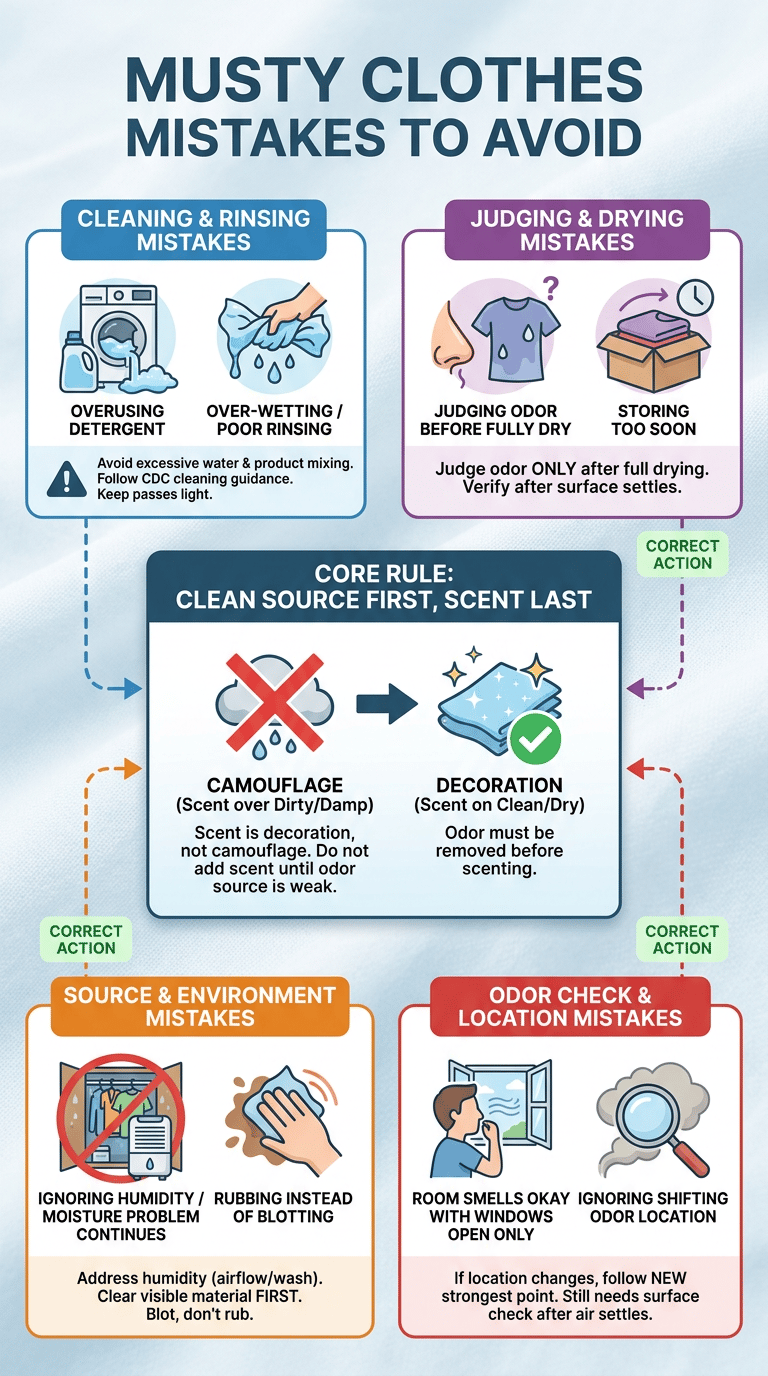
Extra detergent can leave residue when the load, water conditions, or rinse cannot remove it. Measure from the product label and washer directions. If clothing feels slick, stiff, heavily scented, or sudsy after washing, improve load size and rinsing instead of adding another full dose.
Masking with Fragrance Beads
Fragrance beads and strongly scented additives can make warm laundry smell pleasant without resolving dampness, washer residue, trapped soil, or storage moisture. They may also be unsuitable for some fabrics or users. Diagnose with cooled, fully dry clothing and follow every additive label if you choose to use one.
Overloading the Washer or Dryer
Overloading restricts movement in the washer and leaves thick folds in the dryer. A longer cycle cannot always correct poor load distribution. Follow both appliance manuals, separate heavy pieces, and choose a load size that permits washing, rinsing, and drying without dense bundles.
Combining Laundry Products
Combining products can create fumes, damage fabric, interfere with performance, or leave unknown residues. Never mix bleach with ammonia, acids, vinegar, or other cleaners. Do not layer a sanitizer, booster, stain product, and detergent unless the labels and appliance instructions explicitly permit that exact use.
Folding Before Thick Areas Are Dry
A shirt body may be dry while a pocket, hood, waistband, lining, or cuff remains damp. Folding traps that moisture against other fabric. Let the entire garment cool, check the thickest points, and continue label-approved drying before placing it in a drawer, bin, or crowded closet.
Rewashing Clothes in a Musty Machine
Repeatedly rewashing clothes in an affected washer can transfer the same odor again. Pause the clothing cycle, inspect accessible machine parts, and complete manufacturer-approved maintenance. Persistent machine odor, standing water, poor drainage, or leakage may require service rather than another improvised cleaning mixture.
Treating Every Fabric the Same Way
Cotton, athletic synthetics, denim, wool, silk, coated fabric, and structured garments do not share one safe temperature, cycle, treatment, or dryer setting. Read labels before grouping items. When one garment has a more restrictive care limit, separate it instead of exposing it to the method chosen for durable clothing.
When Home Laundering Is Not Enough
Visible Growth or Contamination
Do not shake or sort visibly affected material through the home. Isolate it without spreading residue and seek guidance appropriate to the material and extent. Smell alone cannot identify growth, and ordinary laundering does not correct the moisture source that affected a closet, wall, floor, or stored container.
Flood, Sewage, Fire, or Chemical Exposure
Clothing exposed to sewage, floodwater, soot, fire debris, unknown chemicals, or strong fumes is outside routine musty-laundry care. Limit handling and follow emergency, public-health, restoration, insurer, workplace, or hazardous-material guidance as appropriate. Do not put unknown contamination into a household washer or dryer.
Valuable, Delicate, or Structured Garments
Antique textiles, tailored pieces, uniforms with special coatings, formalwear, leather-trimmed clothing, and delicate or dry-clean-only garments may need a textile conservator, manufacturer, or qualified cleaner. Repeated home treatment can set damage, distort structure, move dye, or remove finishes even when the odor seems minor.
Persistent Odor After Correct Washing and Complete Drying
If a washable garment still smells after a correctly sized wash, measured detergent, adequate rinsing, and complete drying, stop repeating the same cycle. Compare the empty washer and storage area, inspect garment construction, and consider professional textile guidance. Some residue may sit in coatings, padding, or inaccessible layers.
Fabric Damage, Color Loss, or Coating Failure
Stop when color transfers, elastic degrades, waterproof coating peels, fabric becomes stiff, seams separate, or texture changes. More soaking or stronger chemistry can worsen the damage. Rinse only if the product label directs it, protect the item from further treatment, and obtain material-specific advice.
Frequently Asked Questions
Why Do Clothes Smell Musty After Washing?
Common causes include an overloaded washer, detergent residue, a musty machine, laundry left wet, soil trapped in synthetic or heavy fabric, and incomplete drying. Smell the empty washer and check when the odor first appears. That timing tells you whether to adjust washing, drying, or storage.
Can Musty Smell Come Out of Clothes?
Many washable garments improve when the source is corrected, the load can move, detergent is measured, residue is rinsed, and every layer dries. Results depend on the fabric, depth, exposure, and care label. Visible growth, contamination, damage, or persistent odor may require professional assessment or replacement.
Why Do Clothes Smell Fine from the Dryer but Musty in a Drawer?
Warmth and product scent may hide odor temporarily, or thick areas may still be damp. The drawer or bin may also be the source. Cool garments completely, inspect seams and pockets, then store one test item in a different clean, dry location before rewashing the entire load.
Does More Detergent Help Musty Laundry?
Not necessarily. Too much detergent can remain in fabric when the washer is crowded or rinsing is limited. Follow the detergent label and washer directions for the actual load and machine. If residue is likely, reduce load size and use an allowed extra rinse rather than automatically increasing detergent.
What Should I Do If Only Thick Clothes Smell?
Separate hoodies, denim, lined garments, and other heavy pieces from lighter clothing. Check load size, rinsing, dryer capacity, and thick areas such as hoods, cuffs, pockets, and waistbands. Continue only with label-approved drying, then cool the garment before deciding whether odor remains.
How Do I Handle Dry-Clean-Only Clothes?
Do not machine wash or soak them. Isolate the item, read the label, and explain the odor source or exposure to a qualified cleaner. Valuable, structured, embellished, lined, or smoke-exposed garments may need specialized handling. Avoid spraying fragrance or household cleaner onto fabric before professional assessment.
How Do I Know Whether the Washer or Storage Area Is the Source?
The washer is more likely when unrelated loads smell immediately after washing or the empty machine smells. Storage is more likely when cooled clothes are neutral but change in one drawer, bin, or closet. A broad odor removal guide can help frame the source-first check without replacing garment labels or appliance manuals.
Final Thoughts
Musty-clothes troubleshooting should stay evidence-based: note when the odor appears, read every care label, inspect the empty washer, reduce load size, measure detergent, rinse likely residue, and dry the thickest garment areas completely. Then check cooled clothing away from both the machine and storage space.
Keep towel problems, closet moisture, smoke exposure, complete washer cleaning, and non-washable garment care in their specialized workflows. Stop home laundering for contamination, widespread moisture, fire or chemical exposure, valuable materials, or fabric damage that makes another wash unsafe.

Ethan Carter is the Founder & Editor of HomeCleanSecrets. Based in the United States, he has 5 years of experience creating practical home cleaning, laundry care, stain removal, decluttering, and home organization content. His goal is to help everyday households clean smarter and build simple routines that are easier to maintain.
Read more about Ethan Carter on his author page: https://homecleansecrets.com/ethan-carter/