
Best Way to Clean a Bathroom
The best way to clean a bathroom is to work in a clear order: remove clutter, dust dry surfaces, apply cleaners, clean fixtures from top to bottom, then finish with the floor. This keeps you from re-cleaning areas and helps each product work before you scrub or rinse.
The correct cleaning order
A clean bathroom step-by-step routine is simple when you follow the same order every time:
- Clear surfaces first: Remove toiletries, towels, bath mats, trash, bottles, and small items from counters, ledges, the toilet tank, and the tub edge.
- Dust before wet cleaning: Dust light fixtures, shelves, door frames, the exhaust fan cover, baseboards, and corners before spraying anything.
- Apply cleaners and let them work: Put toilet bowl cleaner in the bowl and spray the shower, tub, and sink areas that need dwell time.
- Clean from top to bottom: Work from mirrors, counters, and fixtures down to the toilet, tub, tile, and baseboards.
- Finish with floors: Sweep or vacuum, then mop last so dust, spray, and debris do not land on a freshly cleaned floor.
What to clean every time
For a regular weekly bathroom cleaning, focus on the surfaces that collect visible grime, moisture, and daily residue:
- Toilet: Clean the handle, tank, lid, seat, bowl, base, and the floor seam around the toilet.
- Sink and faucet: Wipe toothpaste, soap film, water spots, faucet handles, and the drain ring.
- Shower or bathtub: Clean walls, ledges, corners, fixtures, and the tub or shower floor.
- Mirror: Remove toothpaste dots, fingerprints, and streaks.
- Floor: Remove hair, dust, and debris, then mop with a cleaner that matches the floor material.
What to deep clean less often
A bathroom deep clean includes details that do not always need weekly attention but can create odors, stains, or buildup if ignored:
- Grout: Scrub grout lines with a grout brush and rinse residue well.
- Shower tracks: Remove soap residue, hair, and buildup from sliding door tracks.
- Exhaust fan cover: Dust regularly and wash the cover when dust becomes heavy.
- Cabinets and drawers: Empty, wipe, sort, and remove expired or unused products.
- Bathroom drains: Clean stoppers and visible drain areas where hair and residue collect.
Before You Start: Bathroom Cleaning Safety

Bathroom cleaning often involves moisture, enclosed spaces, spray products, and residue from different cleaners. A safety-first routine protects your surfaces and helps you avoid unsafe product combinations.
Ventilate the bathroom
Bathrooms can trap humidity and cleaning product odors more easily than larger rooms. Before spraying or scrubbing, increase airflow as much as you can.
- Turn on the exhaust fan: Start the fan before using cleaning sprays, especially in a small bathroom.
- Open a window when possible: Fresh air helps move moisture and odors out of the room.
- Keep airflow running after cleaning: Leave the fan on for a while after showers or deep cleaning so damp surfaces can dry faster.
Wear basic protection
You do not need complicated gear for everyday cleaning, but basic protection is wise when scrubbing toilets, using sprays, or cleaning moldy-looking spots.
- Gloves: Wear reusable or disposable gloves to keep cleaners and bathroom grime off your hands.
- Eye protection for spray cleaners: If you are spraying above shoulder height, scrubbing overhead, or using stronger cleaners, protect your eyes from splashes.
- Old clothes for deep cleaning: Wear clothing you do not mind staining, especially when using products that may discolor fabric.
Never mix cleaning products
This is one of the most important bathroom cleaning rules. Do not mix bleach with ammonia, vinegar, acids, or other cleaners. The CDC’s cleaning and disinfecting guidance advises following product labels and not mixing products because unsafe combinations can create harmful fumes.
- Do not mix bleach with ammonia: This combination can release dangerous gases.
- Do not mix bleach with vinegar: Bleach and acidic products should not be combined.
- Rinse before switching products: If one cleaner is not working, rinse the surface thoroughly and give it time to clear before trying another product.
Safety rule: Use one cleaning product at a time, read the label, keep the room ventilated, and rinse well before changing products.
Supplies You Need to Clean a Bathroom
A good bathroom cleaning guide does not require a huge supply closet. The goal is to use the right tools for common surfaces and avoid abrasive tools that can scratch finishes.
Basic tools
- Microfiber cloths: Use them for mirrors, faucets, counters, and final drying. Keep a separate cloth for toilet areas.
- Non-scratch sponges: Use these on sinks, tubs, and tile when the surface allows light scrubbing.
- Toilet brush: Keep one dedicated brush for the toilet bowl only.
- Soft scrub brush: Use a soft brush for textured areas, around fixtures, and corners.
- Mop or floor cloth: Choose a mop for larger floors or a washable cloth for small bathrooms and tight edges.
Cleaning products
Match your products to your bathroom surfaces. Product labels matter, especially for dwell time, rinsing directions, and surface compatibility. If you prefer products with safer ingredient profiles, the EPA Safer Choice program is a helpful resource for identifying cleaning products that meet its criteria.
- Bathroom cleaner: Use a general bathroom cleaner for soap film, sink residue, counters, and many shower surfaces, as long as the label allows it.
- Glass cleaner or mirror-safe cleaner: Use for mirrors and glass surfaces to reduce streaks.
- Toilet bowl cleaner: Use only inside the toilet bowl unless the label says otherwise.
- Disinfectant when needed: Use a disinfectant on high-touch or contaminated surfaces according to the label. Cleaning removes dirt and residue, while disinfecting uses a product to kill germs on surfaces when used correctly.
- pH-neutral cleaner for stone surfaces: Natural stone can be sensitive to acidic or harsh cleaners, so use a stone-safe cleaner.
Optional deep-cleaning tools
- Grout brush: Helpful for grout lines, corners, and textured tile areas.
- Detail brush: Useful around faucet bases, drain edges, hinges, and shower door tracks.
- Squeegee: Helps remove water from shower walls and glass after use.
- Plastic scraper: Useful for carefully lifting stuck-on residue from durable surfaces without using metal blades.
Step 1: Clear and Declutter the Bathroom
Cleaning is easier when surfaces are open. Before spraying anything, remove the items that block the counter, tub edge, shower ledges, and floor. This also helps you notice expired products, empty containers, and hidden grime.
Remove items from surfaces
- Sink counter: Move toothbrush holders, skincare, soap pumps, razors, makeup, and loose items to a tray or basket while you clean.
- Shower ledges: Remove shampoo, conditioner, body wash, razors, and soap dishes.
- Tub edge: Clear bottles, bath toys, candles, and any items that collect water underneath.
- Toilet tank: Remove tissue boxes, decor, sprays, and extra rolls so you can clean the whole surface.
Take out washable items
- Towels: Put used towels in the laundry and replace them after cleaning.
- Bath mats: Shake them outside if needed, then launder according to the care label.
- Shower curtain liner if needed: If the liner has visible residue, remove it for washing or replacement based on its care instructions.
Throw away obvious trash
- Empty bottles: Recycle or discard empty shampoo, lotion, and cleaning bottles according to local rules.
- Used tissues and wrappers: Empty the trash can and check behind the toilet and vanity.
- Expired toiletries: Remove old medicines, cosmetics, sunscreen, and products you no longer use. Follow safe disposal directions for medications and chemicals.
Step 2: Dust and Dry-Clean First
Dusting before wet cleaning prevents dust from turning into muddy streaks. It also keeps lint, hair, and debris from spreading across damp counters, tile, and floors.
Dust high areas
- Light fixtures: Use a dry microfiber cloth or duster to remove dust from shades, bulbs, and fixture edges. Make sure lights are cool before touching them.
- Shelves: Dust open shelves, the tops of storage units, and decorative items before wiping them damp.
- Door frames: Dust the top of the door frame, trim, and nearby wall edges where lint collects.
Dust the exhaust fan cover
The exhaust fan cover often collects lint and dust. When dust builds up, it can make the fan less effective at moving humid air out of the bathroom.
- Why dust affects airflow: A dusty cover can block some of the vent openings, so it is worth dusting during regular cleaning.
- When to remove and wash the cover: If the cover looks fuzzy or clogged, turn off power according to the fan instructions, remove the cover if safe to do so, and wash it according to the manufacturer’s directions.
Remove hair and debris
- Sink area: Pick up hair, cotton swabs, floss, and loose debris before wiping the counter.
- Shower floor: Remove hair near the drain before applying cleaner.
- Bathroom corners: Use a dry cloth, vacuum attachment, or broom to pull dust from corners.
- Floor edges: Clean along baseboards and behind the door before mopping.
Step 3: Apply Cleaners and Let Them Sit
Many bathroom messes are easier to remove when cleaners have time to loosen residue. Apply products according to the label, then let them sit while you clean another area. Do not let cleaners dry on surfaces unless the label specifically allows it.
Toilet bowl cleaner
- Apply under the rim: Aim the cleaner under the rim so it can run down the inside of the bowl.
- Let it sit while cleaning other areas: Allow the product to work while you clean the sink, mirror, or shower exterior.
Shower and tub cleaner
- Spray soap scum zones: Focus on the lower shower walls, tub ledges, corners, and areas around bottles.
- Focus on lower walls and corners: These areas often collect rinse water, soap residue, and body oils.
Why dwell time matters
- Softens soap scum: Letting cleaner sit briefly can make cloudy film easier to wipe away.
- Loosens mineral film: Water spots and mineral residue are easier to clean when the correct product has time to work.
- Helps disinfectants work when used correctly: Disinfectants require the surface to stay wet for the time listed on the label. Clean visible dirt first, then disinfect when needed.
Step 4: Clean the Toilet
The toilet should have its own cloths or disposable wipes so residue does not spread to the sink or counter. Work from the cleaner areas to the dirtiest areas: handle and tank first, base and floor seam last.
For a related walkthrough, see our guide to how to clean bathroom mold safely.
For a related walkthrough, see our guide to how to clean a bathroom sink.
For a related walkthrough, see our guide to how to clean a bathtub.
For a related walkthrough, see our guide to how to clean bathroom tiles.
Clean the exterior first
- Handle: Wipe the flush handle carefully because it is a high-touch spot.
- Tank: Clean the top, front, sides, and any decorative items before replacing them.
- Seat and lid: Lift the lid and seat to clean both sides, including hinges.
- Base and floor seam: Wipe around the base, bolts, and floor seam where dust and odors can collect.
Scrub the bowl
- Under the rim: Scrub under the rim where stains and buildup can hide.
- Waterline: Focus on the waterline if there is a ring or discoloration.
- Trapway: Scrub the lower bowl and trapway opening, then flush with the lid closed if possible.
When the toilet needs a dedicated deep clean
- Hard water ring: A persistent ring may need a product made for mineral buildup and safe for toilet bowls.
- Urine odor around the base: Clean the base, bolts, floor seam, nearby grout, and wall area. If odor remains, check for leaks or damaged caulk.
- Stains under the rim: Stubborn staining may need a longer dwell time with a toilet-safe product, but do not mix products in the bowl.
Step 5: Clean the Bathroom Sink and Faucet
The sink area collects toothpaste, soap residue, water spots, hair, and product drips. Clean the faucet first, then the basin, then the drain details.
Clean the faucet and handles
- High-touch areas: Wipe handles, the faucet neck, the soap pump, and nearby counter areas.
- Water spots: Use a cleaner suitable for the finish, then dry with a microfiber cloth to reduce spotting.
- Faucet base buildup: Use a detail brush or folded cloth around the base where residue gathers.
Clean the sink basin
- Toothpaste residue: Wet the basin, apply cleaner, and wipe away dried toothpaste before it hardens further.
- Soap film: Scrub lightly with a non-scratch sponge, then rinse.
- Drain ring: Clean the ring around the drain where grime and mineral spots can collect.
Clean the drain stopper and overflow
- Hair and residue buildup: Remove and wipe the stopper if your sink design allows it.
- Musty odor source: Residue on the stopper or around the overflow opening can contribute to unpleasant smells.
- Monthly detail cleaning: Add stopper and overflow cleaning to your monthly bathroom deep-clean checklist.
Step 6: Clean the Mirror and Glass
Bathroom mirrors show every splash, fingerprint, and streak. Use a clean cloth and avoid oversaturating the mirror, especially near edges where moisture can affect the backing over time.
Clean the bathroom mirror
- Remove toothpaste spots: Dampen a small section of cloth to loosen dried spots before cleaning the whole mirror.
- Wipe from top to bottom: Start at the top and work down so drips do not land on finished areas.
- Buff streaks with a dry cloth: Use a dry microfiber cloth to remove haze and leftover moisture.
Prevent streaks
- Use less product: Too much cleaner can leave residue that looks like streaks.
- Avoid dirty cloths: A cloth with lint, soap residue, or toilet cleaner on it will smear the mirror.
- Dry after wiping: A final dry buff usually makes the biggest difference.
Step 7: Clean the Shower or Bathtub

The shower or bathtub usually takes the most scrubbing because it collects soap, body oils, minerals, and moisture. Keep the process broad and steady: rinse, clean, scrub where needed, rinse again, then dry.
Clean shower walls
- Rinse loose residue: Rinse walls first if there is loose hair, grit, or product residue.
- Scrub soap scum areas: Focus on the lower walls, corners, and spots below shelves or bottles.
- Rinse from top to bottom: Rinse high areas first so loosened residue flows downward.
Clean the bathtub basin
- Match cleaner to tub material: Use a cleaner safe for porcelain, acrylic, fiberglass, enamel, or stone, depending on your tub.
- Scrub ledges and corners: Pay attention to the back corners, drain area, and where the tub meets the wall.
- Rinse and dry the finish: Rinsing removes cleaner residue, and drying helps reduce water spots.
Clean fixtures and accessories
- Shower head exterior: Wipe the outside of the shower head and the connection point without forcing cleaner into openings.
- Faucet trim: Clean around handles, plates, and tub spouts where water spots gather.
- Soap dishes and bottle bottoms: Wash soap dishes and wipe bottle bottoms before returning them to the shower.
Step 8: Clean Bathroom Tiles and Grout
Tile and grout can be simple or delicate depending on the material. Ceramic and porcelain are usually more forgiving than natural stone, while grout lines need gentle scrubbing and thorough rinsing.
Clean tile surfaces
- Ceramic and porcelain tile: Use a bathroom cleaner or tile-safe cleaner, scrub with a non-scratch sponge, and rinse well.
- Natural stone tile: Use a pH-neutral stone-safe cleaner and avoid acidic products unless the stone manufacturer says otherwise.
- Textured tile: Use a soft brush to reach low spots where residue can sit.
Clean grout lines
- Use a grout brush: A narrow brush helps clean the lines without over-scrubbing the tile surface.
- Avoid wire brushes: Wire bristles can damage grout and scratch nearby surfaces.
- Rinse residue well: Cleaner left behind can attract more grime and leave a dull film.
When tile or grout needs a dedicated deep clean
- Heavy soap scum: If the tile feels waxy or looks cloudy after normal cleaning, use a product designed for soap scum and safe for the surface.
- Black or orange grout stains: Stains may need closer attention, improved ventilation, or a dedicated grout-cleaning routine.
- Cracked or missing grout: Cleaning will not fix damaged grout. Repair may be needed to keep water from moving behind surfaces.
Step 9: Handle Soap Scum, Hard Water, and Bathroom Mold Carefully
Some bathroom problems need more than a quick wipe. Soap scum, hard water, and mold-like spots each call for a different approach, and surface material matters. If you are unsure what a surface is made of, test carefully in a small hidden area or choose the gentlest product recommended for that material.
Soap scum
- How to recognize cloudy film: Soap scum often looks dull, grayish, white, or waxy. It may feel rough or sticky when wet.
- Why shower walls and tub ledges collect it: Soap residue, body oils, and rinse water tend to settle on lower walls, ledges, corners, and areas under bottles.
- When to use a soap-scum remover: If regular bathroom cleaner does not remove the film, choose a soap-scum remover that is safe for your tub, tile, glass, or fixture finish.
Hard water stains
- White mineral spots: Hard water residue often appears as white, chalky spots or rings.
- Faucet and glass buildup: Faucets, shower doors, and glass panels often show mineral spots because water dries on them repeatedly.
- Why surface material matters: Acidic mineral removers can damage some stone, finishes, and specialty surfaces, so check the label before use.
Bathroom mold or mildew-like spots
- Small spots on hard surfaces: Small spots on nonporous surfaces may be cleanable with the right product and good ventilation.
- Moisture and ventilation causes: Recurring spots often come back when surfaces stay damp, airflow is poor, or water is leaking.
- When recurring growth needs more than cleaning: If spots keep returning quickly, look for moisture sources rather than only scrubbing the surface.
When to stop and get help
- Large mold areas: Do not treat a large mold problem as routine bathroom cleaning.
- Soft or damaged drywall: Soft, crumbling, swollen, or stained drywall can point to a moisture problem behind the surface.
- Water leaks: If you see active leaks, water stains, or recurring wet areas, fix the moisture source before focusing on cosmetic cleaning.
Step 10: Clean the Bathroom Floor
The floor comes last because it catches dust, hair, overspray, drips, and debris from every other step. A clean floor makes the whole bathroom feel finished.
Sweep or vacuum first
- Hair: Remove hair before mopping so it does not clump or smear.
- Dust: Dust gathers along baseboards, under the vanity edge, and behind the door.
- Debris behind the door: Open and close the door to reach hidden corners.
Mop by floor type
- Tile floor: Mop with a tile-safe cleaner and avoid leaving puddles in grout lines.
- Vinyl floor: Use a cleaner safe for vinyl and avoid soaking seams.
- Stone floor: Use a pH-neutral stone-safe cleaner and avoid acidic products.
Clean edges and corners
- Around toilet base: Wipe the curved base, bolts, and floor seam by hand if a mop cannot reach.
- Under vanity edge: Use a cloth or narrow mop head to clean the toe-kick area.
- Behind trash can: Move the trash can and clean the wall and floor behind it.
Bathroom Cleaning Checklist
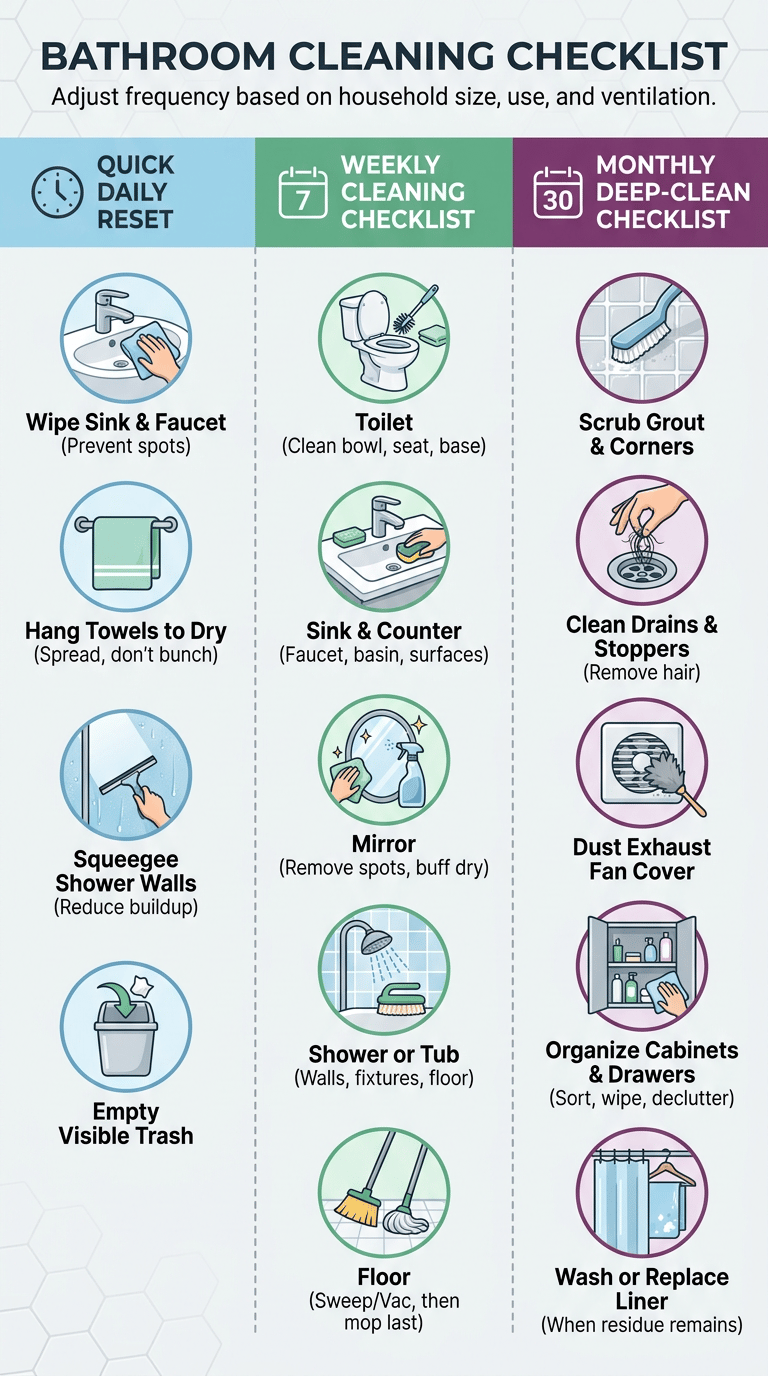
Use this bathroom cleaning checklist to decide what to do daily, weekly, and monthly. Adjust the timing based on household size, bathroom use, ventilation, pets, children, and how quickly buildup appears.
Quick daily bathroom reset
- Wipe sink and faucet: A quick wipe prevents toothpaste and water spots from hardening.
- Hang towels to dry: Spread towels out so they can dry instead of staying bunched.
- Squeegee shower walls: Removing water after showers helps reduce visible spotting and buildup.
- Empty visible trash: Toss tissues, wrappers, empty rolls, and packaging.
Weekly bathroom cleaning checklist
- Toilet: Clean the exterior, seat, lid, bowl, base, and nearby floor.
- Sink: Clean the faucet, handles, basin, drain ring, and counter.
- Mirror: Remove spots and buff dry.
- Shower or tub: Clean walls, ledges, corners, fixtures, and floor or basin.
- Floor: Sweep or vacuum, then mop last.
Monthly bathroom deep-clean checklist
- Grout and corners: Scrub grout lines, corners, and textured areas.
- Drains and stoppers: Remove visible hair and clean accessible stopper parts.
- Exhaust fan cover: Dust or wash the cover according to the fan instructions.
- Cabinets and drawers: Empty, wipe, sort, and remove expired products.
- Shower curtain or liner: Wash or replace the liner when residue remains after cleaning.
How to Keep a Bathroom Clean Longer
The easiest bathroom to clean is one that does not stay wet, crowded, or coated in residue. Small habits after showers and toothbrushing can reduce the amount of scrubbing needed later.
Control moisture
- Run the fan after showers: Use the exhaust fan during and after showers to help move humid air out.
- Leave shower door or curtain open: Spread the curtain or leave the door open so surfaces can dry.
- Dry wet corners: Wipe corners, ledges, and seams where water sits.
Reduce clutter
- Limit products on ledges: Keep only what you use often in the shower and on the counter.
- Use washable organizers: Choose bins, trays, or caddies that can be removed and washed.
- Remove expired products monthly: Sort drawers and cabinets during your monthly deep clean.
Prevent buildup
- Rinse shower walls: Rinse away shampoo, conditioner, and body wash residue before it dries.
- Wipe toothpaste quickly: Fresh toothpaste is much easier to remove than dried splatter.
- Clean before soap scum hardens: Light, frequent cleaning is easier than waiting for thick buildup.
Bathroom Cleaning Mistakes to Avoid
A bathroom can look clean but still have avoidable problems if the routine is rushed or unsafe. These common mistakes make cleaning harder and can damage surfaces.
Mixing cleaners
- Dangerous fumes: Never mix bleach with ammonia, vinegar, acids, or other cleaners. Use one product at a time and follow the label.
- Rinse before switching products: If you change cleaners, rinse the surface thoroughly and allow airflow before applying the next product.
Cleaning floors first
- Dust and spray fall downward: If you mop first, you will likely drop dust, hair, and cleaner residue onto the floor again.
- Floors should be last: Finish with sweeping or vacuuming and mopping for the cleanest result.
Using the same cloth everywhere
- Separate toilet cloths from sink cloths: Use dedicated cloths, color-coded cloths, or disposable wipes for toilet areas.
- Wash reusable cloths properly: Launder cleaning cloths after use and let them dry fully before storing.
Ignoring ventilation
- Moisture causes recurring problems: If the bathroom stays damp, odors, spots, and buildup tend to return faster.
- Exhaust fans need cleaning too: A dusty fan cover can reduce airflow, so include it in your regular and monthly routines.
Frequently Asked Questions

What is the correct order to clean a bathroom?
The correct order is to clear surfaces, dust dry areas, apply cleaners that need dwell time, clean fixtures from top to bottom, scrub the toilet, sink, mirror, shower or tub, tile and grout, then clean the floor last. This order prevents dust and spray from falling onto areas you already cleaned.
How often should you clean a bathroom?
Most bathrooms benefit from a quick daily reset, a weekly cleaning, and a monthly deep clean. A lightly used guest bathroom may need less frequent cleaning, while a busy family bathroom may need more frequent sink, toilet, and shower attention.
How long should it take to clean a bathroom?
A quick bathroom reset can take only a few minutes. A regular weekly cleaning may take longer depending on the bathroom size, clutter, and buildup. A deep clean takes the most time because it includes grout, drains, exhaust fan covers, cabinets, and detailed corners.
Should you clean or disinfect a bathroom first?
Clean first, then disinfect when needed. Cleaning removes visible dirt, soap film, and residue. Disinfecting uses a disinfectant product to kill germs on a surface when the product is used according to the label, including the required wet contact time.
What should you not mix when cleaning a bathroom?
Do not mix bleach with ammonia, vinegar, acids, or other cleaners. Do not layer products in the toilet bowl, shower, drain, or sink. If you need to switch products, rinse the surface well, ventilate the room, and follow label directions.
How do you keep a bathroom from smelling bad?
Start by cleaning the toilet base, sink drain stopper, trash can, bath mats, towels, shower drain area, and damp corners. Improve airflow by using the exhaust fan and letting wet surfaces dry. If odors remain, check for hidden moisture, leaks, or drain issues.
What is the best way to deep clean a bathroom?
The best way to deep clean a bathroom is to remove everything from surfaces, dust first, apply cleaners with proper dwell time, clean each fixture thoroughly, scrub tile and grout, detail drains and stoppers, wash or replace the shower liner if needed, wipe cabinets and drawers, clean the exhaust fan cover, and mop the floor last.
Final Thoughts
Learning how to clean a bathroom properly comes down to order, safety, and consistency. Clear the room first, dust before wet cleaning, let products work, clean from top to bottom, and save the floor for last. Use separate cloths for toilet areas, match cleaners to your surfaces, ventilate the room, and never mix cleaning products.
For everyday upkeep, keep the sink wiped, towels dry, shower walls rinsed or squeegeed, and clutter under control. For weekly cleaning, focus on the toilet, sink, mirror, shower or tub, and floor. For monthly deep cleaning, handle grout, drains, exhaust fan covers, cabinets, and shower liners. With a steady routine, the bathroom stays easier to clean and more comfortable to use.

Ethan Carter is the Founder & Editor of HomeCleanSecrets. Based in the United States, he has 5 years of experience creating practical home cleaning, laundry care, stain removal, decluttering, and home organization content. His goal is to help everyday households clean smarter and build simple routines that are easier to maintain.
Read more about Ethan Carter on his author page: https://homecleansecrets.com/ethan-carter/