
Quick Answer: The Best Way to Clean a Bathtub
Best method for most tubs
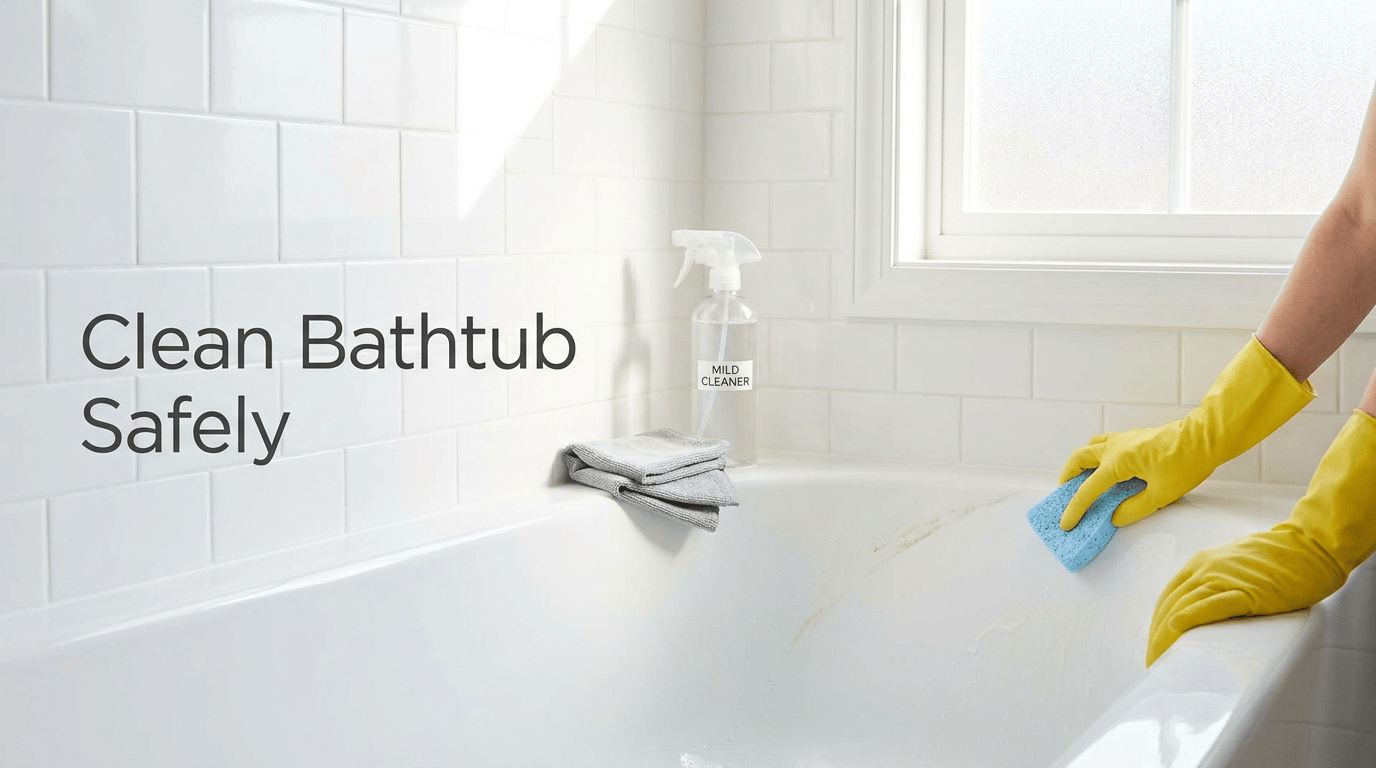
The best way to clean a bathtub is to rinse away loose debris, apply a cleaner that is safe for your tub material, let it sit briefly, scrub with a non-scratch sponge, then rinse and dry the surface. This removes bathtub grime without grinding residue into the finish.
- Rinse the tub: Use warm water to loosen hair, soap residue, and surface dirt.
- Apply a tub-safe cleaner: Choose a mild bathroom cleaner, dish soap solution, or material-specific product.
- Let it sit briefly: Give the cleaner time to soften soap scum so you do not have to scrub aggressively.
- Scrub gently: Use a non-scratch sponge or soft brush, not metal pads.
- Rinse and dry: Rinse until the surface no longer feels slippery, then dry with a towel to reduce spots and residue.
What changes by tub material
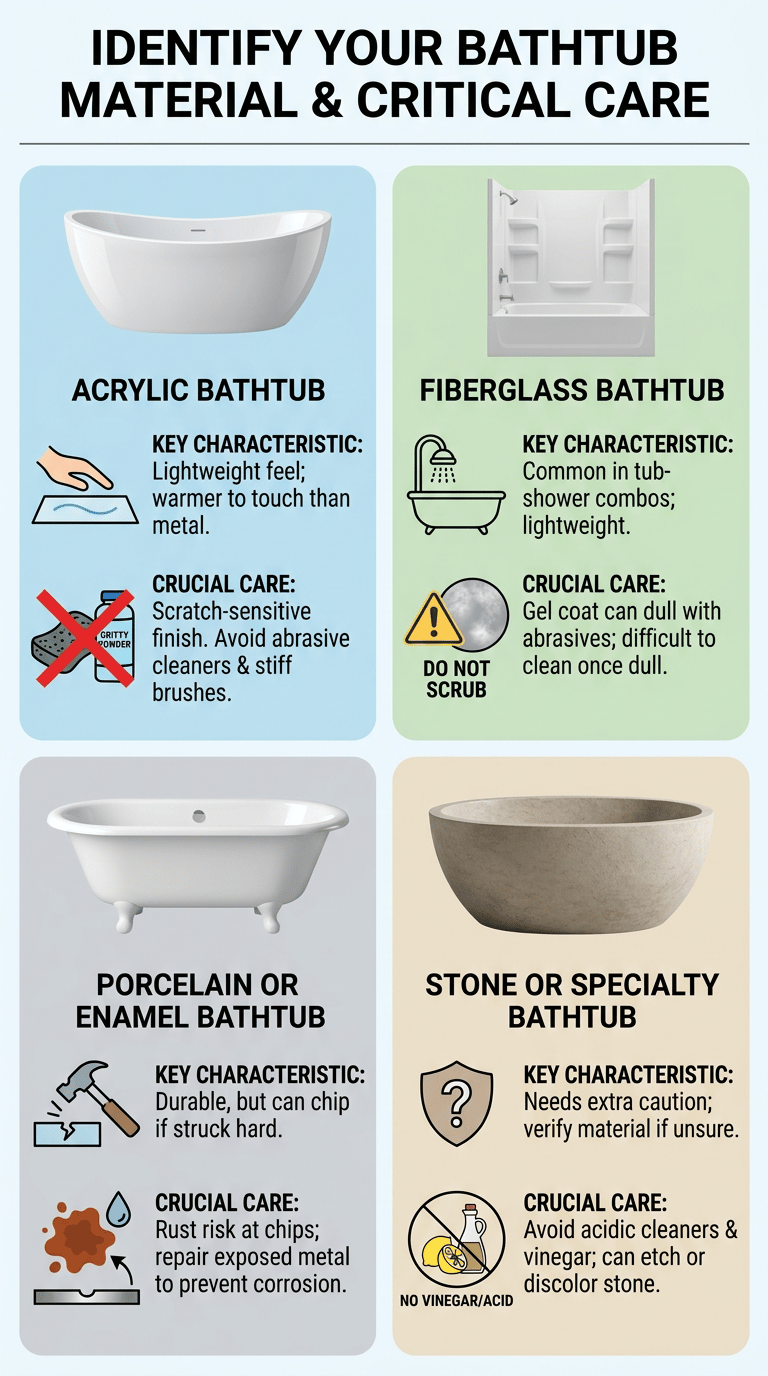
The safest cleaning method depends on the bathtub finish. Acrylic and fiberglass tubs need the gentlest tools because their surfaces can scratch or dull. Porcelain and enamel tubs can usually handle slightly stronger scrubbing, but chipped areas need care. Stone tubs need pH-neutral cleaner and quick drying because acidic products can etch or discolor natural surfaces.
- Acrylic and fiberglass need gentle tools: Use a soft sponge, microfiber cloth, or soft nylon brush.
- Porcelain can handle slightly stronger scrubbing: Use a non-scratch pad and avoid damaged or chipped spots.
- Stone needs pH-neutral cleaner: Skip vinegar, lemon juice, and harsh bathroom acids unless the manufacturer specifically allows them.
What to avoid
Most bathtub damage comes from using a cleaner or tool that is too aggressive for the finish. If you are unsure what your tub is made of, start with the mildest method and test a small hidden area first.
For a related walkthrough, see our guide to how to clean bathroom mold safely.
For a related walkthrough, see our guide to how to clean a bathroom sink.
For a related walkthrough, see our guide to how to clean a toilet properly.
For a related walkthrough, see our guide to bathroom cleaning guide.
- Steel wool: It can leave scratches and may shed metal particles that discolor wet surfaces.
- Harsh abrasives: Powdered scouring products can dull acrylic, fiberglass, and some enamel finishes.
- Acidic cleaners on stone: Vinegar-based and acid-based cleaners can damage marble, limestone, travertine, and other sensitive stone tubs.
Identify Your Bathtub Material
Acrylic bathtub
An acrylic bathtub often has a smooth, glossy surface and a slightly warm, lightweight feel compared with cast iron or stone. Many modern soaking tubs and alcove tubs are acrylic. Acrylic is popular because it is comfortable, easy to shape, and relatively easy to maintain, but the finish is scratch-sensitive.
- Lightweight feel: Acrylic tubs often sound less dense when tapped and may feel warmer to the touch than porcelain over cast iron.
- Scratch-sensitive finish: Avoid gritty powders, stiff brushes, pumice stones, and metal pads.
Fiberglass bathtub
Fiberglass tubs are common in tub-shower combinations and older bathrooms. They are lightweight and practical, but the gel coat can become dull if it is scrubbed with abrasive pads or harsh powders. A dull fiberglass tub can be harder to keep clean, so gentle routine cleaning is useful.
- Common in tub-shower combos: Fiberglass is often used in one-piece or multi-piece surrounds with a built-in tub basin.
- Can dull with abrasive cleaners: Once the surface loses shine, soap scum and body oils can cling more stubbornly.
Porcelain or enamel bathtub
Porcelain and enamel tubs are durable and can often tolerate firmer cleaning than acrylic or fiberglass. Many are porcelain enamel over cast iron or steel. The main concern is damage to the coating. If the surface chips, the exposed metal underneath may be vulnerable to rust.
- Durable but can chip: Do not strike the surface with heavy tools, and avoid scraping chipped areas.
- Rust risk around damaged spots: Treat rust stains carefully and repair exposed metal when possible.
Stone or specialty bathtub
Stone bathtubs, concrete tubs, copper tubs, and other specialty materials need extra caution. Use the manufacturer’s care instructions whenever available. If you cannot confirm the material, use a pH-neutral cleaner and a soft cloth until you know what is safe.
- Needs manufacturer-safe products: Specialty finishes may have sealers, coatings, or patinas that react poorly to common bathroom cleaners.
- Avoid vinegar and acidic cleaners: Acidic cleaners can etch or discolor many natural stone surfaces.
Supplies You Need
Basic supplies
Before you clean a bathtub, gather gentle tools that remove grime without scratching the finish. You do not need a large kit for most tubs. The right sponge, cloth, and cleaner matter more than force.
- Non-scratch sponge: Use this for the main tub basin and walls.
- Soft cloths: Microfiber or cotton cloths work well for wiping fixtures and drying the tub.
- Soft brush: A soft nylon brush helps around textured floors, corners, and caulk lines.
- Gloves: Wear cleaning gloves to protect your hands and improve grip on wet surfaces.
Cleaner options
Choose your cleaner based on the tub material and the type of buildup. A mild cleaner is enough for regular maintenance. Soap scum, mineral marks, and stains may need targeted treatment, but stronger is not always better.
- Mild dish soap: Good for body oils, light grime, and routine cleaning on many tub materials.
- Bathroom cleaner: Choose one labeled safe for your tub surface and follow the product directions.
- Baking soda paste for suitable tubs: A paste of baking soda and water can help lift grime on durable surfaces, but use light pressure and avoid it on delicate or specialty finishes unless approved by the manufacturer.
- pH-neutral cleaner for stone: Use this for stone tubs and any surface where acidic or alkaline cleaners are not recommended.
If you are choosing a new cleaning product, the EPA’s Safer Choice program can help you identify products designed with safer chemical ingredients.
Optional tools
Optional tools help with detail work, but they should still be gentle. Avoid tools that could gouge, scrape, or dull the bathtub finish.
- Detail brush around fixtures: Use a soft detail brush around the faucet base, overflow plate, and drain trim.
- Plastic scraper for residue: A plastic scraper can lift stuck-on labels or residue, but use it carefully and keep it flat against the surface.
- Squeegee or towel for drying: Drying after cleaning helps prevent water spots and slows the return of residue.
Step 1: Rinse and Clear the Bathtub
Remove bath products
Start by taking everything out of the tub. Bottles, razors, soap dishes, toys, and bath mats often hide rings of residue underneath. Cleaning around them leaves grime behind, so clear the surface before applying cleaner.
- Check bottle bottoms for residue: Wipe off sticky shampoo, conditioner, and body wash buildup before putting items back.
- Clear toys and mats: Wash or rinse them separately, then let them dry fully before returning them to the tub.
Rinse loose dirt
Rinse the bathtub with warm water. This removes loose dirt and helps soften soap residue before cleaner goes on. If your tub has a handheld sprayer, use it to rinse corners, ledges, and the lower basin. If not, use a cup or small bucket.
- Use warm water: Warm water helps loosen oily residue and soap film.
- Push hair toward the drain: Gather hair with a tissue or gloved hand so it does not spread while you scrub.
Inspect problem areas
After rinsing, take a quick look at the bathtub. This helps you decide where to use more cleaner and where to be extra gentle. Most buildup collects where water sits, products drip, or skin oils meet soap residue.
- Soap scum line: Look for a dull ring around the waterline or lower side walls.
- Drain area: Check for dark residue, hair, mineral buildup, or rust marks near metal trim.
- Tub corners: Corners often hold damp residue and need slow, careful cleaning.
Step 2: Apply Cleaner and Let It Work
For everyday grime
For a generally dirty bathtub, use a mild cleaner first. Mix a small amount of dish soap with warm water, or use a bathroom cleaner labeled safe for your tub. Apply it evenly to the basin, lower walls, ledges, and corners.
- Use a mild cleaner: Mild cleaning is often enough for body oils, light residue, and routine buildup.
- Spread evenly: A thin, even layer works better than puddles of cleaner in one spot.
For soap scum
Soap scum can feel waxy, chalky, or sticky. It usually needs time to soften. Apply a soap-scum remover that is labeled safe for your specific tub material. On acrylic, fiberglass, stone, or specialty tubs, read the label carefully and test first in a hidden area.
- Use a soap-scum remover safe for the tub: Do not assume every bathroom cleaner is safe for every bathtub finish.
- Let residue soften: Let the product sit for the time listed on the label, then scrub gently instead of forcing it.
For stains
Stains should be spot treated rather than covered with harsh cleaner from end to end. Apply the appropriate cleaner only to the stained area, wait briefly, and check progress. If the finish looks dull, discolored, or rough, stop and rinse.
- Spot treat only where needed: This limits unnecessary exposure to stronger cleaners.
- Test first on delicate finishes: Acrylic, fiberglass, stone, and refinished tubs should always be treated cautiously.
When using household cleaners, follow the label directions, ventilate the bathroom, and avoid mixing products. Poison Control explains that household cleaning products can cause harmful exposures when used incorrectly, especially when products are combined or splashed.
Step 3: Scrub Without Scratching

Use gentle circles
Scrub the bathtub with gentle circular motions. This gives the cleaner and sponge time to lift grime without creating straight-line scratches. If the residue does not move, apply more cleaner and wait a little longer instead of pressing harder.
- Let dwell time reduce scrubbing: A cleaner that has time to loosen residue makes the job easier.
- Rinse the sponge often: A dirty sponge can drag grit across the surface and cause fine scratches.
Clean corners and ledges
Corners, ledges, and caulk lines need careful attention because residue collects there. Use a soft brush or folded cloth to clean tight areas. Do not dig into caulk with sharp tools, since damaged caulk can trap moisture and may need replacement.
- Around caulk: Wipe gently along the seam where the tub meets the wall.
- Behind bottles: Remove product rings and sticky drips before replacing bath items.
- Near overflow plate: Clean around the plate with a soft cloth or detail brush.
Clean around fixtures
Faucets, handles, overflow plates, and drain trim often collect mineral spots and soap residue. Clean these areas with a soft cloth and a cleaner that is safe for the metal finish. Avoid gritty scrubbing, especially on brushed, matte, black, brass, or specialty finishes.
- Around faucet base: Wipe where water and product residue collect.
- Around drain trim: Use a soft brush to loosen grime around the edge.
- Avoid scratching metal finishes: Use a soft cloth rather than abrasive pads.
Step 4: Rinse and Dry the Bathtub
Rinse thoroughly
Rinsing is just as important as scrubbing. Cleaner residue can leave a bathtub feeling sticky, slippery, or dull. Rinse from the top edges down toward the drain until the water runs clear and the surface feels clean.
- Remove all cleaner residue: Leftover cleaner can attract more grime and may leave an unpleasant feel during the next bath.
- Watch textured floors: Textured tub bottoms can trap cleaner in small grooves, so rinse them extra well.
Dry the surface
Use a clean towel, soft cloth, or squeegee to dry the bathtub after rinsing. Drying is especially helpful for hard water areas and around caulk lines. It also gives you a chance to check whether any dull spots or stains remain.
- Prevent water spots: Drying removes mineral-heavy droplets before they leave marks.
- Limit damp buildup near caulk: Keeping caulk dry helps reduce dark surface buildup in damp seams.
Check the drain area
Before you finish, wipe around the drain and stopper. This area often holds hair, soap residue, and dark grime even after the rest of the tub looks clean.
- Remove hair: Lift visible hair with a tissue or gloved hand and throw it away.
- Wipe around the stopper: Clean the edge and underside if the stopper lifts out easily.
How to Remove Common Bathtub Problems

Soap scum
Soap scum forms when soap residue mixes with minerals, body oils, and product buildup. It often appears as a cloudy film, gray ring, or sticky layer on the lower half of the tub.
- Why it forms: Soap residue, bath products, skin oils, and mineral deposits cling to wet tub surfaces.
- Best removal method: Use a soap-scum remover that is safe for your tub material, let it sit as directed, then scrub with a non-scratch sponge.
- Prevention after showers: Rinse the tub, remove standing water, and avoid leaving product drips on ledges.
Hard water stains
Hard water stains usually look white, chalky, cloudy, or crusty. They often appear around the drain, faucet, overflow plate, and waterline. The safest removal method depends heavily on the tub material.
- Mineral buildup signs: Look for rough texture, cloudy patches, or rings that return quickly after cleaning.
- Safe descaling by material: Porcelain and enamel may tolerate some descaling products when the label allows it. Acrylic and fiberglass need non-abrasive, tub-safe products. Stone should be cleaned with a pH-neutral stone-safe cleaner, not acidic descalers.
Yellow stains
Yellow stains can come from product residue, body oils, minerals, or aging finishes. Start with a mild cleaner and warm water. If that does not work, use a material-safe stain remover and spot treat only the stained area.
- Product residue: Bath oils, tinted soaps, shampoos, and conditioner can leave yellowish film if they sit on the surface.
- Body oil and mineral buildup: A repeated waterline stain may need a cleaner that targets both oily residue and mineral film.
Rust stains
Rust stains often appear as orange or brown marks near the drain, around chips, under metal cans, or beneath shaving cream containers. Remove metal items from the tub ledge and check whether the stain is coming from damaged enamel or a rusty accessory.
- Metal cans and damaged enamel: Store metal containers outside the tub, and consider repairing chipped enamel to protect the surface underneath.
- Why bleach may make rust look worse: Bleach is not a rust remover. If a rust stain does not improve quickly, stop using bleach on that mark and switch to a rust-removal product labeled safe for your tub material.
Black spots near caulk
Black spots near caulk may be surface grime, mildew-like staining, or signs that the caulk is failing. Clean the surface gently first. If spots are embedded, keep returning, or appear under the caulk, cleaning the surface may not solve the problem.
- Clean surface residue: Use a bathroom cleaner safe for the tub and caulk, then rinse and dry thoroughly.
- When caulk may need replacement: Replace caulk if it is peeling, cracked, soft, separating from the tub, or stained underneath the bead.
How to Clean Different Bathtub Materials
Acrylic bathtub
To clean an acrylic bathtub, use warm water, mild dish soap or a non-abrasive acrylic-safe bathroom cleaner, and a soft sponge. Rinse well and dry with a soft cloth. For stubborn spots, apply cleaner again and let it sit briefly instead of scrubbing harder.
- Use non-abrasive cleaner: Avoid gritty powders and harsh scouring creams unless the tub manufacturer specifically approves them.
- Avoid stiff brushes: Stiff bristles can leave fine scratches that make the tub look dull.
Fiberglass bathtub
To clean a fiberglass bathtub, use a mild cleaner and a soft sponge or cloth. Fiberglass can lose its shine if scrubbed too aggressively, so repeat gentle cleaning is safer than one harsh cleaning session.
- Use gentle scrubbing: Work in small sections and rinse the sponge often.
- Avoid dulling the finish: Skip abrasive powders, metal pads, and heavy pressure.
Porcelain bathtub
To clean a porcelain bathtub, rinse first, apply a porcelain-safe bathroom cleaner, let it sit briefly, and scrub with a non-scratch pad or soft brush. Porcelain is durable, but damaged areas need a lighter touch.
- Protect chipped areas: Do not scrub chips with abrasive tools, and avoid soaking exposed metal with harsh products.
- Use careful stain removal: Choose stain removers labeled safe for porcelain or enamel, and rinse thoroughly after use.
Stone bathtub
To clean a stone bathtub, use a pH-neutral cleaner made for stone and a soft cloth. Rinse according to the product instructions and dry immediately. Stone tubs may be sealed, honed, polished, or textured, so follow the manufacturer’s care guide whenever possible.
- Use pH-neutral cleaner: Avoid vinegar, lemon juice, acidic descalers, and harsh alkaline cleaners unless approved for the exact stone.
- Dry immediately: Drying helps reduce water marks and protects the finish from lingering residue.
Bathtub Cleaning Mistakes to Avoid
Using toilet bowl cleaner in the tub
Toilet bowl cleaner is made for toilets, not bathtub finishes. It may be too harsh for acrylic, fiberglass, enamel, stone, metal trim, and caulk. It can also run into areas you did not mean to treat.
- Why it can damage finishes: Strong formulas may discolor, dull, or weaken surfaces not listed on the label.
- Safer alternatives: Use a bathroom cleaner specifically labeled for bathtubs and safe for your tub material.
Scrubbing with metal pads
Metal pads may remove grime quickly, but they can scratch the bathtub surface. Scratches are not just cosmetic. They can make the tub harder to clean because residue settles into the roughened areas.
- Scratch risk: Steel wool and metal scrubbers are too aggressive for most tubs.
- Dirt collects in scratches: Fine scratches can hold soap scum and make the tub look dull even after cleaning.
Ignoring caulk and corners
A clean bathtub basin can still look dirty if the caulk, corners, and ledges are neglected. These areas stay damp longer and collect product residue. Clean them gently each week and inspect for cracks or peeling.
- Moisture problem areas: Corners, caulk seams, and ledges behind bottles often need extra drying.
- Early signs of damage: Watch for gaps, loose caulk, soft spots, stains under caulk, or water getting behind the seam.
Leaving bath mats wet
Bath mats can trap water and soap residue against the tub floor. If they stay wet, the area underneath may become slippery, stained, or musty. Lift the mat after bathing or showering so both the mat and tub floor can dry.
- Hidden buildup: Check the underside of mats for dark spots, slime, or odor.
- How to dry mats properly: Rinse the mat, shake off excess water, and hang it where air can reach both sides.
How Often to Clean a Bathtub
After each use
A quick rinse after bathing or showering keeps soap residue from drying onto the tub. This is especially helpful in homes with hard water or heavily used bathrooms.
- Quick rinse: Rinse the basin, lower walls, and ledges with warm water.
- Remove standing water: Use a towel or squeegee on puddles, especially near caulk and textured areas.
Weekly cleaning
Clean the full bathtub surface about once a week in a regularly used bathroom. Weekly cleaning helps keep grime from becoming a thick film that requires stronger products later.
- Full tub surface: Clean the basin, side walls, ledges, corners, and waterline.
- Fixtures and drain trim: Wipe around the faucet, handles, overflow plate, drain trim, and stopper.
Monthly deep cleaning
Once a month, look more closely at buildup and finish condition. This does not have to mean harsh scrubbing. A monthly deep clean is about detail work and prevention.
- Soap scum line: Treat dull or sticky rings before they harden.
- Caulk inspection: Check for cracks, peeling, gaps, or stains under the caulk.
- Hard water buildup: Address mineral spots with a cleaner that is safe for your tub material.
Frequently Asked Questions

What is the best cleaner for a bathtub?
The best cleaner for a bathtub is one that matches the tub material and the type of grime. For routine cleaning, mild dish soap and warm water or a tub-safe bathroom cleaner is usually enough. For soap scum, use a soap-scum remover labeled safe for your finish. For stone, use a pH-neutral stone-safe cleaner.
How do I clean an acrylic bathtub without scratching it?
Clean an acrylic bathtub with a non-abrasive cleaner, warm water, and a soft sponge or microfiber cloth. Let the cleaner sit briefly on grime, then wipe gently. Avoid steel wool, stiff brushes, pumice stones, abrasive powders, and heavy pressure.
How do I remove yellow stains from a bathtub?
Start with a mild cleaner and warm water to remove oily residue. If the yellow stain remains, spot treat with a stain remover labeled safe for your tub material. Rinse thoroughly and dry. If the tub is acrylic, fiberglass, refinished, or stone, test in a hidden area first.
Can I use bleach in a bathtub?
You may be able to use bleach on some bathtub surfaces if the tub manufacturer and product label allow it, but it is not the right cleaner for every problem or every material. Do not mix bleach with other cleaners. The CDC notes that cleaning and disinfecting are different tasks, and its cleaning and disinfecting guidance recommends following product label directions and using disinfectants only when appropriate.
How often should I clean my bathtub?
Rinse the bathtub after each use when possible, clean it weekly, and do a more detailed inspection about once a month. If the tub is used daily, has hard water marks, or collects soap scum quickly, clean it more often with gentle products rather than waiting for heavy buildup.
Why does my bathtub still feel sticky after cleaning?
A sticky bathtub usually means cleaner residue, soap scum, body oils, or product film is still on the surface. Rinse again with warm water, wipe with a clean non-scratch sponge, and dry with a towel. Textured tub floors may need extra rinsing because cleaner can hide in the grooves.
Final Thoughts
Learning how to clean a bathtub starts with identifying the material. Acrylic and fiberglass need gentle, non-abrasive cleaning. Porcelain and enamel are tougher but still need protection around chips. Stone tubs require pH-neutral products and quick drying. Once you match the cleaner and tool to the finish, bathtub cleaning becomes simpler: rinse, apply a safe cleaner, let it work, scrub gently, rinse thoroughly, and dry.
For the best long-term results, keep the tub clear of wet bottles and mats, rinse after use, and clean soap scum before it hardens. A careful routine protects the finish, removes bathtub grime, and keeps the basin looking brighter without unnecessary scratching.

Ethan Carter is the Founder & Editor of HomeCleanSecrets. Based in the United States, he has 5 years of experience creating practical home cleaning, laundry care, stain removal, decluttering, and home organization content. His goal is to help everyday households clean smarter and build simple routines that are easier to maintain.
Read more about Ethan Carter on his author page: https://homecleansecrets.com/ethan-carter/