
Quick Answer: The Best Way to Clean Bathroom Tiles
Best method for most ceramic and porcelain tiles
For most ceramic and porcelain bathroom tiles, a reliable routine is simple: remove loose debris, apply a suitable cleaner, let it sit briefly, scrub gently, rinse well, and dry the surface. This works for shower walls, tub surrounds, sink backsplashes, and bathroom floor tiles when the tile is in good condition and not natural stone.
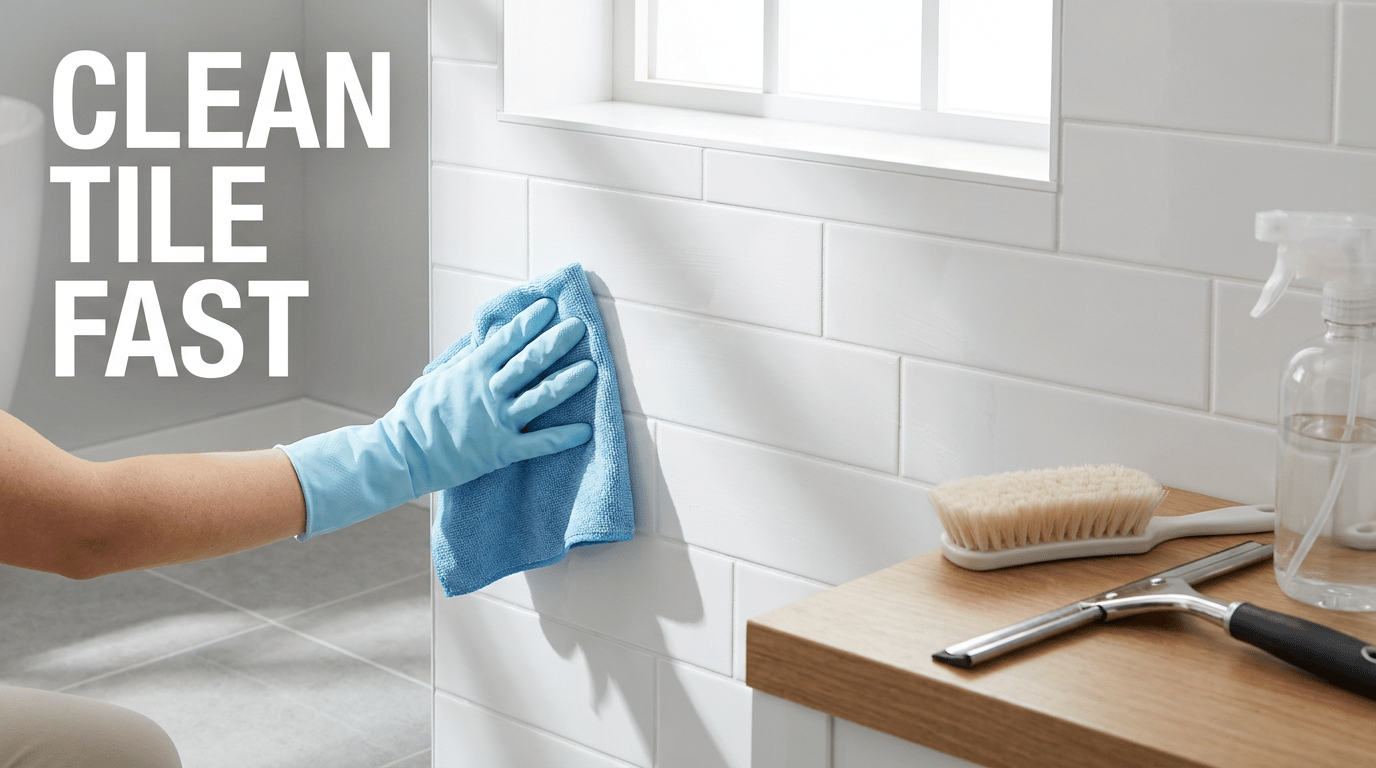
- Remove loose dust and hair: Sweep, vacuum, or wipe the tile first so you do not smear hair, dust, and lint into a muddy film.
- Spray a suitable cleaner: Use a bathroom tile cleaner, a mild dish soap solution, or another cleaner labeled for ceramic or porcelain tile.
- Let it sit briefly: Give the cleaner a short dwell time so it can soften soap film and body oil before you scrub.
- Scrub lightly and rinse: Use a soft-bristle brush, sponge, or non-scratch pad, then rinse with clean water and dry with microfiber.
What changes for natural stone tile
Natural stone bathroom tile needs more caution than ceramic or porcelain. Marble, travertine, limestone, slate, and similar stones can react poorly to the wrong cleaner, especially acidic products.
- Avoid acidic cleaners: Skip vinegar, lemon juice, and acidic bathroom cleaners unless the stone or cleaner manufacturer specifically says they are safe for that stone.
- Use pH-neutral cleaner: Choose a pH-neutral product labeled for natural stone.
- Dry stone after cleaning: Wipe stone dry instead of letting water and cleaner sit on the surface.
What to avoid
Bathroom tile is durable, but it can still become scratched, cloudy, or sticky when cleaned with the wrong method.
- Abrasive powders on glossy tile: Avoid gritty powders and harsh pads that can dull a shiny finish.
- Vinegar on stone: Do not treat vinegar as an all-purpose bathroom tile cleaner because it is not appropriate for natural stone.
- Leaving cleaner residue behind: Always rinse and dry, especially on shower walls and floor tile where residue can make the surface look cloudy or feel slick.
Identify Your Bathroom Tile Before Cleaning

Ceramic tile
Ceramic tile is common on bathroom walls, shower surrounds, and floors. It often has a glazed surface that resists everyday bathroom moisture, soap film, and splashes. The main goal is to clean the surface without scratching or leaving residue behind.
- Common finish clues: Ceramic tile may be glossy, satin, matte, smooth, or lightly textured. Glazed ceramic often has a glassy surface that reflects light.
- Best cleaner type: Use a mild bathroom tile cleaner, diluted dish soap, or another cleaner labeled safe for ceramic tile. Rinse thoroughly after cleaning.
Porcelain tile
Porcelain tile is dense and commonly used in showers and bathroom floors. It handles everyday bathroom moisture well, but it should not be left wet or coated with cleaner. Streaks, cloudy patches, and dullness often come from leftover soap, hard water minerals, or cleaning product residue.
- Why it is common in bathrooms: Porcelain is a dense tile material, which is one reason it is popular for bathrooms and showers.
- How to avoid streaks: Use the right amount of cleaner, rinse with clean water, and dry the tile with microfiber. On glossy porcelain, buffing dry can improve the finished look.
Natural stone tile
Natural stone tile can make a bathroom look warm and refined, but it requires more careful cleaning. If you are unsure whether your tile is natural stone, look for irregular veining, variation from tile to tile, or a softer honed finish. When in doubt, use the gentlest stone-safe option until you confirm the material.
- Marble, travertine, slate, and limestone: These are common natural stone bathroom materials. They should be cleaned with products labeled safe for stone.
- Why acids can etch stone: Acidic cleaners can damage sensitive stone finishes. Avoid vinegar, lemon-based cleaners, and acidic soap scum removers on stone unless a product label specifically confirms compatibility.
Textured or matte tile
Textured and matte tiles can hide grime better than glossy tile, but they can also hold residue in tiny surface low spots. This is common on slip-resistant floor tile and some shower tiles.
- Why grime hides in texture: Soap film, body oil, dust, and minerals settle into uneven surfaces instead of wiping away in one pass.
- Best brush choice: Use a soft-bristle brush that can reach the texture without scratching the tile. Avoid stiff metal scrubbers and overly aggressive pads.
Supplies You Need
Basic supplies
You do not need a large collection of specialty tools to clean bathroom tiles well. A few gentle supplies are usually enough for routine bathroom tile cleaning.
- Microfiber cloths: Use them for wiping, rinsing, drying, and buffing. Keep separate cloths for cleaner application and final drying.
- Soft-bristle brush: A soft brush helps clean textured tile, edges, and corners without harsh scraping.
- Sponge or non-scratch pad: Use this for shower walls, tub surrounds, and glossy tile surfaces.
- Squeegee: A squeegee is useful after showers and after rinsing large wall areas.
Cleaner options
Choose your cleaner based on the tile material and the type of buildup. Do not assume one homemade or commercial cleaner is safe for every tile surface.
- Mild dish soap: A few drops in warm water can clean light soil on ceramic and porcelain tile. Use sparingly so it does not leave a film.
- Bathroom tile cleaner: A cleaner labeled for bathroom tile can help with soap scum and routine grime. Read the label before using it on stone, colored grout, metal trim, or sealed surfaces.
- pH-neutral cleaner for stone: Use a stone-safe pH-neutral cleaner for marble, travertine, limestone, slate, and other natural stone tile.
If you prefer products with safer ingredient profiles, the EPA offers a Safer Choice program that can help you identify cleaning products that meet its criteria.
Optional tools
Optional tools can make the job easier, especially for tall shower walls or textured tile. Use them only when they fit the tile material and the cleaner instructions.
- Steam cleaner if tile allows it: Steam may be useful on some sealed ceramic or porcelain tile, but avoid using it on surfaces where heat or moisture could affect stone, failing grout, loose tiles, or damaged caulk.
- Extension scrubber for walls: This helps you reach upper shower tiles without straining or standing unsafely.
- Old toothbrush for corners: Use it around fixtures, tile edges, and tight spaces. Keep grout scrubbing gentle because this article focuses on tile surfaces.
Step 1: Remove Dust, Hair, and Loose Debris
Bathroom floor tiles
Before wet cleaning floor tile, remove as much dry debris as possible. Bathroom floors collect hair, lint, dust, dried product, and grit. If you spray cleaner before removing that debris, it can turn into a sticky film.
- Vacuum or sweep first: Use a vacuum hard-floor setting, a broom, or a dry microfiber mop. Avoid beater bars that may scatter debris or scratch delicate surfaces.
- Focus around corners and baseboards: Hair and dust collect behind doors, near the toilet base, along vanity edges, and under floating cabinets.
Shower wall tiles
Shower walls often have soap film, shampoo residue, conditioner, body wash, and mineral spots. Start by clearing the area so you can clean the actual tile instead of working around bottles and accessories.
- Rinse loose residue: Use warm water to rinse the walls before applying cleaner. This removes loose product and helps the cleaner contact the stuck-on film.
- Remove bottles and accessories: Take out shampoo bottles, razors, soap dishes, suction hooks, and hanging caddies. Clean behind them because these areas often stay damp.
Tile around the tub or sink
Tile near sinks and tubs gets toothpaste splatter, hand soap, cosmetics, bath products, and water spots. Dry debris and splatter should be wiped away first so the cleaner can work evenly.
- Clear toiletries: Move toothbrush holders, jars, soap pumps, trays, and decorative items before spraying.
- Wipe dry dust before spraying: Use a dry or barely damp microfiber cloth to remove dust from ledges, trim, and tile edges.
Step 2: Apply the Right Cleaner
For ceramic and porcelain tile
Ceramic and porcelain tile can usually be cleaned with a mild bathroom cleaner or diluted dish soap. The key is even coverage and enough contact time without soaking surrounding materials unnecessarily.
- Use bathroom cleaner or diluted dish soap: For routine cleaning, apply a small amount of cleaner. Too much soap can create more rinsing work and leave a cloudy finish.
- Spray evenly without oversaturating: Mist the tile enough to wet the surface, but do not flood seams, caulk lines, or damaged areas.
For soap scum on shower tile
Soap scum needs more patience than light dust. It forms a stubborn film on shower tile, especially in areas that are repeatedly exposed to bar soap, body wash, shampoo, and hard water.
- Use a soap-scum targeted cleaner: Choose a product labeled for soap scum and confirm that it is safe for your tile material.
- Give it time to soften residue: Let the cleaner sit for the time listed on the label. Do not let it dry on the tile.
For natural stone tile
Natural stone needs a stone-safe cleaner and a lighter hand. Avoid experimenting with strong bathroom cleaners, acidic descalers, or vinegar mixtures on stone.
- Use pH-neutral cleaner: Apply a pH-neutral cleaner labeled for natural stone. Follow the dilution and dwell time directions.
- Test in a hidden area: Before cleaning a large visible section, test behind a door, near a low corner, or in another discreet spot and let it dry fully.
Step 3: Scrub Tiles Without Scratching

Use gentle pressure
Good bathroom tile cleaning is not about force. If the cleaner is appropriate and has had a short time to work, light scrubbing is usually enough for routine grime.
- Let cleaner do the work: Reapply cleaner and wait a little longer rather than pressing harder on stubborn spots.
- Avoid metal scrubbers: Steel wool, metal brushes, and harsh scouring tools can scratch tile finishes, damage trim, and rough up caulk.
Scrub textured tile carefully
Textured bathroom tile may need more passes than smooth tile. Work in small sections so you can scrub, rinse, and check the surface before moving on.
- Use circular motions: Circular scrubbing helps reach shallow texture from different angles.
- Rinse brush often: A dirty brush can spread loosened grime back over the tile. Rinse it frequently in clean water.
Clean tile edges and corners
Edges and corners are easy to miss, but they often hold the most visible grime. Pay attention to the perimeter of floors, the bottom row of shower tiles, and areas around faucets or shelves.
- Where grime collects: Look around caulk lines, tile trim, shower niches, soap dishes, tub ledges, and the base of walls.
- How to reach tight areas: Use an old toothbrush, small soft brush, or folded microfiber cloth. Keep pressure gentle around caulk and grout.
Step 4: Rinse and Dry the Tile
Why rinsing matters
Rinsing is the step that many people rush, but it is what separates clean tile from tile that looks dull again after it dries. Any leftover cleaner, soap, or loosened grime can leave streaks or a tacky feel.
- Cleaner residue attracts dirt: A sticky surface catches dust, hair, and lint more quickly.
- Soap residue leaves streaks: Soap left behind can dry into cloudy patches, especially on glossy tile.
How to rinse shower walls
Rinse shower walls thoroughly after scrubbing. Work in an orderly pattern so cleaner does not run over areas you already finished.
- Use clean water: Use a handheld showerhead, a clean bucket of water, or a freshly rinsed sponge or cloth.
- Work from top to bottom: Start at the upper tiles and rinse downward so residue flows toward the drain.
How to dry tile
Drying makes tile look cleaner and helps reduce lingering moisture on bathroom surfaces. It is especially helpful on glossy tile, stone tile, and shower walls with hard water spots.
- Use microfiber towels: Wipe the tile dry with clean microfiber, switching towels if one becomes too wet.
- Squeegee wet shower walls: Pull water down the tile after rinsing or after daily showers.
- Leave ventilation running: Use the bath fan and leave the shower door or curtain open when practical.
How to Handle Common Tile Problems
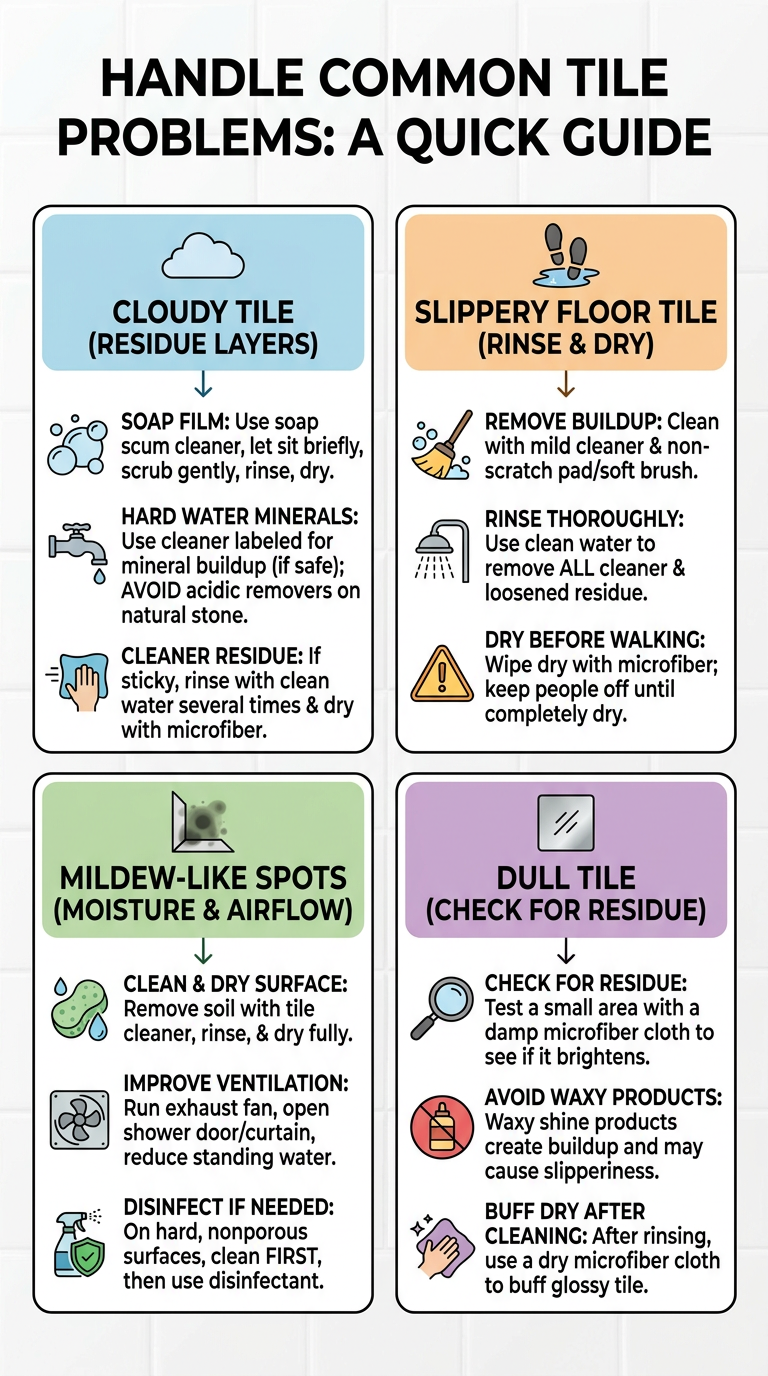
Cloudy tile
Cloudy bathroom tile usually means something is sitting on top of the surface. Before assuming the tile is permanently dull, remove residue in layers.
- Soap film: Use a cleaner appropriate for soap scum and your tile material. Let it sit briefly, scrub gently, rinse, and dry.
- Hard water minerals: Mineral spots can make tile look hazy. Use a cleaner labeled for mineral buildup only if it is safe for the tile material. Avoid acidic mineral removers on natural stone.
- Cleaner residue: If the tile feels slick or tacky, rinse with clean water several times and dry with microfiber.
Slippery bathroom floor tile
Slippery floor tile can come from water, soap, lotion, hair products, or cleaner residue. Treat it as a sign that the floor needs a thorough rinse and dry, not just more cleaner.
- Remove product buildup: Clean the floor with a mild cleaner suitable for the tile, then scrub lightly with a non-scratch pad or soft brush.
- Rinse thoroughly: Use clean water to remove all cleaner and loosened residue.
- Dry before walking: Wipe the floor dry with microfiber and keep people off the tile until it is no longer wet.
Mildew-like spots on tile
Dark or speckled spots on bathroom tile often appear in damp corners, on shower walls, or near caulk lines. Clean the surface first, then focus on drying and airflow so the same areas do not stay wet after every shower. The EPA provides general information about moisture and mold in its mold resources.
- Clean and dry the surface: Remove surface soil with an appropriate tile cleaner, rinse, and dry the area fully.
- Improve ventilation: Run the exhaust fan, open the shower door or curtain, and reduce standing water on surfaces.
- When to use a disinfectant product: If you need to disinfect a hard, nonporous tile surface, clean first and then use a disinfectant according to the product label. The CDC explains that cleaning and disinfecting are different steps in its household cleaning and disinfecting guidance.
Dull tile
Dull tile is often caused by residue rather than permanent damage. Start with a careful clean, rinse, and dry before using stronger products.
- Check for residue: Wipe a small area with a damp microfiber cloth, rinse it, and dry it. If that section looks brighter, residue is likely the issue.
- Avoid waxy products: Waxy shine products can create buildup and may make bathroom floors slippery.
- Buff dry after cleaning: After rinsing, use a dry microfiber cloth to buff glossy ceramic or porcelain tile.
How Often to Clean Bathroom Tiles
Daily shower tile maintenance
Daily maintenance does not need to be a full cleaning session. A few seconds after each shower can reduce water spots and visible soap film.
- Squeegee after showers: Pull water off shower walls and glass so less residue dries on the tile.
- Leave the door or curtain open: Allow air to move through the shower area so surfaces dry more quickly.
Weekly tile cleaning
Weekly cleaning keeps routine grime from becoming a heavy buildup. Adjust based on how often the bathroom is used, how many people use it, and whether you have hard water or heavy soap residue.
- Shower walls: Clean visible soap film, rinse well, and dry or squeegee.
- Bathroom floors: Sweep or vacuum first, then damp clean with a tile-safe cleaner and dry the floor.
- Tile around sinks: Wipe splashes, toothpaste, and soap residue before they harden.
Monthly deep cleaning
A monthly deep clean is the time to focus on areas you do not detail every week. This does not mean using harsh products. It means being more thorough.
- Corners and edges: Clean around baseboards, tub edges, shower niches, and fixture bases.
- Grout inspection: Look for cracked, missing, stained, or deteriorating grout. Keep grout care gentle here because grout needs its own specific cleaning and maintenance approach.
- Hard water buildup check: Check showerheads, tile near fixtures, and the lower shower wall where water repeatedly dries.
Bathroom Tile Cleaning Mistakes to Avoid
Using vinegar on every tile
Vinegar is often suggested for household cleaning, but it is not a universal bathroom tile cleaner. The tile material matters.
- Why stone needs special care: Natural stone surfaces need cleaners labeled for stone. Acidic cleaners are a poor choice for marble, travertine, limestone, and similar materials unless a manufacturer specifically approves them.
- When vinegar can damage surfaces: Avoid vinegar on stone tile, sensitive finishes, damaged grout, and any surface where the manufacturer warns against acidic cleaners.
Scrubbing too aggressively
If tile does not come clean quickly, it is tempting to scrub harder. That can create new problems, especially on glossy finishes, caulk lines, and decorative tile.
- Protect glossy finishes: Use soft cloths, sponges, non-scratch pads, and soft-bristle brushes.
- Avoid damaging caulk: Scrubbing caulk too hard can roughen or loosen it. Clean along caulk lines gently and replace damaged caulk when needed.
Skipping the dry step
Drying helps reduce water spots, streaks, and cloudy-looking residue after cleaning.
- Reduce lingering moisture: Damp bathroom areas can develop mildew-like spotting, especially where airflow is poor.
- Dry tile looks cleaner longer: Squeegeeing and towel drying reduce the residue left behind as water evaporates.
Frequently Asked Questions

What is the best cleaner for bathroom tiles?
The best cleaner depends on the tile. For ceramic and porcelain tile, a mild bathroom tile cleaner or diluted dish soap is often enough for routine cleaning. For natural stone tile, use a pH-neutral cleaner labeled for stone. For soap scum, use a soap-scum cleaner that is safe for your specific tile material.
Can I use vinegar on bathroom tiles?
You can use vinegar only on tile surfaces where it is known to be compatible, and you should never treat it as safe for every bathroom tile. Avoid vinegar on natural stone such as marble, travertine, limestone, and slate. Also avoid it on any surface where the manufacturer advises against acidic cleaners.
How do I make bathroom tiles shine again?
Start by removing residue. Clean the tile with a suitable cleaner, rinse thoroughly with clean water, and dry with microfiber. If the tile is glossy ceramic or porcelain, buff it dry after cleaning. Avoid waxy shine products, which can build up and make floors feel slick.
How often should I clean shower tiles?
Squeegee shower tiles after showers when possible, then do a more complete cleaning about once a week for a frequently used shower. If you notice soap film, cloudy patches, or mildew-like spots sooner, clean those areas before buildup becomes harder to remove.
What should I use on natural stone bathroom tile?
Use a pH-neutral cleaner labeled for natural stone and a soft cloth, sponge, or soft-bristle brush. Avoid vinegar, lemon juice, acidic soap scum removers, abrasive powders, and harsh scrubbing tools unless the product label and stone manufacturer both confirm the method is safe.
Why do my bathroom tiles feel sticky after cleaning?
Sticky tile usually means cleaner, soap, or loosened grime was left behind. Rinse the tile again with clean water, wipe with a damp microfiber cloth, and dry thoroughly. Next time, use less cleaner and rinse more carefully.
Final Thoughts
The best way to clean bathroom tiles is to match the method to the material. Ceramic and porcelain tile usually respond well to a mild bathroom cleaner, gentle scrubbing, thorough rinsing, and drying. Natural stone needs a pH-neutral cleaner and extra caution with acidic or abrasive products.
For routine upkeep, remove loose debris first, let the cleaner soften residue, scrub without forcing it, then rinse and dry. For deep cleaning, pay extra attention to shower walls, textured tile, corners, edges, and areas where bottles or accessories trap moisture. With the right cleaner and a consistent routine, dull and cloudy bathroom tile can look cleaner, brighter, and easier to maintain.
For a related walkthrough, see our guide to how to clean grout in bathroom.
For a related walkthrough, see our guide to bathroom cleaning guide.

Ethan Carter is the Founder & Editor of HomeCleanSecrets. Based in the United States, he has 5 years of experience creating practical home cleaning, laundry care, stain removal, decluttering, and home organization content. His goal is to help everyday households clean smarter and build simple routines that are easier to maintain.
Read more about Ethan Carter on his author page: https://homecleansecrets.com/ethan-carter/