
Quick Answer: The Best Way to Clean a Cast Iron Skillet
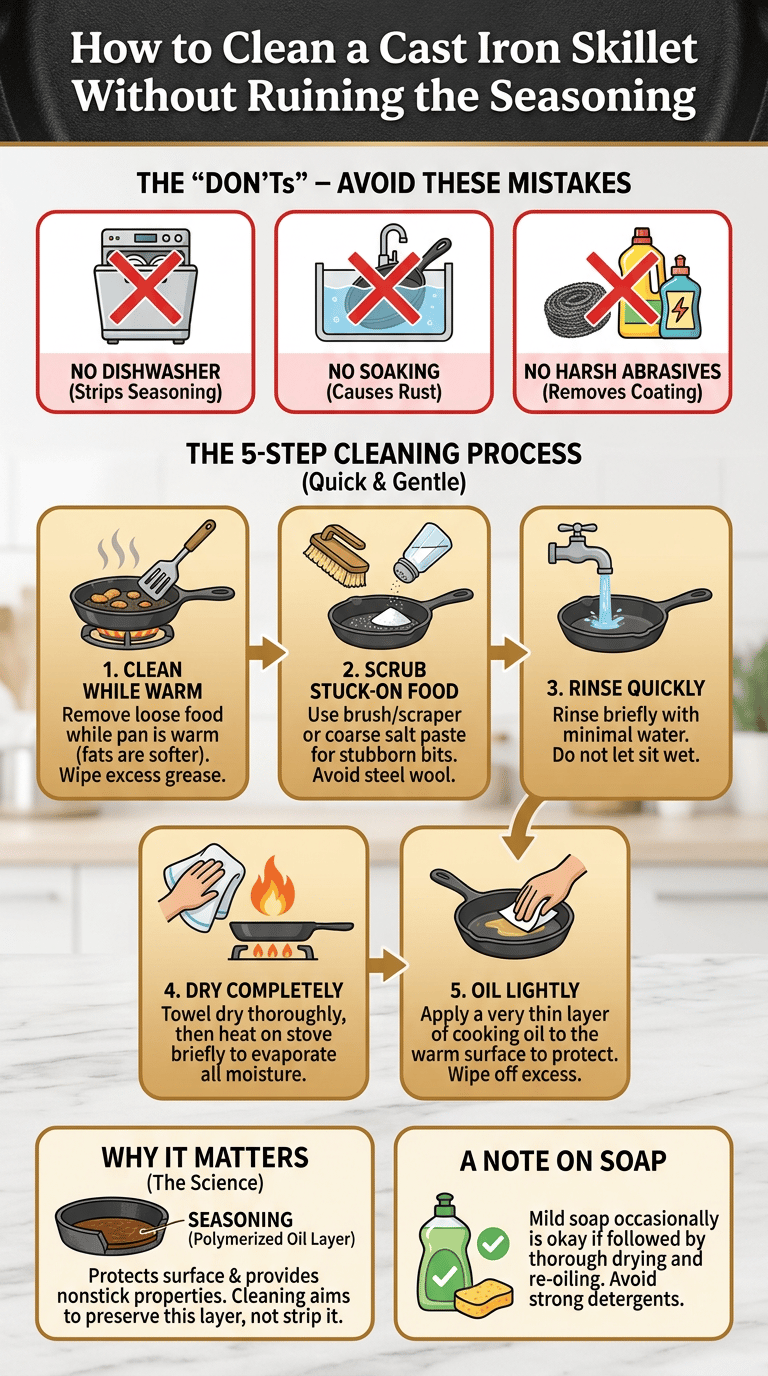
The quickest way to clean a cast iron skillet while protecting its seasoning is simple: clean it while still warm, scrub off food with a brush or salt, rinse quickly with minimal water, dry it completely, and rub a very thin layer of oil on the cooking surface. Avoid soaking, the dishwasher, and heavy repeated use of harsh abrasives that remove seasoning. Follow the five short steps below each time you cook to keep the surface slick and rust-free.
What to do first
Right after you finish cooking, turn off the heat and allow very hot oil to subside a bit. While the skillet is still warm but safe to handle with a mitt, scrape or brush away loose food particles and wipe the interior with a paper towel or cloth to remove excess grease. Acting while the pan is warm makes food easier to remove and reduces the need for aggressive cleaning that can wear down seasoning.
What to avoid
- Avoid soaking the skillet in water for long periods; prolonged moisture exposure encourages rust.
- Do not put cast iron in the dishwasher; water, detergent, and tumble action can strip seasoning and cause rust.
- Do not use abrasive methods regularly that remove seasoning. Occasional resurfacing is okay, but routine heavy scrubbing shortens the pan’s nonstick life.
- Avoid applying too much oil after cleaning. Thick layers can become sticky and attract residue.
Why Cast Iron Needs Different Cleaning
Cast iron is a durable cooking surface that relies on a seasoned coating of polymerized fats and oils. Because that coating is what provides nonstick properties and rust protection, cleaning methods aim to preserve it rather than remove it.
Seasoning protects the pan
Seasoning is a layer of oil that has been heated and polymerized onto the metal. It creates a relatively nonstick surface and acts as a barrier between iron and moisture. Regular, gentle care maintains that layer so your pan performs better over time.
Moisture can cause rust
Cast iron is metal and will oxidize when exposed to water and oxygen. Drying thoroughly and storing in a dry place prevents rust from forming. If the pan is left wet or stored with moisture trapped, rust spots can appear quickly.
Harsh cleaning can strip the surface
Aggressive cleaners, strong detergents used repeatedly, or prolonged scrubbing with heavy abrasives can remove seasoning. The pan will still cook well, but you will need to re-season more often. The goal is to remove food and residue while keeping the seasoning intact.
Can You Use Soap on Cast Iron?
Soap has a reputation for stripping seasoning, but context matters. Modern gentle dish soap used occasionally will not ruin a well-established seasoning. What matters more is how you use soap and how you follow up afterward.
When mild soap is okay
You can use a small amount of mild dish soap to remove greasy residue or sticky bits when needed. Use a soft brush or nonmetal scrubber, rinse quickly with minimal water, dry thoroughly, and then apply a thin coat of oil while the pan is still warm. This sequence restores a protective surface and prevents rust.
When to avoid soap
Avoid repeated heavy dishwasher-strength detergents and highly alkaline cleaners on cast iron. Also avoid frequent use of soap when the food residue can be removed with salt, a scraper, or hot water alone. Limiting soap use helps preserve a patiently built seasoning layer.
What matters more than soap
The more important practices are cleaning while warm, drying completely, and oiling lightly after each cleaning. Those steps restore and maintain the seasoned surface even if you used a small amount of soap.
Step 1: Clean the Skillet While It Is Still Warm
Beginning your cleaning while the skillet is warm is central to preserving seasoning. Warm pans loosen stuck food and make cleanup faster, which reduces the need for aggressive methods.
Why warm pans clean easier
Heat softens fats and proteins that cling to the surface, so scraping and wiping are more effective when the pan is warm. If you let the pan cool completely, residue cements to the surface and requires more mechanical force to remove.
Remove loose food
- Put on an oven mitt or use a towel to protect your hand.
- Use a stiff brush, chainmail scrubber, or a heat-safe scraper to remove loose bits.
- Wipe the pan with a paper towel or cloth to lift away excess oil and loosened food.
These steps remove the bulk of residues while avoiding abrasion to the seasoning.
Avoid sudden temperature changes
Do not run a cold stream of water over a very hot skillet. Rapid temperature shifts can cause thermal shock, which may warp or stress the metal over time. Let the pan cool slightly so it is warm instead of glowing hot before rinsing.
Step 2: Scrub Stuck-On Food
Stuck-on food is the situation that tempts most cooks to use harsh methods. There are effective, seasoning-friendly options that remove debris while protecting the surface.
Use a brush or scraper
Use a stiff synthetic or natural bristle brush, a wooden or plastic scraper, or a dedicated cast iron chainmail scrubber to lift stuck-on bits. These tools are effective with less abrasion than steel wool or metal scouring pads for routine cleaning.
Use coarse salt if needed
Coarse kosher salt acts like a mild abrasive that lifts residues without cutting deeply into the seasoning. Sprinkle a layer of salt over the warm surface, add a little warm water to make a paste, and scrub with a cloth or brush. Rinse quickly and dry thoroughly afterward. Salt cleaning is a classic, reliable technique.
Avoid steel wool for routine cleaning
Steel wool or heavy-duty metal scouring pads remove seasoning faster than other methods. Use them sparingly, only for rescue work when rust or thick baked-on carbon requires a strong approach. After a vigorous scrub with steel wool you will need to re-season the pan.
Step 3: Rinse Quickly
Rinsing should be fast and minimal. The goal is to remove salt, soap, and loosened debris without soaking the pan or leaving it wet for long.
Use minimal water
Rinse under a gentle stream or pour a small amount of warm water into the pan and swirl to remove residue. Avoid leaving the pan under running water for extended periods. If you used salt to scrub, a quick rinse is usually sufficient to clear it away.
Do not soak the skillet
Never leave a cast iron skillet to soak. Prolonged exposure to water is the fastest route to rust. If a piece of stuck-on food requires soaking, consider heating the pan with water to loosen the debris and then scrub and dry immediately instead of leaving it to sit overnight.
Check for leftover residue
After rinsing, inspect the surface. If residue remains, scrub again while warm with salt or a brush and repeat the quick rinse. Only proceed to drying once the surface is visibly clean.
Step 4: Dry Completely
Thorough drying is critical. Any remaining moisture will encourage rust. Combine towel drying and heat to ensure there is not a single damp spot left.
Use a towel first
Wipe the skillet with a clean, dry towel or paper towel immediately after rinsing to remove surface water. Make sure you get into the handle area and any crevices where water can hide.
Heat on the stove briefly
After towel drying, place the skillet on the stove over low to medium-low heat for a few minutes until it is completely dry and any remaining moisture has evaporated. Heat also opens the pores of the metal slightly, which helps the oil applied in the next step bond evenly to the surface.
Why dryness prevents rust
Rust forms where iron, oxygen, and moisture meet. Drying eliminates the moisture link and keeps the pan from oxidizing. If you plan to store the skillet with a lid on, ensure both the pan and lid are dry and consider placing a paper towel inside to absorb any residual moisture.
Step 5: Oil the Skillet Lightly
Oiling is the final step that protects seasoning and gives the surface a smooth, protective film. The key words are light and even.
What oil to use
Use a cooking oil with a high smoke point and neutral flavor such as grapeseed, canola, or refined avocado oil. Flaxseed oil is sometimes recommended for full re-seasoning because it polymerizes well, but it can form brittle layers if not handled properly. Pick an oil you already use for cooking and that you trust to perform well at your stove temperatures.
How to apply oil
Put a small amount of oil into the warm skillet and use a folded paper towel or lint-free cloth to rub a thin, even layer across the entire interior surface and around the rim. Remove any visible pools of oil; the surface should look barely glossy, not wet.
How to avoid sticky buildup
Sticky surfaces are the result of too much oil or oil that was not heated enough to polymerize. If your pan becomes sticky after oiling, wipe it with a paper towel and heat it on the stove until the stickiness fades. If the problem persists, clean the surface with hot water and a salt scrub, dry, and then apply a much thinner layer of oil and heat to set it.
How to Remove Rust From Cast Iron
Rust is fixable in most cases. The approach depends on how deep and extensive the rust is. Light rust often cleans up quickly; heavy rust may require more intensive work and a full re-seasoning.
Light rust spots
- Scrub the rusted area with coarse salt and a brush or with a nonmetal scouring pad until the rust flakes off.
- Rinse quickly, dry thoroughly, and apply a thin coat of oil while the pan is warm.
- Heat the pan on the stove to polymerize the oil and protect the repaired area.
For small spots, this usually restores the surface without removing existing seasoning elsewhere on the pan.
For a related walkthrough, see our guide to how to clean silver.
For a related walkthrough, see our guide to how to clean hardwood floors.
For a related walkthrough, see our guide to how to clean humidifier.
Heavy rust
For heavy or widespread rust that has pitted the metal or removed most seasoning, a more thorough approach is necessary:
- Use steel wool or a heavy scouring pad to remove rust down to bare metal. Work carefully until all orange rust is gone.
- Wash the pan with a small amount of soap or hot water to remove particulate matter, then dry completely.
- Re-season the pan by applying a thin layer of oil over the entire surface and baking it upside down in a hot oven or heating it on the stovetop until the oil polymers to a nonsticky finish. Repeat thin coats if needed.
If the metal is heavily pitted or warped, replacement may be safer than attempting restoration.
When to re-season the skillet
Re-seasoning is appropriate whenever the pan’s surface looks dull, rusty, or if food starts sticking more than usual even after proper cleaning. Regular light oiling after cleaning maintains seasoning, while full re-seasoning is the remedy for surfaces stripped down to bare metal.
Cast Iron Cleaning Mistakes to Avoid
Many common mistakes either damage seasoning or lead to rust. Avoiding these keeps the pan in top condition for years.
Soaking the pan
Soaking invites rust. If food is badly stuck, heat the pan with a little water to loosen the debris, then scrub and dry immediately instead of letting it soak at room temperature.
Leaving it wet
Leaving a pan to air-dry or storing it while damp encourages oxidation. Dry with a towel and then heat briefly to evaporate any remaining moisture.
Using the dishwasher
Dishwashers use strong detergents and prolonged water exposure. These conditions strip seasoning and promote rust. Never put cast iron in the dishwasher.
Applying too much oil
Too much oil leads to a sticky, tacky surface that attracts food and debris. Apply a very thin, even layer and remove excess before heating to set the oil.
Cast Iron Maintenance Checklist
Use this checklist to keep your skillet in ready-to-cook condition. Consistent small actions prevent bigger restoration tasks later.
After each use
- While the pan is warm, remove food with a brush or scraper.
- Use coarse salt for mild abrasion if needed.
- Rinse quickly with minimal water; avoid soaking.
- Dry with a towel and heat briefly on the stove.
- Apply a thin layer of oil and wipe off any excess.
Weekly care
If you use your pan frequently, give it an inspection and light re-oiling once a week. For pans used less often, perform the after-each-use routine every time you cook.
When to re-season
Re-season if the surface looks dull, rust appears, or food starts sticking despite proper cleaning. A full re-season involves cleaning to bare metal if necessary, then applying thin oil layers and heating until a smooth coating forms.
Frequently Asked Questions
Can you use soap on cast iron?
Yes, you can use a small amount of mild dish soap occasionally. Use soap sparingly, rinse quickly, dry fully, and reapply a thin layer of oil to restore protection. Avoid strong dishwasher detergents and repeated heavy soap exposure.
How do you clean stuck-on food from cast iron?
Work while the pan is warm. Scrape with a wooden or plastic scraper, use a stiff brush, or make a coarse salt scrub to lift stubborn bits. Heat plus a little water can also loosen stuck food before scrubbing. Rinse briefly, dry, and oil the surface afterward.
Why is my cast iron sticky?
Sticky cast iron usually means too much oil was applied or oil was not heated sufficiently to polymerize. Remove stickiness by wiping the surface, heating it until the stickiness reduces, or cleaning with a salt scrub and then applying a thinner coat of oil.
How do I remove rust from cast iron?
For light rust, scrub with coarse salt or a brush, rinse, dry, and oil. For heavy rust, use steel wool or a heavy abrasive to remove rust down to bare metal, then wash, dry, and perform a full reseason. If the pan is severely pitted or damaged, replacement is the safer option.
Should I oil cast iron after every use?
Yes. A very thin coat of oil after each cleaning helps maintain seasoning and prevents rust. The layer should be light and evenly applied, not pooled or greasy.
Final Thoughts
Maintaining a cast iron skillet is a routine of small, consistent steps that protect the seasoning and prevent rust: clean while warm, use gentle scrubbing methods like brushes or salt, rinse briefly, dry fully with heat, and finish with a very thin coat of oil. Avoid soaking, the dishwasher, and excessive oil. For safe handling of cleaning products and stronger cleaners when needed, consult official cleaning guidance and product safety resources such as the CDC’s household cleaning and disinfecting guidance household cleaning and disinfecting guidance and the EPA’s guidance on choosing safer cleaning products safer cleaning product guidance.
Practical warning: If a cast iron piece is warped, deeply pitted, cracked, or has built-up rust beyond what scrubbing can remove, consider replacing it or seeking professional restoration. DIY methods are effective for most household issues but have limits.

Ethan Carter is the Founder & Editor of HomeCleanSecrets. Based in the United States, he has 5 years of experience creating practical home cleaning, laundry care, stain removal, decluttering, and home organization content. His goal is to help everyday households clean smarter and build simple routines that are easier to maintain.
Read more about Ethan Carter on his author page: https://homecleansecrets.com/ethan-carter/