
A good weekly cleaning schedule for busy people does not ask you to clean like you have a free day every day. It protects the parts of the home that affect comfort, odor, hygiene, and visual calm, then leaves deeper details for another time. The goal is simple: keep the kitchen usable, bathrooms fresh, floors under control, laundry moving, and clutter from taking over the week.

Quick Answer: A Simple Weekly Cleaning Schedule
The easiest weekly plan is the one you can repeat when work runs late, kids need attention, or the weekend changes. Use a light weekday plan when you prefer small sessions, a weekend block when weekdays are packed, and a minimum reset when the week goes sideways.
The 5-day light schedule
Use this plan when you can spare 15 to 25 minutes on most weekdays. Monday handles trash, loose clutter, and the first reset after the weekend. Tuesday covers bathrooms. Wednesday is for floors and entryway dirt. Thursday handles kitchen surfaces and high-touch spots. Friday resets bedrooms and living areas so the weekend starts cleaner. A good test is whether each day feels small enough to do before dinner, after work, or while laundry runs.
The weekend block schedule
Use a weekend block if weekday energy is low. Choose one 60-minute block for the main chores: bathrooms, kitchen surfaces, floors, trash, and visible clutter. Add one 30-minute catch-up block only if laundry, dishes, or bedding fell behind. Do not turn the whole weekend into cleaning. The schedule works better when one day remains mostly protected for rest, family, errands, or nothing at all.
The minimum weekly reset when time is tight
When the week is overloaded, choose the tasks that stop bigger problems: dishes, trash, bathroom sink and toilet, damp towels, pet zones, entryway dirt, and one laundry move. Skip baseboards, inside appliances, closet projects, and detailed dusting. Stop if you are only moving clutter from one room to another. Put items into rough homes first, then clean the surfaces that are now accessible.
Before choosing a format, decide what you want the end of the week to feel like. A realistic answer is usually not spotless. It is a kitchen that can be used without a big pre-clean, a bathroom that does not feel neglected, floors that are not spreading grit, and laundry that is not trapping damp smells. That definition keeps the schedule practical.
Why Weekly Cleaning Works for Busy Homes
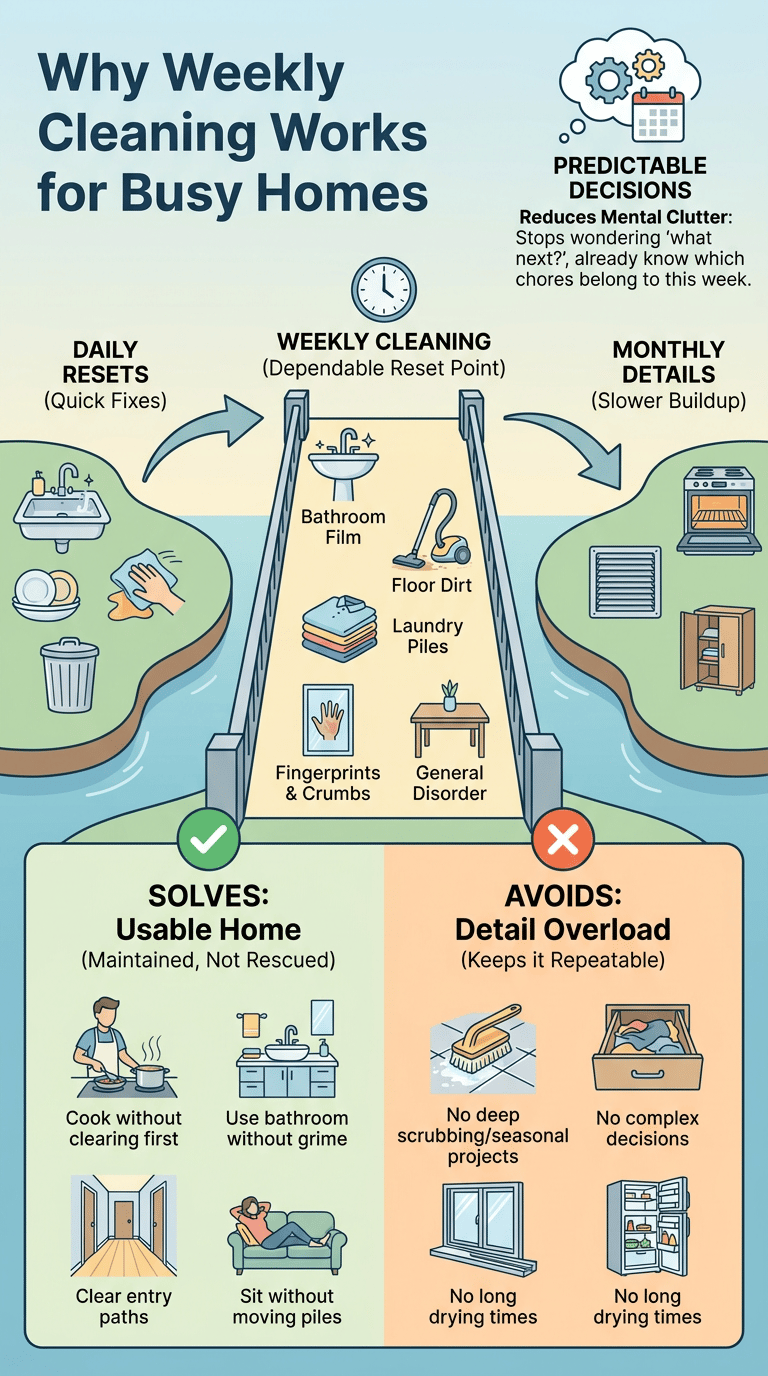
Weekly cleaning gives your home a dependable reset point. It is frequent enough to stop grime from feeling permanent, but not so frequent that every weekday becomes a full cleaning shift.
Weekly cleaning bridges daily resets and monthly details
Daily resets handle dishes, fresh spills, trash, and obvious clutter. Monthly cleaning handles slower buildup, such as appliance interiors, vents, cabinet fronts, and storage areas. Weekly cleaning sits between those two layers. It catches the bathroom film, floor dirt, laundry piles, fingerprints, crumbs, and general disorder that make a home feel messy even when nothing is truly deep-clean dirty.
The flow should stay clear when a week gets crowded: a daily reset protects tomorrow, weekly cleaning restores the rooms that carry normal use, monthly detail work catches slow buildup, and seasonal or annual planning handles access-heavy work. A weekly schedule should not absorb baseboards, full appliance interiors, windows, closet projects, or seasonal storage resets just because one week was missed. Restart by doing the minimum daily reset first, then finish the weekly non-negotiables that keep kitchens, bathrooms, floors, and laundry from sliding further. After that, return monthly tasks to their original slot instead of stacking everything onto the next weekly session. An annual home cleaning calendar keeps seasonal and access-heavy work from being pushed into an already full weekly schedule.
What weekly cleaning should solve
Your weekly routine should make the home usable again. You should be able to cook without clearing a pile first, use the bathroom without noticing sink grime, walk through entry areas without tracking dirt farther inside, and sit down without moving laundry or dishes. When this happens consistently, the home feels maintained instead of constantly rescued.
For a related walkthrough, see our guide to monthly home cleaning checklist.
For a related walkthrough, see our guide to daily cleaning checklist for a tidy home.
For a related walkthrough, see our guide to home cleaning schedule guide.
What weekly cleaning should not try to solve

A weekly schedule should not solve every drawer, closet, appliance, stain, and seasonal project. Those jobs need separate time because they create decisions, drying time, or product limits. If your weekly list includes oven interiors, window tracks, grout scrubbing, closet decluttering, and full refrigerator cleanouts, it will become too heavy. Move detail-heavy tasks to monthly or seasonal cleaning so weekly cleaning stays repeatable.
Another reason weekly cleaning works is that it gives you a predictable decision point. Instead of wondering every evening whether you should clean, you already know which chores belong to this week and which ones can wait. That reduces mental clutter, which matters when the real problem is not knowing what to do next.
Build Your Weekly Schedule Around Non-Negotiables
Busy homes need a short list of chores that matter even during imperfect weeks. These are not perfection tasks. They are the chores that prevent odor, grime, stress, and extra catch-up work.
Kitchen reset tasks
The weekly kitchen reset should include the sink area, counters, stove surface, appliance handles, cabinet pulls near cooking zones, and any food scraps hiding near the trash or under small appliances. Clean first, then sanitize only when needed, especially after raw meat juices or illness. The CDC explains that surfaces should be cleaned before sanitizing or disinfecting because dirt can get in the way of those products working well in its home cleaning guidance.
Bathroom basics
Bathrooms need weekly attention because moisture, toothpaste, hair, body oils, and dust combine quickly. Focus on the toilet, sink, faucet, mirror splashes, shower edges, tub floor, trash, towels, and floor around the toilet. Check this before you finish: touch the towel area, bath mat, and shower corner with your eyes, not your hands. If anything looks damp, bunched, or slow to dry, fix airflow or laundry before odor starts.
Floors and entryway dirt
Floors do not always need a perfect wall-to-wall clean every week, but traffic lanes do. Vacuum or sweep the kitchen, entry, hallway, bathroom, and any visible crumb or pet-hair zones. Mop only where sticky spots, shoe dirt, bathroom residue, or cooking splatter need it. A strong weekly shortcut is to clean the routes people actually walk, then leave low-use corners for a slower monthly pass.
Laundry momentum
Weekly laundry success is less about doing every fabric item and more about preventing stalls. Move wet laundry to the dryer or drying rack promptly, fold at least the clothes needed for the next few days, and collect towels before they sour. A good test is whether there are damp items sitting in a washer, hamper, gym bag, bathroom corner, or laundry basket. Deal with those before starting another load.
Trash, clutter, and visible surfaces
Trash and clutter control make cleaning faster because surfaces become reachable. Empty bathroom trash, kitchen trash, diaper pails, pet waste bins, and small bins where odor starts. Clear tables, counters, nightstands, and the main living area enough to wipe or vacuum. Do not aim for a perfect organizing session. Use broad categories: dishes to kitchen, laundry to hamper, papers to one tray, toys to one bin, and trash out.
If you share the home with other people, assign the non-negotiables by outcome rather than by vague chore names. “Bathroom trash emptied and sink wiped” is clearer than “help with the bathroom.” “Laundry moved to dryer before bed” is clearer than “do laundry.” Clear endings prevent half-finished chores from becoming tomorrow’s mess.
The 5-Day Light Weekly Cleaning Plan
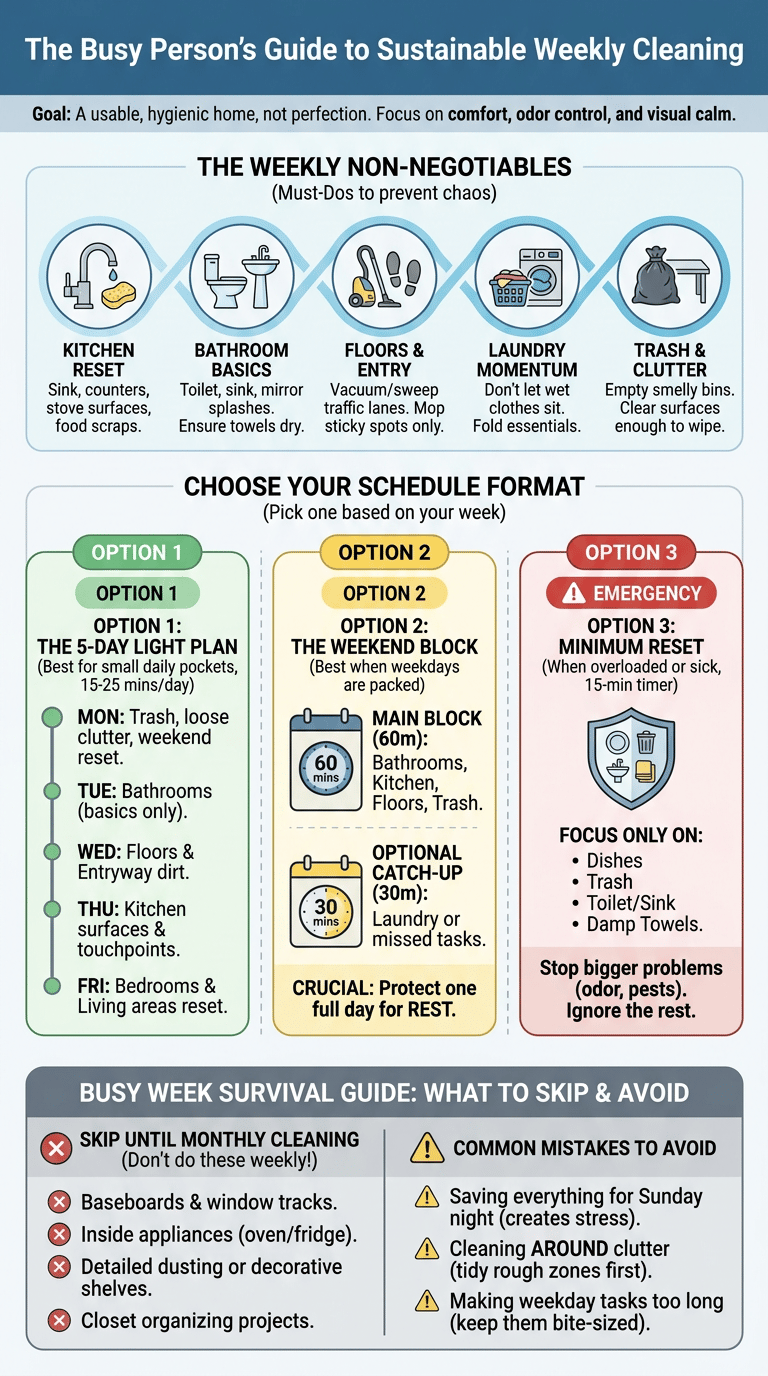
This schedule spreads the work so no single day becomes too heavy. Keep supplies simple: microfiber cloths, an all-purpose cleaner suited to your surfaces, bathroom cleaner, vacuum or broom, mop for sticky areas, gloves, trash bags, and laundry detergent.
Monday reset and trash check
Monday should repair weekend drift. Walk the home with a trash bag first, then return dishes, laundry, shoes, and bags to their zones. Empty bins that smell or look full. Wipe the kitchen counter if food was left out. This is not the day for detailed scrubbing. It is the day to remove the obstacles that would make the rest of the week harder.
Tuesday bathrooms
Clean the toilet, sink, faucet, mirror splashes, and the most-used shower or tub area. Replace or hang towels so they can dry fully. Shake or launder the bath mat if it stays damp or gritty. If you see pink film, soap scum, or a musty smell returning quickly, spend the extra two minutes on the wettest corner instead of polishing decorative items.
Wednesday floors and entryway
Vacuum or sweep traffic lanes, especially the entry, kitchen, bathroom, and living area. Take shoes, packages, bags, and loose mail out of the walkway. Mop sticky spots rather than forcing a full mopping session when time is short. Check under the dining table and around pet bowls because those small zones often explain why the whole floor feels dirty.
Thursday kitchen surfaces and touchpoints
Wipe counters, the stove surface, microwave handle, refrigerator handle, cabinet pulls near food prep, and the sink rim. Wash or replace the dish sponge, brush, or cloth if it smells. Clear old leftovers and obvious spills from the refrigerator shelf edges. Stop before you start a full pantry or refrigerator project unless that task is already planned for the month.
Friday bedrooms and living areas
Reset the rooms where you rest. Change bedding if it is due, clear floor paths, return cups and dishes to the kitchen, collect laundry, and wipe the most visible dusty surfaces. In the living area, focus on seating, remotes, side tables, pet blankets, toys, and crumbs. The goal is a calmer weekend, not a showroom.
The Weekend Weekly Cleaning Plan
A weekend plan works best when it has a beginning and an end. Decide the block length before you start, gather supplies, and avoid opening closets or drawers that will create a second project.
One 60-minute main block
Use the first 10 minutes for trash and clutter. Spend 15 minutes on bathrooms, 15 minutes on kitchen surfaces, 15 minutes on floors, and the last 5 minutes resetting supplies and starting one laundry move. Set a timer if you tend to over-clean one room and ignore the rest. The point is a balanced home reset, not perfect grout or spotless cabinet interiors.
One 30-minute catch-up block
The catch-up block is for whatever would bother you most on Monday morning. That might be folding work clothes, changing sheets, clearing the dining table, vacuuming pet hair, or cleaning a neglected bathroom. Pick one or two jobs only. If you add five, the block becomes another full cleaning session and the schedule starts feeling impossible.
One protected rest day
Protecting one rest day is part of the plan, not laziness. Busy people often quit schedules that consume all free time. If possible, keep one day free from normal cleaning except dishes, obvious spills, and urgent laundry. This creates recovery time and makes it easier to return to the plan the next week without resentment.
How to split tasks if weekends are unpredictable
When weekends change often, split the routine into portable blocks: bathrooms, kitchen, floors, laundry, and clutter. Each block should be able to stand alone in 10 to 20 minutes. If plans change after two blocks, the home still improves. If you get more time later, complete the next block instead of restarting from the beginning.
Room-by-Room Weekly Checklist
Use this checklist as a practical weekly pass, then adjust for household size, pets, children, work schedules, and how often you cook at home.
Weekly kitchen checklist
- Wash dishes or load the dishwasher, then clear the sink.
- Wipe counters, table, stove surface, and small appliance handles.
- Clean the sink rim, faucet, and visible food residue.
- Check leftovers, food spills, trash, recycling, and floor crumbs.
- Wash or replace smelly sponges, dish cloths, and hand towels.
Weekly bathroom checklist
- Clean the toilet bowl, seat, outer base, and nearby floor.
- Wipe sink, faucet, counter, mirror splashes, and cabinet pulls.
- Rinse or clean shower and tub areas that show film.
- Replace towels and remove damp laundry from the room.
- Empty trash and check that ventilation is working during and after showers.
Weekly bedroom and living room checklist
- Clear floor paths and remove dishes, cups, wrappers, and laundry.
- Change or straighten bedding based on your household needs.
- Dust the most visible surfaces, especially nightstands and media areas.
- Vacuum around beds, seating, pet areas, and high-traffic spots.
- Reset blankets, toys, books, remotes, and items that collect on tables.
Weekly floor and laundry checklist
- Vacuum or sweep traffic lanes before low-use corners.
- Mop sticky kitchen, bathroom, or entryway spots.
- Wash towels, work clothes, school clothes, or bedding that cannot wait.
- Move wet laundry promptly and dry items completely.
- Clean lint, dirt, and debris from areas where they collect visibly.
Do not treat the checklist as a contract. Treat it as a menu. If your home is mostly clean but laundry is out of control, put the laundry block first. If floors are fine but the bathroom needs attention, start there. The room-by-room list is useful because it shows what to inspect, not because every line must be completed every week.
Busy Week Shortcut Plan
Some weeks will not fit the schedule. The shortcut plan keeps the home from sliding too far without pretending you have normal energy or time.
The 15-minute emergency reset
Set a timer and move in this order: trash, dishes, damp laundry, bathroom basics, and floor hazards. Do not start with dusting because dust rarely creates the most urgent mess. Clear food, moisture, odor sources, and tripping hazards first. A strong 15-minute reset should make tomorrow easier even if the home still looks lived in.
What to skip until monthly cleaning
Skip baseboards, window tracks, inside cabinets, detailed appliance interiors, closet sorting, decorative shelves, and storage bins. These tasks matter, but they are poor choices during a crowded week because they take focus and often create piles before they create progress. Put them on a monthly list so you can return to them without guilt.
What not to skip because it creates bigger messes
Do not skip wet towels, washer loads, food spills, full trash, pet accidents, bathroom trash, sticky kitchen floors, or dishes with food residue. Moisture and food messes become odor, pests, stains, or extra scrubbing. The EPA notes that controlling moisture is important because mold can grow when moisture problems are not handled, especially on damp materials in its mold and moisture guide.
How to restart after missing the schedule
Do not punish yourself with a double cleaning day. Restart with the next non-negotiable: trash, dishes, bathroom basics, laundry, or floors. Choose the area causing the most friction, finish a small block, then return to the normal schedule the next day. If you missed two weeks, use one weekend block plus one weekday bathroom or kitchen block, not an all-day marathon.
Weekly Cleaning Mistakes to Avoid
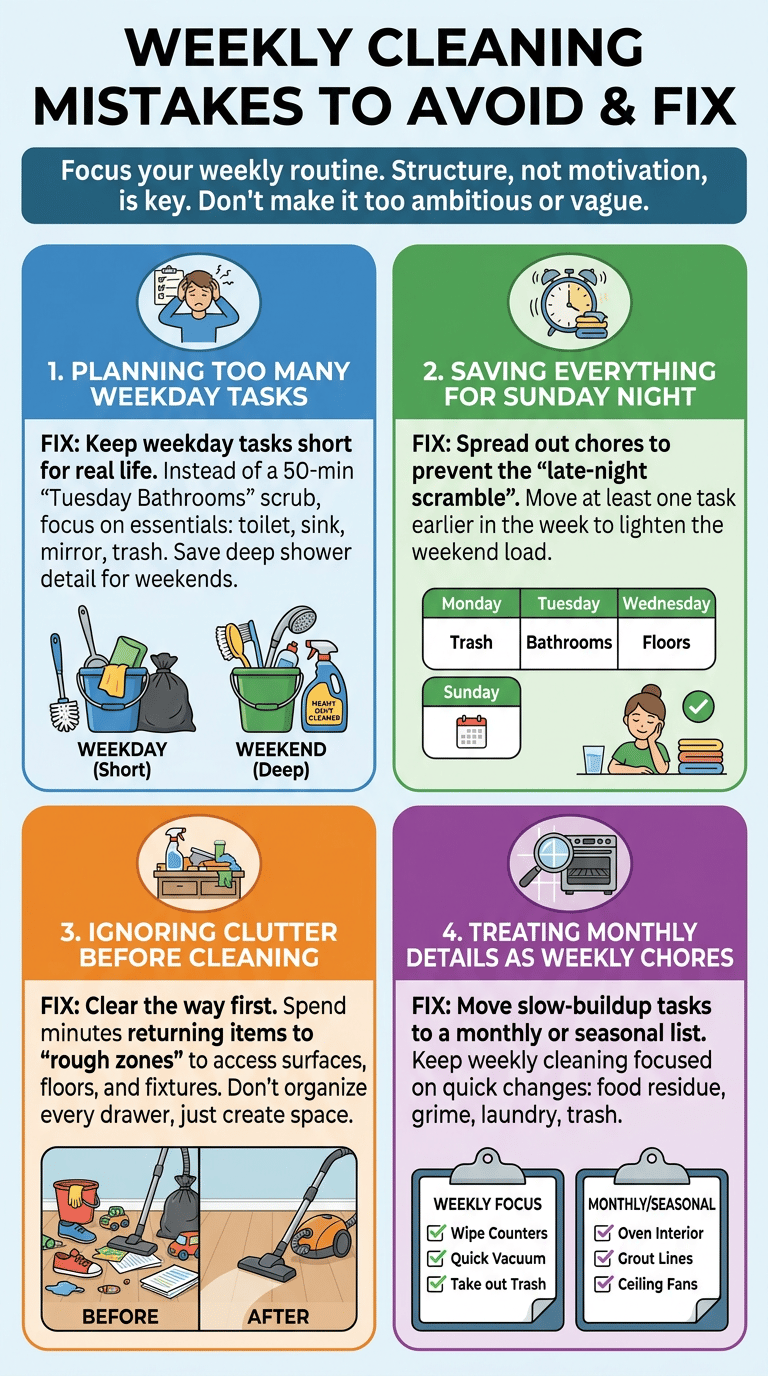
Most weekly schedules fail because they are too ambitious, too vague, or too dependent on one perfect day. Fix the structure before blaming your motivation.
Planning too many weekday tasks
A weekday task should be short enough to finish with real-life interruptions. If Tuesday bathrooms always takes 50 minutes, reduce it to the toilet, sink, mirror splashes, towels, and trash. Save shower detail scrubbing for a weekend or monthly block. The schedule should create a win you can repeat, not a reminder that you are behind.
Saving everything for Sunday night
Sunday night cleaning often feels urgent, rushed, and discouraging. It also leaves no buffer for laundry drying, supply shortages, or unexpected plans. Move at least one chore earlier: trash on Monday, bathrooms on Tuesday, or floors on Wednesday. Even one shifted task can make the weekend lighter and prevent the reset from becoming a late-night scramble.
Ignoring clutter before cleaning
Cleaning around clutter wastes time. Wiping half a counter, vacuuming around piles, or mopping around shoes leaves the room looking unfinished. Spend the first few minutes returning items to rough zones. You do not need to organize every drawer. You only need enough access to clean the surfaces, floors, and fixtures that matter this week.
Treating monthly details as weekly chores
Weekly energy disappears when slow-buildup tasks sneak into the routine. Oven interiors, full refrigerator cleanouts, grout lines, ceiling fans, vents, and closet edits usually do not belong every week. Add them to a monthly or seasonal list. That keeps weekly cleaning focused on what changes quickly: food residue, bathroom grime, floor dirt, laundry, trash, and visible clutter.
Frequently Asked Questions
These answers help you choose a schedule format and adjust it when life is busy, uneven, or unpredictable.
What is the best weekly cleaning schedule for busy people?
The best schedule is either a 5-day light plan or a weekend block plan. The 5-day plan works well if you can clean for 15 to 25 minutes on weekdays. The weekend plan works better if your workdays are packed. In both cases, keep the same priorities: kitchen, bathrooms, floors, laundry, trash, and visible clutter.
How many hours should weekly cleaning take?
Most busy households should aim for about 2 to 4 hours total across the week, depending on home size, pets, children, and cooking habits. A small apartment may need less. A larger home with pets may need more. If your weekly routine regularly takes a full day, move detailed tasks to monthly cleaning and keep weekly chores focused on maintenance.
What chores should I do on weekdays versus weekends?
Weekdays are best for small, contained jobs: trash, bathroom basics, a quick floor pass, kitchen touchpoints, and one laundry move. Weekends are better for tasks that need a longer block, such as changing multiple beds, vacuuming several rooms, catching up on laundry, or doing a more complete kitchen and bathroom reset.
What can I skip during a busy week?
You can usually skip detailed dusting, baseboards, inside cabinets, appliance interiors, closet organizing, window tracks, and decorative shelves. Do not skip food residue, full trash, damp towels, wet laundry, pet messes, or bathroom basics. A busy-week plan should prevent odor, stains, and buildup while leaving detail work for a calmer time.
How do I catch up if I missed my weekly cleaning day?
Start with the task causing the most daily friction. If dishes are blocking the kitchen, start there. If the bathroom feels unpleasant, clean the toilet and sink first. If laundry is the problem, move one load from start to finish. Avoid catching up by doing every missed task at once. One focused reset is enough to restart momentum.
Should I clean one room per day or batch tasks by type?
One room per day works well if you like clear boundaries, such as bathrooms on Tuesday and bedrooms on Friday. Batch cleaning works well if you prefer doing one type of task across the home, such as all floors or all trash. Choose the method that reduces decision-making. The best schedule is the one you can restart easily after an imperfect week. A room-by-room cleaning checklist can help you assign one practical zone to each cleaning day.
One practical way to keep the schedule honest is to review it after two weeks. Circle the chores you actually completed, mark the ones you skipped, and ask why. If a task was too long, shrink it. If it happened on the wrong day, move it. If it was not important enough to do twice, it may belong on a monthly list instead.
Final Thoughts
A weekly cleaning schedule for busy people should make your home easier to live in, not harder to manage. Keep the routine centered on the chores that change quickly: kitchen residue, bathroom grime, floor dirt, laundry, trash, and visible clutter. Use short weekday sessions when you can, switch to a weekend block when needed, and rely on the shortcut plan during overloaded weeks.
When a task keeps getting skipped, do not assume you need more discipline. Make the task smaller, move it to a better day, or shift it to monthly cleaning. Also pay attention to airflow and damp areas, because fresh air and moisture control help prevent stale rooms from becoming recurring problems. The EPA recommends source control, ventilation, and air cleaning as broad ways to improve indoor air quality at home in its indoor air quality guidance.

Ethan Carter is the Founder & Editor of HomeCleanSecrets. Based in the United States, he has 5 years of experience creating practical home cleaning, laundry care, stain removal, decluttering, and home organization content. His goal is to help everyday households clean smarter and build simple routines that are easier to maintain.
Read more about Ethan Carter on his author page: https://homecleansecrets.com/ethan-carter/