
An annual home cleaning calendar turns large, forgotten chores into a steady year-long rhythm. Instead of waiting until dust, odors, clutter, moisture, or guest prep force a stressful weekend, you assign a few deeper tasks to each month and keep the rest of the home moving with daily and weekly upkeep. The goal is not to clean every room perfectly every Saturday. The goal is to prevent the slow buildup that makes a home feel harder to manage than it really is.
This calendar works for homeowners, renters, busy families, and first-year homeowners who need a practical plan without turning cleaning into a second job. You can follow the month-by-month version as written, or shift tasks based on your climate, school calendar, work schedule, allergy season, pet shedding, holidays, and how your home is used. A good test is simple: when the month ends, your home should be a little easier to maintain than it was at the start.

Quick Answer: What to Clean Each Month


Each month should include one visible reset, one hidden-detail task, and one prevention task. A visible reset might be decluttering an entryway or washing bedding. A hidden-detail task might be wiping cabinet fronts, cleaning appliance edges, or vacuuming behind furniture. A prevention task might be checking bathroom moisture, replacing a filter, clearing dryer lint, or reviewing smoke alarm areas before cold-weather appliance use.
Monthly rhythm overview
A useful monthly rhythm starts with the areas that affect daily life: kitchen surfaces, bathroom moisture, floors, bedding, laundry zones, trash areas, and entryways. Then add one task people forget because it is not visible every day, such as cleaning under sofa cushions, wiping baseboards, washing curtains, clearing pantry crumbs, or dusting vents. The American Cleaning Institute’s basic home cleaning rhythm separates weekly and monthly tasks, which is a helpful way to keep recurring chores from blurring together.
For a realistic monthly plan, choose no more than four deeper tasks. One can be kitchen-related, one can be bathroom or laundry-related, one can be fabric or dust-related, and one can be storage-related. If a month is packed with travel, school events, or visitors, reduce the list to two tasks and move the rest forward. A missed month should not make the whole year feel ruined.
Quarterly deep-clean rhythm
Every three months, choose a deeper reset that needs more time than a normal weekend touch-up. Good quarterly tasks include washing interior windows, cleaning behind major furniture, checking pantry expiration dates, wiping closet shelves, vacuuming mattress edges, washing washable rugs, descaling fixtures where appropriate, and inspecting high-moisture corners. These jobs are not urgent every week, but leaving them for a full year can turn them into heavy projects. For a quarter that needs a larger reset, use the deep cleaning checklist to define the work without expanding every month.
Think of each quarter as a change in home conditions. The first quarter resets after holidays and winter dust. The second quarter prepares for warm weather, humidity, pests, pollen, and open windows. The third quarter handles heat, odors, outdoor traffic, and high-use areas. The fourth quarter prepares for guests, storage, colder weather, and indoor air concerns.
Annual reset tasks
Annual tasks are the jobs that need a calendar reminder because daily life rarely points to them. Examples include cleaning rarely used guest spaces, washing high curtains or blinds if the material allows it, checking stored linens, reviewing emergency supplies, cleaning seasonal storage, and checking appliance care instructions. Some homes also need yearly professional service for HVAC, chimneys, dryer vent runs, or specialty flooring, depending on the system and manufacturer guidance.
Stop and call a qualified professional if a task involves electrical issues, fuel-burning appliances, persistent leaks, suspected mold spreading through building materials, unknown stains on delicate surfaces, or any cleaning job that requires equipment you are not trained to use. A calendar should help you notice these issues earlier, not push you into unsafe DIY work.
How the Annual Cleaning System Works
A strong yearly plan has three layers. The first layer keeps the home livable from day to day. The second layer handles monthly detail work. The third layer catches seasonal and yearly resets. Problems happen when all three layers collapse into one giant deep clean. Separating them keeps the plan flexible and easier to restart after a busy season.
Daily and weekly maintenance layer
Daily and weekly tasks should be simple enough to repeat even during a busy week. Dishes, trash, laundry movement, bathroom wipe-downs, kitchen counters, quick floor pickup, and clutter returns belong here. These are not the main subject of an annual calendar, but they protect the deeper plan. If the sink, laundry, and trash are always overloaded, yearly tasks will feel impossible. The home cleaning schedule guide explains how the yearly layer fits with repeatable daily, weekly, and monthly routines.
Keep this layer short. A renter in a studio might need ten minutes each evening. A family with pets and kids may need a short morning reset and a short evening reset. The measure is not perfection. The measure is whether crumbs, moisture, trash, and laundry are kept from turning into bigger cleaning problems.
Monthly detail layer
The monthly layer catches dust, residue, storage creep, and forgotten surfaces. Rotate tasks through the home instead of repeating only the rooms you already notice. One month might focus on kitchen cabinet fronts, the next on bathroom ventilation and grout edges, the next on bedroom fabrics, and the next on entryway mats and closets.
A good monthly detail task has a clear finish line. “Clean the kitchen†is too broad. “Wipe cabinet fronts, clean the range hood exterior, and vacuum crumbs from the pantry floor†is specific enough to complete. When tasks are written clearly, you can split them between family members or move them to a different weekend without losing the plan. Use the monthly home cleaning checklist when you need the detailed task list behind the calendar’s monthly layer.
Seasonal and yearly reset layer
Seasonal resets respond to how the home changes through the year. Spring often brings pollen, open windows, mud, and moisture checks. Summer can bring odors, trash heat, pet smells, sweaty laundry, and heavier use of fans or air conditioning. Fall is a good time to reset entryways, storage, bedding, and guest zones. Winter often brings closed windows, dust, cooking buildup, heating equipment, and condensation around windows.
Yearly resets cover the tasks that do not fit neatly into a room checklist. These include checking stored items for moisture, reviewing cleaning products that are expired or nearly empty, cleaning behind large appliances when safe to move them, washing rarely used bedding, and planning service calls before peak season. If a task affects safety, air movement, moisture, or appliance performance, put it on the calendar before the season when you need it most.
12-Month Home Cleaning Calendar

This 12-month cleaning schedule gives each season a purpose. Move tasks one month earlier or later if your climate is different. In humid areas, moisture checks may need to happen more often. In snowy areas, entryway and salt cleanup may take priority. In homes with pets, shedding and odor control may need extra attention during seasonal changes.
January to March reset tasks
January is a good month for a calm reset after holidays. Clear gift packaging, donation piles, expired pantry items, and guest bedding. Wash throws, wipe high-touch living room surfaces, vacuum under seating, and check storage areas where decorations were packed away quickly. If you use space heaters, fireplaces, or extra cooking appliances, keep nearby clutter low and review safe placement before use.
February should focus on hidden dust and fabric. Dust vents, ceiling fan blades, lampshades, headboards, baseboards, and under-bed areas. Wash mattress protectors and rotate the mattress if the manufacturer recommends it. Check bathroom corners and windows for condensation patterns. When you notice dampness or musty smells, do not cover them with fragrance. Find the moisture pattern first.
March can begin the spring transition. Clean entry mats, wash window tracks where accessible, wipe door frames, and clear laundry-room lint and dust. Sort cleaning supplies before spring projects begin. Replace worn sponges, check labels, and discard products according to local guidance if they are damaged, leaking, or no longer identifiable.
April to June spring and moisture-prep tasks
April is the best month for a practical spring reset. Declutter one storage area before deep cleaning it, because cleaning around excess items wastes time. Wash washable curtains, vacuum blinds, clean reachable window sills, and wipe cabinet fronts. The ACI spring plan recommends starting with decluttering and dividing tasks by room, which keeps spring cleaning from turning into one oversized job.
May should focus on moisture prevention. Check under sinks, around toilets, near washing-machine hookups, around tubs, beside exterior doors, and near windows. Clean bathroom fans if the cover is removable and safe to access. EPA guidance on mold and moisture at home emphasizes controlling moisture and drying wet materials promptly, which is why this month should not be skipped in humid homes.
June is a good time for appliance-adjacent cleaning before summer use increases. Clean refrigerator door seals with mild soap and water if the manual allows it, vacuum accessible condenser areas only if your manual permits, clean dishwasher edges and filter according to the manual, and wipe washer gaskets or lids. ENERGY STAR lists common home appliance categories such as refrigerators, dishwashers, clothes washers, dryers, dehumidifiers, and room air conditioners in its energy efficient product categories, and those categories are a useful reminder of which machines often need routine care.
July to September heat, odor, and high-use tasks
July should focus on odor control and trash areas. Heat can make bins, drains, pet zones, laundry hampers, and kitchen towels smell faster. Wash trash cans, clean under bins, rinse recycling containers, and launder washable mats. Check that bathroom towels dry fully between uses. If fabrics smell sour after washing, avoid overloading the washer and make sure items are drying quickly enough.
August is ideal for high-use floor and entry areas. Vacuum rugs thoroughly, wash entry mats, wipe shoe storage, and clean under furniture where dust and pet hair collect. Families preparing for school can reset backpacks, lunch boxes, drop zones, and laundry baskets. Apartment renters can use this month to clean compact storage areas before fall clutter returns.
September is a transition month. Clean bedroom closets, rotate seasonal clothes, wipe closet shelves before storing summer items, and inspect storage bins for moisture or odors. Wash guest linens before the holiday season begins. This is also a good month to check smoke alarm areas, clear clutter around heating equipment, and make sure exits are not blocked by storage.
October to December holiday, storage, and winter-prep tasks
October should prepare the home for more closed-window living. Dust vents, wash heavier bedding, clean bathroom moisture zones, and wipe kitchen surfaces that will see more cooking. EPA indoor air guidance highlights ventilation and controlling indoor pollutants as part of improving indoor air quality, so build your fall cleaning around dust, moisture, and air movement rather than fragrance alone.
November is for guest readiness without panic. Clean the guest bathroom, wash guest bedding, clear entry clutter, wipe dining chairs, clean appliance fronts, and check the refrigerator before holiday groceries arrive. Do not schedule every deep-cleaning task for the week guests arrive. Do the visible and high-use areas first, then choose one hidden task only if time allows.
December should be a storage and safety reset. Clean up wrapping supplies, check holiday linens, wipe storage bins before packing decorations, and keep exits and heat areas free of clutter. NFPA’s home fire safety information is a useful reminder that winter home habits should include clear spaces, working alarms, and careful use of cooking and heating equipment.
Quarterly Cleaning Checklist
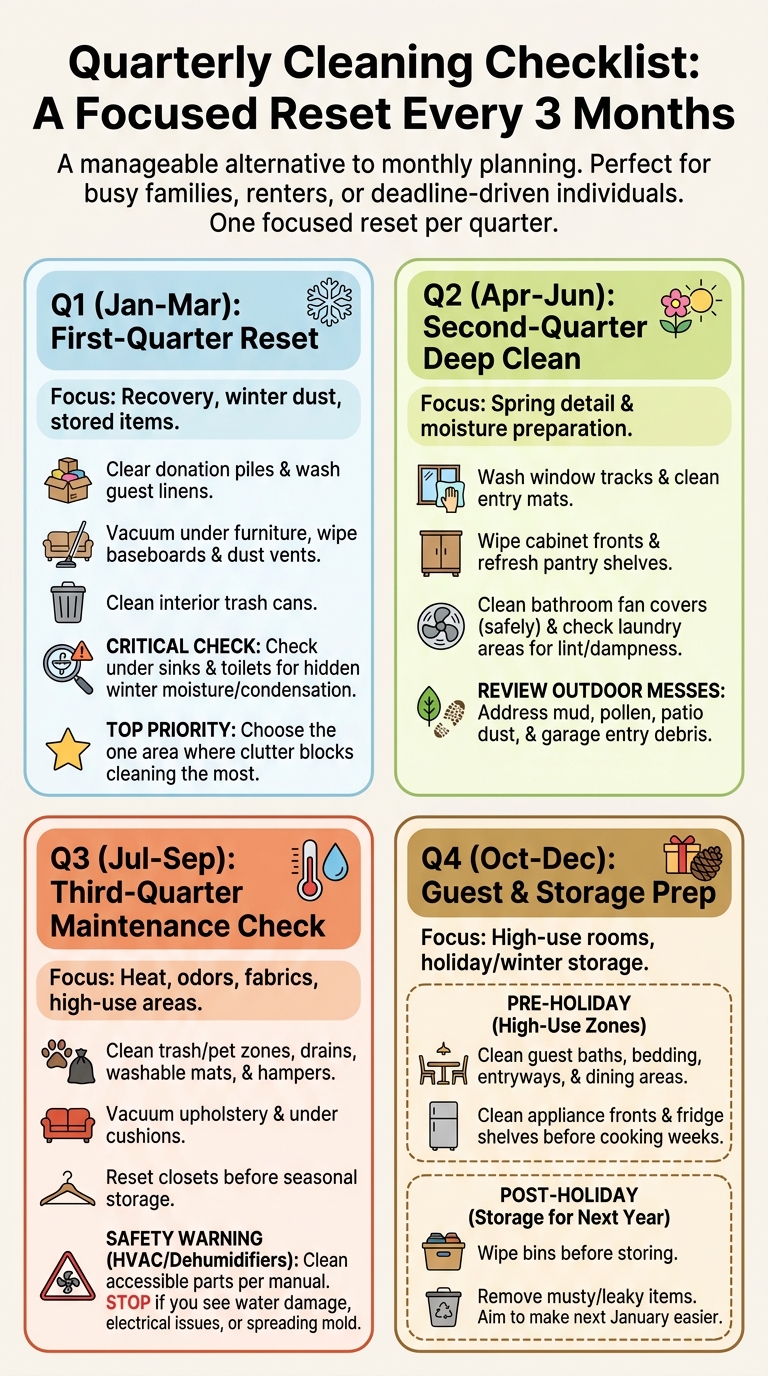
Quarterly cleaning gives you a second way to follow the year if monthly planning feels too detailed. Instead of tracking twelve lists, you complete one focused reset every three months. This works well for busy families, renters, and anyone who tends to ignore a task unless it has a deadline.
First-quarter reset
From January through March, focus on recovery from holidays, winter dust, and stored items. Clear donation piles, wash guest linens, vacuum under furniture, wipe baseboards in main rooms, clean interior trash cans, and dust vents. Check under sinks and around toilets because winter condensation and closed rooms can hide moisture. If you only complete one deeper task this quarter, choose the area where clutter blocks cleaning the most. New owners can begin with the new homeowner cleaning checklist before settling into the full annual calendar.
Second-quarter deep clean
From April through June, focus on spring detail work and moisture preparation. Wash window tracks, clean entry mats, wipe cabinet fronts, clean bathroom fan covers where safe, refresh pantry shelves, and check laundry areas for lint and dampness. This is also the best quarter to review outdoor-adjacent messes, such as mud, pollen, patio dust, and garage entry debris.
Third-quarter maintenance check
From July through September, focus on heat, odors, fabrics, and high-use areas. Clean trash zones, pet zones, drains, washable mats, hampers, and sweaty laundry areas. Vacuum upholstery and under cushions. Reset closets before storing seasonal clothing. If your home uses dehumidifiers, fans, or portable air units, clean accessible parts according to the manual and stop if you see water damage, electrical issues, or mold spreading beyond a small cleanable area.
Fourth-quarter guest and storage prep
From October through December, focus on the rooms people use most and the storage areas you open for holidays or winter. Clean guest bathrooms, bedding, entryways, dining areas, appliance fronts, and fridge shelves before heavy cooking weeks. After the holidays, wipe bins before storing items and remove anything that smelled musty, leaked, or attracted pests. This quarter should make the next January easier.
Seasonal Cleaning Priorities
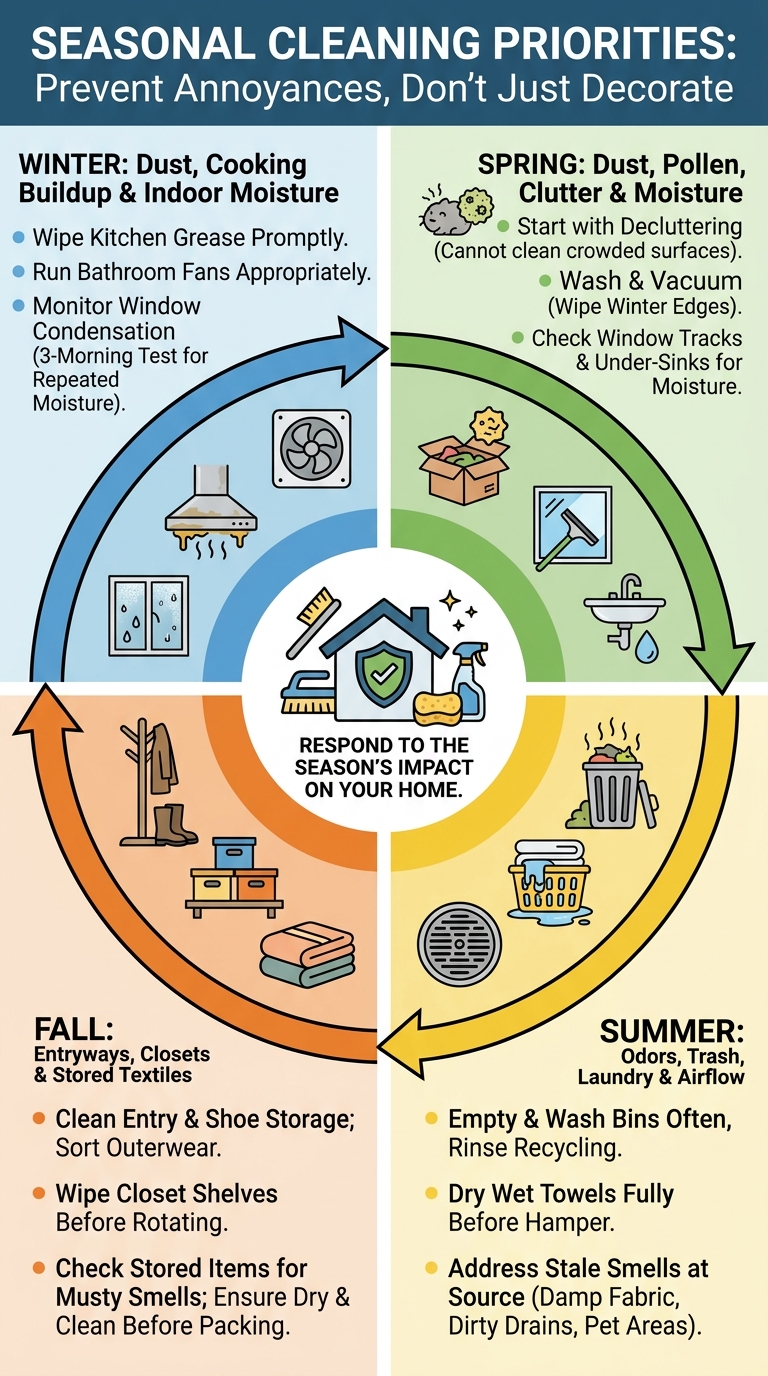
Seasonal cleaning is not about decorating the home for a season. It is about responding to what the season does to your rooms, surfaces, fabrics, and storage. The right task in the right month can prevent a small annoyance from becoming a weekend-long project.
Spring cleaning priorities
Spring priorities are dust, pollen, mud, window areas, storage clutter, and bathroom moisture. Start with decluttering because you cannot clean shelves, floors, or counters properly when every surface is crowded. Then wash what can be washed, vacuum what collects dust, and wipe the edges that winter ignored. Check window tracks and under-sink areas before warm weather makes moisture problems more noticeable. The spring cleaning checklist by room turns the spring portion of the calendar into an actionable room sequence.
Summer odor and ventilation priorities
Summer priorities are odors, trash, laundry, pet areas, drains, and airflow. Empty bins more often, wash cans, rinse recycling, and let wet towels dry fully before they sit in hampers. Clean bathroom surfaces before residue hardens. If the home smells stale, open windows only when outdoor air and weather make sense, then focus on the cause: damp fabric, old food, dirty bins, clogged drains, or pet bedding.
Fall entryway and storage priorities
Fall priorities are entryways, closet rotation, guest areas, school or work drop zones, and stored textiles. Clean shoe storage, wash mats, sort outerwear, and wipe closet shelves before storing seasonal items. This is also a smart time to check stored blankets, guest towels, and extra pillows for musty smells. Do not pack fabrics away unless they are fully dry and clean.
Winter dust, moisture, and indoor air priorities
Winter priorities are dust control, cooking buildup, moisture around windows, bathroom ventilation, and heating-season clutter. Closed windows can make dust and odors more noticeable. Wipe kitchen grease before it spreads to cabinets, run bathroom fans when appropriate, and watch for condensation patterns. A good test is to look at the same window or bathroom corner three consecutive mornings. Repeated moisture deserves attention.
Room-by-Room Tasks to Rotate Through the Year
A yearly calendar should not repeat a full room checklist every month. Instead, rotate the deeper details so each room gets attention before problems build. This keeps the annual plan focused on timing while still covering the rooms that matter most.
Kitchen and pantry
Rotate kitchen tasks across the year: wipe cabinet fronts in spring, clean pantry shelves in early summer, wash trash cans during hot months, and reset the refrigerator before holiday groceries. Clean appliance edges and handles more often if your kitchen is heavily used. Follow appliance manuals before removing filters, panels, racks, or seals. Stop if a part feels stuck or requires tools you do not normally use.
Bathroom and moisture zones
Bathrooms need several shorter checks instead of one yearly rescue clean. Rotate grout-edge inspection, fan cover cleaning, under-sink checks, shower curtain washing, drain area cleaning, and towel storage. If caulk is cracked, grout is missing, or water returns after cleaning, cleaning alone may not solve the issue. That is a repair or ventilation problem, not just a housekeeping problem.
Bedrooms, closets, and fabrics
Bedrooms collect dust quietly. Rotate bedding washes, mattress-edge vacuuming, under-bed dust removal, closet shelf wiping, and seasonal clothing storage. Clean before storing, especially with fabrics. Body oils, food crumbs, perfume, and dampness can set into textiles while they sit for months. If an item smells musty after washing and drying, do not seal it in a bin until you know it is fully dry.
Floors, rugs, and entryways
Floors and entryways need seasonal attention because they carry outdoor soil into the home. Wash mats, vacuum rugs slowly, clean under furniture, and wipe baseboards in high-traffic rooms. In winter or rainy seasons, give shoes a landing zone so mud and grit do not spread. In summer, clean pet hair and dust from corners more often if doors are opened frequently.
Decision Tree: What Should You Clean This Month?
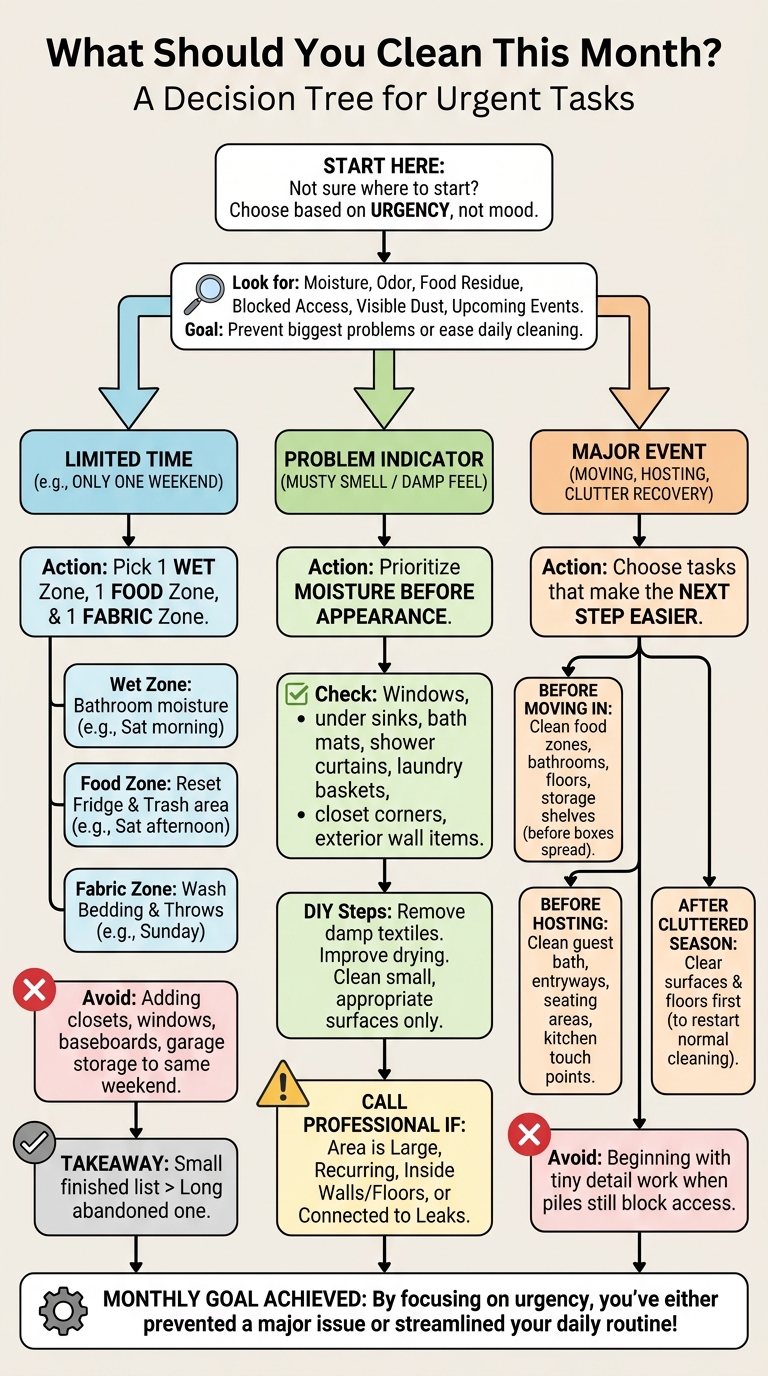
When you are not sure where to start, choose based on urgency rather than mood. Look for moisture, odor, food residue, blocked access, visible dust, and upcoming events. The right monthly task is the one that prevents the biggest problem or makes daily cleaning easier.
If you only have one weekend
Pick one wet zone, one food zone, and one fabric zone. For example, clean bathroom moisture areas on Saturday morning, reset the refrigerator and trash area Saturday afternoon, then wash bedding or throws on Sunday. Do not add closets, windows, baseboards, and garage storage to the same weekend. A small finished list is more useful than a long abandoned one.
If a room smells musty or feels damp
Prioritize moisture before appearance. Check windows, under sinks, bath mats, shower curtains, laundry baskets, closet corners, and items stored against exterior walls. Remove damp textiles, improve drying, and clean small surface issues only when the material is appropriate for DIY cleaning. Call a professional if the area is large, recurring, inside walls or floors, or connected to leaks.
If you are moving, hosting, or recovering from clutter
Choose tasks that make the next step easier. Before moving in, clean food zones, bathrooms, floors, and storage shelves before boxes spread everywhere. Before hosting, clean guest bathrooms, entryways, seating areas, and kitchen touch points. After a cluttered season, clear surfaces and floors first so normal cleaning can restart. Do not begin with tiny detail work when piles still block access.
Common Calendar Mistakes
A cleaning calendar should reduce decisions, not become another thing to fail at. Most plans break because they are too ambitious, too generic, or disconnected from how the home is actually used. Adjusting the plan is not cheating. It is how the calendar becomes usable.
Scheduling too many tasks in one month
The fastest way to abandon a yearly cleaning schedule is to overload one month. Spring is the usual problem. People assign windows, closets, garage storage, upholstery, baseboards, bathrooms, appliances, and every cabinet to April, then finish only one task. Spread the work. Put windows and entryways in spring, odor zones in summer, closets in early fall, and guest spaces in late fall.
Ignoring climate and household use
A dry climate, humid climate, snowy climate, pet household, allergy-sensitive household, and rental apartment do not need the exact same calendar. Humid homes may need more bathroom and closet moisture checks. Homes with pets may need more fabric and odor tasks. Homes with heavy cooking may need more cabinet and range-area cleaning. Let your actual mess patterns shape the plan.
Treating every home like the same home
Your calendar should match your rooms, surfaces, appliances, storage, and limits. A renter may not be able to service built-in systems, move heavy appliances, or alter ventilation. A new homeowner may need more first-year inspection and maintenance reminders. A busy family may need fewer tasks per month but stronger weekly resets. The best plan is one you can repeat without resentment.
FAQ
These answers help you adapt the yearly plan when you are deciding which tasks belong on a monthly list, which ones need a seasonal reminder, and which ones should be handled only when the home actually needs them.
What should be cleaned once a year?
Once-a-year cleaning often includes rarely used guest spaces, high or hard-to-reach dust areas, seasonal storage, spare linens, curtain or blind care if the material allows it, and behind or under heavy furniture when it is safe to move. Some appliance-adjacent tasks may also be yearly, but always follow the manual. If a task involves wiring, fuel, vents, leaks, or a system you do not understand, schedule a qualified professional instead of guessing.
How do I make a yearly cleaning schedule?
Start by listing the tasks you forget until they become annoying: window tracks, cabinet fronts, guest bedding, entry mats, pantry shelves, bathroom moisture checks, closet rotation, trash can washing, and appliance care. Then group them by season. Put moisture and window tasks in spring, odor and trash tasks in summer, storage and entryway tasks in fall, and dust, guest, and indoor-air tasks in winter. Keep each month to a few realistic jobs.
What is the difference between monthly and annual cleaning?
Monthly cleaning handles recurring detail work that keeps rooms from sliding backward, such as wiping cabinet fronts, washing mats, checking bathroom corners, or cleaning trash cans. Annual cleaning handles jobs that need a reminder because they are easy to forget, such as seasonal storage, rarely used linens, deep dust areas, and yearly appliance or home-safety reviews. Monthly tasks maintain momentum. Annual tasks prevent long-term neglect.
How should renters adapt an annual cleaning calendar?
Renters should focus on safe, reversible cleaning tasks: floors, bathrooms, kitchens, fabric care, entryways, trash zones, moisture checks, and compact storage. Avoid taking apart fixtures, moving landlord-owned appliances, using harsh products on unknown surfaces, or making repairs you are not allowed to make. Document leaks, persistent moisture, pest issues, damaged flooring, or ventilation problems and report them through the proper rental process.
Final Thoughts
An annual home cleaning calendar works best when it feels calm, visible, and easy to restart. Choose a few tasks each month, rotate deeper work by season, and leave room for real life. When the plan is built around moisture, dust, odor, storage, guest needs, and appliance care, the home stays easier to manage without relying on one exhausting deep-clean weekend. Start with the current month, finish one task that will make daily cleaning easier, and let the rest of the year build from there.

Ethan Carter is the Founder & Editor of HomeCleanSecrets. Based in the United States, he has 5 years of experience creating practical home cleaning, laundry care, stain removal, decluttering, and home organization content. His goal is to help everyday households clean smarter and build simple routines that are easier to maintain.
Read more about Ethan Carter on his author page: https://homecleansecrets.com/ethan-carter/