
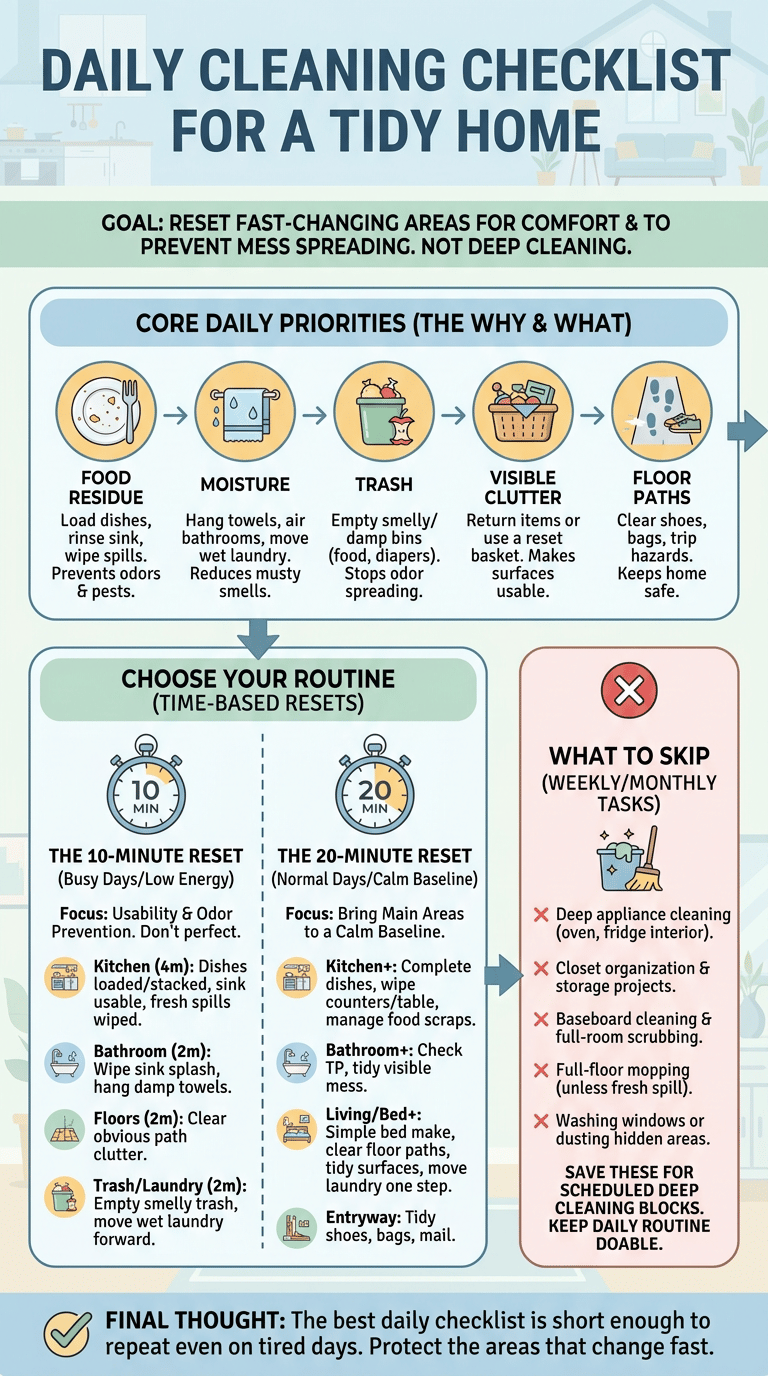
A daily cleaning checklist for a tidy home should be short enough to finish on a normal day and useful enough to stop mess from spreading. The goal is not to deep clean your whole home every evening. The goal is to reset the areas that affect comfort fast: dishes, food residue, wet items, trash, visible clutter, floor paths, and the small messes that become bigger if they sit overnight.
Quick Answer: The Best Daily Cleaning Checklist
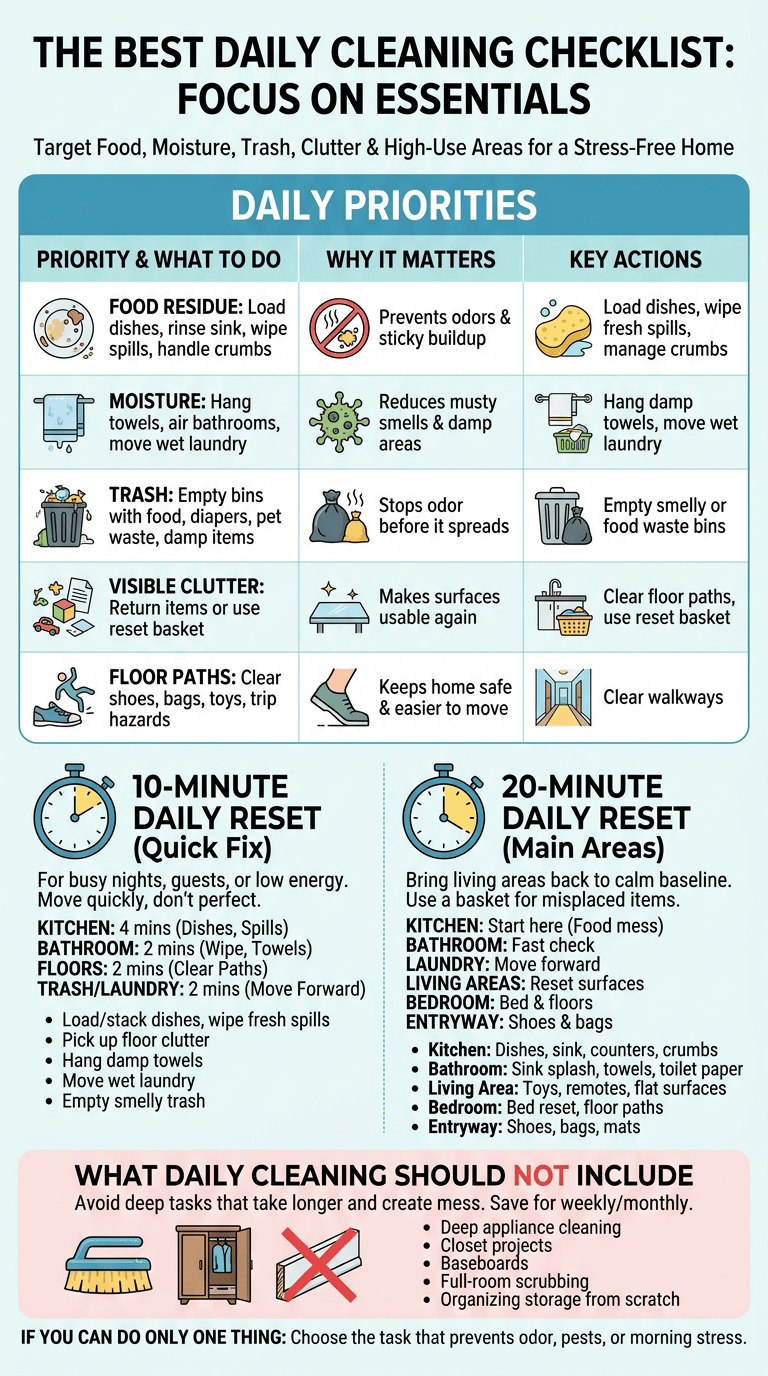
The best daily cleaning checklist focuses on food, moisture, trash, clutter, and the rooms people use most. Start in the kitchen, touch the bathroom only where it needs a reset, clear floor paths, move laundry one step forward, and remove anything that can smell by tomorrow. If you can do only one thing, choose the task that prevents odor, pests, or morning stress.
| Daily priority | What to do | Why it matters |
|---|---|---|
| Food residue | Load dishes, rinse sink, wipe fresh spills, handle crumbs | Prevents odors and sticky buildup |
| Moisture | Hang towels, air out bathrooms, move wet laundry | Reduces musty smells and damp areas |
| Trash | Empty small bins that hold food, diapers, pet waste, or damp items | Stops odor before it spreads |
| Visible clutter | Return items to a home or place them in a reset basket | Makes surfaces usable again |
| Floor paths | Clear shoes, bags, toys, and trip hazards | Keeps the home safe and easier to move through |
The 10-minute daily reset
Use the 10-minute reset on busy nights, before guests arrive, or whenever your home feels messy but you do not have much energy. Set a timer and move quickly without trying to perfect every room. Spend four minutes in the kitchen, two minutes in the bathroom, two minutes clearing floor paths, and two minutes moving trash or laundry forward.
For a related walkthrough, see our guide to weekly cleaning schedule for busy people.
For a related walkthrough, see our guide to home cleaning schedule guide.
- Load or stack dishes so the sink is usable.
- Wipe only fresh spills and sticky counter spots.
- Pick up obvious floor clutter in walkways.
- Hang damp towels where air can reach them.
- Move wet laundry to the dryer, drying rack, or hamper plan.
- Empty any trash that already smells or contains food waste.
The 20-minute daily reset
The 20-minute version gives you enough time to bring the main living areas back to a calm baseline. Start with the kitchen because food mess usually creates the most problems overnight. Then do a fast bathroom check, a laundry move, and a living area reset. If you live with kids, pets, or several adults, use a basket for items that belong in other rooms, then put the basket away after the main reset.
- Kitchen: dishes, sink, counters, table, food scraps, and crumbs.
- Bathroom: sink splash, towel position, toilet paper, and bathroom trash.
- Bedroom: bed reset, floor path, clothes off the floor, and nightstand clutter.
- Living area: dishes, toys, remotes, pet items, and flat surfaces.
- Entryway: shoes, bags, mail, mats, and items blocking the door.
What daily cleaning should not include
Daily cleaning should not include deep appliance cleaning, closet projects, baseboards, full-room scrubbing, or organizing storage areas from scratch. Those tasks take longer, create more mess before they improve the space, and make a daily routine feel impossible. Save them for a weekly block, a monthly checklist, or a seasonal reset.
What Daily Cleaning Is Really For
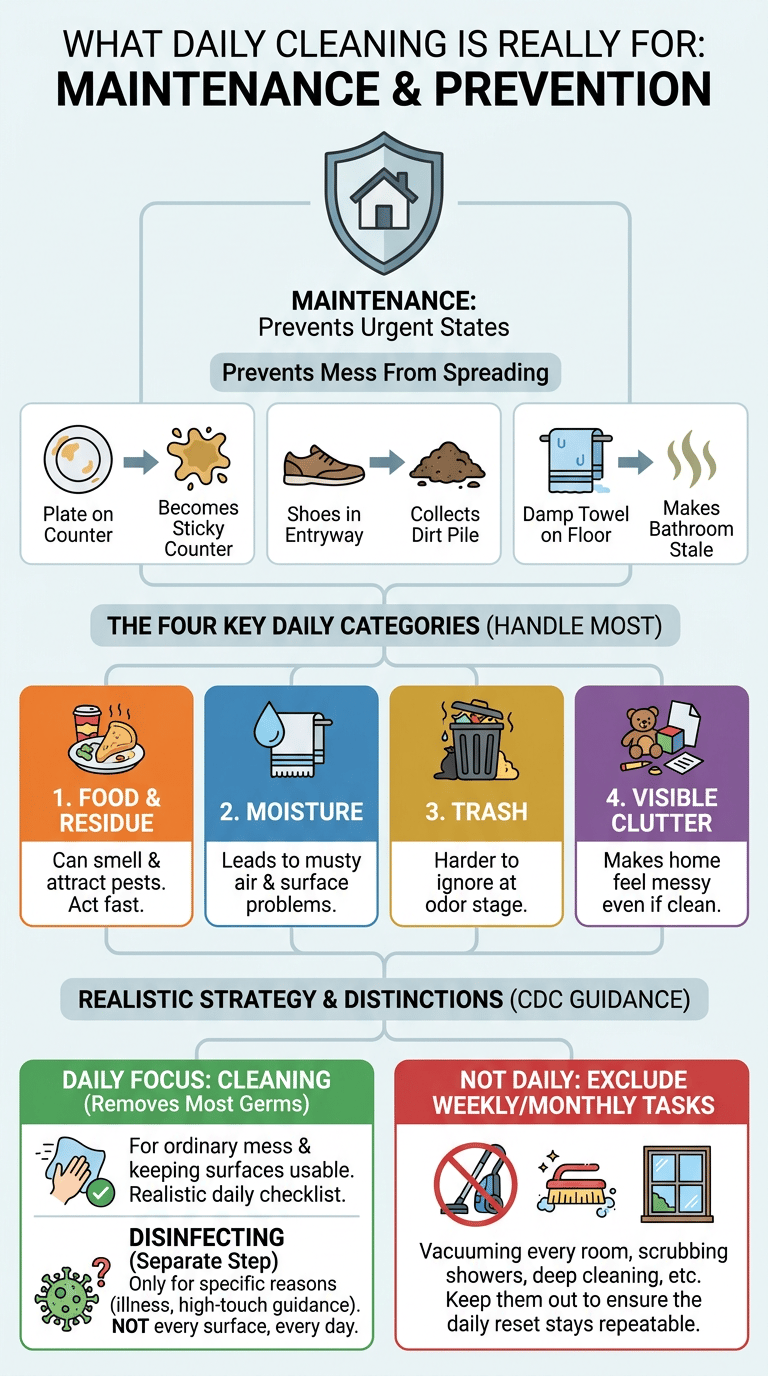
Daily cleaning is maintenance. It keeps the home from sliding into a state where every chore feels urgent. A good daily checklist protects the areas that change fast, especially kitchens, bathrooms, laundry zones, entryways, and shared living spaces.
Preventing mess from spreading
Small messes spread when they block normal use of a room. A plate left on the counter becomes a sticky counter. Shoes left in the entryway turn into a pile that collects dirt. A damp towel on the floor makes the bathroom smell stale. Daily cleaning works best when it catches the first step of that chain.
Handling food, moisture, trash, and visible clutter
Food, moisture, trash, and clutter are the four daily categories that matter most. Food residue can smell and attract pests. Moisture can lead to musty air and surface problems. Trash becomes harder to ignore once it reaches odor stage. Visible clutter makes the home feel messy even when surfaces are not actually dirty.
The CDC explains that cleaning removes most germs from surfaces, while disinfecting is a separate step for certain situations. That distinction helps keep a daily checklist realistic. Most days, you are cleaning ordinary mess and keeping surfaces usable. You do not need to disinfect every surface every day unless there is a specific reason, such as illness, bodily fluid mess, or product-label guidance for a high-touch area.
Leaving weekly and monthly tasks out of the daily list
A daily checklist fails when it tries to include every task you can think of. Vacuuming every room, scrubbing showers, cleaning inside appliances, washing windows, and sorting closets may all be useful, but they do not need to happen daily in most homes. Put them where they belong so your everyday reset stays repeatable.
Daily cleaning is the smallest maintenance layer in the whole-home system. It protects the next morning by keeping food residue, moisture, trash, clutter, and floor hazards from spreading before they become harder to manage. Weekly work restores rooms with fuller bathroom, floor, dusting, and bedding attention, while monthly work catches slow buildup on details that do not need daily handling. Seasonal or annual planning belongs to access-heavy work. If a task requires moved furniture, appliance disassembly, long drying time, storage decisions, or more than a short reset, move it out of the daily list so the checklist stays usable tomorrow. For a fuller breakdown of daily, weekly, and monthly tasks in each space, use the room-by-room cleaning checklist.
Daily Kitchen Checklist
The kitchen usually gives the biggest return on daily cleaning because it collects food, water, trash, and shared clutter. You do not need to scrub every appliance each night. You do need the sink, counters, table, and food waste handled before the mess hardens or smells.
Dishes, sink, and food scraps
Start with dishes because they control the sink and counter space. Load the dishwasher, wash what cannot wait, or stack dishes neatly if you truly cannot finish them. Scrape food scraps into the trash or compost container rather than leaving them in the sink. Rinse the sink after food cleanup so small bits do not sit around the drain.
Counters, table, and fresh spills
Wipe fresh spills before they dry. Focus on sticky spots, food prep zones, the eating area, and any counter space you need tomorrow. Move papers, bags, and non-kitchen items off food surfaces. If a surface is cluttered, clear a working strip first, then wipe it. Spraying around piles only gives you a damp pile and a still-messy counter.
Trash, recycling, and crumb control
Empty kitchen trash when it contains food that smells, raw-meat packaging, spoiled items, or anything wet enough to leak. Recycling should be rinsed enough that it does not stink. Check under the table, near the stove, and around pet bowls for crumbs. You may not need to sweep the entire floor every day, but a one-minute crumb sweep can prevent dirt from moving into other rooms.
Daily Bathroom Checklist
Daily bathroom cleaning should be light. The goal is to prevent damp towels, sink residue, empty supplies, and small trash from making the room feel neglected. Save tub scrubbing, grout work, and deep toilet cleaning for scheduled cleaning unless there is an immediate mess.
Sink splash and counter reset
Wipe obvious toothpaste, soap splashes, hair, and water rings from the sink and counter. Put grooming tools, makeup, and products back where they belong. Keep only the items used daily within reach. If the counter is crowded, place extras in a small bin or drawer instead of arranging them over and over.
Towels, shower moisture, and ventilation
Hang towels flat enough to dry, pull the shower curtain or door into a position that lets air circulate, and turn on the fan or open a window when practical. Damp fabric and trapped moisture are two of the fastest ways for a clean-looking bathroom to smell stale.
EPA guidance on indoor air quality points to practical steps like increasing ventilation when it is safe and appropriate. In a daily bathroom routine, that means clearing moisture instead of only wiping what you can see. Stop and investigate if towels smell sour after drying, the fan barely pulls air, or condensation sits on walls long after a shower.
Toilet paper, visible mess, and bathroom trash
Check toilet paper, hand soap, and bathroom trash. Replace supplies before they become a morning problem. Empty bathroom trash sooner if it contains diapers, hygiene products, pet waste, or damp wipes. Handle visible mess quickly, but do not turn every evening into a full bathroom scrub unless the room truly needs it.
Daily Bedroom and Living Area Checklist
Bedrooms and living areas usually need a reset more than a scrub. The goal is to make the room usable again: clear floor paths, return dishes to the kitchen, collect laundry, and reset the surfaces you see most.
Bed and floor-path reset
Make the bed in a simple way that fits your morning. It can be a full made bed, or it can be pulling up the comforter and placing pillows back. The point is not perfection. The point is creating one large calm surface that changes how the room feels.
Laundry control and small piles
Daily laundry control does not mean finishing all laundry every day. It means preventing wet items, dirty piles, and clean piles from mixing. Put dirty clothes in a hamper, move wet laundry forward, and place clean clothes in one defined spot if you cannot fold them immediately.
Living room surfaces, dishes, toys, and pet zones
Return cups and plates to the kitchen. Put remotes, chargers, books, toys, and blankets back into simple homes. If children or pets use the room, reset only the areas that affect walking, seating, odor, or tomorrow morning. A toy bin can be enough. Pet bowls, litter areas, crates, and bedding may need a quick check if they are creating crumbs, hair, or smell.
Daily Laundry and Entryway Tasks
Laundry and entryways create mess quietly. Wet laundry can smell before you notice it, and entry dirt can spread across floors. A short daily check keeps both from becoming bigger jobs.
Move laundry forward without doing everything
Choose one laundry move. Start a load, transfer a wet load, hang delicate items, fold one basket, or put away the clothes that are blocking a bed or chair. Do not turn this into a full laundry marathon unless you planned for it. Daily laundry works best as a relay, not a race.
Shoes, bags, mats, and dirt tracking
Reset the entryway by placing shoes together, hanging bags, clearing mail from the floor, and shaking or straightening mats if they are carrying visible dirt. You do not need to clean the whole floor every day. You do need to stop outside dirt from traveling through the house.
Trash points that create odor if ignored
Look beyond the main kitchen trash. Small bins in bathrooms, bedrooms, laundry rooms, nurseries, pet areas, and home offices can create odor if they hold food wrappers, tissues, damp items, or pet waste. Empty the bins that need it instead of automatically emptying every bin every night.
What Not to Clean Every Day
The daily checklist needs boundaries. Without them, a simple reset turns into constant cleaning. Most homes do not need every surface scrubbed every day. They need the fast-changing mess handled and the slow-building tasks scheduled somewhere else.
Deep appliance cleaning
Do not deep clean the refrigerator, oven, dishwasher filter, washing machine, dryer vent area, or range hood every day. Wipe fresh spills and remove food that is clearly spoiled, but leave deep appliance work for a separate task block. Daily appliance attention should be limited to immediate mess, odor clues, and safety issues.
Baseboards, closets, and storage projects
Baseboards, closets, junk drawers, pantry sorting, toy rotation, garage bins, and storage shelves do not belong in a daily tidy checklist. These tasks can be worthwhile, but they require decisions and time. Starting them at night can leave the home messier than before.
Full-floor mopping unless there is a spill
Daily full-floor mopping is usually unnecessary unless your home has a specific need, such as a spill, muddy entry, pet accident, food mess, or crawling baby area. Spot clean what is fresh and obvious. Sweep crumbs where food was eaten. Save full mopping for the schedule that fits your floors and household traffic.
Tasks that belong in weekly or monthly cleaning
Weekly tasks usually include fuller bathroom cleaning, vacuuming or floor care, dusting, changing sheets, and a more complete kitchen reset. Monthly tasks usually catch slower buildup, such as vents, appliance details, hidden dust, cabinet fronts, and storage areas. Keep those categories separate so daily cleaning stays small enough to repeat.
Daily Cleaning Troubleshooting
Real homes do not follow perfect routines. Some days you have five minutes. Some days clutter blocks every surface. Some homes have pets, children, shift work, or wet laundry that keeps causing problems. Use the situation in front of you instead of forcing the full checklist.
When you only have 5 minutes
Choose odor, food, and floor safety first. Put food away, clear dishes enough to use the sink, remove trash that smells, hang wet towels, and clear the main walkway. Skip dust, decor, and anything hidden behind a closed door. Five minutes is not failure. It is a protective reset.
When clutter blocks the checklist
Use a reset basket. Walk through the main areas and place out-of-room items in the basket. Then wipe or clean the surface that was blocked. After that, empty the basket by room. If you cannot empty it immediately, place it in one visible spot and set a limit, such as before bed or after breakfast.
When pets or kids create repeat messes
Separate repeat mess into zones. Put pet wipes, a small broom, or a washable mat near the problem area. Keep a toy bin where toys are actually used. Use a snack tray or table rule if crumbs spread through the house. The goal is not to chase every mess instantly. The goal is to make the reset obvious and fast.
When wet laundry or towels keep causing odor
Moisture needs a same-day answer. Move wet laundry out of the washer, separate damp towels from dry clothes, and give fabric air space. If towels smell musty even after washing, check whether they are being hung bunched together, left in a hamper while damp, or stored before fully dry.
The EPA notes that mold control depends on moisture control in the home, and its guidance on mold, moisture, and your home is a useful reminder to treat dampness as more than a cosmetic issue. In a daily checklist, the practical step is simple: do not leave wet fabric trapped in piles.
Daily Cleaning Mistakes to Avoid
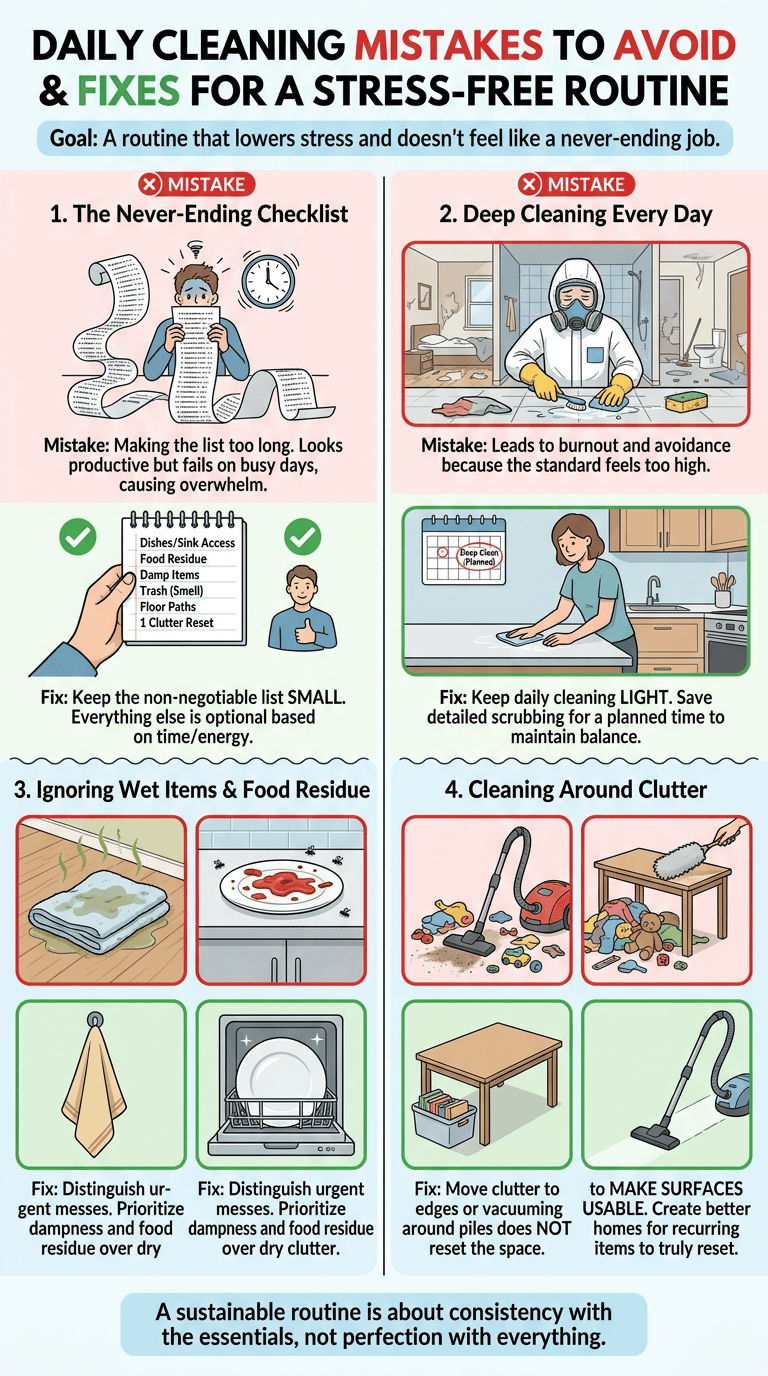
A daily routine should lower stress. If it makes your home feel like a never-ending job, the routine needs adjusting. Most problems come from making the list too long, mixing deep cleaning into daily cleaning, or ignoring the small messes that create odor.
Making the checklist too long
A long checklist may look productive, but it usually fails on busy days. Keep the non-negotiable list small: dishes or sink access, food residue, damp items, trash that can smell, floor paths, and one visible clutter reset. Everything else is optional depending on time and energy.
Deep cleaning every day
Deep cleaning every day leads to burnout and unfinished rooms. You may start with good intentions, then avoid cleaning altogether because the standard feels too high. Keep daily cleaning light and save detailed scrubbing for a planned time. This makes the home easier to maintain and makes deeper tasks less chaotic when they do come up.
Ignoring wet items and food residue
Wet items and food residue are small problems with fast consequences. A dry sock on the floor is clutter. A damp towel on the floor is a smell problem. A book on the counter is clutter. A plate with sauce on the counter is a food residue problem. Learn to tell the difference so you spend energy where it matters most.
Cleaning around clutter instead of resetting it
Wiping the exposed edge of a counter while the rest is covered does not reset the kitchen. Vacuuming around piles does not reset the floor. Move the clutter enough to make the surface usable. If the same category returns every day, create a better home for it or reduce the number of items in that category.
Frequently Asked Questions
What should I clean every day to keep my home tidy?
Clean the areas that change quickly: dishes, sink access, fresh food spills, crumbs, bathroom sink splash, damp towels, trash that can smell, laundry that is wet or blocking space, entryway dirt, and visible clutter in main living areas. You do not need to deep clean every room daily.
Is a 10-minute daily cleaning routine enough?
Yes, a 10-minute routine can be enough for maintenance if it focuses on the highest-impact tasks. It will not replace weekly or monthly cleaning, but it can keep the home usable, reduce odor, and make bigger cleaning sessions easier.
What daily tasks prevent odors?
The most important odor-prevention tasks are handling food scraps, taking out trash that contains food or damp waste, rinsing the sink after food cleanup, moving wet laundry, hanging towels so they dry, and checking pet areas. Fragrance should not replace removing the odor source.
Should I vacuum every day?
Most homes do not need full-home vacuuming every day. Spot vacuum or sweep when there are crumbs, pet hair, tracked dirt, or a specific floor mess. Homes with heavy shedding pets, crawling babies, allergies, or high traffic may need more frequent floor care in certain zones.
What should not be on a daily cleaning checklist?
Daily checklists should not include deep appliance cleaning, baseboards, window washing, closet cleanouts, pantry organization, full shower scrubbing, storage projects, or full-floor mopping unless there is a fresh spill or specific need. Those tasks belong in weekly, monthly, or seasonal cleaning plans.
How do I keep up with daily cleaning when I am tired?
Use a minimum reset. Handle food, wet items, trash, and one walkway. Do not negotiate with a long list when your energy is low. A small reset protects tomorrow, and tomorrow you can choose the 10-minute or 20-minute version again.
Final Thoughts
A daily cleaning checklist for a tidy home should make life easier, not turn every day into a cleaning shift. Keep the routine focused on what changes fast: food residue, moisture, trash, laundry movement, floor paths, and visible clutter. When you have ten minutes, protect the next morning. When you have twenty minutes, reset the main rooms. When a task is too big for today, put it on a weekly or monthly list instead of forcing it into the daily routine.
The most reliable daily checklist is not the longest one. It is the one you can repeat during a normal week, including the days when you are tired, busy, or interrupted. Start with the minimum reset, adjust the routine to your home, and let daily cleaning do its real job: keeping mess from becoming the center of the house.

Ethan Carter is the Founder & Editor of HomeCleanSecrets. Based in the United States, he has 5 years of experience creating practical home cleaning, laundry care, stain removal, decluttering, and home organization content. His goal is to help everyday households clean smarter and build simple routines that are easier to maintain.
Read more about Ethan Carter on his author page: https://homecleansecrets.com/ethan-carter/