
A monthly home cleaning checklist helps you catch the slow buildup that daily and weekly cleaning usually miss. It is not meant to replace quick kitchen resets, bathroom wipe-downs, or regular floor care. It is the layer that handles dust hiding behind furniture, sticky appliance edges, stale trash cans, soft-goods odor, under-sink moisture clues, and storage areas that quietly drift out of order.

The best monthly cleaning routine is specific, limited, and easy to split across the month. You should be able to look at a room, know which details deserve attention, and stop before the job turns into a full seasonal deep clean. Use this checklist to keep your home fresher, easier to maintain, and less likely to need a stressful all-day cleaning marathon.
Quick Answer: What to Clean Monthly
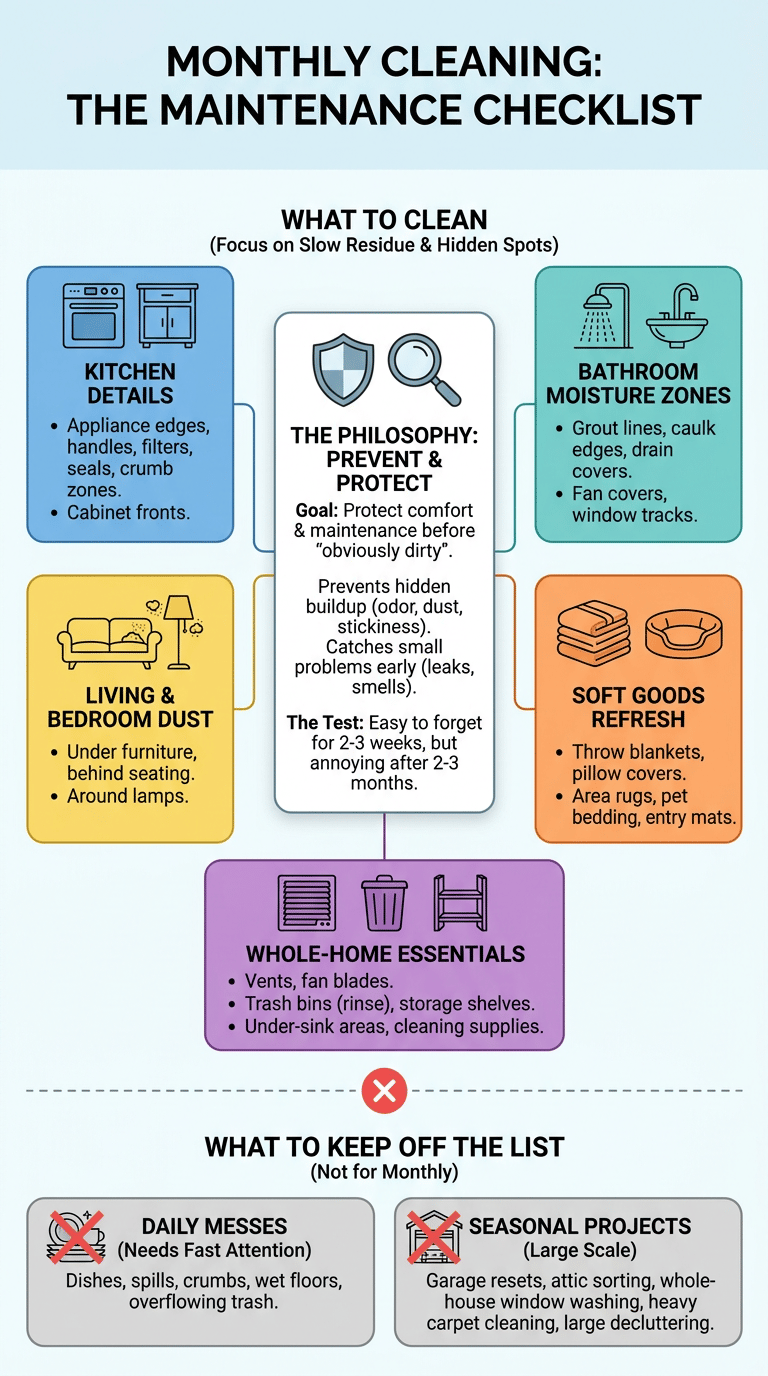
Main monthly task groups
Clean monthly tasks that collect slow residue or hide out of daily sight. The main groups are appliance details, bathroom moisture zones, soft surfaces, vents, baseboards, trash cans, storage shelves, entryway dirt patterns, and under-sink areas. They are easy to delay, but they can create odor, dust, stickiness, or bigger problems if ignored for months. Use an annual home cleaning calendar to rotate larger monthly tasks instead of repeating the same list every month.
- Kitchen appliance edges, handles, filters, seals, crumb zones, and cabinet fronts.
- Bathroom grout lines, caulk edges, drain covers, fan covers, and window tracks.
- Bedroom and living room dust under furniture, behind seating, and around lamps.
- Soft goods such as throw blankets, pillow covers, area rugs, pet bedding, and entry mats.
- Whole-home details such as vents, fan blades, trash bins, storage shelves, and cleaning supplies.
What monthly cleaning is for
Monthly cleaning is for the tasks that protect comfort and maintenance before the home looks obviously dirty. A good test is this: if the task is easy to forget for two or three weeks but annoying when ignored for two or three months, it probably belongs on your monthly list. Examples include wiping the refrigerator gasket, rinsing trash cans, checking the cabinet under the sink, dusting return grilles, and washing washable mats.
Monthly cleaning also helps you notice small problems early. Check for musty smells, sticky cabinet edges, slow drains, damp towels that never dry fully, pet odor near soft surfaces, and dust collecting around air vents. Handled early, those clues usually stay simple.
What should stay off the monthly list
Keep daily messes and major seasonal projects off this checklist. Dishes, food spills, crumbs on counters, overflowing trash, and wet bathroom floors need faster attention. On the other end, full garage resets, attic sorting, whole-house window washing, heavy carpet cleaning, and large decluttering projects usually work better as seasonal or project-based tasks.
The monthly list should feel like maintenance, not punishment. If one task regularly takes more than an hour, break it into smaller pieces or move it to a seasonal project list. If one task needs attention every few days, move it to your weekly or daily rhythm instead.
Monthly Cleaning Versus Weekly and Seasonal Cleaning
How monthly tasks catch slow buildup
Weekly cleaning handles visible, recurring mess: toilets, sinks, floors, laundry, counters, and clutter. Monthly cleaning looks for the buildup that accumulates behind the routine. That includes dust around baseboards, crumbs inside drawers, film on range hood edges, residue around drains, lint near vents, and odors trapped in bins or fabric.
Think of monthly cleaning as a closer inspection pass. You are not trying to scrub every surface in the house. You are checking the details that have had enough time to collect grime but not enough time to become a deep-clean emergency. Use a flashlight under sinks, look behind small appliances, smell trash cans after emptying them, and check baseboards for dust.
Which tasks are too frequent for monthly cleaning
Some tasks should not wait a month. Food-contact surfaces, dishes, spills, damp towels, toilet messes, pet accidents, and trash that smells should be handled promptly. Public health guidance on cleaning and disinfecting at home is a useful reminder that timing matters when surfaces are exposed to bodily fluids, raw food residue, or illness in the home.
Do not let the monthly checklist become an excuse to delay obvious cleaning. If a cutting board is dirty today, clean it today. If a bathroom floor is wet, dry it today. If a drain smells sour, inspect it this week instead of waiting for the next calendar month. Monthly cleaning works best when the daily and weekly basics are already keeping the home livable.
Which tasks are big enough for seasonal cleaning
Seasonal cleaning is better for large resets that need more time, more drying, or more decision-making. Examples include rotating wardrobes, washing all windows, clearing the garage, deep-cleaning outdoor furniture, reorganizing a whole pantry, washing walls, or moving heavy furniture throughout the home. These are valuable tasks, but they can overwhelm a monthly routine.
Use a simple boundary: monthly cleaning maintains the home you already use. Seasonal cleaning resets areas that change with weather, storage, or lifestyle.
Kitchen Monthly Checklist
Appliance details: refrigerator, dishwasher, microwave, and range hood
The kitchen usually benefits from the most detailed monthly pass because food residue creates odor quickly. Start with the refrigerator. Toss expired food, wipe sticky shelf edges, clean the door gasket with a damp cloth, and check the drip-prone spots under condiment bottles. Stop if you see damaged seals, standing water, or cooling problems. Cleaning removes residue, but it cannot fix a failing appliance.
Next, look at the dishwasher, microwave, and range hood. Remove loose food from the dishwasher filter area according to the appliance manual, wipe the door edges, and check whether cloudy dishes or sour odors are still happening after cleaning. In the microwave, loosen splatter with steam from a microwave-safe bowl of water, then wipe the interior and door. At the range hood, wipe the exterior and inspect the filter. Greasy filters may need washing or replacement based on the manufacturer’s instructions.
- Clear crumbs from appliance gaps and under small countertop appliances.
- Wipe refrigerator handles, drawer pulls, and microwave buttons.
- Check the dishwasher filter area for food debris and odor.
- Clean range hood edges before grease hardens into a sticky layer.
Cabinets, pantry, handles, and sticky spots
Cabinet fronts and handles often collect fingerprints, cooking film, and small food smears. Use a mild cleaner appropriate for the cabinet finish, and test a hidden area before wiping painted or wood surfaces. Pay extra attention near the trash can, below the sink, inside utensil drawers, and on the pantry door.
Open the pantry and look for crumbs, leaky packaging, stale snacks, and sticky rings from bottles. You do not need to reorganize the entire pantry every month. Instead, focus on the shelf areas that collect crumbs and the items that are close to expiring. Wipe one shelf at a time so a 20-minute task does not become a half-day project.
Sink, faucet base, drain area, and under-sink check
The sink area deserves a monthly detail check because water, food residue, and cleaning supplies meet in one small zone. Clean around the faucet base, behind the faucet, along the sink rim, and around the drain opening. If the drain smells, remove visible debris from the drain cover and clean the disposal splash guard if your sink has one. Avoid mixing cleaners in the drain, especially products that contain bleach or ammonia.
Then open the cabinet under the sink. Look for dampness, swelling, musty odor, dripping supply lines, stained shelf liner, or cleaning bottles that leaked. Stop cleaning and dry the area if you find moisture. If water returns, the issue needs repair rather than more wiping. This small monthly check can prevent hidden cabinet damage from going unnoticed.
Bathroom Monthly Checklist
Grout, caulk, corners, and residue zones
Bathroom monthly cleaning should focus on residue and moisture clues. Soap scum, shampoo film, hard-water spots, and damp corners often build slowly, especially around shower doors, tub ledges, grout lines, and caulk seams. Clean these areas with a product safe for the surface, then rinse well so residue does not attract more grime.
Check grout and caulk instead of scrubbing blindly. If caulk is cracked, pulling away, or soft, cleaning will not solve the problem. If stains look like they sit beneath the caulk, more force can damage the seal without removing the discoloration. The EPA’s mold and moisture guide explains why moisture control matters when damp materials or mold-like growth keep returning.
Drains, stoppers, hair buildup, and odor checks
Shower and sink drains need monthly attention even when water still drains. Remove visible hair from the drain cover, clean the stopper, and wipe the area where residue collects. If the sink has a pop-up stopper, lift and clean it according to the fixture design. Wear gloves if there is slimy buildup, and place debris in the trash instead of rinsing it back down the drain.
A good test is to run water and watch how quickly it clears. Slow movement, gurgling, or odor that returns after cleaning can point to buildup deeper in the drain. Avoid harsh chemical drain cleaners unless the product label and plumbing situation make sense. If several drains are slow at the same time, or if water backs up, it is no longer a normal monthly cleaning task.
Exhaust fan cover, window tracks, and moisture check
Dust on bathroom fan covers limits airflow and can make a bathroom stay damp longer. Once a month, turn off the fan, dust or vacuum the cover, and check whether the fan pulls air when running. A simple tissue test can help: hold a tissue near the fan while it runs. If the tissue barely moves, the fan may be dirty, blocked, or not working well.
Look at window tracks, corners behind the toilet, the wall near the shower, and the floor around the vanity. These areas can show water spots, dust mixed with moisture, peeling paint, or musty odor before a larger issue becomes obvious. Dry what you can, improve ventilation, and watch whether the same spot returns. Repeating moisture is a repair or ventilation issue, not just a cleaning issue.
Bedroom and Living Room Monthly Checklist
Hidden dust under furniture and behind seating
Bedrooms and living rooms usually look cleaner than kitchens and bathrooms, but they hide dust well. Once a month, move light furniture enough to vacuum or dust behind it. Check under the bed, behind nightstands, around sofa legs, behind TV stands, and along the wall behind seating. Use a vacuum attachment instead of pushing dust into the air.
Dust can collect faster in rooms with pets, fabric furniture, open windows, or ceiling fans. If you notice dust returning within days, check nearby vents, washable textiles, and cluttered surfaces where dust has many places to settle. Monthly cleaning should reduce hidden dust, not turn every room into a furniture-moving project.
Throw blankets, pillow covers, area rugs, and soft goods
Soft goods absorb body oils, pet smells, cooking odors, and dust. Wash throw blankets and removable pillow covers if the care labels allow it. Shake out small washable rugs outside, then launder or spot-clean based on the label. If a rug has a rubber backing, avoid high heat unless the label clearly allows it, since heat can damage backing and shorten the life of the rug.
For a related walkthrough, see our guide to spring cleaning checklist by room.
For a related walkthrough, see our guide to weekly cleaning schedule for busy people.
For a related walkthrough, see our guide to home cleaning schedule guide.
Use smell as a practical guide. If a room looks tidy but still smells stale, check soft surfaces before spraying fragrance. Blankets, pillow covers, pet beds, curtains near open windows, and fabric baskets can hold odor. Clean the item that holds the smell rather than covering the room with scent.
Furniture details, drawer pulls, lampshades, and shelving edges
Furniture details are easy to miss during weekly cleaning. Wipe drawer pulls, cabinet knobs, lamp bases, remote-control storage spots, and the front edges of shelves. Dust lampshades with a lint roller or soft brush, and wipe the top of frames or display shelves where dust forms a visible line.
Check wood, painted, glass, and fabric surfaces before choosing a cleaner. Water can damage some wood finishes, and too much moisture can stain fabric or lampshades. When you are unsure, dust first with a dry microfiber cloth, then use the gentlest surface-safe method only where residue remains.
Floor, Carpet, and Entryway Monthly Checklist
Baseboards, corners, and traffic lanes
Monthly floor cleaning should go beyond open walking paths. Dust or wipe baseboards, vacuum corners, and clean the edges where hair, lint, and crumbs collect. Pay attention to traffic lanes from the entry to the kitchen, bathroom, laundry area, or pet zone. These paths often show soil before the rest of the floor looks dirty.
If you mop hard floors, use the right amount of liquid. Too much water can leave residue, seep into seams, or make floors sticky after drying. A good test is to look at the floor in angled light after it dries. Streaks or tacky spots usually mean too much product, dirty mop water, or a cleaner that does not match the flooring.
Rug and carpet odor or stain checks
Rugs and carpets need a monthly odor and stain check, especially near doors, dining areas, pets, and sofas. Vacuum slowly in multiple directions where traffic is heavy. Lift small rugs when possible and check the floor underneath for trapped dirt or moisture. If a rug smells musty underneath, dry the area and look for the source before putting it back.
Do not soak carpet or rugs during routine monthly cleaning. Overwetting can leave moisture in the backing or pad, which may create odor instead of fixing it. Blot stains, follow label instructions, and use fans or airflow to help drying. Stop if stains spread, dye transfers to the cloth, or the backing feels damp long after cleaning.
Hard-floor residue, mats, and entry dirt patterns
Entry mats do a lot of work, so they deserve monthly attention. Shake outdoor mats, vacuum indoor mats, and wash washable mats according to care labels. Check the floor under the mat for grit that can scratch hard flooring. If the area near the door always looks dirty, add a shoe tray, improve the mat size, or clean the threshold where grit collects.
Hard-floor residue often shows up where people cook, stand at sinks, feed pets, or enter the home. Treat those zones first instead of mopping every room heavily. When the same sticky spot returns, look for the cause: cooking oil mist, pet bowl splashes, leaky trash bags, or cleaner buildup from previous mopping.
Whole-Home Monthly Maintenance
Vents, fan blades, and air return grilles
Airflow areas collect dust that can spread through nearby surfaces. Once a month, dust visible vent covers, fan blades, and air return grilles. Use a vacuum brush attachment where possible, and avoid pushing dust into the grille. The EPA’s indoor air quality guidance includes practical steps such as source control and ventilation, which fit naturally with regular dust and moisture checks.
Check this before cleaning high areas: make sure the fan is off, the ladder or step stool is stable, and you can reach without leaning. Dust fan blades from the top side first because that is where buildup sits. If a vent has heavy dark dust, oily residue, or moisture around it, note the pattern and consider whether filter changes, humidity, or a mechanical issue needs attention.
Trash cans, recycling bins, and pet areas
Trash cans can smell even when they look empty. Monthly, rinse or wipe the inside of kitchen, bathroom, and laundry trash cans. Dry them fully before replacing liners. If odors return fast, check for liquid leaks, food waste, dirty lids, or trash stored too long before pickup. A clean liner cannot fix residue stuck inside the bin.
Pet areas need the same kind of detail check. Wash bowls, wipe feeding mats, clean litter or waste areas according to the product instructions, and launder pet bedding if the care label allows it. Look at the wall, floor, and baseboard near pet zones. Small splashes and dust can create odor even when the main area looks tidy.
Linen closet, cleaning supplies, and entry storage

Monthly cleaning should include the storage areas that support the rest of the home. Straighten the linen closet, remove damp or stale-smelling towels, and keep frequently used items easy to reach. If a closet smells musty, do not add fragrance first. Empty enough to inspect the back wall, floor, and items stored in corners.
Review cleaning supplies before buying duplicates. Wipe bottles that leaked, discard empty containers according to local rules, and separate products that should not be stored together. Check labels before using any cleaner on a new material. Entry storage also deserves a quick reset: remove old receipts, stray socks, broken umbrellas, and dirt from shoe trays.
How to Split Monthly Cleaning Across the Month
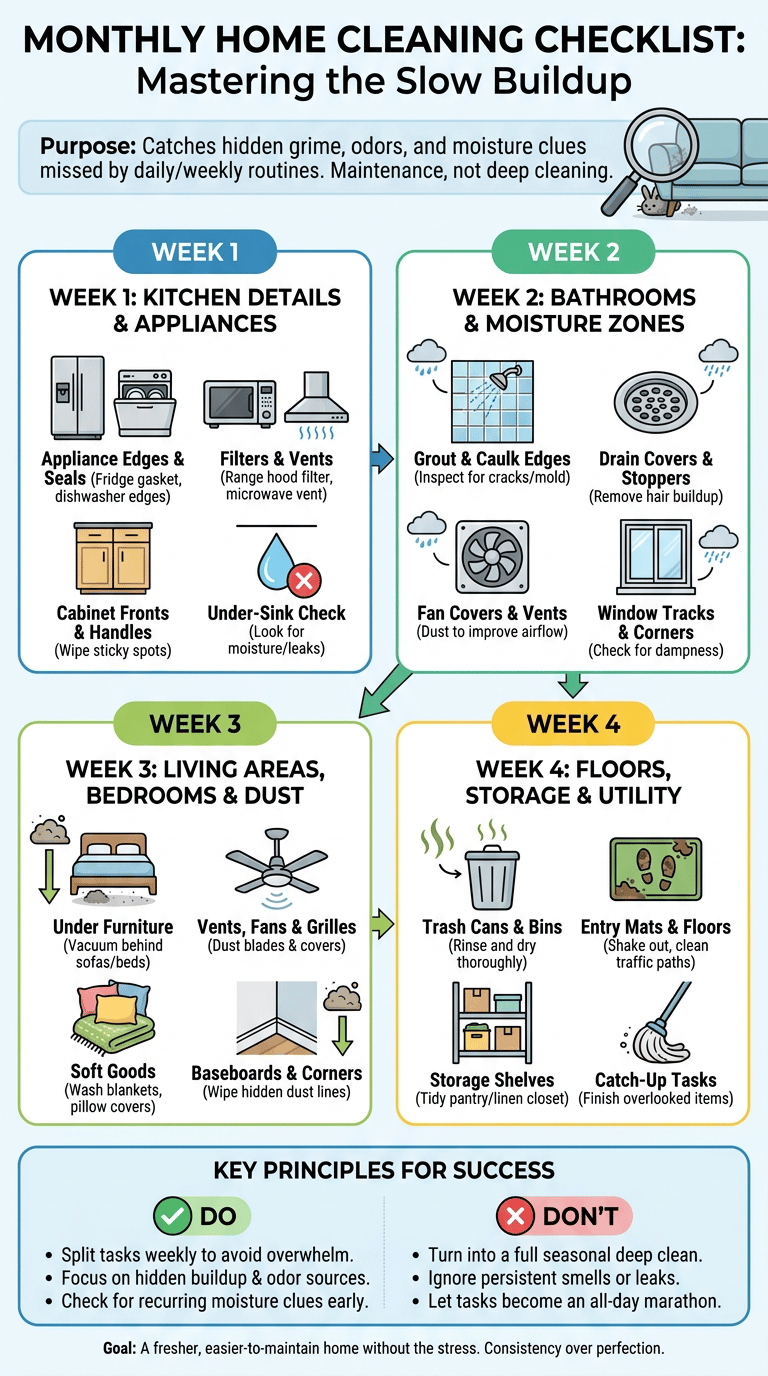
Week 1 kitchen details
Use the first week for kitchen details because food residue and appliance odor become noticeable fast. Spend 30 to 60 minutes on refrigerator shelves, cabinet handles, pantry crumbs, dishwasher edges, the microwave, and the range hood exterior. Do the sink and under-sink check at the end, when you are already focused on water and food-prep zones.
Keep the goal narrow. Do not reorganize every cabinet unless you planned a separate project. The monthly kitchen pass should leave food storage cleaner, appliance touchpoints fresher, and odor clues easier to notice.
Week 2 bathrooms and moisture checks
Use the second week for bathrooms, drains, fan covers, grout lines, caulk edges, and moisture checks. This is also a good time to wash bath mats and check towel storage. Work from dry tasks to wet tasks: dust fan covers first, then clean fixtures, then handle shower residue, drains, and floors.
Look for repeated moisture clues. If the same corner smells musty every month, the answer is not just scrubbing harder. Improve drying, check ventilation, and look for leaks or damaged caulk. Repeating dampness should be solved at the source.
Week 3 bedrooms, living areas, and soft goods
Use the third week for dust and fabric. Vacuum under beds, behind seating, and around furniture legs. Wash throw blankets, removable pillow covers, and washable pet bedding. Dust shelves, lampshades, picture frames, and electronics areas where dust lines form.
This week is also a good time to remove small clutter from surfaces before it becomes permanent decor. Limit the reset to visible room comfort: clear the nightstand, straighten the coffee table, and remove items that belong in another room. Save major decluttering for a separate project.
Week 4 floors, storage, and catch-up tasks
Use the fourth week for floor edges, baseboards, entry mats, trash cans, supply shelves, and unfinished tasks from earlier weeks. Start near the entry because dirt patterns there affect the rest of the home. Then move to baseboards, corners, and mats in high-traffic rooms.
End with a short catch-up list, not a guilt list. Pick the two or three tasks that will make the biggest difference before the month resets. If you missed the range hood but cleaned the bathrooms and floors, the month was not a failure. Move the missed task to next month and keep the system usable.
Monthly Cleaning Mistakes to Avoid
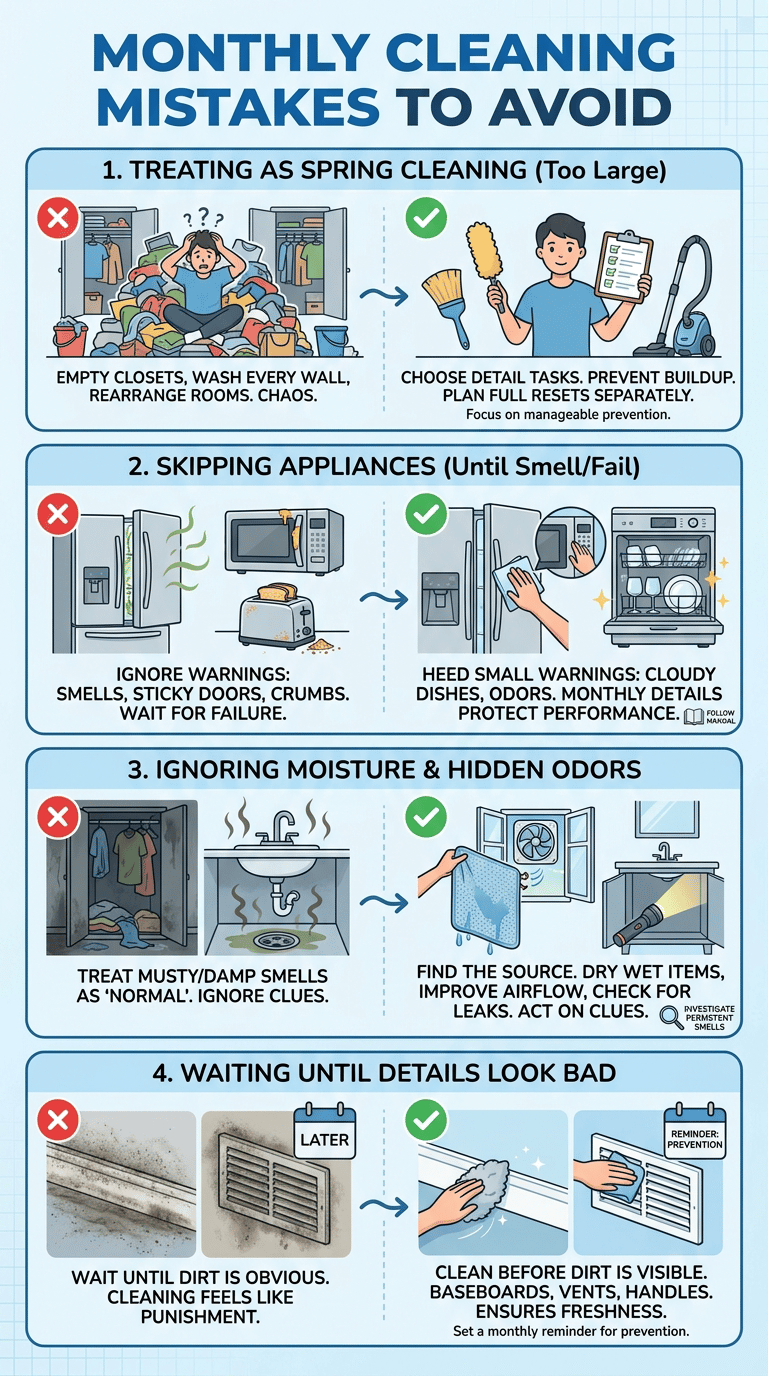
Treating monthly cleaning like spring cleaning
The fastest way to quit a monthly checklist is to make it too large. Monthly cleaning is not the time to empty every closet, wash every wall, and rearrange every room. Choose detail tasks that prevent buildup. Plan full resets separately with more time and clearer stopping points.
Skipping appliances until they smell or perform poorly
Appliances usually give small warnings before they become annoying. Cloudy dishes, refrigerator smells, sticky microwave doors, greasy hood edges, and crumbs near the toaster all tell you where to clean next. Monthly appliance details protect performance and odor, but always follow the appliance manual and stop if cleaning reveals damage or malfunction.
Ignoring moisture clues and hidden odor sources
Musty closets, damp cabinet bottoms, sour drains, wet bath mats, and stale soft goods should not be treated as normal background smell. Find what the odor is attached to. Dry wet items, clean washable fabrics, improve airflow, and check for leaks. If a smell returns in the same location after cleaning, the problem likely needs more than another wipe-down.
Waiting until every detail looks bad
Monthly cleaning works best before the dirt is obvious. Baseboards, vents, drains, trash cans, and cabinet handles may not look terrible at first glance, but they influence how fresh the home feels. Set a monthly reminder and treat the list as prevention rather than punishment.
How Monthly Cleaning Fits Into a Yearly Cleaning Plan
Monthly cleaning works best when it has a clear job inside the larger schedule. It is not a full annual calendar and it is not a room-by-room deep clean. It is the maintenance layer that catches slow buildup before it becomes harder to remove, while leaving seasonal and access-heavy work for a separate planning view. Keeping that boundary clear makes the checklist easier to finish and prevents one missed month from turning into an oversized project.
Monthly Tasks Prevent Slow Buildup
The monthly layer sits between weekly maintenance and deep cleaning. It is useful for details that do not usually need weekly attention but should not be ignored for a whole season. Depending on the home, that can include vents, cabinet fronts, appliance edges, trash bins, upholstery touch-ups, baseboards, under-sink checks, and hidden dust in corners or low-use areas. The goal is to keep ordinary buildup from becoming a larger project. Choose tasks based on visible soil, household traffic, moisture risk, and the surfaces that tend to collect residue slowly.
Seasonal Tasks Need a Separate Planning Layer
Some tasks are too large or too access-dependent to squeeze into every monthly checklist. Window work, curtain care, furniture movement, seasonal storage changes, exterior-adjacent dirt, and large room resets are easier to manage when they are spread across a yearly plan. Keeping those jobs separate protects the monthly checklist from becoming unrealistic and helps you match the work to weather, access, product labels, care tags, and available help. It also gives you room to plan supplies, drying time, and safe access before the job begins.
When a Monthly Task Becomes a Deep-Cleaning Project
A monthly task has moved beyond normal maintenance when it requires extensive disassembly, heavy buildup removal, a specialist product, long drying time, damage assessment, or multiple sessions. At that point, schedule it as a separate deep-cleaning project instead of forcing it into the regular monthly list. Check appliance manuals, product labels, surface-care instructions, and material limits before using stronger methods or taking anything apart. If you are unsure whether a surface can tolerate moisture, abrasion, or a stronger cleaner, pause and verify before continuing.
Frequently Asked Questions
What tasks should be cleaned monthly at home?
Clean slow-buildup tasks monthly, including appliance details, cabinet fronts, sink edges, bathroom grout and caulk checks, drain covers, fan covers, baseboards, vents, trash cans, soft goods, entry mats, and storage shelves. The exact list depends on pets, cooking habits, flooring, humidity, and how many people use the home. If a task requires moving furniture, treating heavy buildup, or resetting several rooms, move it to a separate deep cleaning checklist.
How do I split monthly cleaning into weekly blocks?
Use one category per week. Week 1 can be kitchen details, week 2 bathrooms and moisture checks, week 3 bedrooms, living areas, and soft goods, and week 4 floors, storage, trash cans, and catch-up tasks. This keeps monthly cleaning from taking over one weekend.
Are monthly cleaning tasks the same as deep cleaning tasks?
Some monthly tasks feel detailed, but they are not the same as full deep cleaning. Monthly cleaning maintains areas before buildup gets heavy. Deep cleaning usually involves larger resets, heavier soil, more furniture moving, more drying time, or a room-by-room seasonal project.
What monthly cleaning prevents odors?
Focus on trash cans, drains, soft goods, pet areas, refrigerator shelves, dishwasher edges, under-sink cabinets, bath mats, entry rugs, and laundry storage. Odor usually clings to residue, moisture, or fabric. Clean the source instead of relying on fragrance.
What monthly cleaning tasks are easiest to forget?
Commonly missed tasks include wiping the refrigerator gasket, cleaning the range hood exterior, dusting fan covers and air returns, checking under sinks, washing trash cans, cleaning window tracks in bathrooms, vacuuming under beds, and washing entry mats.
Should appliance maintenance be monthly or seasonal?
Light appliance cleaning can be monthly, such as wiping seals, clearing crumbs, cleaning handles, checking filters, and removing visible residue. More involved maintenance depends on the appliance manual, usage, and signs of poor performance. If cleaning requires disassembly, special tools, or electrical access, check the manual or contact a qualified professional.
Final Thoughts
A monthly home cleaning checklist should make your home easier to live in, not harder to manage. Focus on the details that daily and weekly cleaning miss: appliance edges, moisture clues, soft surfaces, hidden dust, vents, bins, entry dirt, and storage drift. Split the work across the month, keep each session realistic, and watch for patterns that return after cleaning.
When monthly cleaning is done well, it prevents the small problems that make a home feel stale or overwhelming. You do not need a perfect house. You need a repeatable maintenance rhythm that catches buildup early, protects the busiest areas, and keeps deep cleaning from becoming the only way to feel caught up.

Ethan Carter is the Founder & Editor of HomeCleanSecrets. Based in the United States, he has 5 years of experience creating practical home cleaning, laundry care, stain removal, decluttering, and home organization content. His goal is to help everyday households clean smarter and build simple routines that are easier to maintain.
Read more about Ethan Carter on his author page: https://homecleansecrets.com/ethan-carter/