
Outdoor rugs collect grit, pollen, mud, food spills, pet hair, and moisture from the ground beneath them. A safe cleaning method starts with the rug label, fiber, weave, backing, and edge condition. Remove dry soil first, use only as much water as the construction can handle, and dry both the face and backing before the rug goes back into use.

This process is intended for stable rugs sold for outdoor or indoor-outdoor use. Stop when colors bleed, borders unravel, backing becomes sticky or brittle, the rug is too heavy to move safely, or dampness and growth return after thorough drying.
Quick Answer: Confirm the Rug Can Be Washed and Dry Both Sides

The safe cleaning path at a glance
- Read the label and confirm that the rug is rated for outdoor use.
- Identify the face fiber, weave, backing, border, and any damaged areas.
- Remove furniture, shake out loose debris, and clean both sides while dry.
- Spot test the planned cleaner, brush, water amount, and rinse method.
- Wash only as broadly as the care instructions allow.
- Drain excess water before lifting or rolling the rug.
- Elevate the rug so air reaches the face, backing, edges, and thick areas.
- Clean and inspect the patio or deck before replacing the fully dry rug.
Conditions that make broad washing a poor DIY choice
Choose spot treatment or specialty cleaning instead when the label prohibits washing, the backing is unknown, dye transfers during testing, natural fibers are present, adhesive layers are failing, or the rug cannot be supported safely while wet.
Confirm That the Rug Is Designed for Outdoor Use
Read the manufacturer label and care instructions
Look beneath a corner for fiber content, cleaning symbols, drying limits, and warnings about machine washing, hosing, bleach, heat, or professional care. Keep the product name or order record when the label is missing. Safavieh’s rug care instructions distinguish routine vacuuming and spot care from the more vigorous rinsing permitted for certain outdoor rugs, which is why the exact construction matters.
Polypropylene
Many outdoor rugs use polypropylene because the fiber absorbs little water and tolerates ordinary outdoor exposure. That does not make every polypropylene rug identical. Latex-like backing, bound edges, printed color, decorative yarns, and adhesives may have stricter limits than the face fiber.
Polyester or recycled PET
Polyester and recycled PET rugs can hold vivid color and may resist many common spills, but oily residue can cling to synthetic yarn. Avoid strong degreasers unless specifically approved.
Nylon
Nylon is durable, yet dye systems, stain treatments, and backing vary. Use gentle agitation and test for color transfer. A rotating vacuum brush may be too aggressive for looped or loosely woven construction.
Natural-fiber and mixed-fiber limitations
Jute, sisal, cotton, wool, and mixed natural fibers can absorb water, distort, shrink, brown, or weaken. An outdoor setting does not prove the rug can be saturated.
Flat weave versus pile
Flat-weave rugs usually release grit and dry faster because they have less yarn depth. Pile rugs can trap sand, soap, and moisture below the visible tips. Braided, looped, tufted, and shag-like outdoor rugs need different vacuum settings and brush pressure.
Inspect the Backing, Borders, and Surface Below
Rubber, latex-like, woven, coated, or unknown backing
Turn up a corner and identify whether the back is woven, mesh-like, rubbery, foam-coated, adhesive-backed, or simply the reverse of the face weave. A nonporous layer can hold water against the floor.
Loose edges, fraying, delamination, dye transfer, and brittle backing
Check binding, fringe, corners, seams, and bonded layers. Press the backing lightly and rub a white cloth over a concealed area. Stop if particles crumble away, layers separate, coating feels sticky, or color transfers.
Moisture, staining, and residue on concrete, wood, or composite beneath the rug
Lift the rug on a dry day and inspect the floor. Look for damp zones, grit, leaf tannins, discoloration, slippery film, and reduced drying beneath furniture. TimberTech’s deck care guidance warns that rubber-backed and other nonporous items may discolor some decking when left in place. Check the specific deck maker before returning any rug.
Identify the Soil Before Choosing a Method
Dust, sand, pollen, leaves, and pet hair
These should be removed dry. Water turns fine dust and pollen into paste and pushes sand deeper into the weave. Pet hair releases more easily with a vacuum, rubber-free grooming tool approved for the yarn, or a slightly damp cloth after loose grit is gone.
Mud and tracked soil
Let ordinary mud dry enough to crumble unless the spill contains something that requires immediate containment. Break up dry clumps gently, vacuum the loosened soil, and repeat from the reverse side.
Food and drink spills
Lift solids, then blot liquid with clean white towels. Work from the outside of the mark toward the center. Sugar, dairy, sauces, and cooking grease may need a label-compatible detergent, but more product is not better.
Localized organic residue
Bird residue, decomposed leaves, and plant matter should be handled with gloves. Moisten dried material just enough to lift it without grinding particles into the rug. Bag solids and wash hands afterward.
Mildew clues, dye loss, backing breakdown, and permanent stains
Specks, musty odor, recurring dampness, or a shadow that returns after cleaning can indicate a moisture problem, but color alone cannot identify growth. Fading appears more evenly on exposed yarn, while dye loss may follow a spill or cleaner test.
Choose Rug-Compatible Tools and Cleaner
Shaking, sweeping, and vacuuming options
A small flexible rug can be carried to an open area and shaken with help. Large rugs are safer to vacuum in place before rolling. Use suction-only or raise the rotating brush for loops, fringe, thick pile, and weak edges.
Brush stiffness and fiber direction
Use a soft deck brush, upholstery brush, or cloth that does not snag. Test strokes in an inconspicuous corner. Brush along the weave or pile direction with light, overlapping passes.
Label-compatible detergent or rug cleaner
Select only a cleaner allowed by the rug maker. Read dilution, protective equipment, contact time, rinsing, storage, and disposal directions before starting. The American Cleaning Institute explains where directions, cautions, ingredients, and storage information appear on a cleaning-product label. Never mix products or improvise a stronger concentration.
Spot testing fiber color, texture, border, and backing
Test the complete method, not just the liquid. Apply the diluted cleaner to a hidden area, use the planned brush pressure, rinse as intended, and allow the test to dry completely.
Prepare the Work and Drying Area
Clear furniture without dragging or unsafe lifting
Photograph furniture positions, then remove light pieces. Use a helper for heavy tables, benches, and planters. Lift instead of dragging legs over the rug or floor. If the rug is part of a larger patio or deck reset, coordinate the whole outdoor cleaning process before washing so the floor and drying area are ready.
Choose a clean, drained washing area
The work area should be firm, clean, and able to direct rinse water away from doors, neighboring property, storm drains, ponds, pools, and edible gardens. Avoid washing on bare soil or dirty pavement that will transfer grit back into the backing.
Protect nearby plants, doors, metal, and finished surfaces
Move vulnerable items out of splash range. Preplan where the cleaner and dirty water will travel, and follow the product label for plant and runoff precautions. Do not let solution dry on glass, coated metal, painted trim, deck boards, or masonry.
Prepare elevated airflow and a safe route for moving the wet rug
Set up clean, strong supports before washing. The supports must carry the rug’s wet weight without rust transfer, sharp edges, or deep creases. Clear the route between washing and drying areas.
Remove Dry Debris From Both Sides
Shake or beat only when size, construction, and surroundings allow
Two people can shake a small, sound rug while standing clear of dust. Do not snap a rug with brittle backing, weak seams, loose fringe, or bonded layers.
Sweep or vacuum the face fibers
Vacuum slowly in several directions only if the weave tolerates it. For directional pile, finish with the pile. Use an edge tool along borders without pulling loose threads. A good test is to tap the underside after vacuuming.
Turn the rug and clean the backing
Roll the rug loosely around a clean tube or fold it only where the maker permits, then turn it with help. Vacuum or sweep the reverse side.
Remove grit from borders and thick areas
Pay extra attention to bound edges, corners, fringe roots, seams, and transitions from flat weave to pile. Use a crevice tool at reduced suction or a soft hand brush.
Step-by-Step Controlled Washing
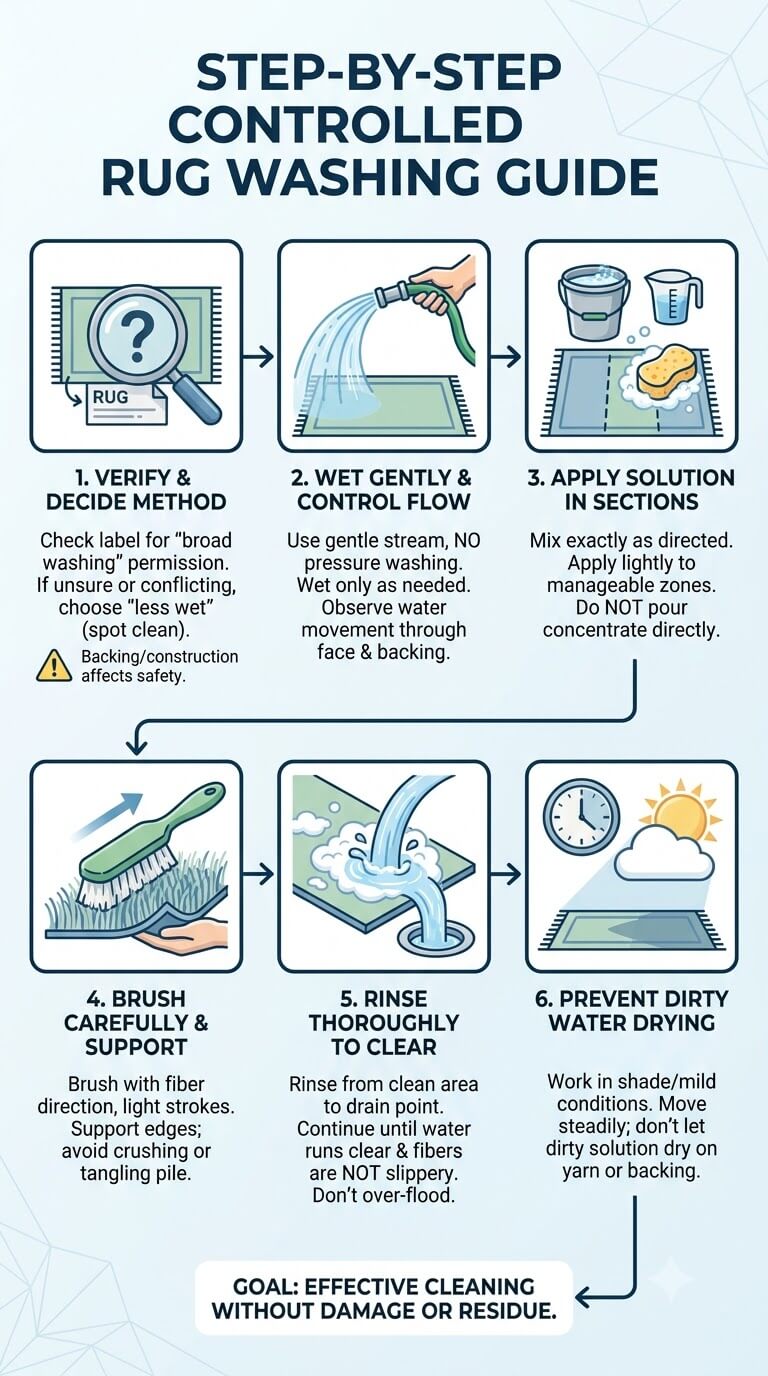
Decide whether the label allows broad washing
Some outdoor rugs permit rinsing with a garden hose, while others allow only spot cleaning. Capel Rugs’ care guidance notes that rug construction and backing affect the safest cleaning choice and often recommends professional cleaning. When instructions are missing or conflicting, choose the less wet method.
Wet only as much as necessary
If broad washing is approved, use a gentle, controlled stream rather than pressure washing. Start at one edge and observe how water moves through the face and backing.
Apply the compatible solution in sections
Mix the product exactly as directed. Apply a light, even amount to a manageable zone so it can be brushed and rinsed before drying. Avoid pouring concentrate directly onto yarn or backing. Keep track of completed areas to prevent repeated treatment and uneven color.
Brush with the fiber direction and avoid edge damage
Use light overlapping strokes. Support the edge with one hand rather than pushing the brush over unsupported binding. On pile, work deep enough to release soil without crushing or tangling yarn.
Rinse until detergent residue is removed
Rinse from the cleanest area toward the drainage point. Continue until water runs clear and the fibers no longer feel slippery. Do not compensate for excess cleaner with prolonged flooding.
Prevent dirty water from drying in pile or backing
Work in shade or mild conditions when possible, but avoid weather that prevents drying. Move steadily so dirty solution is not allowed to dry on the yarn.
Treat Common Outdoor-Rug Messes

Mud after loose soil has dried
Remove as much dry soil as possible from both sides. Apply a small amount of approved solution to the remaining mark, brush gently, and rinse locally. Let the area dry before repeating.
Fresh food and drink spills
Blot immediately, lift solids, and avoid rubbing colored liquid outward. Treat the full affected yarn depth, then rinse away detergent. Check the backing beneath the spill because liquid can travel through an open weave and remain between the rug and floor even when the face looks clean.
Pet hair and ordinary debris
Vacuum pet hair while dry and empty the canister before switching sides. For hair woven around loops, loosen it with a soft rubber-free tool that does not catch yarn.
Localized stains that require spot treatment
Use a clean white cloth to monitor color transfer. Blot from the outside inward and change cloth areas frequently. Do not layer several products when the first treatment fails. Rinse, dry, and reassess.
Organic growth clues and the stop threshold
Light, localized surface film on an otherwise sound synthetic rug may be handled only as the rug and cleaner labels allow. Stop for widespread coverage, recurring odor, deep backing involvement, or a rug that remains damp because of its location.
Move a Wet Outdoor Rug Safely
Why wet rugs become unexpectedly heavy
Water fills spaces between yarns and can remain in backing and borders. A large rug that was manageable when dry may become too heavy for one person. Test the weight at one corner without straining.
Drain excess water before lifting
Allow water to run toward the drainage edge. Raise one side gradually on a clean support if the construction permits. Do not twist the rug or hang its full wet weight from a narrow rail.
Roll, support, and team-lift when needed
Roll the rug face outward or in the direction recommended by the maker, keeping the roll loose enough to avoid sharp creases. Support the roll along its length.
Avoid dragging wet backing across finished surfaces
Wet backing can pick up grit, leave dye, transfer plasticizer, or abrade deck coatings. Carry or support the rug instead of dragging it over wood, composite, painted concrete, thresholds, or metal edging.
Dry the Face, Backing, Edges, and Thick Areas

Elevate the rug so air reaches both sides
Lay the rug over broad, clean supports or a drying rack rated for the load. Avoid narrow lines that can crease the backing. Air should move under the center, not only around the edges.
Rotate or reposition without creasing damaged backing
As the rug becomes lighter, rotate it so shaded or thick zones receive airflow. Support the full width when turning. Do not fold a rubbery or brittle backing.
Check borders, pile, center zones, and backing
Press a dry white towel into the thickest areas and compare the temperature with a known dry area. Damp zones often feel cool and may darken the towel. Smell the backing and border separately.
Do not leave a wet rug flat on wood or composite decking
A wet rug blocks airflow and extends contact between water, backing, grit, and deck boards. It can also hide slippery residue. Keep the deck uncovered until both surfaces are dry and inspected.
Store or replace only after full drying
The U.S. Environmental Protection Agency’s moisture guidance emphasizes drying wet materials promptly and correcting the condition that keeps them damp. Drying time depends on thickness, backing, temperature, humidity, shade, and airflow, so use physical checks instead of a fixed schedule.
Clean and Inspect the Surface Under the Rug
Remove trapped grit and moisture
Sweep or vacuum the exposed floor before washing it with a compatible method. Grit can scratch coatings and hold water in low spots. Check whether furniture feet, rug pads, or backing have left marks.
Concrete patio reset
On poured concrete, remove dry debris and inspect for grease, leaf stains, mineral deposits, scaling, cracks, and drainage problems. Use only a concrete-compatible routine method.
Wood deck drying and damage checks
Clear board gaps, allow airflow, and look for soft wood, peeling coating, splinters, loose fasteners, and persistent dark damp zones. A rug should not return until the wood is dry. Softness, rot clues, or movement require repair assessment rather than stronger cleaning.
Composite decking compatibility and backing marks
Consult the decking manufacturer before treating discoloration. Some rubber-backed rugs and nonporous pads can react with composite surfaces. Avoid solvents, abrasive pads, and sanding unless the deck maker specifically allows them. Confirm that the replacement rug and pad are compatible before resetting the area.
Dirt, Dye Loss, Backing Failure, or Mildew Clue?

Removable surface soil
Surface soil transfers to a cloth, releases during vacuuming, or lightens gradually with an approved wash. The yarn remains stable, color does not bleed, and the backing stays intact.
Permanent dye change or sun fading
Fading usually follows exposed zones and remains after cleaning. Dye loss may create a sharper patch where a spill, cleaner, or furniture foot contacted the rug. Cleaning cannot replace missing color.
Crumbling, sticky, cracked, or delaminated backing
These are failure signs. Crumbs, tackiness, flakes, bubbles, and separated layers can spread during washing and leave residue on the floor. A failing backing may also make the rug unstable underfoot. Replacement is usually more practical than adding another cleaner or adhesive.
Recurring dampness and widespread growth
Repeated odor, growth across a large area, or wetness that returns beneath the rug points to drainage, location, or material problems. Remove the rug from service and correct the moisture condition.
When replacement is safer or more practical
Replace a rug that slips because its backing has failed, tears when lifted, sheds coating, holds persistent odor, transfers unstable dye, or cannot dry through its full thickness.
Storage and Placement After Cleaning
Roll only when the rug is dry through the backing
Roll rather than sharply fold unless the maker says otherwise. Place clean, breathable material around the roll if protection is needed. Do not wrap a questionable rug in airtight plastic, because hidden moisture cannot escape.
Store in a clean, ventilated, dry location
Keep the rug off concrete floors that can become damp, away from leaks, and clear of chemicals or sharp tools. Avoid compressing thick pile for a long period. Check the storage area during humid weather and after storms.
Avoid long-term ground contact that traps moisture
Even outdoor-rated rugs benefit from periodic lifting. After rain or cleaning, inspect the underside and the floor rather than assuming drainage is adequate. Move furniture slightly so pressure points can dry.
Recheck the patio or deck before laying the rug down
The floor should be clean, dry, stable, and compatible with the backing or pad. Confirm that drainage paths and board gaps remain open. Smooth the rug without stretching it, restore furniture by lifting, and check that edges do not curl into a trip hazard.
Common Outdoor-Rug Cleaning Mistakes
Assuming every outdoor rug can be hosed or pressure washed
Outdoor-rated describes intended use, not a universal washing method. Pressure can distort fibers, lift edges, drive soil into backing, and damage nearby surfaces. A hose is appropriate only when the exact rug instructions allow broad rinsing and the work area can manage runoff.
Ignoring an unknown or damaged backing
The face may look strong while the backing is brittle, adhesive-bonded, or chemically incompatible with the floor. Turning the rug over before washing prevents many surprises. Stop when backing condition cannot be identified or a concealed test produces tackiness, crumbs, dye, or separation.
Scrubbing against the fiber or borders
Hard crosswise strokes can fuzz pile, pull loops, and loosen binding. Work with the weave, support edges, and let the approved cleaner do part of the work. Repeated force does not turn fading, mineral discoloration, or backing failure into removable soil.
Leaving the wet rug flat on a deck
This traps water, grit, cleaner residue, and heat between two surfaces. The result can be slow drying, slippery areas, stains, or deck discoloration. Elevate the rug elsewhere and clean the deck separately. Return it only when both are dry.
Storing a rug with damp edges or backing
Borders and backing often dry last. A dry-feeling face is not enough. Press towels into thick areas, inspect the roll’s center zone, and allow more airflow when uncertain. Never cover, fold, or store a rug because a calendar says the drying period is complete.
When to Replace the Rug or Seek Specialty Cleaning
Widespread contamination, persistent odor, or unsafe weight and handling
Use specialty help when contamination covers a large area, odor returns after full drying, or the rug is too large and heavy to wash, drain, turn, and elevate safely.
Dye instability, backing breakdown, frayed borders, or delamination
These signs make ordinary wet cleaning risky. A professional may be able to stabilize a valuable rug, but routine outdoor rugs with crumbling backing or open seams are often better replaced.
Natural-fiber, specialty, or unclear-construction rugs
Handmade, braided, tufted, printed, natural-fiber, antique, and mixed-media rugs can react unpredictably to water and agitation. When construction or care instructions are unclear, provide the cleaner with photos of the label, face, backing, borders, stains, and the floor where the rug was used.
Frequently Asked Questions About Cleaning Outdoor Rugs
Can every indoor-outdoor rug be hosed off?
No. Some synthetic outdoor rugs permit hosing, while others require spot cleaning or professional care because of their backing, dyes, borders, adhesives, or mixed fibers. Read the exact label and test the complete cleaning method before broad washing.
How do I dry the backing without damaging the rug?
Drain excess water, support the rug broadly, and elevate it so air reaches both sides. Rotate it carefully as it becomes lighter. Avoid narrow rails, twisting, high heat, and sharp folds. Check the center, borders, and backing with dry towels before storage.
Why should the surface under the rug be cleaned too?
Grit, moisture, leaf residue, cleaner, and backing transfer can collect underneath even when the top looks clean. Removing the rug lets the floor dry and reveals discoloration, coating damage, soft wood, blocked deck gaps, or slippery film before the area is reset.
Can a wet outdoor rug be left on concrete?
It should not be left flat on concrete to dry. Moisture and dirty water can remain trapped under the backing, slow drying, create odor, and leave marks on both surfaces. Elevate the rug and let the concrete dry separately before replacement.
What backing damage means the rug should be replaced?
Replacement is usually appropriate when the backing crumbles, becomes sticky, cracks, separates from the face, transfers material to the floor, or no longer keeps the rug stable. Cleaning cannot rebuild a failed backing, and continued use may create a slip or trip hazard.
Final Thoughts
The safest way to clean an outdoor rug is to treat the face, backing, borders, wet weight, and floor underneath as one system. Confirm the care instructions, remove grit while dry, test every wet method, rinse without flooding, and provide airflow to both sides. Stop when dye, backing, or construction begins to fail. A fully dry, stable rug can return to a clean patio or deck; a damaged or persistently damp rug should be repaired by a specialist or replaced.

Ethan Carter is the Founder & Editor of HomeCleanSecrets. Based in the United States, he has 5 years of experience creating practical home cleaning, laundry care, stain removal, decluttering, and home organization content. His goal is to help everyday households clean smarter and build simple routines that are easier to maintain.
Read more about Ethan Carter on his author page: https://homecleansecrets.com/ethan-carter/