
If you want a reliable how to remove pet stains from carpet, the order matters as much as the cleaner. Most floor problems begin when pet liquid, solids, odor, and repeat spots are mixed together, pushed across the room, or soaked into a material that needs a lighter touch. This guide gives you a practical routine for carpet fibers, backing, and padding without turning every spill into a deep-cleaning project.

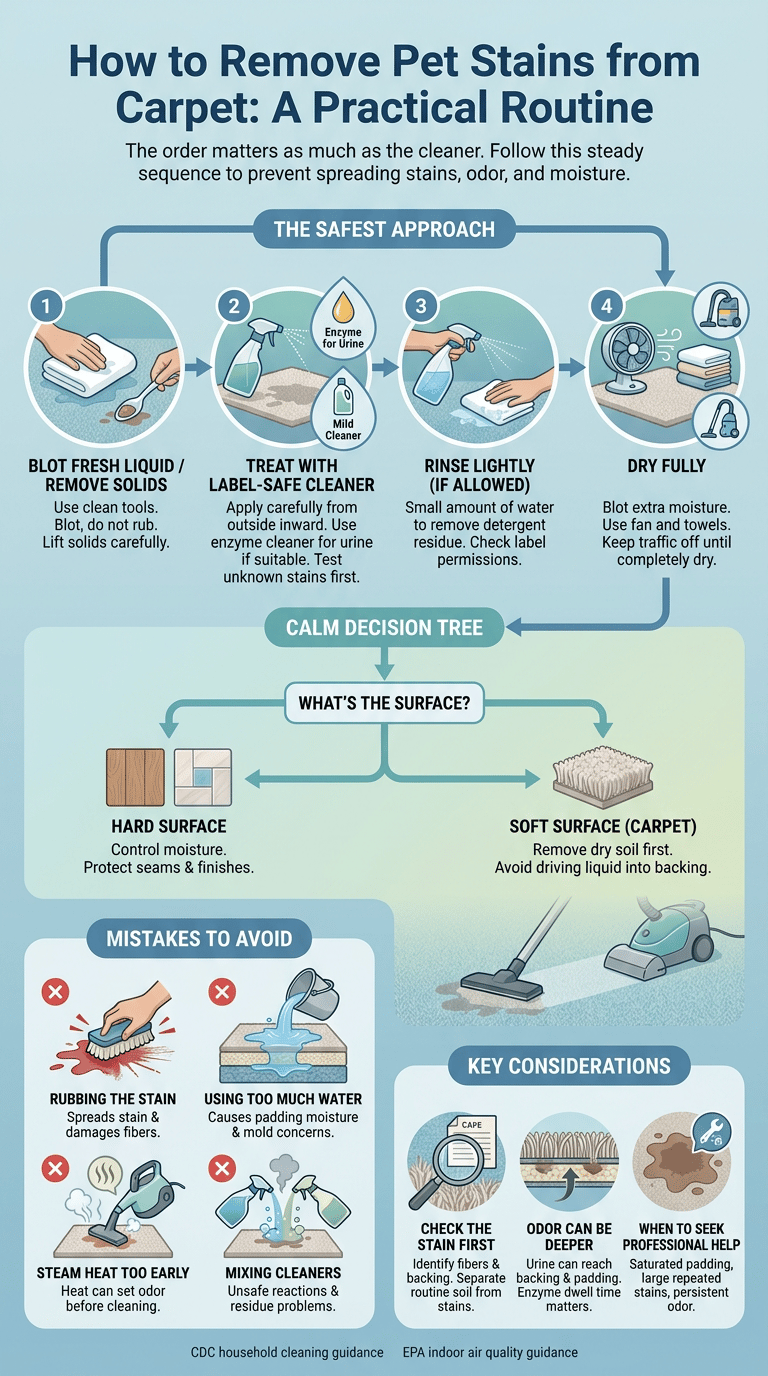
The safest approach is simple: blot, treat with a label-safe cleaner, rinse lightly, and dry fully. That sequence helps cleaning products work on the actual mess instead of on loose grit, old soap, or wet soil. It also gives you natural checkpoints, so you can stop before a surface becomes too wet or too aggressively scrubbed.
Use the advice below as a calm decision tree. If the surface is hard, control moisture and protect seams or finishes. If it is soft, remove dry soil first and avoid driving liquid into backing. CDC household cleaning guidance
Quick Answer: The Best Way to Remove Pet Stains from Carpet
The best way to handle how to remove pet stains from carpet is to follow a steady order: blot, treat with a label-safe cleaner, rinse lightly, and dry fully. That order keeps pet liquid, solids, odor, and repeat spots from spreading and helps you avoid spreading odor deeper or leaving damp carpet behind. Start with the gentlest method that matches the material, then only repeat a step after the area has dried enough to judge the result.
The basic method
For the basic method, keep the goal narrow: solve the visible problem while protecting carpet fibers, backing, and padding. A pet owner does not need a stronger product for every job. The safer move is to remove loose soil, use a measured amount of cleaner, and stop once the surface looks clean and feels residue-free.
Blot fresh liquid
Blot fresh liquid is a small detail, but it affects the final result. Keep the area controlled, use clean tools, and pause if you see color transfer, swelling, spreading, or a slippery feel.
Remove solids carefully
Remove solids carefully is a small detail, but it affects the final result. Keep the area controlled, use clean tools, and pause if you see color transfer, swelling, spreading, or a slippery feel.
Apply carpet-safe cleaner
Apply carpet-safe cleaner should be handled as a separate task, not hidden under a general mop or shampoo pass. Blot first, work from the outside inward, and use small amounts so the stain does not spread.
Use enzyme cleaner for urine if suitable
Use enzyme cleaner for urine if suitable should be handled as a separate task, not hidden under a general mop or shampoo pass. Blot first, work from the outside inward, and use small amounts so the stain does not spread.
Dry completely
Dry completely protects the material after cleaning. Blot or wipe away extra moisture, increase airflow, and keep furniture, rugs, and foot traffic off the area until it is fully dry.
What to avoid
The biggest mistakes with how to remove pet stains from carpet come from rushing, using one cleaner on every surface, and adding too much water. When a method is not working, stop and reassess instead of scrubbing harder. Gentle repetition, good rinsing, and full drying usually protect the finish or fibers better than force.
Rubbing the stain
Rubbing the stain should be handled as a separate task, not hidden under a general mop or shampoo pass. Blot first, work from the outside inward, and use small amounts so the stain does not spread.
Using too much water
Using too much water is a small detail, but it affects the final result. Keep the area controlled, use clean tools, and pause if you see color transfer, swelling, spreading, or a slippery feel.
Masking odor with fragrance
Masking odor with fragrance should be handled as a separate task, not hidden under a general mop or shampoo pass. Blot first, work from the outside inward, and use small amounts so the stain does not spread.
Steam heat on urine before cleaning
Steam heat on urine before cleaning should be handled as a separate task, not hidden under a general mop or shampoo pass. Blot first, work from the outside inward, and use small amounts so the stain does not spread.
Why pet stains are difficult
For why pet stains are difficult, keep the goal narrow: solve the visible problem while protecting carpet fibers, backing, and padding. A pet owner does not need a stronger product for every job. The safer move is to remove loose soil, use a measured amount of cleaner, and stop once the surface looks clean and feels residue-free.
Odor can reach backing
Odor can reach backing should be handled as a separate task, not hidden under a general mop or shampoo pass. Blot first, work from the outside inward, and use small amounts so the stain does not spread.
Protein and urine compounds
Protein and urine compounds should be handled as a separate task, not hidden under a general mop or shampoo pass. Blot first, work from the outside inward, and use small amounts so the stain does not spread.
Repeat accidents in same spot
Repeat accidents in same spot should be handled as a separate task, not hidden under a general mop or shampoo pass. Blot first, work from the outside inward, and use small amounts so the stain does not spread.
Before You Start: Check the Stain
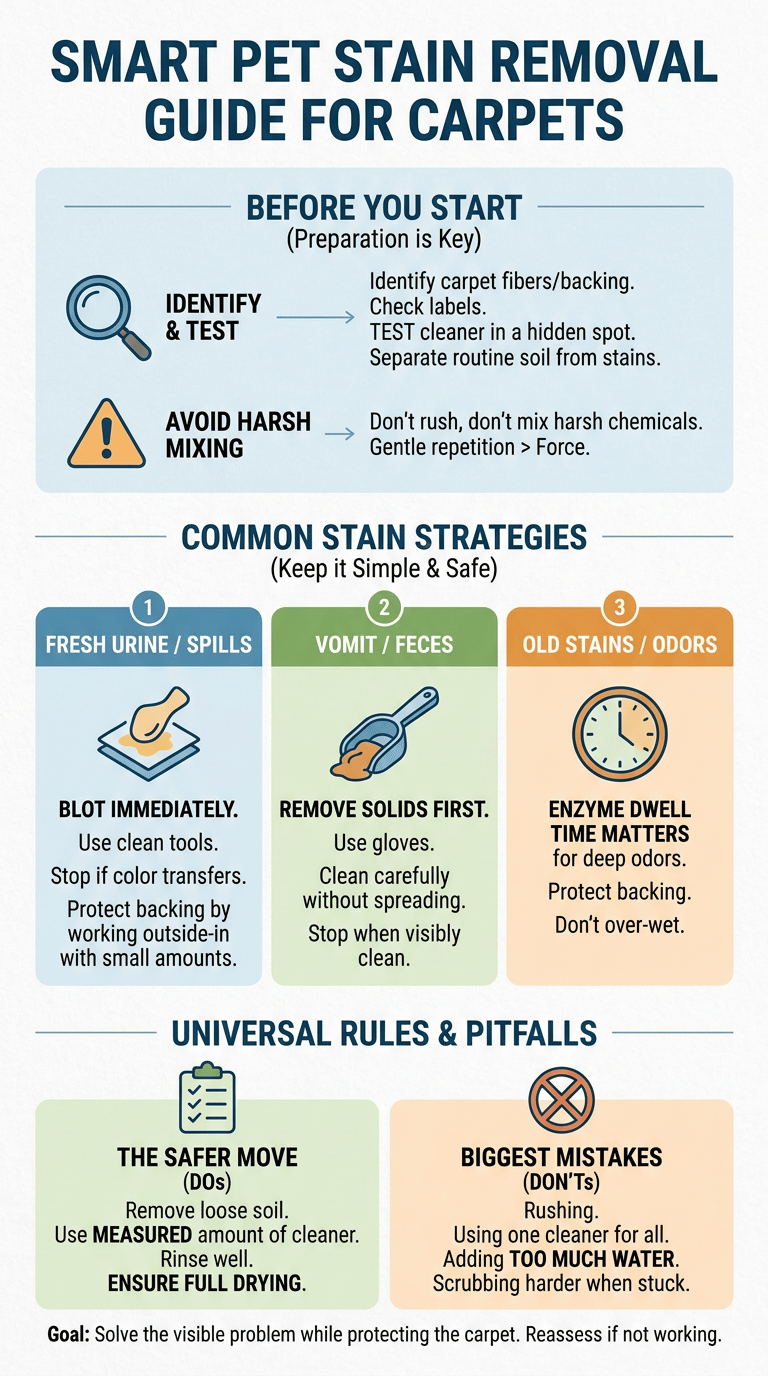
Before cleaning, slow down long enough to identify carpet fibers, backing, and padding. Labels, care tags, manufacturer limits, and a hidden test spot matter because the wrong cleaner can leave damage that looks worse than the original mess. This is also the point to separate routine soil from stains that need their own treatment. EPA indoor air quality guidance
Fresh urine
For fresh urine, keep the goal narrow: solve the visible problem while protecting carpet fibers, backing, and padding. A pet owner does not need a stronger product for every job. The safer move is to remove loose soil, use a measured amount of cleaner, and stop once the surface looks clean and feels residue-free.
Blot immediately
Blot immediately is a small detail, but it affects the final result. Keep the area controlled, use clean tools, and pause if you see color transfer, swelling, spreading, or a slippery feel.
Protect carpet backing
Protect carpet backing should be handled as a separate task, not hidden under a general mop or shampoo pass. Blot first, work from the outside inward, and use small amounts so the stain does not spread.
Old urine stain
For old urine stain, keep the goal narrow: solve the visible problem while protecting carpet fibers, backing, and padding. A pet owner does not need a stronger product for every job. The safer move is to remove loose soil, use a measured amount of cleaner, and stop once the surface looks clean and feels residue-free.
Odor source may be deeper
Odor source may be deeper should be handled as a separate task, not hidden under a general mop or shampoo pass. Blot first, work from the outside inward, and use small amounts so the stain does not spread.
For a related walkthrough, see our guide to how to remove mud stains from carpet.
For a related walkthrough, see our guide to floor and carpet cleaning guide.
Enzyme dwell time matters
Enzyme dwell time matters is a small detail, but it affects the final result. Keep the area controlled, use clean tools, and pause if you see color transfer, swelling, spreading, or a slippery feel.
Vomit or feces
For vomit or feces, keep the goal narrow: solve the visible problem while protecting carpet fibers, backing, and padding. A pet owner does not need a stronger product for every job. The safer move is to remove loose soil, use a measured amount of cleaner, and stop once the surface looks clean and feels residue-free.
Remove solids first
Remove solids first is a small detail, but it affects the final result. Keep the area controlled, use clean tools, and pause if you see color transfer, swelling, spreading, or a slippery feel.
Use gloves
Use gloves is a small detail, but it affects the final result. Keep the area controlled, use clean tools, and pause if you see color transfer, swelling, spreading, or a slippery feel.
Clean carefully without spreading
Clean carefully without spreading is a small detail, but it affects the final result. Keep the area controlled, use clean tools, and pause if you see color transfer, swelling, spreading, or a slippery feel.
Unknown stain
For unknown stain, keep the goal narrow: solve the visible problem while protecting carpet fibers, backing, and padding. A pet owner does not need a stronger product for every job. The safer move is to remove loose soil, use a measured amount of cleaner, and stop once the surface looks clean and feels residue-free.
Test cleaner
Test cleaner is a small detail, but it affects the final result. Keep the area controlled, use clean tools, and pause if you see color transfer, swelling, spreading, or a slippery feel.
Avoid harsh mixing
The biggest mistakes with how to remove pet stains from carpet come from rushing, using one cleaner on every surface, and adding too much water. When a method is not working, stop and reassess instead of scrubbing harder. Gentle repetition, good rinsing, and full drying usually protect the finish or fibers better than force.
Supplies You Need
Keep the kit simple and controlled. A vacuum or broom removes grit, microfiber holds dust and moisture, white cloths show stain transfer, and a soft brush gives targeted agitation without rough scraping. Choose cleaners by label and material, not by strength, because extra product often leaves residue that attracts dirt faster.
Basic tools
Keep the kit simple and controlled. A vacuum or broom removes grit, microfiber holds dust and moisture, white cloths show stain transfer, and a soft brush gives targeted agitation without rough scraping. Choose cleaners by label and material, not by strength, because extra product often leaves residue that attracts dirt faster.
White towels
White towels protects the material after cleaning. Blot or wipe away extra moisture, increase airflow, and keep furniture, rugs, and foot traffic off the area until it is fully dry.
Gloves
Gloves is a small detail, but it affects the final result. Keep the area controlled, use clean tools, and pause if you see color transfer, swelling, spreading, or a slippery feel.
Plastic scraper or spoon
Plastic scraper or spoon is a small detail, but it affects the final result. Keep the area controlled, use clean tools, and pause if you see color transfer, swelling, spreading, or a slippery feel.
Spray bottle
Spray bottle is a small detail, but it affects the final result. Keep the area controlled, use clean tools, and pause if you see color transfer, swelling, spreading, or a slippery feel.
Cleaner options
Keep the kit simple and controlled. A vacuum or broom removes grit, microfiber holds dust and moisture, white cloths show stain transfer, and a soft brush gives targeted agitation without rough scraping. Choose cleaners by label and material, not by strength, because extra product often leaves residue that attracts dirt faster.
Enzyme cleaner
Enzyme cleaner is a small detail, but it affects the final result. Keep the area controlled, use clean tools, and pause if you see color transfer, swelling, spreading, or a slippery feel.
Mild carpet cleaner
Mild carpet cleaner should be handled as a separate task, not hidden under a general mop or shampoo pass. Blot first, work from the outside inward, and use small amounts so the stain does not spread.
Water for light rinsing
Water for light rinsing is a small detail, but it affects the final result. Keep the area controlled, use clean tools, and pause if you see color transfer, swelling, spreading, or a slippery feel.
Drying tools
Keep the kit simple and controlled. A vacuum or broom removes grit, microfiber holds dust and moisture, white cloths show stain transfer, and a soft brush gives targeted agitation without rough scraping. Choose cleaners by label and material, not by strength, because extra product often leaves residue that attracts dirt faster.
Towels
Towels protects the material after cleaning. Blot or wipe away extra moisture, increase airflow, and keep furniture, rugs, and foot traffic off the area until it is fully dry.
Fan
Fan protects the material after cleaning. Blot or wipe away extra moisture, increase airflow, and keep furniture, rugs, and foot traffic off the area until it is fully dry.
Wet-dry vacuum if appropriate
Wet-dry vacuum if appropriate matters because dry particles act like tiny abrasives and can turn into muddy residue once water is added. Use slow passes, reach corners and edges, and empty or clean the tool when pickup drops.
Step 1: Remove Liquid or Solids
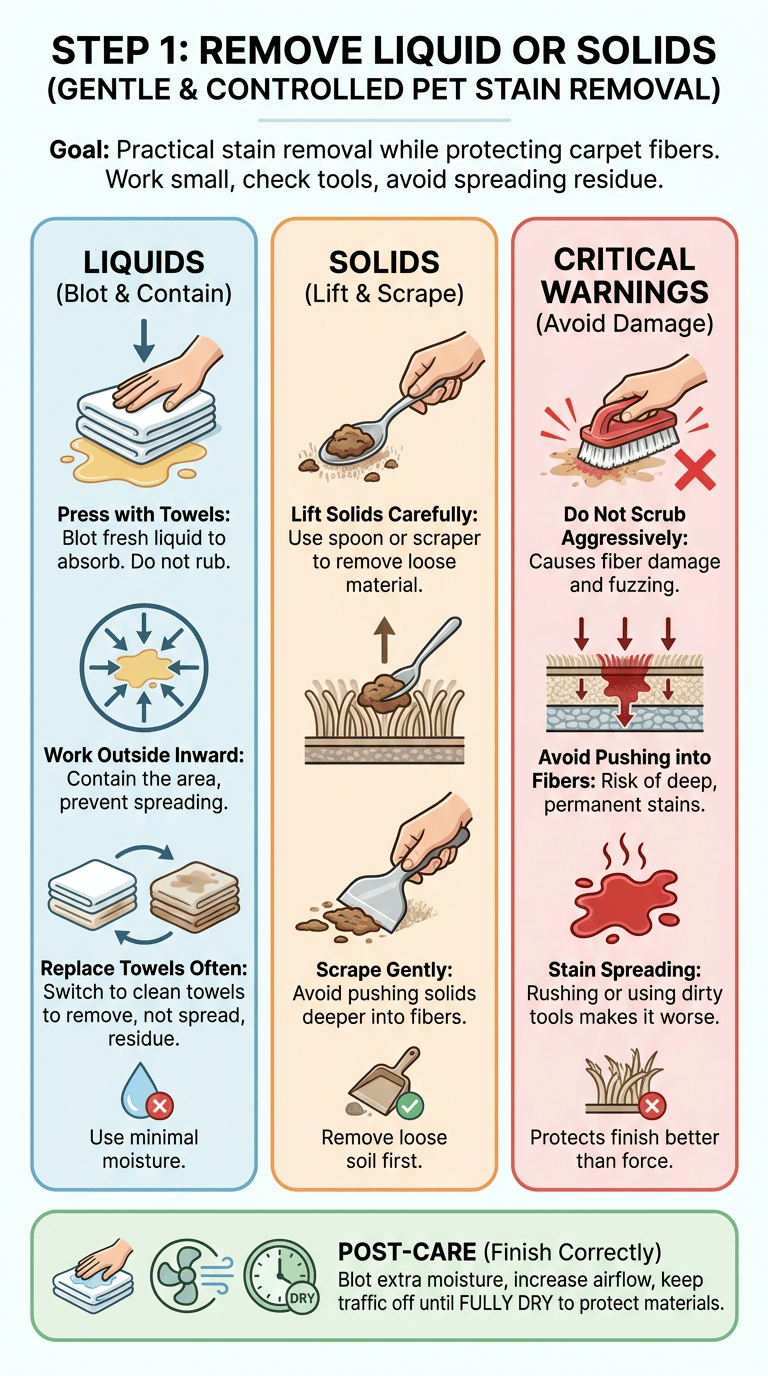
This step keeps how to remove pet stains from carpet practical instead of messy. Work in a small area, use only enough moisture or cleaner to move the soil, and check your cloth, mop pad, or vacuum cup often. If the tool is already dirty, continuing usually spreads residue rather than removing it.
Blot fresh liquid
For blot fresh liquid, keep the goal narrow: solve the visible problem while protecting carpet fibers, backing, and padding. A pet owner does not need a stronger product for every job. The safer move is to remove loose soil, use a measured amount of cleaner, and stop once the surface looks clean and feels residue-free.
Press with towels
Press with towels protects the material after cleaning. Blot or wipe away extra moisture, increase airflow, and keep furniture, rugs, and foot traffic off the area until it is fully dry.
Work from outside inward
Work from outside inward is a small detail, but it affects the final result. Keep the area controlled, use clean tools, and pause if you see color transfer, swelling, spreading, or a slippery feel.
Replace towels often
Replace towels often protects the material after cleaning. Blot or wipe away extra moisture, increase airflow, and keep furniture, rugs, and foot traffic off the area until it is fully dry.
Lift solids carefully
For lift solids carefully, keep the goal narrow: solve the visible problem while protecting carpet fibers, backing, and padding. A pet owner does not need a stronger product for every job. The safer move is to remove loose soil, use a measured amount of cleaner, and stop once the surface looks clean and feels residue-free.
Use spoon or scraper
Use spoon or scraper is a small detail, but it affects the final result. Keep the area controlled, use clean tools, and pause if you see color transfer, swelling, spreading, or a slippery feel.
Avoid pushing into fibers
The biggest mistakes with how to remove pet stains from carpet come from rushing, using one cleaner on every surface, and adding too much water. When a method is not working, stop and reassess instead of scrubbing harder. Gentle repetition, good rinsing, and full drying usually protect the finish or fibers better than force.
Do not scrub aggressively
For do not scrub aggressively, keep the goal narrow: solve the visible problem while protecting carpet fibers, backing, and padding. A pet owner does not need a stronger product for every job. The safer move is to remove loose soil, use a measured amount of cleaner, and stop once the surface looks clean and feels residue-free.
Fiber damage
Fiber damage is a small detail, but it affects the final result. Keep the area controlled, use clean tools, and pause if you see color transfer, swelling, spreading, or a slippery feel.
Stain spreading
Stain spreading should be handled as a separate task, not hidden under a general mop or shampoo pass. Blot first, work from the outside inward, and use small amounts so the stain does not spread.
Step 2: Apply the Right Cleaner
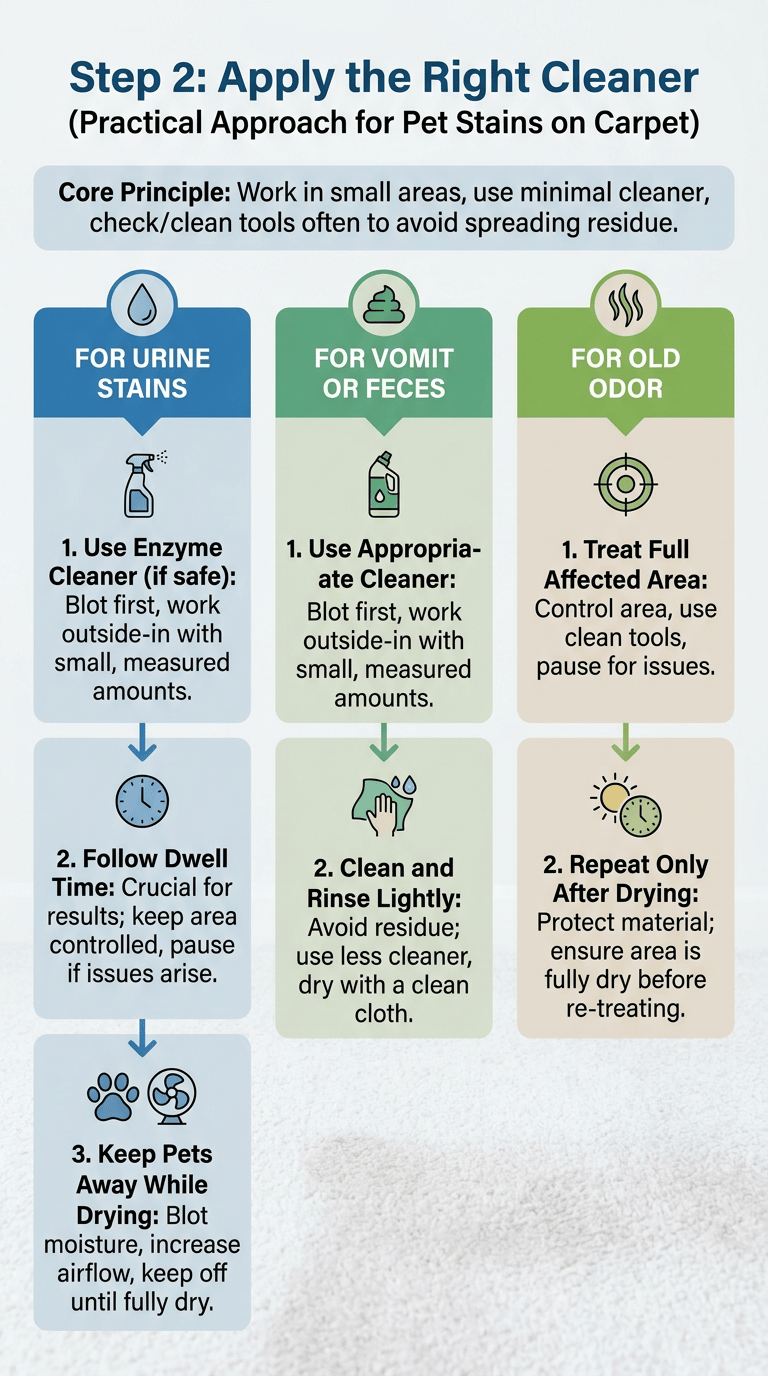
This step keeps how to remove pet stains from carpet practical instead of messy. Work in a small area, use only enough moisture or cleaner to move the soil, and check your cloth, mop pad, or vacuum cup often. If the tool is already dirty, continuing usually spreads residue rather than removing it.
For urine stains
For for urine stains, keep the goal narrow: solve the visible problem while protecting carpet fibers, backing, and padding. A pet owner does not need a stronger product for every job. The safer move is to remove loose soil, use a measured amount of cleaner, and stop once the surface looks clean and feels residue-free.
Use enzyme cleaner if carpet-safe
Use enzyme cleaner if carpet-safe should be handled as a separate task, not hidden under a general mop or shampoo pass. Blot first, work from the outside inward, and use small amounts so the stain does not spread.
Follow dwell time
Follow dwell time is a small detail, but it affects the final result. Keep the area controlled, use clean tools, and pause if you see color transfer, swelling, spreading, or a slippery feel.
Keep pets away while drying
Keep pets away while drying protects the material after cleaning. Blot or wipe away extra moisture, increase airflow, and keep furniture, rugs, and foot traffic off the area until it is fully dry.
For vomit or feces
For for vomit or feces, keep the goal narrow: solve the visible problem while protecting carpet fibers, backing, and padding. A pet owner does not need a stronger product for every job. The safer move is to remove loose soil, use a measured amount of cleaner, and stop once the surface looks clean and feels residue-free.
Use appropriate carpet cleaner
Use appropriate carpet cleaner should be handled as a separate task, not hidden under a general mop or shampoo pass. Blot first, work from the outside inward, and use small amounts so the stain does not spread.
Clean and rinse lightly
Clean and rinse lightly is usually a residue problem. Use less cleaner next time, rinse lightly when the label allows it, and dry with a clean cloth so soil does not cling to leftover product.
For old odor
Treat the full affected area
Treat the full affected area is a small detail, but it affects the final result. Keep the area controlled, use clean tools, and pause if you see color transfer, swelling, spreading, or a slippery feel.
Repeat only after drying
Repeat only after drying protects the material after cleaning. Blot or wipe away extra moisture, increase airflow, and keep furniture, rugs, and foot traffic off the area until it is fully dry.
Step 3: Blot, Rinse, and Dry
This step keeps how to remove pet stains from carpet practical instead of messy. Work in a small area, use only enough moisture or cleaner to move the soil, and check your cloth, mop pad, or vacuum cup often. If the tool is already dirty, continuing usually spreads residue rather than removing it. EPA home guidance
Blot cleaner residue
Use clean towels
Use clean towels protects the material after cleaning. Blot or wipe away extra moisture, increase airflow, and keep furniture, rugs, and foot traffic off the area until it is fully dry.
Avoid overwetting
Light rinse if label allows
Small amount of water
Small amount of water is a small detail, but it affects the final result. Keep the area controlled, use clean tools, and pause if you see color transfer, swelling, spreading, or a slippery feel.
Remove detergent residue
Remove detergent residue is usually a residue problem. Use less cleaner next time, rinse lightly when the label allows it, and dry with a clean cloth so soil does not cling to leftover product.
Dry completely
Fan airflow
Fan airflow protects the material after cleaning. Blot or wipe away extra moisture, increase airflow, and keep furniture, rugs, and foot traffic off the area until it is fully dry.
Towel pressure
Towel pressure is a small detail, but it affects the final result. Keep the area controlled, use clean tools, and pause if you see color transfer, swelling, spreading, or a slippery feel.
Avoid furniture on damp carpet
How to Handle Odor After Pet Stains
Find the odor source
Carpet fibers
Carpet fibers should be handled as a separate task, not hidden under a general mop or shampoo pass. Blot first, work from the outside inward, and use small amounts so the stain does not spread.
Backing
Backing is a small detail, but it affects the final result. Keep the area controlled, use clean tools, and pause if you see color transfer, swelling, spreading, or a slippery feel.
Padding
Padding is a small detail, but it affects the final result. Keep the area controlled, use clean tools, and pause if you see color transfer, swelling, spreading, or a slippery feel.
Avoid fragrance-only fixes
Odor returns
Odor returns should be handled as a separate task, not hidden under a general mop or shampoo pass. Blot first, work from the outside inward, and use small amounts so the stain does not spread.
Pets may revisit spot
When professional help may be needed
Saturated padding
Saturated padding is a small detail, but it affects the final result. Keep the area controlled, use clean tools, and pause if you see color transfer, swelling, spreading, or a slippery feel.
Large repeated stains
Persistent odor after drying
Persistent odor after drying protects the material after cleaning. Blot or wipe away extra moisture, increase airflow, and keep furniture, rugs, and foot traffic off the area until it is fully dry.
Pet Stain Mistakes to Avoid
Rubbing instead of blotting
Spreads stain
Spreads stain should be handled as a separate task, not hidden under a general mop or shampoo pass. Blot first, work from the outside inward, and use small amounts so the stain does not spread.
Damages fibers
Damages fibers is a small detail, but it affects the final result. Keep the area controlled, use clean tools, and pause if you see color transfer, swelling, spreading, or a slippery feel.
Using steam too early
Heat can set odor
Clean first
Clean first is a small detail, but it affects the final result. Keep the area controlled, use clean tools, and pause if you see color transfer, swelling, spreading, or a slippery feel.
Over-wetting carpet
Padding moisture
Padding moisture protects the material after cleaning. Blot or wipe away extra moisture, increase airflow, and keep furniture, rugs, and foot traffic off the area until it is fully dry.
Mold or odor concern
Mixing cleaners
Unsafe reactions
Unsafe reactions is a small detail, but it affects the final result. Keep the area controlled, use clean tools, and pause if you see color transfer, swelling, spreading, or a slippery feel.
Residue problems
Residue problems is usually a residue problem. Use less cleaner next time, rinse lightly when the label allows it, and dry with a clean cloth so soil does not cling to leftover product.
Frequently Asked Questions
What is the best cleaner for pet stains on carpet?
The best cleaner is the mildest label-approved option for the material. A pH-neutral floor cleaner, vinyl-safe or laminate-safe product, or carpet-safe spot cleaner is usually a safer starting point than a strong all-purpose product.
How do I remove old pet urine stains from carpet?
Why does pet urine smell come back after cleaning?
Can I use vinegar on pet stains?
Use vinegar only if the floor or carpet manufacturer allows it. Avoid acidic cleaners on natural stone and be cautious on surfaces where acid, water, or odor can create a bigger problem.
Should I steam clean pet urine stains?
Steam only when the manufacturer clearly approves it. Heat and moisture can harm some seams, backing, adhesives, finishes, and stain types.
When should carpet padding be replaced?
Professional help is worth considering when odor, moisture, repeated pet accidents, damaged grout, dye bleed, loose flooring, or saturated backing may be beyond surface cleaning.
Final Thoughts
Dry fully.

Ethan Carter is the Founder & Editor of HomeCleanSecrets. Based in the United States, he has 5 years of experience creating practical home cleaning, laundry care, stain removal, decluttering, and home organization content. His goal is to help everyday households clean smarter and build simple routines that are easier to maintain.
Read more about Ethan Carter on his author page: https://homecleansecrets.com/ethan-carter/