
Pet bedding gets dirty faster than most soft items in a home because it sits directly under fur, paws, skin oils, saliva, outdoor dirt, and everyday pet odor. A dog bed, cat bed, crate mat, or pet blanket may still look fine on top while hair and smell are trapped in seams, corners, stuffing, or under a removable cover. The safest cleaning routine is simple: remove loose hair first, inspect the bed, separate covers from inserts when possible, wash only what the care label allows, and dry everything completely before your pet uses it again.
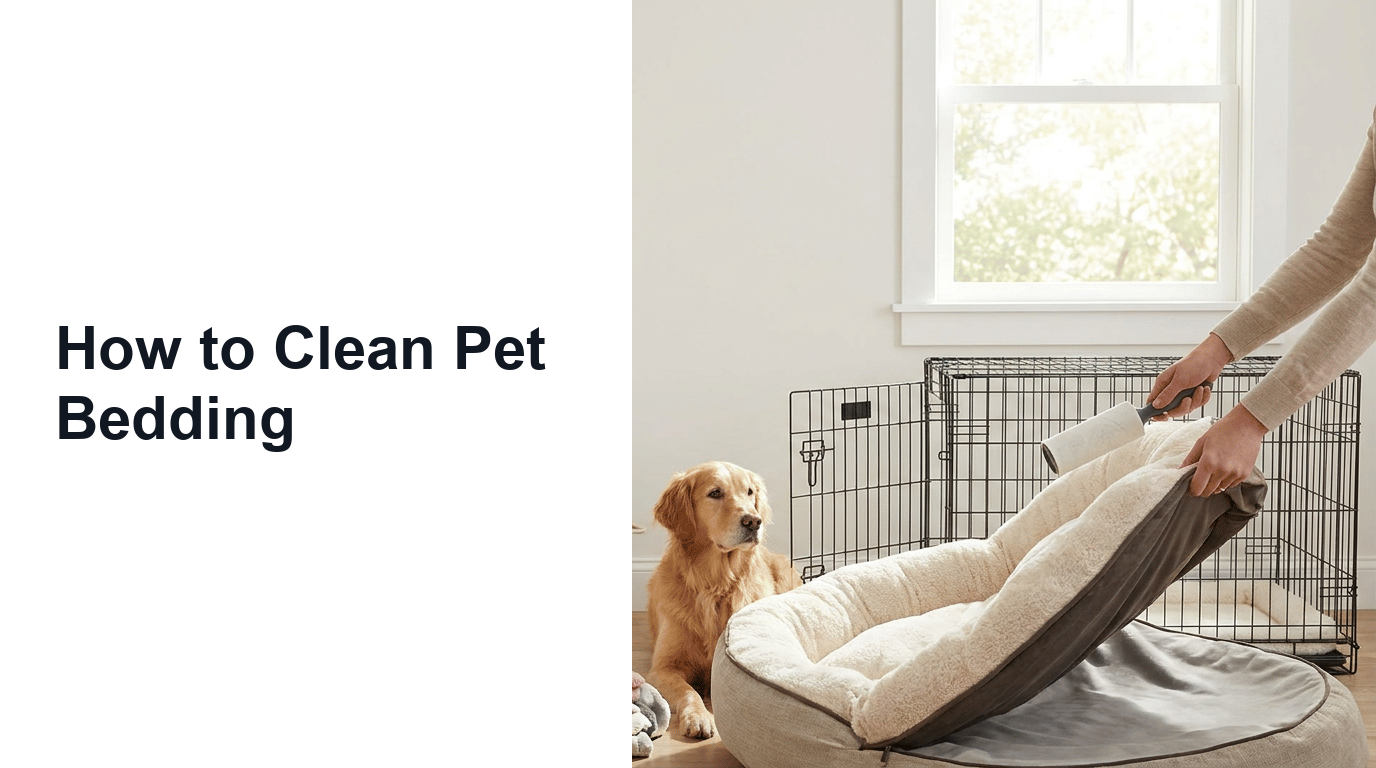
This guide focuses on bedding items that belong to the pet: beds, crate pads, blankets, washable covers, bolster covers, and inserts. It is not a general clothing-laundry guide, a furniture hair-removal guide, a litter box guide, or a couch-odor guide. Those problems can connect to pet bedding, but the steps below stay centered on the bedding itself, the material it is made from, and the point where cleaning is no longer practical.
If bedding smells clean but the room still feels dirty, the cleaning rhythm across the home may be the issue. A whole-house pet cleaning frequency plan balances bedding, floors, furniture, bowls, and litter areas.
Quick Answer: The Safe Way to Clean Pet Bedding
The best order is dry hair removal, inspection, washing or spot-cleaning, then complete drying. This order prevents two common problems: sending a mat of fur into the washer and putting a damp insert back on the floor. Both can make the bed harder to clean next time.
Remove hair first
Start while the bed is dry. Take the bed, cover, or blanket outside if possible and shake it firmly. Then vacuum the surface, seams, corners, and underside. A rubber grooming glove or upholstery brush can help lift hair from fleece, plush, and textured covers before the item goes near the washer.
A good test is to rub one corner with a gloved hand for ten seconds. If hair rolls into clumps, keep removing it before washing. If you skip this step, hair can stick to the washer drum, clog filters, coat the next load, or form wet clumps inside the bedding.
Separate covers from inserts when possible
Many pet beds have a removable cover over foam, fiberfill, or a bolster insert. Remove the cover and shake both pieces. Wash the cover separately if the care label allows. Do not assume the insert can be washed just because the cover can. Foam and stuffed inserts can trap water, tear, flatten, or dry unevenly.
Wash and dry according to the care label
The care label decides the safest water temperature, cycle, detergent type, and drying method. The American Cleaning Institute explains laundry symbols and basic washing steps in its laundry basics guidance, which is useful when a pet bed cover has symbols instead of written directions. If the label says spot-clean only, treat it as spot-clean only.
What Counts as Pet Bedding?
Pet bedding is any soft item your pet regularly sleeps, rests, or curls up on. The exact item matters because a thin blanket is usually easier to wash than a stuffed bed with a foam insert. Identify the bedding type before choosing a cleaning method.
Dog beds
Dog beds often collect outdoor dirt, paw residue, shed hair, drool, and body oils. Larger beds can be too bulky for a home washer even when the cover is washable. If the bed barely fits in the drum, it may not rinse or spin well enough to clean safely.
Cat beds
Cat beds are often smaller, but they can hold dense hair in plush fibers, seams, and covered cave-style areas. Cats may avoid a bed if it smells strongly of detergent, fragrance, or disinfectant. Use the mildest label-approved routine that actually cleans the bed.
Crate mats
Crate mats flatten under body weight and collect hair along edges where the mat touches the crate walls. Check the underside for moisture marks, chew damage, and seams that are starting to split. A damaged mat can shed stuffing or bunch up after washing.
Pet blankets
Pet blankets are usually the easiest bedding item to wash, but they can spread hair to human laundry if you mix loads. Keep pet blankets in their own load or wash them after removing as much hair as possible. If the blanket is used on furniture, it may also be moving hair back and forth between the pet bed and the sofa.
If the sofa gets hairy again shortly after cleaning, bedding may be transferring loose hair back into the room. Use the guide for pet hair on furniture when the couch also needs a fabric-first cleanup.
Removable covers and foam inserts
Removable covers are designed to take the hardest wear. Foam inserts are usually more sensitive. If an insert is memory foam, egg-crate foam, or layered foam, soaking it can damage shape and make drying difficult. The cover can often be washed while the insert is vacuumed, aired, or spot-cleaned lightly.
Why Pet Bedding Gets Dirty So Fast
Pet bedding is not just dusty fabric. It is a resting surface that collects what your pet brings in and what your pet naturally sheds. Understanding the buildup helps you clean the bed before it becomes a bigger odor or laundry problem.
Clean bedding is one part of a larger pet-home system because hair, odor, and residue move between beds, furniture, laundry, and floors. Use the complete pet cleaning routine for the broader plan.
Hair and dander buildup
Hair sits on the surface, pushes into seams, and gathers under bolsters. Dander and fine debris can settle deeper into fleece or plush. A bed may look cleaner after shaking, but a vacuum pass often reveals more hair hidden along stitched channels and corners.
Skin oils and saliva
Pets leave oils and saliva where they sleep, chew toys, lick paws, or rest their chin. These residues can make fabric feel slightly slick or heavy. They can also hold odor even after loose hair has been removed.
Dirt from paws
Outdoor pets, rainy-day walks, dusty yards, and litter tracking can turn bedding into a dirt trap. Dirt usually builds up on the entry edge of a bed, the center sleeping depression, and the underside of mats placed on hard floors. Brush off dry dirt before washing so it does not turn into muddy residue.
Odor trapped in stuffing and seams
Odor often stays in the thickest parts of the bed. Seams, bolsters, deep corners, and stuffed centers dry more slowly and hold residue longer. If the cover smells fresh but the insert still smells musty or sour, the problem may be inside the bed rather than on the surface.
Before Washing: Inspect the Bed
Inspection prevents damage and helps you decide whether the bed should be machine-washed, hand-washed, spot-cleaned, or replaced. Do this before adding water, detergent, or any cleaning product.
Check the care label
Look for water temperature, cycle, drying instructions, and warnings about bleach, dry cleaning, or spot-cleaning. If the label is missing, choose a cautious method: dry hair removal, light spot cleaning on a small area, and air-drying. Do not use high heat or strong cleaners on an unknown material.
Look for removable covers
Unzip the cover fully before pulling it off. Do not yank at a tight corner because older zippers and seams can tear. If the cover is stuck, compress the insert gently and work one section at a time. Check inside the cover for hair clumps before washing.
Check seams, zippers, and stuffing
Loose seams, broken zippers, torn corners, and exposed stuffing can get worse in a washer. Repair small openings before washing if the item is otherwise usable. Stop if foam is crumbling, stuffing is coming out in pieces, or the bed has chew damage that could expose filling.
Decide whether to wash, spot-clean, or replace
Choose machine washing only when the label and size allow it. Spot-clean when the bed is bulky, foam-based, heated, or labeled as non-washable. Replace the bed when it stays damp, has broken foam, has exposed wiring, keeps a strong odor after proper cleaning, or no longer gives your pet a dry and stable place to rest.
Step-by-Step Cleaning Method for Washable Pet Bedding
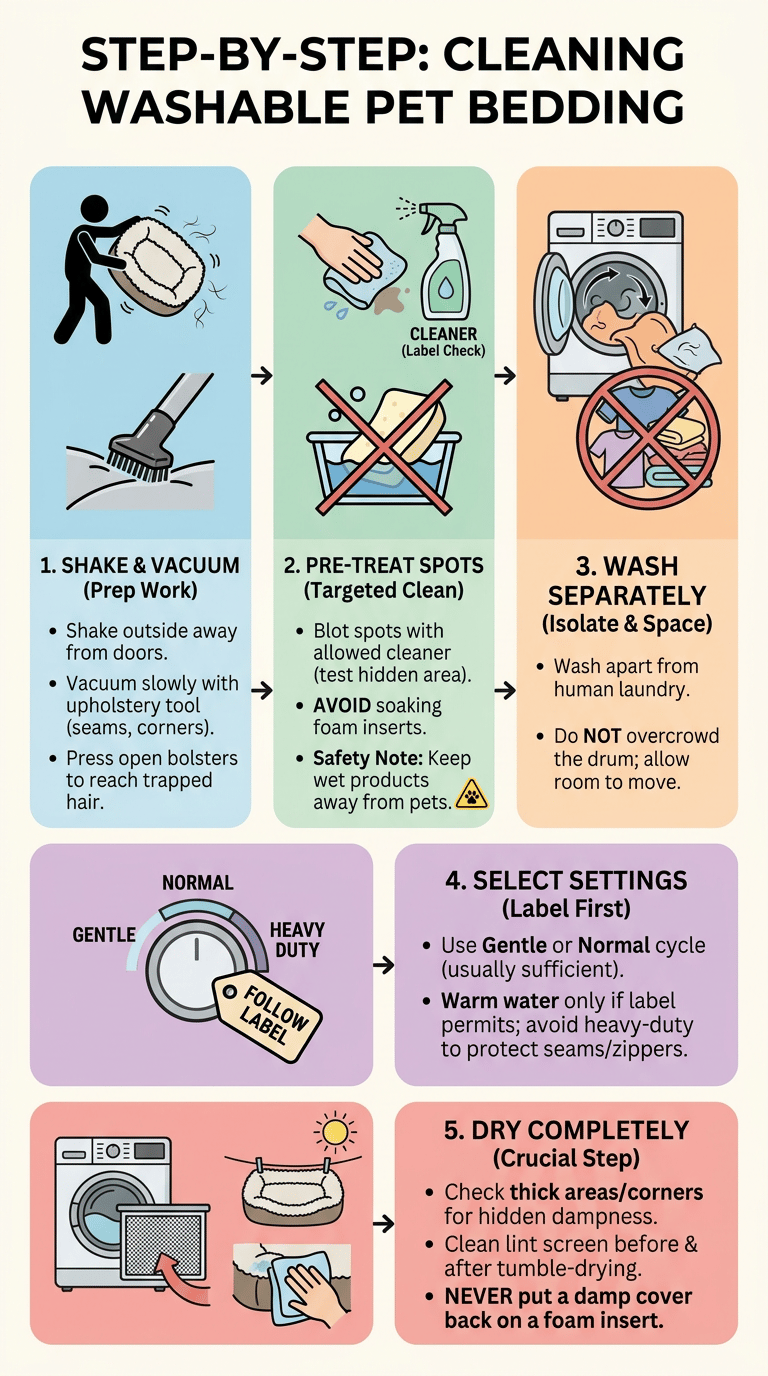
Washable bedding still needs careful handling. The goal is not to use the strongest cycle. The goal is to remove hair and soil while protecting the cover, insert, washer, dryer, and your pet’s comfort.
Shake and vacuum loose hair
Take the cover, blanket, or small bed outside and shake it away from doors and clean laundry. Vacuum slowly with an upholstery attachment. Focus on seams, zipper lines, corners, and the underside. If the bed has a bolster, press the fabric open along the seam so the vacuum can reach trapped hair.
Pre-treat small spots if the label allows
Blot small dirty spots with a damp cloth before washing. Use a detergent or cleaner that the fabric label allows, and test a hidden area first if you are unsure. Avoid soaking foam unless the manufacturer says it can be washed that way.
Keep cleaning products away from pets until the item is rinsed and fully dry. The ASPCA notes in its household product safety guidance that many cleaning products are safe only when used as directed on the label, and extra caution is needed around sensitive animals.
Wash covers and blankets separately
Wash pet covers and blankets apart from human clothes, towels, and bedding. This limits hair transfer and gives the item room to move. If the cover is large, wash it alone or with one similar pet blanket rather than packing the drum full.
Use the right water temperature and cycle
Follow the label first. Warm water may help with oils and odor on some washable covers, but it can shrink, fade, or distort other materials. A gentle or normal cycle is usually enough for routine bedding. Heavy-duty cycles may stress zippers, seams, and older covers.
Dry completely before reuse
Drying is where many pet beds fail. A cover may feel dry on the outside while the corners, zipper flap, or insert remains damp. Check the thickest areas by pressing with a clean dry towel. If the towel picks up moisture, keep drying before returning the bed to your pet.
Use the dryer only when the label allows it. If you tumble-dry a cover, clean the lint screen before and after. If air-drying, place the item where air can move around it. Do not put a damp cover back over a foam insert.
Cleaning Bedding That Cannot Go in the Washer

Some pet bedding is too bulky, too delicate, foam-based, heated, or labeled spot-clean only. These beds can still be maintained, but the method should use less moisture and more drying time.
Vacuuming and brushing
Vacuum the bed thoroughly, then brush textured areas to loosen hair. Work in sections and empty the vacuum canister or bag if it fills with hair. On plush beds, use short strokes rather than hard scrubbing so you lift hair without roughing up the fibers.
Low-moisture spot cleaning
Use a damp cloth, mild label-approved cleaner, and light pressure. Blot instead of soaking. Work from the outside of the spot inward so the damp area does not spread. After cleaning, press with a dry towel to remove as much moisture as possible.
Sun and air-drying limits
Fresh air can help dry a bed, but direct sun and heat can fade fabric, harden some materials, or warp foam. Air the bed in a dry, ventilated place and turn it so the underside dries too. Bring it in before evening humidity settles into the fabric.
When a non-washable bed is no longer practical
A non-washable bed may not be worth keeping if it smells shortly after cleaning, stays damp, has torn seams, or collects debris that cannot be removed. Replacement is also reasonable when your pet has repeated accidents on the same insert or when the bed’s design makes complete drying impossible.
Pet Bedding Cleaning Schedule
A schedule keeps pet bedding from becoming a large weekend chore. The right frequency depends on shedding, outdoor activity, accidents, odor, and whether your pet has sensitive skin or health concerns. Use the schedule as a starting point and adjust when the bed looks, feels, or smells dirty sooner.
Weekly routine for normal use
Once a week, shake the bed or blanket, vacuum the surface, inspect seams, and wash removable covers or blankets if they are visibly dirty or starting to smell. Lightly used beds may not need a full wash every week, but they still benefit from hair removal and inspection.
More frequent washing for heavy shedding or outdoor pets
Heavy shedders and pets that spend time outdoors can dirty bedding faster. During shedding season, add one midweek hair-removal pass. After muddy walks, wipe paws before your pet settles into the bed and clean the bedding sooner if dirt transfers to the cover.
After accidents, illness, or strong odor
Clean sooner after accidents, vomiting, diarrhea, heavy drooling, or illness. Remove solids carefully, blot moisture, and follow the care label. The CDC’s home cleaning and disinfecting guidance explains that cleaning comes before disinfecting, and disinfecting is most relevant when someone is sick or higher-risk conditions apply.
Seasonal bedding rotation
Rotate bedding when weather changes. Thick winter beds may hold heat and odor in warmer months. Thin summer mats may not protect older pets on cold floors. A seasonal check is also a good time to wash stored covers, inspect foam, and discard beds that no longer dry well.
Material-Specific Bedding Tips
Material affects how much water, agitation, brushing, and heat the bedding can handle. When the label and material disagree, follow the label. A sturdy-looking cover can still have a coating, backing, or inner layer that needs gentle care.
Fleece and plush beds
Fleece and plush hold hair tightly. Brush and vacuum before washing. Avoid overloading because thick fabric needs room to rinse. After drying, check the nap of the fabric with your hand. If it feels stiff or matted, detergent residue or high heat may be part of the problem.
Canvas or outdoor-style beds
Canvas-style covers often handle dirt better than plush, but they can have waterproof or water-resistant coatings. Harsh scrubbing, high heat, or the wrong detergent can damage those finishes. Wipe off dry dirt first and follow the manufacturer’s instructions for washing coated fabric.
Memory foam inserts
Memory foam should usually stay out of the washer unless the manufacturer clearly says otherwise. Vacuum both sides, spot-clean lightly, and dry with airflow. Stop if the foam crumbles, stays wet, or develops a strong odor that does not improve after careful cleaning.
Bolster beds
Bolster beds collect hair where the raised edge meets the center pad. Open the seam area with your fingers and vacuum slowly. If the whole bed is washable, make sure the bolster dries all the way through. Thick corners are the last areas to dry.
Heated pet beds and electrical limits
Heated beds need extra caution. Unplug the bed, remove any washable cover according to the instructions, and keep electrical parts away from water unless the manual says a part is washable. Do not use a heated bed with damaged cords, exposed wiring, chew marks, or moisture inside the electrical area.
Mistakes That Ruin Pet Bedding

Most bedding damage comes from rushing: washing with too much hair still attached, using too much detergent, using heat that the label does not allow, or returning the bed while parts are still damp.
Washing before removing hair
Loose hair gets heavier when wet. It can cling to the cover, collect inside seams, and spread through the washer. Removing hair first makes the wash more effective and reduces cleanup afterward.
Using too much detergent
Extra detergent does not make bedding cleaner. It can leave residue that holds odor, stiffens fabric, or irritates sensitive pets. Measure detergent for the load size and soil level. If the bed still smells after washing, check for trapped moisture or a dirty insert before adding more detergent next time.
Leaving inserts damp
Damp inserts can develop musty smells and may make the cover smell dirty again. Press thick areas with a towel, check corners, and allow more drying time than you think you need. A bed should feel dry at the surface and inside the thickest parts before reuse.
Ignoring zipper and seam damage
A weak zipper can break in the wash. A small seam opening can release stuffing. Inspect before and after washing so you can repair small issues early. If your pet chews or pulls at loose threads, remove the bed until it is repaired or replaced.
Using cleaners not intended around pets
Do not mix cleaning products or experiment with strong chemicals on bedding. Poison Control warns in its cleaning products safety information that mixing some cleaners, such as bleach with ammonia or acids, can create toxic fumes. Use products only as labeled, rinse washable items well, and keep pets away until bedding is dry.
Adjacent Issues: When Bedding Is Part of a Bigger Cleaning Problem

Pet bedding often connects to other cleaning jobs in the home. Handle the bedding first, then check nearby surfaces if hair or odor keeps returning.
Bedding spreading hair to furniture
A pet blanket on a sofa can protect upholstery, but it can also move hair back to the couch when it is shaken indoors or washed with other items. Remove hair from the blanket before washing and keep clean blankets folded away until they are needed.
Bedding hair entering clothes laundry
Pet blankets and clothing should not share a load when the blanket is hairy. Wash pet items separately or after a strong dry-hair removal pass. Wipe the washer drum and gasket after bedding loads so hair does not move into work clothes or dark garments.
Do not wash hair-covered pet blankets with work clothes or dark outfits until loose hair is removed. If it has reached garments, use this method for pet hair in clothes laundry.
Couch odor that is not caused by the bed
If the bed is clean but the room still smells like pets, check nearby upholstery, throws, rugs, and favorite resting spots. A couch can hold odor separately from a pet bed. Cleaning the bed alone will not fix odor that is attached to cushions or fabric furniture.
Whole-house pet cleaning frequency
Bedding is one part of a full pet-home routine. If hair returns quickly, pair bedding care with regular vacuuming, furniture hair removal, bowl cleaning, litter area maintenance, and hard-floor cleanup after accidents. Keep each task separate enough that one messy zone does not spread into every load of laundry.
FAQ About Cleaning Pet Bedding
How often should you wash pet bedding?
Many pet owners do well with a weekly hair-removal pass and regular washing of removable covers or blankets when they look dirty, smell stale, or collect heavy hair. Wash sooner after accidents, illness, muddy paws, heavy shedding, or strong odor. A lightly used bed may need less frequent full washing, but it should still be inspected and vacuumed.
Can you put a dog bed in the washing machine?
You can put a dog bed in the washing machine only if the care label allows it and the bed has enough room to move in the drum. A removable cover is often machine-washable even when the insert is not. If the bed is too bulky, foam-based, heated, torn, or labeled spot-clean only, choose a lower-moisture method instead.
How do you dry pet bedding safely?
Dry pet bedding according to the label. Tumble-dry only when allowed, and use the heat setting the label permits. Air-dry thick items with airflow on all sides. Check corners, bolsters, zipper flaps, and inserts before reuse because damp areas can hold odor and make the bed unpleasant for your pet.
When should a pet bed be replaced instead of cleaned?
Replace a pet bed when foam is crumbling, stuffing is exposed, seams keep opening, the bed stays damp, odor returns quickly after proper cleaning, or electrical parts are damaged. Replacement is also practical when a non-washable bed has repeated accidents or can no longer be dried completely.
Final Thoughts
Cleaning pet bedding is easier when you treat it as a small routine instead of a rescue job. Remove hair before washing, separate covers from inserts, respect the care label, use only suitable cleaning products, and dry every layer completely. When a bed cannot be cleaned safely or no longer dries well, replacing it is often the cleaner and safer choice.
The most useful habit is inspection. Check the cover, zipper, seams, insert, and underside before every wash. That quick look tells you whether the bed needs a normal wash, careful spot cleaning, extra drying time, or retirement from the routine.

Ethan Carter is the Founder & Editor of HomeCleanSecrets. Based in the United States, he has 5 years of experience creating practical home cleaning, laundry care, stain removal, decluttering, and home organization content. His goal is to help everyday households clean smarter and build simple routines that are easier to maintain.
Read more about Ethan Carter on his author page: https://homecleansecrets.com/ethan-carter/