
Pet hair on furniture is frustrating because it does not sit on the surface like ordinary dust. It wraps into fabric, settles into cushion seams, and clings harder when static builds up. The best way to remove pet hair from furniture is to work in the right order: loosen the hair, collect it, vacuum the hidden areas, then adjust your routine so the same couch is not covered again the next day.
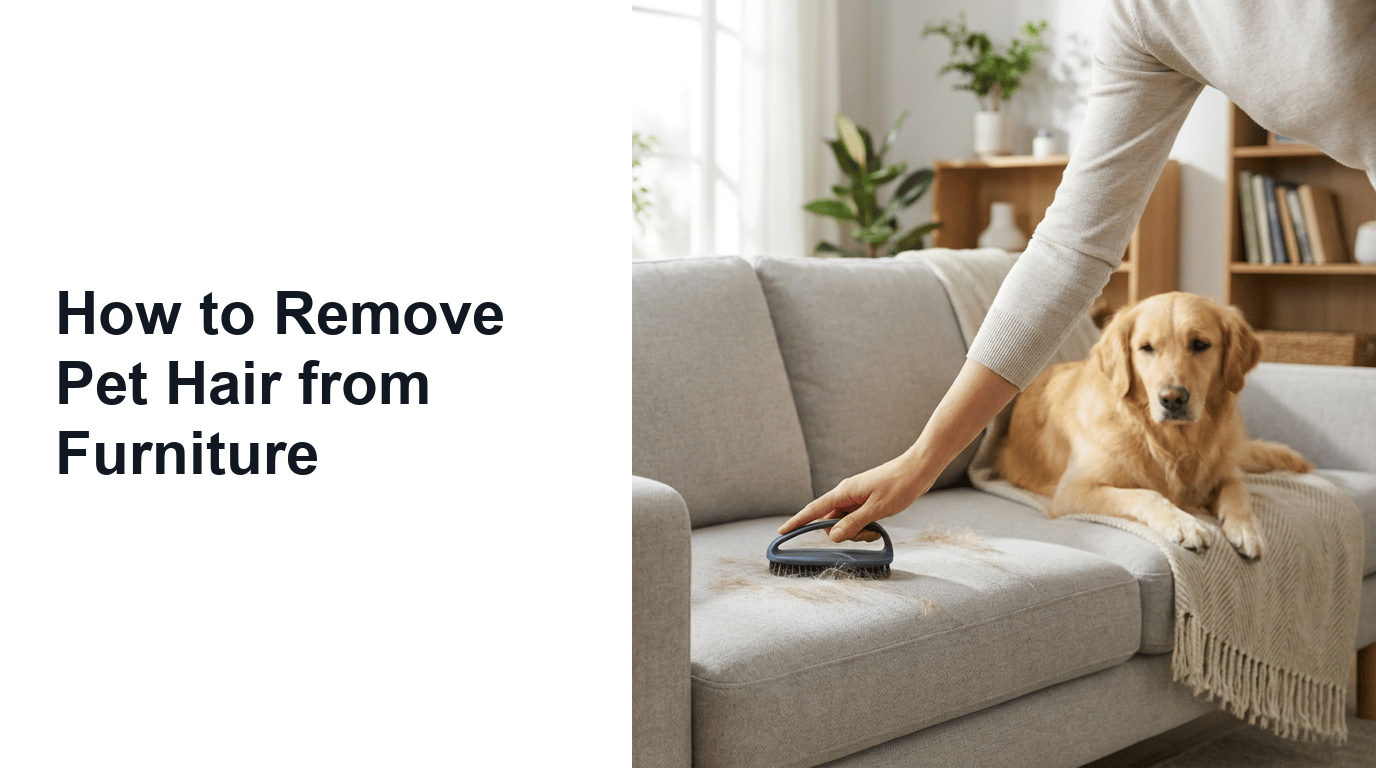
This guide focuses on fixed furniture surfaces such as sofas, armchairs, dining chairs, office chairs, cushions, and throw pillows. It is not a laundry guide, a pet bedding washing guide, or a couch odor treatment guide. If the main problem is visible hair on fabric, microfiber, leather, or faux leather furniture, the steps below will help you clean faster without pushing hair deeper into the material.
When hair returns every day, a couch-only cleanup is not enough. A whole-house pet cleaning routine controls resting spots, laundry, bedding, and floors together.
Furniture hair is usually part of a bigger pet-home routine. For the full zone-based system, start with the full pet cleaning guide for home.
Quick Answer: The Best Order for Removing Pet Hair from Furniture
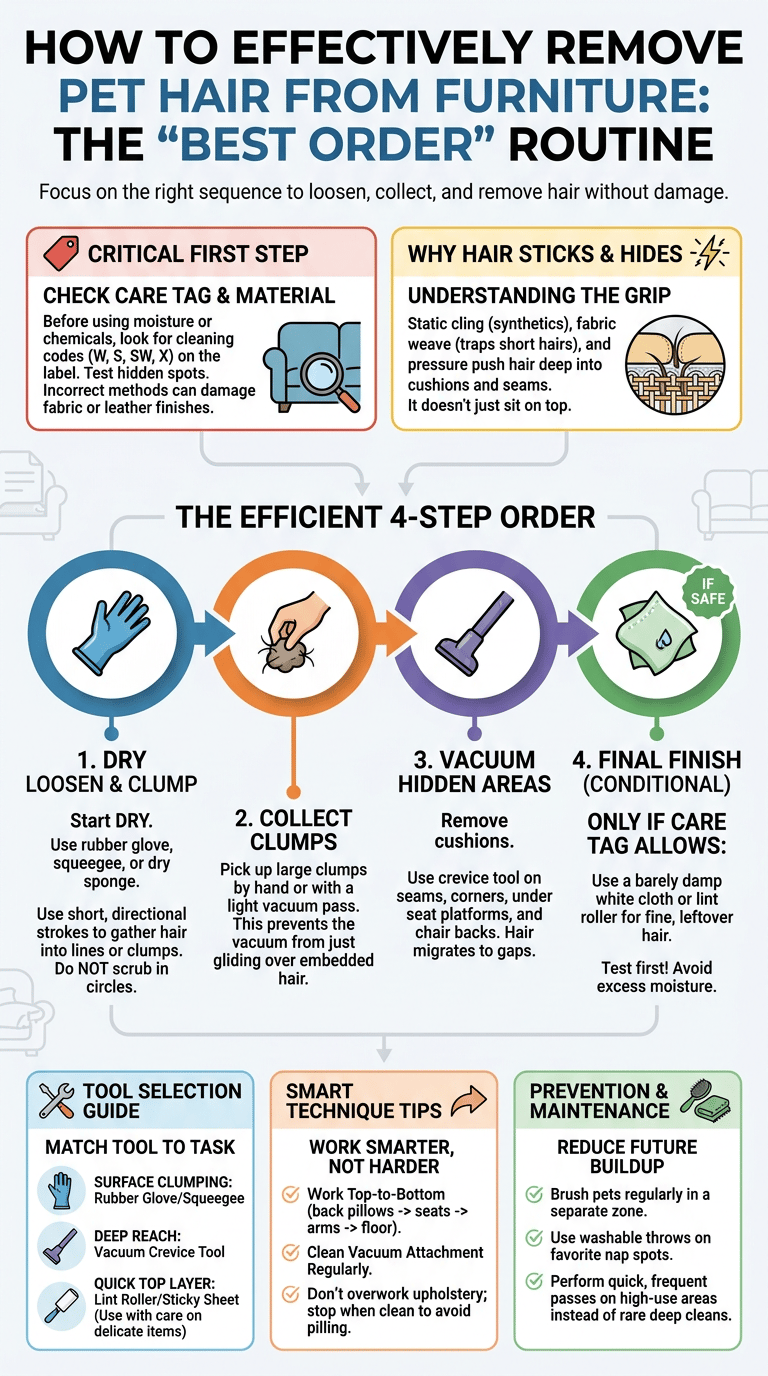
The fastest reliable routine is dry first, tool second, vacuum third, and moisture only if the furniture material allows it. A good test is to run your palm over the couch after each pass. If hair rolls into clumps, keep collecting. If it smears flat or disappears into the weave, change tools before you work harder.
Start dry before using moisture
Begin with the furniture completely dry. Dry hair releases more cleanly from most upholstery, especially when you use a rubber glove, rubber squeegee, fabric brush, or vacuum upholstery attachment. Moisture can help at the finishing stage, but using it too early may flatten hair against fabric or leave water marks on materials that do not tolerate damp cleaning.
Before using any damp cloth or cleaner, check the furniture care tag or manufacturer instructions. Many upholstered pieces have cleaning codes that limit water or solvents. Manufacturer guides such as La-Z-Boy fabric and leather care instructions show why the cleaning code matters before moisture touches a couch or chair.
Loosen hair before vacuuming
Vacuuming works better after the hair has been lifted from the fabric. Use short strokes with a rubber glove, dry sponge, or squeegee to pull hair into small lines or clumps. Then vacuum those clumps and the areas around them. This order prevents the vacuum from simply gliding over embedded hair.
Work from the highest part of the furniture to the lowest part. Start with the back pillows, move to seat cushions, then finish with arms, seams, and the floor directly under the piece. Hair falls as you clean, so cleaning from top to bottom saves repeat passes.
Finish with prevention, not more scrubbing
Once the furniture looks clean, stop scrubbing. Overworking upholstery can roughen fibers, pill fabric, or spread hair into seams. A better finish is a prevention step: brush the pet, shake washable throws outside, clean the vacuum attachment, or set a five-minute furniture reset for high-shedding days.
The goal is not to make furniture permanently hair-free. A realistic goal is to remove the visible layer, pull hair out of the main hiding spots, and slow down the next buildup.
Why Pet Hair Sticks to Furniture
Pet hair sticks because of shape, texture, static, and pressure. A dog that naps on the same sofa cushion every afternoon presses hair into the weave. A cat that rubs against a chair arm leaves hair along a narrow edge. Short, stiff hairs can behave like tiny needles, while long soft hairs can twist into fabric loops.
Static, weave, and fabric texture
Static makes hair cling to synthetic fabrics, fleece throws, microfiber, and some cushion covers. A tight weave may look smooth but still trap short hairs along the surface. A loose or textured weave can catch longer hairs between threads. Velvet, chenille, boucle, and nubby fabrics need extra care because aggressive brushing can change the nap or pull fibers.
When static is high, a rubber tool often works better than a dry cloth. The rubber creates friction that gathers hair into clumps. Use light pressure first. If the surface changes texture or the fabric pills, stop and switch to vacuuming with a soft upholstery attachment.
Why short hair can be harder than long hair
Long pet hair often rolls into clumps. Short hair can be more stubborn because it slips into tiny gaps and stands upright in the weave, especially on woven couches and car-style office chairs.
For short hair, quick vacuuming alone may miss the problem. Use a rubber glove or squeegee in one direction to lift the hair tips, then vacuum slowly. A slow vacuum pass gives the attachment time to pull loose hair instead of bouncing over it.
Why cushions and seams collect hidden hair
Cushion gaps act like hair traps. Every time someone sits down, hair moves toward seams, corners, piping, and zipper lines. If you only clean the flat seating area, the couch looks better for a few hours and then hair seems to come back.
Remove loose cushions when possible. Vacuum the back side of each cushion, the platform under the cushions, and the vertical cracks at the arms. A crevice attachment is useful here, but keep it moving so it does not pull delicate fabric into the nozzle.
Before You Start: Check the Furniture Material
Furniture material decides how much pressure, moisture, and stickiness you can safely use. The same tool that works on a sturdy fabric couch may damage a delicate finish or leave marks on leather. Check the tag, test an inconspicuous spot, and use the gentlest method that still removes the hair.
Upholstery fabric
Most fabric couches can handle dry brushing, vacuuming, and rubber tools. The risk starts when you add water, sprays, sticky sheets, or heavy scraping. Look under cushions or along the furniture frame for a care tag. If the tag shows a code that limits water, do not use damp methods just because the hair looks stubborn.
Use a light hand on textured fabrics. Brush in one direction, collect the hair, then vacuum. If the fabric pills or fuzzes, stop using friction and switch to suction plus a soft brush attachment.
Microfiber
Microfiber often attracts hair because of static, but it usually responds well to a clean rubber glove or dry microfiber cloth used in short strokes. Brush with the nap instead of against it until you know how the surface reacts. If the fabric shows streaks, smooth it back with a clean dry cloth after the hair is removed.
Avoid soaking microfiber. Even when a damp cloth is allowed, it should be barely damp, not wet. If you see dark patches forming from moisture, stop and let the area dry before continuing.
Leather and faux leather
Leather and faux leather do not trap hair the same way woven fabric does. Hair usually gathers in creases, stitching, cushion gaps, and under throw blankets. Use a soft dry cloth, a vacuum brush with soft bristles, or a slightly damp cloth only if the care instructions allow it.
Do not use sticky rollers on fragile, peeling, waxed, or unfinished leather. Sticky adhesive can tug at a finish that is already weak. If the surface is cracked, flaking, or tacky, remove hair gently and avoid adding cleaners unless the manufacturer specifically recommends them.
Delicate or vintage fabric
Silk blends, antique upholstery, handwoven textiles, needlepoint chairs, and vintage fabrics need a cautious approach. Start with a low-suction vacuum setting, a screen or mesh barrier if needed, and a soft brush. Avoid rubber dragging if the fabric has raised threads, loose fibers, or decorative stitching.
Stop if the fabric lifts, snags, or sheds fibers. At that point, hair removal becomes a preservation issue, not a speed-cleaning task. A professional upholstery cleaner may be safer than repeated DIY attempts.
When to check the care tag or manufacturer guide
Check the tag before using water, upholstery spray, solvent, steam, sticky adhesive, or a powered brush. This is especially important for newer furniture under warranty and older furniture with unknown fabric. A small tag can prevent a large mistake.
The American Cleaning Institute notes that regular pet care and household cleaning routines help manage shedding in the home, but surface care still needs to fit the material. Their guide on pets and a clean home is a useful reminder that hair control starts before the hair reaches the couch.
Tool Decision Guide for Furniture Hair
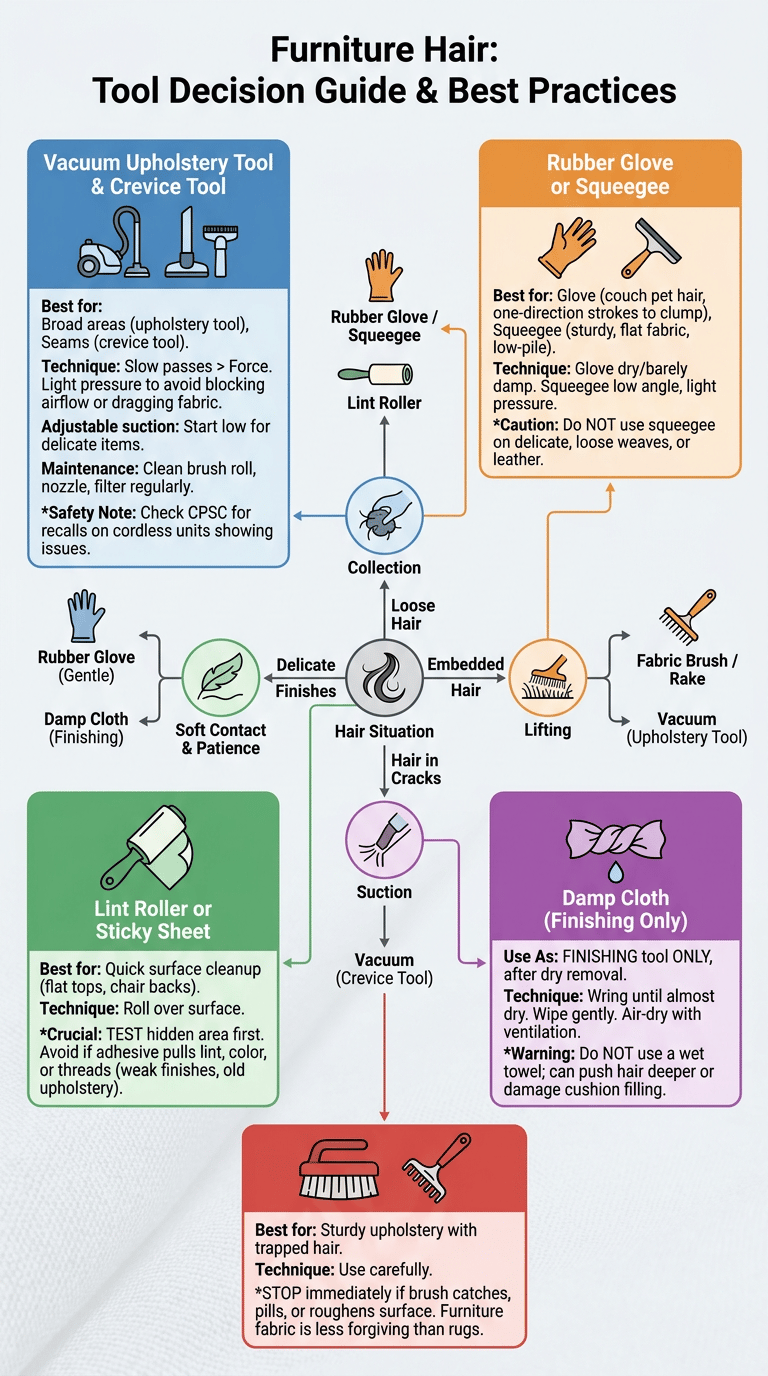
Choose the tool based on how the hair is sitting. Loose hair needs collection. Embedded hair needs lifting. Hair in cracks needs suction. Delicate finishes need soft contact and patience.
Vacuum upholstery tool
Use the upholstery attachment for broad fabric areas and the crevice tool for seams. Slow passes matter more than force. Pressing hard can block airflow or drag fabric into the nozzle. If your vacuum has adjustable suction, start lower on delicate fabrics and increase only if the fabric stays stable.
Clean the brush roll, nozzle, and filter regularly. A clogged attachment leaves hair behind and can blow fine debris back into the room. If you use a cordless vacuum, stop using it if the battery, charger, or body shows damage, overheating, smoke, or unusual odor. The Consumer Product Safety Commission recall database is a practical place to check product safety alerts for household tools.
Rubber glove or squeegee
A clean rubber glove is one of the easiest tools for couch pet hair removal. Put it on, keep it dry or barely damp if the fabric allows, and stroke the upholstery in one direction. Hair should gather into lines or clumps that you can pick up or vacuum.
A small rubber squeegee can work well on sturdy fabric, low-pile microfiber, and flat cushions. Keep the angle low and the pressure light. Do not scrape delicate upholstery, loose weaves, or leather finishes.
Lint roller or sticky sheet
A lint roller is best for quick surface cleanup before guests arrive. It works well on flat cushion tops, chair backs, and throw pillows. It is less useful for deep seams and can become expensive if you use many sheets on a large sectional.
Test sticky tools on hidden areas first. Avoid them on weak finishes, delicate decorative fabric, old upholstery, or anything that sheds fibers. If the adhesive pulls lint, color, or threads, stop immediately.
Damp cloth limits
A damp cloth is a finishing tool, not the main hair removal method. Use it only after dry removal, and only on materials that allow light moisture. Wring the cloth until it feels almost dry. Wipe gently, then let the area air-dry with good ventilation.
Do not use a wet towel to drag hair off upholstery. Too much water can push hair deeper, leave rings, or affect cushion filling.
Fabric brush and pet hair rake limits
A fabric brush can help on sturdy upholstery when hair is trapped in the texture. A pet hair rake can be useful on some heavy fabrics, but it should never feel like you are combing carpet. Furniture fabric is usually less forgiving than rugs.
Stop if the brush catches, pills, or roughens the surface. A tool that removes hair but damages the couch is not a good trade.
Step-by-Step Method for Upholstered Furniture
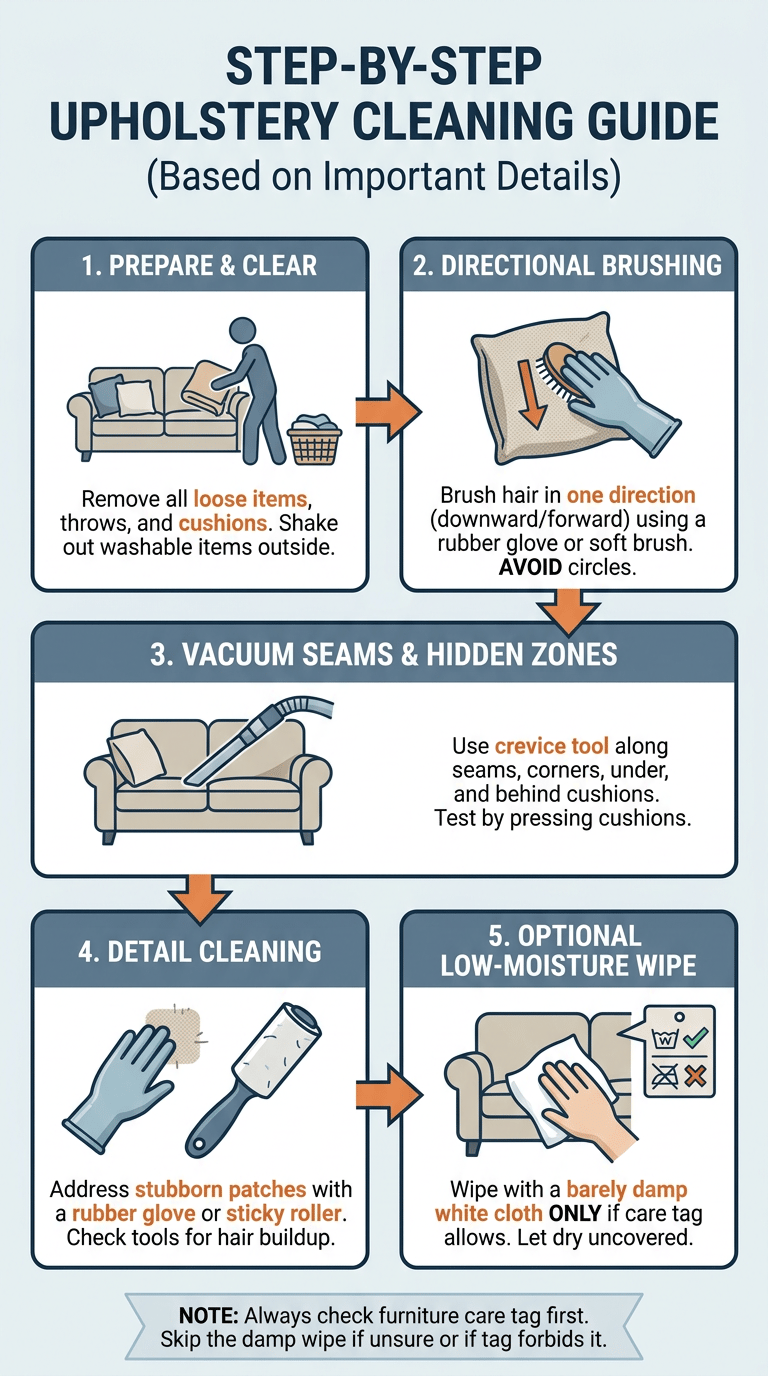
This method works for most sturdy upholstered sofas and chairs when the care tag allows dry cleaning actions. It gives you a clear sequence so you do not vacuum the same area five times with poor results.
Remove loose items and cushions
Take off throw blankets, decorative pillows, pet toys, and removable seat cushions. Shake washable throws outside if possible, or place them in a separate basket so they do not drop hair back onto the couch. Remove loose hair first so the washer does not become the next hair collector.
Look under cushions before you start. You may find fur clumps, crumbs, toy pieces, or grit that can scratch surfaces during cleaning.
Brush hair toward one direction
Use a rubber glove, dry sponge, or soft brush to move hair toward one edge of each cushion. Work in short, overlapping strokes. Do not scrub in circles. Circles can twist hair deeper into the weave and make the surface look fuzzy.
On back cushions, brush downward. On seat cushions, brush toward the front edge. On arms, brush toward the outside seam or toward an area you can vacuum easily.
Vacuum seams, corners, and cushion backs
Vacuum the collected hair first, then clean the hidden zones. Use the crevice tool along seams, under cushion edges, behind back pillows, and around armrests. Tilt cushions and vacuum the back side because hair often clings where the cushion rubs against the frame.
A good test is to press the cushion lightly after vacuuming. If hair appears from the seam, vacuum that seam again more slowly. If nothing moves, continue to the next area.
Detail clean with rubber or sticky tools
After vacuuming, use a rubber glove for leftover stubborn patches. For small visible spots, a lint roller can finish the surface quickly. Keep sticky sheets away from fragile trim, loose threads, and leather finishes.
Check your tools as you work. A glove covered in hair will stop gripping. A full lint roller sheet will smear hair around. A vacuum attachment with a hair-wrapped brush can redeposit hair on the next cushion.
Finish with a low-moisture wipe only when fabric allows
If the care tag and fabric type allow it, finish with a barely damp white cloth to pick up fine hair and dust. White cloth helps you see what is coming off and reduces the risk of dye transfer. Wipe lightly, then leave the furniture uncovered until dry.
When clothes collect hair after you sit down, address both the garment and the furniture surface. Use the clothing routine for pet hair on clothes so laundry does not keep collecting the same hair.
Skip this step if the furniture is marked for vacuum-only care, if the fabric water-spots easily, or if you are not sure what the material is.
Method by Furniture Type
Different furniture pieces collect hair in different places. A flat dining chair may only need a quick rubber pass. A sectional used by a large dog may need cushion removal, seam vacuuming, and a prevention layer.
Fabric couch
Start with the seat and back cushions, then clean arms and seams. If the couch has removable cushions, clean both sides. If the cushions are fixed, spend more time where the seat meets the back because that crease usually hides the most hair.
Use rubber first for visible hair and vacuum second for loosened clumps. Save lint rollers for the final visible layer, not the whole couch.
Microfiber sofa
Use a dry rubber glove, dry microfiber cloth, or upholstery tool. Brush with the nap and watch for streaks. Microfiber may look uneven after cleaning, so finish by smoothing the surface in one direction with a clean dry cloth.
If static is strong, clean in smaller sections. Large sweeping motions can move hair across the sofa instead of collecting it.
Leather couch
Wipe loose hair with a soft dry cloth, then vacuum creases with a soft brush or crevice tool held slightly away from the surface. Pay attention to stitching, cushion cracks, and the area under blankets.
Do not use abrasive brushes or sticky rollers on leather that is cracked, peeling, waxed, or unfinished. If a damp cloth is allowed, use very little moisture and dry the area with a soft cloth afterward.
Dining chairs and office chairs
Dining chairs often collect hair on the front edge of the seat and along the lower back. Office chairs collect hair where clothing rubs against the cushion. Use a lint roller for quick cleanup, then vacuum the seams and underside edges weekly.
If the chair has mesh, do not force hair through the holes. Vacuum one side while brushing lightly from the other side if the design allows it.
Throw pillows and removable covers
For throw pillows, remove surface hair before washing or placing them back on the couch. Shake the pillow outside, brush in one direction, then use a lint roller for the last layer. If the cover is removable, read the care tag before laundering it.
Do not assume every zipper means the cover is machine-washable. Some covers are removable for manufacturing or cushion adjustment, not for home washing.
Furniture Pet Hair Checklist
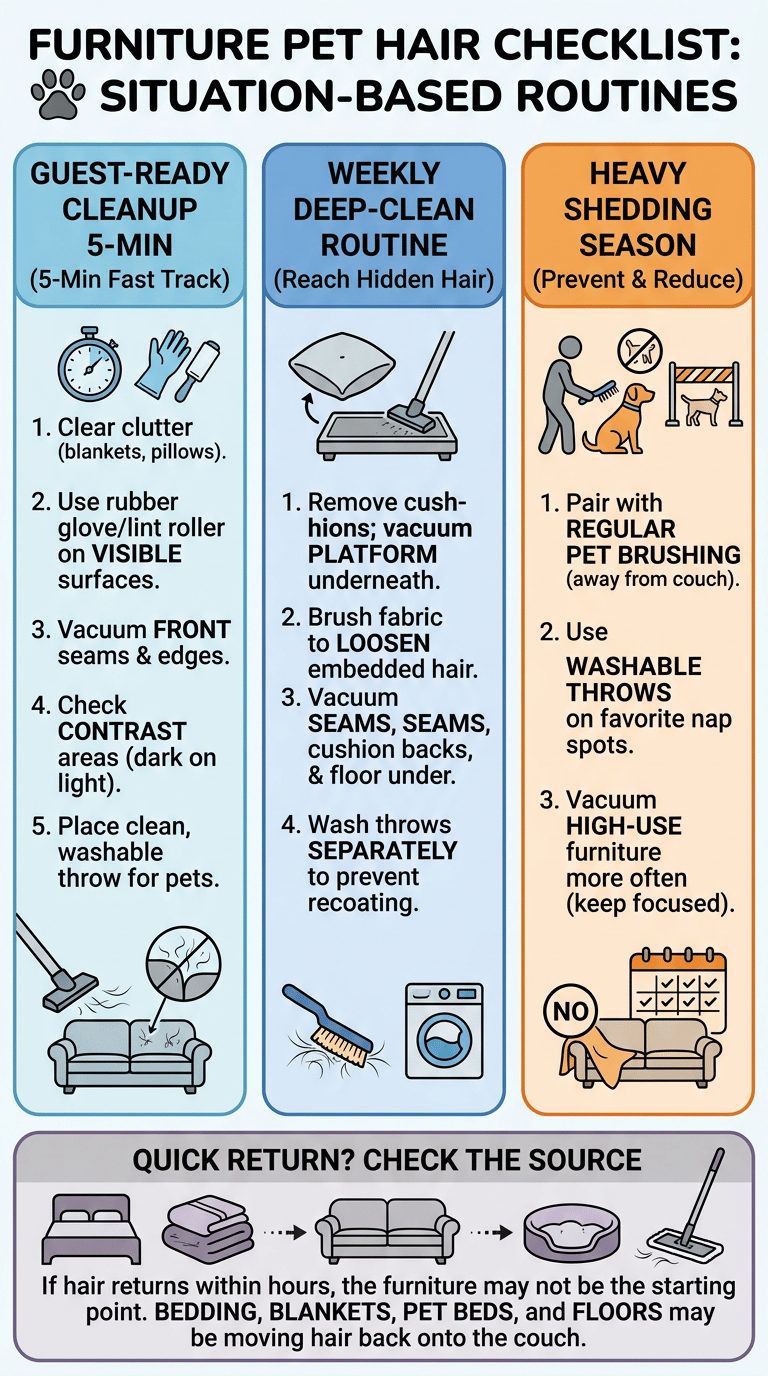
Use the right checklist for the situation. A guest-ready cleanup should be fast. A weekly routine should reach hidden hair. A shedding-season routine should reduce how much hair gets to the couch in the first place.
Five-minute guest-ready cleanup
- Remove blankets, toys, and loose pillows from the main seating area.
- Use a rubber glove or lint roller on the most visible cushion tops and chair backs.
- Vacuum the front cushion edge and armrest seams where hair clumps show quickly.
- Check the back of dark pillows and the front of light cushions, because contrast makes hair more obvious.
- Put down a clean washable throw if pets will return to the same seat.
Weekly deep-clean routine
- Remove cushions if possible and vacuum the platform underneath.
- Brush upholstery in one direction to loosen embedded hair.
- Vacuum seams, cushion backs, arms, and the floor under the furniture.
- Clean the vacuum attachment before storing it.
- Wash or shake throws separately so they do not recoat the furniture.
Heavy shedding season routine
During shedding season, furniture cleaning works best when paired with pet brushing and fabric barriers. Brush pets in a consistent zone away from the couch. Use washable throws on favorite nap spots. Vacuum high-use furniture more often, but keep each session focused so you do not overwork the fabric.
If hair is returning within hours, the furniture may not be the starting point. Bedding, blankets, pet beds, clothing, and floors may be moving hair back onto the couch.
If clean furniture gets hairy again quickly, a pet bed or favorite blanket may be sending hair back into the room. Check how to clean pet bedding before blaming the couch.
Mistakes That Make Furniture Hair Worse
The wrong method can make pet hair look more embedded than before. Most mistakes come from too much pressure, too much moisture, or skipping the hidden places where hair is waiting.
Rubbing hair deeper into upholstery
Hard circular rubbing feels productive, but it can twist hair into the weave. Use directional strokes instead. If the hair does not move after a few passes, change tools rather than pressing harder.
Using too much water on fabric
Water is not a shortcut for pet hair. Wet fabric can hold hair flat, create rings, or make cushion filling damp. Use dry tools first. If a low-moisture wipe is allowed, it should be the final detail step.
Skipping seams and cushion gaps
Hair that sits in seams will migrate back to the surface when people sit down. Clean seams during the same session as the visible cushions. Otherwise the furniture may look clean at noon and hairy again by evening.
Using sticky tools on delicate finishes
Sticky rollers can pull loose fibers, lift weak finishes, or leave residue. They are convenient, not universal. Test first and avoid them on antique fabric, fragile trims, peeling faux leather, and delicate surfaces.
Prevention: Reduce Hair Before It Reaches the Couch
Prevention does not mean banning pets from comfortable places. It means giving hair easier places to land and easier routines to manage.
Pet brushing zones
Choose a brushing zone away from upholstered furniture. A washable mat near a door, laundry area, or bathroom may work better than brushing beside the sofa. Keep a brush and small waste bag there so the habit is easy to repeat.
Brush gently and use tools made for your pet’s coat type. If brushing causes skin irritation, bald spots, or discomfort, stop and ask a veterinarian or groomer for guidance.
Washable throws
A washable throw protects the exact spot where a pet naps. Choose a tightly woven throw that releases hair easily. Shake or brush it before laundering so the washer and dryer do not carry extra hair into the next load.
Furniture covers
Furniture covers are useful when pets always use the same couch or chair. A cover should fit securely enough that it does not bunch into cushion cracks. Loose covers can trap hair underneath and make the furniture harder to clean.
Vacuum schedule for high-shedding pets
High-shedding homes usually need short, frequent furniture cleaning rather than rare deep-cleaning. A five-minute pass every other day on favorite seats can be easier on the fabric than a heavy scrub once every two weeks.
Adjacent Issues: When Hair Is Not the Only Problem
Sometimes hair is only the visible part of the mess. Keep the furniture hair routine separate from odor, laundry, and bedding problems so each task gets the right method.
If the couch also smells like pets
Visible hair removal will make the couch look better, but it may not remove odor from fabric, cushion filling, or hidden spills. Do not cover odor with heavy fragrance. Remove hair first, identify whether the smell is on the surface or deeper in the cushion, and follow a couch odor routine if needed.
When using any cleaner around pets, follow the label and keep animals away until the area is used as directed and fully dry. The ASPCA explains that many household cleaning products can be used around dogs and cats when used according to directions, but concentrated products and certain animals need extra caution in its household product safety guidance.
If bedding is spreading hair back onto furniture
Pet beds and blankets can reload a clean couch with hair. If your furniture gets hairy again right after cleaning, check where your pet sleeps. Shake, brush, or vacuum bedding before washing it, and keep heavily haired bedding away from clean upholstery.
If clothing keeps picking up furniture hair
Clothing can carry hair from the couch to the laundry basket, closet, car seat, and back again. If your clothes are covered after sitting down, focus on the furniture surface first. If clean clothes come out of the laundry with hair still attached, that is a separate laundry process, not a furniture problem.
FAQ About Removing Pet Hair from Furniture
These answers focus on furniture surfaces, not laundry loads, pet bedding, or deep odor treatment.
What removes pet hair from a couch fastest?
For visible surface hair, a rubber glove or lint roller is usually fastest. Use the rubber glove for larger cushion areas and the lint roller for the final visible layer. If hair is stuck in seams, a vacuum crevice tool is faster than trying to pick it out by hand.
Is a damp rubber glove safe for upholstery?
It depends on the fabric. A barely damp rubber glove can help on some sturdy upholstery, but dry rubber is safer as the first step. Check the care tag before using moisture, test a hidden spot, and stop if the fabric darkens, streaks, pills, or feels rough.
Why does pet hair come back right after vacuuming?
Hair often comes back because it was hiding in seams, cushion backs, throws, or nearby pet bedding. Sitting on the furniture pushes hidden hair back to the surface. Remove cushions, vacuum cracks, and clean the items that touch the couch.
Can pet hair damage furniture fabric?
Pet hair itself is usually more of a cleaning problem than a damage problem. The bigger risks are grit caught with the hair, claws on fabric, oils from repeated pet contact, and aggressive cleaning methods. Gentle, frequent cleaning protects furniture better than rare heavy scrubbing.
Final Thoughts: Keep Furniture Hair Removal Simple
The best way to remove pet hair from furniture is to stop fighting the whole couch at once. Identify the material, loosen hair while it is dry, vacuum the hidden spots, and use moisture only when the care instructions allow it. Once the furniture is clean, reduce the next buildup with brushing zones, washable throws, and short maintenance passes. That routine is easier, safer for the furniture, and more realistic for homes where pets are part of daily life.

Ethan Carter is the Founder & Editor of HomeCleanSecrets. Based in the United States, he has 5 years of experience creating practical home cleaning, laundry care, stain removal, decluttering, and home organization content. His goal is to help everyday households clean smarter and build simple routines that are easier to maintain.
Read more about Ethan Carter on his author page: https://homecleansecrets.com/ethan-carter/