
Pet hair on clothes is annoying because washing does not always remove it. Sometimes the washer makes the problem look worse: hair loosens from one shirt, floats through the load, then clings to black pants, leggings, fleece, or work clothes. The better routine is to remove as much loose hair as possible while garments are dry, use the dryer only when the care tag allows it, wash smaller loads, and clean the lint trap, drum, and washer seal after heavy pet-hair laundry.
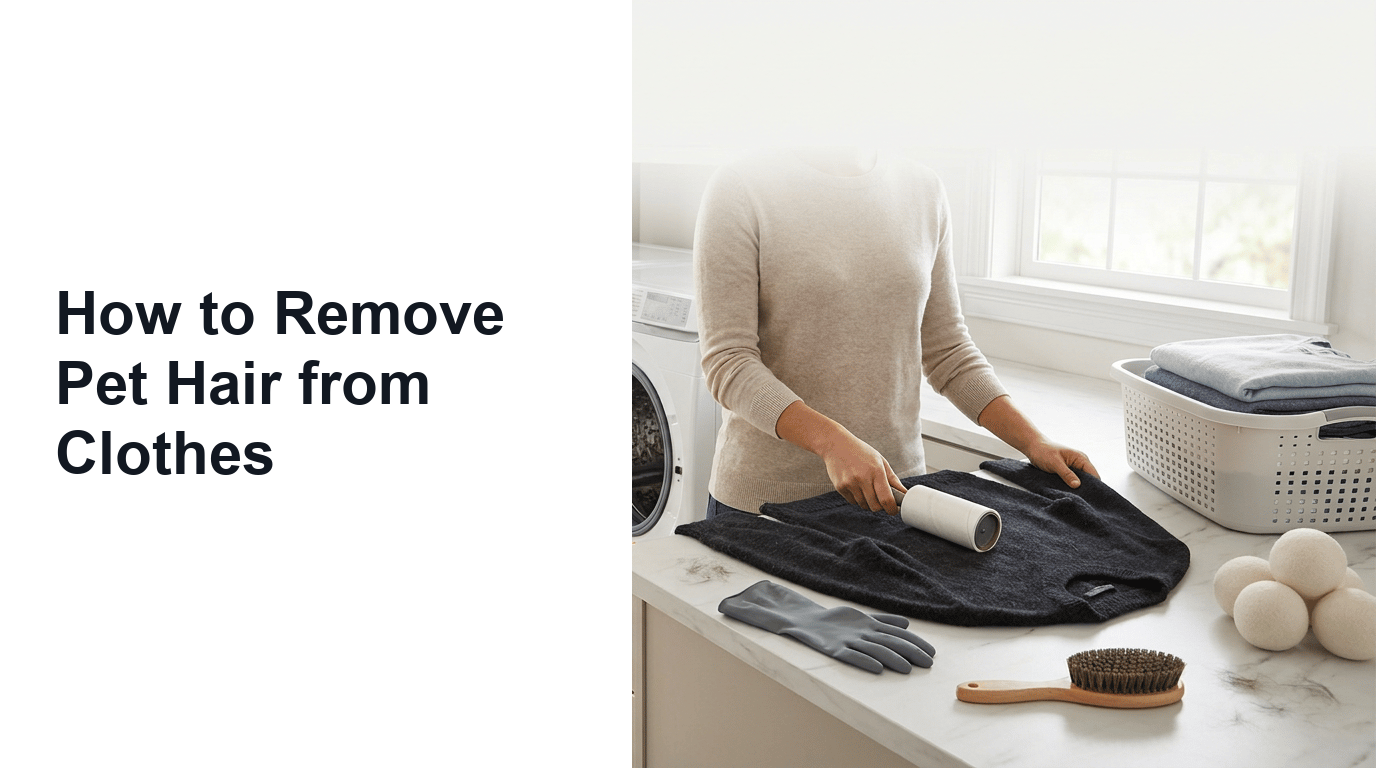
This guide focuses on wearable clothing: shirts, pants, uniforms, sweaters, coats, gym wear, and dark outfits that show every strand. It does not replace a furniture hair-removal guide or a pet bedding washing guide. Furniture and bedding can feed more hair into your laundry, but the steps below stay focused on garments, care tags, washer behavior, dryer safety, and quick fixes before you leave the house.
Pet blankets and beds can carry loose hair into laundry baskets, washer drums, and clean clothing piles. Follow the routine to clean pet bedding before washing more clothes.
Quick Answer: The Best Pet Hair Removal Routine for Clothes
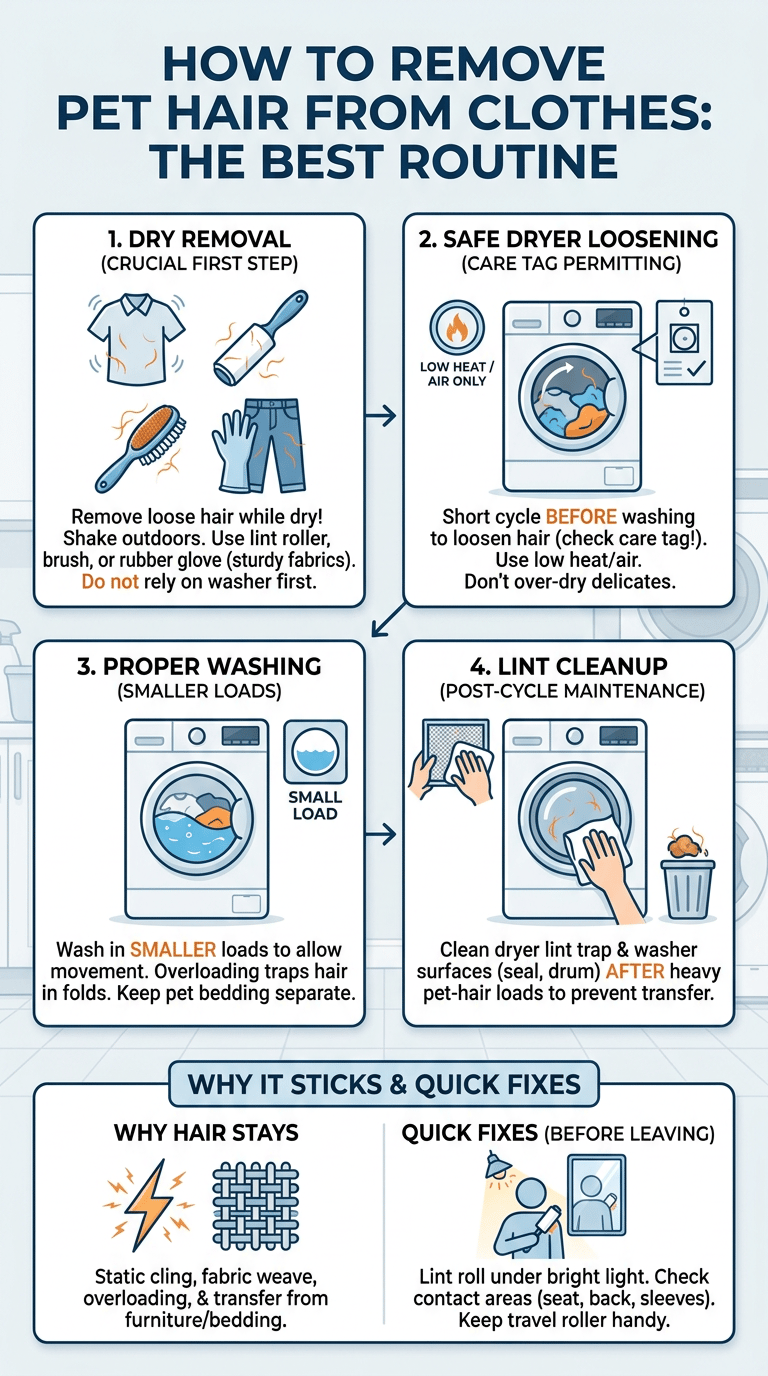
The most reliable order is dry removal, safe dryer loosening, proper washing, then lint cleanup. Pet hair releases more easily from dry fabric than from wet fabric. Once hair is soaked into a twisted load, it can cling harder to synthetic fibers and move from one item to another.
Remove loose hair before washing
Take the hair off while the garment is dry. Shake the item outdoors if possible, then use a lint roller, garment brush, rubber glove, or slightly damp hand on sturdy fabric. A good test is to brush one sleeve or leg for ten seconds. If hair rolls into clumps, keep working dry. If hair only smears flat, change to a lint roller or brush instead of pressing harder.
Use the dryer strategically when the care tag allows
A short dryer cycle before washing can loosen dry hair and send it to the lint screen. This only works when the garment care tag allows tumble drying. Use low heat or air only when appropriate, keep the cycle short, and stop if the garment feels too warm, delicate, or misshapen.
Care tags are not optional here. The American Cleaning Institute explains fabric-care symbols and laundry basics in its laundry basics guide, which is helpful when you are deciding whether a garment can handle tumble drying, gentle cycles, or lower temperatures.
Clean the lint trap and washer after heavy loads
Pet hair does not disappear when it leaves clothing. It lands in the lint trap, door seal, washer gasket, drum, filter area, or on the next load. After a heavy pet-hair load, clean the dryer lint screen, wipe visible hair from the drum, and check the washer gasket before adding clean clothes.
Why Pet Hair Stays on Clothes After Washing
Pet hair stays on clothing because water alone does not break the grip between hair and fabric. Hair can cling through static, twist into textured fibers, hide in seams, or move around in an overloaded washer. The problem usually comes from a workflow mistake, not from one bad garment.
Static cling
Static builds when fabric rubs against fabric, especially with synthetics, fleece, athletic wear, and dry indoor air. Static makes hair stick to leggings, polyester shirts, fleece jackets, and dark pants even after washing. If clothes come out clean but still look hairy, static may be part of the problem.
Dryer sheets and fabric softeners can reduce static, but they are not always right for every household or garment. They can affect moisture-wicking athletic fabrics, towels, and some technical materials. Keep unused laundry products away from pets, and read the product label before using anything new.
Fabric texture and weave
Smooth cotton releases hair more easily than fleece, sherpa, ribbed knits, velvet-like textures, and synthetic leggings. Short dog hair can wedge into tiny fabric gaps. Long cat hair can twist around threads and seams. That is why two garments in the same wash can come out looking completely different.
Overloaded laundry
An overloaded washer leaves clothing packed together, so hair cannot rinse away. Garments need room to move, open, and release debris. When the drum is stuffed, hair moves from one garment to another and stays trapped in folds.
Smaller loads are especially important when you are washing dark clothes, pet owner work clothes, or anything that came from a couch, car seat, or pet sleeping area. The goal is not to fill every inch of the drum. The goal is to give water, detergent, and movement enough space to work.
Hair transfer from bedding or furniture
Clothes often pick up hair before they reach the hamper. A sweatshirt left on the sofa, pajamas tossed onto a pet blanket, or a coat placed on a furry chair can collect more hair than you notice. Once those items enter the hamper, the hair spreads to cleaner garments.
Before Laundry: Remove Hair While Clothes Are Dry
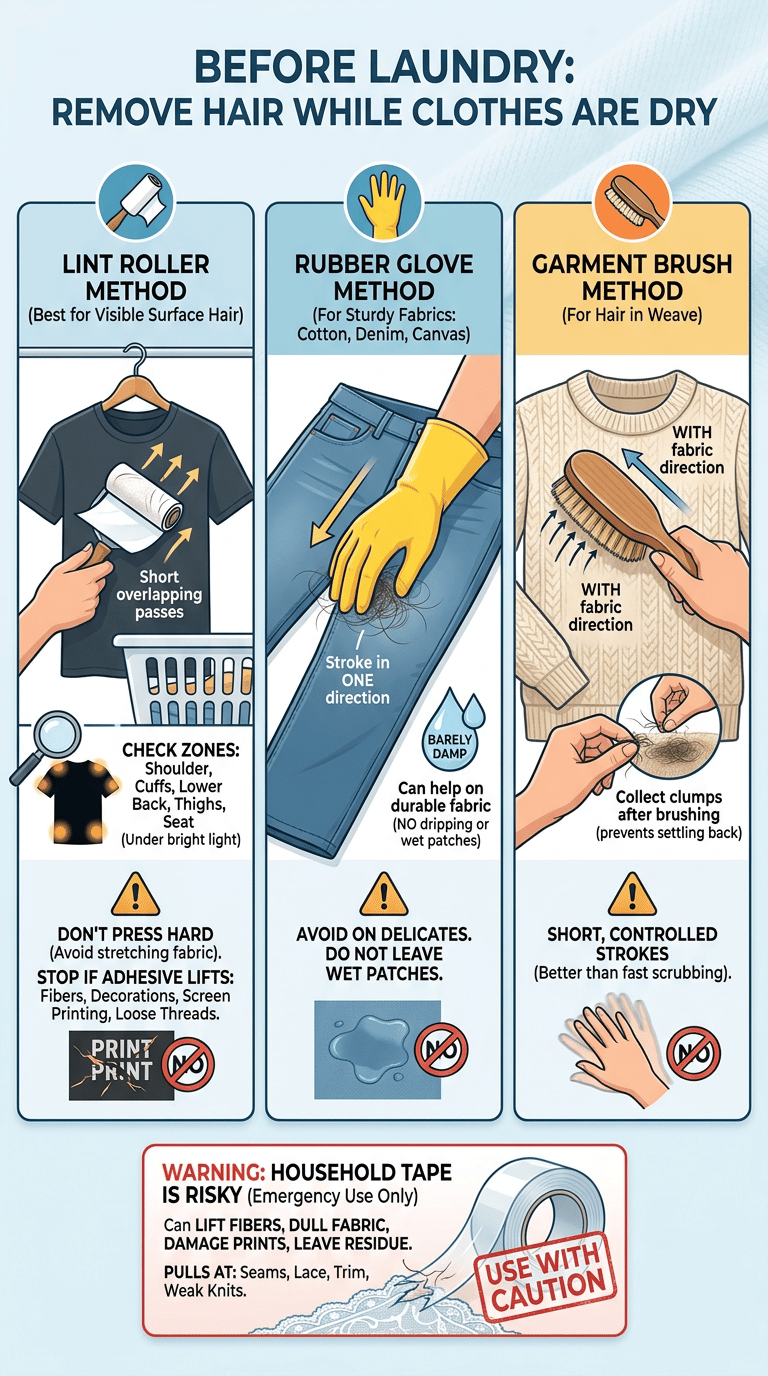
The dry stage is where most people save the wash. It is faster to remove loose hair from a dry shirt than to chase wet strands after the cycle ends. Put the garment on a hanger, lay it flat on a clean surface, or hold it over a laundry basket so removed hair does not land back on the floor.
Lint roller method
A lint roller is the best quick tool for visible surface hair. Roll in short overlapping passes, then change sheets before the adhesive gets dull. On black clothes, work under bright light and check the shoulder, lower back, cuffs, thighs, and seat area because those spots touch furniture and pets most often.
Pet hair often starts on furniture, bedding, and favorite resting spots before it reaches clothes. Use the whole-home pet hair control system for the broader cleaning framework.
Do not press so hard that fabric stretches. A lint roller should collect hair, not pull the garment out of shape. Stop if the adhesive lifts fibers, decorations, screen printing, or loose threads.
Rubber glove method
A clean rubber glove works well on sturdy cotton, denim, canvas, and some sweatshirts. Put on the glove and stroke in one direction to gather hair. A barely damp glove can help on durable fabric, but it should not drip or leave wet patches.
Garment brush method
A garment brush is useful when hair is caught in a weave. Brush with the fabric direction when possible. Short, controlled strokes are better than fast scrubbing. Collect clumps with your fingers or a lint roller after brushing so the hair does not settle back onto the item.
When tape is too harsh for fabric
Household tape can remove hair in an emergency, but it is risky on delicate clothing. Adhesive can lift fibers, dull fabric, damage prints, and leave residue. It can also pull at seams, lace, decorative trim, and weak knits.
Washer and Dryer Decision Tree
Not every garment should follow the same pet-hair routine. The decision depends on the care tag, fabric type, amount of hair, and whether the item can safely tumble. When in doubt, choose the gentler path and remove more hair by hand before washing.
Clothes that can go in the dryer first
Sturdy cotton shirts, jeans, many casual pants, and some sweatshirts may tolerate a short dryer cycle before washing. Use a no-heat, air-only, or low-heat setting when the care tag allows. Ten minutes is often enough to loosen dry hair and move it to the lint screen.
Clean the lint screen before the cycle and again after the cycle. If the screen fills quickly, do not keep running the dryer without clearing it. The Consumer Product Safety Commission warns in its clothes dryer safety alert that lint can block airflow and contribute to excessive heat buildup.
Clothes that must air-dry
Some garments should not go into the dryer at all. Air-dry items need more dry hair removal before washing because you cannot rely on tumble action afterward. Brush them thoroughly, wash with similar fabrics, then hang them where they will not touch pet blankets or furry furniture while drying.
Delicates and knits
Delicates, knits, wool blends, lace, and loosely woven items need low friction. Shake gently, brush lightly, and place washable delicates in a mesh laundry bag if the care tag allows machine washing. Avoid twisting, scraping, and high heat.
The American Cleaning Institute’s fabric care guidance is a useful reminder to follow labels before choosing water temperature, drying method, or special handling. Pet hair removal should not override the garment’s care limits.
Heavy-hair loads that need pre-cleaning
A load covered in hair should not go straight into the washer. Shake items outdoors, brush the worst areas, and consider a short dryer cycle for dryer-safe garments before washing. If bedding or couch throws are involved, keep them separate from clothing.
Step-by-Step Laundry Method for Pet Hair
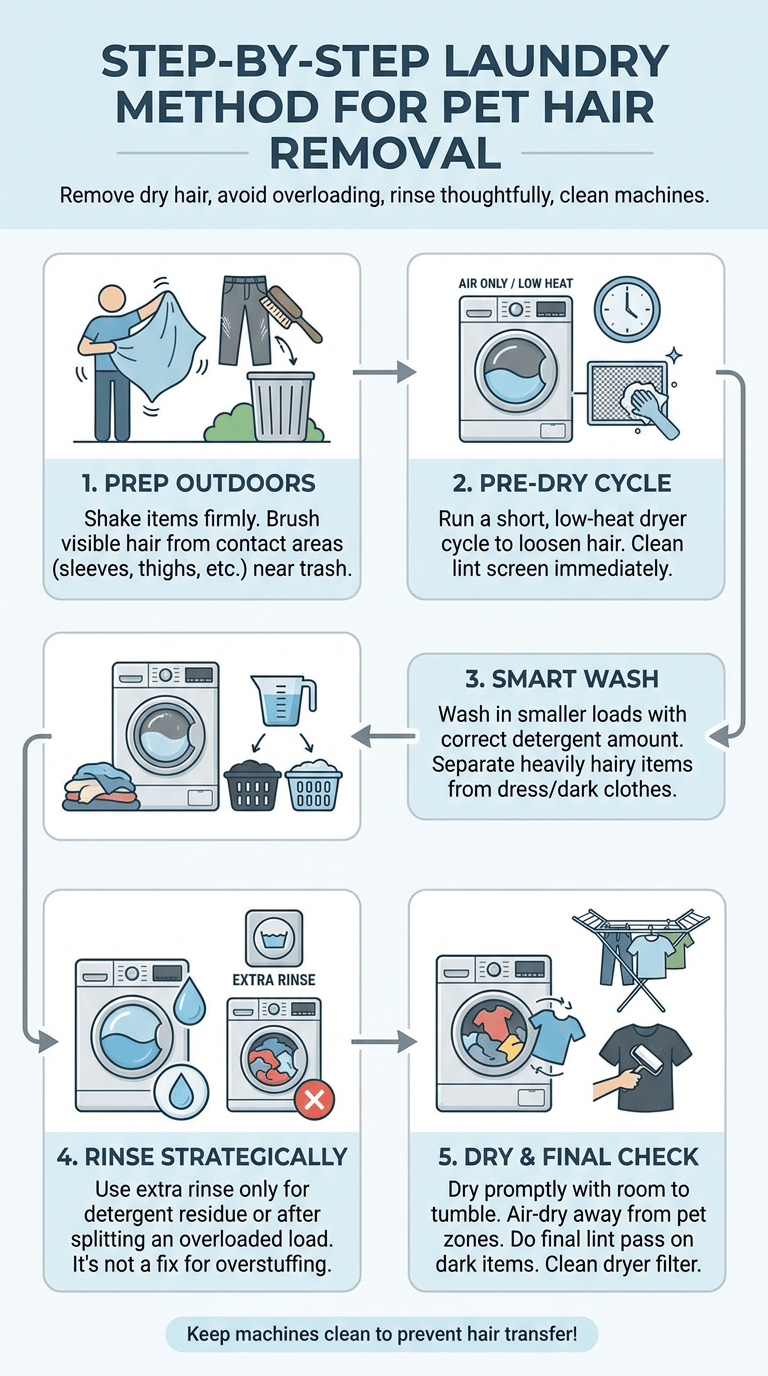
This routine works for most washable clothing when you adjust it to the care tag. The main idea is to remove dry hair first, avoid overloading, rinse only when needed, and clean the machines before hair gets passed to the next load.
Shake and brush outdoors when possible
Take heavily hairy clothes outside or near a trash area. Shake each item firmly but not violently. Then brush the visible hair from the areas that touch pets and furniture: front thighs, sleeves, shoulders, chest, cuffs, back pockets, and the seat of pants.
Run a short dryer cycle if safe
Place dryer-safe garments in the dryer for a short air-only or low-heat cycle. Add only enough items to tumble freely. When the cycle ends, remove the clothes, clean the lint screen, and wipe any visible hair from the door area.
Wash with the right load size
Wash pet-hair clothing in a smaller load than usual. Choose a cycle that matches the garment care tags and soil level. Use the correct amount of detergent; more detergent is not a hair magnet and can leave residue if overused.
Keep heavily hairy items away from dress clothes and dark office wear unless they have been pre-cleaned. If your washer has a pet-hair or deep-rinse feature, check the appliance manual before using it so you understand the right load size and filter care.
Use an extra rinse only when useful
An extra rinse can help when hair and detergent residue are both hanging around, but it is not a magic fix for overloaded loads. If the washer was too full, an extra rinse may still leave hair trapped in folds. Split the load first, then decide whether extra rinsing makes sense.
Dry and remove lint promptly
Move clothes promptly after washing. Dryer-safe items should tumble with enough room to move. Air-dry items should hang away from pet beds, shedding zones, and upholstered furniture. Once items are dry, do a final lint pass on dark clothing and work outfits.
Clean the lint screen after the dryer finishes. If clothing takes much longer than normal to dry, if the dryer feels unusually hot, or if you notice a burning smell, stop using the dryer and check the manual or a qualified appliance professional.
Method by Clothing Type
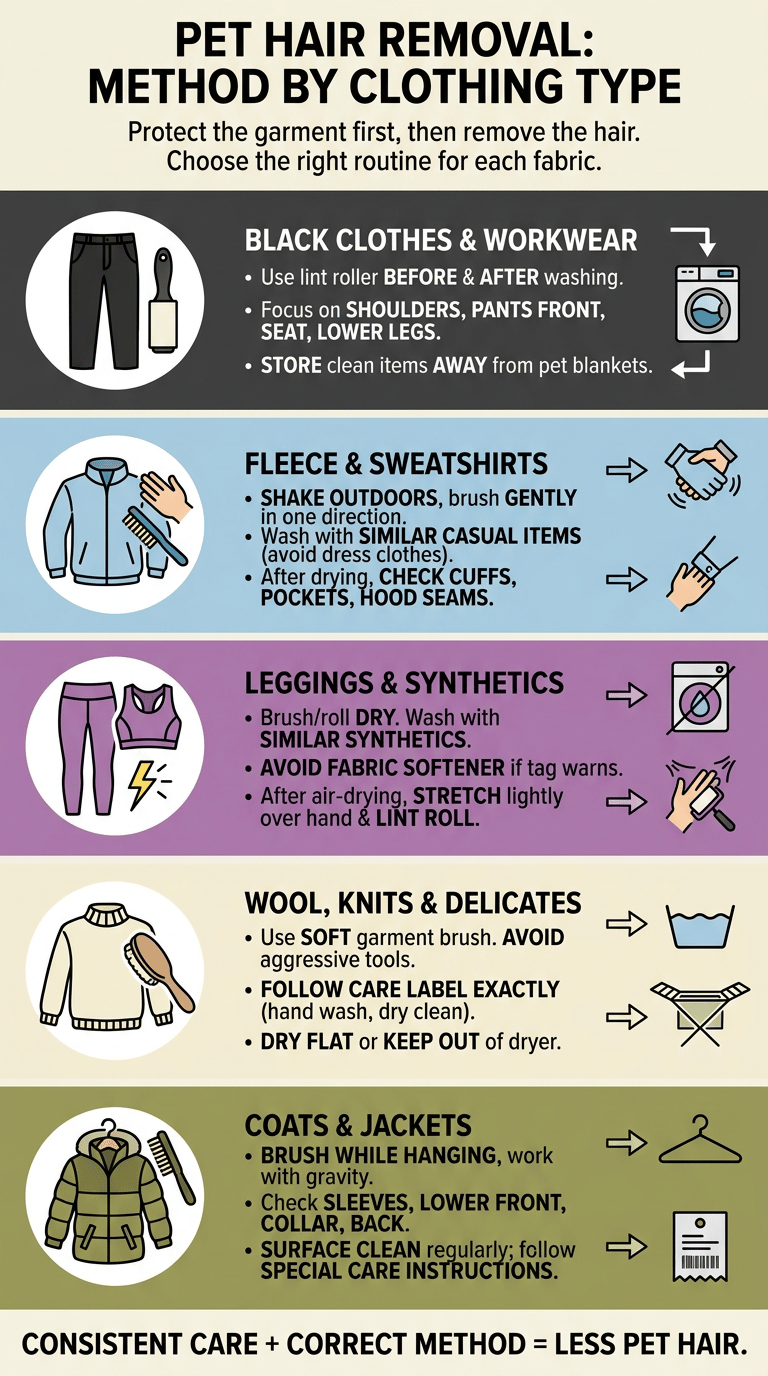
Clothing type changes the best pet-hair method. The routine for black pants is not the same as the routine for fleece or wool. Choose the method that protects the garment first, then remove the hair.
Black clothes and workwear
Black clothes show every hair, especially under daylight or office lighting. Use a lint roller before washing and again after drying. Pay attention to the shoulder line, front of pants, seat, and lower legs. Store clean black items away from pet blankets and open hampers.
Fleece and sweatshirts
Fleece grabs hair because the surface is soft and textured. Shake it outdoors, brush gently in one direction, and wash fleece with similar casual items. Avoid mixing fleece with black work pants or smooth dress clothes because it can transfer lint and hair.
After drying, use your hand or a lint roller to check cuffs, pocket edges, hood seams, and the lower front. These areas often hold hair even when the main surface looks clean.
Leggings and synthetic fabrics
Leggings and athletic fabrics often cling through static. Brush or roll them dry, wash with similar synthetics, and avoid products that the care tag warns against. Some performance fabrics should not be washed with fabric softener because it can affect how the fabric feels or performs.
Air-drying may reduce heat stress, but it can leave loosened hair on the surface. Once dry, stretch the fabric lightly over your hand and use a lint roller in short passes.
Wool, knits, and delicates
Wool, knits, and delicates need the gentlest approach. Use a soft garment brush, avoid aggressive rubber tools, and follow the care label exactly. Some items should be hand washed, dry cleaned, dried flat, or kept out of the dryer entirely.
Coats and jackets
Coats pick up hair from car seats, entry benches, sofas, and pet greetings at the door. Brush them while hanging so you can work with gravity. Check sleeves, lower front panels, collar edges, and the back where the coat touches chairs.
Many coats have special care instructions because of linings, insulation, waterproof finishes, or wool content. Check the label before washing or drying. Surface hair removal may be the safest regular option between deeper cleanings.
Washer and Dryer Care After Pet Hair Loads
Appliance cleanup is part of clothing care when pets are in the home. A washer or dryer that holds leftover hair can contaminate the next load. The best time to clean is right after the hairy load, while the hair is visible and before it dries into corners.
Clean the lint trap
Remove lint and hair from the dryer screen before and after pet-hair loads. A screen that looks only partly covered can still reduce airflow if fine lint and hair mat together. Rinse the screen only if your dryer manual allows it, and let it dry fully before reinstalling.
Wipe the drum and door seal
After drying hairy clothes, wipe the inside of the dryer door and drum with a clean dry cloth. Look for hair clinging near the door opening and around any ridges. Do not spray cleaners inside the dryer unless your manual says it is safe.
Washer drums can also hold hair after a cycle. Leave the door open when appropriate for the machine type, and wipe visible hair once the drum is empty.
Check for hair in washer gaskets
Front-load washer gaskets can trap hair, lint, and moisture. Gently pull back the fold and wipe visible debris with a cloth. Top-load washers can hold hair around the rim, dispenser, or agitator area. Keep hands away from moving parts and only clean when the machine is off.
Manufacturer guidance such as Whirlpool’s washing machine cleaning steps shows why door areas, dispensers, and seals need attention during regular washer care.
When hair buildup needs appliance manual guidance
Check the manual if hair appears in a filter, drain area, pump access panel, vent, or any part you do not normally clean. Do not remove panels, force parts open, or push tools into vents without instructions.
Fast Fixes Before Leaving the House
Some mornings do not allow a full laundry routine. Keep the fast fix simple: remove visible hair, check under strong light, and prevent new transfer before you walk out.
Two-minute dark clothing cleanup
Put the garment on, stand near a window or bright light, and roll from top to bottom. Start with shoulders and chest, then sleeves, thighs, seat, and lower legs. Use a fresh lint roller sheet when the adhesive stops picking up hair.
Finish by checking the back of your clothing in a mirror. Pet hair often hides on the seat of pants and the lower back of shirts because those areas touch couches and chairs.
Car or office emergency kit
Keep a small kit with a travel lint roller, compact garment brush, and a zip bag for used sheets. Store it in a work bag, car console, desk drawer, or entry basket. This is especially useful for uniforms, interviews, office clothes, and dark outfits.
A slightly damp microfiber cloth can help on sturdy fabric in a pinch, but test first. Do not use water on silk, wool, delicate knits, or anything that spots easily.
Preventing hair transfer in closets
Clean clothing can collect hair in the closet if pet bedding, worn clothes, or furry coats sit nearby. Keep work clothes covered or separated. Do not hang freshly cleaned pants where they touch a shedding coat or a pet blanket.
If clean clothes collect hair as soon as you sit down, the furniture needs attention before the next laundry load. Start with the guide for pet hair on furniture to reduce transfer at the source.
Use a closed hamper for hairy items. If your pet sleeps in the closet or laundry room, keep clean outfits inside garment bags or a closed section.
Mistakes That Keep Pet Hair on Clothes
Most pet-hair laundry problems come from timing and sorting. Stronger products do not fix a process that sends loose hair through every garment.
Washing hairy clothes without pre-removal
The washer should not be the first hair-removal tool. Loose hair needs to be shaken, brushed, rolled, or tumbled safely before washing. Otherwise, the washer becomes a mixing bowl for hair.
Pre-removal is especially important for clothes that were on the sofa, in the car, near a pet bed, or on the floor.
Overloading the washer
A crowded washer traps hair in folds. If clothes come out with streaks of hair or lint, the load may have been too large. Split heavy loads, wash similar fabrics together, and leave room for movement.
Mixing pet bedding with work clothes
Pet bedding and work clothes should usually be separate loads. Bedding carries hair, dander, body oils, and sometimes odor. Work clothes, dark pants, and uniforms show transfer quickly.
If you must wash them close together, clean the washer and dryer contact points after the bedding load before adding clothing.
Ignoring care tags
Care tags protect fabric, shape, color, and finish. A dryer-first method is helpful only when the garment can safely tumble. A brush is useful only when the fabric can tolerate friction. A cleaning product is safe only when the label and garment instructions agree.
Adjacent Issues: Where the Hair Is Coming From
If clothes keep collecting hair right after cleaning, the laundry routine may be fine and the transfer point may be elsewhere. Look at the places clothing touches before it reaches your body, hamper, or closet.
Furniture transfer
Sofas, office chairs, dining chairs, and car seats can reload clean clothing with hair. If you sit down after dressing, check that seat. A clean outfit can pick up visible hair in seconds from a favorite pet spot.
Pet bedding transfer
Pet bedding can spread hair to pajamas, robes, blankets, and casual clothes. Keep pet bedding out of clothing hampers. Shake and pre-clean it before washing, and avoid washing it with clothes that need to look lint-free.
Whole-house shedding zones
Entry rugs, couch corners, laundry room floors, bedroom chairs, and car seats often become shedding zones. A quick vacuum or brush in these areas lowers the amount of hair that reaches clothing. Grooming routines can also reduce loose hair before it lands on fabric, but the right schedule depends on the pet’s coat and tolerance.
When hair keeps appearing across rooms, treat it as a routine problem instead of only a laundry problem. A plan for whole-house shedding zones helps decide what to clean daily and weekly.
Keep laundry products closed and away from pets. The ASPCA warns that laundry detergent pods can be dangerous to pets if ingested, so storage matters as much as the cleaning routine.
FAQ About Removing Pet Hair from Clothes
These answers handle the laundry problems readers usually notice after the main routine: wash order, hair transfer, appliance buildup, and fast dark-clothing cleanup.
Should you wash or dry clothes first to remove pet hair?
Remove loose hair while clothes are dry first. If the care tag allows tumble drying, a short air-only or low-heat dryer cycle before washing can loosen more hair and send it to the lint screen. If the garment cannot tumble dry, brush or roll it more thoroughly before washing.
Why do my clothes have more hair after washing?
This usually happens when loose hair transfers inside the load. Common causes include washing hairy items without pre-removal, overloading the washer, mixing pet bedding with clothing, or leaving hair inside the washer or dryer from a previous load.
Can pet hair clog a washing machine?
Pet hair can collect in gaskets, filters, drains, and other areas depending on the machine. Normal visible hair can often be wiped away, but drainage problems, unusual noises, standing water, or repeated error codes need appliance manual guidance or professional service.
What is the best quick fix for pet hair on black clothes?
Use a fresh lint roller sheet under bright light, then check the seat, lower back, sleeves, and thighs. Keep a travel lint roller in your car, bag, or desk. Store black clothing away from pet bedding and furry furniture so it does not reload with hair after cleaning.
Final Thoughts
The best way to remove pet hair from clothes is to stop treating the washer as the first step. Dry hair removal, smart sorting, safe dryer use, smaller loads, and appliance cleanup work together. When you check care tags, keep pet bedding separate, and clean the lint trap and washer contact points after heavy loads, clothing comes out cleaner and stays cleaner longer.
A realistic routine does not promise a hair-free home. It gives you a dependable way to leave the house with cleaner clothes, protect garments from rough treatment, and keep pet hair from cycling through every load of laundry.

Ethan Carter is the Founder & Editor of HomeCleanSecrets. Based in the United States, he has 5 years of experience creating practical home cleaning, laundry care, stain removal, decluttering, and home organization content. His goal is to help everyday households clean smarter and build simple routines that are easier to maintain.
Read more about Ethan Carter on his author page: https://homecleansecrets.com/ethan-carter/