
A clean pet home is not a home where someone deep-cleans every room every day. It is a home with a rhythm. Hair is caught before it travels too far, bowls are handled before residue dries, bedding is washed before odor settles in, and accidents are cleaned while they are still fresh. That rhythm matters more than buying another tool or waiting for a free weekend.
Quick Answer: The Simple Pet Owner Cleaning Rhythm
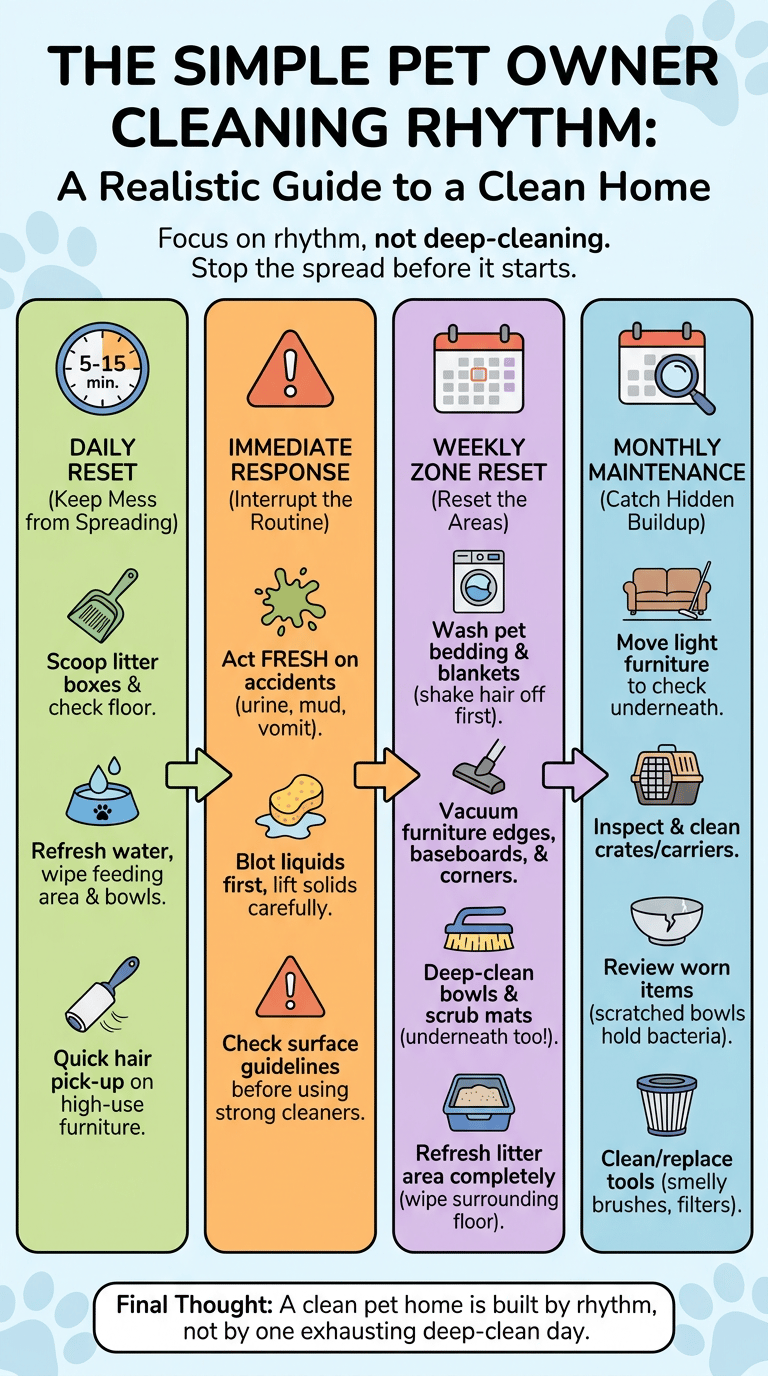
The easiest rhythm is daily control, weekly zone cleaning, immediate accident response, and light monthly maintenance. Daily control stops mess from spreading. Weekly work resets the zones you do not want to deep-clean every night.
This routine turns pet cleaning into a daily and weekly rhythm. For the full framework behind each mess type, start with the pet cleaning guide for home.
Daily reset
Spend a few minutes where your pet spends the most time. Scoop the box, refresh water, pick up visible hair, wipe the feeding area, and handle fresh floor messes before they dry.
Weekly zone clean
Choose one or two pet zones each week. Wash bedding, vacuum furniture edges, clean the litter area, reset the feeding station, and check corners where hair collects.
Accident response
Fresh accidents should interrupt the routine. Urine, vomit, muddy paw prints, tracked litter, or food spills are easier to manage before they dry, soak into seams, or spread under rugs. Blot first, remove solids carefully, clean according to the surface, and stop if a floor, rug, or furniture material needs a care tag or manufacturer instruction.
For urgent urine, vomit, or paw-print messes, follow the hard-floor accident cleanup steps before residue reaches seams or grout.
Monthly maintenance
Monthly maintenance catches hidden buildup. Move lightweight furniture, inspect crates and carriers, review worn bowls or bedding, and replace cleaning tools that smell or shed.
Why Pet Homes Get Messy So Quickly
Pet mess builds through repetition. One splash or tuft of hair is small, but it happens in the same places every day. Clean the source before you chase the spread.
Hair moves through rooms
Pet hair rarely stays where it falls. It sticks to socks, blankets, cushions, laundry, entry mats, and baseboards. Vacuuming the center of a room may look productive, but the better first target is the collection point: couch seams, chair arms, pet bedding, floor edges, under dining chairs, and the path between the pet bed and food bowl.
When odor or hair comes from beds and blankets, follow the routine for pet bedding that needs a full wash.
Bedding and furniture spread odor and hair
Pet beds, throws, sofa cushions, and blankets collect body oils, dander, outdoor dust, saliva, and hair. When those surfaces are ignored, the rest of the house starts to feel dirty even after the floor is clean. The EPA indoor air quality resources are a useful reminder that dust, particles, moisture, and ventilation all affect how a home feels indoors, so soft surfaces should not be left out of the routine.
Bowls and litter areas create daily residue
Food bowls, water bowls, litter mats, and the floor around them need short, repeated care. A water bowl can develop a slick feel. A feeding mat can hold grease under the bowl. A litter mat can trap granules that get stepped into nearby rooms. These areas do not always need a full deep clean, but they do need regular attention.
Small messes become bigger when delayed
A pet accident on a hard floor is different after it dries. Hair is easier to lift before it tangles into fabric. Bedding is easier to wash before odor settles into the insert. A good rule is to act quickly on wet, sticky, or organic messes, then save dry hair control and routine vacuuming for the next scheduled reset.
Daily Pet Cleaning Checklist
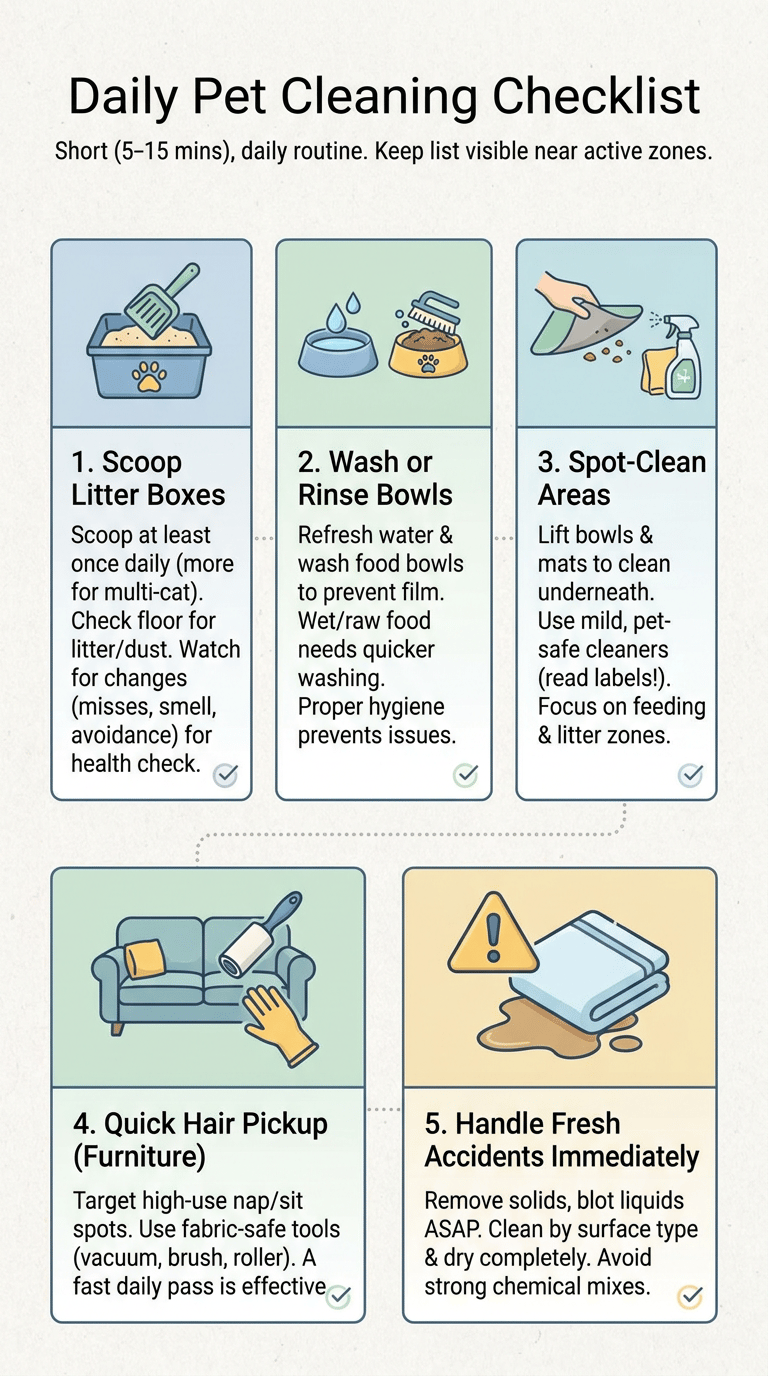
A daily checklist should be short enough that you can complete it on a normal workday. Keep the list near the most active pet zone, not hidden in a drawer. The best daily routine takes about five to fifteen minutes depending on the number of pets, the size of the home, and whether anything unusual happened that day.
Scoop litter boxes
Scoop litter boxes at least once a day in a cat home, and more often in a multi-cat home if the box fills quickly. Check the floor around the box at the same time. Pick up visible litter, wipe obvious dust from the edge of the mat, and watch for changes such as missed spots, unusual smell, or a cat avoiding the box. Those changes may call for a deeper box clean or a pet health check rather than another scented product.
Wash or rinse bowls as needed
Refresh water bowls and wash food bowls often enough that no greasy or slippery film builds up. Wet food, toppers, broth, fish oil, and raw food need quicker washing than plain dry kibble. The American Veterinary Medical Association pet ownership guidance emphasizes regular care, safe housing, and appropriate daily attention, and bowl hygiene fits that practical routine.
Spot-clean feeding and litter areas
Lift bowls and mats instead of wiping around them. Crumbs, splashes, and litter dust often hide under the item, not beside it. A small hand broom, a washable cloth, and a mild cleaner that fits the surface are usually enough. Read the cleaner label before using it near food bowls, pet toys, litter boxes, or any area where a pet may lick the floor.
Quick hair pickup on high-use furniture
Target the places where people sit and pets nap. Use a furniture-safe tool such as a vacuum upholstery attachment, reusable pet hair brush, dampened rubber glove, or lint roller depending on the fabric. Stop if the fabric pulls, pills, darkens, or sheds fibers. A fast daily pass on one couch cushion can do more for the room than vacuuming a hallway that has little hair.
Handle fresh accidents immediately
Fresh accidents need a different pace than routine dust or hair. Remove solids, blot liquids, clean according to the floor or fabric type, and keep pets away until the area is dry. Avoid mixing cleaners, and do not use a strong product just because the mess feels frustrating. If the surface is wood, laminate, stone, fabric, or a rented-home material, check care guidance before using extra moisture or disinfectants.
Weekly Pet Cleaning Checklist
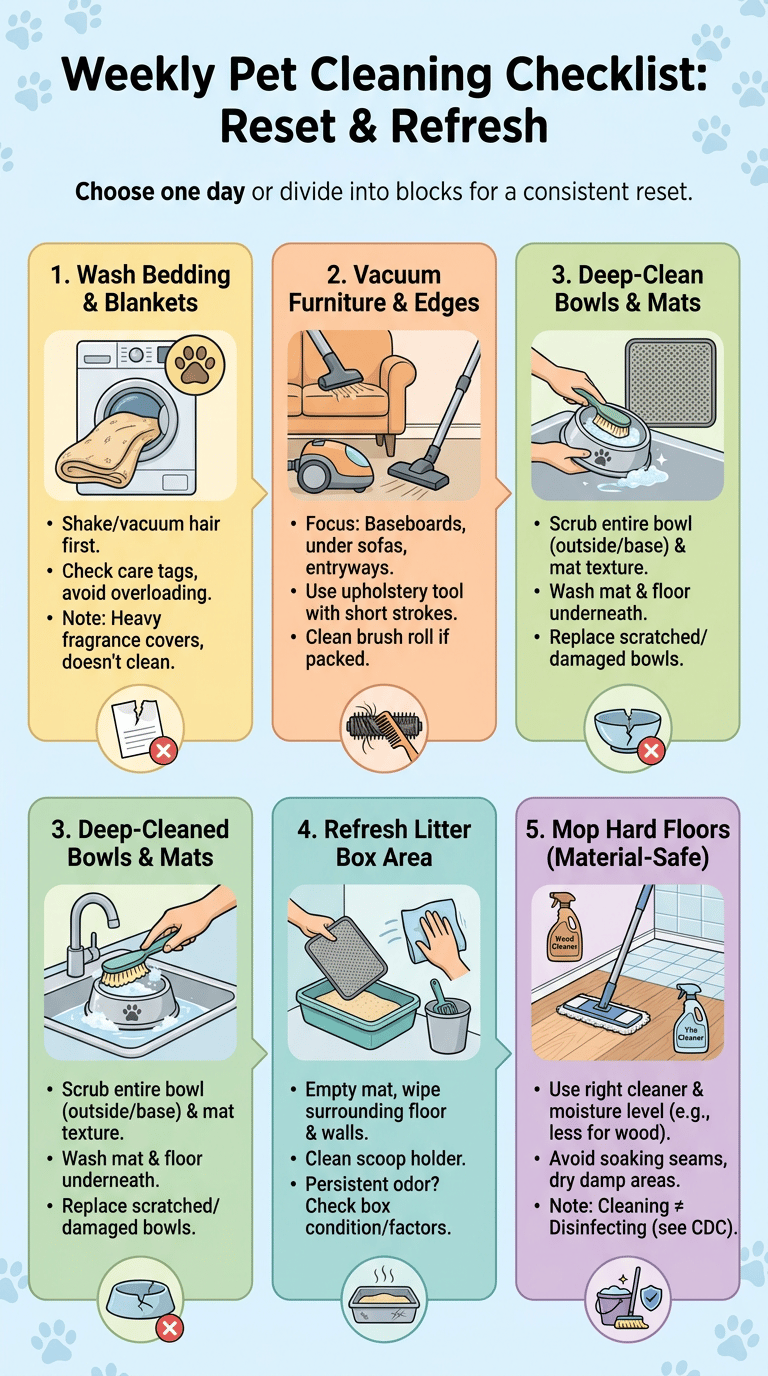
Weekly cleaning should reset the pet zones that daily tasks only manage. Choose the same day each week or divide the work into smaller blocks. A common schedule is bedding and laundry on one day, floors and furniture on another, and bowls, mats, crates, or litter areas on a third day.
For litter areas that collect daily residue, use the litter box deep cleaning guide to separate daily scooping from full cleaning.
Wash pet bedding and blankets
Shake or vacuum loose hair before washing pet bedding. Check the care tag, separate covers from inserts when possible, and avoid overloading the washer. Bedding that still smells after washing may need a slower dry, a second wash that follows the care tag, or replacement if the insert is damaged. Do not use heavy fragrance as the main fix, because it can cover residue without removing it.
Vacuum furniture and floor edges
Vacuum where pet hair collects, not only where the floor is open. Work along baseboards, under the front edge of the sofa, around pet beds, beneath dining chairs, and near entryways. On furniture, use the upholstery attachment and short strokes so hair lifts instead of smearing across fabric. If a vacuum brush gets packed with hair, clean the brush roll before continuing.
When fabric surfaces need more than a quick reset, start with this furniture hair removal method for sofas, chairs, cushions, and seams.
Deep-clean bowls and feeding mats
Once a week, go beyond the quick bowl wash. Scrub the outside of bowls, the base ring, the mat texture, and the floor underneath. If bowls are dishwasher-safe, follow the manufacturer instructions. If not, wash by hand with hot soapy water, rinse thoroughly, and dry before refilling. Replace plastic or damaged bowls when scratches, cracks, peeling, or a returning smell make them hard to clean well.
Refresh litter box area
Empty the litter mat, wipe nearby floor edges, check the wall or baseboard behind the box, and clean the scoop holder if it collects residue. Do not wait for the whole bathroom or laundry room to smell before you address the box area. If odor returns right after a full clean, look at box size, litter depth, number of boxes, ventilation, and whether the box itself is scratched or worn.
Mop hard floors based on material
Hard floors need the right moisture level. Vinyl and sealed tile can usually handle more routine wiping than wood or laminate, but every floor has limits. Use the cleaner recommended for the material, avoid soaking seams, and dry damp areas when needed. The CDC cleaning guidance explains the difference between cleaning and disinfecting, which helps prevent overusing harsh products when normal cleaning is enough.
Monthly or Seasonal Pet Cleaning Tasks
Monthly work is not about starting over. It is a checkup for the routine. Look for hidden hair, worn supplies, product clutter, and pet items that no longer clean up properly. Seasonal changes matter too. Shedding, muddy weather, flea prevention routines, holiday guests, or closed-window months may all change what needs attention.
Check under furniture
Move lightweight chairs, small tables, pet beds, and storage baskets. Look under sofa fronts, bed edges, crate corners, and furniture near windows where pets nap. You may find hair mats, toys, old treats, tracked litter, or food crumbs. Remove the dry debris first, then clean the floor based on the surface.
Clean pet crates and carriers
Crates and carriers collect hair, drool, treat crumbs, and outdoor dirt. Remove bedding and toys, vacuum loose debris, wash removable parts according to the manual, and dry everything before reuse. Check latches, handles, cracked plastic, rust, or sharp edges. A carrier used only for travel can still smell stale if it is stored dirty.
Inspect scratched bowls and worn bedding
Look closely at bowls, slow feeders, mats, blankets, and bed covers. Scratches, torn seams, flattened inserts, peeling coatings, and trapped odor can make a pet item harder to clean each week. Replacement is not a failure of the routine. Sometimes it is the step that keeps the routine realistic.
Adjust routine for shedding season
During shedding season, move hair control earlier in the day and closer to the source. Brush pets where appropriate, vacuum pet bedding before washing, and add a quick furniture pass on the most-used cushion. If you wait until hair is on every blanket and shirt, the laundry problem gets bigger than the furniture problem.
Review product storage and labels
Keep cleaners, laundry products, disinfectants, odor removers, and stain products out of pet reach. Check caps, labels, and old bottles. The ASPCA household product guidance is a practical reminder to use products as directed and prevent pet exposure during storage and cleaning.
Room-by-Room Pet Cleaning Plan
A room plan helps you avoid random cleaning. Each room has a different pet problem, so the task should match the space. When you clean by room, you can decide what belongs in the daily reset, what belongs in the weekly zone clean, and what should wait for a monthly check.
Living room
Start with pet beds, favorite cushions, throws, and rug edges. Keep a hair tool nearby if pets use the couch. Before guests arrive, clean the seat, armrest, and back cushion first.
Bedroom
Bedrooms collect hair on bedding, curtains, upholstered headboards, and laundry piles. Keep pet blankets separate when possible, close hampers, and keep clean clothes off pet-favorite chairs.
For laundry problems, use the focused routine for clothes covered in pet hair before loose hair spreads through the washer and clean load.
Kitchen or feeding area
Check the water bowl ring, mat underside, floor under bowls, and nearby cabinet fronts. Store pet food in a clean closed container and do not place clean bowls on a dirty mat.
Laundry area
Remove loose hair before washing when practical, clean the lint trap, and avoid overloading the machine. The American Cleaning Institute laundry basics can help with sorting, load size, detergent use, and care label habits.
Bathroom or litter area
Keep a small broom or hand vacuum nearby, wipe the floor around the box, and wash the scoop holder when residue collects. Keep litter tools separate from sink, tub, and toilet tools.
Entryway and mud zone
Keep a washable mat, towel, and simple paw-wipe routine near the door. Clean paw prints while fresh, especially on wood, laminate, and light-colored grout.
Routine by Pet Type and Household
Your routine should match the mess that appears first. Pet count, coat type, litter location, floor material, work schedule, and square footage all change the cadence.
Dog-only home
Focus on entryways, feeding areas, bedding, furniture, and floors. Paw control near the door saves time. Heavy drool, shedding, or wet food means bowls and washable throws need more attention.
Cat-only home
Focus on litter tracking, furniture hair, bedding, and favorite window spots. Scoop daily, clean around the box, and vacuum the path from the box to the main resting area.
Multi-pet home
A multi-pet home needs shorter intervals. Group items into feeding, sleeping, litter or potty, grooming, and entry zones. Clean the busiest zone daily and rotate the others weekly.
Small apartment
Small homes need fast source control. Use washable mats under bowls and boxes, keep pet zones away from clean laundry when possible, and store tools where mess happens.
Home with kids and pets
Keep pet bowls, litter tools, cleaning products, and pet laundry separate from play areas when practical. Clean sticky food, dropped treats, and wet paw marks quickly. Older children can help with safe tasks such as picking up toys or shaking a washable mat outside.
Five-Minute Resets for Busy Days
Busy days need a rescue version. Do the task that reduces the biggest spread first. Set a timer, clean one zone, and stop before it turns into an unfinished deep clean.
Guest arriving soon
Clean what guests will see, touch, and smell first. Pick up toys, remove hair from the main seat, empty visible trash, wipe the feeding area, and check the litter area or entryway.
Hair on clothes before work
Clean the clothing, then check the chair, bed, or couch where it sat. Keep clean clothes off pet-favorite surfaces. Repeated morning hair means the bedroom or laundry routine needs a change.
Bowl or litter odor check
Smell near the source without adding fragrance first. Check the water bowl film, food bowl residue, mat underside, litter box level, scoop holder, and nearby trash. Wash or wipe the actual residue. If odor returns immediately after cleaning, the item may be scratched, the litter box may need a full clean, or the area may need better airflow.
Fresh paw prints or floor mess
Stop the spread before cleaning the whole floor. Keep the pet away from the area, remove loose dirt, wipe the prints according to the floor material, and dry if the surface needs it. On wood or laminate, avoid soaking seams. On tile, check grout lines where damp dirt can settle.
Mistakes That Make Pet Cleaning Feel Endless
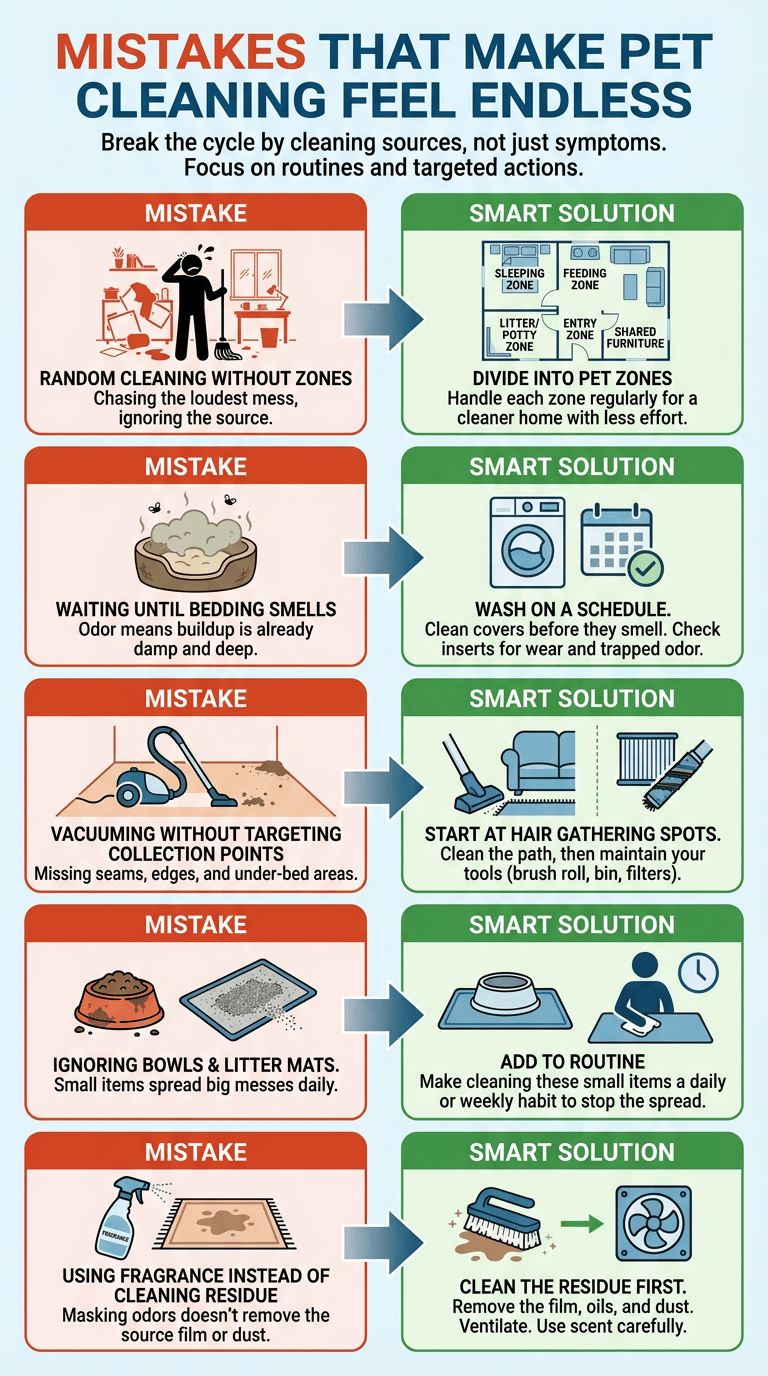
Pet cleaning feels endless when the routine chases symptoms instead of sources. Clean the collection point, keep tools nearby, and schedule repeated tasks.
Cleaning randomly without zones
Random cleaning usually means the loudest mess gets attention, not the most important one. Divide the home into pet zones: sleeping, feeding, litter or potty, entry, laundry, and shared furniture. When a zone is handled regularly, the whole house feels cleaner with less effort.
Waiting until bedding smells
Pet bedding can be dirty before it smells strong. Hair, oils, and dust build slowly, and odor may only appear when the bed is damp, warm, or pressed under your pet. Wash covers on a schedule that fits the household, and check inserts for wear, clumping, or trapped smell.
Vacuuming without targeting hair collection points
Vacuuming open floor space while ignoring sofa seams, rug edges, stairs, and under-bed areas wastes effort. Start where hair gathers, then clean the travel path. Clean the brush roll, empty the vacuum bin, and check filters as recommended by the vacuum manual so the tool keeps working well.
Ignoring bowls and litter mats
Bowls and litter mats are small, but they affect the room daily. A clean kitchen floor will not stay clean if the feeding mat is greasy underneath. A bathroom will still track litter if the mat is full. Add these small items to the daily or weekly routine so they stop spreading mess.
Using fragrance instead of cleaning residue
Fragrance can make a room smell better for a short time, but it does not remove food film, urine residue, litter dust, body oils, or damp bedding. Clean the residue first. Ventilate when helpful. Keep scented products away from pets unless the label clearly supports the use, and stop if a product bothers a pet or a person in the home.
Adjacent Deep-Dive Tasks
A schedule keeps the house manageable, but some problems need a more focused method. Treat these as separate tasks when the routine is not enough. That keeps the daily checklist short and prevents one article from trying to solve every surface problem at once.
Furniture hair removal when vacuuming is not enough
If hair remains after a normal vacuum pass, focus on upholstery texture, seams, static, and the correct hair removal tool. A couch, microfiber chair, leather seat, and delicate fabric cushion should not all be treated the same way.
Clothes covered in pet hair
Hair on clothes is often a laundry workflow problem. Remove hair before washing when practical, avoid overloading the washer, clean the lint trap, and keep clean clothes away from pet sleeping spots. The clothing routine should not depend on last-minute lint rolling every day.
Pet bedding that needs a full wash
Bedding needs its own method because covers, inserts, blankets, and foam pieces have different limits. Check care tags, remove loose hair first, dry thoroughly, and replace items that stay smelly or damaged after careful washing.
Litter box deep cleaning
Daily scooping is maintenance. Full cleaning is a separate task involving box emptying, washing, drying, and checking for scratches or odor that returns quickly. Keep litter tools separate from food, laundry, and general bathroom cleaning tools.
Dog bowl hygiene
Dog bowls and feeding mats need steady cleaning because saliva, food oils, water minerals, and floor debris build in the same spot. Check the rim, base, mat underside, and any slow feeder grooves. Replace damaged bowls that no longer wash clean.
Hard-floor accident cleanup
Hard-floor accidents depend on the floor material and the type of mess. Fresh urine, vomit, muddy paw prints, and food spills need different steps. Sealed tile, vinyl, laminate, and wood also have different moisture limits, so check care guidance before using stronger cleaners.
Carpet stains and couch smell as separate surface problems
Carpet stains and couch smell should stay separate from the daily routine because they involve different materials and deeper residue. A routine can prevent some buildup, but once a stain or odor is set into fabric or carpet, it needs a focused process and clear stopping point.
FAQ About Keeping a House Clean with Pets
These answers focus on practical frequency and routine design for real pet homes.
What should pet owners clean every day?
Most pet owners should handle the tasks that spread fastest: scoop litter boxes, refresh water bowls, wash or rinse food bowls as needed, wipe the feeding area, pick up visible hair from high-use furniture, and clean fresh accidents immediately. In a dog home, add paw and entryway checks. In a cat home, add litter tracking checks.
For feeding stations that collect food and water residue, use the dog bowl hygiene routine for bowls and mats.
How many times a week should you vacuum with pets?
Vacuuming frequency depends on shedding, floor type, number of pets, and how much furniture pets use. Many pet homes benefit from quick hair pickup in high-use zones several times a week and a fuller weekly vacuum of furniture edges, baseboards, rugs, and pet sleeping areas. Heavy shedding or small apartments may need shorter, more frequent passes.
How do you keep a small apartment clean with pets?
Small apartments need source control. Put washable mats under bowls and litter boxes, keep a hair tool near the couch or bed, wash bedding before odor spreads through the room, and clean fresh messes right away. Store tools near the pet zone so a small problem does not wait until the weekend.
What is the best routine for a busy pet owner?
The best busy routine is a short daily reset and a rotating weekly zone clean. Each day, handle bowls, litter, visible hair, and fresh messes. Each week, rotate through bedding, furniture, floors, feeding station, and litter area. Keep the routine realistic enough that you can repeat it even when the week is crowded.
Final Thoughts
Keeping a house clean with pets is easier when the routine is small, specific, and repeated. Daily resets stop mess from spreading. Weekly zone cleaning handles the heavier work. Monthly checks catch hidden buildup and worn pet items. You do not need to clean everything every day. You need to clean the right thing at the right time.
Start with the zone that bothers you most: the couch, the feeding area, the litter box, the laundry, or the entryway. Give that zone a simple daily action and one weekly reset. Once that feels normal, add the next zone. A clean pet home is built by rhythm, not by one exhausting deep-clean day.

Ethan Carter is the Founder & Editor of HomeCleanSecrets. Based in the United States, he has 5 years of experience creating practical home cleaning, laundry care, stain removal, decluttering, and home organization content. His goal is to help everyday households clean smarter and build simple routines that are easier to maintain.
Read more about Ethan Carter on his author page: https://homecleansecrets.com/ethan-carter/