
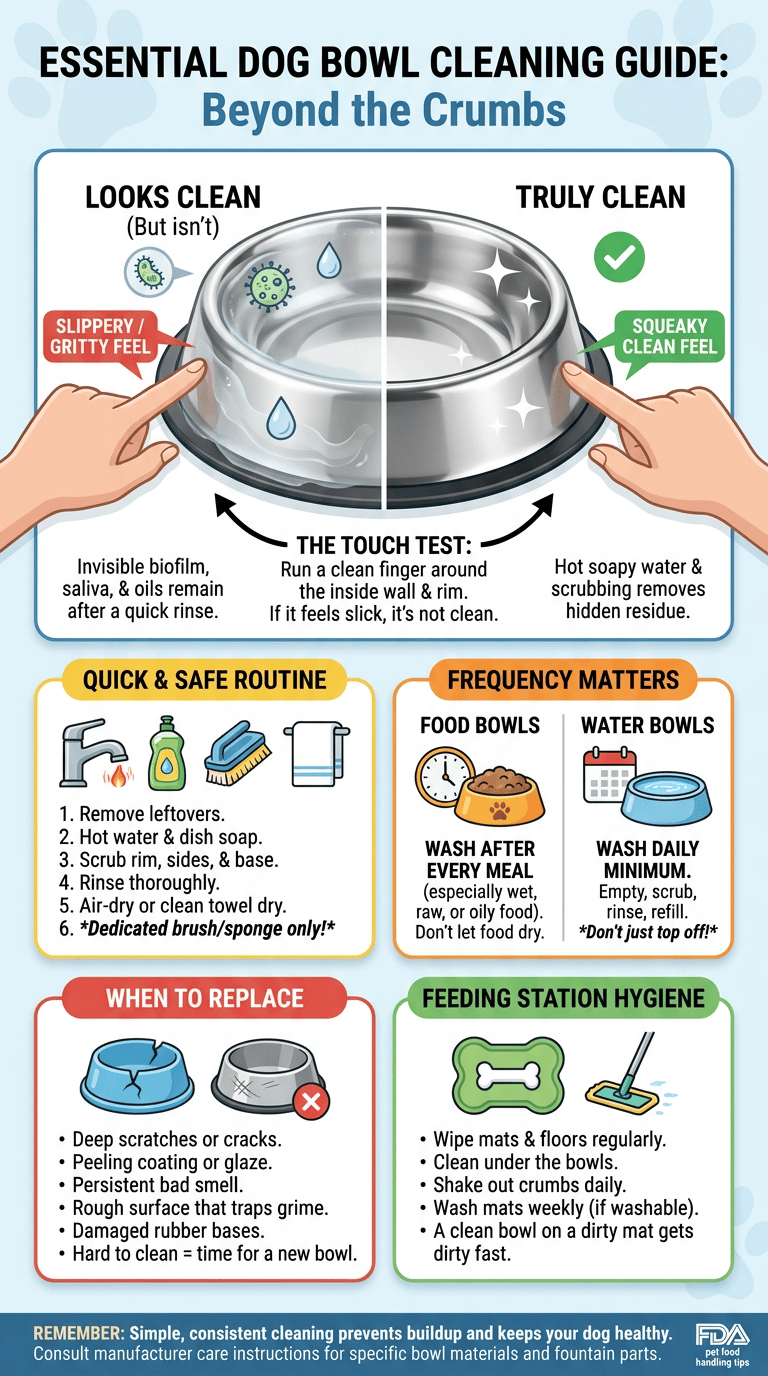
Dog bowls look simple, but they collect more than crumbs. Food residue, saliva, water minerals, grease, dust, and floor debris can build up on the rim, sides, base, feeding mat, and the area around the bowls. A bowl can look mostly clean from across the room and still feel slippery when you touch the inside wall.
A good test is simple: after washing, run clean fingers around the inside wall, outer base, and rim. If you still feel grease, grit, or a slick film, the bowl is not done yet. If the bowl has deep scratches, cracks, peeling coating, or a smell that returns right after cleaning, replacement may be the safer and easier choice.
Quick Answer: The Safe Dog Bowl Cleaning Routine
The safest routine is not complicated. Remove leftovers, wash the bowl with hot water and dish soap, scrub the rim and base, rinse thoroughly, and dry before putting it back. Wash water bowls often enough that the inside never develops a slick layer. Clean the mat and floor at the same time, because the bowl area is usually where splashes, kibble dust, and wet food smears collect.
Wash food bowls after meals when practical
If your dog eats wet food, raw food, softened kibble, toppers, broth, or oily food, wash the bowl after that meal. Do not let soft food dry overnight in the corners or under the rim. Dried residue is harder to remove, and a quick rinse rarely reaches the thin film left behind.
Dry kibble bowls may not look messy after one serving, but they can still collect saliva and oily dust from food. The FDA pet food handling tips advise washing pet food bowls and scooping utensils with soap and hot water after each use. In a real home, the closer you can get to that habit, the easier the bowl stays to clean.
Refresh and wash water bowls regularly
Water bowls need more than a refill. Empty the old water, scrub the inside wall and bottom, rinse well, and refill with fresh water. If you only pour new water on top of old water, the slippery film can stay in place and become more stubborn.
Check the water bowl by touching the inside wall near the water line. That is where a slick ring often forms first. If your dog has a beard, heavy drool, eats before drinking, or uses an outdoor bowl, expect to wash the water bowl more often.
Clean feeding mats and nearby floors
The feeding station is part of the bowl routine. A clean bowl placed on a sticky mat or greasy floor will get dirty again quickly. Lift the bowls, shake loose crumbs into the trash, wash or wipe the mat, and clean the floor under the mat before replacing everything.
Why Dog Bowls Get Slimy or Greasy
Dog bowls do not get dirty from food alone. The biggest problems come from repeated contact: your dog’s mouth, food oils, water minerals, dust, and the surface texture of the bowl. Understanding the residue helps you choose the right cleaning method without reaching for harsh products first.
Saliva and biofilm-like residue
The slick feeling in a water bowl usually comes from a film that builds up where water, saliva, and food particles meet. It may be clear, slightly cloudy, or hard to see. You notice it more by touch than by sight.
Soap, hot water, and scrubbing are the first response. Do not try to solve a slippery bowl by adding a strong cleaner while the bowl still has film on it. Cleaning removes the layer that disinfectants cannot reliably work through.
Wet food and oil buildup
Wet food, fish oil, canned food, gravies, and food toppers can leave a greasy coating. The bowl may look clean after rinsing, but your fingers may still slide across a thin oily layer. That layer can hold smell and make new food residue stick faster.
Use hot, soapy water and a brush or sponge that can reach the corner where the wall meets the bottom. If grease remains after one wash, repeat the soap step instead of increasing pressure until you scratch the bowl.
Hard water marks
Water bowls can develop cloudy rings or white spots from minerals. These marks are not the same as food grime. They often appear near the water line, especially when bowls air-dry with droplets sitting on the surface.
Try normal washing first. If a dishwasher-safe stainless steel or ceramic bowl still has mineral spots, check the care instructions before using vinegar or another mild acid. Some finishes, decorative glazes, or coated surfaces may not tolerate every cleaning method.
Scratches that trap residue
Scratches create tiny grooves where residue can hide. Plastic bowls are the most common problem, but any bowl can become harder to clean if the surface is damaged. A bowl that feels rough after washing is not giving you a clean surface anymore.
Stop and inspect if odor returns quickly, the bowl has dark lines in the grooves, or the surface feels fuzzy, cracked, or gouged. At that point, more scrubbing may make the surface worse.
Supplies and Cleaner Limits
You do not need a complicated kit. The key is using clean tools, enough contact with hot soapy water, careful rinsing, and a drying step that does not reintroduce grime. Keep bowl cleaning separate from bathroom, floor, or litter box tools.
Dish soap and hot water basics
Use regular dish soap and hot water that is comfortable enough to handle safely. Hot water helps loosen grease, while soap lifts food oils and saliva film. Scrubbing is what removes the stuck layer, so do not depend on soaking alone.
Dishwasher-safe bowls
A dishwasher can be helpful for bowls marked dishwasher-safe, especially stainless steel and many ceramic bowls. Check the underside stamp, package details, or manufacturer care instructions. Place the bowl so water can reach the inside, outside, and base, not upside down in a way that traps dirty water.
Separate sponge or brush
Use a dedicated brush or sponge for pet bowls. It does not need to be fancy, but it should be clean, easy to rinse, and replaced when it smells, frays, or stays greasy. A dirty sponge can move residue from yesterday’s bowl back onto today’s clean bowl.
Cleaners and disinfectants that need label checks
Most routine bowl cleaning should start with soap and water. If you use any disinfectant, follow the product label for dilution, contact time, rinsing, ventilation, and whether it is appropriate for food-contact items. Stronger does not mean safer.
The ASPCA household product guidance notes that cleaning products should be used according to label directions around pets. Keep your dog away from the area while products are being used, and never leave cleaner residue in a food or water bowl.
Drying before refilling
Drying matters because standing water can leave spots and let moisture sit in seams, rubber rings, or the underside of bowls. Air-dry on a clean rack or towel-dry with a fresh towel. Avoid wiping a clean bowl with a towel that was used for counters, floors, or pet messes.
Step-by-Step Method for Food Bowls
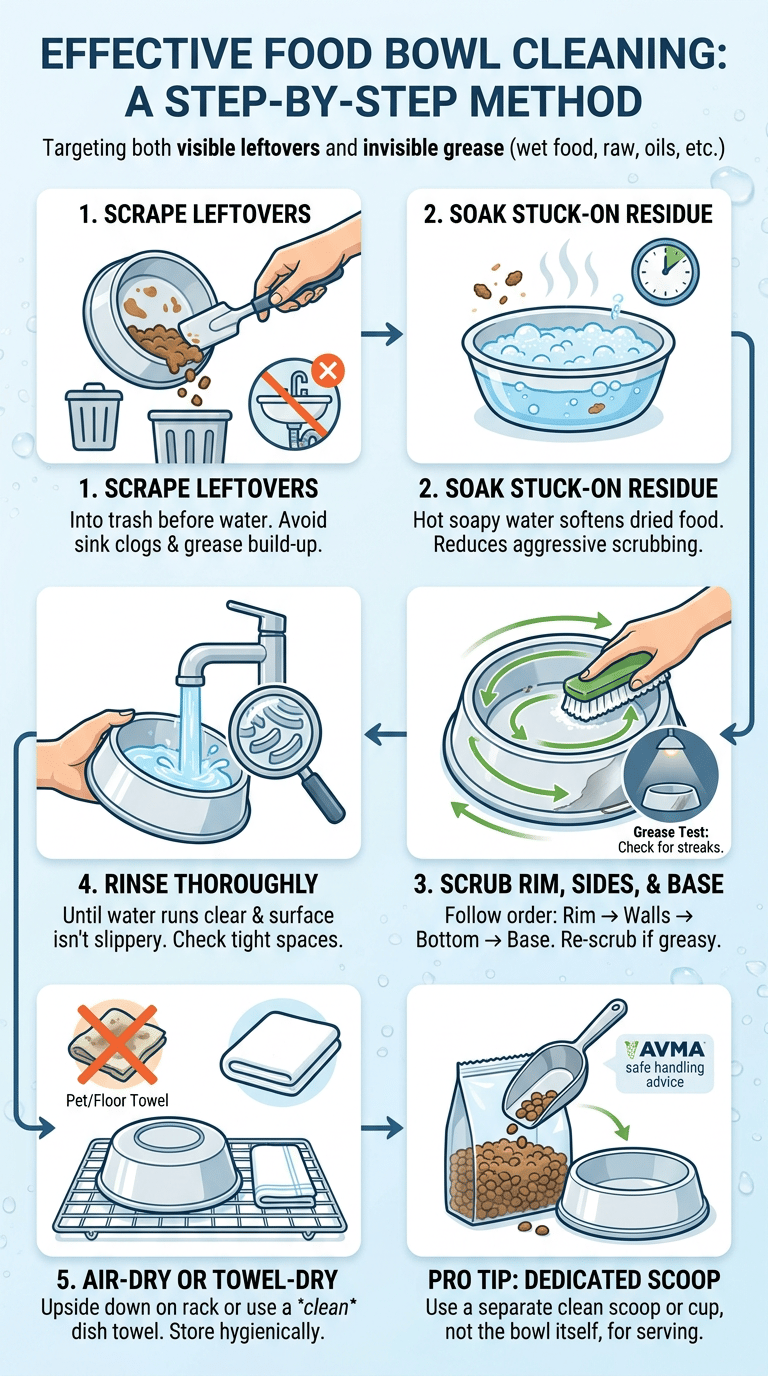
Food bowls need a method that removes both visible leftovers and invisible grease. This is especially important for wet food, raw feeding, softened kibble, medication mixed into food, or meals with oils and toppers.
Remove leftover food
Scrape leftovers into the trash before adding water. Do not wash chunks of food into the sink if they can clog the drain or leave grease in the basin. If the food is spoiled, smells wrong, or has been sitting too long, clean the bowl promptly and wash your hands after handling it.
Soak stuck-on residue
Fill the bowl with hot soapy water and let it sit for a few minutes if food has dried on. Soaking softens residue so you do not need to scrape aggressively. This is useful for bowls used with canned food, rice, pumpkin, peanut butter, or medication paste.
Scrub rim, sides, and base
Scrub in a full loop around the rim, then the walls, then the bottom corner, then the outside base. That order prevents you from missing the areas touched most often by your dog’s mouth, your hands, and the floor.
A good test is to turn the bowl under a light. Grease can show as dull streaks or water that beads strangely on one patch. If that patch stays after rinsing, repeat the soap and scrub step.
Rinse thoroughly
Rinse until the water runs clear and the surface no longer feels slippery from soap. Pay attention to slow feeder grooves and decorative edges. Soap trapped in tight spaces can change the smell of the bowl and may discourage some dogs from eating.
Air-dry or towel-dry with a clean towel
Place the bowl upside down on a clean drying rack or towel. If you need it right away, dry it with a clean towel used for dishes, not a towel used for pet accidents or floors. Store the bowl where it will not touch dirty shoes, mop buckets, or trash bags.
When feeding again, use a clean scoop or measuring cup. The AVMA safe handling advice recommends a dedicated spoon or scoop instead of using the bowl as the measuring tool.
Step-by-Step Method for Water Bowls
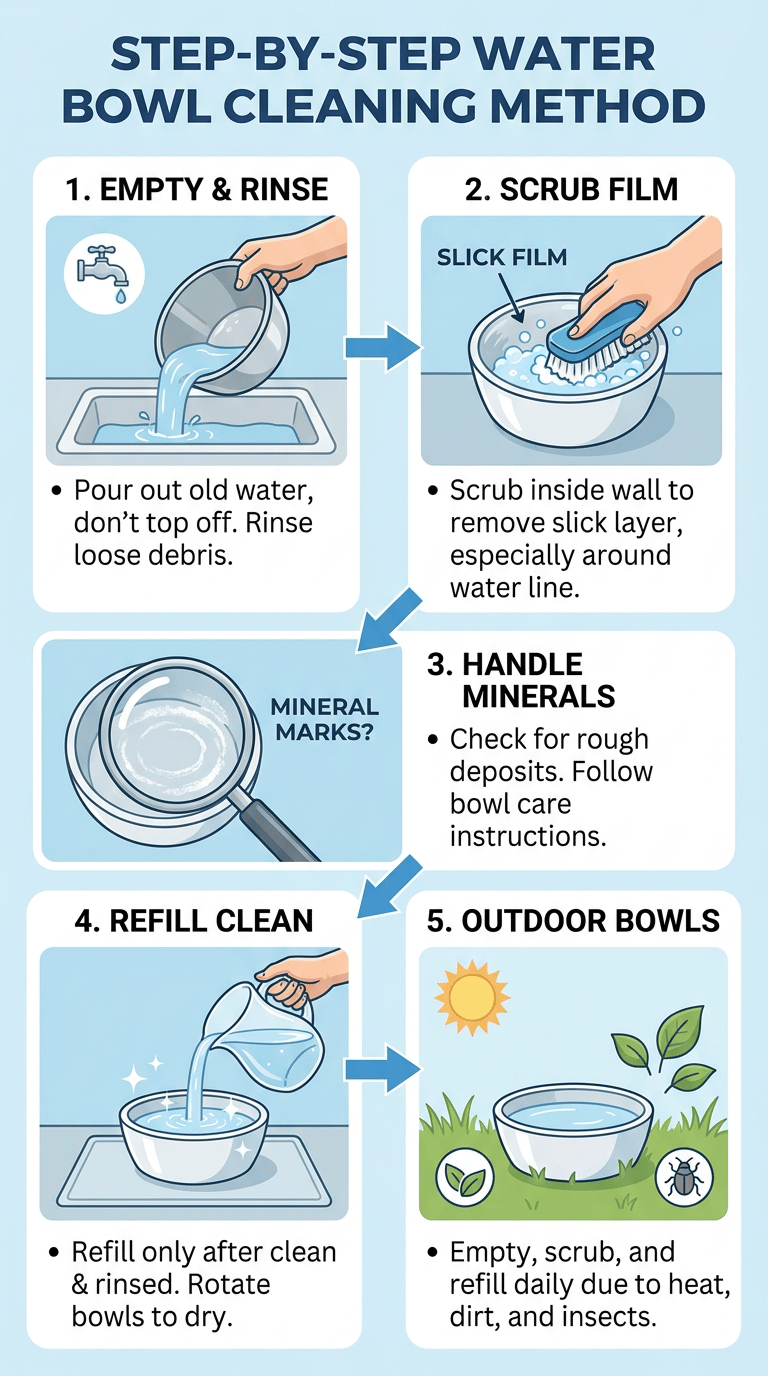
Water bowls deserve their own method because they often look clean while the inside wall is already slick. The goal is to break the film, remove mineral marks when appropriate, and refill with clean water in a clean bowl.
Empty and rinse
Pour out old water rather than topping it off. Rinse loose hair, dust, and food crumbs from the bottom. If the bowl sits outside, check for insects, leaves, soil, and algae-like discoloration before bringing it to the sink.
Scrub slippery film
Add dish soap and scrub the inside wall, especially around the water line. Use circular pressure that is firm enough to remove the slick layer but not so harsh that it scratches the bowl. Rinse and touch the inside wall again.
Handle mineral deposits
Mineral marks may need a different approach from slime. After normal washing, check whether the mark is still rough, chalky, or ring-shaped. Follow the bowl’s care instructions before using any descaling method, especially on ceramic glaze, decorative finishes, or coated metal.
If deposits return quickly, dry the bowl after washing and consider rotating bowls so each one dries fully. Persistent mineral buildup is often a water issue, not a failure of scrubbing.
Refill with fresh water
Refill only after the bowl is clean and rinsed. Place it on a clean mat or floor area. If your dog splashes, drinks after eating, or drops kibble into the water, plan a second refresh later in the day.
Check outdoor bowls more often
Outdoor bowls need extra attention because heat, dust, rain, insects, and yard debris change the bowl faster. Empty, scrub, and refill them at least daily in normal use, and more often in hot or dirty conditions.
Bowl Material Comparison
The right cleaning method depends on what the bowl is made of. Material affects scratching, heat tolerance, dishwasher safety, weight, odor retention, and how easy it is to see residue.
Stainless steel bowls
Stainless steel is usually easy to wash, durable, and less likely to hold odor than plastic. Choose bowls with smooth surfaces and inspect them for dents, rust-like spots, rough seams, or damaged non-slip rings.
Ceramic bowls
Ceramic bowls can be heavy and stable, which helps dogs that push bowls around. The main risk is chips, cracks, crazing in the glaze, or decorative finishes that require special care. A cracked bowl can trap residue and may become sharp.
Stop using a ceramic bowl if you can feel a rough crack or see chips along the rim. Do not keep a damaged bowl just because it still holds water.
Plastic bowls
Plastic bowls are lightweight and common, but scratches can become a cleaning problem. Once the surface is gouged, sticky, stained, or smelly after washing, it may be time to replace it.
Slow feeders
Slow feeders need extra scrubbing because food sits in ridges, corners, and channels. Rinse first, soak if needed, then use a narrow brush around each groove. Tilt the bowl under light to find missed streaks.
Automatic water fountains and manufacturer manuals
Water fountains add parts that normal bowls do not have: filters, pumps, tubes, reservoirs, lids, cords, and seals. Unplug the fountain before cleaning. Take apart only the pieces the manual says can be removed, and replace filters on the schedule recommended by the manufacturer.
The CDC pet supplies cleaning guidance separates cleaning from disinfecting and gives a schedule for pet bowls and related supplies. Use that as a baseline, then follow your fountain manual for part-specific limits.
Cleaning the Feeding Station
Bowls are only one part of the feeding area. Mats, floors, crate corners, scoops, storage bins, and nearby walls can all collect the same residue. Cleaning the station keeps clean bowls from returning to a dirty setup.
Feeding mats
Shake loose kibble into the trash. Wash silicone or plastic mats with dish soap and hot water if the care instructions allow it. For fabric mats, follow the care tag and remove hair or crumbs before washing.
Lift the mat fully. Moisture can hide underneath, especially near water bowls. If the floor under the mat feels sticky or smells sour, clean and dry it before putting the mat back.
Floor under bowls
Wipe the floor under and around the bowls after messy meals. Use a product suitable for the floor material, and do not leave the area wet. Water sitting under mats can affect some flooring finishes over time.
If the feeding area is near a wall, check the baseboard for splashes. Wet food and drool can dry into a thin line that looks like dust until you wipe it.
Crate feeding areas
If your dog eats in a crate, remove the bowl and clean the holder, crate floor, and nearby bars. Food can smear where the bowl clips onto the crate. Water bowls can drip into bedding, so check fabric under the bowl after washing the dish.
Do not spray strong cleaners inside a crate while your dog is nearby. Clean, rinse if the label requires it, dry, and let the area air out before your dog returns.
Food storage scoop and container contact points
The scoop touches food every day, so wash and dry it regularly. Do not store a greasy or damp scoop inside the food bag or bin. Moisture and crumbs in the container can make the feeding routine messier.
The FDA storage guidance for pet food also recommends washing and drying storage containers between bags to remove residual fat and crumbs. That habit supports cleaner bowls because the food starts from a cleaner storage setup.
Dog Bowl Cleaning Schedule
A schedule keeps bowl cleaning from becoming a random chore. Adjust it based on food type, number of dogs, drool level, weather, and whether bowls are used indoors, outdoors, or inside a crate.
Daily tasks
Wash water bowls daily at minimum, and more often if they feel slippery. Wash food bowls after meals when practical, especially after wet, raw, oily, or softened food. Wipe the mat and floor if you see splashes or crumbs.
At the end of the day, check the feeding station with your hand and nose. Sticky mat edges, sour odor, and a slick water line mean the routine needs a faster reset.
Weekly deeper cleaning
Once a week, clean the full feeding area: bowls, mat, stand, crate holder, scoop, storage bin contact points, and the floor underneath. Inspect bowls for scratches, chips, rust-colored marks, loose rubber, or cloudy residue that did not wash away.
This is also a good time to rotate backup bowls through the dishwasher if they are marked dishwasher-safe. Rotating bowls lets one set dry fully while the other is in use.
After raw, wet, or messy food
Meals that contain raw food, wet food, cooked meat, broth, egg, pumpkin, fish oil, or medication paste should be treated as messy meals. Wash the bowl promptly, clean the prep surface if food touched it, and wash your hands.
The CDC pet food safety advice recommends cleaning food and water bowls, scoops, treat toys, feeding mats, and placemats frequently. That matters most when food leaves moisture or residue behind.
Multi-dog household adjustments
Multiple dogs usually mean faster buildup. Label bowls if one dog uses medication, prescription food, or a special diet. Wash shared water bowls more often, because more mouths touch the same surface.
Mistakes to Avoid
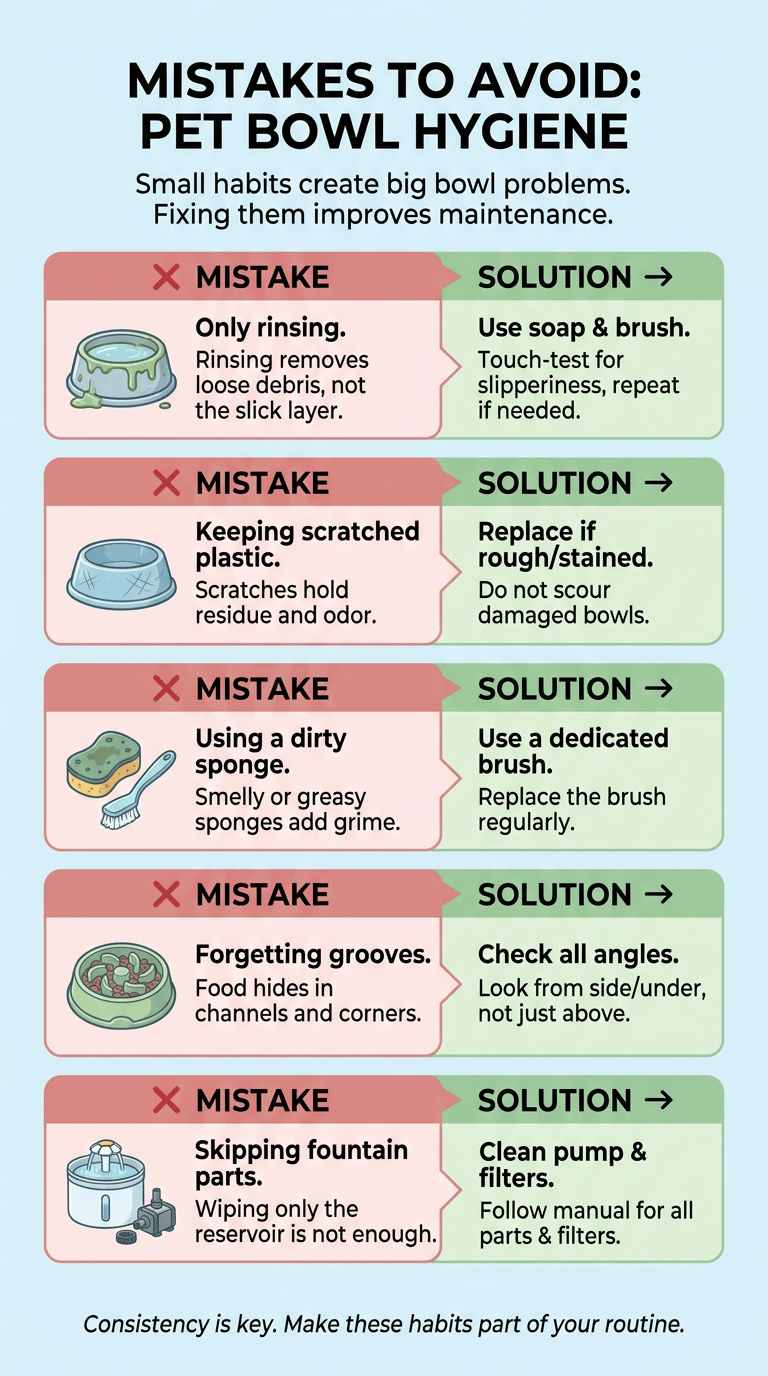
Most bowl problems come from small habits repeated for weeks: rinsing instead of washing, keeping damaged bowls, using a dirty sponge, skipping grooves, or forgetting fountain parts. Fixing these habits usually makes the feeding area easier to maintain.
Only rinsing a slimy water bowl
Rinsing removes loose debris, not the slick layer on the inside wall. If the bowl feels slippery, use soap and a brush. Rinse, touch-test, and repeat if needed.
Keeping scratched plastic too long
Scratched plastic can hold residue and odor. Replace it when the surface stays rough, stained, or smelly after a normal wash. Do not try to rescue a damaged plastic bowl with harsh scouring.
Using a dirty sponge
A sponge that smells bad, feels greasy, or has been used on heavy kitchen grime is not a good tool for dog bowls. Keep a dedicated brush and replace it before it becomes part of the problem.
Forgetting slow feeder grooves
Slow feeders can hide food in channels and corners. Look from the side and underneath, not only from above. If one groove still has residue, the bowl is not clean.
Skipping fountain parts
Fountains need more than a wiped reservoir. Clean the pump cover, intake area, lid, and tubing only as the manual allows. Replace filters on schedule, and do not run the fountain with clogged parts.
Adjacent Issues Around Dog Bowls
Dog bowl cleaning connects naturally to other pet cleaning tasks, but it should not replace them. Use the feeding station as one zone in a larger routine.
Hard-floor spills and accidents near the feeding area
Water spills, drool, and wet food smears are normal around bowls. Clean them promptly with a floor-safe method. If the mess is urine, vomit, or diarrhea, that belongs in a separate hard-floor accident cleanup process with more careful steps.
Water spills, wet food residue, and muddy paw marks should be handled before they dry or spread. Use the hard-floor spills near the feeding area guide when the mess reaches the floor.
Whole-house pet cleaning routine
Bowls are a daily or near-daily task. Pair them with quick resets like removing visible hair, checking bedding, and wiping the feeding mat. A small daily routine prevents weekend cleaning from becoming a rescue mission.
Bowls are easier to maintain as part of a daily reset with floors, bedding, hair pickup, and litter care. Use this whole-house pet cleaning routine to separate daily tasks from weekly work.
Pet food storage hygiene
Clean bowls will not help much if the scoop, lid, and storage bin are greasy. Keep food sealed, dry, and away from heat. Wash the scoop and clean container contact points so crumbs do not keep moving back into the bowl.
Bedding or furniture mess from wet faces and paws
If bedding or furniture near the feeding area develops damp spots or odor, check whether the water bowl setup is causing drips after drinking.
FAQ About Cleaning Dog Bowls
How often should dog bowls be washed?
Wash food bowls after meals when practical, especially after wet, raw, oily, or softened food. Wash water bowls at least daily and sooner if they feel slimy, cloudy, or have food bits floating in them. Clean the mat and nearby floor whenever spills or food smears appear.
Can dog bowls go in the dishwasher?
Some dog bowls can go in the dishwasher, but only if the bowl or manufacturer information says it is dishwasher-safe. Stainless steel and many ceramic bowls often tolerate dishwasher cleaning better than plastic, rubber parts, decorated bowls, fountain pieces, or slow feeder inserts. Check the label or manual before using heat.
Why is my dog water bowl slimy?
A slimy water bowl usually means a slick film has formed from water, saliva, and tiny food particles. Empty the bowl, wash with hot soapy water, scrub the inside wall and water line, rinse thoroughly, and dry before refilling. If slime returns very fast, clean more often and inspect the surface for scratches.
When should a dog bowl be replaced?
Replace a bowl when it has deep scratches, cracks, chips, peeling coating, rust-colored damage, rough grooves, or odor that remains after proper washing. Also replace pieces that no longer fit securely in a fountain or feeder. A damaged bowl is harder to clean and may not be worth saving.
Final Thoughts
The best dog bowl routine is simple, consistent, and matched to how your dog eats and drinks. Wash food residue before it dries, scrub water bowls before they turn slick, clean the mat and floor around the station, and replace damaged bowls instead of fighting them forever. Read labels and manuals whenever a cleaner, dishwasher cycle, fountain part, rubber base, or special bowl material has limits. Clean bowls are not a full pet cleaning plan, but they are one of the easiest daily habits to get right.
Clean bowls are one daily habit inside a larger pet-home cleaning system. Use this complete pet cleaning plan for the bigger routine beyond bowls.

Ethan Carter is the Founder & Editor of HomeCleanSecrets. Based in the United States, he has 5 years of experience creating practical home cleaning, laundry care, stain removal, decluttering, and home organization content. His goal is to help everyday households clean smarter and build simple routines that are easier to maintain.
Read more about Ethan Carter on his author page: https://homecleansecrets.com/ethan-carter/