
An entryway can be organized well and still look chaotic by the end of a busy day. Shoes drift away from their tray, coats land on a chair, backpacks slide into the walkway, mail spreads across a console, and rain or mud leaves the floor looking worse than the storage system really is.
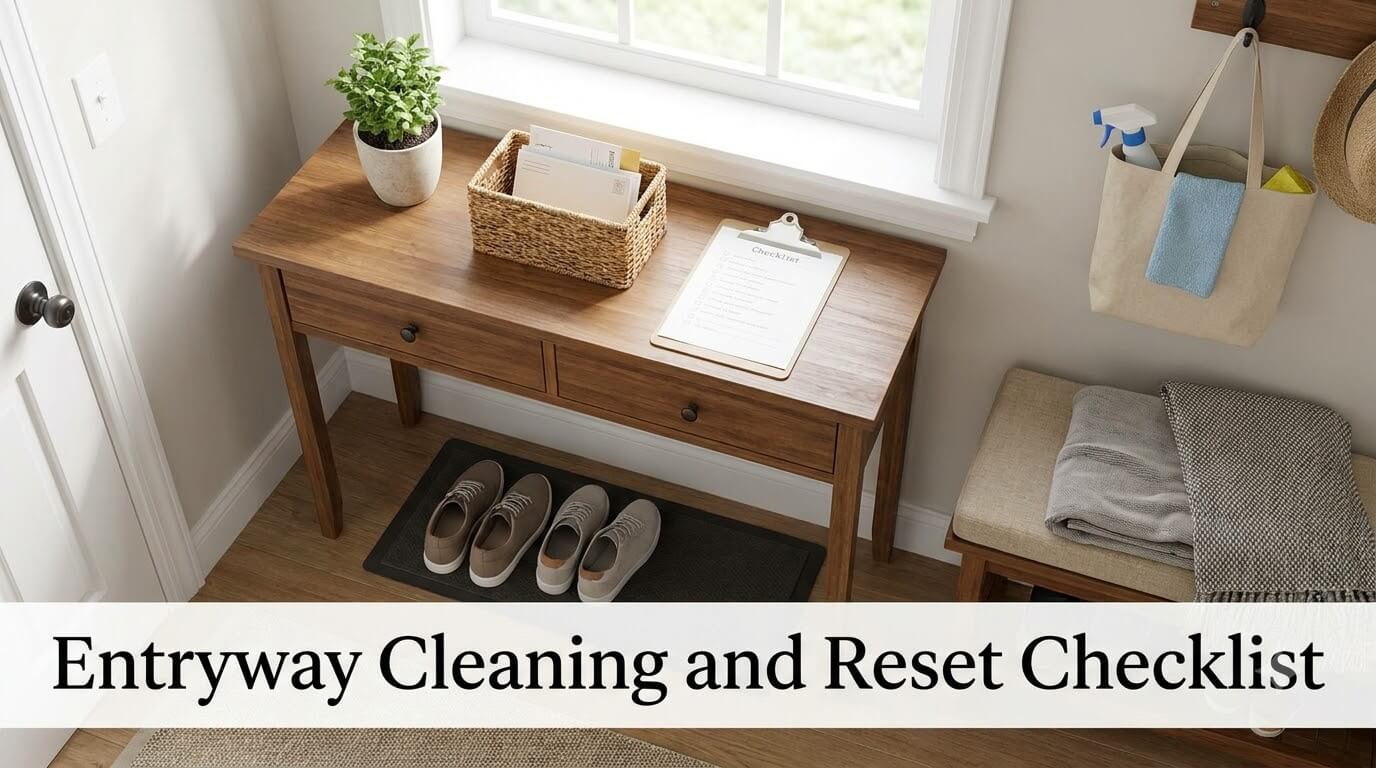
A reset is different from organizing. Return active items to the places they already have, remove what no longer belongs near the door, clean tracked-in dirt and moisture, and make sure the next departure is easy. Use the five-minute version for daily drift, the 15-minute version for visible buildup, and the deeper reset for overflow or weather-related mess.
Quick Answer: Reset the System First, Then Clean the Surfaces
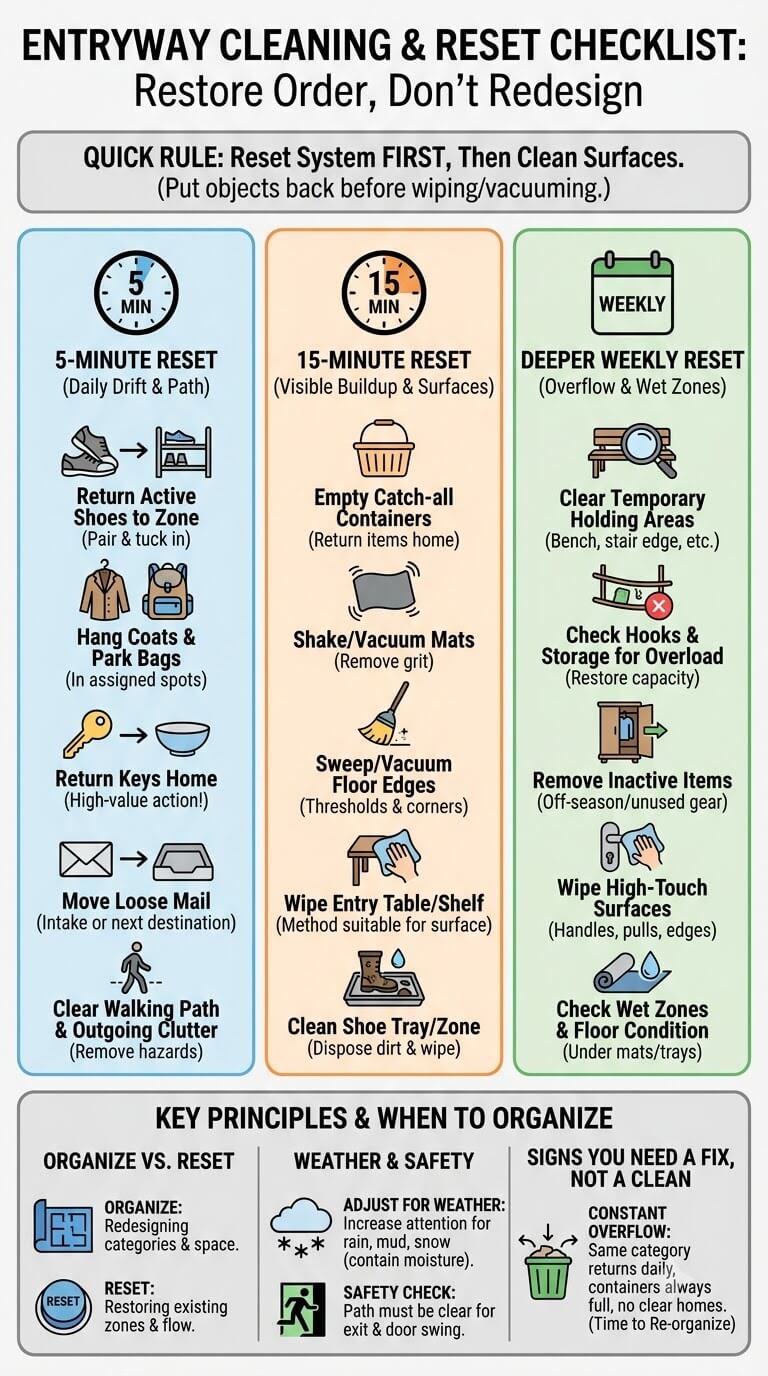
Put objects back before you start wiping and vacuuming. Cleaning around misplaced shoes, bags, and paper makes the room look better for an hour without restoring how the entrance is supposed to work.
Organizing versus resetting
Organizing decides where categories belong and how much space each one receives. Resetting uses those decisions. A reset means the daily shoes go back to the shoe zone, coats return to their hooks, keys return home, mail moves forward, and unrelated items leave the entrance. If the same clutter returns because zones are too small or poorly placed, revisit the overall entryway and mudroom organization system before increasing the cleaning schedule.
Why maintenance should restore existing zones rather than redesign them
Frequent redesign creates new rules faster than household members can learn them. During a normal reset, keep the current arrangement unless there is clear evidence it cannot handle real daily use.
The 5-Minute Entryway Reset
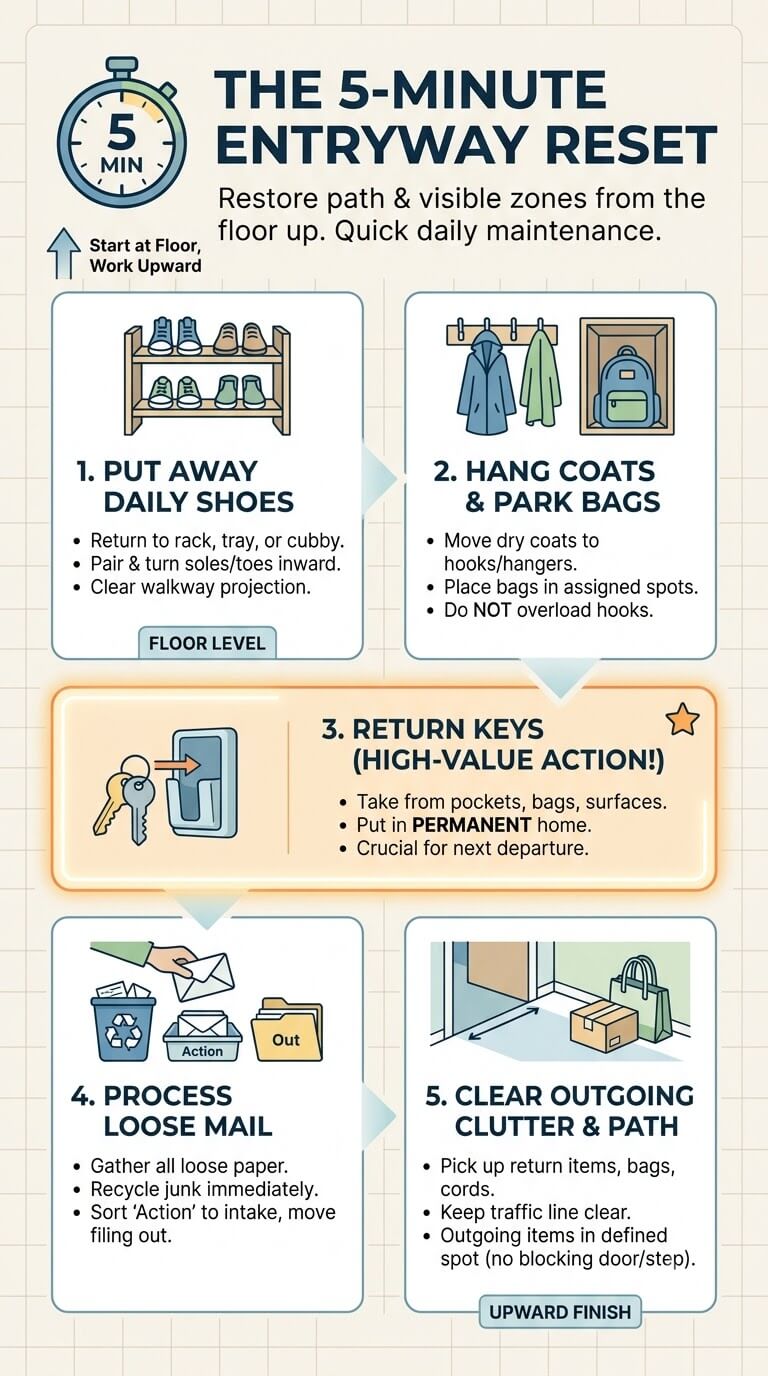
Five minutes is enough to restore the path and the most visible daily-use zones. Work from the floor upward so you remove trip hazards before spending time on small details.
Put away daily shoes
Return active pairs to the rack, tray, cubby, or other assigned footprint. Pair shoes together and turn loose soles or toes inward so they do not project into the walkway.
Hang coats and park bags
Move dry coats to their normal hooks or hangers and place backpacks, purses, work bags, and totes in their assigned parking spots. If a hook is already overloaded, do not stack another heavy item on it.
Return keys
Take keys out of pockets, bags, counters, and tables and put them in their permanent home. This is one of the highest-value reset actions because it affects the next departure.
Move loose mail to its intake or next destination
Gather envelopes, flyers, school notices, and other loose paper. Recycle obvious junk where appropriate, put action items into the small intake holder, and move anything ready for filing or another task out of the entryway.
Clear outgoing clutter and the walking path
Pick up return packages, donation bags, reusable totes, umbrellas, cords, and anything else sitting in the traffic line. Outgoing items can remain near the exit only if they have a defined spot that does not reduce door movement or create something people have to step around.
The 15-Minute Entryway Reset
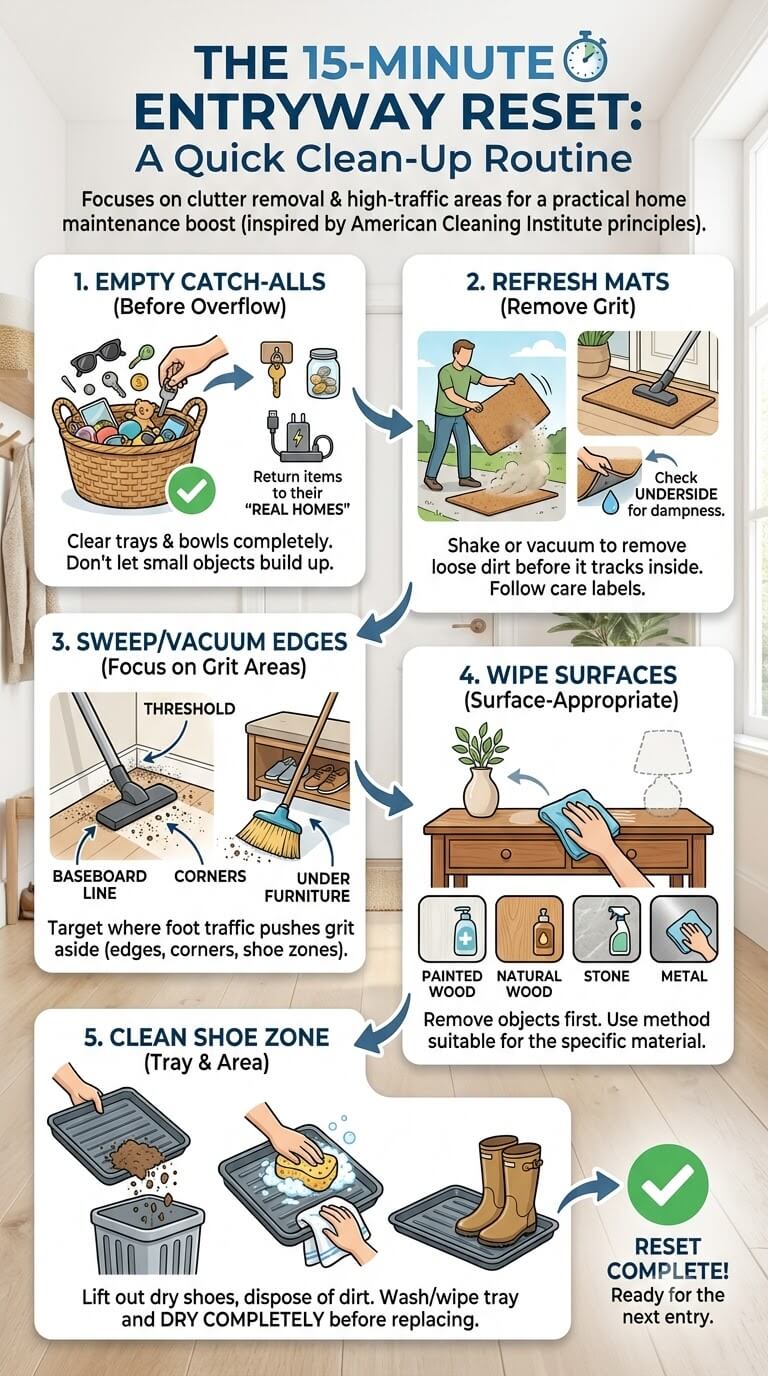
Add the surfaces and catch-all containers that collect visible soil. The American Cleaning Institute includes clutter removal, high-traffic sweeping, and routine floor care in practical home maintenance. See the American Cleaning Institute’s home cleaning routine.
Empty catch-all baskets before overflow
Take everything out of the basket, bowl, or tray that tends to collect small objects. Return gloves, sunglasses, coins, receipts, chargers, toys, and other items to their real homes.
Shake, vacuum, or clean mats as appropriate
Remove loose grit before it is ground into the mat or carried farther indoors. Shake an outdoor-safe mat outside when practical, vacuum indoor mats when their construction allows it, and follow the care label before washing any removable rug. Check the underside for trapped dampness while it is lifted.
Sweep or vacuum floor edges
Focus on the threshold, baseboard line, corners near the shoe zone, and the area under open racks or benches. Grit collects where foot traffic pushes it aside.
Wipe the entry table or shelf
Remove objects first, then wipe only with a method suitable for that surface. Painted wood, natural wood, laminate, stone, and metal can have different care limits.
Clean the shoe tray or immediate footwear zone
Lift dry shoes out, dispose of loose dirt, and wipe or wash the tray according to its material. Dry it before replacing footwear.
The Deeper Weekly Reset
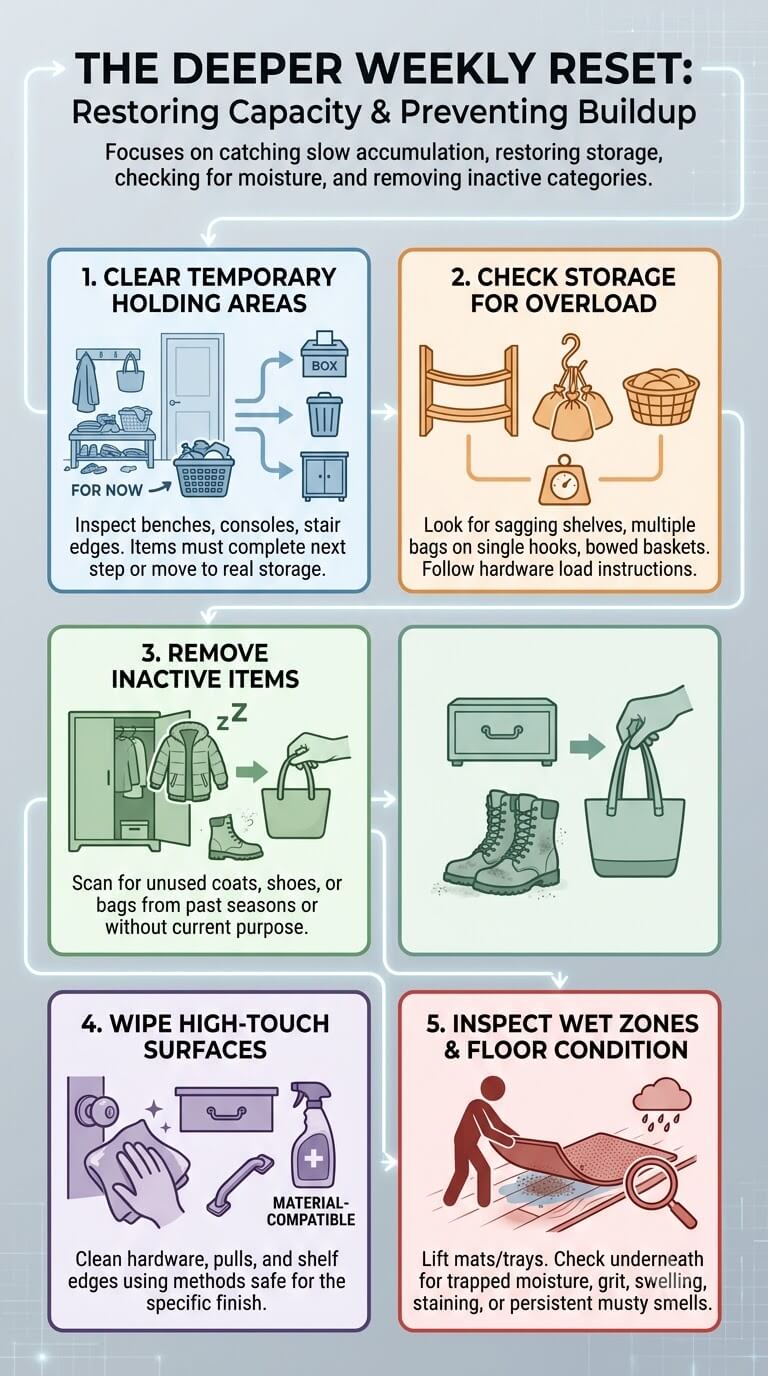
A deeper reset catches slow buildup that the short routines miss. It is less about scrubbing harder and more about restoring capacity, checking wet zones, and removing categories that have quietly expanded.
Clear every temporary holding area
Inspect the bench, console, top shelf, stair edge, basket beside the door, and any spot where people leave things “for now.” Temporary items should either complete their next step or move to their real storage area.
Check hooks, baskets, bins, and cubbies for overload
Look for hooks carrying multiple heavy bags, baskets bowed outward, shelves sagging, and cubbies packed so tightly that objects fall when one item is removed. Follow the installation and load instructions for the exact hardware you own.
Remove inactive shoes, coats, and bags
Scan for items that have not been used recently: an extra coat left from colder weather, shoes that migrated from a closet, a backup tote, or a sports bag with no current purpose. For a dedicated mudroom, run the same reset zone by zone, with extra attention to wet footwear, outerwear, family stations, and floor-level dirt near the door.
Wipe high-touch surfaces with material-compatible methods
Door hardware, drawer pulls, cabinet handles, and frequently touched shelf edges may need routine cleaning. Use the care instructions for the finish and the directions on the product you choose.
Check wet zones and floor condition
Lift mats and trays and inspect the surface beneath them. Look for trapped grit, moisture that has not dried, swelling, staining, loose flooring, or a musty area that returns even when wet gear has been removed.
Reset the Shoe Zone
The shoe area should contain today’s active footwear and provide a controlled place for dirt or moisture. It should not become the default storage location for every pair in the household.
Return active pairs
Group each person’s current shoes within the assigned footprint. If several pairs do not fit without stacking or spilling forward, choose the pairs actually used this week and move the rest to their normal overflow storage.
Move dried footwear out of the wet area
A wet-shoe landing area is temporary. Once boots or shoes are dry enough for their normal storage, return them there so the drying spot is available for the next rainy day.
Remove muddy debris from the containment zone
Let loose mud dry enough to remove without smearing when the material allows, then sweep, vacuum, or wipe the tray and surrounding floor using suitable tools.
Send excess pairs to overflow storage
If a child has three school pairs, two athletic pairs, boots, slippers, and weekend shoes at the door, the problem is no longer cleaning.
Reset Coats, Jackets, and Wet Gear
Outerwear needs two states: active storage when dry and an appropriate drying step when wet. The reset should restore both without turning the entryway into long-term clothing storage.
Hang dry outerwear
Return dry coats and jackets to their assigned hooks or hangers and spread them enough to remain easy to remove.
Let wet items dry before closed storage
Dripping raincoats, gloves, umbrellas, and damp winter layers should not be sealed immediately into crowded cabinets or bins. Give them space to dry in a location that will not drip onto electronics, bags, paper, or moisture-sensitive finishes, then return them to normal storage.
Empty overloaded accessory baskets
Pull out gloves, hats, scarves, and small weather accessories. Match pairs, remove out-of-season pieces, discard trash, and move unrelated objects elsewhere.
Move off-season outerwear out of the active zone
When weather changes, remove coats and accessories that no longer support current departures. Store them in the household’s normal clothing area after they are clean and dry according to their care instructions.
Reset Bags and Backpacks
Bags often create visual clutter because they arrive full of other categories. The reset should park the bag while sending its contents toward the places where those contents are actually handled.
Park each bag in its assigned place
Put school backpacks, work bags, purses, gym bags, and frequently used totes in their normal cubby, shelf, hook, or floor position.
Remove trash and loose papers
Empty wrappers, receipts, permission slips, notes, and loose handouts that do not need to stay in the bag. Send actionable papers to the household’s paper-processing location instead of building a second stack inside the entryway.
Move food or gym contents to the proper care area
Lunch containers go to the kitchen, wet towels and workout clothes go to laundry, and reusable bottles go where they are washed and refilled.
Clear straps from walkways
Tuck long shoulder straps, drawstrings, and handles inside the storage footprint. If straps keep falling onto the floor, adjust the parking method instead of accepting the trip hazard.
Reset Keys, Mail, and the Drop Zone
Small items can overwhelm a landing surface faster than larger categories because they have no obvious visual limit. Keep the reset focused on return and routing rather than storing every small object by the door.
Return keys to their permanent home
Place daily key sets on the designated hook, tray, or drawer as soon as you find them. Remove keys that belong to vehicles, locks, or spaces used only occasionally if they are crowding the daily spot.
Triage loose incoming mail
Separate obvious recycling, papers requiring action, and items ready to move elsewhere. Keep the intake holder small enough that it must be emptied regularly.
Clear stale temporary items
Returns that were supposed to leave last week, items meant to go upstairs, borrowed objects, and packages waiting for someone can become permanent scenery.
Empty catch-all surfaces rather than adding another basket
If the table fills every few days, clear it to its intended few items and observe what keeps returning. A second basket may hide the problem without solving it.
Clean Mats, Floors, Trays, and Entry Surfaces Safely
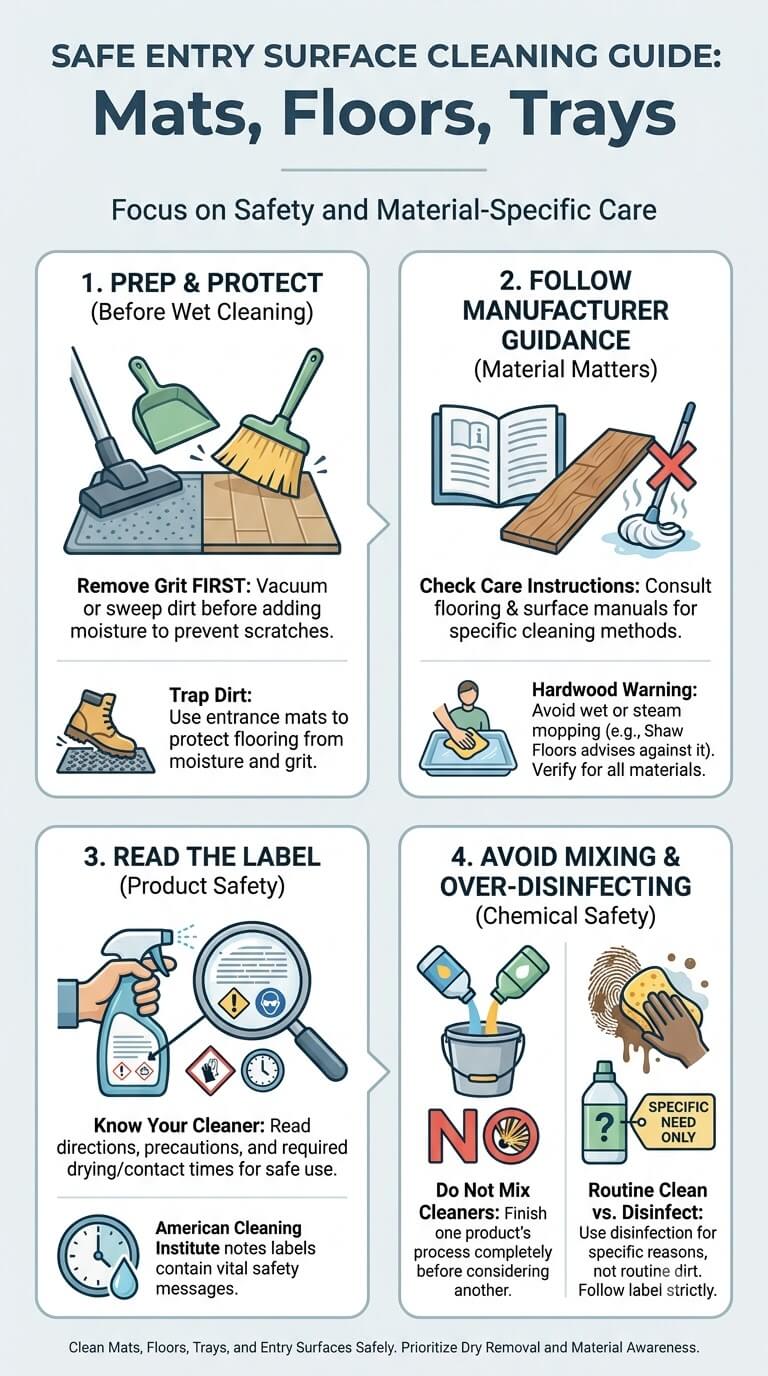
Entry surfaces take more grit and moisture than many rooms, but the safest cleaning method still depends on the material.
Follow flooring and surface manufacturer care
Vacuum or remove grit before adding moisture, then check the care guidance for your floor. Shaw Floors recommends entrance mats for trapping dirt and moisture on hardwood and warns against wet or steam mopping that flooring. Check a flooring manufacturer’s hardwood care guidance.
Use cleaning-product labels
Read the directions, surface limitations, precautions, and required contact or drying information before using a cleaner. The American Cleaning Institute notes that labels contain directions and safety messages intended for proper use. Review how to read a cleaning product label if you are unsure what information to check.
Avoid mixing cleaners
Do not combine products in a bucket, spray bottle, or on the same wet surface unless the label specifically directs that use. Finish one product’s process, including any required rinsing or drying, before considering another.
Do not default to disinfecting ordinary surfaces without a specific reason
Routine dirt, dust, mud, and fingerprints usually call for routine cleaning rather than automatic disinfection. If a situation does call for a disinfectant, use a product intended for the surface and follow its label completely.
Wipe Door Handles and High-Touch Areas
Door hardware is easy to include in a reset because it is handled often, but finishes vary. Clean deliberately rather than spraying the entire door area.
Choose material-compatible cleaning methods
Check whether the handle is painted, plated, unfinished metal, coated metal, wood, glass, or another material, and follow the maker’s instructions when available.
Avoid oversaturating finishes or nearby electronics
Use only the amount of moisture needed. Drips can travel into electronic locks, switches, doorbell components, unfinished wood edges, or gaps in trim.
Let surfaces dry as directed
After wiping, leave the area undisturbed for the drying time specified by the cleaning product or surface care guidance. Do not immediately cover a damp shelf with mail or press a wet mat against a door base.
Weather-Specific Resets
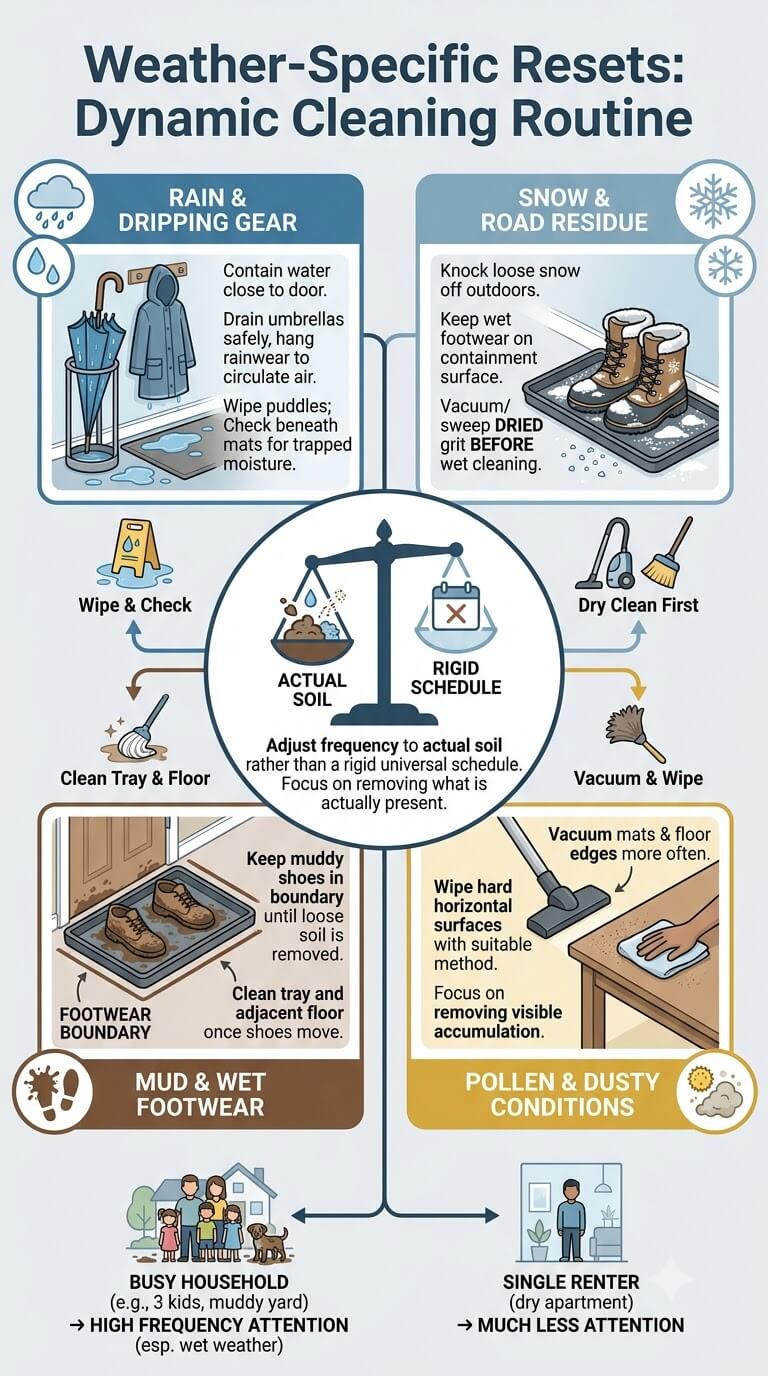
The best routine changes with what is arriving from outside. Increase attention when the entrance is receiving more water, salt, grit, pollen, or mud, and scale back when conditions are dry and clean.
Rain and dripping gear
Start by containing water close to the door. Open umbrellas where they can drain safely, hang rainwear where air can circulate, wipe visible puddles, and check beneath mats before water sits against a moisture-sensitive floor.
Snow and road residue
Knock loose snow from boots outdoors when practical and keep wet footwear on a containment surface. Vacuum or sweep dried grit before wet cleaning.
Mud and wet footwear
Keep muddy shoes in the footwear boundary until loose soil can be removed without spreading it across the room. Clean the tray and adjacent floor once the shoes move.
Pollen or dusty conditions
Vacuum mats and floor edges more often when visible dust or pollen accumulates, and wipe hard horizontal surfaces with a method suitable for the finish. Focus on removing what is actually present.
Adjust frequency to actual soil rather than a rigid universal schedule
A household with three children and a muddy yard may need floor attention every day during wet weather. A single renter in a dry apartment may need much less.
Pet Hair and Paw Dirt at the Entryway Boundary
Pets can add hair, grit, and damp paw marks to the entrance, but the entryway reset only needs to handle what crosses this boundary.
Remove tracked debris and hair from the entrance
Vacuum or sweep loose hair and grit with a tool suitable for the floor, then spot-clean paw marks using the floor manufacturer’s care method. Address moisture promptly, especially around mats.
Keep pet walking gear in its assigned small zone
Return the active leash, harness, or waste-bag holder to the small near-door location already assigned to it. Keep straps off the floor and away from door swing.
Leave full pet-cleaning and pet-supply systems to their dedicated workflows
Do not let a five-minute entrance reset expand into washing bedding, reorganizing food, cleaning toys, or sorting every leash and collar.
Safety and Access Check
The entrance should remain usable even when the household is busy. A reset is a good moment to confirm that storage has not migrated into the path people need to enter, leave, and open the door fully.
Confirm the exterior door opens freely
Open the door through its normal swing and check both sides for shoes, baskets, stools, packages, or mats that catch underneath. NFPA home escape materials advise keeping doors and windows used for escape unblocked. Review NFPA home escape guidance when deciding what can remain near an exterior exit.
Clear shoes, bags, cords, and baskets from the path
Move anything a person could step on, catch a foot in, or have to sidestep. Pay special attention to backpack straps, loose charging cords, shoe piles, and low baskets. Storage is not successful if normal movement requires weaving around it.
Address wet spots that could create a slip hazard
Dry puddles promptly and identify the source. A boot drip is routine; a leak, seepage, or floor that stays damp needs investigation. EPA guidance emphasizes moisture control and drying wet materials when water problems occur. Use EPA moisture guidance.
Check overloaded or unstable storage
Look for rocking furniture, shifting benches, bowed shelves, loose hardware, or hooks carrying more than their instructions allow. Stop using unstable storage until it is corrected. CPSC maintains information on furniture tip-over hazards and restraint standards. Review CPSC furniture stability information.
Signs You Need an Organization Fix, Not Another Clean
Cleaning can restore a workable system, but it cannot create capacity that does not exist. Repeated patterns after several resets are useful evidence that the layout, item limits, or storage assignments need a separate adjustment.
The same overflow returns every day
If the shoe tray is full again by evening or the bench is covered every morning, identify the category that returns first.
Containers are full before the week ends
A mail holder, glove basket, or bag cubby that reaches capacity immediately is not a cleaning failure. Empty it, decide what truly belongs, and compare the remaining quantity with the container’s usable space.
Family members have no obvious item homes
If everyone can clean the room but nobody knows where a backpack or set of keys belongs afterward, the system needs clearer assignments. A reset should involve returning items, not making a new storage decision for the same object every day.
Wet gear has no drying step
When rain or snow always leads to coats over dining chairs and boots scattered across the floor, the entrance lacks a practical temporary drying plan.
The walkway becomes storage
If the only place left for shoes, bags, or baskets is the path people walk through, the active inventory exceeds safe usable capacity. Remove overflow first.
Seasonal Reset at a Glance
At a seasonal change, use the reset to update what counts as active without rebuilding the whole entrance. The goal is to make current weather gear easy to use and remove categories that have become inactive.
Swap active footwear and outerwear
Bring forward the shoes, boots, jackets, and accessories needed for the next season and move the previous season’s items out after appropriate cleaning and drying. Keep the near-door quantity limited to what the household is likely to use regularly.
Remove stale outgoing items
Check donation bags, return packages, borrowed items, and seasonal gear waiting to leave the house. Complete the errand, move the item to a better staging location, or remove it from the entrance.
Review weather containment
Inspect mats, trays, umbrella storage, and the drying location before a wet or snowy season begins. Replace only items that are damaged or no longer functional.
Move off-season categories to their real storage areas
Send extra boots, coats, sports bags, and accessories to closets or other designated storage instead of stacking them above the active set. Seasonal rotation works because prime entryway space changes ownership as household routines change.
Common Entryway Cleaning and Reset Mistakes
Most reset problems come from doing the right tasks in the wrong order or expecting cleaning products to solve a storage problem.
Cleaning around clutter instead of returning items
Wiping the visible half of a table or vacuuming around a shoe pile leaves the system unchanged. Route objects first, then clean the exposed surface.
Mixing products
Do not layer or combine cleaners because one product did not remove a mark immediately. Read each label, use the product only as directed, and finish any required rinsing or drying before changing methods. More chemistry is not a shortcut for matching the cleaner to the surface and soil.
Sealing damp items
Closing wet boots, gloves, umbrellas, or coats inside crowded storage hides the mess but removes the drying step. Use a temporary open drying location that suits the material and surroundings, then return the item after it is dry enough for normal storage.
Over-wetting materials
More water is not automatically more effective. Saturating wood, seams, mats, laminate edges, or door finishes can create new problems.
Treating repeated overflow as a cleaning failure
If a properly reset entrance becomes overcrowded again immediately, do not respond by cleaning more often. Track which items return, reduce active inventory, improve the assigned location, or move overflow elsewhere.
FAQ About Entryway Cleaning and Reset
These answers focus on maintaining an existing entryway or mudroom setup rather than redesigning it.
How often should you reset an entryway
Reset it when daily items begin drifting out of place or the walking route starts collecting clutter. Busy families may benefit from a short reset most evenings, while low-traffic households may need it less often.
What should be included in a five-minute reset
Return active shoes, hang coats, park bags, put keys back, route loose mail, remove obvious outgoing clutter, and clear the walking path. If time remains, sweep visible grit or wipe a small spill.
How do you handle mud and wet shoes without redesigning the space
Keep the shoes inside the existing wet-footwear boundary, remove loose mud without spreading it, let footwear dry appropriately, clean the tray and nearby floor according to material care, and move dry shoes back to their normal place.
Should entryway surfaces be disinfected every day
Not as a default for ordinary dirt and routine household use. Regular cleaning is generally the practical first step. If there is a specific reason to disinfect a particular surface, choose an appropriate product and follow its label, including surface compatibility, contact time, precautions, and drying directions.
When does clutter mean the storage system needs to change
Consider a system change when the same category overflows soon after repeated resets, containers are constantly full, people cannot identify where common items belong, wet gear has no workable drying step, or storage repeatedly spreads into the walking path.
Final Thoughts
A useful entryway reset is short enough to repeat and specific enough to restore the room’s intended flow. Put items back before cleaning, remove what has drifted in, deal with moisture promptly, clean each surface according to its material, and finish by checking that the door and walking route are clear.
When the same clutter returns immediately, stop treating it as a housekeeping problem. Use the pattern to identify the overloaded category, reduce the active inventory, or improve that zone during a separate organization session. Cleaning should maintain a workable entrance, not compensate for a system that no longer fits the household.

Ethan Carter is the Founder & Editor of HomeCleanSecrets. Based in the United States, he has 5 years of experience creating practical home cleaning, laundry care, stain removal, decluttering, and home organization content. His goal is to help everyday households clean smarter and build simple routines that are easier to maintain.
Read more about Ethan Carter on his author page: https://homecleansecrets.com/ethan-carter/