
A pet accident on a hard floor feels urgent because liquid can move faster than you expect. Urine can run into plank seams, vomit can leave acidic residue, feces can smear into grout, and muddy paw prints can spread grit across the finish. The best first move is not a stronger cleaner. It is a calm sequence: remove what you can, blot what remains, choose a floor-safe cleaner, rinse only if the label calls for it, and dry the floor completely.
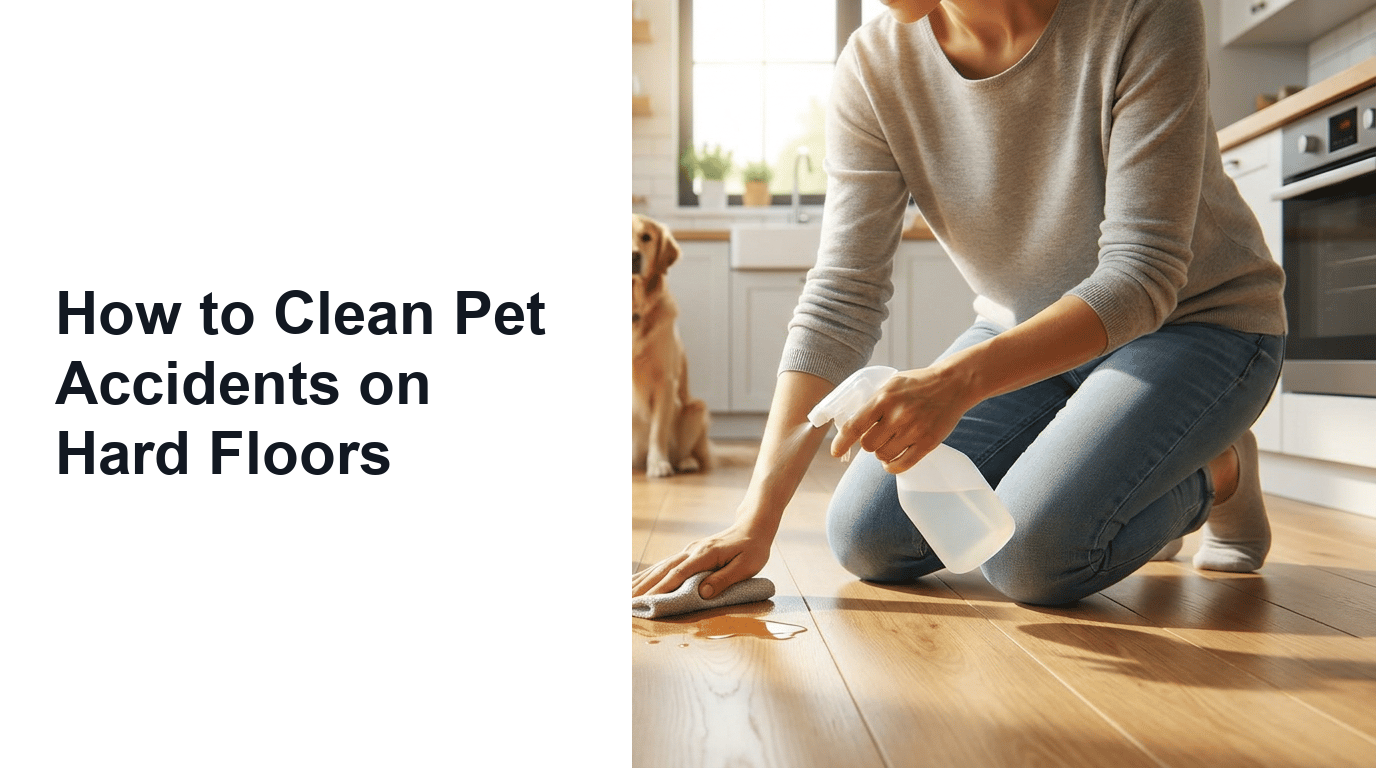
This guide focuses on hard floors only: sealed hardwood, tile, grout, laminate, vinyl plank, and sealed concrete. Carpet, rugs, upholstery, and couch odor need different methods because absorbent fibers hold moisture and odor differently. On hard flooring, the main goal is to keep the mess from spreading, keep moisture out of vulnerable seams, and avoid products that damage the finish while you are trying to clean the accident.
Quick Answer: What to Do First After a Pet Accident
Start with the fastest safe cleanup, then slow down for the material-specific step. Put on gloves if needed, move pets and children away from the area, remove solids, blot liquids with paper towels or absorbent cloths, and keep the mess contained to the smallest area possible. After the bulk is gone, clean the spot with a product that matches the flooring and the mess type.
Remove solids or liquid quickly
For feces, vomit, or mixed messes, lift solids first with paper towels, a scraper with a smooth edge, or disposable cardboard. Do not press the mess down into seams or grout. For urine, place absorbent towels over the puddle and press gently from the outside edge toward the center. Replace towels until they stop picking up moisture.
Blot instead of spreading
Wiping a puddle in wide circles spreads the mess. Blotting keeps it contained. Use a fresh towel each time the towel becomes wet or dirty. If the accident is near a rug, dog bed, litter box mat, or feeding mat, lift that item away from the wet area before the liquid wicks into it.
Urgent hard-floor cleanup is one part of a broader routine around litter, feeding, bedding, and daily resets. Use this whole-home pet cleaning routine for the larger system.
Match the cleaner to the floor material
The same product is not safe for every floor. Some hardwood finishes dislike too much moisture. Some laminate edges swell if wet. Some vinyl floors can develop dull areas from abrasive powders or harsh solvents. Tile is usually more forgiving, but grout can absorb residue if it is unsealed or worn.
Read the floor care information when you are unsure. Many flooring warranties and product manuals limit steam, standing water, abrasive pads, ammonia, wax, polish, or vinegar. If a cleaner says it is safe for hard floors, still check whether it names your specific material and whether it requires rinsing or drying.
Dry the area fully
Drying is part of the cleanup, not a final cosmetic step. After cleaning, use a dry towel to remove leftover moisture. Leave the area open to air. Do not cover it with a rug, mat, pet bed, or furniture until it feels dry to the touch and passes a smell check after drying.
Identify the Accident Type
The mess type decides your first move. Urine needs fast absorption. Vomit needs careful lifting because it can be acidic and chunky. Feces needs solids removed without grinding. Muddy paw prints need dirt lifted before mopping. Mixed messes need separate steps rather than one big wipe across the floor.
Urine
Urine spreads quickly and can follow the slope of the floor. On tile, it may run into grout. On plank flooring, it may sit along seams. On hardwood, it can affect the finish if it remains too long. Blot first, then clean the surface with a compatible product.
An enzyme cleaner may help with urine odor when the label says it is safe for your floor type. Some enzyme products need a set dwell time, while others require wiping after use. Follow the label exactly and avoid over-wetting seams just to keep the area damp longer.
Vomit
Vomit should be lifted, not smeared. Remove chunks first, then clean the remaining film. Because vomit can contain stomach acid, do not leave it sitting while you finish another chore. After you lift the solids, clean with a floor-safe solution and dry the area.
Feces
Feces cleanup starts with containment. Pick up solids carefully, fold the towel inward, and dispose of it. If the mess is soft, use a smooth-edged tool to lift from the outside inward. Avoid pushing it into grout lines, plank bevels, or the gap under a baseboard.
Once the solids are gone, clean the residue. Disinfecting may be appropriate on some nonporous surfaces, but it is not always safe for every finish. The CDC cleaning and disinfecting guidance separates routine cleaning from disinfecting and advises disinfecting in specific situations such as when someone is sick or at higher risk. For flooring, product and surface compatibility still matter.
Muddy paw prints
Mud is different from urine or vomit because it brings grit. Let thick mud dry slightly if wiping it wet will smear it across a large area, then sweep or vacuum loose dirt using a hard-floor-safe attachment. After grit is removed, damp-clean the remaining marks.
Do not drag a wet mop over gritty paw prints. Grit can scratch finishes, especially on hardwood, laminate, and some vinyl surfaces. Remove particles first, then clean the film.
Mixed messes that need separate steps
A mixed accident might include urine plus feces, vomit plus food chunks, or muddy paws plus a water bowl spill. Treat it in layers. Remove solids, absorb liquid, lift grit, clean residue, then dry. One aggressive pass with a wet mop usually spreads the mess into a wider problem.
Identify the Floor Type Before Cleaning
Hard floors can look similar but react differently. The safest method depends on whether the surface is sealed, whether it has seams, whether grout is present, and whether the finish can tolerate moisture or stronger cleaners. When in doubt, choose the gentlest compatible method first.
Sealed hardwood
Sealed hardwood can handle quick surface cleaning, but standing liquid is the enemy. Focus on fast blotting, minimal moisture, and thorough drying. Avoid steam unless the flooring manufacturer specifically allows it. Avoid abrasive pads, because they can dull or scratch the finish.
Tile and grout
Tile surfaces are often easier to clean, but grout lines can hold residue. Blot liquid from grout rather than just wiping the tile face. Use a soft brush if residue sits in the grout, but avoid harsh scrubbing that breaks down old grout or pushes mess deeper.
Laminate
Laminate is vulnerable at edges and seams. Even products marketed for hard floors can be risky if you leave the area wet. Blot thoroughly, clean with a lightly damp cloth or a laminate-compatible cleaner, and dry right away.
Vinyl plank
Vinyl plank is often more water-resistant than laminate, but seams, edges, and underlayment can still be concerns. Clean promptly, keep liquid from pooling along plank joints, and dry around baseboards. Avoid abrasive powders and rough pads that can scratch the wear layer.
Sealed concrete
Sealed concrete can still absorb odors if the sealer is worn, cracked, or thin. Clean the surface, dry it, and smell-check later. If the odor returns from the same patch, the issue may be below the surface or in a damaged sealer.
When to check flooring manufacturer guidance
Check guidance before using steam, bleach, ammonia, vinegar, peroxide, wax, polish, abrasive powders, or enzyme products on a floor you care about. This matters most for new flooring, rental properties, older hardwood, specialty tile, and floors still under warranty.
Step-by-Step Method for Fresh Urine on Hard Floors
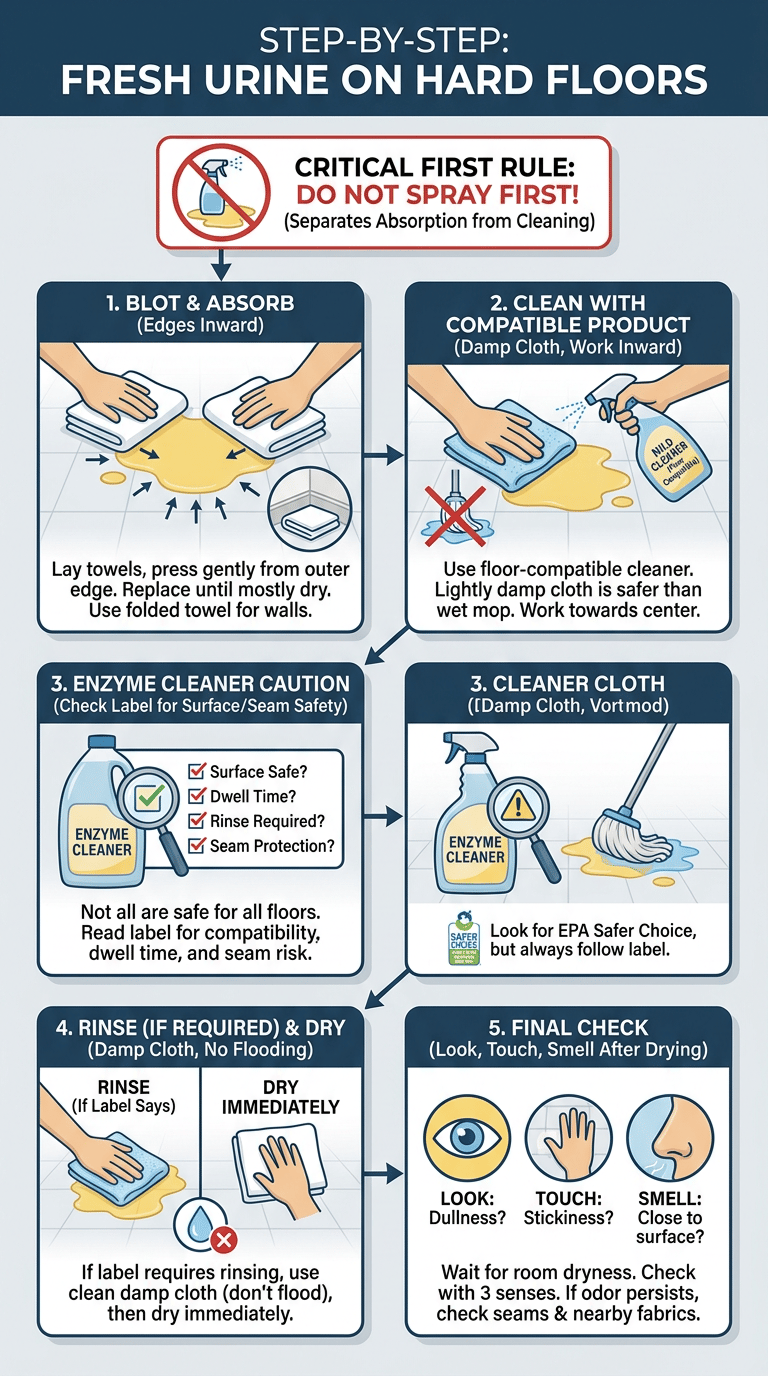
Fresh urine is easiest to handle when you separate absorption from cleaning. Do not spray first. Spraying before blotting increases the wet area and can carry urine into seams. Absorb as much as possible, then clean the remaining residue.
Blot and absorb
Lay absorbent towels over the puddle and press down gently. Start at the outer edge so the liquid does not spread. Replace towels until they come up mostly dry. For a puddle near a wall or baseboard, press a folded towel along the edge to pull out trapped liquid.
Clean with a compatible product
Once the free liquid is removed, use a cleaner compatible with the floor. For many sealed hard floors, a lightly damp cloth with a mild cleaner is safer than a soaking wet mop. Work in a small area and keep the cloth moving toward the center of the accident rather than outward.
Use enzyme cleaner only when label allows
Enzyme cleaners are often sold for pet urine odor, but they are not all approved for all hard floors. Some formulas may require the surface to stay damp, which can conflict with laminate or hardwood seam protection. Read the product label for surface compatibility, dwell time, rinsing, and pet access during use.
The EPA Safer Choice program can help shoppers identify products with ingredients reviewed for safer chemistry, but any cleaner still needs to be used according to the label and the floor material.
Rinse if required by label
Some cleaners are leave-on products. Others require rinsing. If the label calls for rinsing, use a clean damp cloth rather than flooding the floor. Rinse the cloth often, wring it well, wipe the cleaned patch, and dry the area immediately.
Dry and check for residue
Dry with a clean towel, then wait until the floor reaches normal room dryness. Check with three senses: look for dullness, touch for stickiness, and smell close to the surface. If odor appears only after the floor warms or the room is humid, check seams and nearby fabric items.
Step-by-Step Method for Vomit or Feces
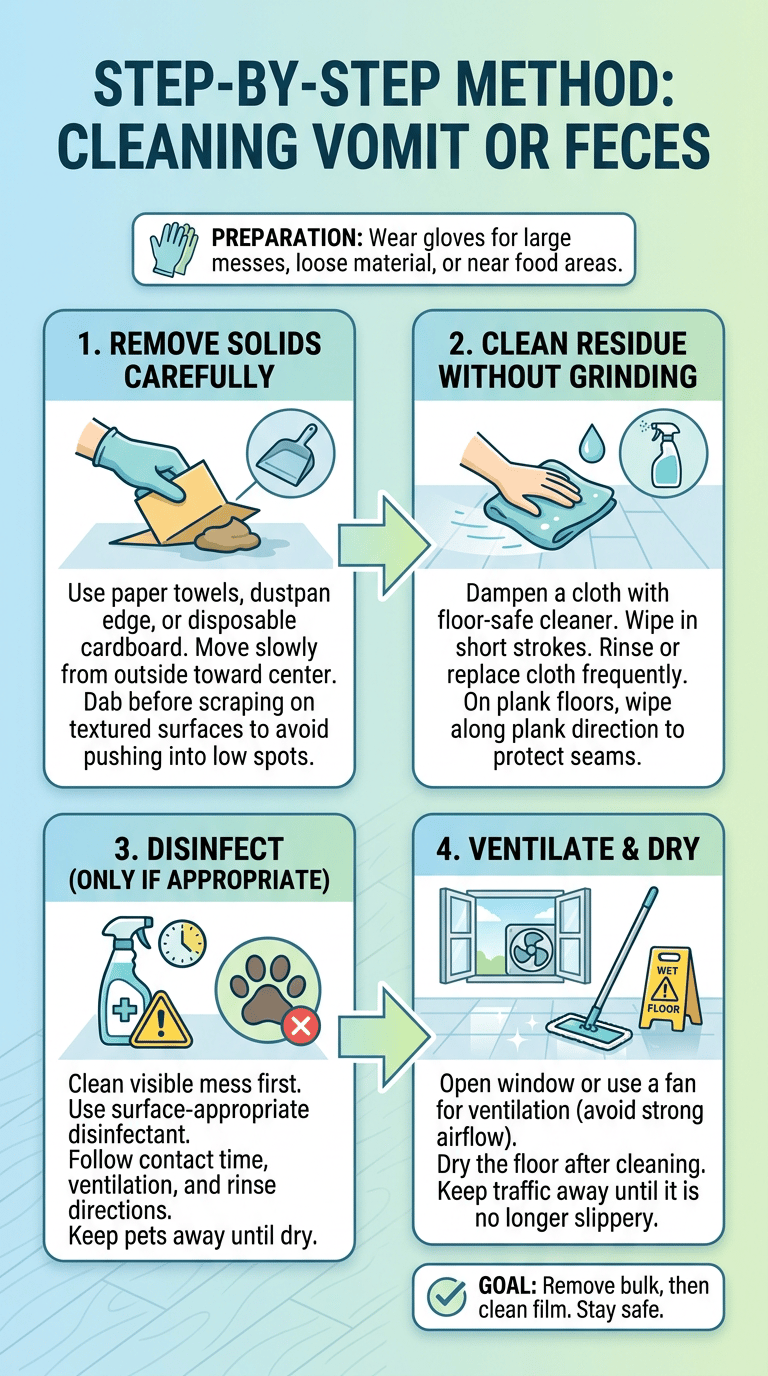
Vomit and feces need a different order because solids come first. The goal is to remove bulk material without grinding it into the floor, then clean the film left behind. Wear gloves if the mess is large, loose, or near food preparation areas.
Remove solids carefully
Use paper towels, a dustpan edge, or disposable cardboard to lift solids. Move slowly from the outside toward the center. If the mess is on grout or textured tile, dab before scraping so you do not push it into low spots.
Clean residue without grinding it into seams
After solids are gone, dampen a cloth with a floor-safe cleaner and wipe the residue in short strokes. Rinse or replace the cloth as soon as it becomes dirty. On plank floors, wipe along the plank direction only if that keeps liquid away from seams.
Disinfect only when product and surface allow
Disinfecting is not the same as cleaning. Clean the visible mess first. If the situation calls for disinfecting, use a product that is appropriate for the floor and follow the contact time, ventilation, and rinse directions. Keep pets away until the product is used and dried as directed.
Ventilate and dry
Open a window or turn on a fan if the product label recommends ventilation, but do not blow air so strongly that it spreads odor or particles before the mess is removed. Dry the floor after the cleaning step and keep traffic away until it is no longer slippery.
Floor-Specific Cleaning Notes
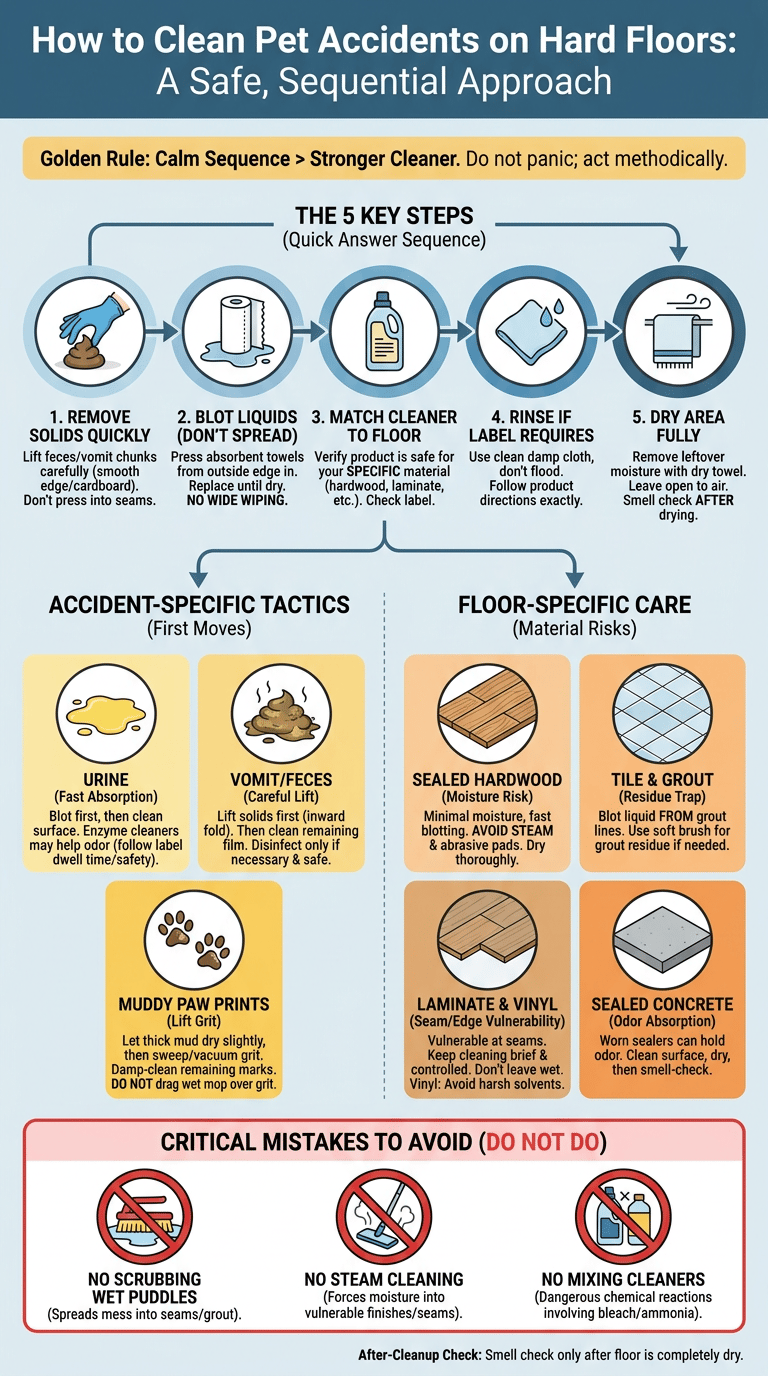
After the basic cleanup, use the floor type to decide whether any extra step is needed. This is where many people accidentally cause damage: they treat a hard floor as if it is one single category. The safer approach is to respect seams, finishes, grout, and moisture limits.
Hardwood seam and finish risks
Hardwood problems usually start at seams, scratches, worn finish, and board edges. Blot fast and keep the cleaning cloth damp, not dripping. Dry with a towel and leave the area uncovered. Do not place a rug back until both the rug and floor are dry.
Grout lines on tile
Grout needs attention because it is lower and often more porous than tile. After blotting, wipe the tile face, then clean the grout line with a small soft brush if needed. Dry the grout with a towel, not just the tile surface.
Laminate swelling risks
Laminate can swell when liquid reaches the core through seams or damaged edges. Keep every cleaning step controlled and brief. Apply cleaner to the cloth, not directly to the floor, unless the product and flooring guidance say otherwise.
Vinyl plank seam care
Vinyl plank usually handles normal spills well, but liquid can still travel into seams, around transitions, and under baseboards. Blot first, clean with a vinyl-compatible product, and dry along the seams. Avoid steam and abrasive tools unless your specific floor permits them.
Concrete absorption limits
Sealed concrete is easier to clean than raw concrete, but worn sealers can let odors cling. Clean the surface, dry it, and check later. If the same patch smells again, the cleaner may not be reaching what absorbed into the floor or coating.
Decision Tree: Cleaner Choice for Hard-Floor Pet Accidents
Cleaner choice should follow the mess, the surface, and the label. Do not jump from a mild cleaner to several stronger products at once. If the first cleaning does not work, identify what remains: visible soil, odor, stickiness, discoloration, or moisture damage.
When mild soap is enough
Mild soap and water may be enough for fresh muddy paw prints, a small fresh urine spot cleaned immediately, or light food-related residue from a pet accident. Use a cloth, not a soaked mop, on moisture-sensitive floors. Rinse if needed and dry.
When an enzyme cleaner may help
An enzyme cleaner may help when urine odor returns after normal cleaning, especially on sealed hard surfaces where the label confirms compatibility. The cleaner needs contact with the residue, so blotting and cleaning loose soil first still matter.
When disinfecting is appropriate
Disinfecting may be appropriate after feces, illness-related messes, or situations where household risk is higher. Clean first, then disinfect only if the product is safe for the floor. Follow contact time and drying directions instead of wiping it off too early or leaving puddles behind.
When to stop and avoid stronger chemicals
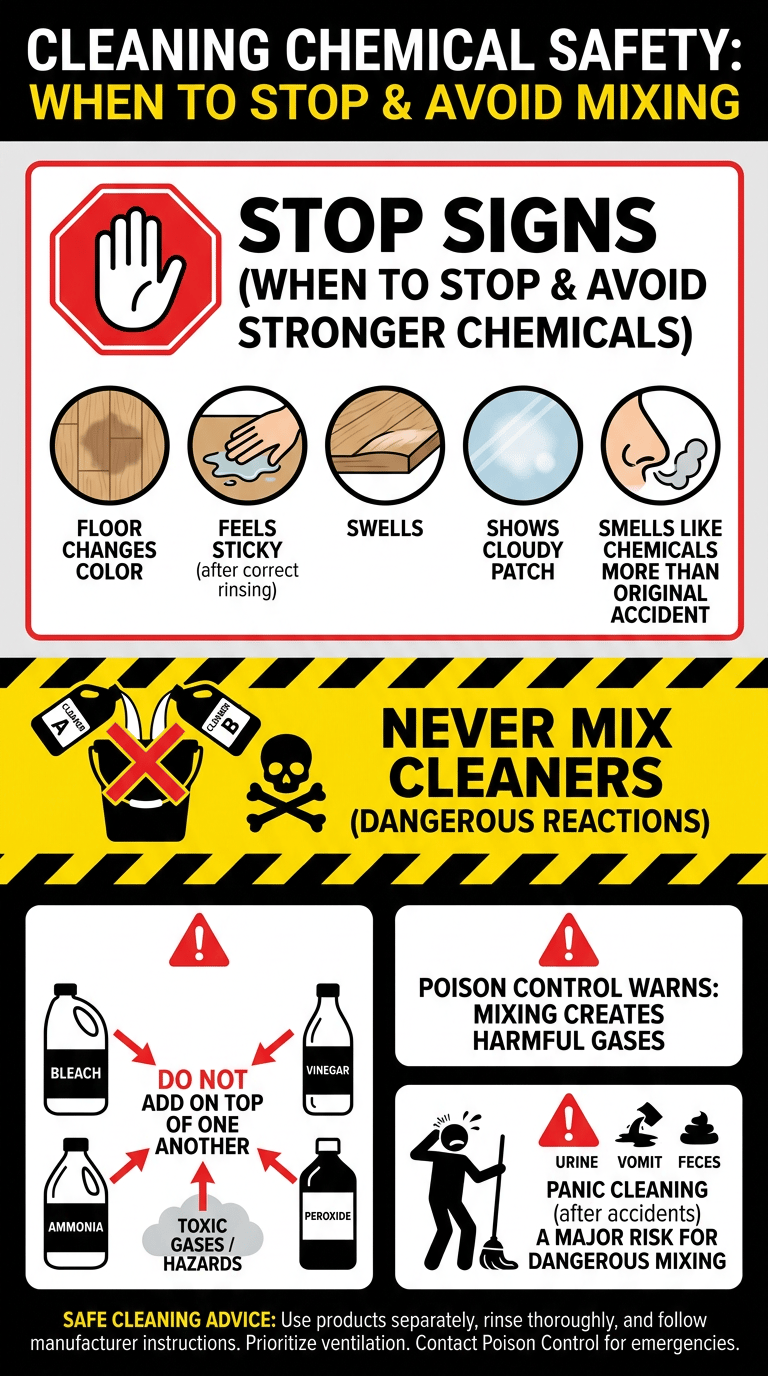
Stop when the floor changes color, feels sticky after correct rinsing, swells, shows a cloudy patch, or smells like chemicals more than the original accident. Also stop if you have already used one cleaner and are tempted to add bleach, ammonia, vinegar, peroxide, or another product on top.
Mixing cleaners is dangerous. Poison Control warns that cleaning chemicals should not be mixed because reactions can create harmful gases or other hazards. Their safe cleaning advice is especially important when people panic after urine, vomit, or feces and start combining products.
Mistakes That Make Pet Accidents Worse
Most hard-floor accidents become worse because of spreading, soaking, harsh scrubbing, or chemical layering. A careful cleanup may feel slower at first, but it protects the floor and usually reduces repeat cleaning.
Scrubbing liquid across the floor
Scrubbing a wet puddle pushes liquid outward. It can carry urine into seams, under baseboards, or across grout lines. Absorb first, then clean what remains. If you see liquid moving away from the original spot, pause and contain it with towels.
Using steam on vulnerable flooring
Steam can force heat and moisture into seams and finishes. It may be risky for hardwood, laminate, some vinyl plank, and floors with unknown adhesive or coating. Do not use steam for pet accidents unless your flooring guidance specifically allows it.
Mixing cleaners
Using several cleaners in a row can leave residue and create safety concerns. Rinse and dry between compatible products if the label tells you to. Never mix bleach with ammonia, vinegar, or other cleaners. Pet urine itself can contain ammonia-like odors, so do not treat urine spots with random bleach mixtures.
Letting moisture sit in seams
Moisture in seams can outlast the visible puddle. Pay attention to plank joints, thresholds, baseboards, grout edges, and the area under mats. A dry top surface does not always mean the edges are dry.
Covering odor with fragrance
Fragrance can make the room smell better for a short time without removing residue. If odor returns after the fragrance fades, the problem is still there. Clean the residue, dry the floor, check nearby fabrics, and look for hidden moisture.
After-Cleanup Checks
Do not judge success while the floor is still wet. Many cleaners smell different while drying, and some pet odors return only after moisture evaporates. Give the cleaned area time to dry, then check it without adding new products first.
Smell check after drying
Smell close to the floor after it dries. If the odor is gone, keep the area uncovered and watch for repeat pet behavior. If odor remains, identify whether it comes from the floor, grout, baseboard, rug, pet bed, or nearby furniture.
If your pet keeps returning to the same place, clean the surface again only if there is evidence of remaining residue. Also consider behavior, litter box access, outdoor schedule, stress, or health concerns. Repeated accidents can be a pet-care issue, not just a floor-care issue.
Sticky or dull residue
Sticky residue often means cleaner was left behind or the mess was not fully lifted. Dullness may be residue, but it can also be finish damage. Use a clean damp cloth if the label permits rinsing, then dry. Do not polish over sticky residue.
Floor swelling or discoloration
Swelling, raised seams, darkened wood, lifted laminate, or cloudy finish means you should stop adding moisture. Take photos, note when the accident happened, and check your floor care information. Renters should document the issue before trying aggressive fixes.
Repeat accidents in the same spot
Repeat accidents may happen because odor remains, the area is easy for the pet to access, or the pet has a habit or medical issue. Clean the spot, remove nearby soft items, block access temporarily if safe, and address the underlying pet routine.
If accidents keep happening in the same areas, one-time cleanup will not solve the routine problem. Use this whole-house routine for repeat messes to connect accident response with daily and weekly maintenance.
Adjacent Issues: When the Problem Is Bigger Than One Accident
Sometimes the hard-floor accident is only one part of a wider home problem. Keep this article focused on the hard floor, but check surrounding zones so the same odor does not return from another surface.
Litter box misses
If the accident is near a litter box, clean the floor and then inspect the box area. Litter scatter, a dirty mat, a low-entry box, or a box that is hard for the cat to access can all contribute. Do not solve a box-area problem by only mopping the floor every day.
When a cat misses the box edge or tracks damp litter onto the floor, clean the floor first and then adjust the box routine. Use the litter guide for litter box misses that keep returning.
Accidents on carpet instead of hard floors
Carpet needs a different approach because liquid moves into fibers, backing, and padding. If the accident crossed from hard floor to carpet, treat the carpet as a separate material. Do not scrub the carpet with the same method used on tile or vinyl.
Pet smell on couches
If the room still smells after the hard floor is clean and dry, check the couch, pet blankets, throw pillows, and bedding. A floor accident may not be the only odor in the room. Upholstery holds smells in places a mop cannot reach.
Whole-house routine for repeat messes
Repeated accidents call for a routine, not just emergency cleanup. Keep towels, gloves, bags, and a floor-compatible cleaner in one place. Clean bedding, mats, bowls, litter areas, and entry zones on a schedule so fresh accidents do not mix with old residue.
FAQ About Cleaning Pet Accidents on Hard Floors
These answers focus on the hard-floor problems that come up most often after the first cleanup: enzyme cleaners, laminate seams, disinfecting decisions, and odor that returns after drying.
Can enzyme cleaner be used on hardwood floors?
Only use an enzyme cleaner on hardwood if the product label says it is safe for your hardwood finish and your floor care guidance does not prohibit it. Many enzyme cleaners need dwell time, and hardwood seams do not like excess moisture. Test first in a hidden spot, use the smallest effective amount, and dry the area well.
What should you do if pet urine gets into laminate seams?
Blot the surface and seam line immediately, clean with a laminate-compatible method, and dry the area. Do not flood the seam with more cleaner. Watch for swelling, lifting, or raised edges over the next day. If the seam changes shape, stop adding moisture and check flooring guidance or ask a flooring professional.
Is disinfectant always needed after a pet accident?
No. Cleaning removes visible mess and residue, and disinfecting is a separate step for specific situations. For urine on a hard floor cleaned immediately, a compatible cleaner may be enough. For feces, illness-related accidents, or higher-risk households, disinfecting may be appropriate if the product is safe for the surface and used exactly as directed.
Why does the floor still smell after cleaning?
Odor can remain because residue entered grout, seams, baseboards, nearby rugs, mats, or pet bedding. It can also return if cleaner residue traps odor or if the floor stayed damp under a mat. Let the area dry, smell-check the surrounding materials, and avoid layering fragrance over the problem.
Final Thoughts
The safest way to clean pet accidents on hard floors is to act quickly without panicking. Remove solids, absorb liquid, clean with a product that fits the floor, follow the label, and dry the area completely. Stronger products are not always better, especially on hardwood, laminate, vinyl seams, worn grout, or sealed concrete.

Ethan Carter is the Founder & Editor of HomeCleanSecrets. Based in the United States, he has 5 years of experience creating practical home cleaning, laundry care, stain removal, decluttering, and home organization content. His goal is to help everyday households clean smarter and build simple routines that are easier to maintain.
Read more about Ethan Carter on his author page: https://homecleansecrets.com/ethan-carter/