
Outdoor cleaning is safer when you begin with the material, not the mess. Concrete, wood, steps, and cushions need different cleaners, tools, water levels, and drying conditions. The goal is to remove residue without damaging finishes, driving water into vulnerable areas, creating uncontrolled runoff, or mistaking deterioration for dirt.
This guide gives you a complete decision process for patios, decks, porch areas, outdoor furniture, cushions, umbrellas, and rugs. It focuses on routine and seasonal care. It does not cover restoration projects, structural repair, roof work, or large areas of recurring organic growth.
Quick Answer: Start With the Material, Not the Mess
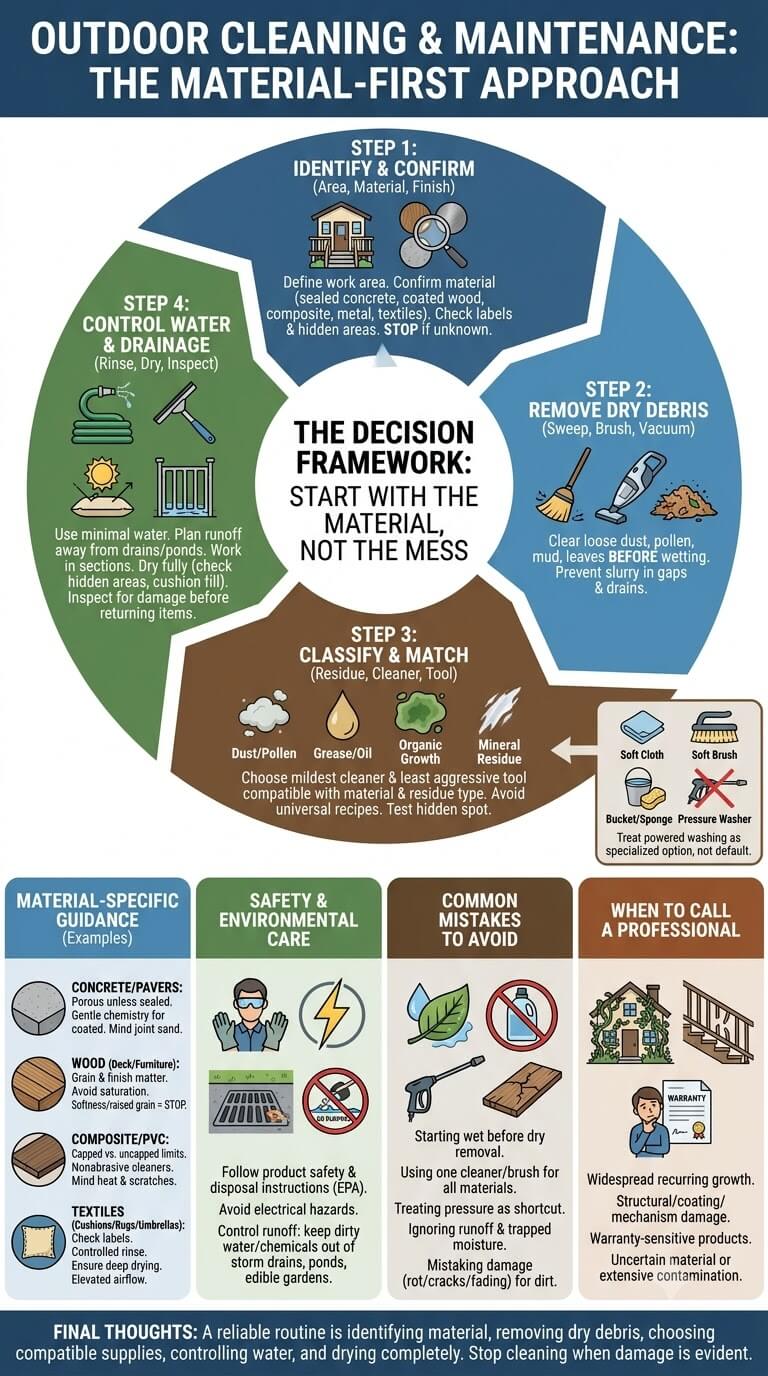
The safest decision path in one view
Before wetting anything, identify the item, confirm the material and finish, remove dry debris, classify the residue, and inspect for damage. Choose the mildest compatible cleaner and least aggressive tool likely to work. Plan drainage, clean in controlled sections, dry fully, and inspect again before replacing furniture, rugs, covers, or stored textiles.
A good test is simple: if you cannot confidently answer what the surface is made from, whether it has a coating, and where the water will drain, pause before cleaning. Those three unknowns cause many avoidable mistakes.
What this guide covers and what belongs in a specialist project
Routine cleaning covers dust, pollen, mud, food residue, bird droppings, light grease, leaf stains, and localized surface film. Stop for soft wood, unstable railings, deep cracks, loose masonry, broad coating failure, broken mechanisms, electrical hazards, or widespread recurring growth. Cleaning cannot correct movement, rot, corrosion loss, delamination, or failed coatings.
Why Outdoor Cleaning Needs a Material-Specific System
Exposure, porosity, coatings, and moving parts change the method
Outdoor materials age under sunlight, rain, temperature swings, dust, and plant debris. Concrete absorbs differently from sealed wood. Composite boards may have a cap layer, metal may have a coating, and textiles may hide absorbent fill or backing that dries slowly.
Moving parts add another limit. Water sprayed into furniture joints, umbrella cranks, hollow frames, electrical fixtures, or door thresholds can remain trapped after the visible surface looks dry. The cleaning plan must account for the whole item, not just the part you can see.
Why more water or more pressure is not automatically better
Water loosens soil, but excess water spreads residue, saturates wood, wets cushion fill, and carries cleaner beyond the work area. High pressure can scar grain, damage composite surfaces, force water under coatings, fray fabric, and launch debris. Start with dry removal, a damp cloth, a bucket-and-brush method, or a gentle rinse when the material allows it.
The CDC pressure washer safety guidance warns that strong spray can cause serious wounds, throw objects, and create electrical hazards. That is another reason to treat powered washing as a specialized option rather than a default first step.
The Outdoor Cleaning Decision Framework

Step 1: Identify the area or item
Define the work area before choosing supplies. A patio is a broad horizontal surface; a porch includes traffic paths, railings, thresholds, and steps; a deck includes boards, gaps, fasteners, and the structure below. Furniture may combine metal, wood, plastic, glass, fabric, hardware, and moving joints. These boundaries determine access control, drainage, drying space, and what must be moved.
Step 2: Confirm the material and finish
Look for labels, manufacturer documents, warranty information, coating records, or a hidden area that reveals the base material. Confirm whether concrete is sealed, wood is coated, composite is capped, metal is painted, and textiles are removable. When the finish is unknown, use the least aggressive method and test a concealed spot.
Step 3: Remove dry debris
Sweep, brush, shake, or vacuum before adding water. Dry removal keeps leaves, grit, pollen, hair, and soil from becoming slurry that spreads into gaps, seams, drains, and texture. Use soft tools on scratch-prone finishes and clear places where debris holds moisture.
Step 4: Classify the soil or residue
Loose dust needs a different response from grease, sap, mineral residue, or absorbed oil. Decide whether the mark sits on the surface, is lodged in texture, or has penetrated a porous material. Begin with the mildest compatible treatment and repeat only after the surface dries without damage.
Step 5: Check for organic growth clues
Green, black, brown, or pale film may be growth, dirt, tannin staining, or pollution residue. Color alone is not a diagnosis. Check for shade, slow drying, irrigation overspray, trapped moisture, or rapid return after cleaning. Recurring dampness is the more useful clue.
Step 6: Match the cleaner and tool
Read the surface instructions and cleaner label. Choose tools softer than the finish. A nonabrasive cloth, soft brush, or approved pad is often enough. Do not mix products or assume a homemade formula suits stone, metal, coatings, wood, composite boards, or treated textiles.
The American Cleaning Institute explains how directions, caution statements, ingredients, and storage information work together on a cleaning product label. Reading those details before use is more reliable than copying a universal recipe.
Step 7: Decide how much water and pressure are acceptable
Use only enough water to loosen and remove residue. A damp cloth may suit furniture, a controlled rinse may suit sound concrete, and a lightly wetted brush may be safer on wood. Textiles require a drying plan before soaking. Manufacturer limits override generic settings.
Step 8: Plan drainage and runoff
Find slopes, drains, low points, thresholds, garden beds, and places where water can pool. Redirect dry debris before rinsing. Work in small sections so dirty water remains manageable, and keep oily residue, concentrated cleaner, paint flakes, and contaminated debris away from storm drains, ponds, pools, and edible gardens.
Step 9: Dry, inspect, and choose maintenance or repair
Drying is part of cleaning, not an optional final detail. Check shaded edges, board gaps, seams, folds, cushion centers, rug backing, and the underside of furniture. Once dry, decide whether the surface is clean, needs one more gentle treatment, needs coating maintenance, or shows damage that cleaning cannot solve.
Identify the Outdoor Material Before Cleaning
Mineral hard surfaces such as concrete
Poured concrete is porous unless sealed or coated. It can hold grease, leaf color, mineral deposits, and textured dirt. Painted or coated concrete needs gentler chemistry and abrasion than bare concrete. Pavers, brick, tile, and stone have separate joint, sealer, and acid-sensitivity concerns.
Natural wood and coated wood
Wood absorbs water and can splinter, swell, weather, or rot. Painted, stained, sealed, and unfinished boards have different limits. Gray color may be weathering rather than removable soil. Soft areas, raised grain, loose fasteners, peeling finish, and movement underfoot are warning signs to address before cleaning.
Composite and PVC-style manufactured boards
Composite decking is not simply waterproof wood. Capped products can scratch, dull, or react to incompatible cleaners, while uncapped boards may absorb more staining. PVC may have different heat and solvent limits. Confirm the material family before broad cleaning.
Furniture frames, glass, resin, wicker, and mixed materials
Outdoor furniture often combines materials with different limits. Metal may have coatings and hidden drainage holes; wood may be sealed or unfinished; synthetic wicker tolerates different moisture than natural rattan; glass needs edge and hardware protection. Remove cushions and treat each material separately.
Cushions, umbrellas, rugs, and other outdoor textiles
Outdoor-rated fabric can still fade, delaminate, stretch, or trap moisture. Check labels, removable covers, backing, foam, fill, seam construction, and water-repellent treatments. A surface that feels dry may still be damp inside a cushion, under a rug backing, or inside folded umbrella fabric.
Mixed-material porch and entry zones
Porches may include concrete, wood, composite, masonry, painted trim, metal railings, glass, lighting, doormats, and a door threshold within a few feet. Clean from upper and cleaner areas toward lower and dirtier ones, but control water near doors, electrical fixtures, and interior flooring.
Classify the Mess Before Choosing a Cleaner
Dust, pollen, leaves, and loose soil
These are dry-debris problems first. Sweep surfaces, vacuum textiles when allowed, and brush corners before washing. Pollen smears when wet, while leaves hold moisture under rugs, in deck gaps, and around furniture joints.
Mud, food, grease, drink spills, and bird droppings
Let fresh mud dry enough to lift loose solids without grinding grit into the finish. Blot drink spills. Use compatible detergent on grease instead of extra force. For bird droppings, avoid dry scraping that creates dust; soften the residue and remove it in a controlled area.
Leaf stains, mineral residue, and sticky deposits
These marks need patience and spot treatment. Leaf color can penetrate porous materials, mineral residue may follow drainage patterns, and sap can resist ordinary detergent. Test a small area, follow the approved contact time, and inspect after drying before repeating.
Light organic surface film versus a condition that should stop DIY work
A small surface film on sound, accessible material may respond to a compatible cleaner and thorough drying. Stop when growth is widespread, recurring, linked to soft wood or damaged backing, or likely to create contaminated runoff. EPA guidance emphasizes that moisture control is central to recurring mold problems, so correct the damp condition rather than repeatedly washing the mark.
Plan Weather, Access, and Work Order
Sun, wind, rain forecast, surface temperature, and drying conditions
Choose mild, dry weather with enough time for natural drying. Strong sun can dry cleaner too quickly and heat dark surfaces. Wind spreads spray and can move umbrellas. Avoid lightning, freezing conditions, unsafe heat, and rain that overwhelms drainage.
Control foot traffic, pets, children, ladders, electricity, and heavy objects
Keep people and animals off wet surfaces. Get help with heavy tables, planters, or rugs. Do not stand on furniture to reach an umbrella. Avoid uncontrolled water near outlets, cords, lights, doorbells, and damaged fixtures. Stop if access requires an unstable ladder or unsafe reach.
Work from cleaner zones toward dirtier zones and high areas toward lower areas when appropriate
Clean upper furniture parts, railings, and trim before floors and steps. On patios, work toward a planned drainage point. This order reduces re-soiling and repeated walking across wet surfaces.
Build a Material-Safe Cleaning Workflow

Dry-debris-first preparation
Remove furniture, mats, planters, and loose textiles when possible. Photograph complex furniture placement if it helps with reassembly. Sweep the surface, clear gaps and corners, and collect debris rather than pushing it into drains. Inspect hidden areas that were covered, especially under rugs and planters.
Read care labels, manuals, coating limits, and cleaner labels
Look for restrictions on bleach, solvents, abrasives, soaking, machine washing, temperature, and powered equipment. Follow dilution and contact-time directions exactly. The label also tells you about protective equipment, ventilation, storage, and disposal. EPA household hazardous waste guidance advises consumers to follow product instructions for use, storage, and disposal.
Spot test before broad application
Test a concealed area with the complete planned method, including rinsing and drying. Check for color change, dulling, raised grain, softening, residue, texture change, or water marks. A test is incomplete until dry.
Use controlled agitation, rinsing, and water volume
Let compatible chemistry and gentle agitation do most of the work. Brush in the direction recommended for the material, such as with wood grain or rug fibers. Rinse in small sections so residue does not dry on the surface. Keep water out of joints, mechanisms, cushion fill, and threshold gaps.
Prevent cleaner and dirty rinse water from drying on adjacent surfaces
Protect nearby glass, metal, painted trim, plants, and doors. Work in shade when possible, or reduce section size in warm conditions. Rinse accidental splashes promptly according to the affected material’s care instructions. Do not allow dirty water to collect beneath rugs, furniture feet, or low deck areas.
Water Pressure, Drainage, and Runoff Decisions
When a hose, bucket, damp cloth, or soft brush is enough
Use a damp cloth for furniture frames, a bucket-and-brush method for controlled patio sections, a gentle hose rinse on approved surfaces, or dry methods for textiles that should not be soaked. The method is successful when it removes the residue without changing the finish or creating a larger drying problem.
Why pressure washing is not the default
Powered spray adds force, overspray, electrical risk, and runoff. It may suit some sound surfaces when both equipment and material instructions allow it, but it should not replace diagnosis. Avoid damaged wood, questionable coatings, textiles, furniture joints, umbrella mechanisms, and open thresholds.
Manufacturer instructions override generic pressure advice
There is no single safe pressure, nozzle, angle, or distance for every outdoor surface. Product age, surface condition, coating, grain, cap layer, texture, and previous damage all matter. When instructions are missing, choose a lower-force method or contact the manufacturer rather than experimenting on a large visible area.
Keep runoff away from storm drains, neighboring property, pools, ponds, edible gardens, and thresholds
Collect debris and absorb oily spills before washing. Use minimal cleaner and water, and follow local disposal rules. EPA materials advise households not to rinse spilled fluids into storm drains, a principle that also applies to wash water containing grease, paint flakes, concentrated cleaner, or contaminated residue. See the agency’s stormwater pollution guidance for homes.
Choose the Right Surface-Specific Guide
Concrete patio cleaning for porous mineral surfaces
Choose a concrete-focused method when the area is poured concrete and the main concerns are porosity, grease, leaf color, textured dirt, mineral residue, or surface deterioration. Confirm whether it is sealed, painted, or coated before selecting a cleaner.
Wood deck cleaning for grain, coatings, absorption, and rot clues
Use a wood-specific process when boards are natural wood. The main decisions are finish condition, water absorption, grain protection, fasteners, drainage between boards, and whether softness or movement suggests repair rather than cleaning. Natural boards need a wood-deck cleaning process that protects grain, coatings, fasteners, and drying between boards.
Composite decking care for cap layers and manufacturer limits
Use composite guidance for capped or uncapped manufactured boards. Cleaner compatibility, brush softness, warranty instructions, rubber-backed mats, grease, scratches, and heat damage are more important than wood restoration methods.
Outdoor furniture cleaning by frame and finish
Separate frame materials, tabletops, hardware, and removable fabric. Metal, resin, wood, wicker, and glass need different levels of water and agitation. Inspect loose joints, rust, peeling coating, brittle plastic, and splintering before cleaning.
Cushion cleaning for covers, fill, and deep drying
Focus on labels, removable covers, seams, zippers, foam or fiberfill, controlled rinsing, and drying from all sides. Do not reinstall covers or store cushions while the center remains damp. Padded textiles need an outdoor-cushion cleaning process that accounts for covers, seams, fill, and deep drying.
Patio umbrella care for canopy, ribs, pole, and mechanisms
Clean umbrellas only in stable weather. Support the canopy, protect crank and tilt parts, avoid disassembly, and dry the fabric fully while safely opened. Bent ribs, damaged cords, and torn seams need repair or replacement.
Outdoor rug cleaning for face fibers, backing, and ground contact
Confirm that the rug is outdoor-rated, inspect the backing, clean both sides when allowed, and provide elevated airflow. Clean and dry the patio or deck beneath it before putting the rug back. Large floor textiles need an outdoor-rug cleaning process that considers face fibers, backing, wet weight, and the surface underneath.
Porch and entry-step cleaning for thresholds, handrails, and slip-sensitive traffic
Use a zone-based order for railings, high-touch surfaces, landing, treads, risers, threshold, and mats. Control access until the route is dry, and stop if rails, boards, masonry, or steps are unstable. Arrival routes need a porch-and-entry-step cleaning sequence that protects thresholds, handrails, treads, and slip-sensitive traffic.
Decision Tree: Clean, Repeat, Maintain, Repair, or Call a Specialist

Ordinary dirt and removable residue
If the material is sound and the mark responds to a mild compatible method, finish the area, rinse as needed, dry fully, and inspect. One repeat treatment may be reasonable after the surface has dried and shown no adverse change.
Persistent discoloration or coating wear
If the area is clean but still looks uneven, the cause may be fading, oxidation, absorbed staining, worn sealer, or coating failure. More scrubbing may worsen the finish. Maintenance or refinishing can be a separate project after the material is assessed.
Recurring moisture or widespread organic growth
Repeated growth indicates a moisture, shade, drainage, ventilation, irrigation, or storage problem. Stop broad DIY cleaning if the condition is extensive, returns quickly, involves absorbent fill, or is associated with soft structural wood.
Cracks, rot, corrosion, unstable parts, torn textiles, or broken mechanisms
These are repair decisions. Keep the area out of service when damage affects footing, railings, furniture stability, electrical safety, or moving parts. Cleaning around the damage can hide warning signs and may make the condition worse.
Dirt Versus Damage Across Outdoor Materials
Fading, oxidation, peeling coating, and etching
Fading is usually broad and follows sun exposure. Oxidation may appear chalky on metal or some plastics. Peeling coating lifts, flakes, or exposes the base material. Etching changes the surface texture or sheen. None of these conditions is ordinary soil, and aggressive cleaning may increase the contrast.
Spalling, cracking, splintering, rot, delamination, and brittle plastic
Spalling and cracks affect mineral surfaces. Splintering and softness affect wood. Delamination separates layers in boards, coatings, or textiles. Brittle plastic cracks under light pressure. Stop if cleaning exposes loose material or causes the surface to break apart.
Loose railings, structural movement, and other stop conditions
Any movement in steps, deck boards, railings, furniture legs, umbrella ribs, or mounted fixtures deserves attention before cleaning. Do not treat instability as a stain problem. Restrict access and arrange repair or product support.
Seasonal Outdoor Maintenance Framework

Quick resets after storms, pollen, meals, and heavy use
Remove leaves, standing water, crumbs, spills, and wet textiles promptly. Brush pollen before it becomes muddy. Dry furniture seats, open umbrellas when weather allows, and lift rugs if water has collected underneath.
Deeper cleaning before seasonal use or storage
Inspect finishes, fasteners, seams, backing, joints, and drainage before a deeper clean. Clean early enough to allow complete drying. Repair damaged items before covering or storing them, because trapped moisture and hidden defects often worsen during long periods of disuse.
Exposure-based maintenance instead of a universal calendar
A shaded deck beneath trees may need debris removal more often than a sunny patio. Coastal metal may need frequent salt removal. Base frequency on exposure, use, moisture, and visible soil rather than a fixed calendar.
Dry fully before covering, folding, stacking, or storing
Check thick and hidden areas by touch and smell. Turn rugs, separate cushions, open umbrella folds, and inspect furniture joints. Covers should protect dry items, not trap existing moisture.
Common Outdoor Cleaning Mistakes
Starting wet before removing debris
Water turns loose debris into paste and pushes it into gaps. Sweep or vacuum first, then use moisture only where it adds value.
Using one cleaner or brush on every material
A product that works on bare concrete may damage coated metal, wood, composite boards, or fabric. Match both the chemistry and the tool to the material and finish.
Treating pressure as a shortcut
Force does not identify the stain or protect the surface. Begin with the least aggressive method and escalate only when the material manufacturer supports it.
Ignoring runoff, shade, airflow, and trapped moisture
A clean-looking surface can remain wet underneath. Plan drainage before rinsing and drying space before washing textiles.
Mistaking fading, rot, cracks, or coating failure for dirt
When repeated cleaning does not improve the appearance, reassess the condition. Stop before abrasion or strong chemistry turns cosmetic wear into permanent damage.
When Professional Cleaning, Repair, or Material Support Makes More Sense
Widespread growth, contaminated runoff, or inaccessible areas
Call for help when the work area is extensive, runoff cannot be controlled, access is elevated or unstable, or recurring growth involves hidden spaces or absorbent materials. The goal is to solve the underlying condition without spreading contamination.
Structural, coating, corrosion, or mechanism damage
Repair is the right next step for loose rails, rotten boards, cracked treads, deep corrosion, broad coating failure, torn seams, bent umbrella ribs, or broken cranks. Keep damaged items out of use until evaluated.
Warranty-sensitive products and uncertain materials
Contact the manufacturer when a composite board, coated furniture set, outdoor fabric, or specialty finish is still under warranty or cannot be identified. Product support can confirm approved cleaners, tools, and maintenance limits.
Frequently Asked Questions About Outdoor Cleaning and Maintenance
What should be cleaned first in an outdoor area?
Begin with loose debris and upper surfaces. Remove leaves, pollen, cobwebs, and grit before washing. Then clean higher furniture parts, railings, or umbrella components before floors and steps, while keeping runoff moving toward a controlled collection or drainage area.
Can one mild detergent be used on every outdoor material?
No. Mild does not mean universally compatible. Check the surface manual, textile care label, coating instructions, and cleaner label. Test a hidden area and include rinsing and drying in the test.
How do I tell whether a dark patch is dirt or damage?
Look for texture change, softness, cracking, peeling, recurring moisture, or movement. Clean a small test area gently. If the mark remains after drying or the material feels different, stop and reassess rather than increasing force.
Should outdoor items be cleaned before or after seasonal storage?
Clean before storage when there is enough time for full drying. Remove food residue, pollen, mud, and damp debris so they do not remain trapped under covers or inside folded textiles. Inspect again when items return to use.
What is the safest alternative when pressure-washer guidance is unclear?
Use dry removal, a damp cloth, a soft brush, a bucket method, or a gentle hose rinse if the material allows it. Work in small sections and contact the manufacturer for product-specific limits.
Final Thoughts
A reliable routine follows the same sequence: identify the material, remove dry debris, classify the residue, choose compatible supplies, control water, protect drainage, dry completely, and inspect for damage. Careful low-force methods are often enough on sound surfaces. When a material is failing, stop cleaning and move to maintenance, repair, or specialist support.

Ethan Carter is the Founder & Editor of HomeCleanSecrets. Based in the United States, he has 5 years of experience creating practical home cleaning, laundry care, stain removal, decluttering, and home organization content. His goal is to help everyday households clean smarter and build simple routines that are easier to maintain.
Read more about Ethan Carter on his author page: https://homecleansecrets.com/ethan-carter/