
A concrete patio usually needs less force than its stains suggest. Begin by confirming that the surface is poured concrete, checking whether it is sealed or coated, and removing every bit of loose grit before water touches the slab.

This method is intended for routine dirt, pollen, mud, food residue, fresh grease, bird droppings, leaf marks, and light surface film on sound concrete. It does not cover pavers, acid etching, resurfacing, crack repair, or large areas of recurring growth.
Quick Answer: A Mild, Controlled Concrete-Patio Workflow

The routine-cleaning sequence at a glance
- Confirm that the patio is poured concrete and identify any sealer, paint, stain, or coating.
- Inspect cracks, weak edges, drainage, nearby plants, doors, glass, and metal.
- Move furniture and rugs, then sweep the slab, joints, texture, and low spots.
- Spot test a concrete-compatible cleaner and a nonmetal brush in an inconspicuous area.
- Clean manageable sections so the product never dries on the patio or adjacent surfaces.
- Agitate gently, rinse with the least water needed, and keep dirty water out of storm drains.
- Let the slab dry in consistent light before judging stains or repeating a local treatment.
When to stop before adding water or cleaner
Pause if concrete flakes under light brushing, a coating lifts at the edge, cracks show vertical displacement, or the patio has a hollow, loose, or unstable section. Also stop when runoff cannot be contained, when an unknown product has already been applied, or when the work area includes exposed electrical components.
Confirm That the Surface Is Poured Concrete
Poured concrete versus pavers, brick, tile, or stone
Poured concrete normally forms a continuous slab divided by tooled or saw-cut control joints. Pavers and brick are individual units with sand or mortar joints. Tile and natural stone may have grout, sealers, and acid-sensitive minerals.
Sealed versus unsealed concrete
Unsealed concrete often darkens quickly when a small drop of water is placed on a clean, hidden area because the water enters the pores. Sealed concrete may bead or darken more slowly, although an old sealer can be patchy.
A good test is to compare several protected and exposed spots, not just one worn traffic area. If the finish remains uncertain, clean as though a vulnerable coating is present: mild product, soft agitation, short contact time, and a small test section.
Painted, coated, stamped, or previously repaired surfaces
Painted and film-coated concrete should be treated according to the coating maker’s instructions rather than bare-concrete advice. Stamped concrete may include color hardener, antiquing color, and a clear sealer that changes how aggressively it can be scrubbed. Patch compounds can also absorb and dry differently from the original slab. The decorative concrete maintenance guidance from Euclid Chemical emphasizes inspection, appropriate cleaning agents, careful use of pressure, and manufacturer recommendations.
Inspect the Patio Before Cleaning
Cracks, spalling, scaling, weak edges, and loose coatings
Walk the patio when it is dry and look across it from a low angle. Hairline cracks may be stable, but wide cracks, height differences, loose fragments, or movement underfoot deserve evaluation. Scaling looks like shallow flaking or peeling at the surface.
Drain locations, slope, nearby doors, walls, plants, and neighboring areas
Pour a small amount of clean water only if conditions allow and observe where it travels. Note low areas, blocked channels, door thresholds, basement openings, retaining walls, planting beds, pools, and property lines.
Decide whether furniture, rugs, grills, and planters can be moved safely
Empty tables and planters before lifting them. Ask for help with heavy pieces instead of dragging metal feet across a sealer or decorative finish. Move grills only when cool, stable, and disconnected according to their instructions. Lift outdoor rugs rather than pulling wet backing across the slab.
Identify the Soil or Mark
Dust, grit, pollen, and mud
Loose mineral soil and pollen should be removed dry. Water turns them into a fine paste that settles in broom texture, control joints, and edges. Let thick mud dry enough to lift the bulk without smearing it, then sweep with overlapping passes.
Food, drinks, grease, and cooking residue
Blot liquids and lift solids promptly. Sugary drinks may leave a sticky film, while cooking grease can enter porous, unsealed concrete. Fresh grease responds better than an old dark patch. Use absorbent material first on a wet oily spill, collect it for appropriate disposal, and avoid rinsing the spill across the patio. If the patio is only one part of a larger cleanup, plan the whole outdoor cleaning sequence first so runoff, drying, and neighboring materials do not conflict.
Bird droppings and localized organic residue
Do not grind dry droppings into the surface or scatter dust with vigorous sweeping. Dampen the spot with plain water when appropriate, allow the deposit to soften, and lift the solids with a disposable scraper that will not gouge the finish.
Leaf stains and dark surface film
Wet leaves release color and hold moisture against concrete. Fresh brown outlines may lighten with mild cleaning, but old plant pigments can penetrate porous concrete or discolor a sealer. A green, brown, or black film may reflect algae-like growth, soil, tannins, soot, or moisture patterns.
Efflorescence, rust discoloration, oil penetration, and marks that may not be ordinary dirt
Efflorescence is generally a pale, powdery mineral deposit associated with moisture moving soluble compounds to the surface. Rust can come from metal furniture, fertilizer, irrigation water, or embedded metal. Deep oil may remain darker even after the removable surface residue is gone.
Gather Concrete-Compatible Tools and Products
Brooms, scrapers, absorbent materials, and brush stiffness
Prepare a stiff outdoor broom for sound, broom-finished concrete and a softer nylon brush for sealed, painted, or decorative surfaces. Add a plastic scraper, disposable absorbent material for oily spills, buckets, a controlled hose nozzle, gloves suited to the product label, and towels or barriers for nearby doors.
Mild cleaner versus a labeled specialty product
Routine soil often needs only water and a mild detergent approved for the finish. A specialty concrete product should match the specific residue, such as grease or mineral deposits, and the patio’s sealer or coating. Read dilution, dwell time, temperature, protective equipment, rinsing, plant protection, and disposal directions. The American Cleaning Institute explains how to interpret directions and caution statements on a cleaner label.
Spot-test location and pass-or-fail signs
Choose a small area behind furniture or near an inconspicuous edge that represents the same finish and exposure as the stain. Test the cleaner, brush, dwell time, and rinse together. The test fails if color transfers to the cloth, gloss changes, the surface becomes tacky, aggregate loosens, a coating wrinkles, or the cleaned patch becomes noticeably lighter than the surrounding finish after drying.
Why acids, harsh alkalis, bleach, and pressure are not universal solutions
Strong products can etch concrete, alter decorative color, attack metal, damage coatings, or create difficult runoff. Chlorine bleach is not a routine answer for every dark mark, and homemade acid mixtures are especially risky when the finish is unknown.
Prepare the Patio and Protect Nearby Areas
Remove dry debris before wetting
Start at the house side and sweep outward if that direction keeps debris away from thresholds. Brush under rail bases, along expansion material, around posts, and through textured low points. Use a narrow nonmetal tool to lift packed leaves from control joints without cutting sealant.
Lift or relocate furniture and rugs without damaging the surface
Place furniture on a clean, stable holding area and keep dirty feet from marking freshly cleaned concrete later. Check rug backing for breakdown, dye transfer, and trapped moisture. If the slab under a rug is darker, allow it to dry before deciding that it is stained.
Protect doors, siding, glass, plants, metal, and drains
Close doors and windows, cover vulnerable electrical fixtures as their manufacturer permits, and keep water away from threshold gaps. Pre-plan how to prevent cleaner from drying on glass, painted siding, aluminum, or furniture hardware.
Plan where dirty rinse water will travel
Use the patio slope to divide the slab into sections that can be cleaned and rinsed without sending dirty water across completed work. Keep absorbent materials ready for grease. EPA household stormwater guidance recommends sweeping yard debris rather than hosing it away, protecting storm drains during outdoor projects, using cleaners in the smallest necessary amount, and following label directions.
Step-by-Step Routine Cleaning for a Concrete Patio
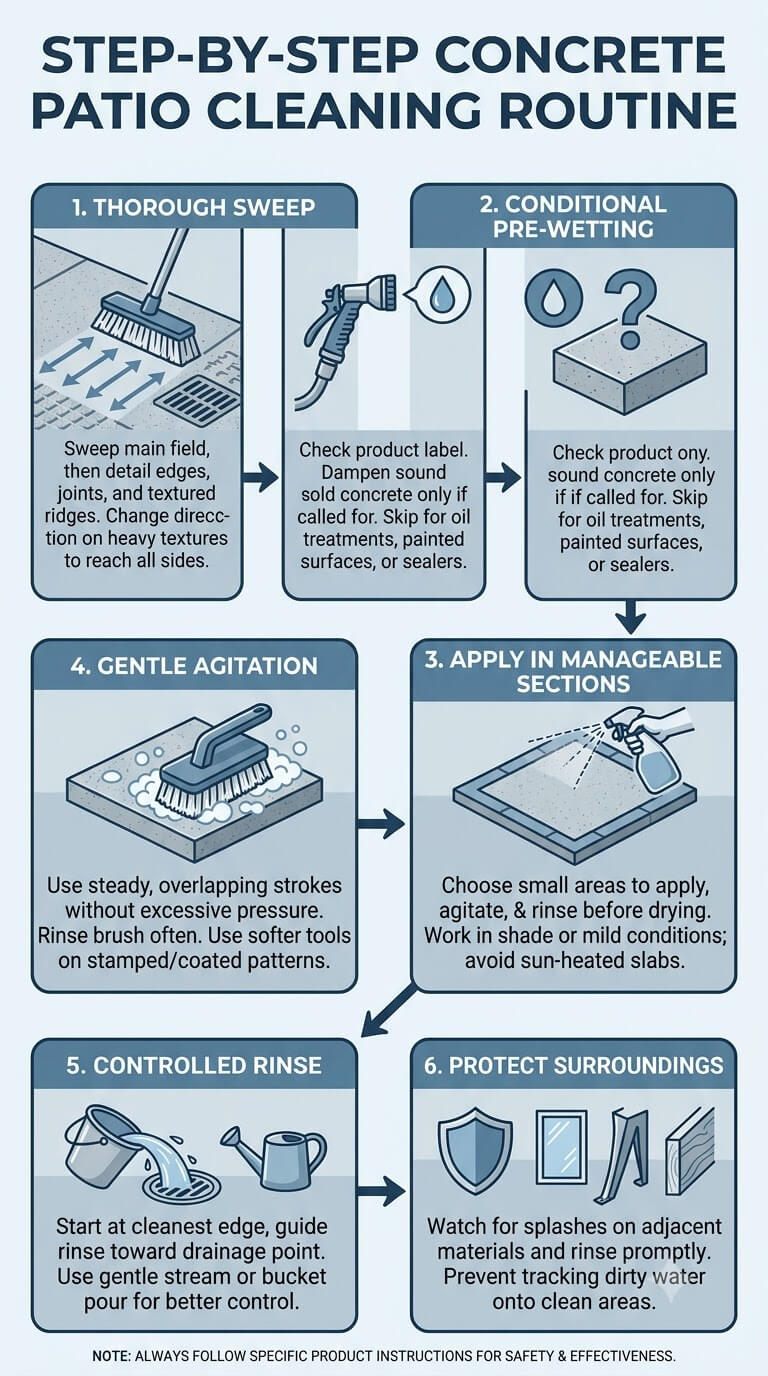
Sweep edges, joints, texture, and low spots
Sweep the main field first, then make a detailed pass along walls, slab edges, drains, and joints. Change direction on heavily textured concrete so the broom reaches both sides of the ridges.
Decide whether controlled pre-wetting is appropriate
Pre-wetting can reduce rapid absorption on sound, unsealed concrete when the cleaner label calls for a damp surface. It may be wrong for oil treatment, some specialty products, painted concrete, or a sealer that should remain dry during application. Follow the product instructions.
Apply a compatible cleaner in manageable sections
Choose a section small enough to apply, agitate, and rinse before the cleaner dries. Work during mild conditions or in shade when the label permits. Do not clean a sun-heated slab if the product flashes dry on contact.
Agitate without grinding grit into the surface
Brush with steady overlapping strokes, using enough pressure to move soil but not polish, scratch, or loosen the finish. Rinse the brush when it loads with mud. On stamped or coated concrete, follow the pattern and use a softer tool around high points.
Rinse with the least water needed
Start at the cleanest edge and guide the rinse toward the planned collection or drainage point. A bucket pour, watering can, or gentle hose stream may offer better control than a wide spray.
Keep rinse water from drying on adjacent materials
Watch glass, painted trim, metal legs, and neighboring coated surfaces while you work. If splashes reach them, rinse or wipe them promptly according to their care instructions. Do not let a second person unknowingly walk through dirty water and track it onto clean concrete or indoor flooring.
Treat Common Patio Residues Without Over-Cleaning
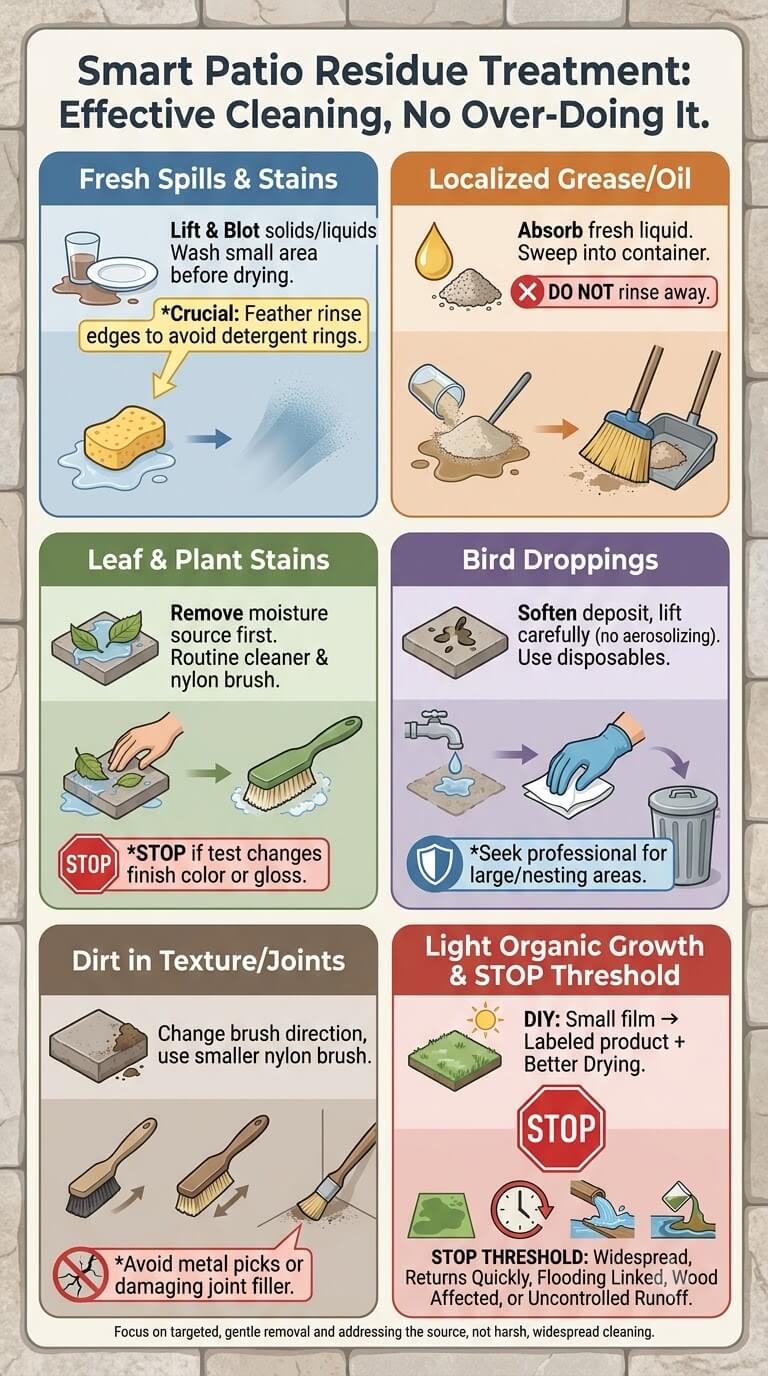
Fresh food and drink spills
Lift solids, blot liquids, and wash the small area before the residue dries. Avoid rubbing colored drinks across a larger area. After cleaning, feather the rinse beyond the spot so a detergent ring does not remain.
Localized grease and oil-like residue
For a fresh spill, cover the liquid with an absorbent material and allow it to take up as much as possible. Sweep it into a suitable container instead of rinsing it away.
Leaf and plant stains
Remove the moisture source first: wet leaves, planter runoff, or decomposing plant material. Start with the routine cleaner and a nylon brush. Persistent pigment may require a product labeled for organic stains and compatible with the finish. Stop if the test lightens decorative color or changes gloss.
Bird droppings
Soften the deposit, lift it without aerosolizing dry material, and wash only the affected area. Use disposable supplies when practical and wash hands after removing gloves. If droppings cover a broad area, come from an active nesting site, or create runoff that cannot be contained, postpone the work and seek appropriate professional advice rather than spreading the residue.
Dirt embedded in texture, edges, and control joints
Change brush direction and use a smaller nylon brush for corners. Do not dig into flexible joint filler or use a metal pick on coated concrete. Packed soil that returns after every rain may be washing from a bed, downspout, or eroding edge.
Light organic growth clues and the DIY stop threshold
A small slippery film on sound concrete may respond to a labeled, material-compatible product plus better drying conditions. Do not identify the organism by color alone. Stop when growth is widespread, returns quickly, is connected with persistent flooding, affects adjoining structural wood, or requires enough chemical and water that the runoff cannot be controlled.
Water Pressure, Runoff, and Drainage Decisions
When a hose or bucket is sufficient
Routine dust, pollen, mild food residue, and loosened mud usually do not require powered washing. A bucket and brush keeps the cleaner concentrated where needed and limits splash near doors and furniture.
Why there is no universal concrete PSI
Concrete strength, age, finish, existing damage, coating, aggregate exposure, nozzle, distance, and operator technique all change the result. A setting tolerated by dense uncoated concrete may strip paint or damage a weak, scaled, decorative, or repaired area.
Conditions that make pressure risky on coatings, weak surfaces, joints, and nearby materials
Do not use powered spray on loose coatings, spalling or scaling concrete, weak edges, uncertain patches, open cracks, failed sealant, or areas beside fragile siding and doors. Strong spray can also launch grit and create electrical hazards. Review CDC pressure washer safety recommendations before considering the equipment, and follow its owner manual.
Keep contaminated water away from storm drains, pools, ponds, gardens, and thresholds
Collect solids first, use minimal product, and isolate greasy or concentrated residue. Do not assume a nearby grate leads to treatment; many storm drains discharge to local water. Keep rinse away from edible beds, fish ponds, pools, neighboring property, and door thresholds.
Dry and Inspect the Patio
Remove standing water and reopen drainage paths
Guide clean residual water toward the approved route with a floor squeegee only if the finish tolerates it. Clear leaves and debris from surface channels without pushing them into underground drains. If water repeatedly pools in a settled area, document the location.
Wait for visual drying before judging stain removal
Concrete changes color as it dries, and dense or shaded zones may remain dark longer. Do not apply a second product simply because the slab looks uneven while wet. Allow airflow and time, keep foot traffic controlled, and compare only after the area has returned close to its normal dry color.
Compare cleaned and untreated areas in consistent light
Sun angle, shade, and wet edges can exaggerate differences. Inspect at the same time of day if possible and view the spot from several directions. A clean test patch that is permanently brighter may reveal surrounding weathering or an aging coating, not remaining dirt.
Decide whether a second localized treatment is reasonable
Repeat only when the surface is sound, the first test caused no color or texture change, and the residue clearly improved. Keep the second treatment local and within label limits. Stop if progress is minimal, the finish becomes dull, aggregate loosens, or the mark appears to be within the concrete rather than on it.
Dirt, Discoloration, or Concrete Damage?
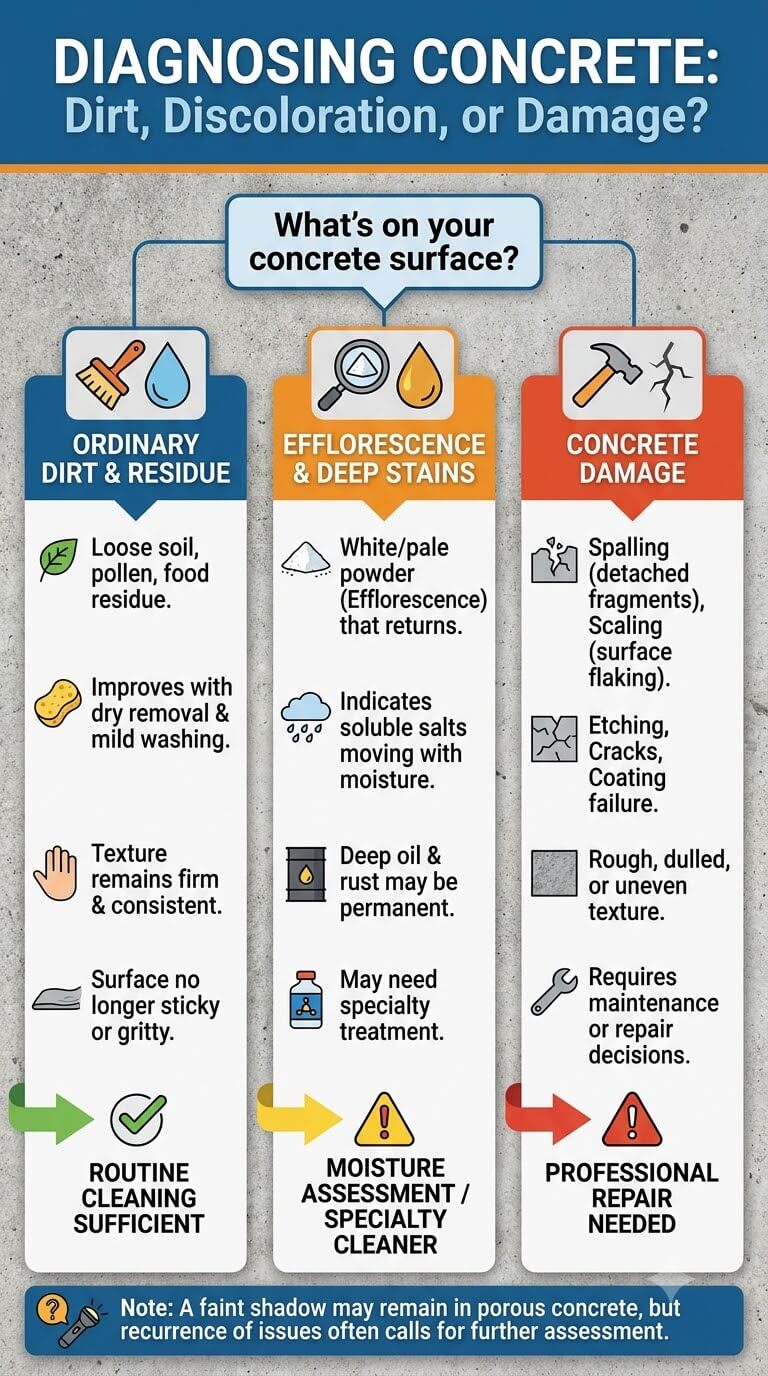
Ordinary residue that should improve with cleaning
Loose soil, pollen, recent food residue, surface mud, and fresh droppings should show visible improvement after dry removal and mild washing. Texture should remain firm and consistent. A faint shadow may remain in porous concrete, but the surface should no longer feel sticky, gritty, or slippery.
Efflorescence and mineral clues
White or pale powder that returns can indicate soluble salts moving with moisture. It is different from ordinary dust because it may reappear after being brushed away. The American Concrete Institute’s concrete terminology defines efflorescence as a deposit formed when water-soluble compounds emerge from concrete or masonry and crystallize or react at the surface. Recurrence calls for moisture assessment.
Deep oil penetration, rust marks, and persistent discoloration
Old oil can travel below the surface, while rust may come from a metal source that must be moved or repaired. A remaining color difference after proper cleaning may be permanent or may need a specialty treatment chosen for the exact finish.
Spalling, scaling, etching, cracks, and coating failure
Spalling produces detached fragments. Scaling is shallow surface flaking. Etching leaves a roughened, dulled, or uneven texture. Cracks may widen, shift, or collect water. Coating failure can appear as peeling, blistering, whitening, or loss of adhesion. These conditions require maintenance or repair decisions, not a stronger routine cleaner.
Routine and Seasonal Concrete-Patio Maintenance

Exposure-based sweeping and spot cleanup
Sweep when leaves, grit, pollen, or pet hair begin collecting in joints and under furniture rather than waiting for a fixed date. Blot spills after meals, remove wet plant debris, and keep greasy cooking residue localized.
Post-storm, leaf-drop, and high-use resets
After storms, check drains, low spots, mud routes, furniture feet, and the area beneath rugs. During leaf fall, lift damp piles before they release more color. After gatherings, remove food and drink residue before it becomes sticky or attracts pests.
Furniture feet, outdoor rugs, planters, and trapped moisture
Use manufacturer-approved glides that do not rust or transfer color. Lift rugs periodically to let the concrete and backing dry. Place planters on stable supports that allow drainage without concentrating dirty water in one ring.
When maintenance becomes a sealing, repair, or specialist project
A worn sealer, recurring efflorescence, broad discoloration, spreading cracks, scaling, or poor drainage deserves a separate assessment. Do not add a new coating simply to hide residue, and do not seal concrete that is still damp or contaminated.
Common Concrete-Patio Cleaning Mistakes
Treating every dark patch as mold
Dark color can come from water, soil, leaf pigment, grease, soot, algae-like film, or a coating change. Inspect the moisture pattern and test a small area before selecting a product. A diagnosis based only on appearance can lead to unnecessary bleach use, damage to nearby materials, and runoff that is harder to control.
Scrubbing abrasive grit across the finish
Sand and small stones act like abrasive media under a brush. Sweep thoroughly, rinse the brush as it loads, and stop if scratching sounds continue. This matters most on sealers, paint, smooth troweled areas, decorative color, and exposed aggregate with a surface coating.
Letting cleaner dry in sun or on nearby metal and glass
Hot concrete shortens working time and can leave streaks or concentrated residue. Choose manageable sections and watch wind direction. Keep a clean rinse or wiping method ready for nearby glass and metal, but follow those materials’ care limits.
Flooding drainage areas or interior thresholds
More rinse water does not guarantee a cleaner slab. It can carry soil into door tracks, under siding, toward foundation openings, or across neighboring property. Set barriers before cleaning and keep a wet vacuum or absorbent towels available when thresholds are close. If the slab continues into an entry landing or steps, use a porch-and-entry cleaning sequence because thresholds, rails, and foot traffic change the risk.
Using pressure on damaged or coated concrete without approval
Powered spray can enlarge loose areas, cut lines into decorative finishes, lift coating edges, and force water into cracks. When pressure guidance is absent, choose manual cleaning or contact the coating or concrete product maker.
When to Call a Concrete Specialist or Other Professional
Widespread deterioration or uncertain coatings
Seek an assessment when scaling, spalling, hollow areas, peeling coatings, or surface softness extend beyond a small isolated spot. A specialist can help identify whether the issue is cosmetic, moisture-related, coating-related, or structural.
Deep penetration, recurring deposits, or contaminated runoff
Professional help is sensible when oil or rust has penetrated deeply, white deposits return repeatedly, growth is widespread, or the necessary wash water cannot be kept out of drains and sensitive areas. Explain what products have already been tried.
Cracks, movement, and repair needs beyond cleaning
Cracks with height difference, widening gaps, rocking sections, settlement near the house, or water entering a building are not routine cleaning concerns. Mark the area, restrict use if footing is affected, and arrange appropriate repair advice.
Frequently Asked Questions About Cleaning a Concrete Patio
Should concrete be pre-wet before cleaner is applied?
Only when the product instructions and finish allow it. Dampening can reduce rapid absorption on sound unsealed concrete, but some degreasers, coatings, and specialty treatments require a dry surface. The spot test should reproduce the complete application, including pre-wetting and rinsing.
Can leaf stains be removed completely?
Fresh marks often improve, but plant pigments can penetrate porous concrete or discolor a sealer. Remove the leaf source, begin with mild cleaning, and let the slab dry before repeating. A faint permanent shadow is preferable to etching or stripping the surrounding finish.
How should sealed concrete be cleaned differently?
Protect the sealer from incompatible solvents, harsh alkalinity, abrasion, and excessive pressure. Use the sealer manufacturer’s approved product and tool when known. Test for gloss, color, softening, and tackiness, and stop if the coating changes even when the concrete underneath appears sound.
Is a pressure washer necessary for textured concrete?
No. Cross-direction brushing with a concrete-compatible nylon brush often reaches broom texture and shallow recesses. A smaller brush can handle edges and joints. Powered washing should be considered only after checking surface condition, finish instructions, equipment safety, and runoff control.
When should a patio stain be considered permanent?
Consider it potentially permanent when proper cleaning removes surface residue but the dry color remains, or when further treatment starts changing texture, gloss, or surrounding color. Deep oil, rust, plant pigment, etching, and coating changes may require specialist assessment rather than repeated household cleaning.
Final Thoughts
The safest way to clean a concrete patio is to work from identification to inspection, dry removal, spot testing, controlled cleaning, minimal rinsing, and complete drying. Judge the result only after the slab dries.

Ethan Carter is the Founder & Editor of HomeCleanSecrets. Based in the United States, he has 5 years of experience creating practical home cleaning, laundry care, stain removal, decluttering, and home organization content. His goal is to help everyday households clean smarter and build simple routines that are easier to maintain.
Read more about Ethan Carter on his author page: https://homecleansecrets.com/ethan-carter/