
Exterior window cleaning begins with a reach decision, not a bucket of cleaner. A ground-floor pane that can be reached while both feet stay on level ground is a different job from a second-story window above a slope, roof, balcony edge, or overhead wire.

This guide covers routine outdoor soil such as dust, pollen, cobwebs, fingerprints, bird marks, and light patio film. It does not turn difficult access into a do-it-yourself task. Stop when the glass, frame, terrain, electricity, or required body position cannot be controlled from a stable, manufacturer-approved location.
Quick Answer: Choose the Access Method Before the Cleaning Method
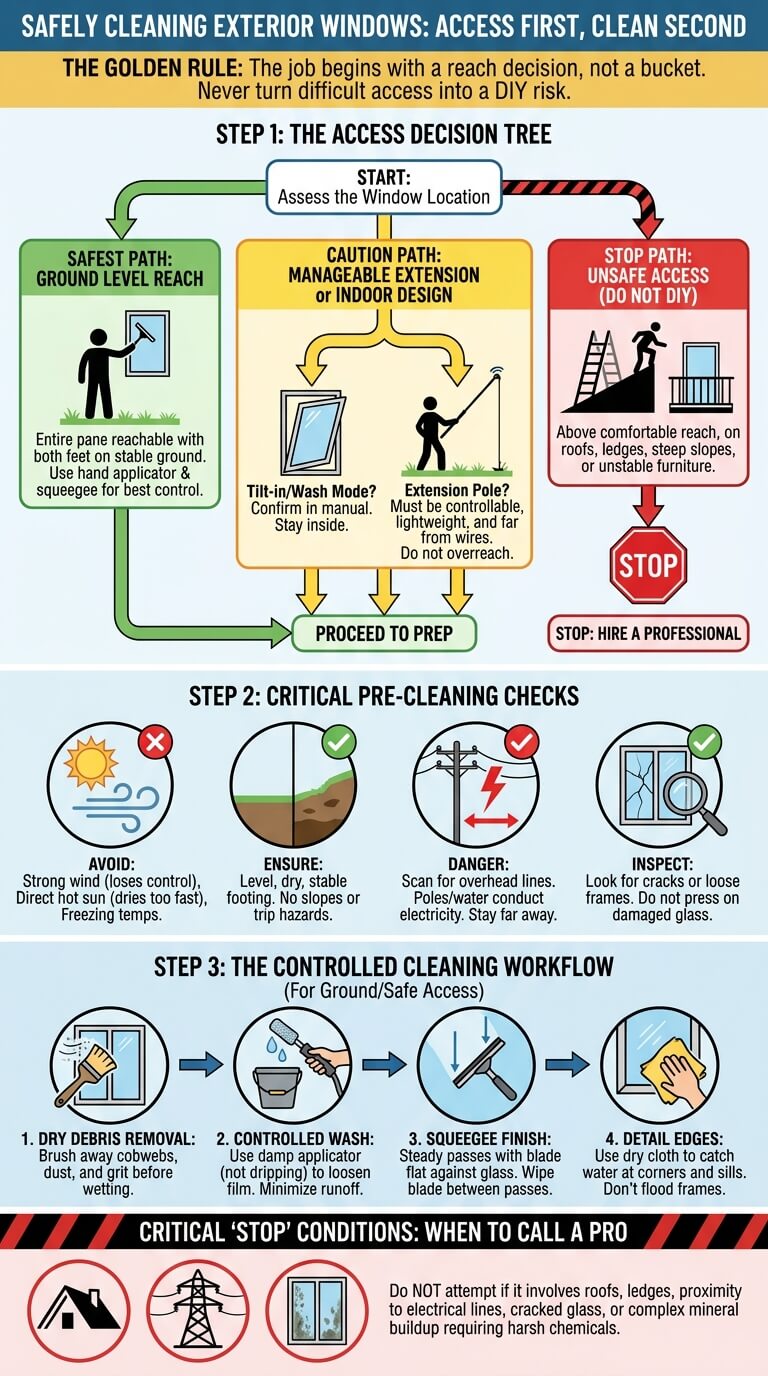
Ground-level reach is the default
Work from level ground whenever the entire pane can be reached without climbing, leaning, or stretching past a balanced stance. Ground-level access gives you better control over the applicator, runoff, and squeegee pressure. Exterior access is only one part of whole-window care; interior panes, tracks, sills, screens, curtains, and shades have different material and moisture limits.
Use indoor access only when the window design permits
Some double-hung, single-hung, casement, or gliding windows include a wash mode, tilt feature, or removable sash intended for cleaning from indoors. Confirm the exact procedure in the owner’s manual. Do not force latches, disconnect balances, remove hardware, or place body weight on an open sash.
Use extension tools within controlled ground-level limits
A pole can increase reach without raising your feet, but longer is not automatically safer. The tool must remain light enough to control, short enough to keep clear of wires and branches, and visible enough that you can judge pressure.
Do not improvise elevated access
Furniture, folding chairs, stools, railings, roofs, wet retaining walls, and exterior ledges are not cleaning platforms. Do not lean out of an upper-story opening or step onto a balcony edge to gain a few inches. Moving the task to another day or hiring help is safer than creating an unstable position.
Hire help when reach, terrain, electricity, or glass condition is unsafe
Professional service is appropriate when a window is above comfortable ground reach, access crosses a steep slope, overhead lines are nearby, or the pane is cracked or loose. The decision is also reasonable when specialty glazing needs treatment that cannot be applied evenly from the ground.
Exterior Window Access Decision Tree

Ground-level window
If the top edge can be reached with a normal stance, use a hand applicator and squeegee or clean cloths. Keep both feet planted, position the bucket where it cannot be kicked over, and work one pane at a time.
First-floor window reachable from a stable surface
A porch or patio may provide safe access only when the surface is level, dry, structurally sound, and protected from traffic. Do not work from a narrow step, sloped driveway, loose gravel, or surface made slippery by your own runoff. Reposition instead of stretching across shrubs or furniture.
Tilt-in or removable sash permitted by the manufacturer
Locate the product label or manual before moving the sash. Follow the stated sequence for unlocking, tilting, supporting, and returning it to the frame. Pella’s current window and patio door owner’s manual is an example of why product-specific directions matter: cleaning access differs by window style and operating design.
Long-reach tool from level ground
Choose this option only when the pole can be raised and lowered in open space without contacting wires, gutters, branches, vehicles, or people. Test the tool at its shortest useful length first.
Upper-story, roof-adjacent, ledge, or inaccessible balcony window
Do not turn these windows into a climbing project. A professional cleaner can evaluate access equipment, anchors, fall controls, and surrounding hazards that are outside routine household cleaning.
Plan Around Weather and Surface Conditions
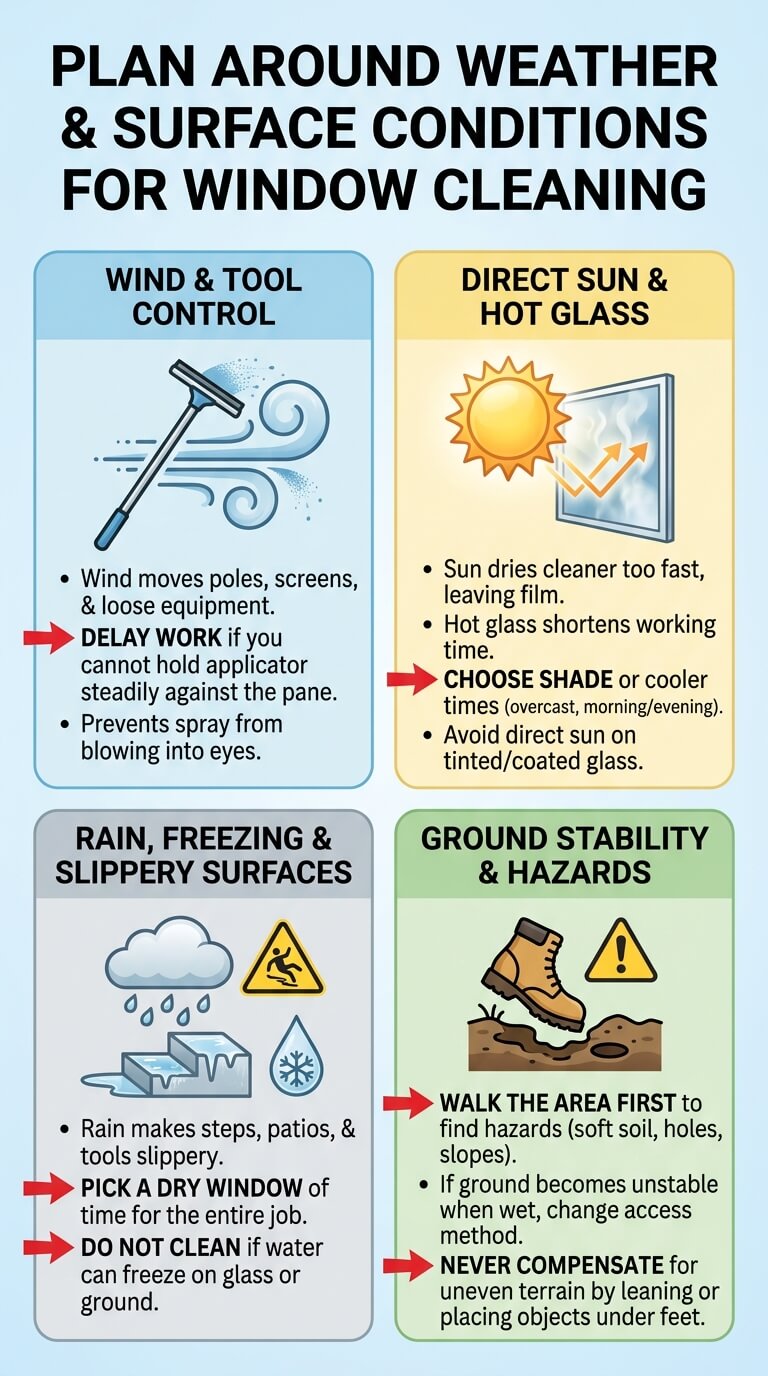
Wind and tool control
Wind can push a long pole sideways, blow spray into eyes, and move screens or loose equipment. Delay work when you cannot hold the applicator steadily against the pane.
Direct sun and hot glass
Strong sun can dry cleaner before it is removed, leaving film and making you repeat the job. Hot glass also shortens working time. Choose a shaded side of the home, an overcast period, or a cooler part of the day. Marvin’s care and maintenance guidance advises avoiding direct sunlight, especially on tinted and coated glass.
Rain forecast and drying
Light rain does not create dirt by itself, but cleaning just before a dusty storm or heavy runoff may waste the effort. More importantly, rain can make steps, patios, soil, and tools slippery. Pick a dry window long enough to wash, inspect, dry equipment, and remove trip hazards.
Freezing or extreme temperatures
Do not clean when water can freeze on glass, pavement, steps, or tools. Extreme heat can make solutions dry too quickly and can increase fatigue.
Ground stability, mud, slopes, and wet surfaces
Walk the work area before carrying water. Look for soft soil, hidden holes, irrigation heads, loose pavers, cords, toys, and slopes. If the ground changes underfoot as it becomes wet, move to a different access method. Never compensate for uneven terrain by leaning farther or placing objects under your feet.
Inspect Before Cleaning
Cracked or chipped glass
Look across the pane and along every edge before pressing a tool against it. Cracks, chips, star breaks, or a loose pane are stop conditions.
Loose frames or damaged screens
Gently observe rather than pull on a frame that appears separated, bowed, or unstable. A loose screen can fall when brushed or sprayed.
Failed seals and cloudiness between panes
Haze or droplets that remain between insulated panes cannot be wiped from either exposed surface. Clean a small area to confirm the cloudiness is internal, then stop repeated washing.
Peeling paint, corrosion, or damaged exterior finish
Check wood, metal, vinyl, fiberglass, sealant, and nearby masonry. Peeling paint, swollen wood, powdery corrosion, open joints, or a lifting finish may worsen with scrubbing or runoff. Use minimal moisture only when the manufacturer permits it, and arrange repair assessment when the material is deteriorating.
Electrical lines and nearby hazards
Scan above and beside the work zone, including the full path used to raise a pole or move equipment. The U.S. Consumer Product Safety Commission warns that ladders and electricity do not mix. Apply the same conservative distance principle to extension poles, water-fed tools, and any long conductive object.
Tools for Ground-Level Exterior Cleaning
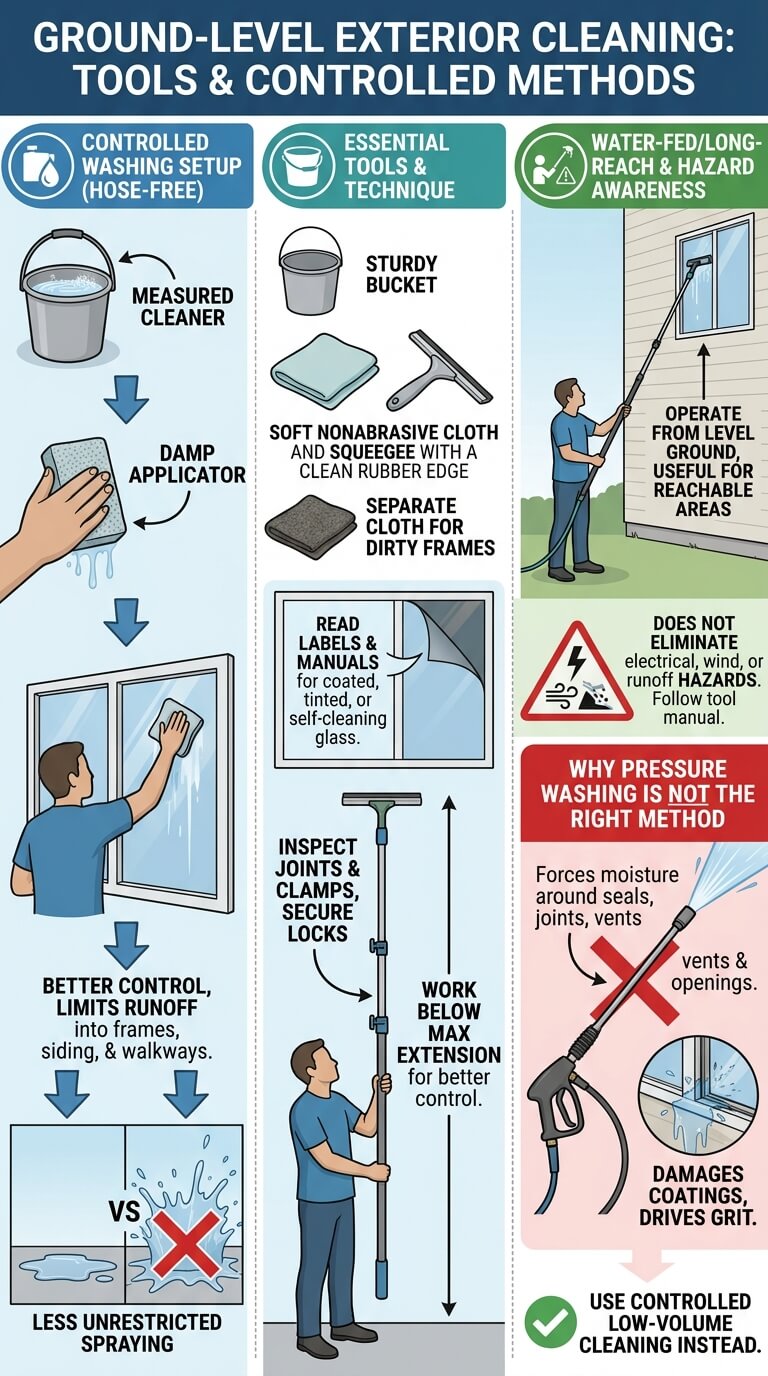
Hose-free controlled washing setup
A small bucket, measured cleaner, and damp applicator give better control than unrestricted spraying. This setup limits runoff into frames, landscaping, siding, and walkways.
Bucket, cloth, applicator, and squeegee
Use a stable bucket, soft nonabrasive applicator, clean lint-free cloths, and a squeegee with an undamaged rubber edge. Keep a separate cloth for dirty frames so grit does not return to the pane. Read the cleaner label and the window manual before treating coated, tinted, filmed, decorative, or self-cleaning glass.
Extension poles and reach limits
Select a pole that locks securely and accepts the applicator without wobbling. Inspect joints, clamps, and handles before raising it. Work below maximum extension when possible because control decreases as length and weight increase.
Water-fed or long-reach consumer tools within manufacturer instructions
These tools can be useful for reachable upper areas when operated from level ground, but they do not remove electrical, wind, visibility, or runoff hazards. Follow the tool manual for water pressure, pole sections, attachments, and storage. Stop if the head cannot remain flat or runoff cannot be controlled.
Why Pressure Washing Is Not the Right Method
High-pressure water can force moisture around seals, screens, joints, vents, finishes, and wall openings. It can also damage coatings or drive grit across glass. Use controlled low-volume cleaning instead.
Prepare the Window Area
Clear the ground and control foot traffic
Move toys, planters, hoses, furniture, and loose tools away from the work zone. Close nearby doors or assign another route so no one walks through a wet area. Keep children and pets indoors while poles, buckets, and cleaner are in use.
Remove or Secure Screens Before Washing
Inspect whether the screen blocks the pane and whether it is designed to release from indoors or outdoors. Support it with two hands and place it flat in a protected location.
Brush away loose exterior debris
Remove cobwebs, pollen clumps, insects, leaves, and dry grit before wetting the glass. Use a soft brush or low-suction vacuum only where the tool can be controlled.
Protect frames, sills, walls, and landscaping from runoff
Pre-wet or cover sensitive plants when the cleaner label calls for it, and keep solution away from natural stone, unfinished wood, damaged paint, and incompatible metal. Use less liquid near frame joints.
Stage wet equipment to prevent trips
Place the bucket behind or beside your working stance, never directly in the path used to step back. Lay cloths in a container instead of on the ground. Collapse unused pole sections and keep the hose-free work zone as open as possible.
Ground-Level Exterior Window Workflow
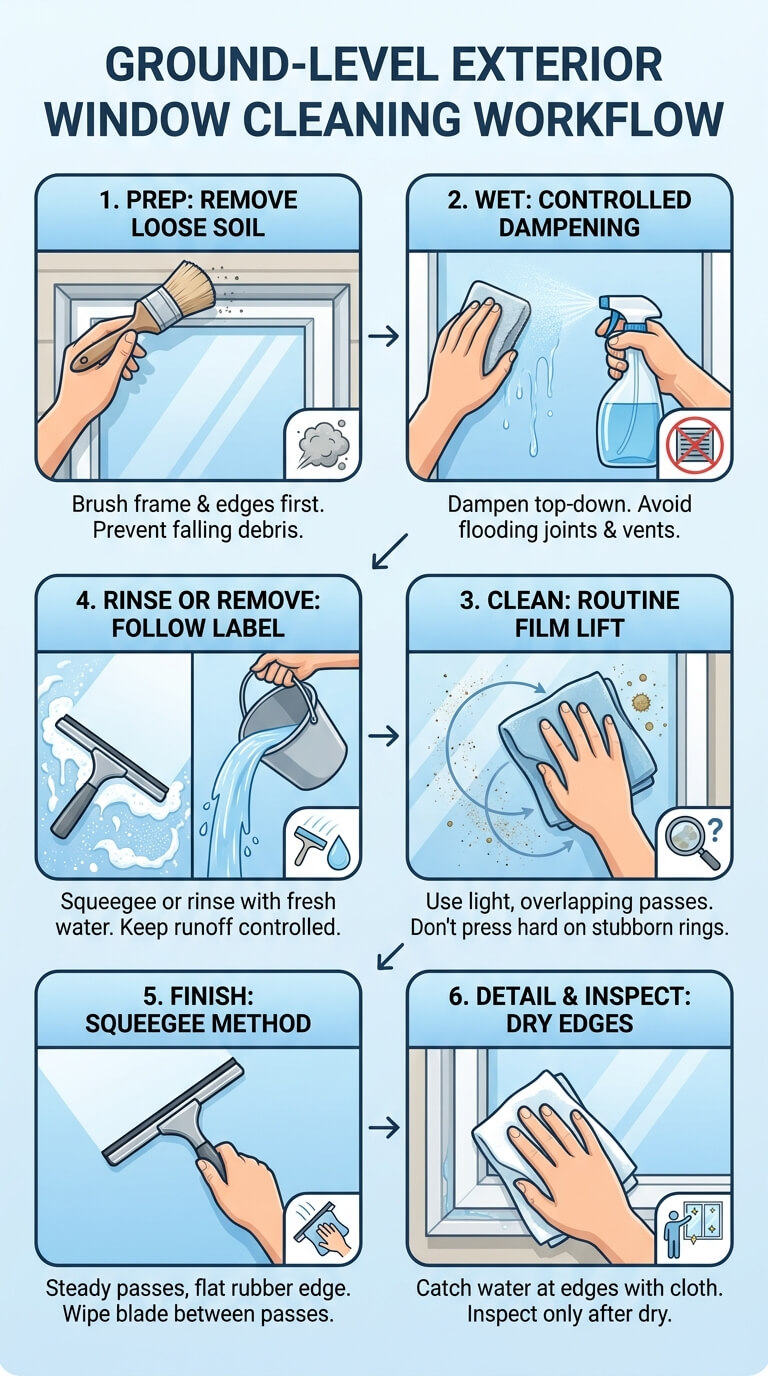
Remove loose soil
Brush the upper frame, corners, and pane edges first so debris does not fall into freshly washed areas. Check the applicator after each dirty section. If a safely reachable pane still shows wipe marks or haze, use a dedicated streak-free glass method rather than adding more product.
Wet the pane in a controlled way
Dampen the glass from the top down with enough solution to loosen routine film but not enough to flood frame joints. Work a manageable area that can be finished before drying. Do not spray cleaner toward vents, weep paths, locks, or open gaps.
Clean routine outdoor film
Use light overlapping passes to lift dust, pollen, fingerprints, and ordinary patio residue. Do not press harder on a stubborn white ring until you know whether it is a mineral deposit.
Rinse or remove cleaner residue
Follow the product label. Some cleaners are removed with a squeegee, while others require a clean-water rinse. Use fresh water and a clean applicator so dissolved soil is not spread back across the pane. Keep runoff controlled at the lower edge.
Finish with a squeegee or approved drying method
Place the rubber edge flat against the glass and make steady passes without scraping metal against the pane. Wipe the blade between passes.
Detail edges without flooding frames
Use a clean absorbent cloth to catch water at corners and along the bottom edge. Avoid pushing liquid beneath glazing beads, seals, or damaged finish. Step back and inspect from several angles only after the pane and frame are dry.
Cleaning From Inside When the Window Design Allows
Confirm tilt-in or removable-sash instructions
Identify the exact window series before moving parts. Labels may be on the frame, sash edge, or lock area. Use the manual for release points, sash order, weight limits, and reinstallation.
Secure the work area
Move furniture, curtains, cords, and breakable items away from the opening. Keep children and pets out of the room.
Support components as directed
Hold the sash at the locations stated in the manual and keep it within its intended travel. Do not let a heavy sash hang from one pivot, balance shoe, hinge, or cable.
Clean only accessible surfaces
Reach the exterior face from inside only while your body remains fully within a stable interior position. Do not lean your torso outside or extend past the frame. Clean the area presented by the approved wash position and leave inaccessible edges for professional service.
Reinstall and test according to the manual
Return pivots, latches, clips, and locks to their normal positions in the correct order. Confirm the sash sits square, closes fully, and locks without force.
Using Extension Tools From Ground Level

Tool length, weight, and control
Extend only as far as needed. A shorter pole is easier to steer and less tiring, especially when the cleaning head is wet.
Stable stance and clear overhead space
Stand on level, dry ground with room to move the tool without stepping backward into a curb, bed, or bucket. Look up before every raise.
Avoiding overreaching and electrical lines
Move your feet and shorten the pole instead of reaching sideways. Never use a pole where it or the water stream could approach electrical equipment or overhead conductors. NIOSH’s ladder safety information highlights planning and common fall causes; the safer household choice is often to eliminate elevated access altogether.
Controlling water and drips
Use a damp pad rather than a dripping one, especially above doors, electrical fixtures, painted trim, or sensitive plants. Watch where water lands before adding more. Stop if runoff crosses a walkway, enters a wall opening, or reaches an area you cannot dry.
Stopping when visibility or pressure is inadequate
You need to see the contact point well enough to know that the pad is clean and the squeegee is flat. If glare, height, foliage, or tool flex hides the surface, lower the pole.
First-Floor and Multi-Story Limits
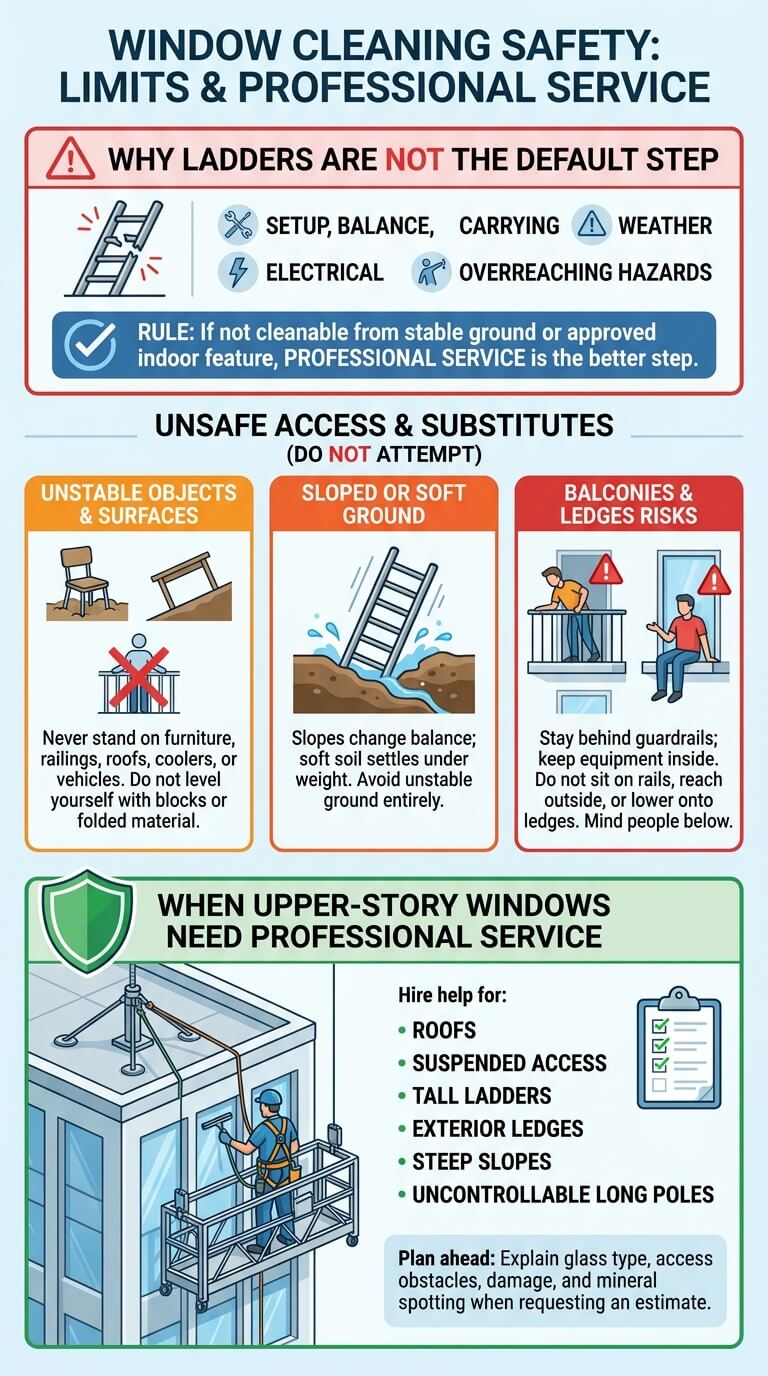
Why ladders are not the default step
A ladder adds setup, balance, carrying, weather, electrical, and overreaching hazards to a task that uses water and hand tools. If the window cannot be cleaned from stable ground or through an approved indoor feature, professional service is usually the better next step.
Unstable stools, furniture, railings, roofs, and ledges
Do not substitute household objects for proper access equipment. Never stand on a chair, table, railing, roof edge, planter, cooler, or vehicle.
Sloped or soft ground
A slope changes balance even before water is added, while soft soil can settle under weight. Do not attempt to level yourself with blocks, boards, stones, or folded material.
Balconies and exterior ledges
Stay behind the guard and keep equipment inside the balcony footprint. Do not sit or stand on the rail, reach around the outside, or lower yourself onto a ledge. Consider people and property below before using any water, even on an otherwise reachable pane.
When Upper-Story Windows Need Professional Service
Hire help when cleaning requires a roof, suspended access, tall ladder, exterior ledge, steep slope, or long pole that cannot be controlled. Explain the glass type, access obstacles, damaged components, and mineral spotting when requesting an estimate so the provider can plan appropriately.
Check Screens, Frames, and Exterior Sills
Screen inspection and separate care
Check for torn mesh, bent corners, loose spline, and fragile frames before removal. Brush only loose debris during window preparation.
Frame and seal compatibility
Window frames may be painted wood, clad wood, vinyl, fiberglass, aluminum, or another finished material. A cleaner that works on glass may not suit the frame. Follow the window manual and keep liquids away from damaged seals, open joints, hardware, and unfinished surfaces.
Exterior sill and runoff awareness
Do not let dirty solution pool on a sill or ledge. Wipe reachable surfaces with a material-compatible method, using minimal moisture on wood or deteriorated finishes.
Sliding glass doors as a different accessible system
A patio door includes large panes, handles, locks, threshold, weatherstripping, screen interface, and an accessible track. Clean it in a system-based order so grit and water do not collect near rollers. Do not treat the door as merely an oversized fixed window.
Routine Soil Versus Hard-Water Deposits
Dust, pollen, cobwebs, and outdoor film
These soils usually loosen with dry debris removal followed by a compatible mild wash. Fingerprints and pet nose marks may need a second controlled pass.
Sprinkler rings and bonded mineral spots
White rings or cloudy droplet patterns that remain after routine cleaning may be mineral deposits. Do not reach for a blade, abrasive pad, or strong acid while working at height. First identify the glass coating, surrounding frame, and product limits from a safe position.
When routine cleaning should stop and mineral diagnosis begins
Stop repeating the basic wash when ordinary film is gone but fixed spots remain in the same pattern. Mineral treatment requires close inspection, controlled dwell time, material protection, and a reachable test area.
Safe Cleanup and Equipment Storage
Drying tools
Rinse pads, cloths, and squeegee rubber according to product directions, then allow them to dry before storage. Grit left in an applicator can scratch the next pane. Inspect rubber edges for nicks and replace worn parts rather than accepting poor contact.
Storing poles and wet equipment
Collapse and lock pole sections only after they are clean and dry. Store them horizontally or in a secure rack where they cannot fall.
Removing trip hazards
Collect buckets, towels, brushes, and attachments before reopening the area. Empty water where permitted without creating a slippery walkway or harming plants. Coil any hose or cord fully and return outdoor furniture only after the surface is dry.
Checking the area for drips or runoff damage
Inspect siding, sill edges, walls, paving, and plants. Wipe unexpected drips and rinse only when the product label permits it. If cleaner contacts skin or eyes, or products are accidentally mixed, follow the label and contact Poison Control; its cleaning safety advice emphasizes reading directions and never mixing household cleaners.
Common Exterior Window Cleaning Mistakes
Working in strong wind or intense sun
Wind reduces control, while heat dries cleaner too fast. Both conditions encourage rushed movements and repeated washing.
Treating a ladder as mandatory
A high pane does not create an obligation to climb. Check for an approved indoor wash position, controlled ground-level pole access, or professional service. If none is suitable, leave the exterior face alone until safe arrangements are available.
Overreaching
Stretching sideways shifts balance and changes tool pressure. It also makes it difficult to see the pad and edge. Reposition on level ground, shorten the reach, or stop.
Working near electrical lines
Do not raise ladders, poles, or water-fed tools near overhead conductors or electrical equipment. Wet tools and unexpected movement increase danger. Keep the entire tool path, not only your hands, clear of electrical hazards and hire a professional when clearance is uncertain.
Pressure washing seals and frames
High-pressure spray can force water into joints and damage finishes, screens, caulk, or weatherstripping. It also spreads dirty runoff over walls and landscaping.
Assuming every extension tool is safe in every setting
A consumer pole does not make a slope, wire, wind gust, balcony edge, or blocked view safe. Evaluate the full setting every time. Tool condition, reach, weight, water flow, overhead clearance, and the operator’s ability to stop all matter.
When to Hire a Professional
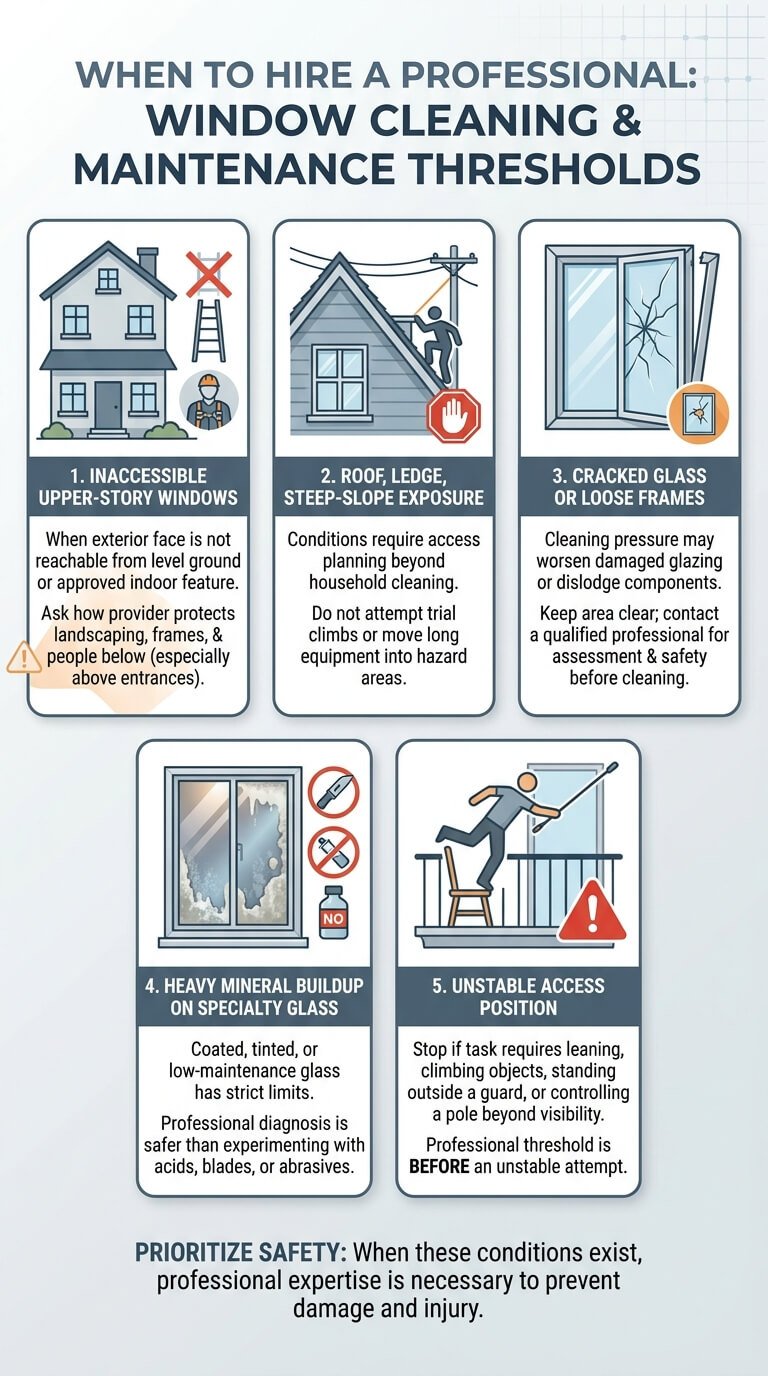
Inaccessible upper-story windows
Arrange service when the exterior face cannot be reached from level ground or through a manufacturer-approved indoor feature. Ask how the provider plans to protect landscaping, frames, coatings, and people below, especially for windows above entrances or shared walkways.
Roof, ledge, steep-slope, or electrical-line exposure
These conditions require access planning beyond household cleaning. Do not attempt a trial climb or move long equipment into the hazard area.
Cracked glass or loose frames
Cleaning pressure may worsen damaged glazing or dislodge an unstable component. Keep the area clear and contact a qualified window or glass professional. Cleaning should wait until the pane and frame are assessed and made safe.
Heavy mineral buildup on specialty glass
Coated, tinted, filmed, decorative, or low-maintenance glass may have strict limits on chemicals and tools. When bonded deposits cover a large or inaccessible area, professional diagnosis is safer than experimenting with acids, blades, abrasives, or polishing compounds.
Access that cannot be maintained from a stable approved position
Stop whenever the task requires leaning, climbing on household objects, standing outside a guard, moving onto a roof, or controlling a pole beyond clear visibility. The professional threshold is reached before an accident, not after the first unstable attempt.
Exterior Window Safety FAQ
Can second-story windows be cleaned safely from the ground?
Sometimes, but only with a tool that can be controlled from level ground in clear space. The pole must stay away from wires, and you need enough visibility to judge pad cleanliness, contact, and runoff.
Should I use a ladder to clean outside windows?
A ladder should not be the default household method for wet window cleaning. First consider ground-level reach, a manufacturer-approved tilt or wash mode, or professional service. Never use a ladder near overhead wires, on unstable ground, or when the task requires overreaching.
What weather is best for exterior window cleaning?
Choose a mild, dry period with little wind, stable ground, and glass that is not hot in direct sun. Avoid freezing conditions, gusts, storms, and intense heat.
Are extension poles safe near overhead lines?
No household window-cleaning pole should be used where it or the water path could approach overhead electrical lines. Do not rely on material claims or your ability to judge distance from below. Move the task to a safe method or arrange professional service.
When should a window cleaner be hired instead of continuing DIY?
Hire help when access requires a roof, tall ladder, ledge, steep slope, exterior reach from an upper opening, or an uncontrolled long pole. Also stop for cracked glass, loose frames, nearby electricity, specialty coatings, or deposits that need close controlled treatment.
Final Thoughts
The safest exterior window-cleaning method is the one that keeps the work controlled from beginning to end. Choose access first, inspect the glass and frame, wait for suitable weather, remove dry debris, use minimal compatible liquid, and keep both feet on a stable approved surface.
Do not let a dirty upper pane turn into a climbing task. Manufacturer-approved indoor access and manageable extension tools can solve some situations, but roofs, ledges, electrical hazards, damaged glass, and uncontrolled multi-story reach belong with qualified professionals.

Ethan Carter is the Founder & Editor of HomeCleanSecrets. Based in the United States, he has 5 years of experience creating practical home cleaning, laundry care, stain removal, decluttering, and home organization content. His goal is to help everyday households clean smarter and build simple routines that are easier to maintain.
Read more about Ethan Carter on his author page: https://homecleansecrets.com/ethan-carter/