
Learning how to keep garage floors clear is not just a one-day cleanup job. It is a system for deciding what is allowed to touch the floor, what needs a better storage home, and what should leave the garage completely. A garage floor fills up again when the room has no landing zone, shelves are already full, bulky items are awkward to lift, or unfinished projects never get a deadline.
The goal is not to make the garage look empty. The goal is to keep parking, walking paths, doors, utility areas, and work areas usable without stepping around bins every time you go inside. A floor-clear garage still has bicycles, tools, outdoor gear, cleaning supplies, sports equipment, and seasonal bins. Those items just have defined places that do not steal the main floor every week.
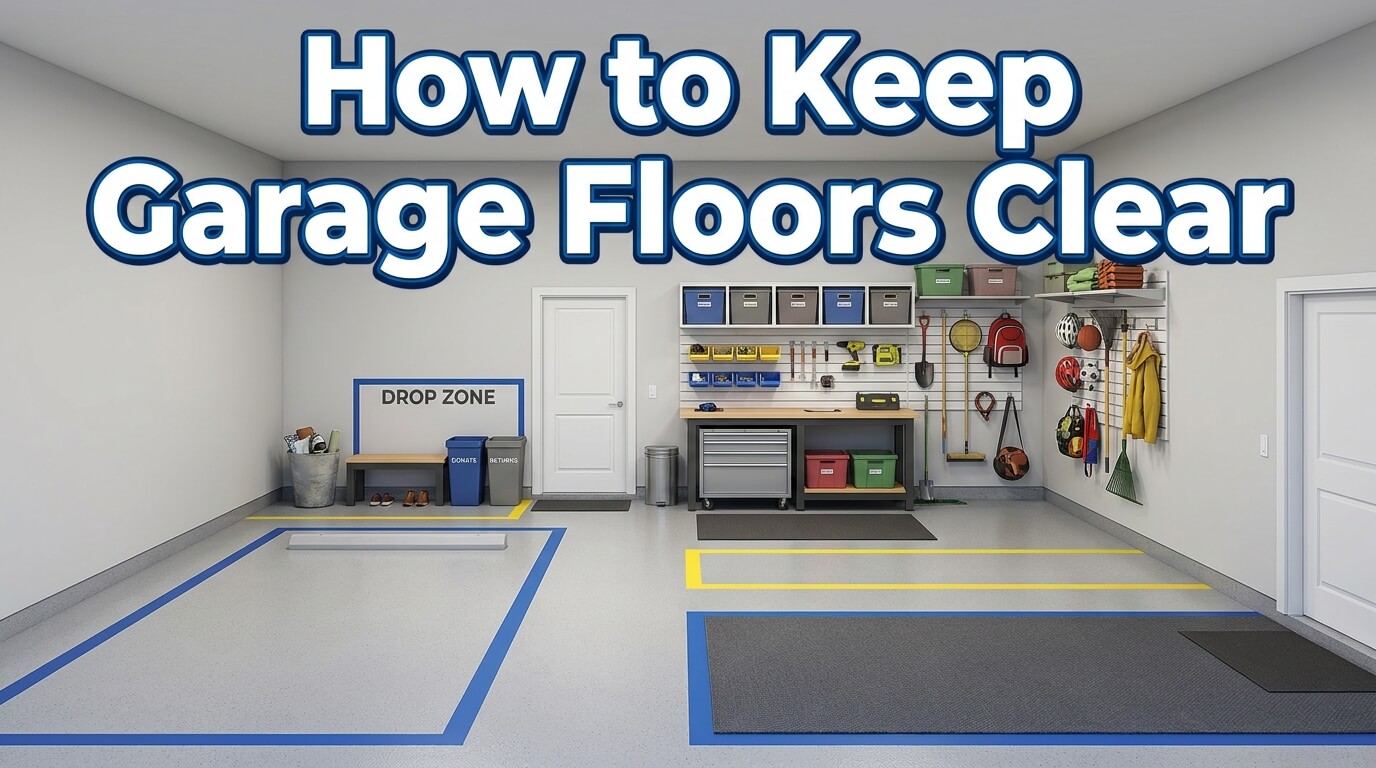
Quick Answer: The Floor-Clear Garage Rule
Place this category within a broader garage organization and storage plan so the surrounding zones work together.
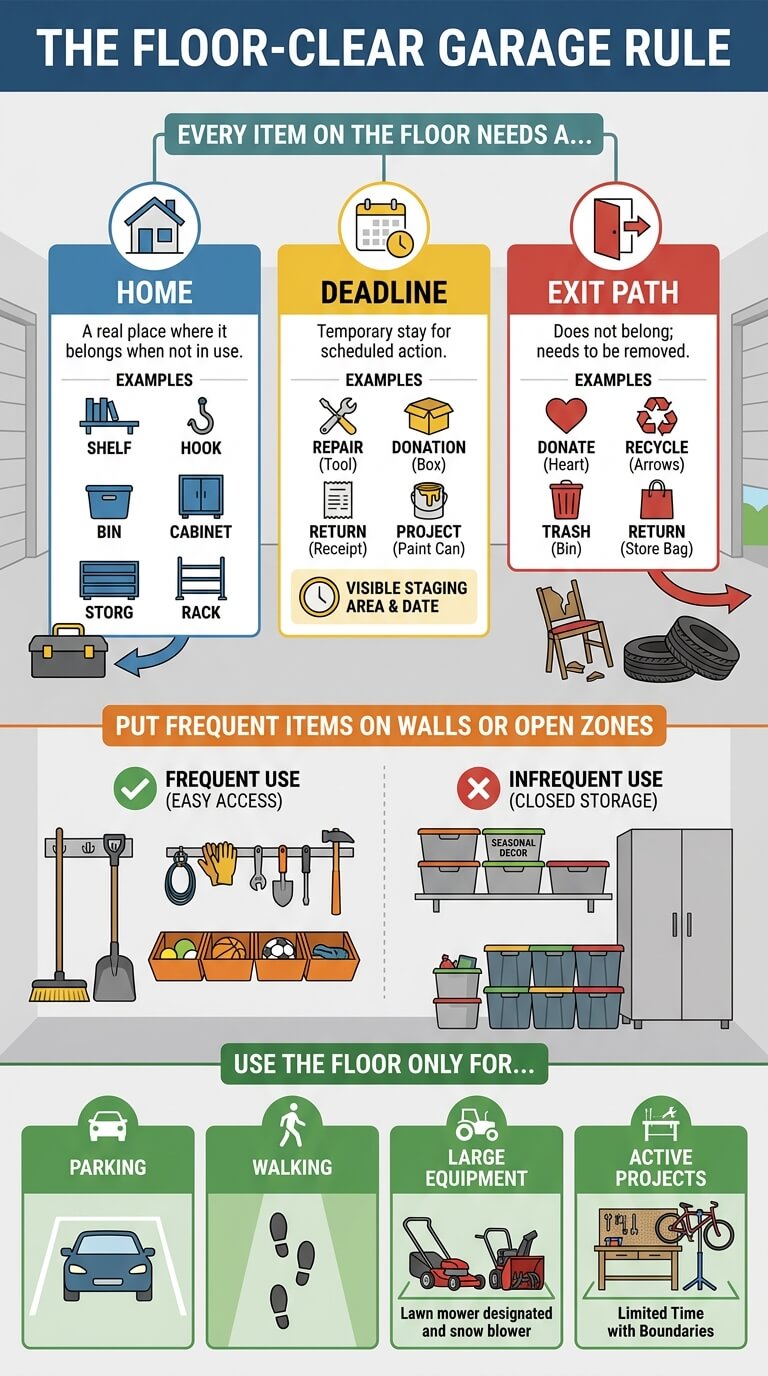
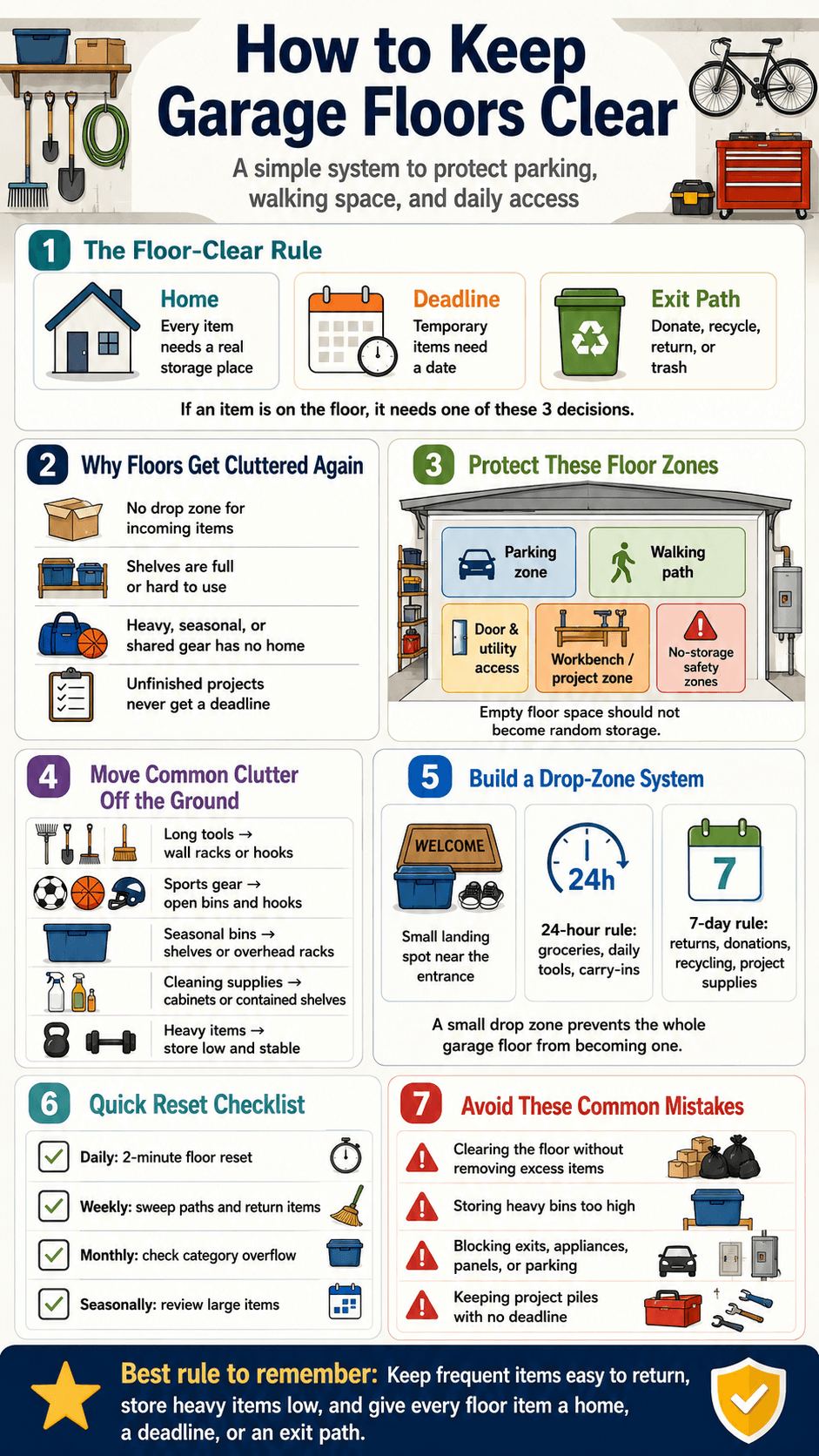
The easiest rule is this: every item on the garage floor needs a home, a deadline, or an exit path. A home means a real place where the item belongs when it is not in use. A deadline means the item can stay temporarily because a repair, donation, return, or project is scheduled. An exit path means the item does not belong in the garage and needs to be removed, recycled, donated, returned, or thrown away.
Every floor item needs a home, a deadline, or an exit path
Walk the garage with three labels in mind. Items with a home go back to their shelf, hook, bin, cabinet, or rack. Items with a deadline get a date and a visible staging area. Items with an exit path leave the garage during your next donation run, trash pickup, recycling trip, or return errand. This prevents the floor from becoming a waiting room for decisions you have not made.
Put frequent items on walls or open zones, not piles
Frequently used items need the easiest homes. A soccer ball used three times a week will not stay in a lidded bin on a high shelf. A broom used every day will not stay behind stacked totes. Use wall hooks, open bins, rails, and waist-height shelves for repeat-use items. Save closed storage for things you use less often, such as seasonal decorations or spare parts.
Use the floor only for parking, walking, large equipment, and active projects
A garage floor should serve four main purposes: parking vehicles, walking safely, holding large equipment that cannot reasonably be lifted, and supporting active projects for a limited time. Examples include a lawn mower, snow blower, rolling tool chest, bike stand, or work table currently in use. Even these should have boundaries so they do not spread into the main path.
Why Garage Floors Get Cluttered Again
Most people can clear a garage floor for a weekend. The harder part is keeping it clear after groceries, sports practice, yard work, online deliveries, seasonal decorating, and quick repairs start happening again. Recurring clutter usually means the floor is solving a storage problem that the rest of the garage has not solved.
No drop zone for incoming items
Incoming clutter is one of the biggest reasons garage floors fill up. Packages arrive. Returns wait by the door. Bulk groceries pause before going inside. Donation bags sit near the car. Tools come back from the yard. Without a small landing area, these items spread across the nearest open floor.
Shelves are full or too hard to access
A full shelf pushes the next item to the floor. A badly arranged shelf does the same thing. If you need to unstack five heavy bins to put one item away, you will probably leave it on the floor. If tall shelves hold random categories with no front labels, people stop using them.
Heavy, dirty, seasonal, or shared family gear has no assigned home
Items that are heavy, dirty, seasonal, or used by several people are the most likely to land on the floor. Garden tools come in with soil on them. Sports gear gets dropped after practice. Seasonal bins are pulled down and never returned. Cleaning products may be left out after a spill or outdoor chore.
Unfinished projects become permanent floor storage
Garages collect unfinished projects because there is often no better place to pause. A broken chair, half-built shelf, paint touch-up supplies, bike repair parts, or leftover lumber can sit for months because it feels temporary. The problem is that temporary piles often have no end date.
Identify Your Floor Clutter Type
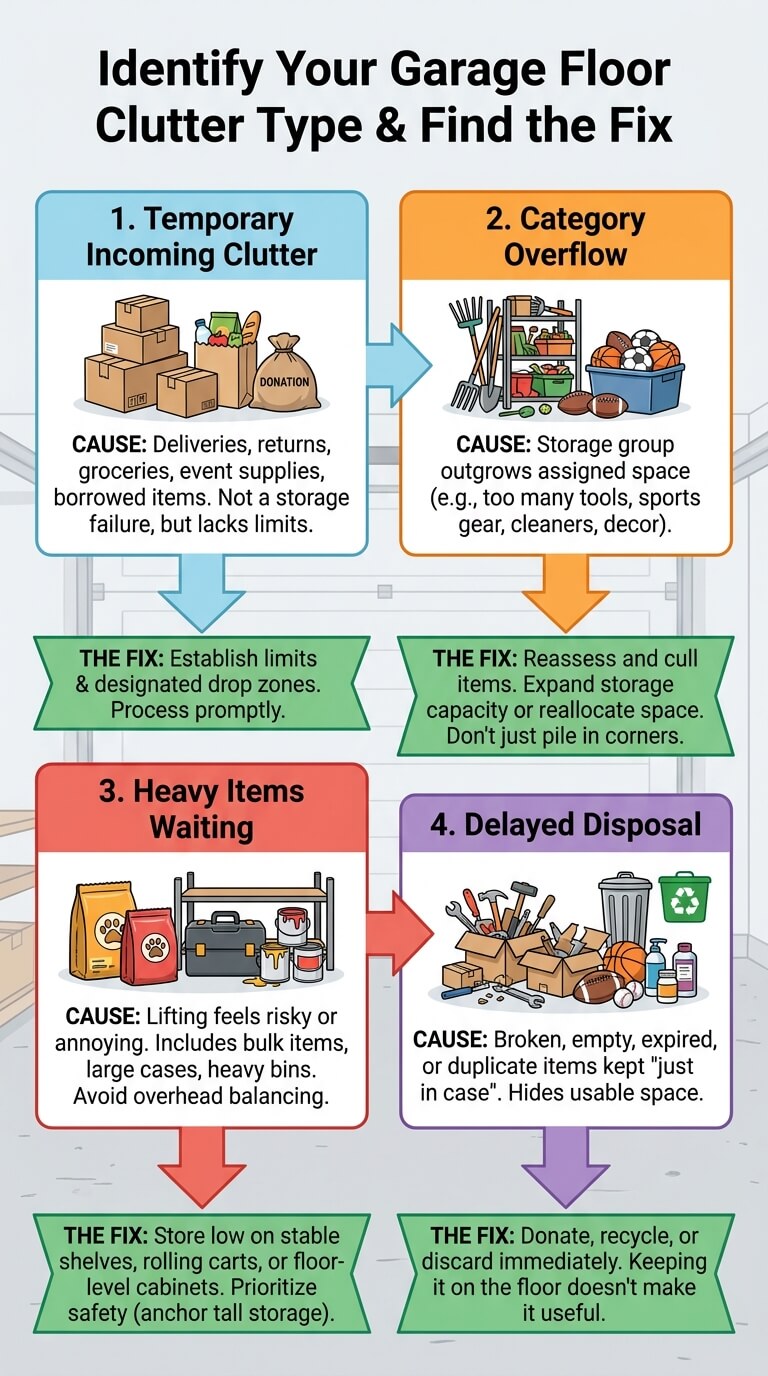
Before moving items, identify why they are on the floor. The cause tells you whether the fix is a better storage home, a deadline, a lower shelf, or removal from the garage.
Temporary incoming clutter
Temporary incoming clutter includes deliveries, returns, donation bags, groceries, supplies for an upcoming event, and things borrowed from neighbors. These items are not necessarily a storage failure. They become a problem when they have no limit.
Category overflow from tools, sports, cleaners, or decorations
Category overflow means a storage group has outgrown its assigned space. If garden tools no longer fit on the rack, extra tools land in a corner. If sports balls overflow their bin, they roll under the car. If cleaner bottles do not fit on the shelf, they appear near the door. If seasonal bins are too hard to retrieve, half-packed decor sits on the floor.
Heavy items waiting for storage
Heavy items often stay on the floor because lifting them feels risky or annoying. This includes bulk pet food, large tool cases, paint supplies, car-care products, heavy bins, and spare materials. The answer is not always to lift them higher. Often the safer solution is a low shelf, rolling cart, floor-level cabinet, or clearly marked large-item zone.
Store heavy items low and keep them stable. The CPSC furniture anchoring guidance is a useful reminder that tall storage should not invite climbing, tipping, or overloaded upper shelves. In a garage, that means heavy items should not be balanced overhead just to make the floor look clear.
Items that should leave the garage
Some floor clutter is really delayed disposal. Broken tools, empty boxes, old sports gear, leftover materials with no planned use, expired products, and duplicate items can sit for years because they look like they might be useful. Keeping them on the floor does not make them more useful. It only hides the garage space you already own.
Create Clear Floor Zones
If the surrounding space still lacks structure, take time to organize the garage into clear zones before fine-tuning this area.
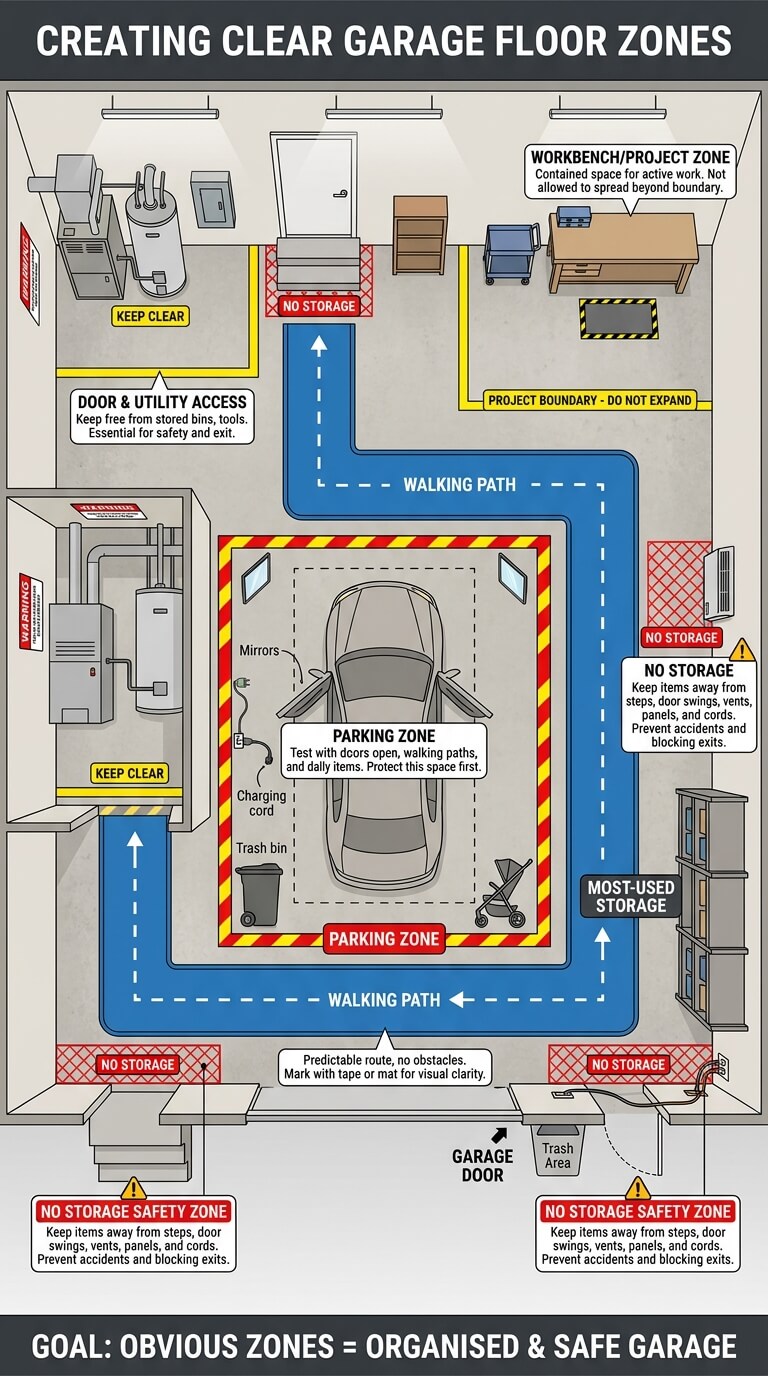
A clear garage floor needs visible zones. Otherwise every empty spot looks available. Mark zones with tape, mats, wall labels, shelving edges, parking stops, or the natural lines of cabinets and walls. The goal is to make it obvious where items may sit and where they may not.
Parking zone
If the garage is supposed to hold a vehicle, protect the parking zone first. Pull the car in, open the doors, and mark the real space needed for getting in and out. Include mirrors, charging cords, trash bins, strollers, and anything else that affects daily parking.
Test the parking zone with the garage in normal use, not when everything has been staged outside. Park the vehicle, open the doors you use most, walk around with a bag in each hand, and notice where your feet naturally go. Those spots should stay clear every day, even if wall storage nearby is full.
Walking path
Create at least one reliable walking route from the main house entrance to the garage door, vehicle, trash area, and most-used storage. The path does not need to be beautiful. It needs to be predictable and clear enough that people do not step over cords, balls, bins, or tools.
Do not make the walking path depend on memory. A strip of floor tape, a mat edge, or the front line of a shelf can show where storage stops. This visual line helps children, guests, and busy adults understand that bags, balls, tools, and boxes do not belong there.
Door and utility access
Doors, appliances, panels, water heaters, freezers, and shutoff areas need access. Keep these zones free from stored bins and leaning tools. The Ready.gov home fire planning guidance emphasizes planning ways out of the home, and a garage that blocks doors or paths can make daily movement harder when time matters.
Workbench or project zone
A project zone keeps active work from spreading across the garage. It might be a workbench, rolling cart, folding table, or small floor rectangle for items that truly need to sit out. The key is that the project zone is not allowed to expand every time a new task begins.
No-storage safety zones
No-storage zones are places where convenience should not win. Keep items away from steps, door swings, heaters, appliance vents, electrical panels, outlets used for daily equipment, and areas where cords cross a walkway. Also keep flammable, messy, or sharp items out of places where children, pets, or guests may brush against them.
The NFPA guidance on combustible storage notes that storage should not block exits. For a home garage, the practical takeaway is simple: do not let boxes, paper, fabric, or project materials crowd doors, utility areas, or places needed for safe movement.
Move Common Floor Items Off the Ground
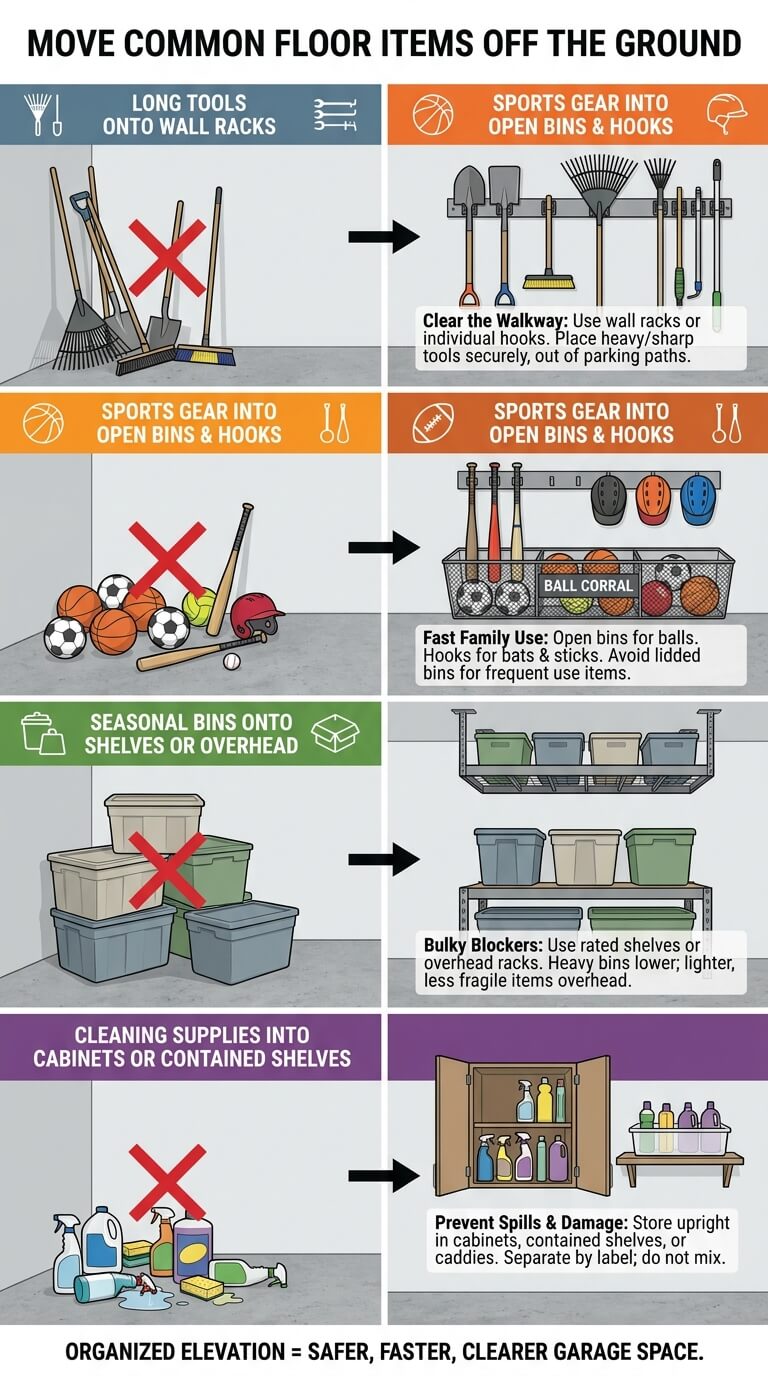
Start with the objects that keep coming back underfoot. The fastest wins usually come from long tools, sports gear, seasonal bins, and loose cleaning supplies.
Long tools onto wall racks
For safer control of long, sharp, or dirty items, move garden tools onto safer wall storage in a dedicated area.
Rakes, shovels, brooms, extension poles, snow tools, and weed trimmers should not lean in corners where they slide or block the walkway. Use wall racks, individual hooks, or a narrow vertical tool holder. Place sharp or heavy tools where they will not fall into a parking path.
Sports gear into open bins and hooks
To stop balls and shared gear from spreading into walkways, get sports equipment off the floor near the main entry.
Sports equipment needs storage that matches fast family use. Balls need open bins or corrals. Bats, sticks, rackets, and helmets need hooks or divided bins. Smaller accessories need a basket near the main activity area. Avoid lidded bins for gear used several times a week, especially if children are expected to put items away.
Seasonal bins onto shelves or overhead racks within limits
Seasonal bins are common floor blockers because they are bulky and used only a few times a year. Put them on shelves or overhead racks only if the storage system is rated for the load and installed as directed. Keep heavy bins lower. Use overhead space for lighter, less fragile items that are not needed often.
Cleaning supplies into cabinets or contained shelves
Because labels, leaks, temperature, and access matter, keep cleaning supplies off the garage floor in a controlled area.
Cleaning supplies should not sit loose on the garage floor. Bottles can tip, leak, freeze, overheat, or get kicked behind other items. Store them upright in a cabinet, on a contained shelf, or in a sturdy caddy that can be lifted as one unit. Separate products according to the label, and do not mix chemicals into unmarked containers.
Build a Garage Drop-Zone System
A drop zone is the pressure-release valve for a garage. It gives temporary items one place to land so they do not take over the whole floor. The best drop zone is small, visible, and easy to empty.
Short-term landing spot near the entrance
Place the drop zone where clutter naturally enters. For many homes, that is near the house door, side door, or vehicle door. Use a small shelf, one bin, a bench with cubbies, or wall hooks. Label it with simple categories such as returns, donations, borrowed items, and today only.
If the household drops many types of items in the garage, divide the landing spot into very small sections. One tray for keys or small parts, one bin for returns, and one hook for bags can work better than one large table that collects everything.
24-hour or 7-day decision rule
Use different deadlines for different clutter. Groceries, tools from a finished task, and items carried in from the car should be handled within 24 hours. Returns, donations, recycling, and project supplies can use a seven-day limit if they have a clear next step.
Donation, return, recycling, and project staging areas
Separate exit items from active storage. Donation bags should not mix with sports gear. Returns should not sit under seasonal bins. Recycling should not block the car. Project materials should not hide tools needed for daily tasks.
Storage That Prevents Floor Relapse
Choose storage by weight, frequency, mess level, and who needs access. A system fails when it is too high, too hidden, too heavy, or too annoying to use.
Wall rails, hooks, pegboards, and vertical racks
Wall storage works well for long, awkward, or frequently used items. Rails are useful when you may move hooks later. Pegboards are useful for light hand tools and small parts. Individual heavy-duty hooks are useful for ladders, folding chairs, hoses, or strollers when installed correctly.
Shelving with clear category limits
Shelves keep bins and supplies off the floor, but they need category limits. A shelf labeled outdoor games should not also collect cleaners, tools, holiday lights, and old paint. Mixed shelves are hard to maintain because nobody knows where a new item belongs.
Cabinets for hazardous or messy supplies
Cabinets help contain items that should not be loose in a walkway: cleaners, small hardware, sharp tools, paint supplies, pesticides, and car-care products. Choose cabinets that fit the weight and product type. Keep labels visible, caps tight, and incompatible products separated according to directions.
Avoiding oversized bins that become hidden clutter
Oversized bins look efficient, but they often create hidden floor clutter. They become too heavy to lift, too deep to search, and too vague to label well. When a bin is annoying to use, people stop returning items to it.
Garage Floor Reset Checklist
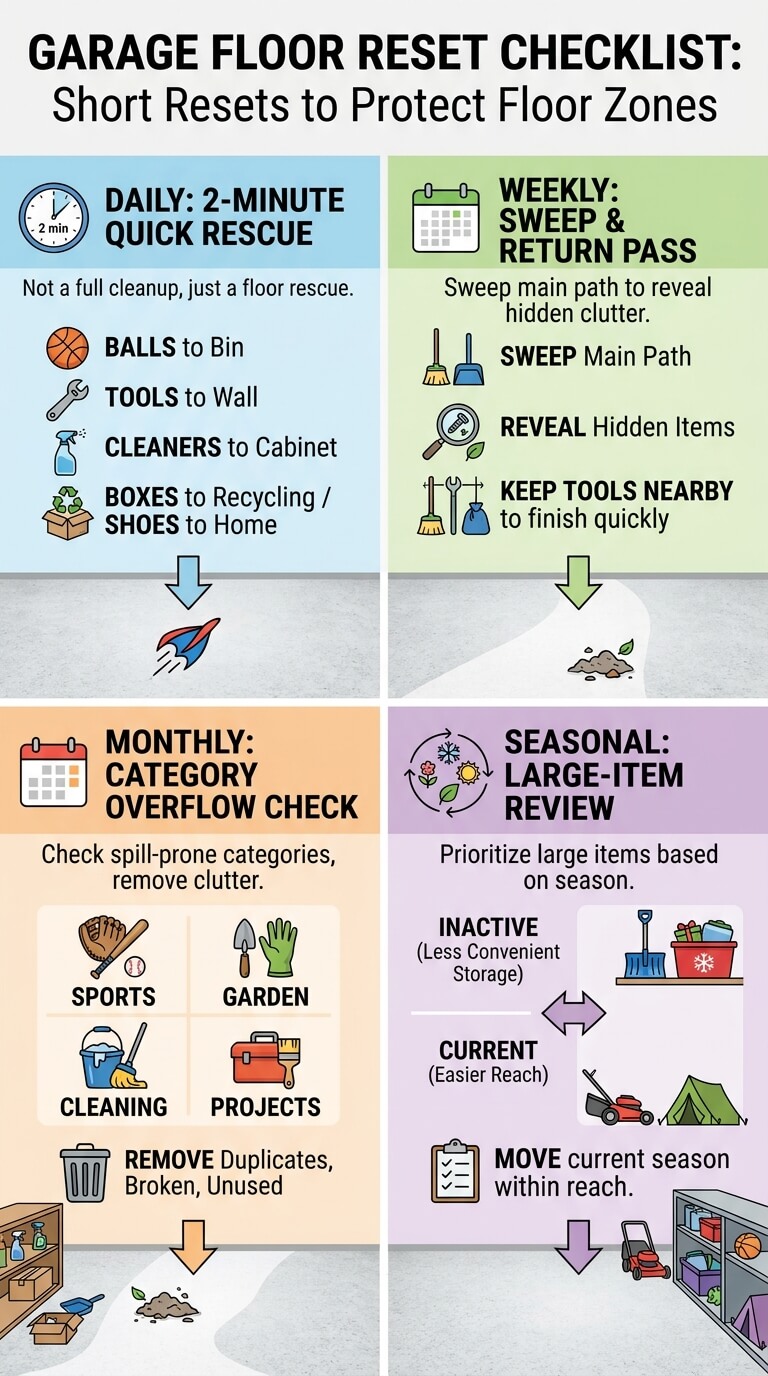
Use short resets so clutter is handled while it is still small. These passes are meant to protect the main floor zones, not reorganize the entire garage every time.
Daily 2-minute reset
At the end of a busy day, return the obvious floor items: balls to the bin, tools to the wall, cleaners to the cabinet, boxes to recycling, and shoes or bags to their proper home. This is not a full garage cleanup. It is a quick floor rescue.
Weekly floor sweep and return pass
Once a week, sweep the main path and return anything that drifted. Sweeping is useful because it reveals what the floor is hiding: loose screws, soil, leaves, pet hair, broken plastic, leaking containers, or forgotten small gear.
Keep a broom, dustpan, and small trash bag close to the reset area so the weekly pass does not become another project. When the tools for the reset are already nearby, you are more likely to finish before clutter spreads again.
Monthly category overflow check
Once a month, look at the categories most likely to spill onto the floor: sports gear, garden tools, cleaning products, seasonal bins, car-care supplies, and unfinished projects. Remove duplicates, empty packaging, broken pieces, and items nobody uses.
Seasonal large-item review
At the start or end of each season, review large items. Snow tools, lawn gear, holiday bins, camping supplies, pool toys, outdoor furniture covers, and sports equipment all change priority during the year. Move the current season within easier reach and move inactive items to less convenient storage.
Common Mistakes
A floor can look clear for one afternoon and still be set up to fail. These mistakes usually send items right back to the same corners and walkways.
Clearing the floor without removing excess items
If you keep everything, the floor will eventually fill again. New hooks and shelves can help, but they cannot solve years of duplicates, broken items, abandoned hobbies, and saved packaging. Remove what you do not use before building a larger system.
Storing heavy bins too high
High shelves and overhead racks can free floor space, but they are not the place for heavy, awkward bins. Store heavy items low, distribute weight as directed, and never climb on storage units. If lifting an item down feels unsafe, it is stored in the wrong place.
Blocking exits, appliances, panels, or parking
A garage may look organized while still being hard to use. Do not block doors, appliance access, panels, freezers, utility equipment, stairs, or the vehicle door swing. A clear-looking wall of bins is not helpful if it prevents normal access.
Keeping temporary project piles with no deadline
Project piles need an end point. If a repair, build, or sorting task has been sitting for weeks, it is no longer an active project. Give it a date, shrink it into one container, or let it go. Floor space should not be held hostage by unfinished plans.
When Floor Clutter Signals a Bigger Problem
If shelves and bins are overflowing, declutter the garage first so storage is not built around broken, duplicate, or unused items.
Sometimes the floor is not the real issue. It is the visible sign that the garage has too much inventory, unsafe storage, moisture trouble, pest activity, or a layout that no longer matches how the household lives.
Too many duplicates or abandoned projects
If you find several versions of the same tool, many half-empty supply containers, multiple broken items waiting for repair, or old hobby gear nobody uses, the garage may need a deeper declutter. Clearing the floor will help for a week, but excess inventory will push back out unless the duplicates are reduced.
Category systems that are not working
If one category keeps landing on the floor, the storage plan for that category is failing. Sports gear may need child-height bins. Garden tools may need a better rack. Cleaners may need a cabinet. Seasonal decor may need smaller labeled bins. Fix the category instead of blaming the people using it.
A useful test is whether the person who uses the item can put it away without help. If a child cannot reach the sports bin, if a gardener cannot return a rake without moving bicycles, or if a cleaner cabinet is blocked by boxes, the system is too hard for daily life.
Unsafe storage, water issues, pests, or structural concerns
Stop and reassess if you find wet boxes, moldy materials, rodent droppings, damaged shelving, sagging overhead racks, leaking chemicals, frayed cords, or blocked equipment. Floor clutter can hide problems that need cleaning, repair, disposal, or professional help before you reorganize.
For installed racks, shelves, cabinets, and ceiling storage, check the product instructions and weight ratings before loading. The overhead garage rack instructions show why load distribution, framing type, and inspection matter. If your setup does not match the instructions, do not rely on it to clear the floor.
FAQ
These answers focus on floor space, walking paths, parking access, and storage choices that keep garage clutter from returning.
What should be stored on the garage floor?
Store only items that truly need floor space, such as vehicles, trash bins, lawn mowers, snow blowers, rolling tool chests, large equipment, and active projects with a defined boundary. Even these items should have assigned zones. Loose tools, balls, boxes, cleaner bottles, decorations, and small supplies should have shelves, hooks, bins, cabinets, or exit plans.
How do I stop my garage floor from becoming a dumping ground?
Create one small drop zone for temporary items, assign a home for each repeat-use category, and set deadlines for returns, donations, recycling, and projects. Then do a short weekly reset. If the same item keeps returning to the floor, change its storage home instead of just picking it up again.
What is the best storage to keep items off the garage floor?
The best storage depends on the item. Use wall hooks or rails for long tools, open bins for sports gear, sturdy shelves for labeled bins, low shelves for heavy items, cabinets for messy or hazardous supplies, and overhead racks only for appropriate lighter items within the product limits. Choose storage that is easy to use, not just storage that holds the most.
How much floor space should stay clear in a garage?
Keep enough clear floor space for parking if the garage holds a car, a comfortable walking path between doors and frequently used areas, full door swings, access to utilities and appliances, and any large equipment that must stay on the floor. The exact amount depends on the garage layout, but you should not need to step over items or move bins to reach daily-use zones.
Final Thoughts
A clear garage floor lasts when every floor item gets a decision. Do not rely on one big cleanup to solve a daily storage problem. Protect parking, walking paths, doors, utility access, and project space first. Then move repeat offenders to better homes on walls, shelves, cabinets, open bins, or exit areas.
The best system is the one your household can repeat when everyone is tired. Keep frequent items visible and easy to return. Store heavy items low. Follow product labels and storage instructions. Give temporary piles a deadline. When the floor starts filling again, use it as information: something needs a better home, a smaller category, or a trip out of the garage.

Ethan Carter is the Founder & Editor of HomeCleanSecrets. Based in the United States, he has 5 years of experience creating practical home cleaning, laundry care, stain removal, decluttering, and home organization content. His goal is to help everyday households clean smarter and build simple routines that are easier to maintain.
Read more about Ethan Carter on his author page: https://homecleansecrets.com/ethan-carter/