
Garage storage can work well for extra cleaning supplies, but it needs more care than a random shelf or open floor box. Many garages get hot, cold, dusty, damp, or busy with bikes, tools, yard products, and sports gear. A bottle that is fine under a laundry sink may not belong beside a water heater, a freezer, a child’s scooter, or a bag of fertilizer.
The safest setup is simple: keep products upright, visible, contained, separated, and protected from temperature extremes. Store only the supplies that make sense for your garage conditions, keep original labels intact, and move anything questionable indoors or to proper local disposal. A good test is whether another adult could open the garage, find the right product, read the label, and put it back without guessing what it is or stepping around clutter.

Quick Answer: The Safe Garage Cleaning Supply Setup
Place this category within a broader garage storage plan so the surrounding zones work together.
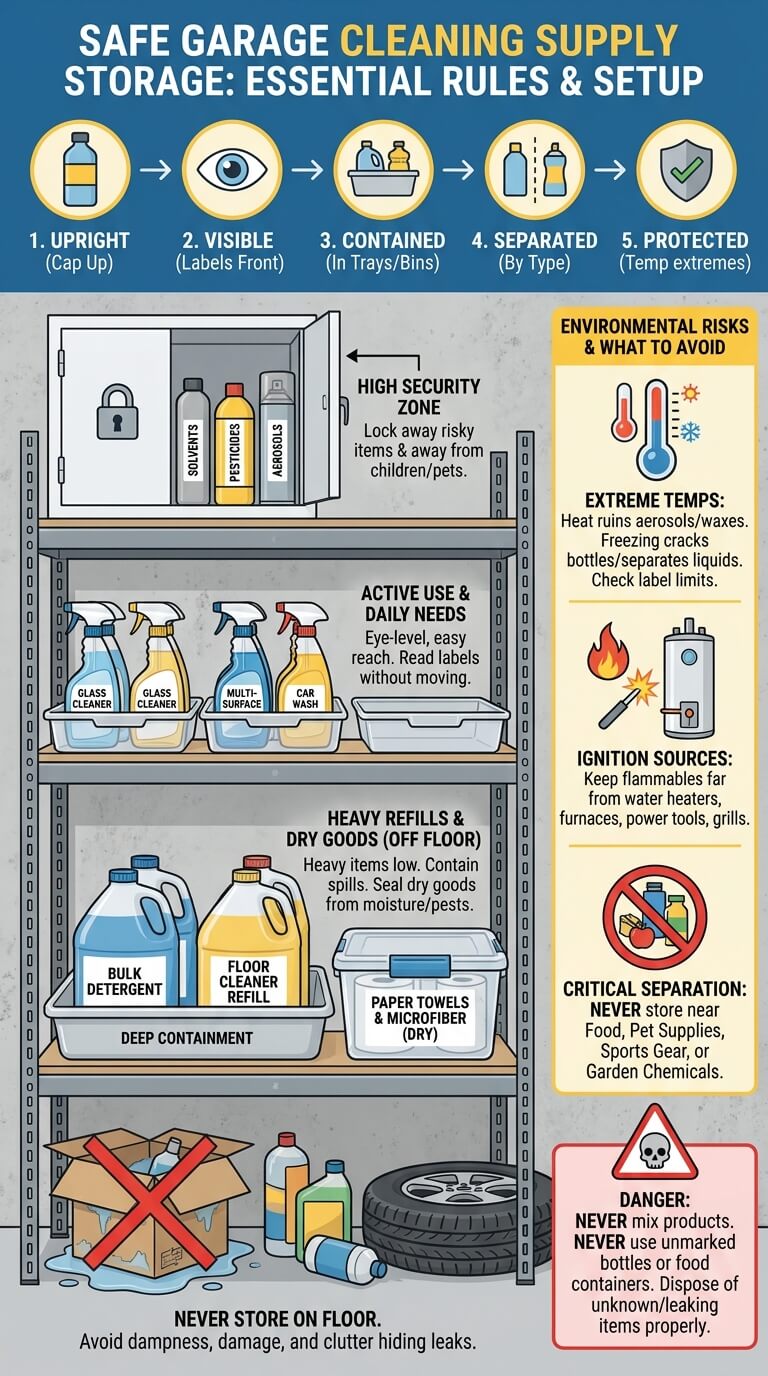
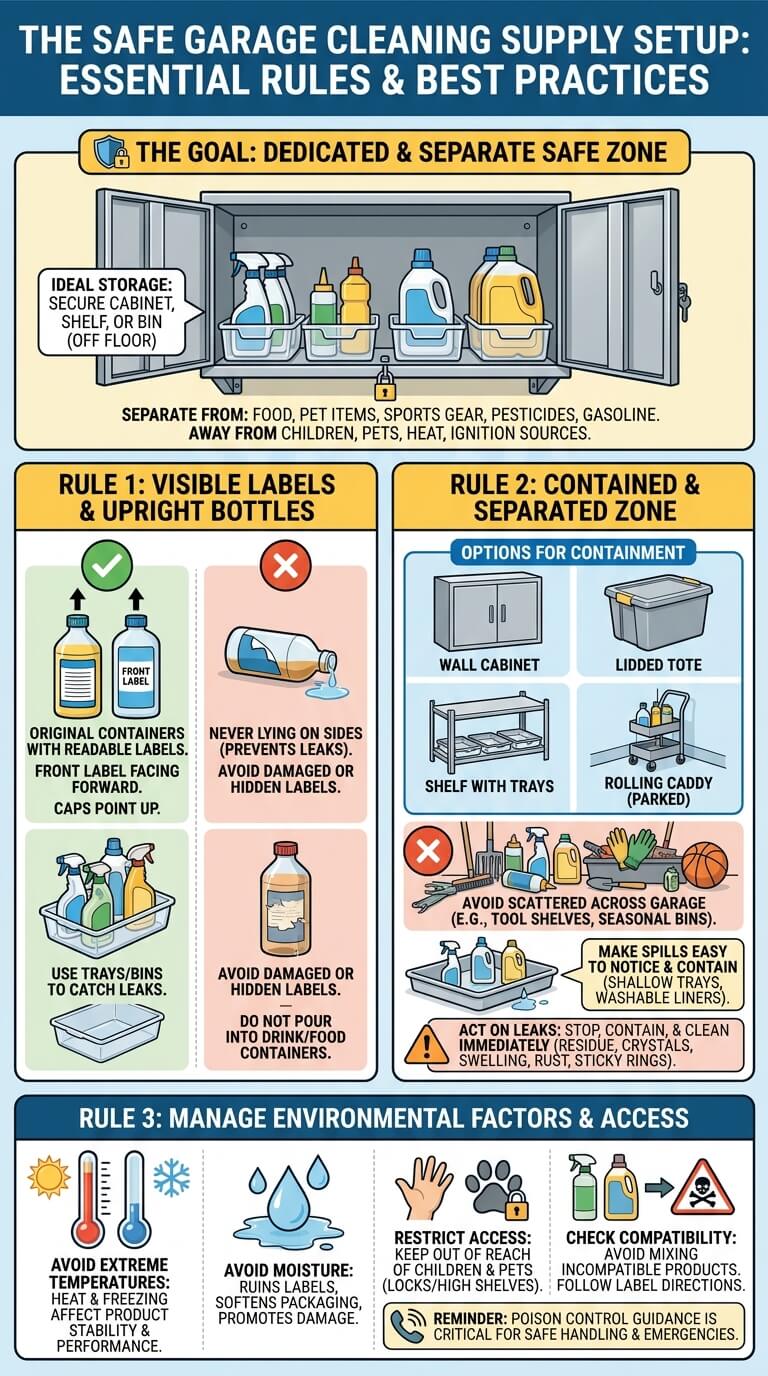
The best garage cleaning supply setup is a dedicated cabinet, shelf, or sturdy bin that is off the floor, away from heat and ignition sources, away from children and pets, and separate from food, pet items, sports gear, pesticides, and gasoline. Keep products in original containers with readable labels, and use trays or bins that can catch small leaks.
Keep labels visible and products upright
Place bottles so the front label faces forward and the cap points up. This sounds basic, but it prevents most garage supply problems before they start. When labels face the wall, people grab the wrong cleaner. When bottles lie on their sides, caps can loosen, sprayers can leak, and paper labels can get damaged by moisture.
Do not pour cleaners into drink bottles, food jars, or unmarked spray bottles. If you use a reusable spray bottle, label it clearly with the product name and date mixed, and follow the product directions. Never create a mystery bottle just because the original container is bulky.
Store cleaners in a contained, separated zone
A contained zone can be a wall cabinet, a lidded utility tote, a metal shelf with trays, or a rolling caddy that parks in one place. The exact product matters less than the separation. Cleaning supplies should not be scattered across tool shelves, seasonal bins, sports bags, or garden areas.
Containment also makes spills easier to notice. A shallow tray under bottles, a plastic bin for refills, or a washable shelf liner can reveal a drip before it spreads across cardboard, drywall, or the garage floor. Stop and handle a leak as soon as you see residue, crystals, swelling, rust, or a sticky ring under a bottle.
Avoid heat, freezing, moisture, children, pets, and incompatible products
Garage conditions vary widely. Heat can affect some aerosols, waxes, wipes, disinfectants, and specialty cleaners. Freezing can change the texture or performance of liquids. Moisture can ruin paper goods, soften cardboard packaging, and damage labels. Product labels are the first place to check because storage limits differ by formula.
Keep children and pets out of the storage zone. The Poison Control guidance on cleaning products is a useful reminder that common household products can still cause harm when swallowed, splashed, mixed, or used incorrectly. A locked cabinet or high shelf is often worth it in garages where kids, guests, or animals move through the space.
Should Cleaning Supplies Be Stored in a Garage?

Some cleaning supplies store well in a garage. Others belong indoors because the product is temperature-sensitive, flammable, pressurized, expensive, or used frequently enough that garage storage creates extra handling. Do not decide by category alone. Decide by label directions, local climate, access risk, and how quickly the product needs to be used.
Supplies that usually work in garage storage
Garage storage usually works best for stable, sealed, non-aerosol backup supplies. Examples include extra paper towels, unopened sponges, scrub brushes, mop heads, microfiber cloths, empty buckets, dustpans, broom refills, and some unopened household cleaners when the label allows normal storage conditions.
Bulk refill stock can also work if the garage stays reasonably dry and moderate. Keep refill jugs in a secondary bin instead of directly on the shelf. That way, a small leak does not spread into tools, cardboard boxes, or stored decorations.
Supplies that may be heat-sensitive, freeze-sensitive, flammable, or risky
Be more careful with aerosol cans, solvents, specialty stain removers, disinfectants, bleach-based products, ammonia-based products, drain cleaners, oven cleaners, adhesives, waxes, polishes, and anything with strong fumes. These items may have stricter label directions or should be stored away from heat, sparks, flames, and children.
Bleach and disinfecting products deserve extra attention because strength and safety depend on proper storage and use. A bottle stored for too long, exposed to heat, or mixed with the wrong product may not perform the way a reader expects. Check the date, condition, smell, cap, and label before keeping it in the garage.
When an indoor utility cabinet is safer
An indoor cabinet is safer when the garage gets very hot, drops below freezing, has pest activity, floods during storms, or is used as a high-traffic play area. Indoor storage is also better for small amounts of daily cleaners that are used in kitchens, bathrooms, and laundry rooms because carrying them through the garage every day increases spills and missed caps.
Move products indoors when the label says to avoid temperature extremes or store in a cool, dry, well-ventilated place and your garage cannot provide that. A laundry cabinet, mudroom cabinet, utility closet, or locked interior shelf may be a better fit than forcing every cleaner into the garage.
Create a Dedicated Cleaning Supply Zone

A garage cleaning supply zone should be easy to reach but not in the path of tires, doors, bikes, strollers, or pet crates. Choose a spot where an adult can stand, read labels, remove one product, and put it back without moving five unrelated items first.
Choose cabinet, shelf, bin, or caddy storage
A cabinet is the best choice when you need child-resistant access, dust control, or a neater look. A sturdy open shelf works in an adult-only garage when labels stay visible and products are contained in trays. A lidded bin works for sealed backup supplies but is not ideal for daily spray bottles because products get buried. A caddy works for items you carry to the driveway, patio, or utility sink.
Choose washable materials when possible. Bare cardboard absorbs leaks and hides damage. Thin fabric bins sag under heavy liquid jugs. Clear plastic bins, utility trays, powder-coated shelves, and labeled caddies are easier to wipe and inspect.
Keep products off the floor
Use hooks, shelves, and simple return rules to keep cleaning products off the garage floor.
Floor storage is the fastest way to lose control of cleaning supplies. Bottles get kicked, crushed, blocked by car tires, or hidden behind seasonal bins. Moisture from rain, snow, mopping, or small garage leaks can also soak packaging and make labels unreadable.
Use a shelf, wall cabinet, peg rail with a caddy, or a raised utility tote. Heavy refill jugs can go on the lowest shelf, but that shelf should still be off the floor and inside a tray or bin. Keep the walking path clear so no one has to step over cleaners to reach tools, bikes, or the door into the house.
Separate cleaning supplies from sports equipment, food, pet items, and garden chemicals
For safer control of long, sharp, or dirty items, keep garden tools separate from cleaning products in a dedicated area.
Cleaning products should not share a bin with balls, helmets, pet bowls, animal bedding, pantry overflow, or gardening products. A spilled cleaner on a soccer ball or pet item may not be obvious right away. Garden chemicals also have their own label rules and should not be treated as regular household cleaners.
Use physical separation, not just labels. A different shelf, a different cabinet, or a different side of the garage is better than placing everything on one crowded surface. The EPA has separate pesticide storage guidance, which is a good reason to keep yard chemicals in their own clearly controlled area.
Sort Supplies Before You Store Them
If shelves and bins are overflowing, declutter old or unknown garage products so storage is not built around broken, duplicate, or unused items.
Sorting prevents the garage from becoming a backup closet for products no one actually uses. Before buying bins or installing shelves, put every cleaning-related item on a safe work surface and sort it by use, condition, and risk. Wear gloves if containers are dusty, sticky, rusty, or leaking.
Daily cleaners and refill stock
Daily cleaners are the sprays, wipes, and liquids used often inside the home. Keep only true duplicates or unopened refills in the garage. The active bottle belongs closer to where it is used, unless the product is specifically for garage, driveway, patio, or utility tasks.
Group refill stock by product family: bathroom, floor, glass, laundry, and utility cleaning. Do not make one crowded “miscellaneous cleaner” bin. If someone needs to dig through bleach, window spray, degreaser, floor cleaner, and furniture polish to find one refill, the system is already too loose.
Laundry and floor-care supplies
Laundry detergent, stain products, fabric softener, floor cleaner, mop solution, and carpet spot products can be heavy and messy. Keep them on a low shelf, not above eye level. A low shelf reduces the chance of dropping a jug or pouring from an awkward angle.
Check labels before storing laundry liquids in a garage that freezes or overheats. Some products can thicken, separate, leak from pressure changes, or lose performance when stored outside their recommended range. Powder products need extra moisture protection because clumps can form in humid spaces.
Paper goods, gloves, sponges, brushes, and microfiber cloths
Dry supplies need a different setup from liquids. Paper towels, trash bags, disposable gloves, sponges, scrub pads, and microfiber cloths should stay clean and dry. Store them in a closed bin, drawer, or cabinet, especially in a dusty or pest-prone garage.
Do not store clean microfiber cloths directly beside leaky liquids, garden soil, or greasy tools. If cloths pick up grit, oil, or chemical residue, they can scratch surfaces or spread contamination the next time you clean. A small labeled cloth bin is safer than a loose pile on the shelf.
Expired, leaking, unknown, or unlabeled products
Do not keep a product just because the bottle is half full. Unknown, unlabeled, leaking, corroded, separated, or swollen containers should be handled carefully and kept away from regular storage until you know what to do with them. Avoid smelling unknown products closely, mixing them, or pouring them into another container.
Some items may need local disposal instructions rather than household trash. The EPA household hazardous waste information can help readers understand why leftover cleaners, solvents, and other household products sometimes need special handling instead of casual disposal.
Safety Rules for Garage Cleaning Products

Garage storage does not need to feel scary, but it should be deliberate. The goal is to reduce guessing. Every product should have a readable label, a stable container, a safe location, and a clear reason for being stored there.
Read labels for temperature, ventilation, and storage limits
Product labels may tell you to store the item in a cool, dry place, keep it from freezing, avoid direct sunlight, keep it away from heat, or store it with the cap tightly closed. Follow those directions over any generic organizing advice. The American Cleaning Institute explains safe use, storage, and disposal principles in its cleaning product storage guidance.
Also check cabinet and shelf limits. Liquid gallons are heavier than they look. If a shelf bows, pulls from the wall, or wobbles when loaded, move heavy products lower and reduce the load.
Do not mix products or consolidate unknown liquids
Never combine leftover cleaners to save space. Do not top off a bottle with a similar-looking product unless the label specifically allows refilling with that exact product. Many cleaners should not be mixed, and “almost empty” is not a safe reason to pour products together.
Also avoid moving cleaners into decorative bottles or unlabeled containers. In a garage, someone may mistake a liquid for water, car fluid, plant food, or pet cleaner. Original containers are safer because they carry directions, warnings, active ingredients, and disposal information.
Keep chemicals away from ignition sources and children’s reach
Do not store cleaning products beside water heaters, furnaces, electrical panels, battery chargers, grills, fuel cans, or power tools that create sparks. Some household products are not highly flammable, but a garage often contains enough heat and equipment that separation is still the smarter default.
Child access matters even if children do not live in the home. Visiting relatives, neighbors, and friends may enter the garage. Use a locked cabinet, latch, or high shelf for products that should not be reached casually. The Consumer Product Safety Commission’s Anchor It information is also helpful when tall cabinets or shelving could tip if climbed or overloaded.
Manage spills, leaks, and damaged containers
A leak check should be quick but regular. Look for wet rings, crusty caps, faded labels, rust marks, swollen containers, or a smell that appears only near the shelf. Put on gloves before touching a damaged container, and ventilate the area if a product has strong fumes.
Do not wipe an unknown leak with your best cleaning cloth and toss it back on the shelf. Treat the cloth or absorbent material as contaminated until you know what spilled. Follow the product label for cleanup, and check local guidance if the spill involves solvents, pesticides, fuels, or unknown chemicals.
Best Storage Layouts by Garage Type
If the surrounding space still lacks structure, take time to organize the rest of the garage around safer zones before fine-tuning this area.
The right layout depends on how the garage is used. A quiet garage with one parked car and adult users can use open shelving more safely than a busy family garage with bikes, pets, guests, and sports gear moving through the space every day.
Small garage or shared parking area
In a small garage, vertical storage is usually better than wider storage. Use one narrow cabinet or one shelf bay instead of several scattered bins. Keep the zone close to the house door or utility sink if possible, but not so close that it blocks entry.
Limit garage storage to backup stock and utility items. Daily kitchen and bathroom cleaners usually belong indoors because small garages do not have enough safe surface area for constant access. A slim caddy can hold car wash items or driveway cleaning supplies without turning the floor into a storage lane.
Utility wall with shelves or cabinets
A utility wall works well when shelves are sturdy, fastened correctly, and grouped by task. Place heavy refill jugs low, active garage cleaners at waist to chest height, paper goods in closed bins, and rarely used specialty products higher only if they are light and safe to lift.
Leave a little empty space on the shelf. A packed shelf encourages products to be shoved sideways, stacked on caps, or hidden behind other items. Empty space also gives you room to inspect labels and remove a bottle without knocking over nearby bottles.
Garage used by kids, pets, or frequent visitors
A busy garage needs stricter access control. Use a cabinet with a latch or lock for liquids and aerosols. Keep sports equipment, pet supplies, and toys in a different zone so children do not have to stand next to cleaners to get a ball, helmet, leash, or scooter.
Watch the floor path at child and pet height. If a dog crate, litter supplies, stroller, or sports bag sits under the cleaning shelf, drips and spills can land on items that are handled daily. Move either the cleaners or the everyday gear so they do not share the same drop zone.
Hot, cold, humid, or pest-prone garage
Extreme garages need a shorter storage list. Avoid keeping products that labels say should not freeze, overheat, or sit in damp conditions. Keep paper goods and microfiber cloths in sealed bins. Use shelves that resist rust and bins that close tightly.
If the garage smells musty, shows condensation, or has active pest signs, do not store large amounts of cleaning backup there. Moisture and pests can ruin packaging before you notice. A smaller indoor supply, plus a garage caddy for outdoor tasks, may be more reliable.
Cleaning Supply Storage Checklist
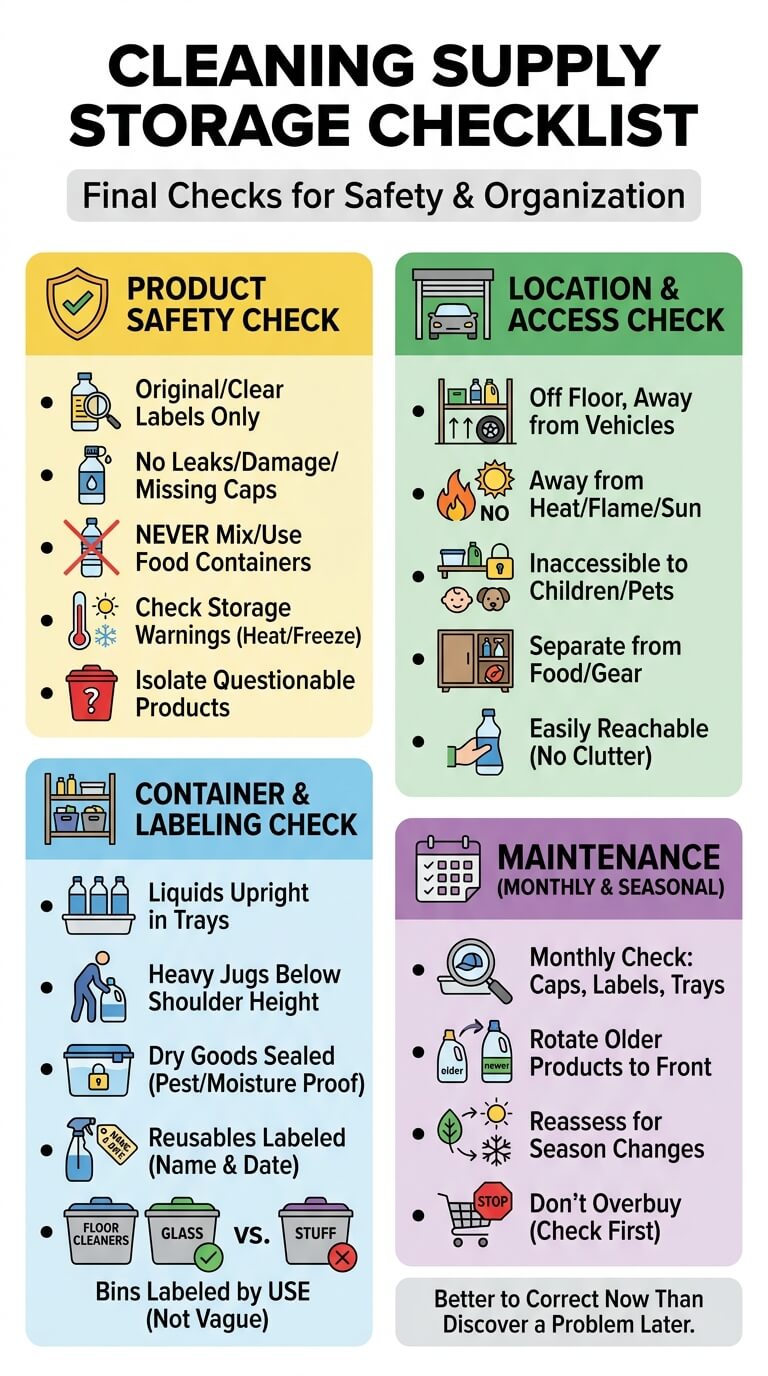
Use this checklist after sorting and before calling the garage setup finished. It is better to make small corrections now than to discover a leaking bottle behind a stack of boxes months later.
Product safety check
- Every bottle has an original or clearly readable label.
- No product is leaking, swollen, rusted, sticky, or missing a cap.
- Nothing unknown has been mixed, combined, or moved into a food or drink container.
- Labels have been checked for heat, freezing, ventilation, and storage warnings.
- Questionable products are separated until disposal instructions are confirmed.
Container and label check
- Liquids are upright in trays, bins, or a washable cabinet area.
- Heavy jugs are not stored above shoulder height.
- Dry goods are protected from dust, moisture, and pests.
- Reusable spray bottles show the product name and mix date if the product was diluted.
- Bins are labeled by use, not by vague labels like “stuff” or “extra.”
Location and access check
- Cleaners are off the floor and out of vehicle paths.
- The storage area is away from heat, flame, sparks, and direct sun.
- Children, pets, and visitors cannot easily reach risky products.
- Cleaning supplies do not share storage with food, sports gear, pet items, or garden chemicals.
- An adult can reach one product without moving unrelated garage clutter.
Monthly restock and leak check
Once a month, look over the shelf before adding new products. Check caps, labels, and tray bottoms. Move older products to the front if they are still safe and usable. Avoid buying another refill until you know what is already there.
Season changes are a smart time to reassess. A product that was fine in mild spring weather may not belong in the garage during peak summer heat or freezing winter nights. Adjust the location before the weather creates a problem.
Common Mistakes
Most garage cleaning supply problems come from convenience decisions that slowly become habits. These mistakes are easy to fix once you notice them.
Storing cleaners in random floor boxes
Floor boxes hide leaks, invite pests, collect dust, and get blocked by other garage items. They also make it too easy to forget what you own. Move cleaners to a shelf, cabinet, or tray where labels can be seen without digging.
Keeping unlabeled or leaking products
An unlabeled cleaner is not a bargain. It is a guess. If you cannot identify the product and confirm how it should be used or stored, do not put it with regular supplies. Keep it separate and check local disposal guidance.
Storing incompatible products together
Do not store products in a way that encourages accidental mixing. Bleach products, ammonia products, drain cleaners, acids, solvents, and specialty chemicals should not be crowded into one loose bin where caps can loosen and residue can spread. Keep categories separated and labels visible.
Ignoring temperature warnings on labels
A garage shelf is not automatically a cool, dry place. Sun exposure, closed doors, uninsulated walls, and concrete floors can create temperature swings. Read the product label before storing cleaners through summer or winter.
Adjacent Garage Storage Issues
Cleaning supplies rarely sit alone in a garage. They compete with garden products, tools, pet gear, sports equipment, car care items, and seasonal bins. A clean supply zone works better when the neighboring zones make sense too.
How garden chemicals differ from household cleaners
Garden chemicals, pesticides, fertilizers, and weed products should not be treated as normal cleaning products. They may have different storage rules, disposal rules, protective gear instructions, and environmental warnings. Keep them in their own area with labels facing forward.
Why sports equipment and pet supplies need separation
Sports gear and pet items are touched often and sometimes handled by children. They should not sit under or beside cleaning liquids. If a bottle leaks onto a ball, glove, leash, pet towel, or food scoop, the residue may not be noticed before someone uses it.
When cleaning supply overflow signals a broader garage reset
If cleaning products are spread across several shelves, hidden behind boxes, or duplicated because no one can find them, the issue is bigger than cleaner storage. The garage may need a full sort by category, followed by a clearer zone plan and a floor-clearing routine.
FAQ
Is it safe to store cleaning products in a garage?
It can be safe when products are sealed, labeled, upright, contained, separated from incompatible items, away from heat or ignition sources, and protected from children and pets. It is not a good idea when the garage gets too hot, freezes, floods, has pests, or cannot keep products secure. Always follow the storage directions on each label.
Can laundry detergent be stored in a garage?
Laundry detergent may be stored in a garage only if the label allows it and the space stays within a reasonable temperature range. Keep heavy jugs low, upright, capped, and inside a tray or bin. In a freezing, very hot, or humid garage, an indoor laundry cabinet is usually safer and more convenient.
What cleaning supplies should not be stored in heat?
Check labels carefully on aerosols, disinfectants, bleach-based products, solvents, waxes, polishes, drain cleaners, specialty stain removers, and products with strong fumes. Many labels warn against heat, direct sunlight, flames, sparks, or temperature extremes. When the label calls for cool storage and your garage gets hot, choose an indoor utility cabinet instead.
How do I organize bulk cleaning supplies without clutter?
Keep only backup stock in the garage, group it by task, and store it in labeled bins or trays. Put older usable products at the front, avoid buying duplicates before checking inventory, and limit each category to the amount your household will realistically use. Bulk storage should make restocking easier, not create a second messy supply closet.
Final Thoughts
The best way to store cleaning supplies in a garage is to make every product easy to identify, easy to reach, and hard to misuse. Keep labels readable, bottles upright, liquids contained, dry goods protected, and risky products away from heat, children, pets, sports gear, food, and garden chemicals.
Before you add more bins or refills, do one careful pass through what you already own. Remove unknown or damaged products, check the labels on what remains, and build one dedicated zone that fits your garage conditions. A smaller, safer, well-labeled setup will serve the home better than a crowded shelf full of products no one can confidently use.

Ethan Carter is the Founder & Editor of HomeCleanSecrets. Based in the United States, he has 5 years of experience creating practical home cleaning, laundry care, stain removal, decluttering, and home organization content. His goal is to help everyday households clean smarter and build simple routines that are easier to maintain.
Read more about Ethan Carter on his author page: https://homecleansecrets.com/ethan-carter/