
A good cleaning supplies list should make your home easier to maintain, not turn one cabinet into a packed store shelf. Most homes do not need ten sprays, three mop systems, and specialty tools for every possible mess. They need a small set of dependable cleaning tools, a few cleaning products for home surfaces, and a safe place to store everything so the right item is easy to grab.
This guide walks through the essential cleaning supplies a beginner can buy first, the optional deep cleaning supplies worth adding later, and the safety items that should stay with your kit. It also explains which products to skip until you know your surfaces better, because the wrong cleaner can waste money or damage a finish.

Quick Answer: The Essential Home Cleaning Kit


The fastest way to build a useful kit is to cover the jobs that happen every week: wiping, dusting, floors, bathroom soil, kitchen grease, trash, spills, and safe storage. Start with the basics below, then add specialty items only when a real problem appears in your home.
Starter cleaning tools
A basic cleaning kit should include microfiber cloths, a few non-scratch sponges, a scrub brush, a toilet brush, a broom and dustpan, a vacuum or floor sweeper, a mop that works with your flooring, a bucket, trash bags, and a sturdy cleaning caddy. These items cover most routine messes without locking you into a cabinet full of gadgets.
- Microfiber cloths: keep at least six so you can separate bathroom, kitchen, glass, and general dusting cloths.
- Sponges and scrub pads: choose non-scratch pads first, then add stronger scrubbers only for surfaces that allow them.
- Brushes: one soft detail brush and one stiffer grout or corner brush handle more jobs than a large collection of novelty brushes.
- Floor tools: match the mop head to your floor material before buying refills in bulk.
- Caddy or bin: choose one that is easy to carry and easy to clean if a bottle leaks.
A good test is whether you can clean a sink, wipe a counter, sweep crumbs, handle a spill, and refresh a bathroom without leaving the room three times to hunt for supplies.
Starter cleaning products
Most homes can begin with dish soap, an all-purpose cleaner, a bathroom cleaner, a glass cleaner or glass-safe cloth routine, a floor cleaner approved for your flooring, baking soda, white vinegar for compatible surfaces, and a disinfectant used only when needed. The American Cleaning Institute recommends gathering products before cleaning and reading directions so they are used safely and effectively, which is especially important when you are new to a product category cleaning product directions and preparation.
Do not assume one spray belongs on every surface. Stone, unfinished wood, some appliance coatings, sealed floors, fabric, and electronics may need different care. Check the label, the surface manual, or the care tag before using acidic, abrasive, bleach-based, or solvent-based products.
Safety items to keep with your supplies
Your cleaning shelf should include reusable gloves, eye protection for splash-prone jobs, a small supply of masks for dusty tasks, a labeled measuring cup or scoop for cleaning only, and access to fresh ventilation. Keep the original labels on every product. If you mix a diluted cleaner according to a label, write the product name, dilution, and date on the bottle.
Safety also means knowing when not to clean. Stop if a product causes strong irritation, if fumes build up, if a surface changes color, or if a stain spreads after a spot test. Move people and pets away from the area, add ventilation, and switch to a safer next step only after the surface is stable.
How to Build a Cleaning Kit Without Overbuying
Overbuying usually starts when every problem looks urgent in the store aisle. A smarter approach is to split supplies into three levels: a daily reset kit, a weekly cleaning kit, and deep cleaning add-ons. This keeps everyday items close while preventing rare-use products from taking over prime storage space.
Daily reset kit
The daily kit should be small enough to grab in one hand. Keep an all-purpose cleaner, a few clean microfiber cloths, dish soap, a small dustpan or handheld vacuum, a trash bag roll, and gloves in one bin. In a kitchen, add a non-scratch sponge and a sink brush. In a bathroom, add a toilet brush nearby and a separate cloth color for bathroom surfaces.
This kit is not meant to deep clean the entire house. It handles crumbs, fresh spills, toothpaste marks, sticky handles, light counter messes, and trash. When the daily kit stays simple, it gets used more often because there is no decision fatigue.
Weekly cleaning kit
The weekly kit fills the gaps left by quick resets. It should include a mop or floor system, vacuum attachments, bathroom cleaner, glass cleaner, dusting wand, extra cloths, scrub brush, and a cleaner that fits your kitchen grease level. Households with hard water may also need a descaling product that is safe for the fixture material.
Store weekly supplies near the area where they are used most. Floor products can live with the mop. Bathroom products can stay in a locked or high bathroom cabinet if that is safe for your home. Grease cleaners belong near the kitchen but away from food, heat, and open flames.
Deep cleaning add-ons
Deep cleaning supplies should solve specific problems. Examples include an extendable duster for ceiling fans, a grout brush, upholstery-safe cleaning cloths, a carpet spot cleaner approved for your carpet type, a descaler, appliance cleaning tablets recommended by the appliance maker, and a squeegee for glass shower doors.
Add these only after you notice the task recurring. A renter in a small apartment may not need a carpet machine, ladder duster, or large bucket. A family with pets, high traffic floors, or hard water may find those add-ons worth the space. The best upgrade is the one you will use often enough to justify cleaning, storing, and replacing it. Choose specialty add-ons only after checking the tasks in your deep cleaning checklist.
Cleaning Tools by Task and Surface

A cleaning tools list becomes more useful when it is organized by job instead of by aisle. Before buying a tool, ask what surface it will touch, how much pressure it applies, whether it can be washed, and where it will dry after use.
Dusting and wiping tools
Microfiber cloths are the workhorse for dusting, wiping, and polishing many washable hard surfaces. Use separate cloths for bathroom, kitchen, glass, and general dusting so residue does not travel around the house. Wash them without heavy fabric softener, because residue can reduce absorbency and leave streaks.
A dusting wand helps with blinds, ceiling fans, vents, and high shelves. A soft detail brush helps around faucet bases, appliance seams, window tracks, and cabinet corners. Keep old toothbrushes only if they are clearly marked for cleaning, stored away from personal care items, and replaced once the bristles flatten.
Floor and carpet tools
Floor tools should match your actual flooring, not the most popular product online. Hardwood, laminate, tile, vinyl, stone, and carpet all respond differently to water, abrasion, steam, and cleaner residue. A safe starter setup is a broom, dustpan, vacuum or sweeper, and a damp mop system recommended for your floor type.
Check this before buying a mop: how wet does it leave the floor, how easily can the pad be washed, and can you buy replacement pads without changing the whole system? If a floor has gaps, swelling, loose tiles, worn sealant, or cloudy finish, avoid aggressive cleaning until you confirm the surface can handle it.
Bathroom and kitchen tools
Bathrooms need tools that handle soap film, body oils, minerals, and toilet areas without cross-contamination. Keep a toilet brush, bathroom-only cloths, a non-scratch scrub pad, a grout or corner brush, gloves, and a small squeegee if you have glass or tile that holds water spots.
Kitchens need tools that manage grease and food residue. A sink brush, dish brush, non-scratch sponge, scraper approved for the surface, microfiber cloths, and a small brush for appliance seams are usually enough. Do not use the same sponge for raw food areas, dishes, pet bowls, and general counters without cleaning or replacing it properly.
Pet, odor, and spill add-ons
Homes with pets or kids benefit from a small spill station. Keep absorbent cloths, paper towels or washable rags, enzyme cleaner for compatible pet messes, disposable gloves, a small trash bag, and a soft brush for fabric. Store odor products away from food and litter, and check labels before using them around animals.
Fresh spills should be blotted before scrubbing. Scrubbing can push liquid deeper into carpet, upholstery, or grout. If a stain keeps spreading, smells strong, or involves bodily fluids on porous material, the next step may be a specialized cleaner or professional advice rather than more pressure.
Cleaning Products by Job

The best home cleaning supplies are not always the strongest ones. Choose products by soil type, surface material, ventilation, and who lives in the home. A simple label reading habit prevents many common cleaning mistakes.
General cleaners
A general cleaner should handle light soil on washable surfaces such as sealed counters, many cabinet fronts, tables, and some appliance exteriors. Look for clear directions, compatible surfaces, dilution instructions if needed, and storage warnings. Fragrance is a preference, not proof that a surface is clean.
Many people can start with one all-purpose cleaner and dish soap before adding specialty products. Dish soap diluted in water can handle many fresh greasy messes on compatible surfaces, but it should be rinsed when residue would attract dirt or make floors slippery.
Degreasers and disinfectants
Degreasers help when cooking oils build up on stovetops, range hoods, backsplashes, and cabinet areas near the stove. They are not automatically safe for every painted, stone, wood, or coated surface. Test in a hidden spot and use the dwell time listed on the label instead of scrubbing harder right away.
Disinfectants have a narrower role than many beginners expect. The CDC explains that cleaning with soap or detergent is enough in many home situations, while disinfecting is more useful when someone is sick or a higher-risk mess needs it when and how to clean and disinfect your home. Clean visible soil first, follow the product contact time, and avoid using disinfectant as an everyday fragrance spray.
Descalers and stain removers
Descalers target mineral buildup from hard water around faucets, shower glass, toilet bowls, kettles, and some appliance parts. Many descalers are acidic, so they can harm natural stone, certain metals, worn grout, and delicate finishes. If the label warns against a surface, believe it.
Stain removers should be selected by material and stain type. Laundry stain remover, carpet spot cleaner, rust remover, adhesive remover, and mildew stain products are not interchangeable. A good test is to spot treat a hidden area, wait long enough to see whether color changes, and stop if the material feels sticky, rough, faded, or softened.
When natural cleaners are enough
Baking soda, white vinegar, hot water, and dish soap can be useful for some routine jobs, but they are not universal replacements for formulated cleaners. Baking soda can help with gentle deodorizing and light abrasion. Vinegar can help with some mineral deposits on compatible surfaces. Dish soap helps lift many fresh greasy soils. The comparison of natural cleaning versus commercial cleaners helps separate useful simple methods from jobs that need a formulated product.
Natural does not always mean safe for every material. Vinegar can damage stone and some finishes, baking soda can scratch delicate surfaces if rubbed aggressively, and homemade mixtures may lack clear testing or storage instructions. The American Cleaning Institute encourages careful thinking about mix-at-home cleaners, including whether the recipe has complete directions and safe handling steps questions to consider before mixing cleaners at home.
Safety and Storage Rules for Cleaning Supplies

Cleaning supplies work best when they are easy to find, clearly labeled, and stored away from heat, food, kids, and pets. A neat shelf is not enough if incompatible products sit together or a spray bottle has no label.
Label and dilution basics
Keep products in their original containers whenever possible. Original labels include directions, warnings, first-aid information, storage instructions, and surface limits. If a product label allows dilution in a secondary bottle, label that bottle with the product name, dilution ratio, date mixed, and any discard timing from the label.
Never use food or drink containers for cleaners. Do not top off an old bottle with a different product. If you cannot identify what is inside a bottle, dispose of it according to your local rules instead of guessing.
Products that need separate storage
Bleach products, ammonia products, acids, drain cleaners, oven cleaners, solvents, and strong stain removers should not be crowded together in a general cleaning caddy. Keep them upright, closed, and away from incompatible products. Poison Control warns that household cleaning products can involve hazardous ingredients and should be handled with attention to label directions and exposure risks household cleaner safety tips.
Do not mix cleaners to make them stronger. This includes mixing bleach with ammonia, vinegar, toilet bowl cleaner, or other acids. If a product spills or leaks, ventilate, keep people and pets away, and follow the label for cleanup or disposal. For a complete compatibility check, review the cleaning products you should not mix.
Kid and pet storage precautions
Homes with children or pets need storage that is harder to access than a low unlocked cabinet. Use a high shelf, locked cabinet, or child-resistant storage area when needed. Keep pods, powders, concentrated refills, and brightly colored products especially secure because they can look interesting to children.
Pet households should also think about scent and residue. Strong fragrances, wet floors, and freshly treated surfaces can bother some animals or invite licking. Keep pets away until surfaces are dry and ventilated, and check pet-area labels before using cleaners around bowls, litter boxes, crates, or bedding.
Budget, Small-Space, and Apartment Cleaning Kits
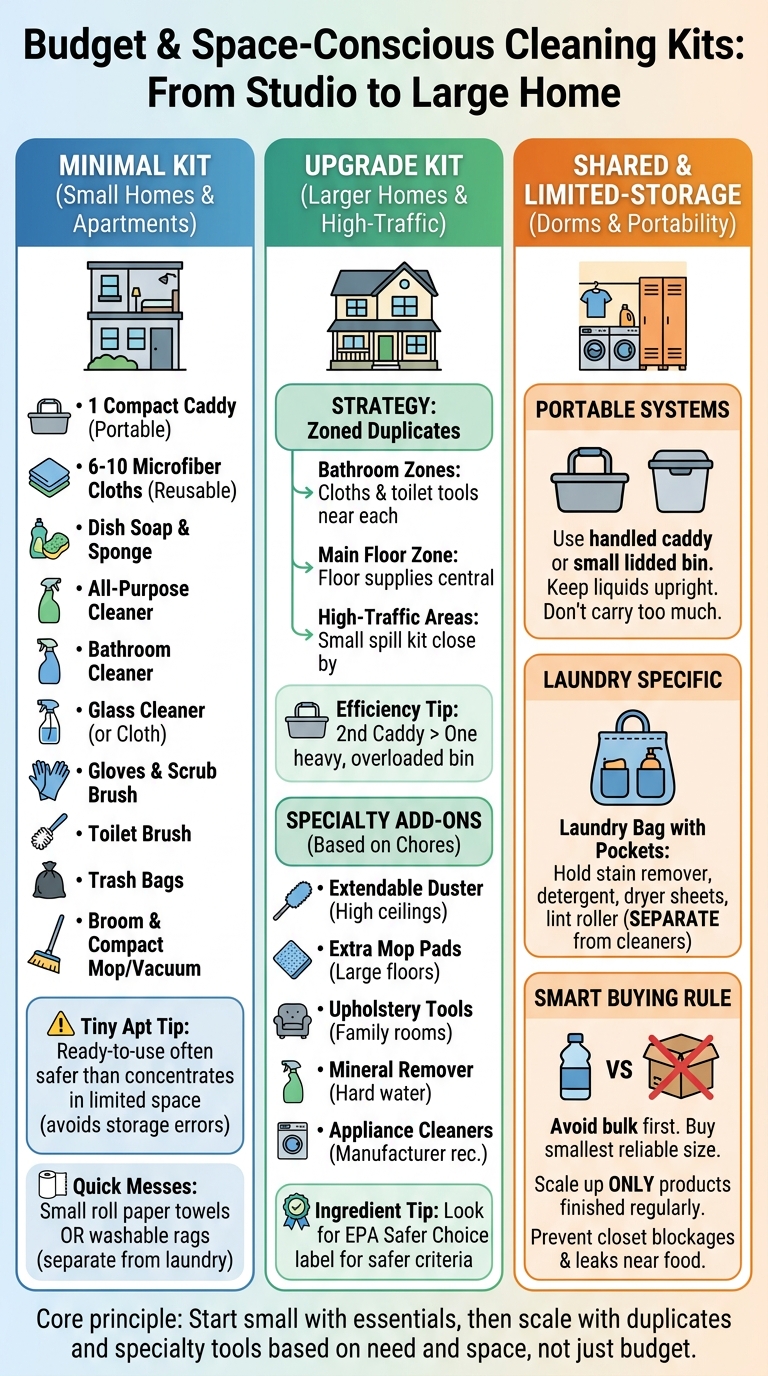
A good beginner cleaning supplies list should work for a studio apartment as well as a larger home. The difference is how many duplicates, refills, and specialty tools make sense.
Minimal kit for small homes
A small home can usually start with one compact caddy, six to ten microfiber cloths, dish soap, all-purpose cleaner, bathroom cleaner, glass cloth or glass cleaner, gloves, a sponge, one scrub brush, a toilet brush, trash bags, a broom, and a compact mop or vacuum suited to the flooring. Add a small roll of paper towels or washable rags for messes you do not want in the laundry.
Choose concentrates only if you have space to store them safely and you will actually measure them correctly. Tiny apartments often do better with fewer ready-to-use products because storage errors are easier when everything shares one closet.
Upgrade kit for larger homes
Larger homes benefit from duplicates in the right places. Keep bathroom cloths and toilet tools near each bathroom, floor supplies near the main floor zone, and a small spill kit close to high-traffic areas. A second caddy may be more useful than one overloaded bin that becomes too heavy to carry.
Add upgrades based on repeated chores: extendable duster for high ceilings, extra mop pads for large floors, upholstery tools for family rooms, mineral remover for hard water, and appliance cleaners recommended by the manufacturer. The EPA Safer Choice program can also help shoppers identify products that meet its safer-ingredient criteria when comparing options Safer Choice cleaning product search.
Shared-laundry and limited-storage setups
Shared laundry rooms, dorms, and apartments need portable systems. Use a handled caddy or small lidded bin, keep liquids upright, and avoid carrying too many products at once. A laundry bag with pockets can hold stain remover, detergent, dryer sheets if you use them, and a small lint roller without mixing them with bathroom cleaners. A small-space kit works best when it supports the actual tasks in an apartment cleaning checklist.
When storage is limited, avoid bulk packs until you know your pace. A bargain is not helpful if it blocks the closet, leaks, expires, or forces you to store cleaning chemicals near food. Buy the smallest reliable size first, then scale up only for products you finish regularly.
Common Buying Mistakes
Most cleaning supply mistakes are easy to avoid once you slow down before buying. Look at your surfaces, mess patterns, storage space, and label needs before choosing another bottle.
Buying duplicates before knowing your surfaces
Duplicate sprays are common because many labels promise similar results. Before buying a new cleaner, check whether it solves a different problem than what you already own. A bathroom cleaner, glass cleaner, degreaser, and all-purpose cleaner may cover more ground than five versions of the same everyday spray.
Walk through your home and write down special surfaces first: stone counters, stainless steel, sealed wood, laminate, vinyl plank, tile, painted cabinets, glass shower doors, upholstery, carpet, and appliance screens. This list tells you where a general cleaner is fine and where a specialty product or gentler method is safer.
Using one product on every material
One-product cleaning sounds simple, but it can cause problems on surfaces that need specific care. Acidic cleaners may dull stone. Abrasive powders may scratch glossy finishes. Too much water can damage wood or laminate. Strong degreasers may affect paint or coatings if left too long.
Read the label every time you move to a new material. Test a hidden area when the surface is valuable, old, porous, glossy, painted, or unfamiliar. Stop if the cloth picks up color from the surface, the finish turns cloudy, or the material feels different after a minute.
Ignoring manuals, labels, and care tags
Appliance manuals, flooring care guides, furniture tags, and cleaner labels are not exciting, but they prevent costly mistakes. Before using steam, bleach, vinegar, abrasive pads, or soaking methods, check whether the surface maker allows it. This is especially important for newer appliances, sealed floors, stone, leather, wool, and performance fabrics.
Keep a small folder or phone album with care notes for your home. Photograph the cleaner label, flooring care instructions, appliance model number, and furniture tag. When a mess happens, you can check the correct care path quickly instead of guessing under pressure.
FAQ
These quick answers cover the most common decisions people face when buying a first cleaning kit or simplifying a supply closet.
What cleaning supplies should every home have?
Every home should have microfiber cloths, non-scratch sponges, a scrub brush, gloves, trash bags, dish soap, all-purpose cleaner, bathroom cleaner, a floor tool, a vacuum or broom, a mop suited to the flooring, and a toilet brush. Most homes also benefit from a small caddy, glass cleaner or glass cloth, baking soda, and a disinfectant reserved for situations that actually call for it.
Do I need disinfectant for everyday cleaning?
No, not for every everyday mess. Routine cleaning with soap, detergent, or a suitable cleaner handles many household surfaces. Disinfectant is more useful when someone is sick, after certain bodily fluid messes, or on high-touch areas that need extra attention. Clean visible dirt first, follow the product contact time, and do not treat disinfectant as a substitute for regular wiping.
Which supplies are most useful around pets and kids?
Useful supplies include washable cloths, gloves, a quick spill kit, enzyme cleaner for compatible pet messes, a handheld vacuum or lint tool, trash bags, and secure storage. Choose products with clear labels and keep them out of reach. Around pets and kids, residue, wet floors, open buckets, loose pods, and strong scents matter as much as the cleaner itself.
What cleaning supplies should beginners skip at first?
Beginners can usually skip large bulk packs, duplicate sprays, harsh specialty chemicals, steam tools, carpet machines, polishing compounds, and single-purpose gadgets until they understand their surfaces and habits. Start with a basic cleaning kit, notice which chores repeat, then upgrade one problem at a time.
Final Thoughts
The best cleaning supplies list is the one you can store safely, understand quickly, and use without second-guessing every label. Begin with essential cleaning supplies for wiping, floors, bathrooms, kitchens, spills, and safe handling. Add deep cleaning supplies only when a task repeats often enough to earn space in your home. Before each new product or tool becomes permanent, check the surface, read the label, test when needed, and make sure it solves a real problem rather than adding more clutter to the closet.

Ethan Carter is the Founder & Editor of HomeCleanSecrets. Based in the United States, he has 5 years of experience creating practical home cleaning, laundry care, stain removal, decluttering, and home organization content. His goal is to help everyday households clean smarter and build simple routines that are easier to maintain.
Read more about Ethan Carter on his author page: https://homecleansecrets.com/ethan-carter/