
Learning how to organize garden tools is mostly about creating safe reach, clean storage, and a routine you can actually keep after yard work. Rakes, shovels, hoses, pruners, gloves, and battery tools all behave differently in storage. Long handles fall when they are crowded, sharp blades get buried in bins, wet gloves mildew in sealed boxes, and small hand tools disappear behind bulky equipment.
A good garden tool setup does not need a magazine-perfect wall. It needs clear groups, safe hanging points, breathable storage, and enough space to put tools back when they are dusty or damp. The best system also protects walking paths in the garage or shed so yard work does not turn into a tripping hazard before you even get outside.
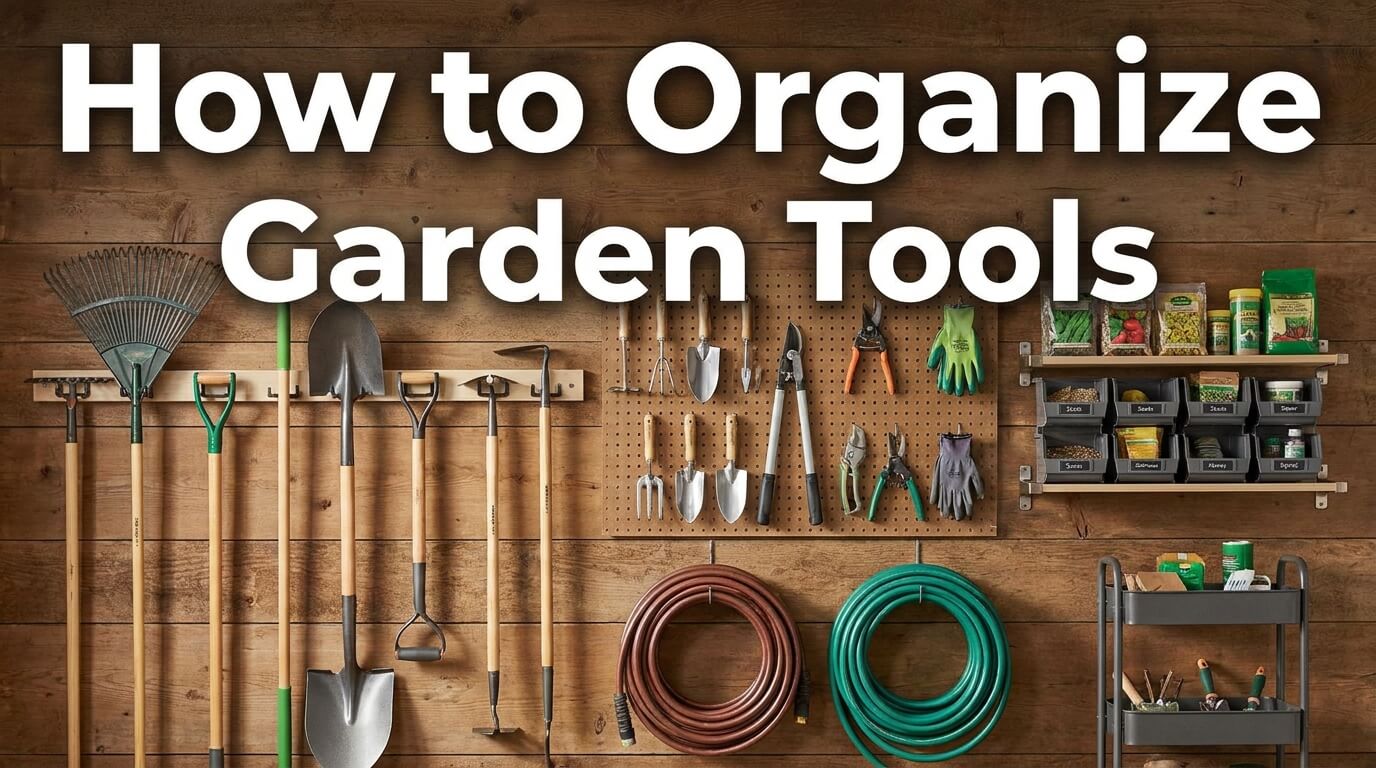
Quick Answer: The Best Garden Tool Organization System
Place this category within a broader garage organization and storage plan so the surrounding zones work together.
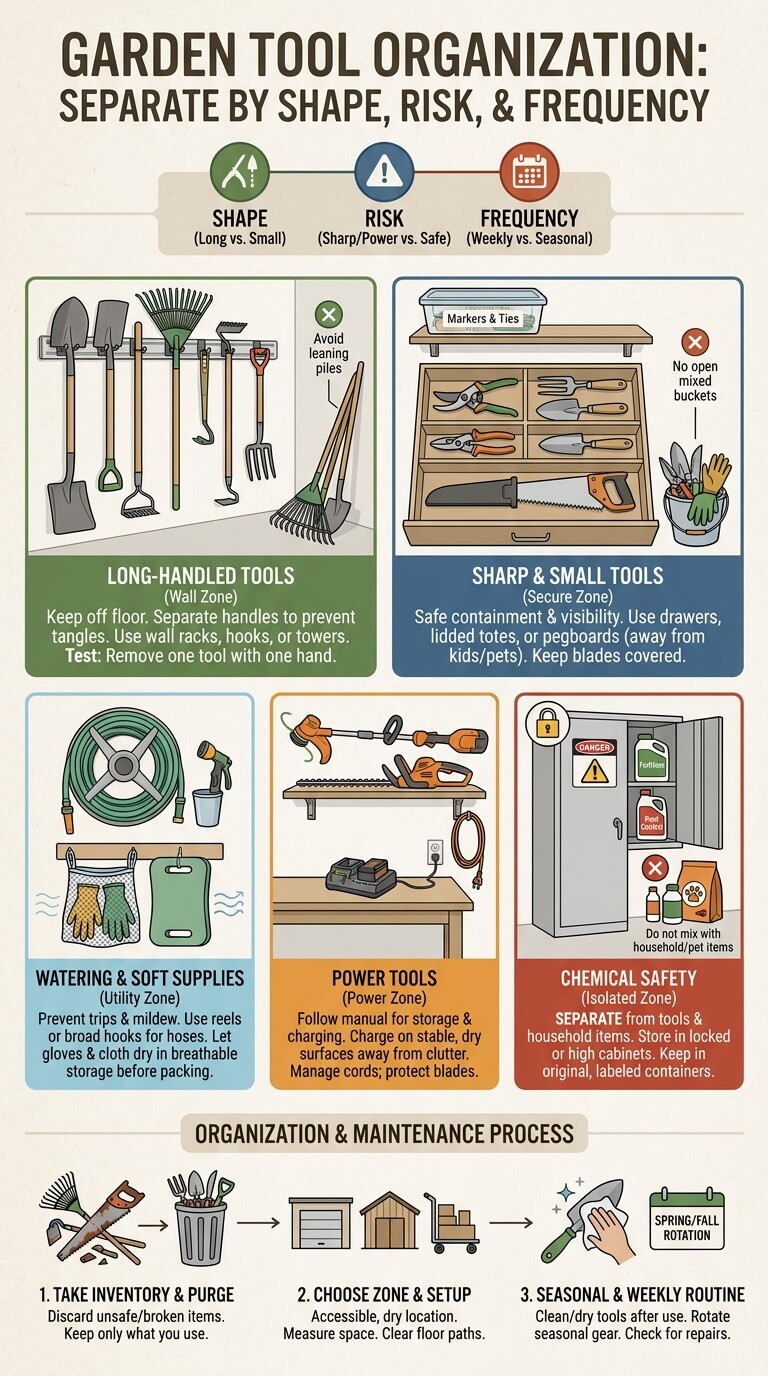
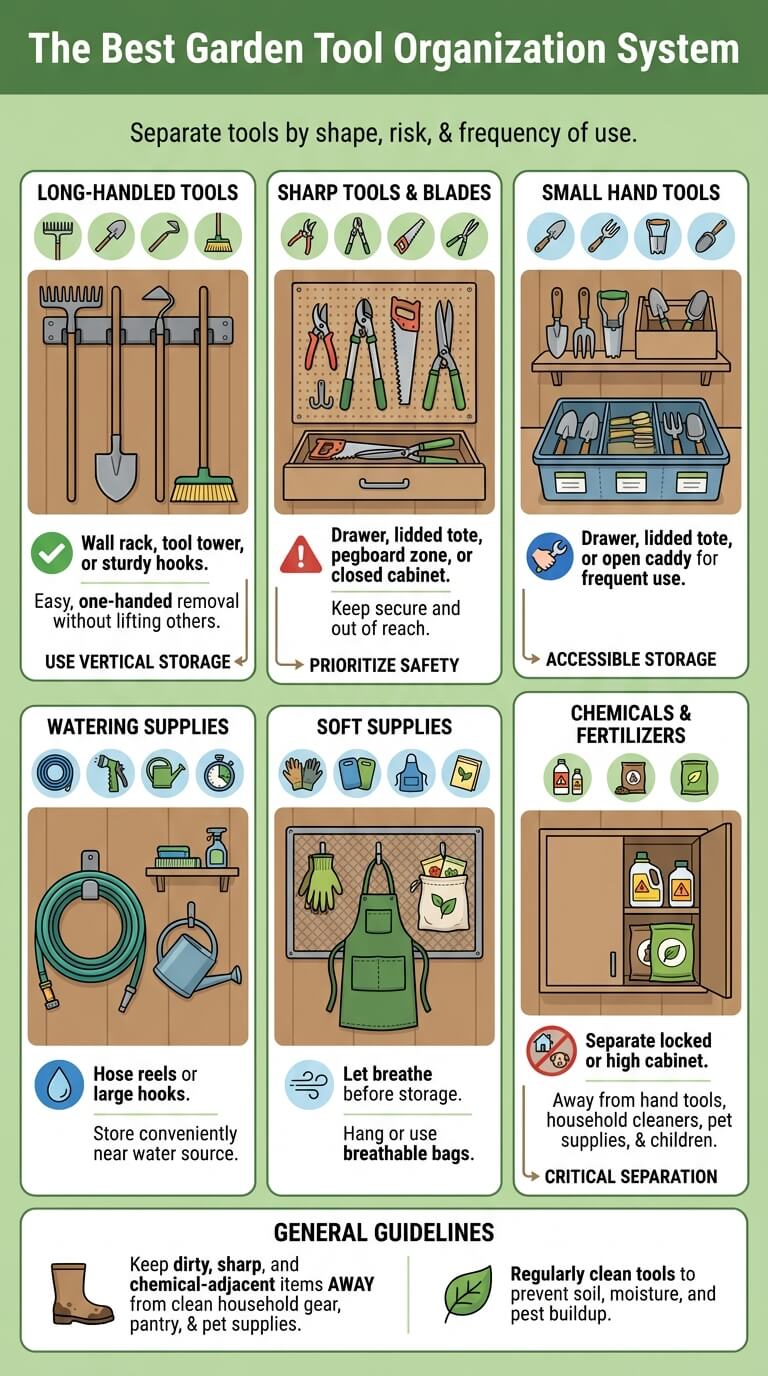
The best garden tool organization system separates tools by shape, risk, and frequency of use. Keep long-handled tools on a wall rack, tool tower, or sturdy hooks. Keep sharp and small tools in a drawer, lidded tote, pegboard zone, or closed cabinet. Keep hoses on reels or large hooks. Let gloves and cloth items breathe before they go into storage. Keep chemicals and fertilizers away from hand tools, household cleaners, pet supplies, and children.
Separate long tools, sharp tools, hand tools, hoses, and supplies
Start with five basic groups: long-handled tools, sharp cutting tools, small hand tools, watering supplies, and soft supplies. A rake needs a different home from a pair of pruning shears. A hose needs a different home from seed packets or twine. When these items share one crowded corner, the longest and sharpest pieces always win, and everything else becomes hard to reach.
- Long-handled tools include rakes, shovels, hoes, edgers, brooms, and cultivators.
- Sharp tools include pruners, loppers, hand saws, hedge shears, axes, and blades.
- Small hand tools include trowels, hand forks, bulb planters, soil scoops, and markers.
- Watering supplies include hoses, nozzles, watering cans, hose washers, and timers.
- Soft supplies include gloves, kneeling pads, aprons, seed packets, ties, and cloth bags.
Use vertical storage for long handles
Long-handled tools usually work best off the floor. Wall rails, individual hooks, slotted racks, and standing towers all solve the same problem: they keep handles separated so the tool you grab does not pull three others down with it. The test is simple. You should be able to remove one rake or shovel with one hand, without lifting another tool first.
Keep dirty, sharp, and chemical-adjacent items away from household gear
Garden tools bring in soil, moisture, fertilizer residue, plant debris, and sometimes pests. Do not store them against clean household overflow, pantry backups, pet bedding, sports helmets, or paper decorations. If garden chemicals are stored in the same garage or shed, keep them in a separate locked or high cabinet, not in the same bin as gloves, trowels, or watering supplies. EPA guidance on storing pesticides safely is a useful reference before deciding where labeled yard products belong.
Take Inventory Before Choosing Storage

Inventory matters because garden tools often look like one category until you pull them apart. A pile may include tools you use every week, tools you forgot you owned, broken items, dull blades, duplicate gloves, empty seed packets, leaky nozzles, and mystery bottles. Storage should be chosen after you know what is staying.
Long-handled tools
Lay long-handled tools in one line. Check each handle for cracks, splinters, loose heads, and bent metal. Keep the tools you use for your real yard, not the yard you imagine having. A small patio garden may need a broom, hand trowel, pruners, and hose nozzle, but not five full-size digging tools. A larger yard may need several long tools, but they still need separate slots.
Hand tools and small accessories
Small garden tools need containment, not just visibility. Trowels, tags, ties, plant clips, gloves, twine, dibbers, and soil scoops scatter quickly when they are tossed on open shelves. Use a drawer, shallow bin, divided tote, wall pocket, or handled caddy. A good test is whether you can carry the whole small-tool setup to a potting bench, raised bed, or balcony without making multiple trips.
Hoses, watering items, gloves, and kneeling pads
Watering items are bulky and often damp. A hose left on the floor creates a trip loop, traps grit, and gets crushed by bikes, bins, or car tires. Use a hose reel, wall hook, hose pot, or broad hanger that does not kink the hose sharply. Keep nozzles and small washers in a nearby cup or small lidded container.
Gloves and kneeling pads should dry before storage. Breathable baskets, mesh bags, open cubbies, or ventilated bins are better than sealed plastic when fabric is still damp. If gloves smell musty, feel stiff, or have holes, decide whether they should be washed, replaced, or kept only for rough jobs.
Battery or fuel-powered yard tools
String trimmers, hedge trimmers, blowers, chainsaws, edgers, and small mowers need more care than a rake. Read the manual before deciding where to store batteries, chargers, fuel, oil, blades, and cords. Do not hang a tool by a part that the manufacturer did not design to carry weight. Do not block vents, switches, guards, or battery release buttons.
Battery charging should happen on a stable surface away from flammable clutter, water, direct sun, and heavy traffic. UL Solutions discusses lithium-ion battery safety concerns, which is worth keeping in mind when you choose a charging shelf for cordless yard tools. Stop using a battery or charger if it is swollen, cracked, unusually hot, leaking, or giving off an odd smell.
Broken, rusty, duplicate, or unsafe items
Garden tool organizing gets much easier when unsafe items leave the system. Set aside broken handles, bent rake heads, rusty blades, duplicate trowels, cracked watering cans, leaking sprayers, and cords that no longer work. Do not store a dangerous item just because it might be repaired someday. Make a small repair pile only if you will actually sharpen, tighten, clean, oil, or replace the part.
Rust is not always a reason to throw a tool away, but deep corrosion, loose heads, split handles, or missing guards need attention before storage. Clean tools before you hang them. The University of Minnesota Extension explains how to clean and disinfect gardening tools, including removing visible dirt and letting tools dry completely.
Choose the Right Garden Tool Zone
If the surrounding space still lacks structure, take time to organize the garage around clear zones before fine-tuning this area.
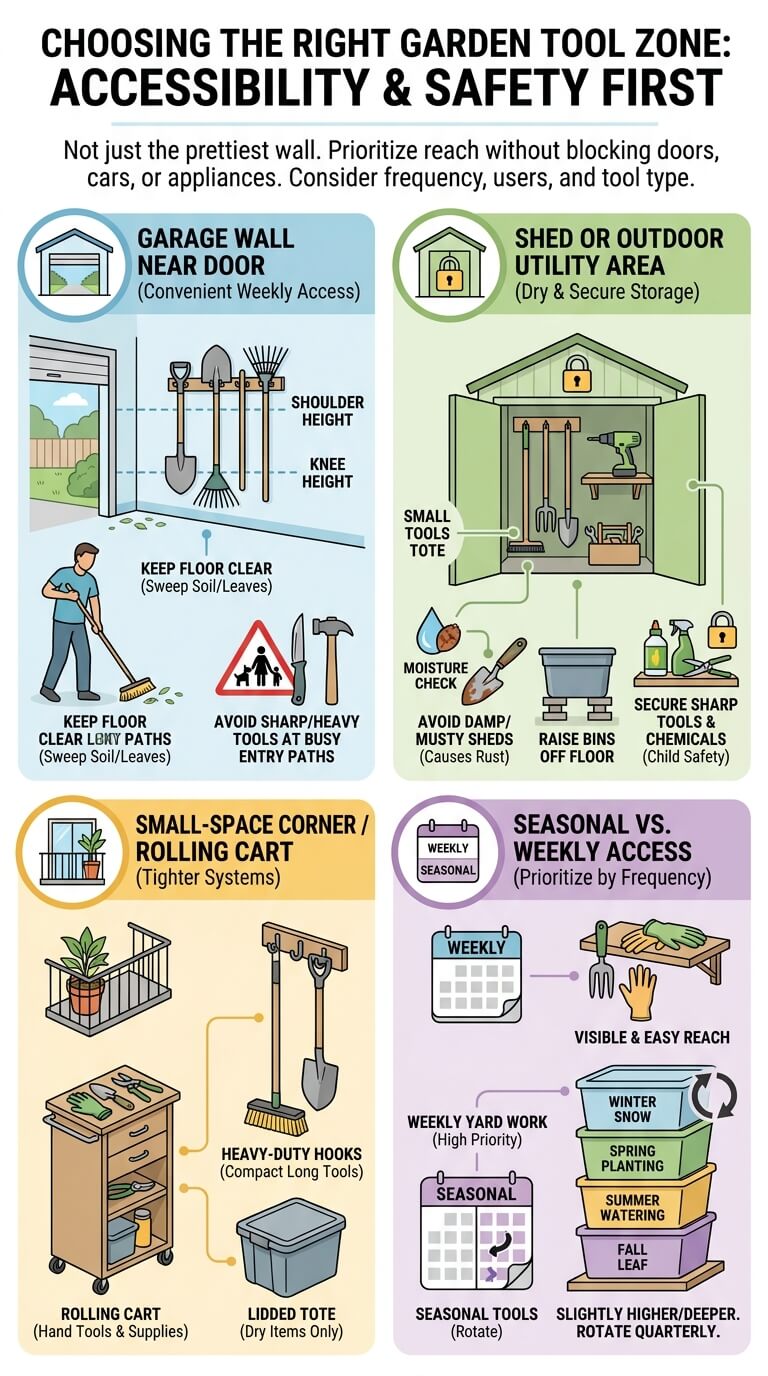
The right zone depends on how you enter the yard, how often you garden, how many people share the garage, and whether tools are clean, sharp, heavy, or powered. The best zone is not always the prettiest wall. It is the place where tools can be reached without blocking doors, cars, laundry machines, freezers, trash cans, or kids’ gear.
Garage wall near the door
A garage wall near the yard door is convenient for weekly tools. Place the most-used items between knee and shoulder height. Keep the floor clear under the rack so you can sweep soil and leaves. Avoid placing sharp or heavy tools directly beside the house entry if children, pets, or guests pass through that path every day.
Shed or outdoor utility area
A shed works well when tools are mostly used outside and the shed stays dry, ventilated, and secure. Store long tools on one wall, powered tools on a stable shelf or rack, and small tools in a tote near the entrance. Avoid stacking tools against the back wall where you have to climb over equipment to reach them.
Check for moisture before storing metal tools long term. A shed that smells musty, has wet flooring, or leaves condensation on metal can rust tools quickly. Raise bins off the floor if water enters during storms. Keep sharp tools and chemicals out of reach if children can enter the shed.
Small-space corner or rolling cart
Small garages, carports, patios, and balconies need tighter systems. A narrow rolling cart can hold gloves, a trowel, hand pruners, twine, and small watering supplies. A few heavy-duty hooks can hold a broom, rake, or compact shovel. A lidded tote can hold soil scoops and plant supports, as long as tools are dry before they go inside.
Seasonal access versus weekly yard work access
To protect fragile and rarely used items, rotate seasonal garage items with labels, moisture protection, and a rotation plan.
Do not give every tool the same reach priority. Weekly tools should be visible and easy. Seasonal tools can be slightly higher, deeper, or grouped in a labeled bin. Winter snow tools, spring planting tools, summer watering supplies, and fall leaf tools may rotate through the best spots.
Organize Long-Handled Tools
Use hooks, shelves, and simple return rules to keep long-handled tools off the garage floor.

Long-handled tools cause the most visible clutter because they lean, slide, and tangle. The safer solution is to give each handle a defined place. The tool head should not scrape the wall, block a walking lane, or hang where it can catch clothing.
Wall hooks and rail systems
Wall hooks and rails are best when you have solid mounting points and enough wall length. Put heavier tools on hooks rated for their weight, and follow the hardware instructions for studs, anchors, masonry, or track systems. If the wall is unfinished, mark stud locations before installing anything. If the garage wall is shared with plumbing, electrical, or finished living space, be careful before drilling.
Upright bins and tool towers
Upright bins and tool towers are useful when you rent, cannot drill, or need a movable setup. Choose a broad, stable base that does not tip when one heavy tool is removed. Do not overload one side with shovels or metal tools. Put the heaviest handles evenly around the tower.
Spacing handles to prevent tangles and falling tools
Spacing matters more than the number of hooks. Leave enough room for each tool head and handle. Rakes need space for wide tines. Hoes and cultivators need space so their heads do not hook onto neighboring tools. Brooms need space so bristles are not bent sideways.
Organize Sharp and Small Garden Tools
Sharp and small garden tools need a different strategy from long handles. The priority is safe containment with quick visibility. You want to find the pruners without digging through a box of metal points, but you also do not want blades exposed where a child, pet, or visitor can grab them.
Pruners, trowels, shears, and saws
Clean, close, and protect cutting tools before storage. Lock pruners if they have a latch. Use blade covers for saws and shears when available. Store small sharp tools in a drawer, lidded container, high cabinet, or pegboard section that is not in a busy walkway. Do not toss pruners into a bucket with gloves and seed packets.
Lidded bins, drawers, pegboards, and magnetic strips only when appropriate
Lidded bins protect small accessories from dust, but they can trap moisture. Use them for dry seed markers, ties, labels, spare nozzles, and packaged parts. Drawers work well for sharp hand tools because they hide blades and keep items flat. Pegboards work well when adults use the space and the wall is away from door swings.
Child, pet, and visitor access concerns
Think about who enters the garage when you are not gardening. Children may pull on bright handles. Pets may knock over soft baskets. Visitors may brush against hanging tools while carrying bags. Place sharp tools above casual reach or inside a closed cabinet. Put the heaviest tools low enough that adults do not have to lift them over their heads.
Tall shelves and freestanding racks should not wobble. The Anchor It safety campaign explains tip-over risks and why securing furniture and storage pieces matters in homes where children may be present. A garden zone with heavy tools deserves the same caution as any other storage area.
Store Hoses, Gloves, and Soft Supplies
Watering and soft supplies look harmless, but they create clutter quickly because they do not stack neatly. The main goals are to prevent tripping, stop mildew, and keep small accessories near the place where they are used.
Hose reels and hooks
Use a reel, wall hook, or hose pot that supports the hose without tight bends. Drain the hose before storing it for a long period, especially before freezing weather. Remove nozzles if they leak or if the hose will be stored for the season. Keep spare washers, connectors, and nozzles in a small labeled cup near the hose, not loose on a shelf.
Breathable glove and cloth storage
Gloves, towels, aprons, and kneeling pads should dry before they go into a bin. Use mesh bags, wire baskets, open cubbies, or a small drying hook near the garden zone. Once dry, gloves can move into a labeled basket by type: thin planting gloves, heavy work gloves, and waterproof gloves.
Mud and moisture control before putting items away
A fast cleanup habit protects both the tools and the storage area. Knock off clumps of soil outdoors. Wipe wet handles before hanging them. Let muddy tools dry on a tray or mat before placing them in a closed cabinet. Do not store wet metal in sealed plastic unless the item is meant to be stored that way.
Handle Power Garden Tools Carefully

Powered yard tools need storage that protects blades, batteries, cords, fuel, and people. Treat each tool as equipment, not as another random item on the garage wall. Read the manual for storage position, battery instructions, lubrication, blade covers, and fuel guidance.
Battery charging and storage limits
Use the charger that belongs to the tool system unless the manual says another charger is compatible. Charge batteries on a stable, dry, open surface. Do not bury chargers under gloves, towels, cardboard, or plastic bins. Keep batteries away from water, extreme heat, and direct sun. Stop and replace or service equipment if a battery case is cracked, swollen, leaking, or unusually hot.
Fuel, oil, and manual checks
Fuel-powered equipment brings additional limits. Keep fuel, oil, and oily rags away from ignition sources and living areas, and follow local rules for storage and disposal. Keep containers closed, labeled, and away from garden gloves, paper products, and household cleaners. Do not store fuel in a random bottle or unlabeled container.
Check the manual before storing equipment for the season. Mowers, trimmers, tillers, and chainsaws may have specific steps for fuel, blades, guards, filters, or spark plugs. The University of Minnesota Extension notes in its mower safety guidance that operators should read the manual for specific maintenance instructions, and that same habit is useful for other powered yard equipment.
Cord management and blade protection
Cords should be looped loosely and hung where they will not kink, pinch, or drag across the floor. Keep outdoor extension cords separate from indoor cords if you use both. Check cords for cuts, crushed spots, exposed wiring, or damaged plugs before putting them back into storage.
Garden Tool Organization Checklist
Use a short checklist to keep the system working after the first setup. The goal is not to reorganize the whole zone every weekend. The goal is to catch the small problems that turn into a tangled corner.
Before-yard-work access check
- Can you grab the main tool without moving another item?
- Are sharp tools closed, covered, or stored safely?
- Is the hose off the floor and easy to uncoil?
- Are gloves dry and easy to find?
- Are batteries charged in a safe, clear place?
- Is the walking path clear from the door to the yard?
End-of-season reset
At the end of each heavy yard season, clean tools, remove broken items, rotate seasonal gear, and check what needs repair. Move leaf tools forward in fall, snow or winter items forward if needed, planting supplies forward in spring, and watering items forward in summer. Put off-season items higher or farther back, but keep heavy items low.
Safety and floor-clear check
Look at the floor below the garden zone. Nothing sharp should point into the walking path. No hose should cross the garage entrance. No tool head should lean where a car door can hit it. No heavy rack should wobble. No product should be leaking, unlabeled, or mixed with unrelated household items.
Common Mistakes
Most garden tool storage problems come from small decisions that seem harmless at the time. Fixing these mistakes usually takes less effort than living with them for another season.
Leaning sharp tools in corners
Leaning tools in a corner feels quick, but it is unstable. Rakes slide, shovel blades twist, and sharp edges can land at ankle or hand height. Use a rack, hooks, tower, or closed storage area instead. If a corner is the only available spot, use a stable tool tower with separated slots rather than a loose pile.
Storing wet tools in sealed bins
Wet tools in sealed bins invite rust, odor, mildew, and damaged handles. Let tools dry first. If soil is stuck to metal, remove the visible dirt before storing. Use open drying time, a tray, or a temporary hook so damp items are not sealed away immediately after yard work.
Mixing garden chemicals with hand tools or household cleaners
Because labels, leaks, temperature, and access matter, keep cleaning supplies separate from garden tools in a controlled area.
Garden chemicals, fertilizers, pest products, and sprayers should not share a loose bin with gloves, hand tools, towels, or household cleaners. Keep labeled products upright, closed, and separate. If a container is leaking, unreadable, or no longer needed, follow the label and local disposal guidance rather than hiding it behind other supplies.
Buying racks before measuring handles and wall space
A rack that looks perfect online may not fit your actual tools. Measure handle length, head width, wall height, car clearance, door swing, and the distance to garage door tracks. Also count how many tools truly need prime storage. Buying storage first often creates unused hooks beside the same old corner pile.
FAQ
These answers focus on the everyday storage problems that make garden tools hard to reach, unsafe, or messy in a garage or shed.
What is the best way to organize long-handled garden tools?
The best way is to give each long-handled tool its own slot, hook, or rail position. Wall hooks and rail systems work well when you can mount them securely. A standing tool tower works when you rent or cannot drill. Leave enough spacing so wide rake heads, shovel blades, and hoe heads do not catch each other when you remove one tool.
How do I store garden tools in a small garage?
Use vertical wall space, a narrow rolling cart, or a compact tool tower. Keep only the tools you actually use, and move seasonal tools out of prime reach when the season changes. Small garages need strict floor control, so avoid loose hose piles, leaning tools, and deep mixed bins that spill into the walking path.
Should garden tools be stored in a garage or shed?
Either can work if the space is dry, secure, and easy to access. A garage is convenient when it connects to the house or yard, but it may be crowded with cars, sports gear, cleaning products, and household storage. A shed keeps dirt closer to the yard, but it needs moisture control, ventilation, and safe access. Choose the location that keeps tools dry, reachable, and away from children, pets, and unrelated household items.
How do I keep garden tools from falling over?
Stop relying on a loose corner. Use wall hooks, a rail, a slotted rack, or a stable tool tower. Store heavy tools evenly, leave room between handles, and test the setup by removing each tool one at a time. If the rack wobbles, the hooks bend, or one tool pulls another down, adjust the system before adding more items.
Final Thoughts
Garden tool organization works best when it respects the shape and risk of each item. Long handles need separation. Sharp tools need safe containment. Gloves and hoses need moisture control. Powered tools need manual-based storage. Chemicals need their own protected area. When each group has a clear home, yard work starts faster, the garage floor stays safer, and tools are easier to maintain from season to season.
Start with one garden zone, not the entire garage. Remove unsafe items, clean the tools that are staying, choose storage after measuring, and test whether each item can be removed and returned easily. A system that survives real yard work is better than a perfect-looking wall that falls apart after the first muddy weekend.

Ethan Carter is the Founder & Editor of HomeCleanSecrets. Based in the United States, he has 5 years of experience creating practical home cleaning, laundry care, stain removal, decluttering, and home organization content. His goal is to help everyday households clean smarter and build simple routines that are easier to maintain.
Read more about Ethan Carter on his author page: https://homecleansecrets.com/ethan-carter/