
Toiletries are easy to lose control of because they are small, used at different points in the day, and scattered across drawers, cabinets, shower ledges, gym bags, travel pouches, and countertop corners. A bathroom can look full even when the real issue is not the room. The issue is that daily products, backups, samples, medicine-adjacent items, grooming tools, and travel sizes are all mixed together.

The most reliable way to organize toiletries is to sort them by routine before choosing containers. A bottle used every morning needs a different home than a backup toothpaste tube, a once-a-week hair mask, or a travel-size lotion you only pack before a trip. This guide focuses on personal-care product categories and storage decisions across the bathroom. It does not replace a full cabinet layout, drawer divider plan, shower-product system, or bathroom product decluttering checklist, but it will make those nearby systems easier to build later.
Quick Answer: Sort Toiletries by Routine First
Toiletry storage works better when you place toiletries within the full bathroom storage system instead of spreading them across every surface.
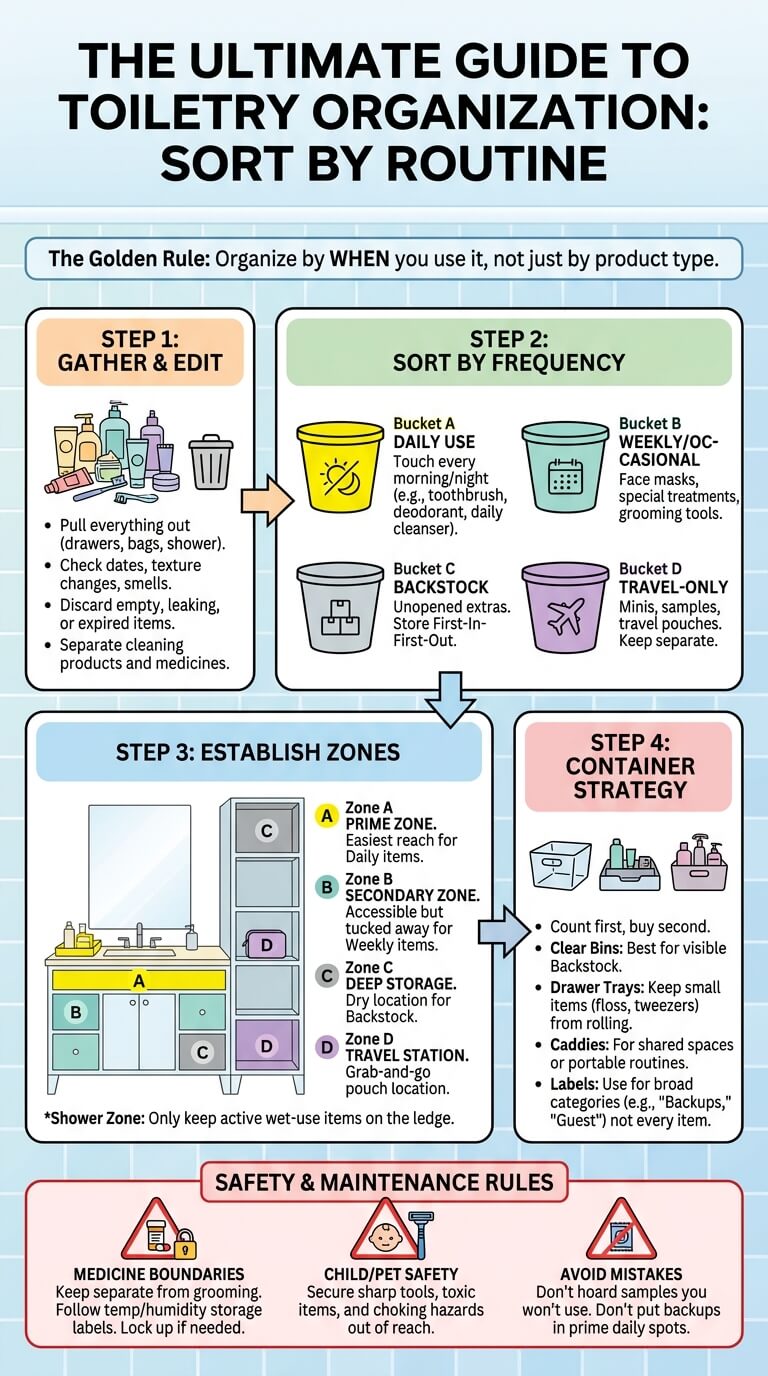
Start by grouping toiletries into daily use, weekly or occasional use, backstock, and travel-only. Then assign the closest storage to the products used most often and move everything else to a calmer secondary zone. This stops the common problem of a daily drawer being blocked by unopened backups, old samples, and products that are not part of the current routine.
Daily-use toiletries
Daily-use toiletries are the items you touch almost every morning, night, or shower day. Common examples include toothbrushes, toothpaste, deodorant, cleanser, moisturizer, sunscreen, lip balm, contact lens supplies, razors, shaving cream, and the hair products that are truly part of the regular routine. These items deserve the easiest reach because they shape the bathroom’s everyday traffic.
Weekly or occasional toiletries
Weekly and occasional toiletries include face masks, exfoliants, deep conditioners, specialty shaving supplies, nail-care items, hair-removal tools, whitening products, extra styling products, and grooming items used only before events. These products do not need prime countertop or top-drawer space. They need a clearly labeled or easy-to-see secondary area.
Backstock toiletries
Backstock means unopened or extra items kept for future use: spare toothpaste, unopened soap, replacement razors, extra deodorant, backup shampoo, cotton swabs, and sealed skincare. Backstock should not compete with daily products. It should have a limit, a dry location, and a simple first-in, first-out order so older products are used before newer ones.
Travel-only toiletries
Travel-only toiletries belong in a separate pouch, caddy, or small bin rather than in the daily bathroom mix. This includes travel-size bottles, mini toothpaste, spare contact cases, sample packets, compact brushes, refillable containers, and flight-size grooming items. Keeping them together makes packing easier and keeps tiny products from cluttering daily storage.
What Counts as Toiletries in This Guide
In this guide, toiletries are personal-care items used for washing, grooming, dental care, skincare, shaving, makeup, hair care, and travel routines. The category can touch medicine, cleaning, and beauty, but it should not blur those areas. Cleaning products need separate storage. Medicines need label-based handling. Cosmetics and grooming products need routine-based organization and expiration awareness.
Dental care
Dental toiletries include toothbrushes, toothpaste, floss, interdental brushes, mouthwash, retainers, night guards, denture supplies, whitening trays, and travel dental kits. The daily dental group should be near the sink, but not scattered directly across a wet counter. A cup, divided tray, drawer insert, or medicine-free cabinet shelf can keep it contained.
Skincare and makeup
Skincare and makeup can quickly overtake bathroom storage because many products look similar but serve different routines. Split them into daily skincare, occasional treatments, active makeup, backup makeup, and products you are testing. Keep daily skincare easy to reach and store lesser-used products upright so labels are visible.
FDA notes that cosmetic shelf life can vary and that manufacturers are responsible for determining shelf life, which makes your own date awareness useful when organizing cosmetics and expiration dating. Mark the month opened on products where that matters to you, especially mascara, eye products, and skincare that changes texture, smell, or color.
Hair care and styling products
Hair toiletries include shampoo, conditioner, leave-in products, heat protectant, gel, mousse, dry shampoo, oils, hair ties, clips, brushes, combs, and styling tools. Daily hair products should live where they are used, but not all hair products belong in the shower or on the counter. Keep wet-use bottles in the shower area only if they are actively used there.
Shaving and grooming
Shaving and grooming items include razors, blades, shaving cream, aftershave, trimmers, tweezers, nail clippers, files, scissors, beard products, and body-grooming tools. Keep sharp items protected and separated from loose cotton rounds, makeup, and children’s items. A small grooming tray or lidded bin prevents blades, caps, and tiny tools from spreading through drawers.
Medicine-adjacent items and what to handle carefully
Some items feel like toiletries but need extra care: thermometers, first-aid creams, contact lens solution, medicated skincare, over-the-counter medicines, prescription items, supplements, and antiseptic products. Keep these separate from ordinary grooming products so no one confuses a treatment item with a daily lotion or cosmetic.
Step 1: Gather Toiletries Without Creating a Mess
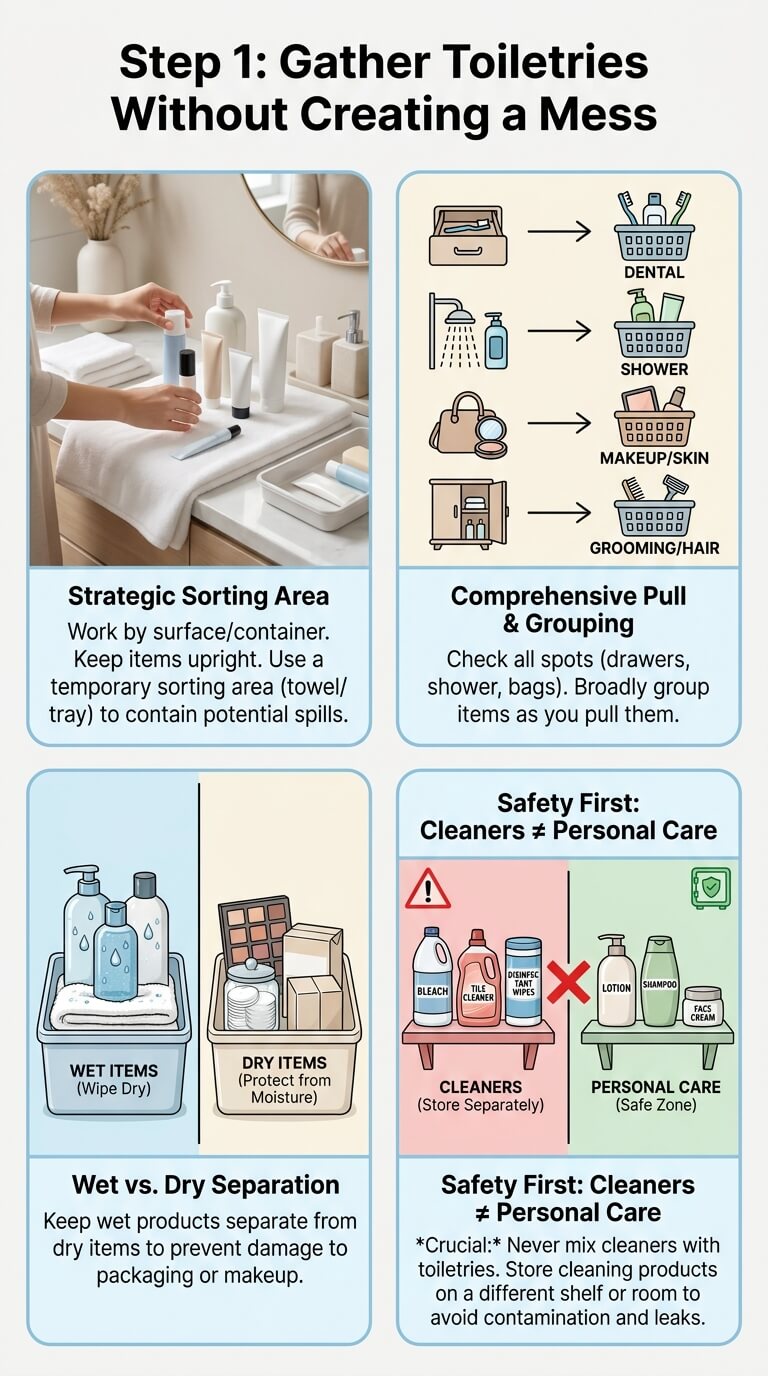
A full gather helps you see how many toiletries you actually own, but the process can become chaotic if every bottle, tube, and sample lands in one pile. Work by surface and container. Keep products upright when possible, protect dry items from wet ones, and create a temporary sorting area with a towel, tray, or washable surface.
Pull from drawers, cabinets, counters, shower, and bags
Collect toiletries from every place they hide: vanity drawers, under-sink bins, countertop trays, shower shelves, medicine cabinets, linen closets, gym bags, purses, suitcases, guest baskets, and travel pouches. Put them in broad groups as you pull them, such as dental, skincare, makeup, hair, grooming, shower, travel, and backups.
Keep wet products separate from dry products
Shower bottles, damp razors, wet caddies, and recently used wash items should not sit on top of makeup, cotton products, paper packaging, or travel pouches. Place wet items on a washable towel or in a separate bin until you can wipe the bottoms and decide where they belong.
Avoid mixing cleaners with personal-care products
Bathroom cleaners, disinfecting wipes, toilet products, drain products, and laundry chemicals do not belong in the same bin as toiletries. They may share a cabinet only if they are clearly separated, upright, capped, and not at risk of leaking onto personal-care products. In many homes, cleaners deserve a different shelf or a different room.
The American Cleaning Institute explains why product directions, cautions, storage instructions, and warnings on a cleaning product label matter. In practical storage terms, do not let a bottle of cleaner become just another bathroom bottle beside shampoo, lotion, or cotton pads.
Step 2: Edit Toiletries Before Organizing
Before grouping toiletries, declutter bathroom products before grouping toiletries so expired, duplicate, irritating, or unused items do not get organized back into the room.
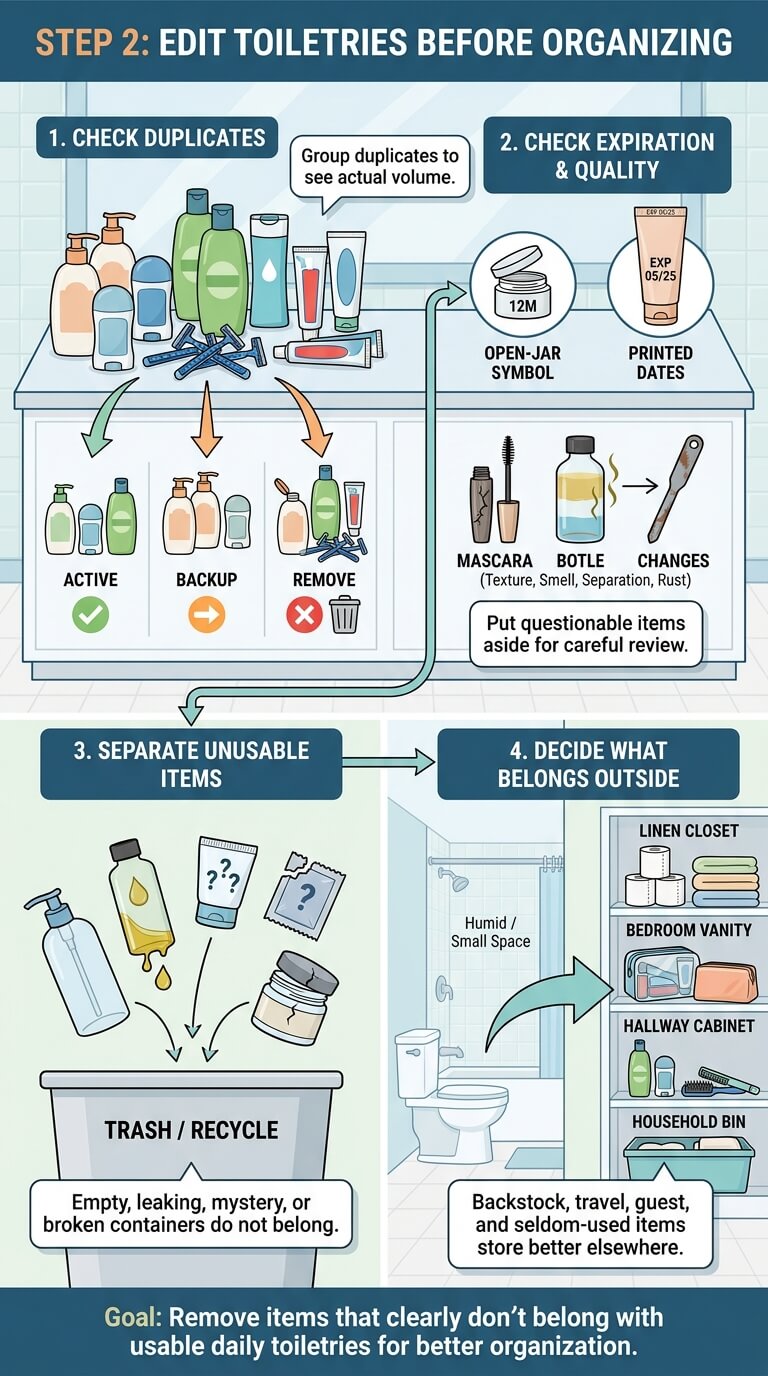
Organizing works better after a light edit. This is not the same as a full bathroom decluttering project. The goal here is to remove items that clearly should not be stored with the usable toiletry system, then organize what remains by routine and category.
Check duplicates
Group duplicates before choosing containers. You may find four open lotions, three deodorants, two shampoos, several mini toothpastes, and more razors than you expected. Decide which duplicate is active, which is backup, and which no longer belongs in the bathroom.
Check expiration and product changes
Look for printed expiration dates, open-jar symbols, texture changes, smell changes, separated formulas, dried mascara, rusty tools, and bottles that no longer spray or pump correctly. Put questionable cosmetics and toiletries aside so you can decide carefully instead of hiding them in a new bin.
Separate empty, leaking, or unlabeled items
Empty bottles, mystery travel containers, leaking oils, unmarked jars, sample packets with no readable label, and cracked caps should not return to organized storage. If the item cannot be identified or safely contained, it does not belong with daily toiletries.
Decide what belongs outside the bathroom
Some toiletries store better outside a small or humid bathroom. Backstock, travel kits, extra paper goods, spare hair tools, guest supplies, and seldom-used products may stay cleaner and easier to manage in a hallway cabinet, bedroom vanity, linen closet, or labeled household bin.
Step 3: Build Toiletry Zones by Use Frequency
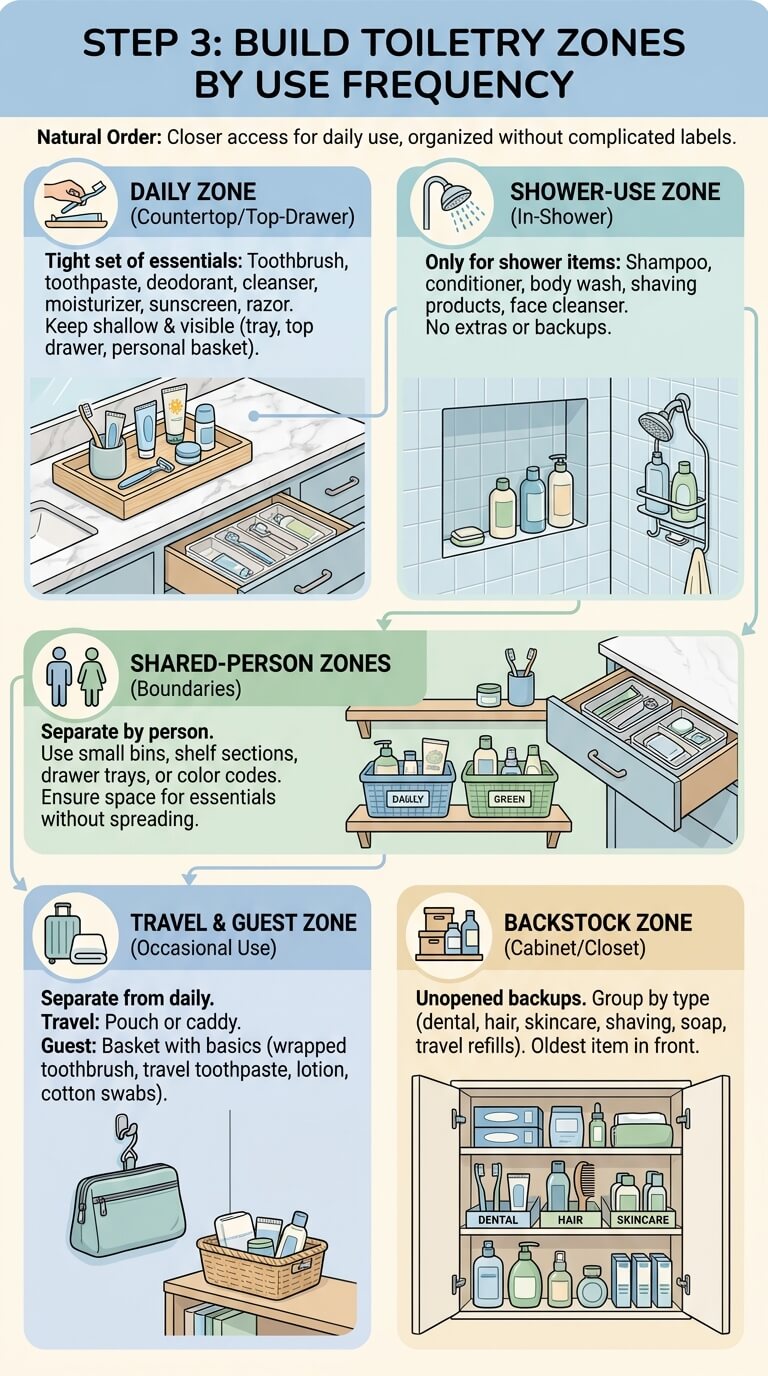
Once the edit is done, assign zones based on how often each item is used. This creates a natural order without needing a complicated label system. The closer the product is to daily use, the easier it should be to grab and return.
Countertop or top-drawer daily zone
The daily zone should hold a tight set of essentials: toothbrush, toothpaste, deodorant, cleanser, moisturizer, sunscreen, razor if used daily, and a few routine-specific items. Keep this area shallow and visible. A tray on the counter, a top drawer insert, or a small personal basket can work.
Cabinet backstock zone
Backups, refill products, and taller bottles usually work better when you store backup toiletries in bathroom cabinets rather than daily-use drawers.
Backstock works best in a cabinet, closet, or dry shelf where unopened items can stand upright and be counted at a glance. Group backups by type: dental, hair, skincare, shaving, soap, and travel refills. Put the oldest item toward the front so it is used first.
Shower-use zone
Products used only in the shower should separate shower products from dry toiletries so the wet zone stays simple and easier to maintain.
The shower zone is only for toiletries used in the shower or bath. Typical items are shampoo, conditioner, body wash, shaving products, face cleanser if used there, and a few personal tools. Extra bottles, old products, and backup shampoo do not need to live on the ledge.
Travel and guest zone
Travel toiletries and guest toiletries need their own small zone because they are used differently from daily products. Keep travel items in a pouch or caddy, and keep guest supplies in a simple basket with only items guests may actually need: wrapped toothbrushes, travel toothpaste, hand lotion, cotton swabs, and a spare razor if appropriate.
Shared-person zones
Shared bathrooms need personal boundaries. Separate toiletries by person using small bins, shelf sections, drawer trays, caddies, or color-coded labels. Each person should have enough space for daily essentials without spreading into everyone else’s area.
Step 4: Choose Containers for Toiletries
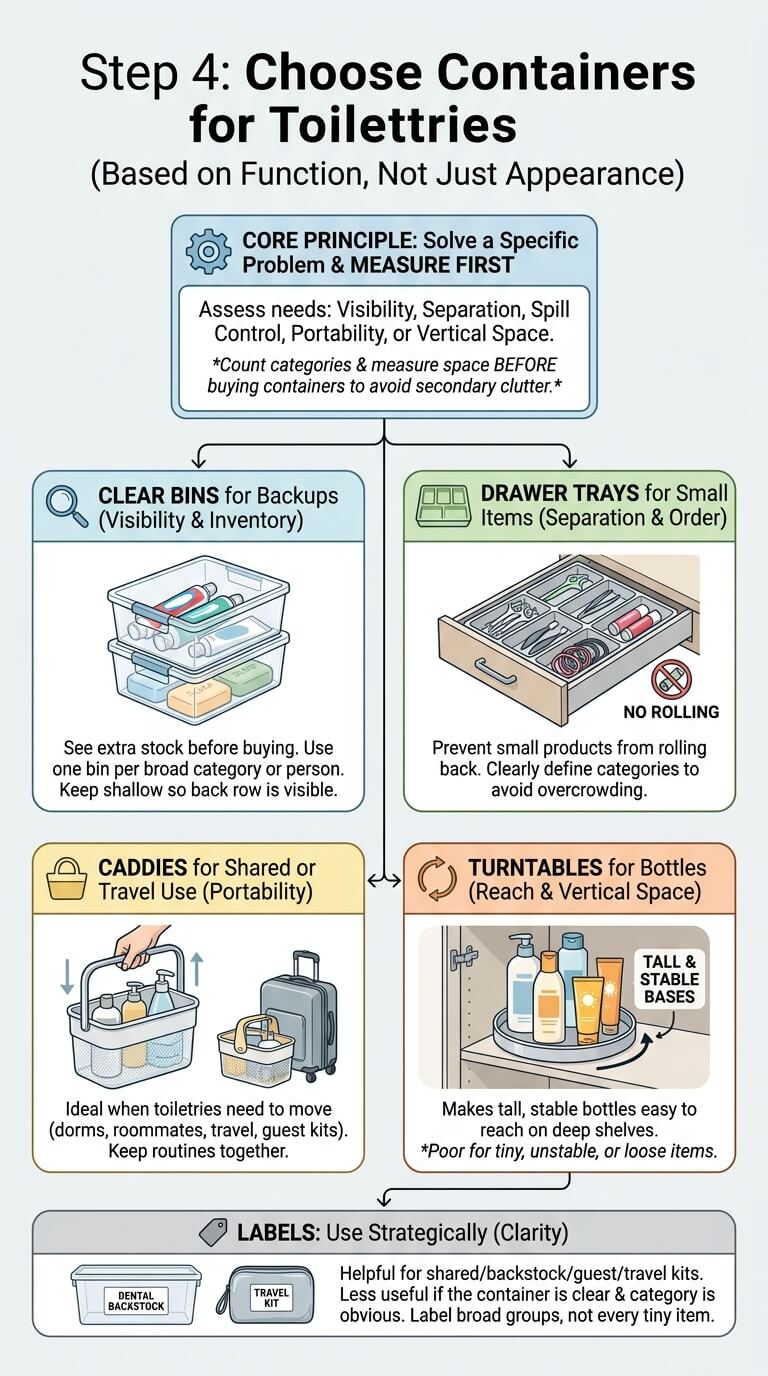
Containers should solve a specific problem: visibility, separation, spill control, portability, or vertical space. Buying organizers before counting products often creates a second clutter problem. Measure the space, count the categories, and choose containers that match how the toiletries are used.
Clear bins for backups
Clear bins help with backstock because you can see extra toothpaste, deodorant, soap, or unopened skincare before buying more. Use one bin per broad category or one bin per person. Keep bins shallow enough that the back row is visible.
Drawer trays for small items
Small daily toiletries are easier to use when you organize small toiletries inside drawers by morning routine, evening routine, dental care, or grooming.
Drawer trays work well for floss, lip balm, tweezers, nail tools, razors, hair ties, cotton pads, contact lens cases, and small makeup items. They prevent small products from rolling into the back of the drawer. They also make it clear when a drawer has too many categories.
Caddies for shared or travel use
Caddies are useful when toiletries need to move. A roommate can carry a shower caddy. A college student can keep a personal routine together. A guest kit can be lifted out before visitors arrive. A travel caddy can stay packed between trips.
Turntables for bottles
A turntable can make tall bottles easier to reach in a cabinet or on a deep shelf. It works best for hair products, lotions, sunscreen, and skincare bottles with stable bases. It works poorly for tiny tubes, loose razors, soft packets, or products that tip easily.
Labels only where they solve a real problem
Labels help in shared bathrooms, backstock bins, guest baskets, and travel kits. They are less useful when the container is already clear and the category is obvious. Label broad groups such as dental, hair, skincare, shaving, backups, travel, and guest instead of labeling every tiny product.
Toiletry Storage by Product Type
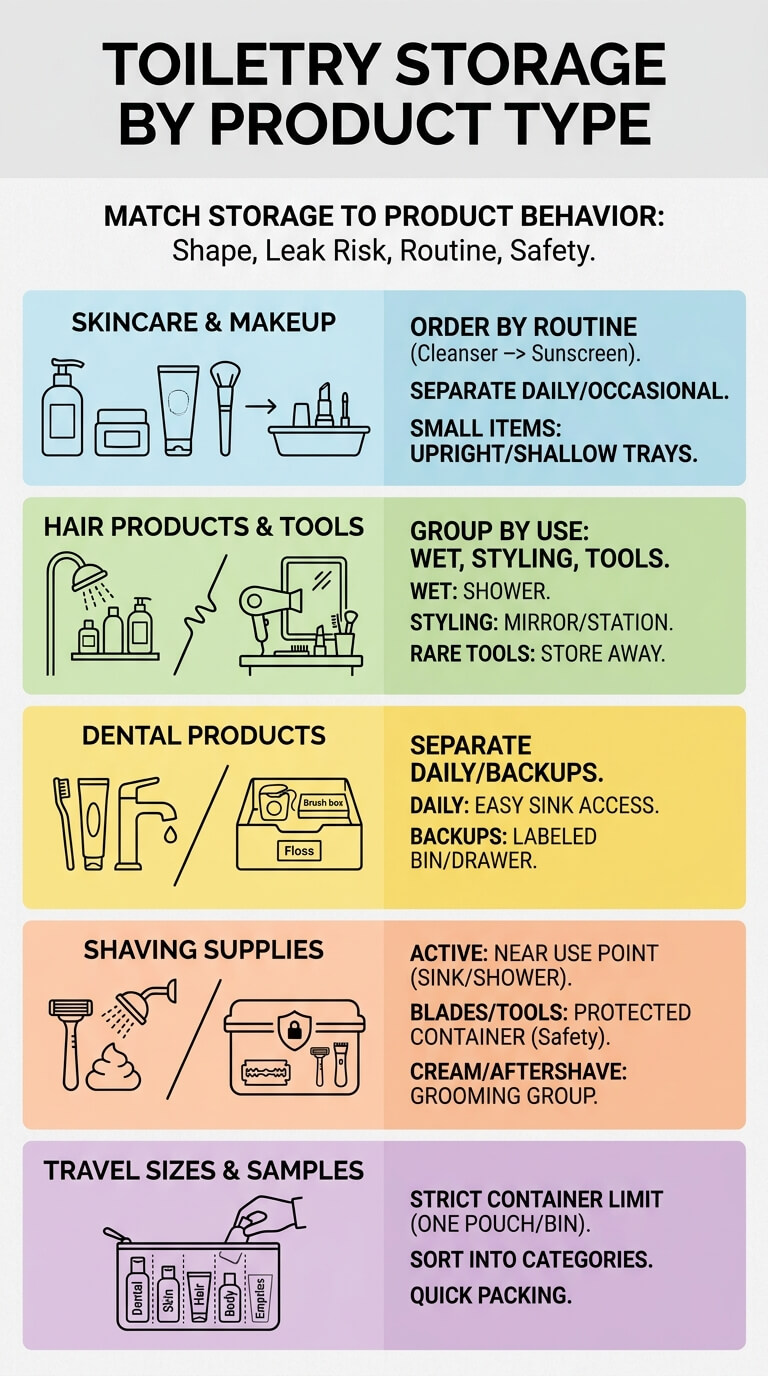
Product type matters because a razor, face serum, floss pack, hair spray, and travel-size lotion do not behave the same way in storage. Match the container and location to the shape, leak risk, routine timing, and safety limits of each category.
Skincare and makeup
Keep active skincare together in routine order if that helps you get ready: cleanser, toner if used, treatment, moisturizer, sunscreen. Makeup can be separated into daily face, eye, lip, and occasional items. Store small items upright or in shallow trays so they do not become a pile.
Hair products and tools
Group hair products by wet use, styling use, and tools. Keep shampoo and conditioner in the shower if used there. Keep styling creams, gels, sprays, brushes, combs, and clips near the mirror or hair station. Keep rarely used tools outside prime bathroom storage.
Dental products
Dental products work best when daily items and backups are separate. Toothbrushes and toothpaste need easy sink access. Extra toothpaste, brush heads, floss packs, and travel dental items can sit in a labeled backup bin or drawer section.
Shaving supplies
Keep active shaving supplies near the sink or shower, depending on where shaving happens. Store replacement blades, trimmer guards, and small grooming tools in a protected container away from children and loose hands. Shaving cream and aftershave can sit with grooming items rather than floating between hair and skincare bins.
Travel sizes and samples
Travel sizes and samples need a strict container limit. A small pouch, one clear bin, or one divided travel box is enough for most homes. Sort them into dental, skincare, hair, body, and empty refillable bottles so packing takes minutes instead of a long search.
Small Bathroom Toiletry Strategy
A small bathroom cannot hold every toiletry category at full size. It needs a lean daily routine, a controlled backup system, and a way to move portable items in and out without crowding the sink, shower, and toilet area.
Keep fewer daily products visible
Visible storage is expensive in a small bathroom. Keep only the daily essentials on the counter or open shelf. Move occasional products into a drawer, cabinet, or caddy. If the countertop tray is full, the answer is usually fewer visible products, not a larger tray.
Move backstock out of the bathroom
Backstock takes up space without helping the daily routine. In a small bathroom, store extra toothpaste, soap, shampoo, skincare, and grooming supplies outside the room if possible. A hallway cabinet, bedroom shelf, laundry area, or labeled bin can work better than an overfilled vanity.
Use one portable toiletry caddy
A portable caddy helps when storage is shared, the bathroom has no vanity, or daily products must move between rooms. Keep the caddy limited to current routine items. Return it to the same shelf, closet, or bedroom spot after use.
Avoid overcrowding the shower
Small showers become cluttered quickly when every person leaves full-size bottles inside. Keep one active set per person or one shared set if the household uses the same products. Move backups and occasional treatments out of the shower.
Toiletry Safety and Label Limits
Toiletry organization is mostly about access and order, but safety still matters. Personal-care products, medications, blades, hot tools, and cleaners can look like ordinary bathroom items until they are stored in the wrong place. Let labels, packaging, and product instructions set the limits.
Product labels, storage temperature, and humidity
Many products include storage instructions, warnings, or temperature limits. Read the label before moving products into a sunny window, hot cabinet, damp shower area, or sealed container. If the label says to keep a product tightly closed, dry, cool, away from children, or away from heat, build the storage around that instruction.
Medication boundaries
Medicines should not be casually mixed with toiletries. Keep prescription and over-the-counter medicines in their original packaging when possible, follow storage instructions, and separate them from cosmetics and grooming products. A bathroom cabinet may be convenient, but humidity and access concerns can make another location better for some homes.
When unused or expired medicine needs to leave the home, FDA guidance says a drug take-back option is the best choice for most unused or expired medicines; its unused medicine disposal guidance explains what to do when take-back is not readily available.
Child and pet access concerns
Children and pets change the storage plan. Razors, medicines, medicated creams, essential-oil products, aerosols, hair color, nail products, and small items that could be swallowed should not sit in easy reach. Move higher-risk items to locked, high, or supervised storage.
Poison Control advises keeping medicines and household products locked up and out of a child’s reach, with secure caps and child-resistant packaging as part of its poison prevention guidance for toddlers. A bathroom organizer should make safer storage easier, not more decorative at the cost of access control.
When to discard or ask a pharmacist or manufacturer
Discard or set aside toiletries that are leaking, unlabeled, moldy-looking, separated, rusty, dried out, contaminated, or clearly past a printed date. Ask before using products that changed texture, smell, or color, or products connected to a medical condition, prescription, allergy concern, eye area, or irritation.
Toiletry Organization Mistakes to Avoid
Most toiletry systems fail because they protect the container plan instead of the routine. Avoid the mistakes below and the bathroom will be easier to reset after busy mornings, shared use, travel, and shopping trips.
Saving every sample
Samples feel harmless because they are small, but they can fill drawers, travel bags, and guest baskets quickly. Keep only samples you would actually use soon or pack for a specific trip. Put them in one small container so the limit is visible.
Keeping backups in daily zones
Backups in the daily zone make routines slower. They block the current toothpaste, crowd the deodorant, hide the razor, and make the drawer look messy even after you organize it. Move unopened items to a backstock bin and leave only active products in the daily zone.
Organizing expired products
A neat row of expired or questionable products is still a storage problem. Check dates, labels, product changes, and whether the item is still part of your routine before giving it space. Organizers should not preserve products you already avoid using.
Buying containers before counting products
Containers should come after sorting. If you buy bins first, you may choose the wrong size, shape, material, or number. Count categories, measure the drawer or shelf, and decide which products truly stay in the bathroom before shopping for organizers.
FAQ
These answers focus on toiletry-specific decisions: routine sorting, bathroom storage limits, shared spaces, and travel sizes. They are meant to help you finish the system without drifting into a full bathroom decluttering or cabinet layout project.
What is the easiest way to organize toiletries?
The easiest way is to sort toiletries by routine first: daily use, occasional use, backstock, and travel-only. Put daily items in the easiest reach, move backups to a separate dry zone, keep travel items in one pouch or bin, and remove empty, leaking, unlabeled, or questionable products before choosing containers.
Should toiletries be stored in the bathroom?
Many daily toiletries can be stored in the bathroom when the space is dry enough, easy to access, and safe for the product. Backstock, travel items, medicines, heat-sensitive products, and rarely used tools may be better outside the bathroom, especially when the room is humid, tiny, or shared with children or pets.
How do I organize toiletries in a shared bathroom?
Give each person a small personal zone, such as a bin, drawer section, shelf area, or portable caddy. Keep shared backups in one separate area and label broad categories only where confusion happens. Avoid mixing sharp grooming tools, medicine-adjacent items, and children’s products in the same open container.
How do I organize travel-size toiletries?
Keep travel-size toiletries in one travel pouch or clear bin, grouped by dental, skincare, hair, body, and empty refillable bottles. Check the kit after each trip, refill what you actually use, discard leaking or unlabeled items, and stop saving samples that never get packed.
Final Thoughts
Toiletry organization works when the bathroom reflects your real routine instead of every product you own. Start with daily, occasional, backstock, and travel-only groups. Then place each group where it makes sense for access, moisture, safety, and the people using the room.
A strong toiletry system also has limits. Daily zones stay small, backups stay separate, travel items stay portable, and medicine-adjacent products follow label instructions rather than ordinary storage habits. Once those boundaries are clear, drawers, cabinets, shower caddies, and small bathroom storage all become easier to maintain without forcing every item into one crowded space.

Ethan Carter is the Founder & Editor of HomeCleanSecrets. Based in the United States, he has 5 years of experience creating practical home cleaning, laundry care, stain removal, decluttering, and home organization content. His goal is to help everyday households clean smarter and build simple routines that are easier to maintain.
Read more about Ethan Carter on his author page: https://homecleansecrets.com/ethan-carter/