
A shower can look messy even when the rest of the bathroom is organized. Bottles collect on ledges, razors sit in the wrong place, kids products mix with adult products, and backups slowly move into the wet zone because they seem convenient. The shower needs its own system because water, steam, slick surfaces, and daily rushing make it different from a cabinet or drawer.

This guide explains how to organize shower products by deciding what belongs in the shower, choosing storage that fits the shower type, setting up practical zones, and making shared products easier to manage. It does not cover shower cleaning, tile repair, drain cleaning, or full bathroom decluttering. The goal is a shower that is easier to use, safer to move in, and faster to reset after each routine.
Quick Answer: Keep Only Active Shower Products in the Wet Zone
The shower should be treated as the bathroom wet zone, so include the shower in the full bathroom storage plan instead of using it for overflow bottles.
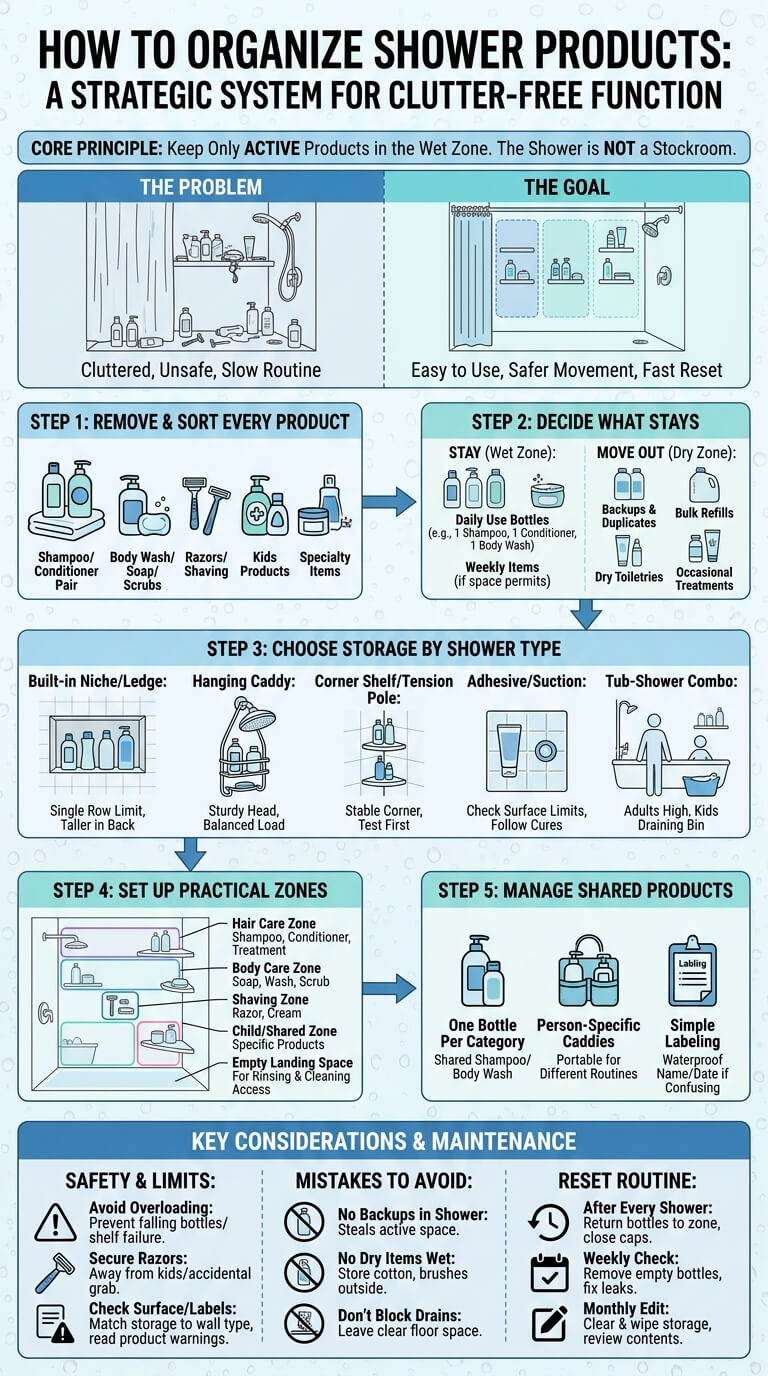
The simplest shower product system is built around one rule: the wet zone should hold only products being used now. The shower is not a stockroom for unopened bottles, a storage shelf for every toiletry, or a place to park products that should stay dry. A good setup keeps the active routine reachable without covering every ledge.
Daily-use bottles only
Start with the bottles used in most showers. For one adult, that may mean shampoo, conditioner, body wash or bar soap, and one shaving item. For a hair routine, it may include one curl product, scalp product, or treatment used often. If a bottle is touched less than once a week, it does not need prime shower space.
Backups outside the shower
Unopened shampoo, extra body wash, spare razors, backup conditioner, and bulk refill products belong in a dry backstock area. Keeping backups in the shower makes the ledge crowded and makes it harder to notice what is nearly empty. A cabinet, linen closet, or labeled bin outside the wet zone works better.
One storage method per shower type
Choose storage based on the actual shower, not on a photo of a larger bathroom. A narrow stall may need a hanging caddy. A tub-shower combo may need a corner shelf or suction bin for kids items. A shower niche may need only a strict product limit. Mixing several storage systems often creates more clutter than the products themselves.
When Shower Product Clutter Needs Its Own System
Shower clutter deserves attention when it changes how the shower works. If you are moving bottles before each shower, stepping around products on the tub floor, or arguing over whose bottle is whose, the issue is no longer cosmetic. It is a daily function problem.
Too many bottles on ledges
If the ledge or caddy is crowded, declutter shower products before adding a caddy and remove duplicate or nearly empty bottles first.
A ledge starts failing when products sit two rows deep or when you have to lift one bottle to reach another. A good test is to remove every bottle, wipe the ledge, and return only what can sit in a single row without touching the shower curtain, door, or spray path.
Products falling or leaking
Falling bottles usually point to overloaded storage, angled ledges, slippery packaging, or a caddy that does not fit the shower head or wall. Leaking bottles need a separate decision. Check caps and pumps before placing them back. If a product repeatedly leaks, move it to a tray outside the shower or replace the container only if the product label allows that.
Shared shower confusion
Shared showers get messy when everyone keeps a full personal routine in the same small space. One person adds purple shampoo, another adds kids wash, and another keeps a half-empty body scrub. The fix is not more arguing. Give each person a limit, a position, or a portable caddy so the wet zone does not become a mixed pile.
What this guide does not cover
This guide does not teach grout cleaning, glass cleaning, drain clearing, mold removal, or deep bathroom cleaning. It also does not replace a full toiletry inventory. If the main problem is expired products, unopened duplicates, or drawers full of old items, handle the broader product declutter before choosing a shower caddy.
Step 1: Remove and Sort Every Shower Product
Take every product out of the shower before organizing. This prevents the common mistake of arranging clutter into a neater shape. Put the items on a towel or washable surface and sort them by how they are used in the shower, not by brand or bottle size.
Shampoo and conditioner
Group shampoo and conditioner first because they are usually the largest bottles. Keep the active pair together. If several bottles are open, decide whether they serve different hair needs or whether they are simply unfinished duplicates. Keep the pair used most often in the shower and move occasional formulas to a dry, labeled finish-first spot.
Body wash, soap, and scrubs
Body wash, bar soap, exfoliating scrubs, and shower oils need different storage. Bar soap needs drainage and air around it. Scrubs and oils can leave residue and should not sit where they drip onto the floor. If a product makes the surface slick, keep it in a stable spot and stop storing it on a narrow ledge.
Razors and shaving products
Razors need a defined place away from kids, pets, and casual grabbing. Do not leave loose razors on the tub edge or floor. Shaving cream, gel, and after-shower products should be separated by where they are used. If a product is applied after drying off, it usually belongs outside the shower.
Kids products
Kids shampoo, body wash, bath toys, and rinsing cups can quickly overtake a tub-shower combo. Separate products from toys. Keep only the active wash products in the shower and choose a bin that drains well. Products not meant for children should not sit where a child can easily open or squeeze them during bath time.
Specialty or occasional products
Hair masks, medicated shampoos, scalp treatments, foot scrubs, tanning removers, and specialty body products may be useful, but most do not need to stay in the shower all week. Store them dry and bring them in on the day they are used. This one change can remove a surprising amount of crowding.
Step 2: Decide What Stays in the Shower
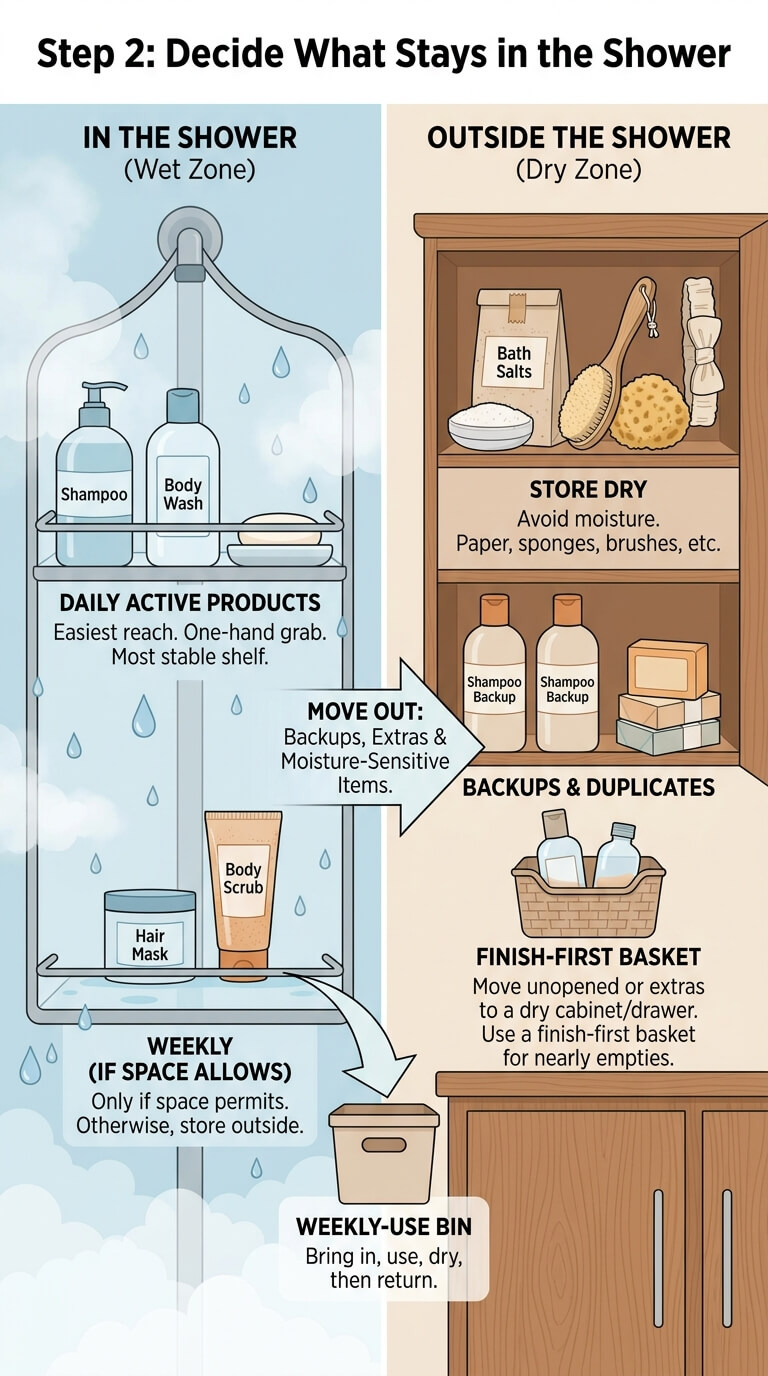
After sorting, choose products by frequency and location of use. The shower should support the routine that happens under running water. It should not hold the entire bathroom inventory just because bottles are waterproof.
Daily active products
Daily active products are the first items allowed back. Give them the easiest reach and the most stable shelf. A good setup lets you grab each bottle with one hand while standing normally, without bending to the floor or knocking another bottle into the tub.
Weekly products
Weekly products can stay in the shower only when space is available after daily products. If a hair mask or scrub causes clutter, store it outside the shower in a weekly-use bin. Bring it in before the shower and return it after the bottle is closed and dry enough for storage.
Products that should be stored dry
Some toiletries belong in the shower, but separate shower products from other toiletries so backups and dry products have their own storage zone.
Some products do better outside the wet zone. Bath salts in paper packaging, dry brushes, body sponges that never dry, certain razors, cloth accessories, and products with labels warning about moisture should be stored away from spray. The EPA guidance on moisture control is a useful reminder that damp materials and poor drying conditions can create problems over time.
Backups and duplicates to move out
Backups and duplicates should leave the shower even when they are bathroom products. Keep one active bottle in the wet zone and move unopened or extra versions to a dry cabinet, drawer, or closet. If several nearly empty bottles remain, set a finish-first basket outside the shower rather than keeping all of them on the ledge.
Keep only current-use products in the shower and move backups to a dry storage area. Larger bottles are usually easier to manage when you store bathroom products in cabinets.
Step 3: Choose Storage by Shower Type
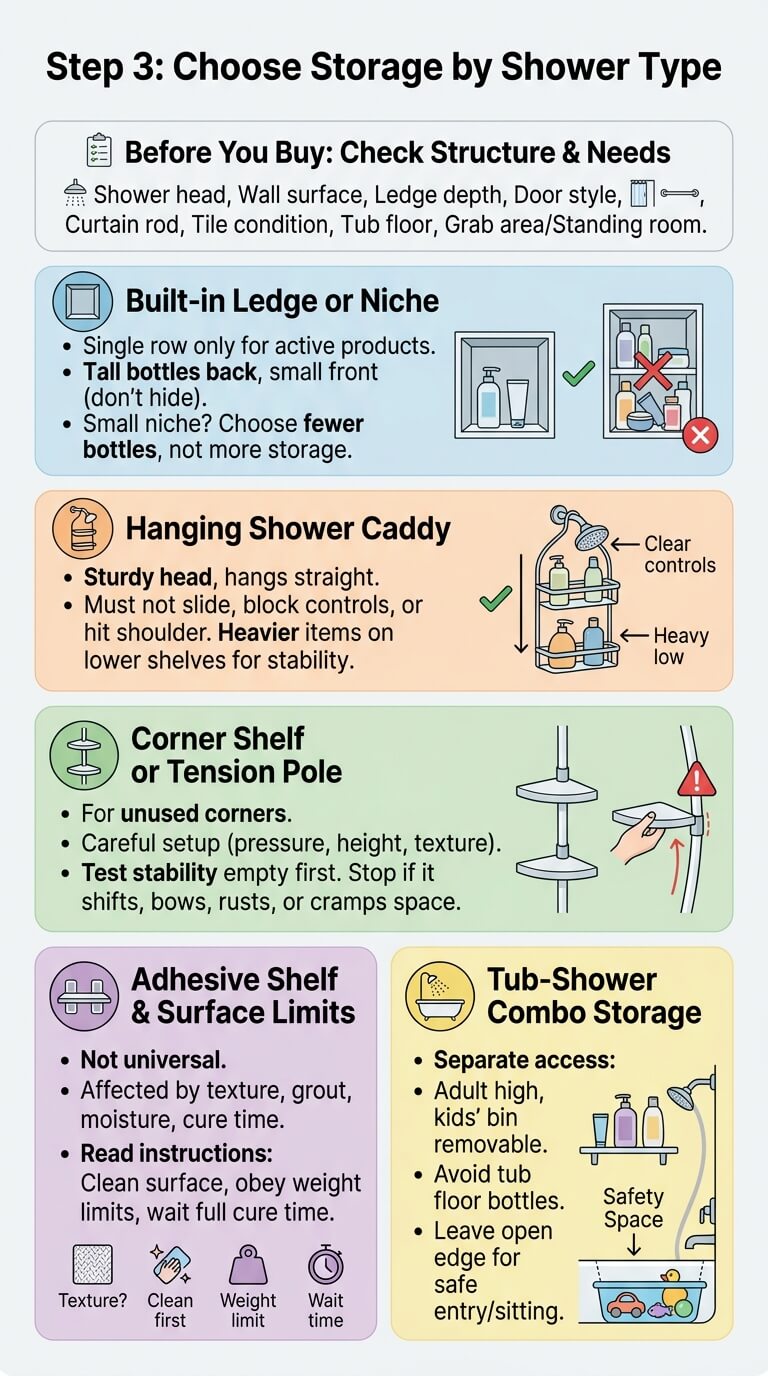
Storage works best when it fits the structure you already have. Before buying anything, check the shower head shape, wall surface, ledge depth, door style, curtain rod, tile condition, tub floor, and whether anyone in the home needs a clear grab area or extra standing room.
Built-in ledge or niche
A built-in ledge or niche is enough only when it holds a single row of active products. Place taller bottles at the back if the shelf is deep enough, but do not hide small items behind them. If the niche is small, choose fewer bottles instead of adding a second storage product inside it.
Hanging shower caddy
A hanging caddy can work well when the shower head is sturdy and the caddy hangs straight. Check that the caddy does not slide forward, block the water controls, or hang low enough to hit your shoulder. Put heavier bottles on lower shelves so the caddy is less top-heavy.
Corner shelf or tension pole
Corner shelves and tension poles are useful in showers with unused corners. They need careful setup because pressure, ceiling height, and surface texture matter. Test stability with empty shelves first, then add products slowly. Stop using the unit if it shifts, bows, rusts, scratches the surface, or makes the shower feel cramped.
Adhesive shelf and surface limits
In a small room, handle shower storage in a tight bathroom with slim storage that does not block movement, drainage, or access.
Adhesive shelves are not universal. Tile texture, grout lines, painted surfaces, stone, glass, moisture, and cure time can affect performance. Read the shelf instructions and surface care guidance before installing. Manufacturer directions for removable products, such as adhesive hook installation guidance, show why clean surfaces, weight limits, and waiting time matter.
Tub-shower combo storage
A tub-shower combo needs both adult shower storage and bath-time access. Avoid storing bottles on the tub floor where people step. Put adult products higher and kids products in a small draining bin that can be removed after bath time. Leave enough open edge space for safe entry, sitting, or rinsing.
Step 4: Set Up Shower Zones
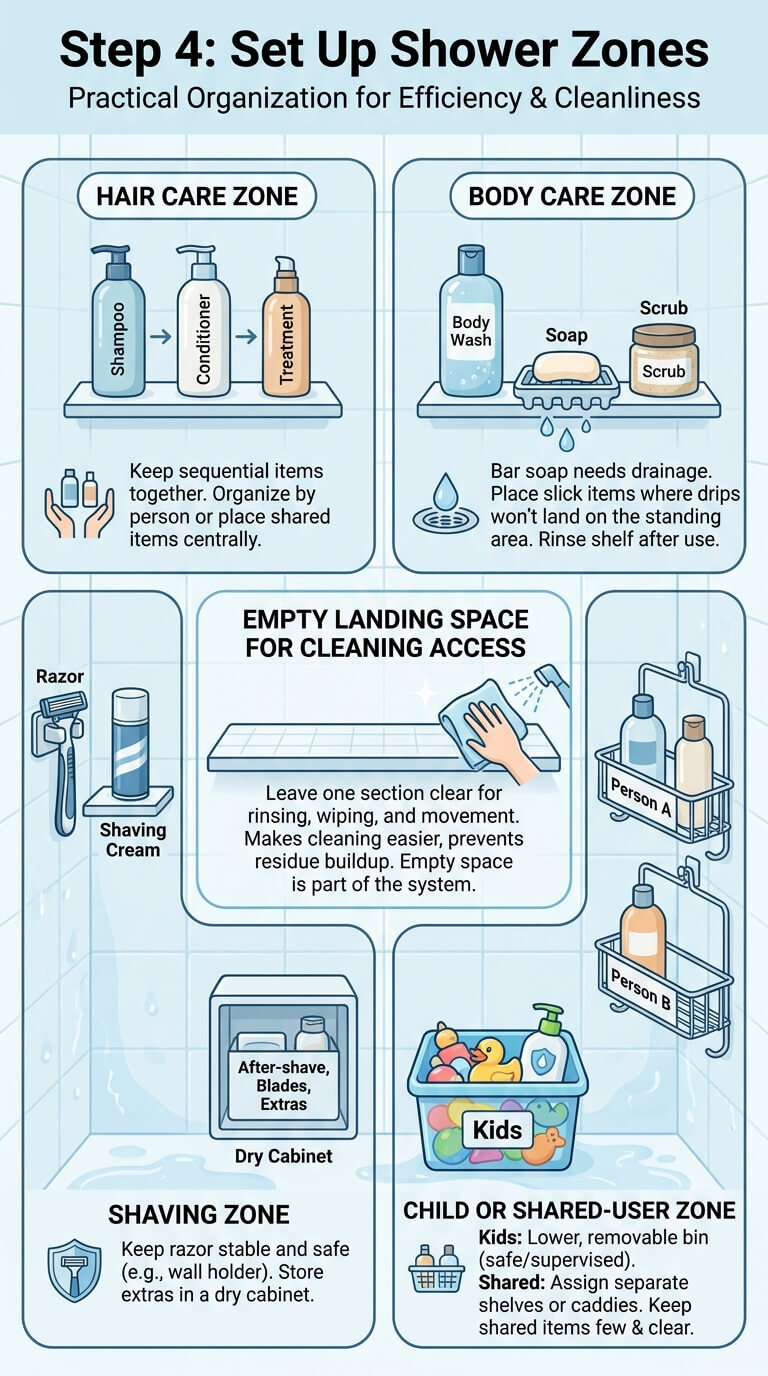
Zones keep products from spreading across every surface. They do not need labels or a complicated layout. The practical goal is to place each product near the moment it is used while leaving enough empty space for movement, rinsing, and cleaning access.
Hair care zone
The hair care zone should hold shampoo, conditioner, and one active treatment if used often. Keep these bottles together because they are used in sequence. If multiple people use different formulas, line them by person or place the shared shampoo and conditioner in the central position.
Body care zone
The body care zone holds body wash, bar soap, scrub, or a washcloth item. Bar soap needs a draining dish, not a puddle. Body oils and slick scrubs should sit where drips do not land on the standing area. A quick rinse of the shelf after use keeps residue from turning into a storage problem.
Shaving zone
The shaving zone should keep the razor stable, visible, and away from accidental contact. A small wall holder or high shelf is better than a loose razor on the tub edge. Shaving cream can sit near it, but after-shave lotion, spare blades, and extra packs usually belong in a dry drawer or cabinet.
Child or shared-user zone
A child or shared-user zone prevents product mixing. In a family shower, keep kids products in a lower removable bin only when supervision and product safety allow it. In a roommate shower, assign one shelf per person or use portable caddies. Shared products should be few and easy to identify.
Empty landing space for cleaning access
Leave one section of ledge, niche, or tub edge empty. This space helps during rinsing, wiping, and moving around the shower. If every flat surface holds a bottle, cleaning becomes harder and products are more likely to sit in residue. Empty space is part of the system, not wasted space.
Step 5: Manage Shared Shower Products
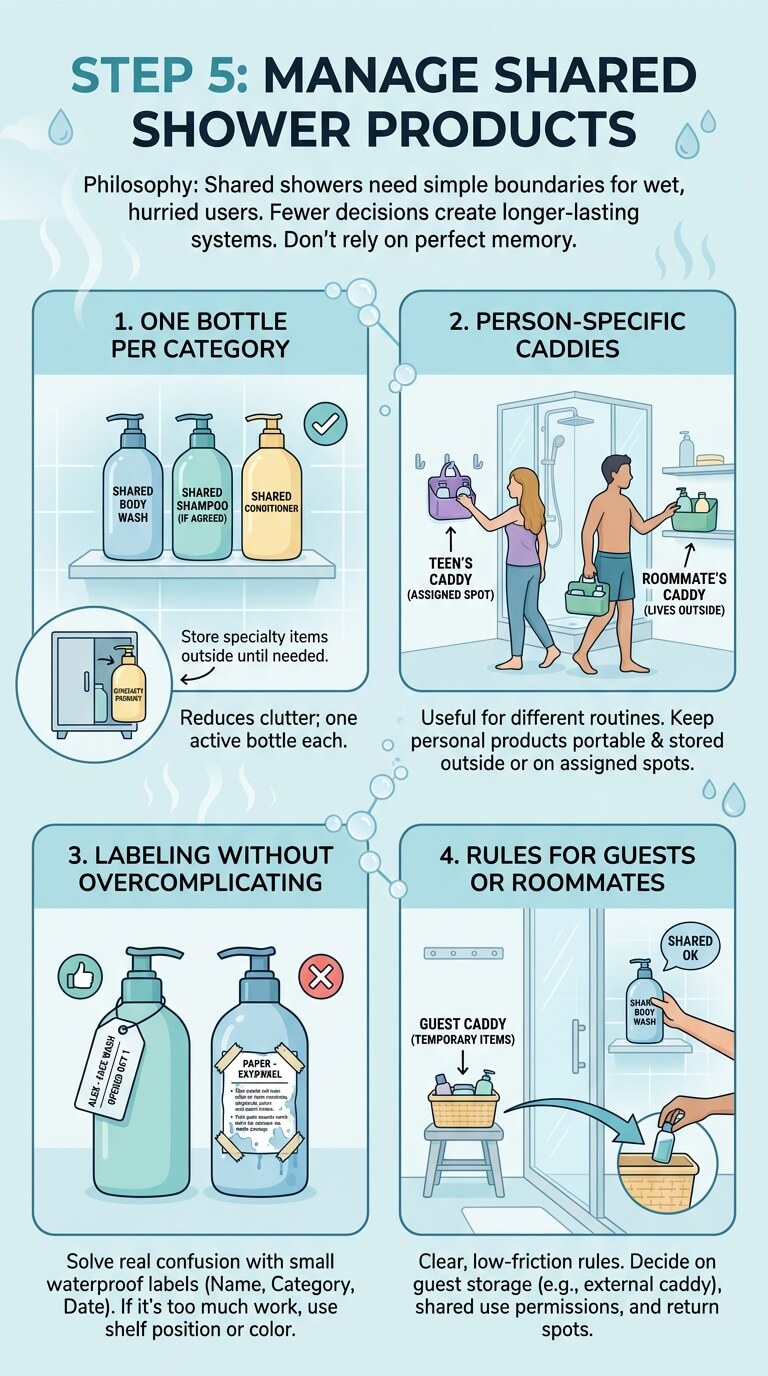
Shared showers need simple boundaries because the products are used while people are wet, hurried, or half-awake. The fewer decisions the system requires, the longer it will last. Do not depend on everyone remembering a perfect arrangement after every shower.
One bottle per category
Shared products work best when there is one active bottle per category. One shared body wash, one shared shampoo if everyone agrees, and one shared conditioner can reduce clutter. Specialty products should be personal or stored outside the shower until needed.
Person-specific caddies
Person-specific caddies are useful when routines are very different. Each person keeps products in a portable caddy that lives outside the shower or on an assigned shelf. This works especially well for roommates, teens, guests, and anyone with hair products that others do not use.
Labeling without overcomplicating
Labels can help, but they should solve a real confusion problem. A small waterproof label with a name, category, or date opened can be enough. Avoid turning every bottle into a project. If the label takes more work than the product is worth, use shelf position or caddy color instead.
Rules for guests or roommates
Guests and roommates need clear, low-friction rules. Decide where guest shampoo goes, whether shared products are okay to use, and where personal products should return after showering. A small guest caddy outside the shower can prevent temporary bottles from becoming permanent ledge clutter.
Shower Product Safety and Material Limits
Shower organization is also about avoiding avoidable mess and access problems. Bottles are slippery, shelves carry weight, adhesives can fail, and some products should not be easy for children to reach. A neat shower is not successful if it makes movement or product access less safe.
Slip and falling-bottle concerns
Heavy bottles should not sit on narrow ledges, angled corners, or the tub floor. Falling bottles can startle someone, crack a cap, or spill product where people stand. If products keep falling, reduce the number of bottles before adding another shelf. The storage is overloaded or mismatched to the surface.
Razor and child access concerns
Razors, certain personal-care products, and adult products need thoughtful placement in homes with children. Child-resistant packaging does not make a product safe to leave within reach. Poison Control offers practical poisoning prevention guidance that applies whenever bathroom products are accessible to children or visitors.
Adhesive, tile, glass, and metal limits
Every organizer has limits. Adhesive shelves may not hold on textured tile. Metal caddies may rust if their coating fails. Suction cups may slide on uneven surfaces. Glass doors may not be designed to carry over-door weight. Read the organizer instructions and the surface care guidance before trusting a shelf with full-size bottles.
Reading product labels and organizer instructions
Product labels can tell you about storage, warnings, directions, and conditions to avoid. Organizer instructions tell you weight limits and installation steps. The American Cleaning Institute explains how label information can guide safer product handling in its product label guidance. Keep labels visible when a product has cautions, active ingredients, or storage limits.
Shower Product Mistakes to Avoid
Most shower organization problems come from small habits that seem harmless. A backup bottle stays in the shower. A new caddy is loaded too heavily. A razor gets moved to the tub edge. Fixing those habits matters more than finding the perfect organizer.
Keeping backups in the shower
Backups make the shower feel prepared, but they steal the space needed for active products. They also make it harder to know what is empty and what is being used. Keep one backup nearby only if the bathroom has dry storage that does not crowd daily routines.
Overloading caddies
Caddies fail when they hold more than their design allows. Too many bottles can make a hanging caddy tilt, a pole shelf shift, or an adhesive shelf peel. If you cannot see the bottom of each shelf or remove one product without moving three others, the caddy is overloaded.
Blocking drainage or cleaning access
Products should not block drains, cover weep areas, or make it impossible to rinse ledges. Leave room around the drain and keep products off the tub floor. If you have to remove a dozen bottles before a quick wipe-down, the storage system is making maintenance harder.
Mixing dry toiletries into wet storage
Dry toiletries do not belong in the shower just because they are part of the same routine. Cotton pads, extra blades, bath salts in paper containers, dry brushes, travel bags, and skincare used after drying off need a dry home. Store them with toiletries outside the wet zone.
Shower Product Reset Routine
A shower system only works if it is easy to reset. The routine should take seconds after a shower, a few minutes weekly, and a short edit once a month. Small resets prevent the shower from sliding back into a crowded bottle lineup.
After-shower bottle return
After each shower, return bottles to their zone before stepping away. Close caps, hang the razor, lift soap out of standing water, and move any product that fell to the floor. A good test is whether the shower looks ready for the next person without extra cleanup.
Weekly empty-bottle check
Once a week, check for empty bottles, loose caps, leaking pumps, dull razors, and products nobody is using. Remove empty containers immediately. If a bottle is nearly empty, decide whether to finish it this week or replace it. Do not leave both the old and new bottle in the shower for weeks.
Monthly product edit
Once a month, remove everything from the caddy, niche, or ledge and wipe the storage area. Put products back only if they are still active. Move seasonal products, abandoned routines, and duplicates to a dry review spot. This short edit is easier than waiting until the shower feels crowded again.
FAQ
These answers focus on shower-product storage decisions, especially bottle limits, small wet zones, and razor placement. They are intentionally narrow so the shower system stays separate from full bathroom decluttering or cleaning tasks.
How many products should I keep in the shower?
Most showers work best with only the active products used that week. For one person, that may be four to seven items. Shared showers may need more, but the limit should still be based on daily use, stable storage, and clear standing space.
What is the best way to organize shower bottles?
The best method is the one that fits your shower type. A niche works with strict bottle limits, a hanging caddy works when the shower head and weight load are suitable, and a corner shelf can work when the corner is stable and out of the standing path.
How do I organize a small shower?
In a small shower, remove backups first, keep bottles in a single row, avoid floor storage, and choose one compact organizer. Prioritize products used during the shower and move occasional treatments, travel items, and dry toiletries outside the wet zone.
Should razors be stored in the shower?
A razor can stay in the shower if it has a secure holder, dries reasonably well, and is not accessible to children or anyone who may grab it accidentally. Spare blades and extra razor packs should usually stay dry in a drawer or cabinet.
Final Thoughts
Shower product organization works when the wet zone has boundaries. Keep active products close, move backups out, choose storage that fits the shower surface, and leave enough empty space for safe movement and easy rinsing. Once the shower has a simple reset routine, the bathroom feels calmer without turning the whole room into a storage project.

Ethan Carter is the Founder & Editor of HomeCleanSecrets. Based in the United States, he has 5 years of experience creating practical home cleaning, laundry care, stain removal, decluttering, and home organization content. His goal is to help everyday households clean smarter and build simple routines that are easier to maintain.
Read more about Ethan Carter on his author page: https://homecleansecrets.com/ethan-carter/