
Bathroom towels are bulky, absorbent, and used in a room that already has moisture, small surfaces, and limited storage. That is why a towel pile can make a clean bathroom look crowded even when the rest of the room is in good shape. The best system is not the most decorative fold or the biggest basket. It is a simple setup that separates clean towels, towels currently in use, guest towels, and towels ready for laundry.

Quick Answer: A Simple Bathroom Towel System
Towel storage should fit towel storage into the full bathroom system so towels do not compete with toiletries, cleaning supplies, or daily-use items.
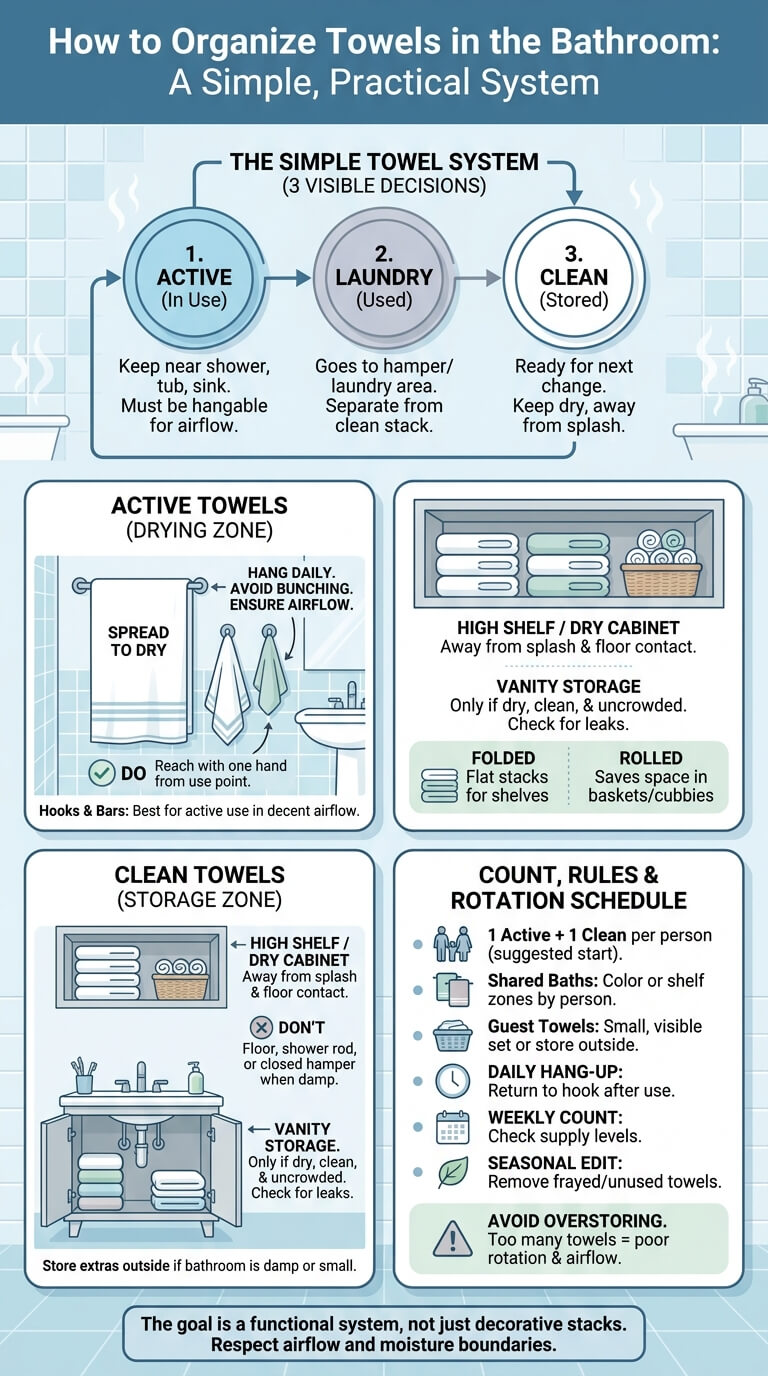
A practical bathroom towel system has three visible decisions: which towels are active today, which clean towels are stored for the next change, and which towels should leave the bathroom for laundry or overflow storage. Keep the active towels near the shower, tub, or sink. Keep clean extras away from direct splash and floor contact. Keep laundry towels out of clean storage so the whole stack does not start feeling questionable.
Keep daily towels reachable
Daily towels need to be reachable without opening three containers or digging through a packed shelf. Bath towels should be close enough to grab after bathing, hand towels should sit near the sink, and washcloths should be easy to pull without disturbing the whole stack. A good test is to stand where the towel is used and reach with one hand. If someone has to step across the room with wet feet, the storage zone is not working for daily use.
Store extras outside wet splash zones
Clean towels should not sit where they can be splashed from the sink, shower, tub, or toilet area. Even when the towels look dry, repeated exposure to mist and damp hands can make the stack feel less fresh. Store extras on a higher shelf, in a closed cabinet with enough air space, in a basket away from the wet edge, or outside the bathroom if the room is very small.
Separate clean, in-use, and laundry towels
Clean towels, in-use towels, and towels headed to laundry need different homes. Clean towels belong folded or rolled in a dry zone. In-use towels belong on a hook, bar, or rack where they can spread out enough to dry. Used towels that will not be reused should go to a hamper or laundry area, not back into the clean stack.
Decide How Many Towels Belong in the Bathroom
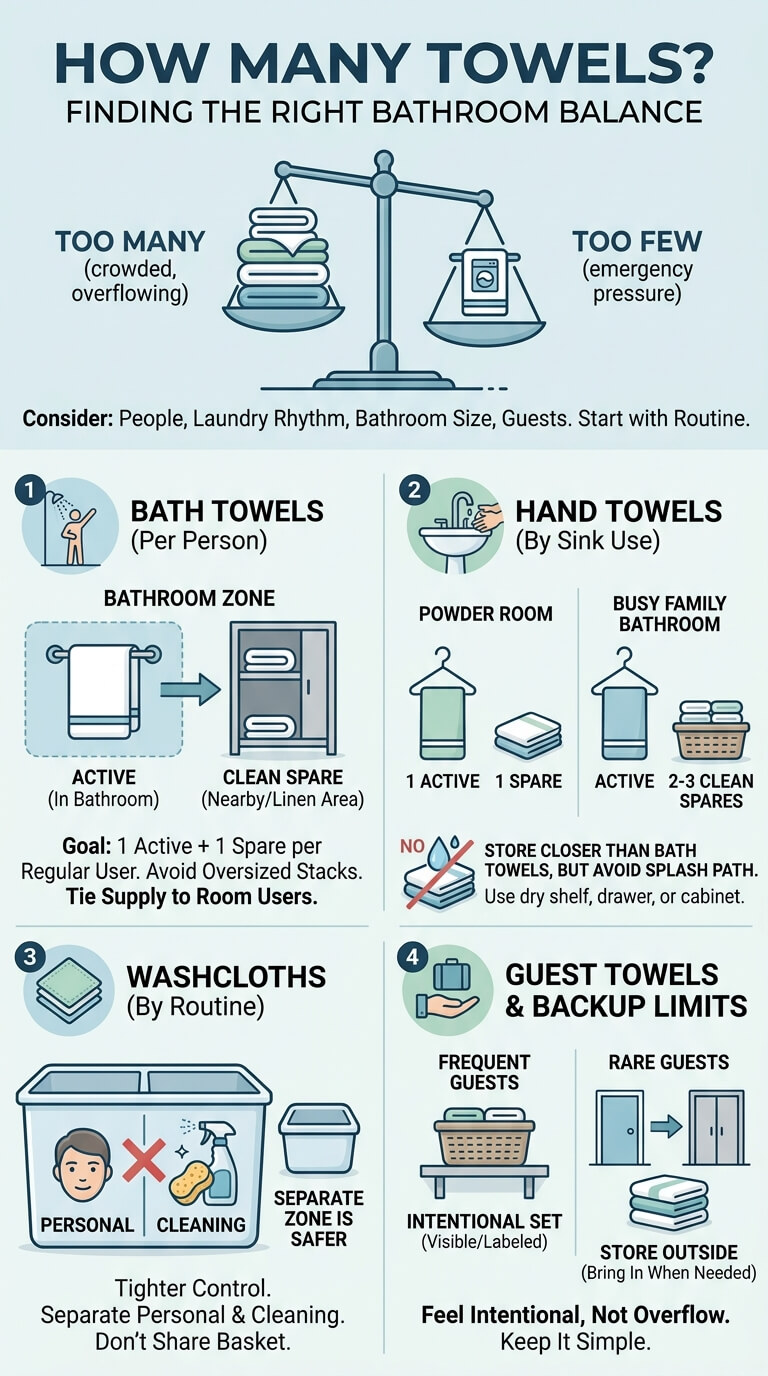
The right towel count depends on the number of people, laundry rhythm, bathroom size, and whether guests use the room. Too many towels crowd the room and make rotation harder. Too few towels create emergency laundry pressure. Start with the bathroom’s real routine before buying baskets or installing hooks.
Bath towels by person
Most bathrooms work best when each regular user has one active bath towel in the bathroom and one clean replacement nearby or in a linen area. A family bathroom may need a little more buffer, but storing every household bath towel in one bathroom usually creates oversized stacks and poor rotation. Keep the bathroom supply tied to the people who use that room most often.
Hand towels by sink use
Hand towels turn over faster than bath towels because they serve every sink visit. A powder room may need one active towel plus one spare. A busy family bathroom may need two or three clean hand towels nearby, especially if children, guests, or frequent handwashing make the towel damp quickly.
Keep hand towels closer to the sink than bath towels, but avoid placing the clean stack in the direct splash path. A narrow basket on a dry shelf, a drawer near the sink, or a small cabinet zone can work. If the sink area is always wet, move the clean hand towels a little farther away and keep only the active towel at the sink.
Washcloths by routine
Washcloths need tighter control because they are small and easy to overstore. Decide whether they are used for face washing, bathing, children, guests, or cleaning. Personal washcloths and cleaning cloths should not share the same basket unless they are clearly separated, and even then a separate zone is safer and easier to maintain.
Guest towels and backup limits
Guest towels should feel intentional, not like overflow from the family towel stack. Keep a small guest set in a visible basket, on a shelf, or in a labeled cabinet zone if guests use the bathroom often. If guests are rare, store guest towels outside the bathroom and bring them in before they arrive.
Choose the Right Towel Storage Zone
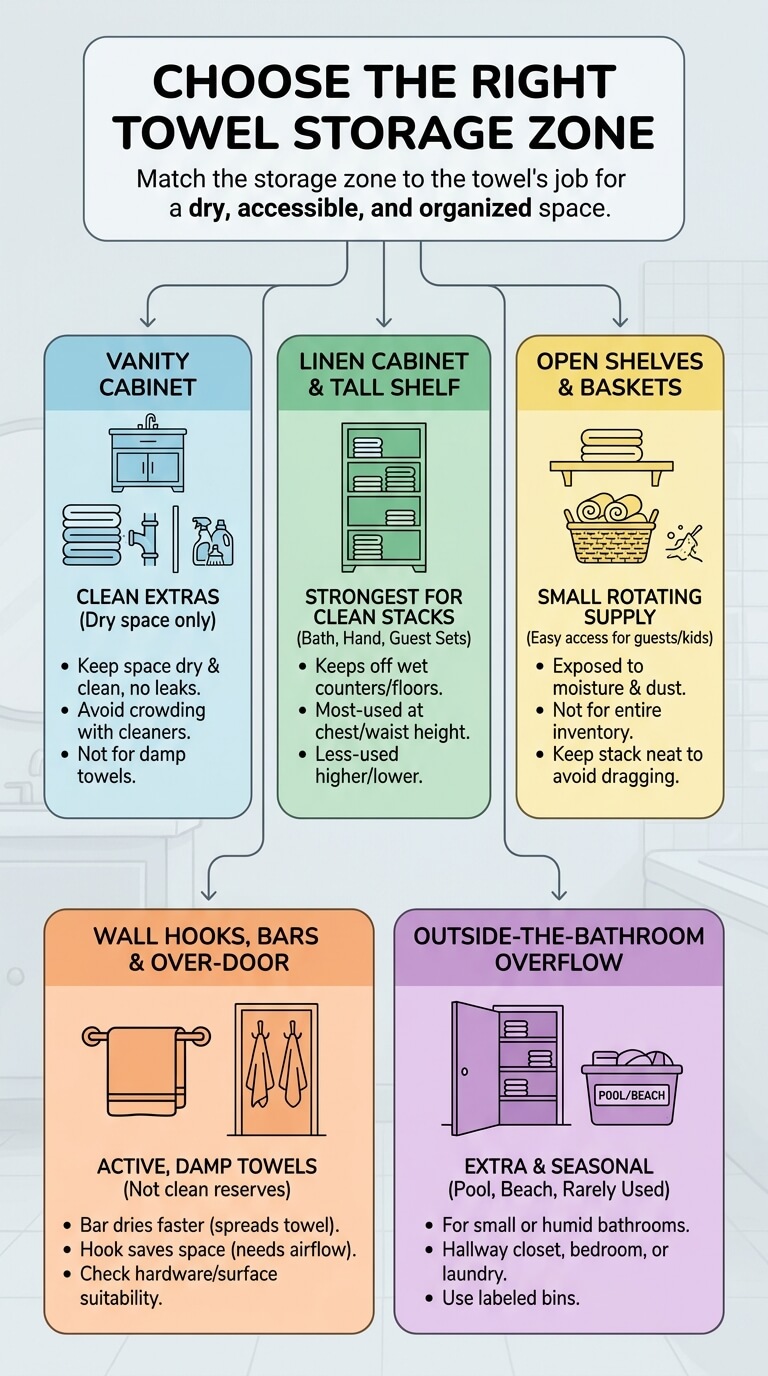
The best towel zone is dry, easy to reach, and sized for the number of towels that truly belong there. Bathroom storage often fails because towels are placed wherever there is empty space rather than where the towel type is used. Match the storage zone to the towel’s job.
Vanity cabinet towel storage
If cabinet space is available, use bathroom cabinets for extra towels, guest towels, or washcloths that do not need to stay on open shelves.
A vanity cabinet can hold folded towels when the space is dry, clean, and not crowded with cleaners or leaking products. Use cabinet towels for clean extras, not damp towels. If the cabinet has plumbing, keep the pipe area visible and leave enough room to check for leaks or spills.
Linen cabinet or tall shelf storage
A linen cabinet or tall shelf is often the strongest towel zone because it keeps clean textiles off counters and away from the wettest parts of the room. Use it for bath towel stacks, hand towel stacks, guest sets, or washcloth baskets. Put the most-used towels at chest or waist height and less-used guest towels higher or lower.
Open shelves and baskets
Open shelves and baskets make towels easy to see, which helps guests and children. They also expose towels to bathroom moisture, dust, and splash. Use open storage for a small, rotating supply rather than the entire household towel inventory. Keep the stack neat enough that each towel can be removed without dragging others onto the floor.
Wall hooks, bars, and over-door options
Hooks, bars, and over-door racks are for active towels, not clean reserves. A bar spreads the towel wider and may help it dry more evenly. A hook saves space but bunches the towel more, so it works better when the bathroom has decent airflow and each person has a dedicated hook.
Before installing hardware, check the door, wall, tile, adhesive, or cabinet material instructions. Some adhesive hooks are not meant for textured tile, painted damp areas, heavy bath sheets, or repeated pulling. Stop if the hardware loosens, tilts, damages paint, or makes the door hard to close.
Outside-the-bathroom overflow storage
Overflow towel storage is useful when the bathroom is small, humid, or already handling too many categories. Extra bath towels, seasonal towels, pool towels, beach towels, and rarely used guest sets can live in a hallway linen closet, bedroom cabinet, laundry room shelf, or labeled bin.
Fold, Roll, or Hang Towels by Space Type
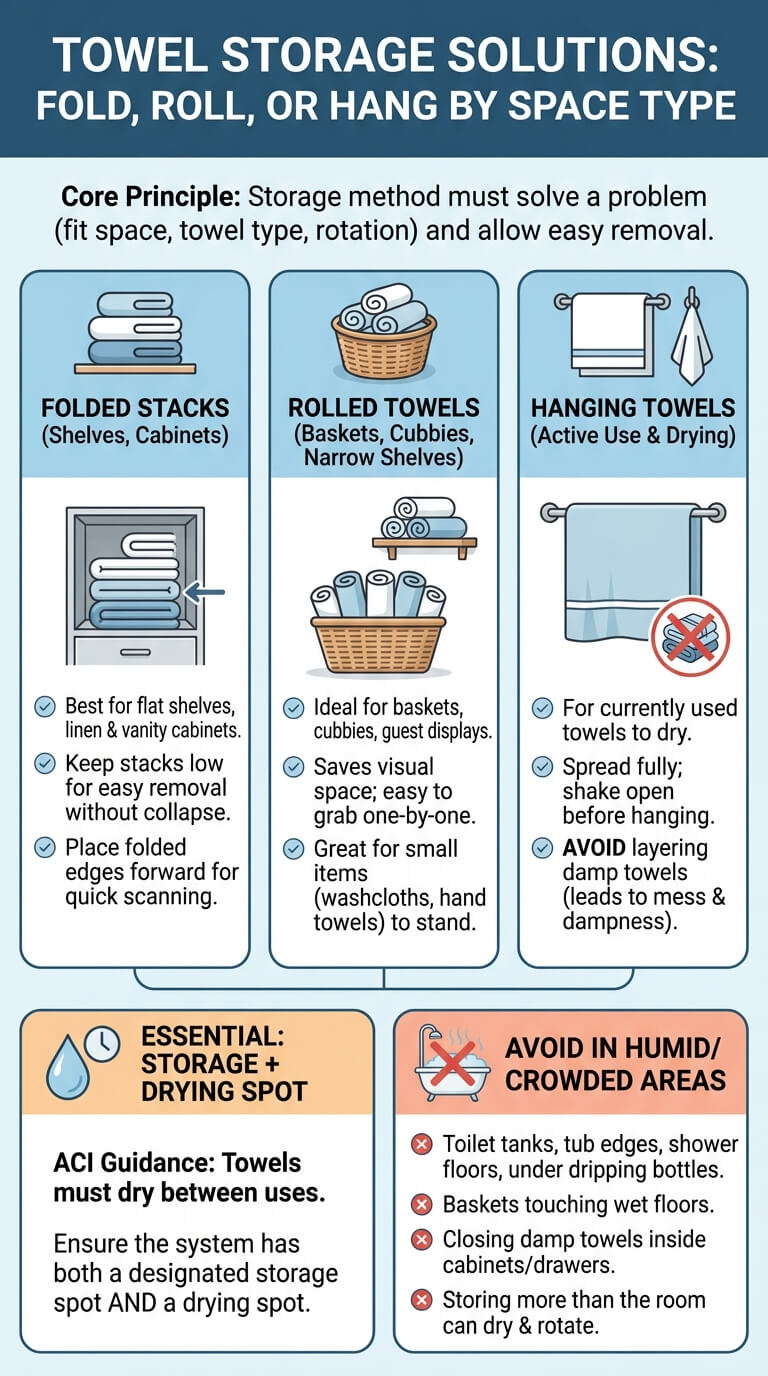
Folding style should solve a storage problem, not just create a pretty stack. Choose the method that fits the shelf depth, basket shape, towel thickness, and rotation habit. If the method makes towels hard to remove, it is the wrong method for that bathroom.
Folded stacks for shelves
Folded stacks work well on flat shelves, inside linen cabinets, and in some vanity cabinets. Keep stacks low enough that the bottom towel can be pulled without collapsing the pile. Place folded edges forward if that makes the shelf easier to scan.
Rolled towels for baskets and narrow shelves
Rolled towels are helpful in baskets, cubbies, narrow shelves, and guest displays. They can save visual space and make small towels easier to grab one at a time. Rolling works especially well for washcloths and hand towels because they are small enough to stand or stack neatly.
Hanging towels for active use
Hanging is the right choice for towels that are currently being used. Spread the towel as much as the space allows, shake it open before hanging, and avoid layering several damp towels on one hook or bar. If towels stay bunched, they may remain damp longer and make the bathroom feel messy.
The American Cleaning Institute notes that bath towels should be allowed to dry between uses and gives practical wash timing in its guidance on when items need washing. For organization purposes, that means the towel system needs both a storage spot and a drying spot.
What to avoid in humid or crowded areas
Avoid stacking clean towels on the toilet tank, directly beside the tub edge, on the shower floor, under dripping bottles, or in a basket that touches a wet floor. Avoid closing damp towels inside cabinets or drawers. Avoid storing more towels than the room can dry, access, and rotate.
Small Bathroom Towel Organization
In a small room, organize towels in a small bathroom by limiting how many stay there and using hooks, shelves, or narrow storage.
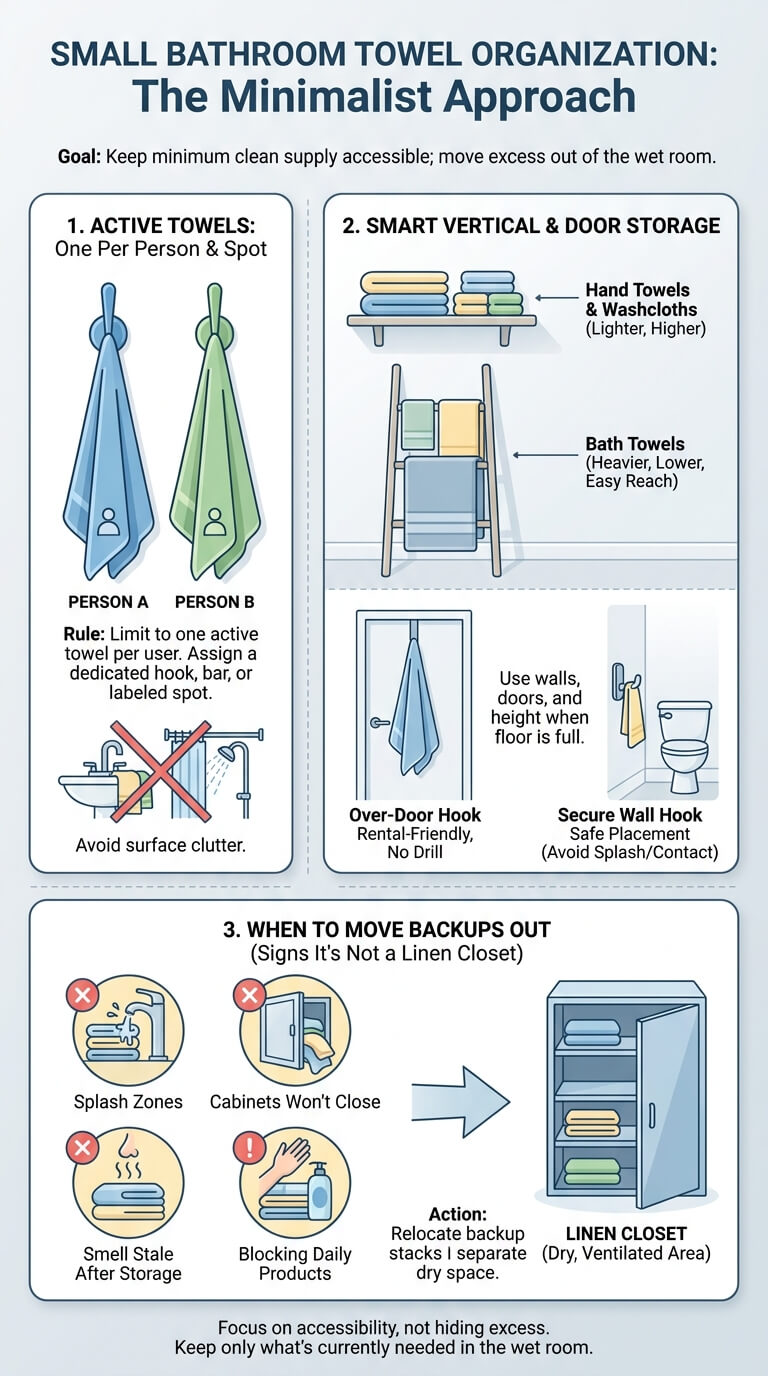
Small bathrooms need stricter towel limits because every towel competes with toiletries, cleaning supplies, shower products, and open floor space. The goal is not to hide dozens of towels in clever places. The goal is to keep the minimum clean supply accessible and move the rest out of the wet room.
One active towel per person
In a small bathroom, start with one active bath towel per person who uses that bathroom. Give each towel a hook, bar section, or labeled spot. This keeps damp towels from landing on the door, shower rod, sink edge, or floor.
Vertical towel storage
Vertical storage can help when the floor and vanity are full. Consider wall shelves, a narrow ladder rack, over-door hooks, a slim cabinet, or a tall open shelf if the room can handle it safely. Put lighter hand towels and washcloths higher, and keep heavy bath towel stacks where they are easy to lift.
Door and wall space
Door and wall space can be useful for active towels, especially in rentals where floor storage is limited. Over-door hooks are easy to test because they do not require permanent installation. Wall hooks can work when they are mounted securely and placed where towels do not brush the toilet, sink, or shower curtain.
When to move backup towels out
Backup towels should move out when clean stacks sit in splash zones, cabinet doors will not close, towels smell stale after storage, or people have to remove a pile to reach daily products. These are signs that the bathroom is acting as a linen closet even though it does not have the space or airflow for that job.
Family, Guest, and Shared Bathroom Setups
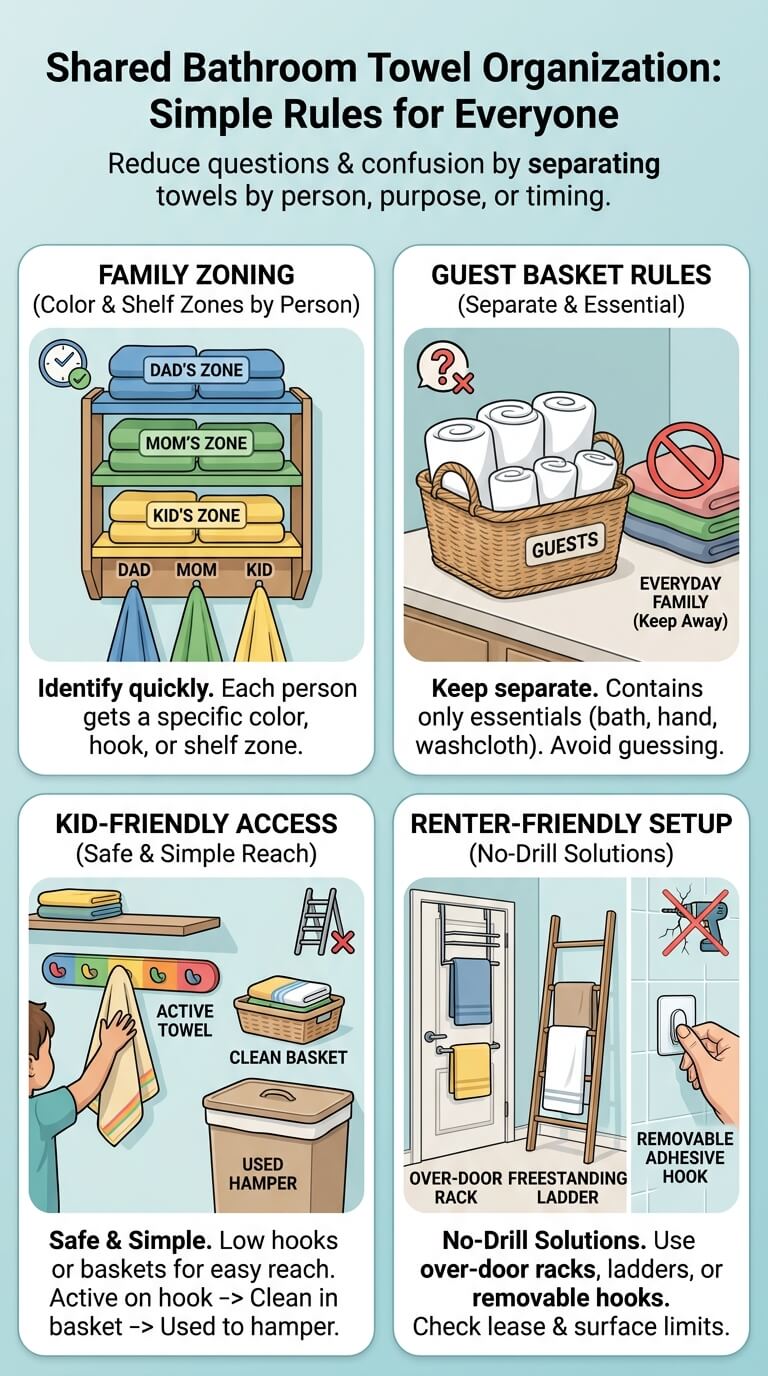
Shared bathrooms need towel rules that are simple enough for tired people to follow. The more people use the room, the more important it is to separate towels by person, purpose, or timing. A shared setup should reduce questions, not create a storage puzzle.
Color or shelf zones by person
Color zones can help family members identify their towels quickly. Each person can have a towel color, a shelf section, a basket, or a named hook. This is especially helpful when towels are similar in size and children cannot remember which towel they used last.
Guest towel basket rules
A guest towel basket should contain only what a guest needs: one or two bath towels if they are bathing, a hand towel, and washcloths if your guests use them. Keep it away from everyday family towels so guests do not have to guess what is available.
Kid-friendly towel access
Children need towel access they can reach safely. A low hook, short towel bar, or small labeled basket works better than a high shelf that requires climbing. Keep the system simple: active towel on the hook, clean towel in one basket, used towel to hamper.
Minimal towel setup for renters
Renters can organize towels well without drilling into walls. Over-door racks, freestanding towel ladders, removable hooks rated for the surface, baskets, and portable shelves can all work. Always check the product instructions and lease limits before attaching anything to tile, paint, cabinet sides, or doors.
Damp Towel and Moisture Boundaries
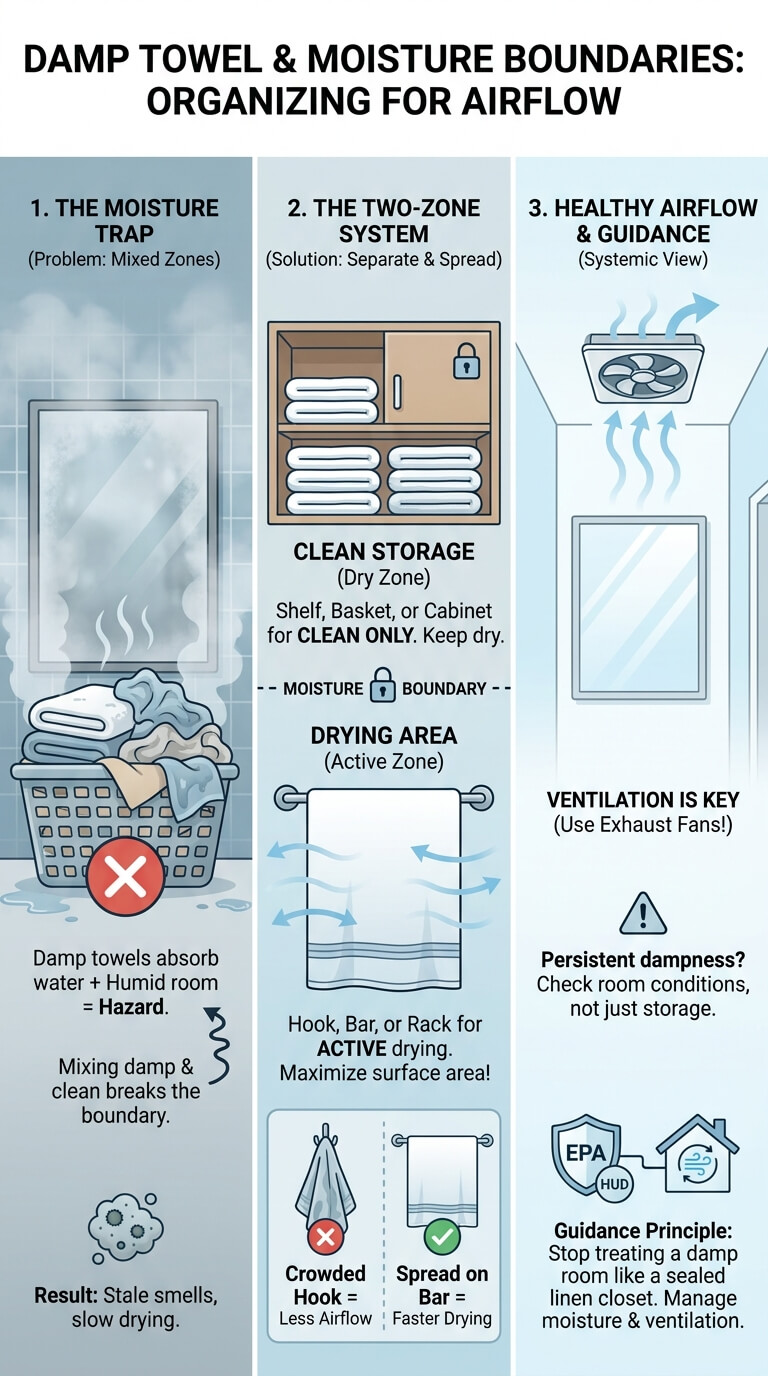
Towel organization is partly a moisture problem because towels absorb water and sit in a humid room. This does not mean every damp towel is a major hazard, but it does mean the storage plan should respect airflow, ventilation, and drying time.
Clean towel storage versus drying area
Clean towel storage and towel drying should not be the same zone. A shelf, basket, or cabinet holds clean towels. A hook, bar, or rack holds an active towel while it dries. When a damp towel gets folded back into clean storage, the system loses its boundary.
Why towels need airflow
Towels dry better when air can move around them. A towel folded over itself three times on a crowded hook has less exposed surface than a towel spread across a bar. A stack of clean towels also needs a dry location so the outer towels are not constantly exposed to steam.
EPA moisture guidance explains that moisture control and ventilation are key parts of managing damp indoor spaces, including bathrooms. Its advice to use bathroom exhaust fans to remove moisture is a useful reminder that towel storage works better when the room can dry after showers.
When a towel storage problem is really a ventilation problem
Sometimes the towel system is not the main issue. If towels remain damp for a long time, mirrors stay fogged, walls feel wet, or clean towels stored in the room start smelling stale, the bathroom may need better airflow or a different storage location. Moving backup towels outside the bathroom can help while you investigate the room conditions.
HUD healthy homes materials connect moisture control, ventilation, and indoor conditions in its broader healthy homes guidance. For a bathroom towel system, the practical takeaway is to stop treating a damp room like a sealed linen closet.
Towel Organization Mistakes to Avoid
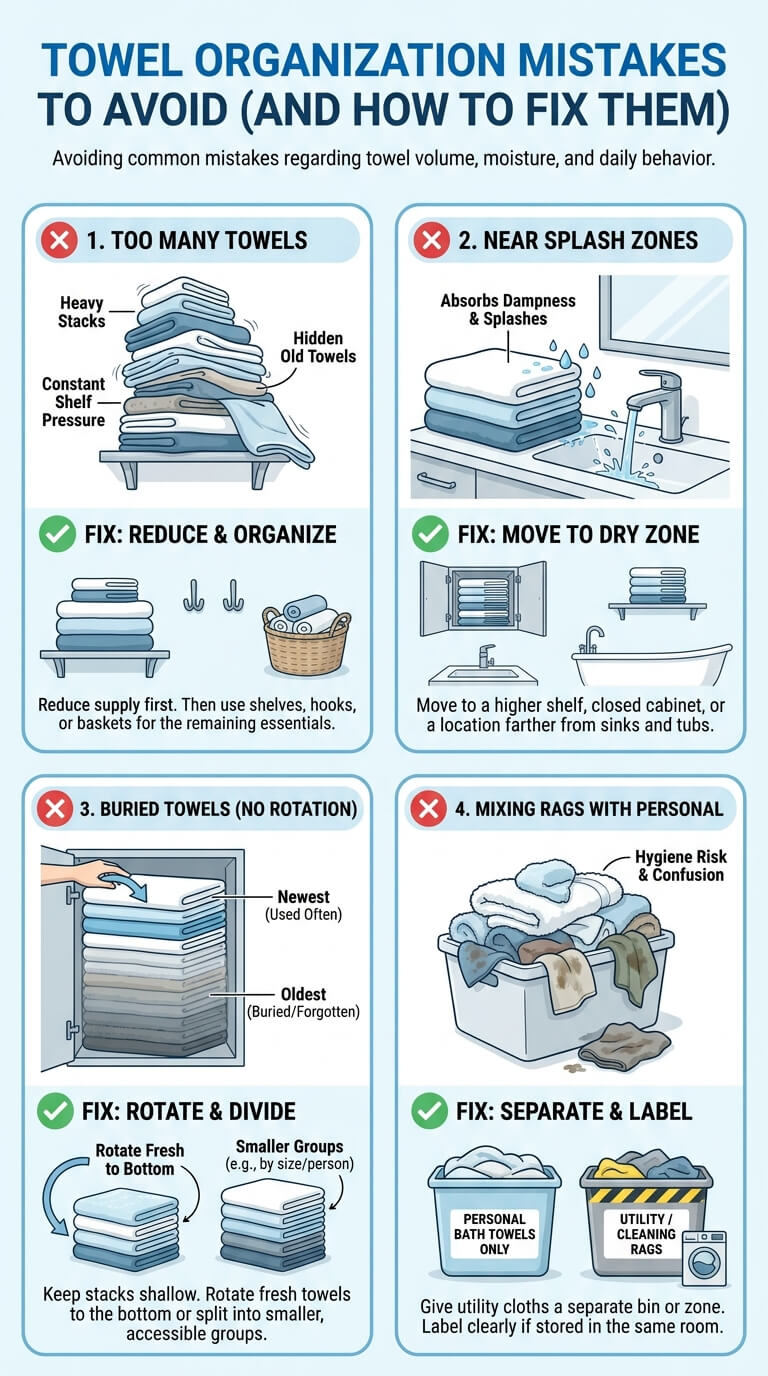
Most towel systems fail because the setup ignores towel volume, moisture, or daily behavior. Avoiding a few common mistakes usually improves the bathroom faster than buying a new matching set of containers.
Keeping too many towels in the bathroom
If towels have no room, clear products that are taking over towel space before assigning more shelves or baskets to linens.
Too many towels create heavy stacks, hidden old towels, and constant shelf pressure. If you cannot remove one towel without the stack sliding, there are too many towels in that zone. Reduce the bathroom supply first, then decide whether the remaining towels need shelves, hooks, baskets, or overflow storage.
Storing clean towels too close to splash zones
Clean towels beside a sink or tub can look convenient until they absorb splashes, toothpaste mist, or damp hand contact. If a towel stack often feels slightly damp at the edge, move it to a higher shelf, closed cabinet, basket farther from the sink, or outside the room.
Folding towels in a way that hides the oldest ones
Deep stacks make rotation difficult. When new towels always go on top and old towels stay buried, the bottom towels may sit for months. Keep stacks shallow, rotate fresh towels to the bottom, or split towels into smaller groups by size or person.
Mixing cleaning rags with personal towels
Cleaning rags, microfiber cloths, and old utility towels should not be mixed with bath towels, hand towels, or washcloths used on the body. Give utility cloths a separate bin, cabinet zone, or laundry area. If they are stored in the bathroom at all, label or separate them clearly.
Towel Reset and Rotation Schedule
A towel system only stays organized when it has a small reset rhythm. The rhythm does not need to be complicated. It should simply move towels from use, to laundry, to clean storage, then back into use without letting piles build up.
Daily hang-up habit
Every active towel needs to return to its hook, bar, or rack after use. Shake it open, hang it in its assigned spot, and keep it from sitting on the floor, sink, tub edge, or closed hamper while damp. This habit prevents the most common bathroom towel mess.
Weekly towel count
Once a week, count what is actually in the bathroom: active bath towels, clean bath towels, hand towels, washcloths, guest towels, and towels waiting for laundry. If one category keeps growing, it needs a limit or a better exit path.
Seasonal linen edit
A seasonal edit catches towel buildup before it takes over the bathroom. Remove towels that are frayed, scratchy, mismatched for the room’s routine, rarely used, or better suited for pets, utility tasks, beach trips, or donation if they are still in good condition.
Before changing care routines for towels you keep, read the care tag. The FTC describes how textile care instructions are provided through care labels in its Care Labeling Rule information, and those labels are the first place to check when towels have special washing or drying limits.
FAQ
These answers focus on towel-specific storage decisions: how many towels belong in the bathroom, when rolling helps, where towels fit in small rooms, and whether under-sink storage is appropriate.
How many towels should I keep in a bathroom?
Keep enough towels for the people who regularly use that bathroom plus a small changeover supply. A practical starting point is one active bath towel per person, one clean replacement per person, a small hand towel supply near the sink, and a limited washcloth stack if your household uses them. Store the rest outside the bathroom if the room is small or humid.
Is it better to roll or fold bathroom towels?
Rolling is better for baskets, narrow cubbies, washcloths, hand towels, and guest displays where you want each towel visible. Folding is better for flat shelves, linen cabinets, and large bath towels that need stable stacks. The better method is the one that lets people remove one towel and put one towel away without disturbing the whole storage area.
Where should I store towels in a small bathroom?
In a small bathroom, keep only active towels and a small clean supply in the room. Active towels can hang on hooks, bars, or over-door racks. Clean towels can sit on a dry shelf, in a slim cabinet, or in a small basket away from splash zones. Move backups, guest towels, and rarely used towels to a hallway closet, bedroom cabinet, laundry room, or labeled overflow bin.
Should clean towels be stored under the sink?
Clean towels can be stored under the sink only if the cabinet is dry, uncrowded, and easy to inspect. Keep towels away from plumbing, cleaners, leaking bottles, and damp surfaces. If the cabinet smells musty, has past leak marks, or forces towels tightly around pipes, use that space for something else and store towels in a drier zone.
Final Thoughts
Bathroom towel organization works best when it respects how towels behave in real life. Towels are bulky when clean, damp after use, and easy to overstore because every household wants spares. Start by setting a towel count, give clean towels a dry storage zone, give active towels a drying zone, and move overflow out of the bathroom when space or airflow is limited.
Once the system is in place, keep it simple. One daily hang-up habit, one weekly towel count, and one seasonal linen edit can prevent most towel piles from coming back. The bathroom does not need every towel you own. It needs the right towels, in the right zones, with enough room to dry, rotate, and return easily.

Ethan Carter is the Founder & Editor of HomeCleanSecrets. Based in the United States, he has 5 years of experience creating practical home cleaning, laundry care, stain removal, decluttering, and home organization content. His goal is to help everyday households clean smarter and build simple routines that are easier to maintain.
Read more about Ethan Carter on his author page: https://homecleansecrets.com/ethan-carter/