
Bathroom product clutter usually builds quietly. One backup shampoo becomes three. A skincare sample stays in a drawer for a year. Half-used hair products move from the shower to the cabinet because throwing them away feels wasteful. Before long, the bathroom has plenty of products but very little usable space.

This guide shows how to declutter bathroom products before buying bins, drawer dividers, shower caddies, or cabinet organizers. The focus is decision-making: what to keep, what to use soon, what to relocate, and what to dispose of carefully. It does not cover bathroom cleaning, tile cleaning, sink cleaning, toilet cleaning, or a full storage layout. The goal is a smaller, safer, easier-to-manage product inventory that can be organized afterward.
Quick Answer: Declutter Before You Buy Bathroom Organizers
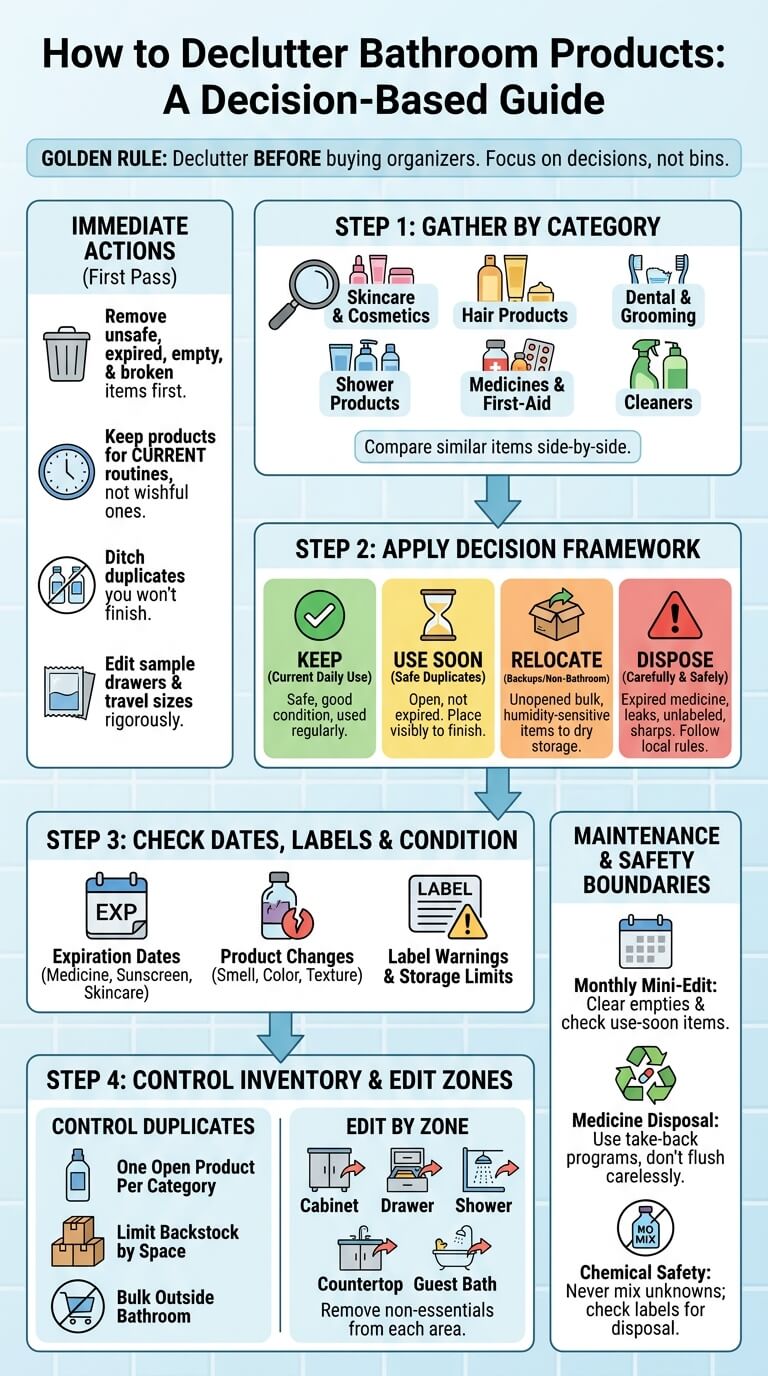
The fastest way to make a bathroom feel easier to use is to remove products that no longer belong there. Organizers can help later, but they cannot fix expired medicine, leaking bottles, duplicates, old cosmetics, or five open products serving the same job. Edit the products first, then choose storage for what remains.
Remove unsafe, expired, empty, and duplicate products first
Start with the obvious removals. Empty bottles, cracked lids, dried-out cosmetics, expired medicine, unlabeled containers, leaking cleaners, rusty razors, and duplicate products you will not realistically finish should not be arranged back into the same crowded space. This first pass creates room quickly and makes the harder decisions easier.
Keep products by current routine, not wishful routines
A bathroom should support the routine you actually use now. Keep the moisturizer you reach for, the shampoo that works for your current hair, and the first-aid supplies that are in date. Be careful with products kept only for a future routine, a former style, a gift you feel guilty about, or a version of your schedule that does not exist.
When Bathroom Product Clutter Needs a Decluttering Checklist
A checklist is useful when the bathroom looks full but still feels unprepared. You may own enough products, yet still struggle to find toothpaste, a clean razor, a current skincare item, or medicine that has not expired. That is a sign the issue is inventory control, not just storage.
Cabinets are full but nothing is easy to find
Cabinets become difficult when backups, cleaners, toiletries, hair tools, and old products share the same dark space. If you have to move several items to reach one daily product, start by decluttering. Cabinet organization works better after expired, unused, and duplicate products are removed.
Shower has too many bottles
The shower should hold active wet-use products, not the whole product inventory. If bottles line the floor, ledge, niche, and caddy, pull everything out and decide what is current. Move backups and occasional treatments to a dry place before setting up shower storage.
Drawers are full of samples
Samples feel harmless because they are small, but they can fill a drawer faster than full-size products. Gather packets, mini tubes, travel bottles, spare floss, extra lip balm, and small cosmetics in one pile. Keep only the samples you will use within a set time frame.
Products expire before use
If products expire before anyone finishes them, the bathroom is carrying more inventory than the household can use. This often happens with medicine, sunscreen, skincare, makeup, and bulk purchases. Decluttering should reduce both the current pile and the buying pattern that created it.
Step 1: Gather Bathroom Products by Category

Decluttering works best when similar products are compared side by side. Instead of opening one drawer and making isolated decisions, gather products by category. You will see duplicates, expired items, almost-empty bottles, and products that no longer match the household routine.
Skincare and cosmetics
Group face wash, moisturizer, sunscreen, serums, masks, makeup, lip products, nail products, and cosmetic samples. Check for products that changed smell, color, texture, or performance. The FDA explains that cosmetics can be affected by shelf life and storage conditions in its cosmetics shelf-life guidance, so do not rely only on how full a container looks.
Hair products
Collect shampoo, conditioner, styling cream, gel, mousse, hair spray, dry shampoo, treatments, oils, and color-care products. Separate daily products from special-occasion products. If several products promise the same result but only one gets used, make that visible before returning anything to storage.
Dental and grooming items
Gather toothpaste, floss, mouthwash, toothbrushes, replacement heads, razors, blades, shaving products, tweezers, nail clippers, cotton swabs, and grooming refills. Keep daily dental care easy to reach. Move excess refills to backstock only if they are clean, sealed, and useful within a reasonable time.
Shower products
Remove every product from the shower, including bottles on ledges, hanging caddies, corners, floor edges, and bath trays. Sort shampoo, conditioner, body wash, bar soap, scrubs, shaving items, kids products, and hair treatments. The shower pile often reveals how many backups have drifted into the wet zone.
Medicines and first-aid items
Separate medicine and first-aid products from toiletries. Check expiration dates, labels, packaging condition, and whether the item still matches current household needs. Do not keep loose pills, mystery ointments, unlabeled bottles, or damaged packaging in the same bin as daily toiletries.
Cleaners and non-toiletry products
Bathroom cleaners, drain products, disinfectants, toilet products, air fresheners, and laundry additives should not mix with toiletries. Gather them as their own category. Keep labels intact and never combine unknown leftovers. If a product is leaking, damaged, or unlabeled, handle it more carefully than ordinary clutter.
Step 2: Use the Keep, Use Soon, Relocate, Dispose Framework

Once categories are gathered, avoid making every decision a yes-or-no choice. Four decisions are more useful: keep, use soon, relocate, and dispose. This framework lowers waste while still reducing clutter, because not every extra product needs to be thrown away immediately.
Keep current daily products
Keep products that are safe, in good condition, and part of the current routine. These are the products that deserve prime access later: the cleanser used every night, the toothpaste used twice a day, the hair product used after most washes, and the current deodorant or moisturizer.
Use soon for safe duplicates
Safe duplicates can go into a use-soon group when they are open, not expired, and still wanted. This group should be small and visible. Place it where you will actually finish the items, not in the back of a cabinet where they will be rediscovered months later.
Relocate backups and humidity-sensitive items
Unopened backups, paper-packaged items, extra cotton goods, spare blades, some cosmetics, and bulk refill products often do better outside a humid bathroom. Relocate them to a dry, clearly labeled space if your home allows it. This keeps the bathroom focused on active products instead of warehouse storage.
Dispose of expired, leaking, unlabeled, or unsafe items carefully
Dispose decisions need more care than ordinary trash decisions. Expired medicine, leaking chemical products, aerosols, sharps, and unlabeled containers may require special handling. When a label or local rule gives specific disposal instructions, follow that guidance rather than guessing or pouring products together.
Step 3: Check Dates, Labels, and Product Condition

Dates and labels are not just fine print. They help you decide whether a product still belongs in the bathroom. A good test is to check the package before smelling, mixing, transferring, or combining anything. If the container gives you a warning or a storage limit, respect it.
Cosmetics and skincare changes
Look for changes in smell, color, texture, separation, dried edges, unusual thickness, or irritation history. Mascara, liquid products, sunscreen, acne products, and creams deserve closer attention than unopened bar soap. If a product looks suspicious or no one remembers when it was opened, do not return it to daily storage.
Medicine and first-aid expiration
Medicine and first-aid items should be checked by date, package condition, and identity. The FDA provides guidance on disposing of unused medicines, including why some products should not simply sit in a household cabinet after they are no longer needed. Keep current medicine separate from beauty products and grooming extras.
Hair products and aerosols
Hair products can become clutter when several formulas are open at once. Check pumps, caps, sprayers, stickiness, residue, rust, and whether the product still suits your hair. Aerosols need extra caution. Do not puncture cans, store them near heat, or keep damaged cans in crowded bathroom storage.
Cleaners, chemicals, and label limits
Cleaning products must be judged by label condition, container integrity, and household use. Keep products in original containers when the label carries safety information. The American Cleaning Institute explains why product labels matter in its guidance on reading product labels. Stop if you find leaking bottles, unreadable labels, or products that may have been mixed.
Step 4: Control Duplicates and Backstock

Bathroom clutter often comes from too many versions of useful things. Extra toothpaste, shampoo, soap, razors, cotton rounds, lotions, and travel products all seem reasonable until the bathroom cannot hold the active routine. Backstock needs limits based on space and use speed.
One open product per category
For crowded categories, use one open product at a time. One shampoo, one conditioner, one body lotion, one face cleanser, one toothpaste, and one shaving cream are easier to finish than several half-used versions. Specialty products can be exceptions, but only when they serve a real current need.
Backup limits by storage space
Choose backup limits that fit the bathroom, not the sale price. A small bathroom may hold one spare toothpaste and one spare body wash. A larger home may keep more, but the backups should still fit in a defined dry zone. When the zone is full, pause buying.
Bulk purchases outside the bathroom
Bulk packages rarely belong in bathroom cabinets or drawers. Large refill bottles, multipacks, and warehouse-size boxes take over daily-use space quickly. Store bulk products outside the bathroom when possible, then bring one replacement in only when the active product is nearly finished.
Travel sizes and samples
Travel sizes need a stricter rule because they multiply easily. Keep a small travel kit, a short use-soon group, or a guest basket, not all three if space is tight. If a sample has survived several trips without being packed, it probably does not need bathroom storage.
Step 5: Declutter by Bathroom Zone

After the category pass, walk through the bathroom by zone. This catches products that were missed because they were hidden in a shower corner, countertop tray, vanity drawer, medicine cabinet, or guest-bath basket. Zone editing also shows where clutter returns fastest.
Cabinet products
Cabinets should not hide expired medicine, mystery bottles, old cleaners, or duplicate toiletries. Pull products forward, check the back corners, and remove anything that cannot be identified quickly. After decluttering, cabinets can hold backups and larger products without burying daily essentials.
Drawer products
Drawers are best for small daily items, not endless samples and loose refills. Remove wrappers, expired mini products, broken tools, duplicate tweezers, old razors, dried cosmetics, and anything that catches when the drawer opens. Keep only what can be seen and reached.
Shower products
The shower should be edited to active wet-use products. Remove old bottles, nearly empty duplicates, unused scrubs, slippery oils that do not have a safe spot, and products used after drying off. If a product belongs to a weekly routine, decide whether it needs to live in the shower full time.
Countertop products
Counters should hold only products that need immediate access and can stay tidy. Too many bottles on the counter make cleaning harder and create visual clutter. Keep the daily few, then move extras to a drawer, cabinet, or use-soon tray if they are still worth finishing.
Guest bathroom products
Guest bathrooms often collect old products because no one checks them often. Keep simple, current, clearly usable items for guests. Remove expired medicine, old sunscreen, dusty lotions, specialty products, and anything with a damaged label. Guest storage should feel intentional, not like overflow from the main bathroom.
Step 6: Decide What to Organize After Decluttering
After the excess products are gone, build the full bathroom storage system around clear zones for daily items, backups, towels, shower products, and small tools.

Organizing comes after editing. Once the pile is smaller, it becomes clear which products need daily access, which can live as backstock, which are better in drawers, and which belong in the shower. This is where storage choices become more accurate and less wasteful.
Toiletries that need daily access
Once you know which products are staying, organize the toiletries you decide to keep by daily use, backup stock, travel items, and occasional-use products.
Daily toiletries should be grouped by routine: morning, night, dental, shaving, hair, or family member. Keep these products easy to grab without moving backups. The final system should make the next use obvious, not simply make the shelf look full and balanced.
Cabinets for backups
Bulky backups and extra bottles usually need a cabinet zone, so move backup products into bathroom cabinet storage instead of crowding the counter, drawer, or shower ledge.
Cabinets can hold backups when the items are sealed, useful, and limited. Use a defined shelf, bin, or area so replacements do not spread into every cabinet corner. Store cleaners away from personal-care products and keep labels facing forward when safety information matters.
Drawers for small items
Drawers work well for small grooming items, dental refills, daily cosmetics, cotton goods, and compact tools after the excess is removed. Avoid returning loose samples as a pile. If small items need storage, give them a small container and a limit that can be maintained.
Products you keep but do not use every day usually work better in organized cabinet space, while small daily items are easier to manage when you organize bathroom drawers by routine.
Shower storage for active wet-use products
If most of the clutter is shampoo, body wash, razors, or nearly empty bottles, reset the products inside the shower so only active products stay in the wet zone.
Shower storage should receive the smallest product group: active items used under running water. Keep backups, travel products, extra blades, dry toiletries, and most occasional treatments outside the wet zone. This keeps shower caddies, ledges, and niches easier to reset.
Disposal and Safety Boundaries
Decluttering the bathroom can involve products that need more than a quick trash decision. Medicine, chemicals, aerosols, sharps, and products accessible to children or pets deserve extra care. When a product has a label, warning, or local disposal rule, let that rule guide the decision.
Medicine disposal basics
Do not keep expired, unidentified, or no-longer-needed medicine because it feels wasteful. Check labels and local options such as take-back programs when available. Keep medicine out of casual reach during the decluttering session, especially if children, teens, guests, or pets are in the home.
Household chemical disposal caution
Bathroom chemicals should not be poured, mixed, or transferred casually. The EPA gives an overview of household hazardous waste, including why some household products need careful disposal. If a container is leaking or the label is unreadable, stop and check local waste guidance before handling further.
Aerosol, sharp, and child/pet access concerns
Aerosols, razor blades, lancets, broken glass packaging, sharp grooming tools, and small medicine items should be separated from ordinary clutter. Use a sturdy temporary container during sorting. Poison Control offers practical poisoning prevention guidance for keeping household products and medicine out of unsafe reach.
When to check local waste guidance
Check local waste guidance when you are unsure about medicine, aerosols, chemicals, sharps, mercury-containing items, or large amounts of a product. Local rules can vary. A careful pause is better than guessing, especially when the product has a warning label or damaged packaging.
Bathroom Product Decluttering Mistakes to Avoid
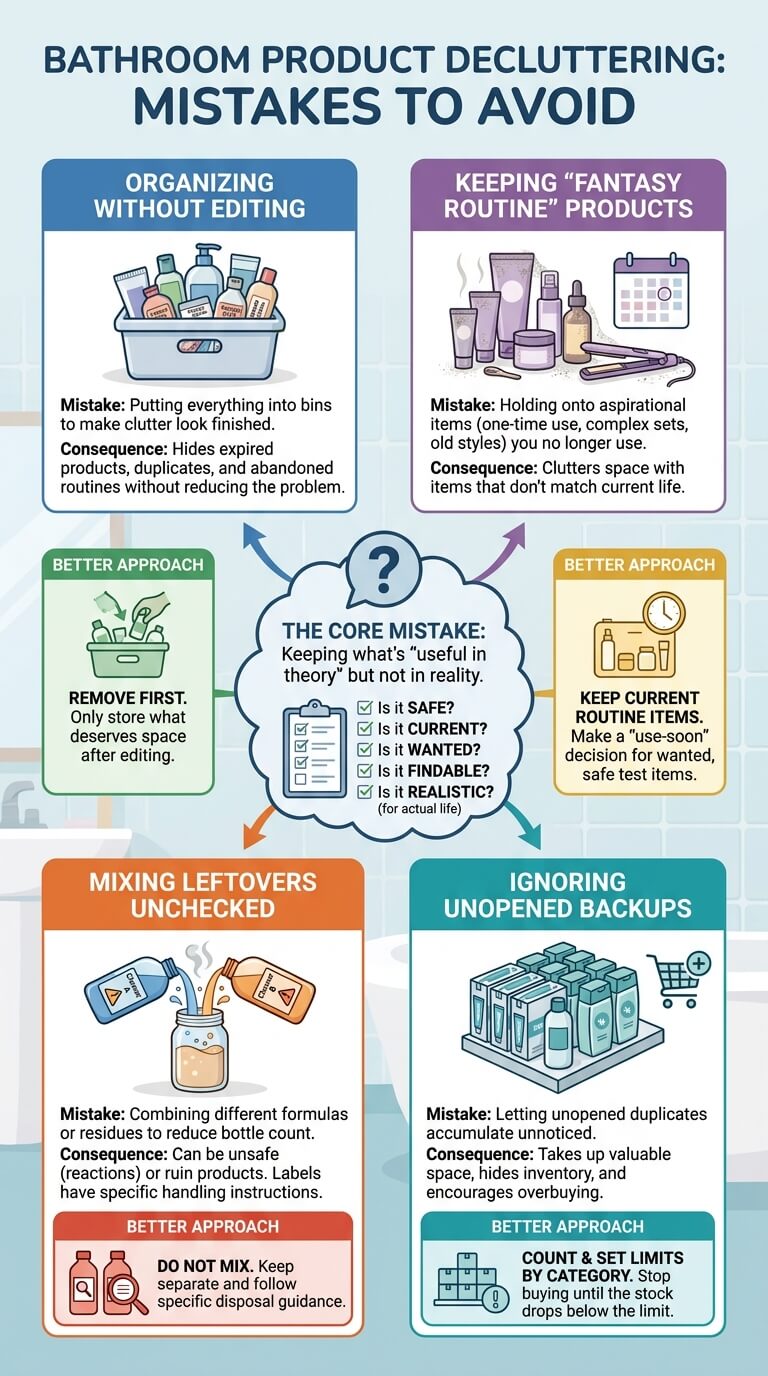
Most decluttering mistakes happen because the product still seems useful in theory. The bathroom gets crowded when everything might be useful someday. A practical edit asks whether the item is safe, current, wanted, findable, and realistic for the way the household actually lives.
Organizing everything instead of editing
Putting every product into a bin can make clutter look finished without reducing the problem. If the bathroom still holds expired products, duplicates, and abandoned routines, the organizer is only hiding the decisions. Remove first, then store what deserves space.
Keeping products for a fantasy routine
Aspirational products are common in bathrooms: the treatment used once, the skincare set that requires six steps, the hair product bought for a style you no longer wear. Keep products that match current routines and make a use-soon decision for safe items you genuinely want to test.
Pouring or mixing products without checking labels
Do not combine leftovers just to reduce bottles. Different formulas, cleaners, cosmetics, and treatments may not belong together, and some labels give specific storage or handling instructions. If two products are not clearly meant to be mixed, keep them separate and follow disposal guidance.
Ignoring unopened duplicates
Unopened duplicates can still be clutter. They take up space, hide what you already own, and encourage more buying because the inventory is hard to see. Count unopened backups and set a limit by category. If you have more than the limit, stop buying until the stock drops.
Maintenance Plan to Prevent Product Clutter
The best decluttering session is the one you do not have to repeat from zero. A simple maintenance plan keeps product buildup visible. It also reduces wasted money because you can see what is open, what is waiting, and what should not be purchased again yet.
Monthly mini edit
Once a month, remove obvious clutter from the bathroom: empties, abandoned samples, nearly finished duplicates, expired items, and products that migrated to the wrong zone. This should take only a few minutes when categories and limits are already set.
Use-up basket
A use-up basket is for safe products you want to finish soon. Keep it small and visible. Include a few duplicates, travel sizes, or almost-empty products, but do not let it become a second clutter bin. If an item sits there for months, make a final decision.
One-in-one-out rule for crowded categories
Use a one-in-one-out rule for categories that overflow often, such as skincare, shampoo, body wash, candles, lip products, or hair styling products. The rule does not need to apply to every item forever. Use it where crowding, overspending, or expiration is already a pattern.
Seasonal expiration check
Do a seasonal check for sunscreen, medicine, first-aid items, cosmetics, specialty skincare, and products stored in guest spaces. Check dates, label condition, texture, smell, and whether the household still uses the item. This prevents expired products from hiding behind newer purchases.
FAQ
These answers focus on product decluttering decisions, not full cabinet layouts or shower organizer setup. Once the product inventory is edited, storage choices become much easier and more specific.
How often should I declutter bathroom products?
A full bathroom product declutter is useful once or twice a year, but crowded bathrooms benefit from a monthly mini edit. Check empties, expired items, duplicates, and products that no longer match the current routine. Medicine and first-aid items should be checked by date more deliberately.
What bathroom products should I throw away first?
Start with empty containers, expired medicine, unidentified products, leaking bottles, dried-out cosmetics, rusty razors, broken packaging, and products that smell or look wrong. For medicine, chemicals, aerosols, and sharps, do not guess. Check the label and local disposal guidance before removing them from the home.
How do I declutter toiletries without wasting money?
Separate safe extras into a use-soon basket before throwing away usable products. Stop buying crowded categories until open products are finished. Keep one active product per category when possible, move sealed backups to a defined area, and avoid buying more just because storage looks neater.
What should I do with expired medicine or cosmetics?
Expired medicine should be handled according to medication guidance, package instructions, and local disposal options. Expired or changed cosmetics should not be returned to daily use just because the container is still full. When in doubt, choose caution, especially with eye products, damaged packaging, or items used by children.
Final Thoughts
Bathroom product decluttering is not about owning the fewest items. It is about making the bathroom support real routines with products that are current, safe, useful, and easy to find. Remove expired and unsafe items first, set limits for duplicates, move backups out of daily zones, and then organize what remains. Once the product inventory is smaller, cabinets, drawers, toiletries, and shower storage become much easier to manage.

Ethan Carter is the Founder & Editor of HomeCleanSecrets. Based in the United States, he has 5 years of experience creating practical home cleaning, laundry care, stain removal, decluttering, and home organization content. His goal is to help everyday households clean smarter and build simple routines that are easier to maintain.
Read more about Ethan Carter on his author page: https://homecleansecrets.com/ethan-carter/