
A dehumidifier can make a damp room feel easier to manage, but only when the unit is chosen, placed, drained, cleaned, and used for the right problem. Many people buy one after a basement smells musty, a closet feels clammy, or windows collect condensation, then feel disappointed when the room still seems damp a week later. Often the machine is not defective. The setup is incomplete.
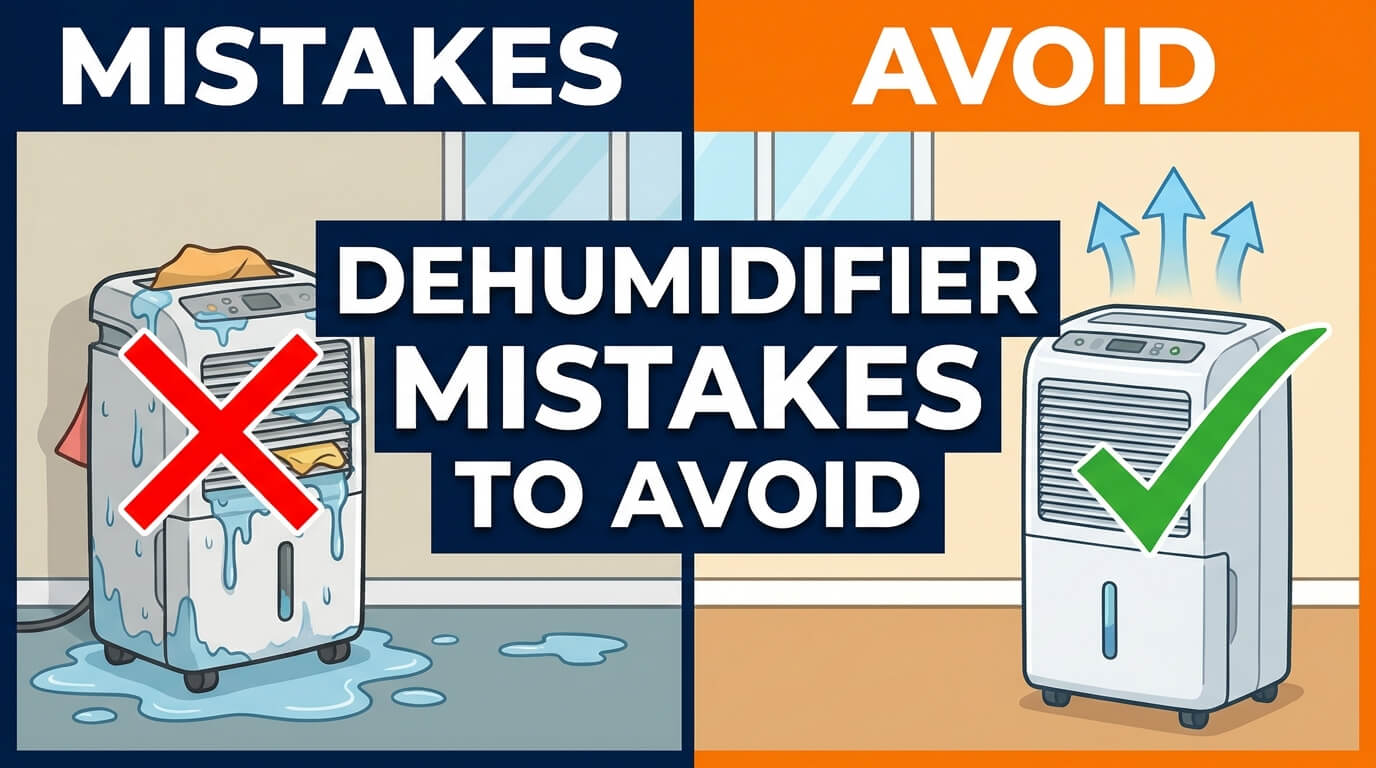
The most important dehumidifier mistakes to avoid are buying before you measure humidity, choosing the wrong capacity, blocking airflow, ignoring drainage, setting the humidity target poorly, skipping filter and bucket cleaning, and expecting the machine to solve leaks or standing water. This guide walks through each mistake in a practical order so you can correct the easy things first and recognize when the room needs a repair, better ventilation, or professional inspection.
Quick Answer: The Biggest Dehumidifier Mistakes
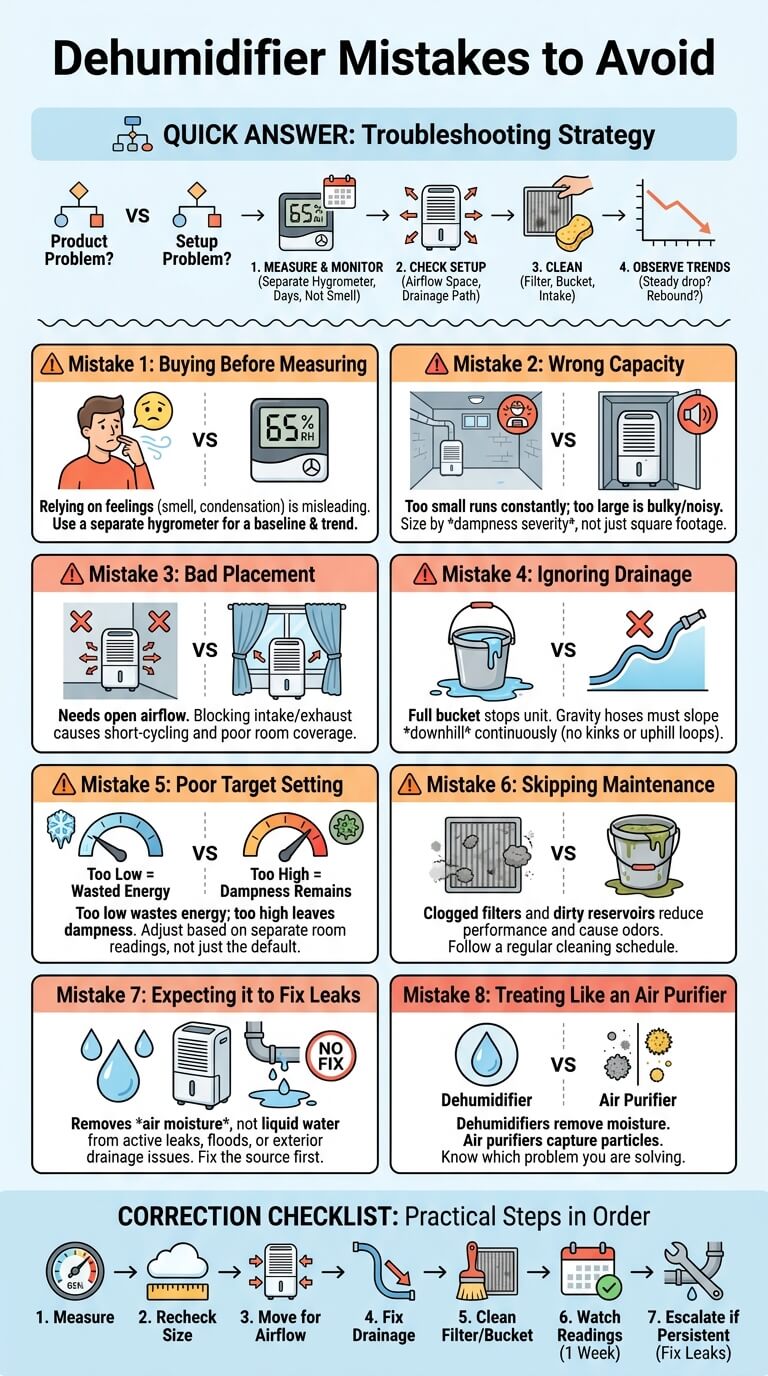

The fastest way to troubleshoot a disappointing dehumidifier is to separate product problems from setup problems. A good test is to check the room humidity with a separate hygrometer, confirm the machine has open space around the intake and exhaust, empty or connect the drain properly, clean the filter, and then watch the readings for several days instead of judging by smell alone.
If the product keeps disappointing you, the issue may be that the room needs a different part of the home moisture control setup, not just another dehumidifier.
Buying without measuring
A room can feel damp because of high humidity, cool surfaces, poor airflow, a musty material, or an active water problem. Before buying or returning a unit, measure the room at several times of day. A small digital hygrometer gives you a baseline and helps you tell whether the appliance is lowering humidity or only running without changing the room.
If the current unit lacks the drainage, noise control, or maintenance access you need, use those lessons when you choose a dehumidifier next time.
Choosing the wrong size
A unit that is too small may run constantly and still leave the room above your target. A unit that is much larger than a small, mildly damp room may feel noisy, bulky, and more expensive to run than necessary. Sizing is not only about square footage. Dampness level, basement temperature, doors, laundry activity, and air movement all matter.
If the unit runs constantly or shuts off too quickly, revisit what size dehumidifier you need before assuming the product is defective.
Bad placement
Dehumidifiers need open airflow. When the intake faces a wall, the exhaust is blocked by a curtain, or the unit sits behind storage bins, the machine may short-cycle, run louder, or dry the air near the unit without improving the rest of the room.
Many performance problems improve once you fix where to place the dehumidifier, especially around airflow, walls, curtains, and drainage.
Ignoring drainage
A full bucket stops many machines until it is emptied. A gravity hose that runs uphill, kinks behind the unit, or drains into a risky location can create leaks or repeated shutoffs. Drainage is part of the setup, not an accessory to think about later.
Skipping maintenance
Dust on the filter, grime in the reservoir, and lint around the intake reduce performance and can make the unit smell worse. Most owners do not need complicated maintenance, but they do need a repeatable cleaning schedule based on the manual and how often the machine runs.
Expecting it to fix leaks
A dehumidifier can reduce moisture in the air. It does not repair a plumbing leak, wet foundation, roof issue, flooded carpet, or drainage problem outside the home. The EPA mold and moisture guidance emphasizes fixing water problems as part of controlling moisture at home.
Mistake 1: Buying Before You Measure Humidity
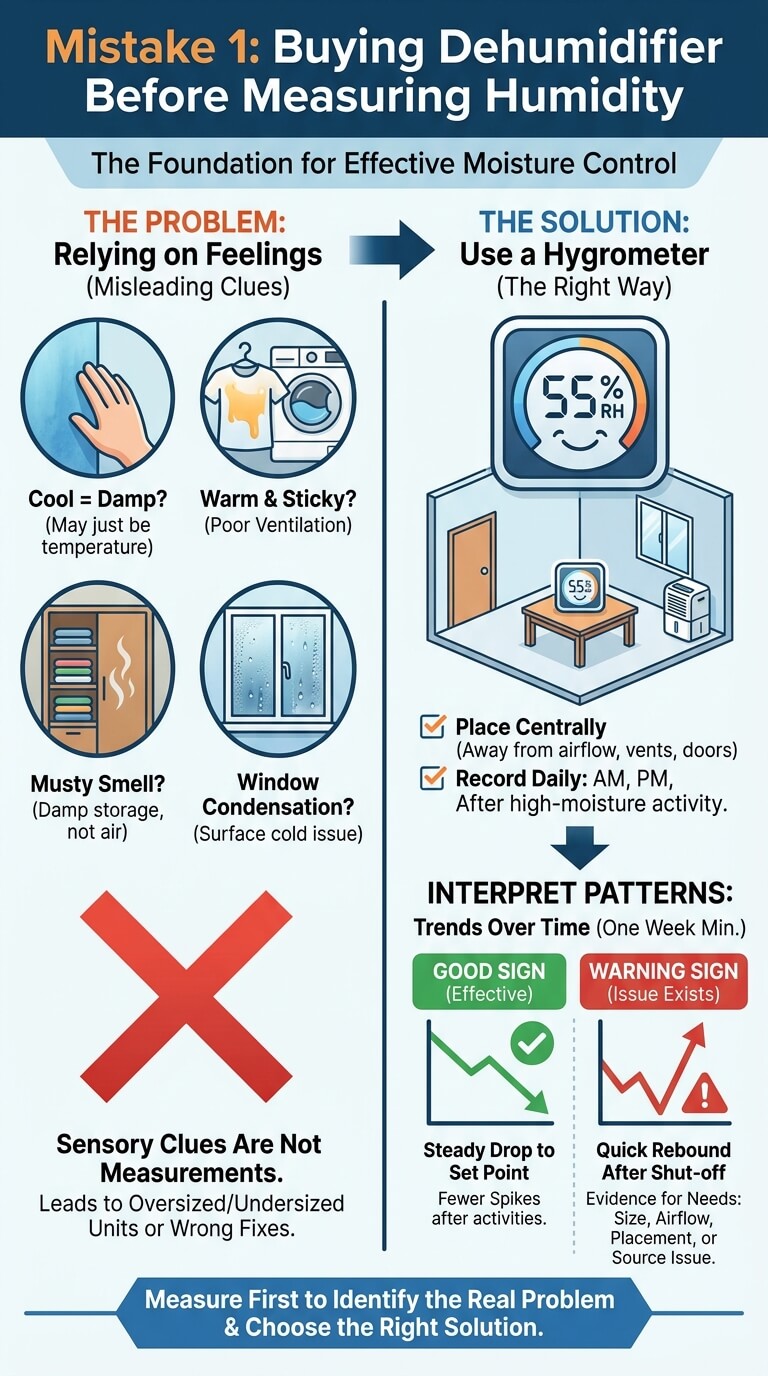
The first mistake happens before the appliance is even plugged in. Many people buy based on how a room feels, how a basement smells, or what a neighbor uses. Those clues are useful, but they are not measurements. Without a starting number, you cannot tell whether the unit is helping, oversized, undersized, or fighting a different problem.
Using a home humidity meter helps you avoid buying, sizing, or adjusting a dehumidifier based only on how the room feels.
Why feelings can be misleading
A cool basement may feel damp even when humidity is only moderately high. A warm laundry area may feel sticky because the dryer vents poorly. A closet may smell musty because stored fabric was put away slightly damp. Condensation on windows may be a surface temperature issue as much as an air moisture issue. If you rely only on comfort, you may buy more machine than the room needs or miss the real cause.
How a hygrometer prevents guesswork
Place a hygrometer near the center of the room, away from direct airflow from the dehumidifier, vents, exterior doors, and wet laundry. Write down the reading in the morning, evening, and after moisture-heavy activities. If the room stays high even after the unit runs for several days, you have stronger evidence that size, placement, drainage, airflow, or a moisture problem needs attention.
What patterns matter more than one reading
One reading tells you very little. A room that rises after rain, laundry, showers, or closed windows needs a different response than a room that stays damp all day. Watch the trend for a week when possible. A good sign is a steady drop toward the set point and fewer spikes after normal activities. A warning sign is humidity that rebounds quickly after the machine shuts off.
Mistake 2: Choosing the Wrong Capacity
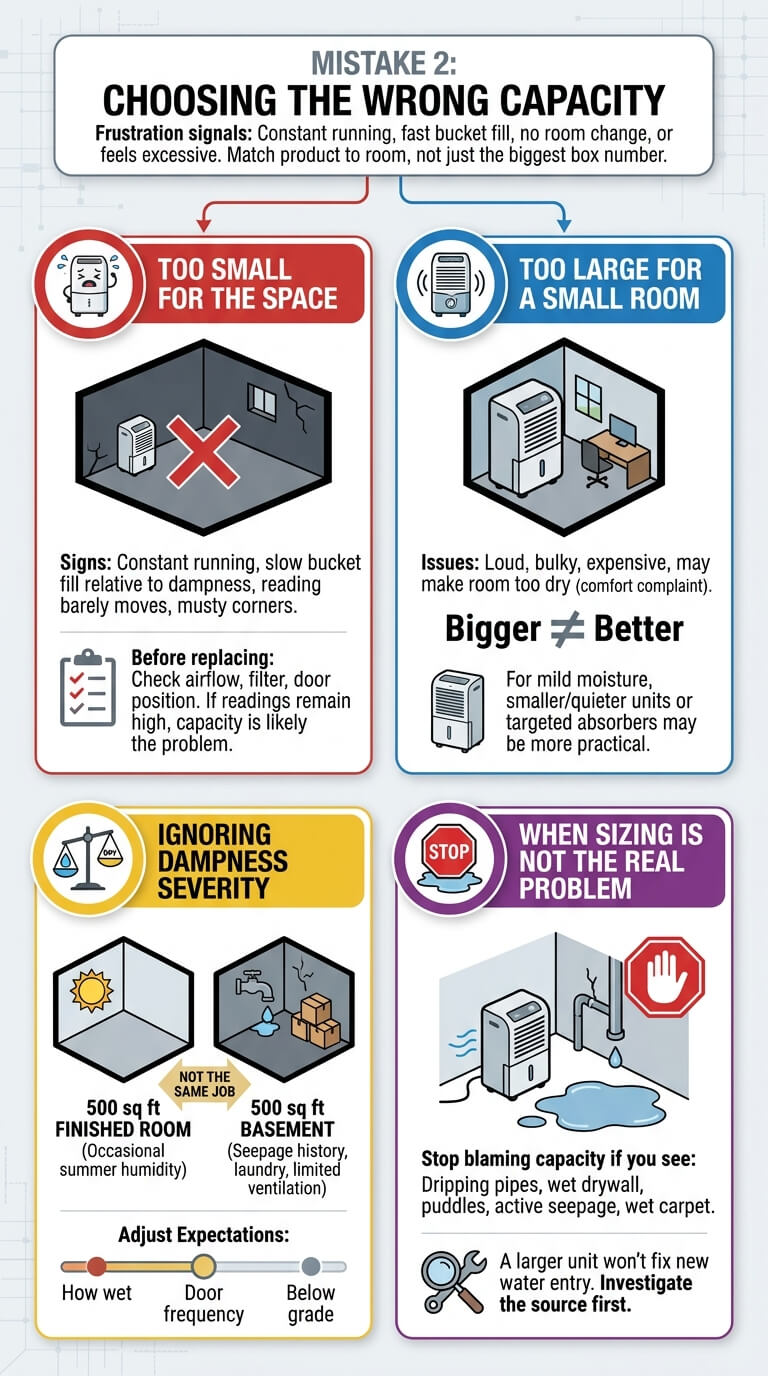
Capacity mistakes usually show up as frustration: the unit runs constantly, the bucket fills too fast, the room never feels different, or the appliance seems excessive for the space. Modern dehumidifier labels and efficiency details can be confusing, so match the product to the room instead of choosing only by the biggest number on the box. The ENERGY STAR dehumidifier guidance is a useful starting point for understanding efficient models and product categories.
Too small for the space
A small unit in a large basement may remove water, but not enough to change the room quickly. Signs include constant running, slow bucket filling relative to the dampness you feel, a reading that barely moves, and musty areas far from the unit. Before replacing it, check airflow, filter condition, and door position. If those are correct and readings remain high, capacity may be the problem.
Too large for a small room
A very large unit in a small bedroom, closet-adjacent area, or lightly damp office may be loud, bulky, and expensive for the task. It may also create comfort complaints if the room feels too dry at times. Bigger is not automatically better. For a mild moisture problem, a smaller, quieter unit or a targeted closet absorber may be more practical.
Ignoring dampness severity
Square footage alone does not describe the job. A 500-square-foot finished room with occasional summer humidity is not the same as a 500-square-foot basement with seepage history, laundry, stored cardboard, and limited ventilation. Use area as the first screen, then adjust your expectations based on how wet the space gets, how often doors stay open, and whether the room is below grade.
When sizing is not the real problem
Stop blaming capacity if you see dripping pipes, wet drywall, puddles, active seepage, or carpet that remains wet. A larger appliance may remove more water from the air, but it will not fix new water entering the home. In that situation, protect belongings, reduce immediate dampness if safe, and investigate the water entry before buying another unit.
Mistake 3: Putting It in the Wrong Spot
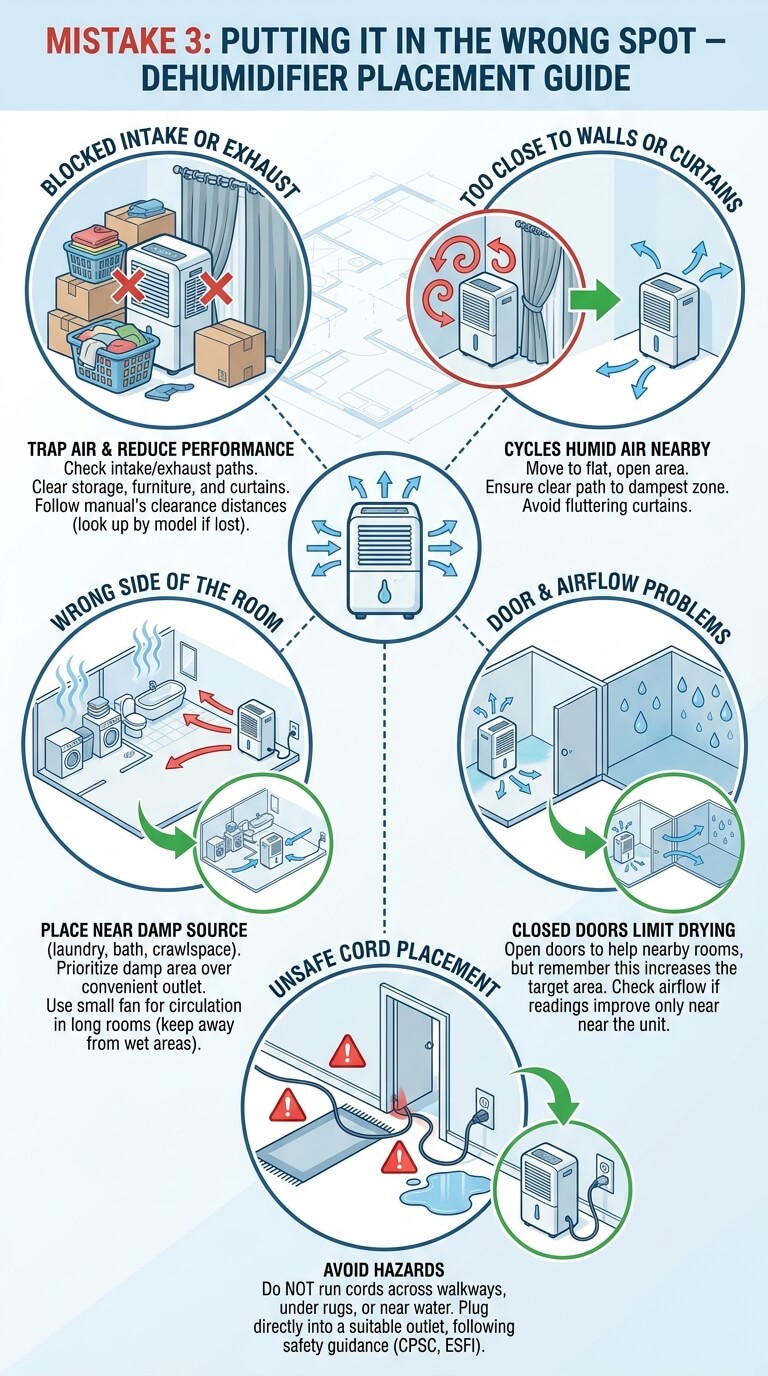
A dehumidifier works by pulling room air across internal coils and returning drier air to the space. Placement affects how much room air reaches the machine. Poor placement can make a capable unit look weak and can add noise, heat buildup, tripping hazards, or drainage problems.
Blocked intake or exhaust
Check the intake and exhaust path before you judge performance. Storage bins, laundry baskets, walls, curtains, and furniture can trap air around the unit. Most manuals specify clearance distances. Follow the manual because the needed space varies by model. If you lost the booklet, look up the manufacturer instructions by model number.
Too close to walls or curtains
A unit pushed tight against a wall may cycle humid air around one corner instead of treating the room. Curtains can flutter against the exhaust or intake and reduce airflow. Move the machine to a flat, open area with stable footing. In a basement, this often means moving it away from stacked storage and giving it a clear path to the dampest open area.
Wrong side of the room
When moisture comes from a laundry zone, bathroom doorway, crawlspace entrance, or damp exterior wall, the best location is not always the most convenient outlet. Put the unit where air can move from the damp area toward the machine, while still keeping cords and drainage safe. In a long room, a small fan may help circulation, but never aim water or wet air directly into unsafe electrical areas.
Door and airflow problems
A dehumidifier in a closed room will mainly dry that room. If you expect it to help nearby rooms, air must be able to circulate. Open doors may help, but they also increase the area the unit must handle. If readings improve near the machine but not elsewhere, the problem may be airflow between spaces rather than machine failure.
Unsafe cord placement
Do not run cords across walkways, under rugs, through pinched doorways, or near standing water. Plug the unit into a suitable outlet according to the manual. The CPSC and ESFI home electrical safety guidance warns against unsafe cord and outlet habits, especially where appliances draw significant power.
Mistake 4: Ignoring Drainage Setup

Drainage mistakes are common because the machine may seem to work at first. Then the bucket fills overnight, the unit stops, the hose leaks behind the appliance, or water ends up where it should not. Treat drainage as part of performance. A dehumidifier that cannot remove collected water reliably cannot control humidity reliably.
Bucket overflow habits
If you rely on the bucket, choose a routine that fits the room. A damp basement may fill the bucket faster after storms or during humid weeks. Empty it before bedtime or before leaving the house if the unit tends to shut off when full. Make sure the bucket is seated correctly after each emptying, because many machines will not restart if the reservoir is slightly misaligned.
Hose slope problems
Gravity drainage needs a continuous downward path. A hose that rises over a threshold, loops behind the unit, or gets crushed under storage can stop water from moving. Use a short, straight path when possible. After setup, pour a small amount of water through the bucket or monitor the first collection cycle to confirm water reaches the drain.
Pump assumptions
Some units include a pump, some require an add-on, and some have only gravity drainage. Do not assume the hose port can push water upward to a sink or window. Check the manual for maximum lift, required hose size, and pump cleaning instructions. If the pump sounds different, stops moving water, or triggers an error, stop and troubleshoot before leaving it unattended.
Floor drain and sink risks
A floor drain can be convenient, but it still needs to be open, stable, and positioned so the hose cannot pop out. A sink drain may be risky if the hose can slip, the basin is used by other people, or the unit runs when nobody is home. Avoid draining into a bucket that can overflow unless you are checking it often.
Checking for leaks after setup
After changing a hose, moving the unit, or cleaning the bucket, run the appliance while you are home. Check behind the machine, around the hose connection, and near the drain after the first collection cycle. A paper towel placed under the hose connection can reveal slow drips before they reach flooring or stored items.
Mistake 5: Setting the Humidity Target Poorly
The humidity setting controls how aggressively the appliance runs. A poor target can waste energy, leave the room damp, or create comfort swings. Do not set the number once and ignore it all season. Use room readings, comfort, and the manual to adjust the target carefully.
Too low and energy waste
Setting the target very low may make the machine run longer than needed. The room may feel dry, the unit may add heat, and energy use can climb. If the space is already comfortable and readings are stable, raising the target slightly may keep moisture under control without constant running.
Too high and dampness remains
If the target is too high, the machine may shut off while the room still feels damp. This is common when people use the default setting without checking a separate hygrometer. If musty smell, condensation, or clammy surfaces remain, compare the machine display with a room reading away from the unit.
Seasonal adjustments
Basements, laundry rooms, and coastal homes often need different settings by season. A summer target may be too aggressive in cooler weather, while a rainy week may need more runtime than a dry week. Recheck after storms, after turning on air conditioning, and when you start or stop using a room heavily.
Why readings near the unit differ from room readings
The air beside the unit may be drier than the air across the room. That does not mean the display is useless, but it can mislead you. Compare the built-in reading with a hygrometer placed several feet away. If the numbers are far apart, focus on room circulation and placement before lowering the target further.
Mistake 6: Skipping Filter and Bucket Maintenance
A dirty dehumidifier can become noisy, weak, and unpleasant to use. Maintenance is not only about keeping the appliance nice. It affects airflow, odor, drainage, and long-term reliability. Always follow the manual because filter type, bucket design, pump parts, and storage instructions vary by model.
Dirty filters
Many dehumidifiers have a washable filter behind the intake grille. When it collects dust, lint, pet hair, or basement debris, airflow drops. Remove it according to the manual, rinse or vacuum only as allowed, let it dry fully, and reinstall it correctly. Never run the unit without a required filter unless the manufacturer specifically allows it.
Reservoir smell
The bucket holds collected water, so it can develop odor if it is left wet or dirty. Empty it regularly, wash it with mild dish soap if the manual allows, rinse well, and dry accessible surfaces before storage. Stop if you see slime, damage, or parts that do not fit back correctly.
Coil and intake dust
Dust around the intake, grille, and visible coil area can reduce performance. Unplug the unit before cleaning exterior vents. Use a soft brush or vacuum attachment gently, and do not bend fins or push tools inside the appliance. If the coil area is dirty beyond basic access, check the manual or contact the manufacturer.
When the main problem is dust, smoke, or pet dander, compare a dehumidifier vs air purifier so you do not expect moisture equipment to filter particles.
Manual cleaning schedule
A machine running daily in a dusty basement or laundry room needs more frequent attention than one used occasionally in a guest room. Put filter checks on a calendar during humid months. A practical routine is to inspect the filter weekly at first, then adjust once you know how fast dust builds up in that room.
Storage after the humid season
Before storing the unit, empty the bucket, disconnect and drain hoses, clean allowed parts, and let everything dry. Store it upright unless the manual says otherwise. If a unit was moved, shipped, or tipped, read the manual before restarting because some compressor appliances need time upright before use.
Mistake 7: Using It Where Another Fix Is Needed
A dehumidifier is helpful for controlling air moisture, but it should not be used as a substitute for repairing water problems. If you keep removing water and the room keeps getting wet, the appliance is only managing symptoms. The next step is to find out where moisture is entering or why it cannot leave.
Active leaks
Look for dripping pipes, supply line leaks, wet walls, water stains, or dampness that worsens after rain. Turn off water to a leaking fixture when appropriate and safe. Do not rely on the dehumidifier to dry a leak that continues to feed the room.
Standing water
Standing water is not a normal dehumidifier job. Remove water safely, protect electrical equipment, and avoid walking into a wet area if outlets, cords, or appliances may be involved. Once the obvious water is addressed, a dehumidifier may help dry air, but it should not be the first and only response.
Repeated visible growth
If visible growth returns in the same place after cleaning, moisture is still present. The problem may be a leak, condensation, wet building material, poor ventilation, or stored items touching a cold wall. The EPA mold course drying guidance explains why quick drying and correcting water problems matter after damp materials are discovered.
Ventilation failures
Bathrooms, laundry rooms, and kitchens can overwhelm a dehumidifier if moist air is not exhausted or diluted. Check whether bathroom fans work, dryer vents are clear, and windows or doors are being used in a way that brings in more humid air. A dehumidifier may help, but it may not be the main fix.
When to stop and investigate
Stop relying on the appliance alone if humidity stays high for a week of correct use, the same wall or floor stays wet, the unit collects unusual amounts of water every day, or electrical safety is uncertain. At that point, inspect plumbing, exterior drainage, ventilation, and building materials before spending money on a bigger machine.
Mistake 8: Treating It Like an Air Purifier
A dehumidifier and an air purifier solve different problems. Confusing them can lead to the wrong purchase or the wrong expectation. A dehumidifier removes moisture from air. An air purifier is designed to capture certain airborne particles through filtration. Neither device is a complete answer for every musty, dusty, or stale room.
Moisture removal versus particle filtration
If the room has high humidity, clammy surfaces, condensation, or damp stored items, moisture control comes first. If the room has dust, pollen, smoke particles, or pet dander, filtration may be the more relevant feature. Check what problem you can measure or observe before deciding what to run.
Musty smell context
Musty smell often points toward moisture, but the odor may also be attached to carpet, cardboard, fabric, or a drain. A dehumidifier can make conditions less damp, but it may not remove odor from contaminated materials. Clean or remove the item causing the smell when the surface or material allows it.
When pairing products makes sense
In some rooms, using both devices makes sense: a basement office with high humidity and dust, a laundry area with lint and moisture, or a pet area with damp air and airborne hair. Run each device according to its manual, give each one open airflow, and avoid crowding outlets or cords.
Why one device may not solve mixed problems
If a room has leaks, dust, poor ventilation, stored damp fabric, and high humidity, one appliance will not correct every cause. Make a short list of problems: water entry, air moisture, particles, odor sources, and airflow. Then fix the most physical problem first. Water entry beats appliance upgrades every time.
Dehumidifier Correction Checklist

When the room still feels damp, work through the correction checklist in order. This keeps you from buying another appliance before you have checked simple setup issues.
Measure
Place a hygrometer away from the unit and record readings for several days. Note rain, laundry, showers, open windows, and air conditioning use. The pattern tells you more than one number.
Recheck size
Compare the unit capacity with the actual room size, dampness level, and layout. Do not use square footage alone. Consider whether doors stay open, the room is below grade, and moisture spikes after weather or daily tasks.
Move for airflow
Give the unit clear space around intake and exhaust areas. Move bins, curtains, and furniture away. If one corner stays damp, improve air circulation before lowering the target.
Fix drainage
Empty the bucket consistently or correct the hose path. Check for upward loops, kinks, loose fittings, and risky drain locations. Watch the first cycle after every hose change.
Clean filter and bucket
Unplug the unit, clean the filter as the manual allows, wash the bucket if permitted, and remove dust from exterior vents. Let parts dry before reinstalling them.
Watch readings for a week
After corrections, give the room time. Track readings, bucket volume, runtime, and comfort for about a week. A slow but steady improvement is different from no change at all.
Escalate persistent moisture problems
If readings stay high, materials remain wet, or water keeps returning, look beyond the appliance. Check for leaks, drainage, ventilation, wet storage, and exterior water movement. Bring in qualified help when the problem involves wiring, plumbing, structural dampness, or repeated visible growth.
FAQ
What is the most common dehumidifier mistake?
The most common mistake is using a dehumidifier without measuring room humidity. Without a separate reading, it is hard to know whether the unit is working, whether the setting is wrong, or whether the room has a water problem the appliance cannot fix.
Why is my dehumidifier running but the room is still damp?
Common reasons include an undersized unit, blocked airflow, a dirty filter, a poor humidity setting, open doors increasing the load, or a continuing moisture problem such as a leak or wet material. Start with measurement, placement, drainage, and cleaning before assuming the machine is defective.
Can a dehumidifier be too big?
Yes, it can be impractical for a small or mildly damp room. It may be louder, bulkier, and less efficient for the way you use the space. Choose capacity based on room size, dampness severity, drainage needs, noise tolerance, and how often the room is occupied.
Is it bad to run a dehumidifier all day?
Running all day is not automatically bad if the unit is designed for continuous use, drainage is safe, and the room needs it. It becomes a problem when the appliance runs constantly because the target is too low, the filter is dirty, the unit is too small, or water is still entering the room.
How often should I clean my dehumidifier?
Follow the manual first. As a practical starting point, inspect the filter weekly during heavy use, empty the bucket before it sits too long, and clean allowed parts when dust, odor, or reservoir buildup appears. A basement or laundry room usually needs more attention than a clean spare bedroom.
Final Thoughts
Most dehumidifier problems are easier to fix when you stop guessing and check the basics in order: measure the room, confirm capacity, open the airflow path, set up drainage carefully, clean the filter and bucket, and watch the readings over time. A dehumidifier is useful when the problem is air moisture. It is not a repair tool for leaks, standing water, unsafe wiring, or wet building materials. Correct the setup first, then investigate deeper if the room keeps getting damp.

Ethan Carter is the Founder & Editor of HomeCleanSecrets. Based in the United States, he has 5 years of experience creating practical home cleaning, laundry care, stain removal, decluttering, and home organization content. His goal is to help everyday households clean smarter and build simple routines that are easier to maintain.
Read more about Ethan Carter on his author page: https://homecleansecrets.com/ethan-carter/