
An apartment cleaning checklist works best when it respects small rooms, limited storage, shared building areas, and rental-safe surfaces. A house checklist can feel too large for a studio or one-bedroom apartment because it assumes extra closets, outdoor space, utility rooms, and more control over fixtures. Apartment cleaning needs a tighter routine: clear the mess you see every day, protect surfaces you do not own, control odors quickly, and keep supplies simple enough to store safely.
Use this checklist as a practical apartment cleaning schedule for daily resets, weekly upkeep, monthly detail work, move-in cleaning, inspection preparation, and small-space odor control. The goal is not a spotless apartment every night. The goal is a home that feels manageable, does not smell stale, and can be cleaned without turning every cabinet into a supply closet.

Quick Answer: The Simple Apartment Cleaning Plan


The easiest plan is a three-layer routine: a 10-minute daily reset, a weekly apartment cleaning checklist, and a monthly detail pass. Daily work controls dishes, trash, laundry, crumbs, and bathroom moisture. Weekly work handles floors, fixtures, bedding, dust, and the kitchen. Monthly work catches the hidden areas that make a small apartment feel grimy, such as baseboards, cabinet fronts, fridge shelves, vent covers, closet corners, and trash-can interiors.
Daily apartment reset
Start with the items that create smells or attract pests the fastest. Wash dishes or load the dishwasher, wipe food spills, close food packages, take out trash that contains food waste, hang damp towels, and move laundry off the floor. In a small apartment, a sink full of dishes can make the whole home feel dirty because the kitchen, living area, and entry may share the same air.
Keep the reset short. Set a timer for 10 minutes and clean in this order: food, trash, moisture, floors, clutter. Wipe the counter after cooking, rinse the sink, shake crumbs from the table area, and return shoes, bags, and mail to their usual spots. A good test is whether you could wake up tomorrow and make coffee, shower, or leave for work without cleaning first.
Weekly apartment checklist
Once a week, clean the surfaces that get used constantly. Vacuum or sweep floors, mop hard floors as allowed by the flooring care instructions, clean the toilet and sink, wipe the shower or tub, clean mirrors, change bedding, empty all small bins, dust visible surfaces, and wipe kitchen counters, stovetop, microwave, fridge handle, and appliance fronts. CDC guidance on cleaning before disinfecting is useful here because most apartments need regular cleaning more often than heavy disinfecting.
Monthly apartment detail tasks
Monthly cleaning should catch what daily and weekly work miss. Wipe baseboards in high-traffic areas, clean behind the trash can, wash the kitchen bin, wipe cabinet fronts, clean the fridge shelf that catches spills, vacuum under the bed, clean closet floors, dust vents, and check bathroom corners for moisture or residue. If you have pets, wash pet bedding, vacuum upholstery edges, and clean around food and water bowls.
What Makes Apartment Cleaning Different

Apartment cleaning is different because the home is compact, surfaces may be landlord-owned, air can feel trapped, and storage is limited. You may not have a utility sink, garage, laundry room, outdoor drying area, or spare closet. You may also share walls, hallways, elevators, trash rooms, and laundry machines with neighbors, so odors and timing matter more.
Limited storage for supplies
A small apartment does not need a full shelf of specialty cleaners. Keep a compact kit that handles most tasks: dish soap, a mild all-purpose cleaner, toilet bowl cleaner, glass cleaner if needed, disinfectant for appropriate high-touch surfaces, microfiber cloths, scrub brush, sponge, gloves, trash bags, vacuum or broom, mop system, and a small caddy. Add specialty products only when your surfaces require them.
Store supplies in one safe zone instead of scattering bottles under every sink. If children or pets live in or visit the apartment, keep products up high, latched, or otherwise out of reach. Do not decant cleaners into decorative bottles unless the product label allows it and the new container is clearly labeled. In rental homes, original containers also make it easier to check directions before using a product on a surface you do not own.
Shared laundry and trash areas
Shared laundry changes the cleaning routine because you may not control machine cleanliness, timing, or ventilation. Carry laundry in a washable bag or basket, remove lint from dryers as required, do not leave wet clothes sitting, and wipe detergent spills from shared surfaces. At home, sort laundry into one or two containers rather than letting piles spread across the bedroom floor.
Rental-safe surfaces and fixtures
Rental surfaces can be older, refinished, painted, sealed, or repaired in ways you cannot see. Before using a strong product, check the product label and your rental rules. Test mild cleaners in a hidden spot when appropriate, especially on painted cabinets, laminate counters, stone-look surfaces, older tubs, vinyl floors, and metal fixtures. Stop if a cleaner changes color, softens paint, dulls a finish, or leaves a sticky film.
Ventilation, odors, and close neighbors
Many apartments have limited airflow, small bathrooms, interior kitchens, or windows that do not open well. When you clean, run the bathroom fan if available, use the range hood if it vents or filters properly, and open a window when weather and building conditions allow. EPA information on indoor air quality at home is a reminder that cleaning should reduce dust, moisture, and pollutants rather than cover them with stronger scents.
Apartment Kitchen Cleaning Checklist

The apartment kitchen usually affects the whole home because food smells and grease travel quickly. Clean it more often than any other zone, even if it is small. A clean kitchen also makes the rest of the apartment easier to reset because dishes, trash, and crumbs are often the reason a small space feels out of control.
Counters, sink, stovetop, and small appliances
After cooking, clear counters, wipe spills, rinse the sink, and clean the stovetop once it is cool. Pay attention to the edges around burners, the wall behind the stove, the front of the microwave, appliance handles, and the counter under small appliances. Crumbs under a toaster or coffee maker can attract pests and make the kitchen smell stale.
Fridge, trash, and food odors
Once a week, check leftovers and wipe fresh spills in the refrigerator. Once a month, remove one shelf or bin at a time if your manual allows it, wash it with mild soap and water, dry it fully, and put it back. Do not use harsh cleaners inside the fridge unless the manufacturer says they are safe. If an odor remains, look for spoiled food, sticky residue under drawers, or spills in door bins.
Small kitchen floor and cabinet tasks
Sweep or vacuum kitchen floors several times a week if you cook often. Mop with a damp, not soaking, mop and use a cleaner allowed for the floor type. Pay attention to the toe-kick area, corners near the fridge, and the floor under the trash can. These small areas collect crumbs and sticky spots faster than the open floor.
Cabinet fronts need gentle cleaning. Greasy fingerprints around handles are common in apartments with compact kitchens. Use a damp microfiber cloth and mild cleaner first. Stop if paint transfers to the cloth or the finish feels tacky. For cabinet interiors, clean one shelf at a time so you do not create a kitchen-wide mess. Throw out expired food, wipe crumbs, and return items in categories.
Apartment Bathroom Cleaning Checklist

An apartment bathroom needs frequent attention because moisture has fewer places to go. A small bathroom can look clean but still hold damp towels, soap residue, mildew staining, and smells around the toilet, drain, or shower curtain. Clean it in short passes so buildup never becomes a heavy scrub job.
Toilet, sink, shower, and mirror tasks
Weekly bathroom cleaning should cover the toilet bowl and exterior, seat hinges, flush handle, sink basin, faucet, counter, mirror, shower walls, tub ledge, and floor around the toilet. Use products made for the surface and follow label directions for dwell time, rinsing, and ventilation. Wear gloves and never mix bathroom cleaners.
Moisture, fan, and shower curtain issues
Run the bathroom fan during showers and after, if your apartment has one and the building allows it. Leave the shower curtain or door positioned so surfaces can dry. Spread towels out instead of hanging several wet items on one hook. HUD’s healthy home habits include keeping homes dry, clean, safe, and well ventilated, which fits apartment bathrooms especially well.
Rental-safe grout and caulk caution
Grout and caulk are common trouble spots in rentals because they may already be worn. Clean with the gentlest effective method first. Avoid scraping caulk with sharp tools, using harsh acids on grout, or applying abrasive powders to surfaces that can scratch. If caulk is cracked, missing, soft, or separating from the tub or wall, cleaning cannot repair it.
Stop if you see spreading discoloration under caulk, water stains on walls or ceilings, soft flooring near the tub, or a musty smell that returns right after cleaning. Take photos, note the date, and report the issue. A renter cleaning checklist should help you maintain the bathroom, not make you responsible for repairing building materials.
Living Area and Bedroom Checklist
Living rooms and bedrooms collect dust, clothing, hair, pet dander, food crumbs, and paper clutter. Because these rooms often share one open space in apartments, the fastest improvement comes from clearing floors and fabrics first. Once the fabric and floor load is lower, the whole apartment feels cleaner. For a broader list of tasks by space, use the room-by-room cleaning checklist and keep only the sections that fit the apartment.
Dust, floors, rugs, and upholstery
Dust visible surfaces weekly with a microfiber cloth, starting higher and working downward. Clean TV stands, nightstands, shelves, lamp bases, windowsills, and desk surfaces. Vacuum rugs and upholstery edges, especially where snacks, pet hair, or lint collect. If you have hard floors, vacuum or sweep before mopping so grit does not scratch the surface.
Small apartments often have furniture close to walls, which creates dust lines and hidden debris. Once a month, move lightweight furniture enough to vacuum behind and beneath it. Do not drag heavy furniture across rental floors. Use furniture sliders if appropriate, or clean only what you can reach safely.
Laundry, bedding, and closet overflow
Laundry can make a clean apartment feel messy faster than almost anything else. Keep one hamper for dirty clothes and one small basket for items that need to be put away. Wash bedding weekly or on a regular schedule that fits your household, pets, allergies, and climate. Let damp towels and sweaty clothes dry before they sit in a closed hamper.
Pet hair or roommate mess zones
For pets, clean the zones they actually use: bed, crate, litter area, food bowls, water mat, sofa corner, and entry path. Vacuum more often during shedding seasons and wash pet fabrics according to care tags. Keep pet food sealed and wipe around bowls so crumbs and moisture do not sit on the floor.
Small-Space Cleaning Supply Setup
A compact supply setup keeps cleaning easy without filling the apartment with bottles, gadgets, and duplicate tools. The best supplies are the ones you can reach quickly, use correctly, and store safely. If a product is too specialized, too harsh for your surfaces, or hard to store, it probably does not belong in a beginner apartment kit. The cleaning supplies list can help you build a minimal kit without filling limited storage with duplicate products.
Minimal apartment cleaning kit
A minimal apartment kit can include microfiber cloths, non-scratch sponge, scrub brush, dish soap, mild all-purpose cleaner, toilet bowl cleaner, glass cleaner if needed, disinfectant for appropriate moments, gloves, small broom or vacuum, mop, trash bags, and a compact caddy. Add laundry detergent, stain remover, and a lint roller if laundry is part of your routine.
Where to store supplies safely
Store cleaners away from food, heat, and direct sun. Keep products in original containers with readable labels. Do not store incompatible products together in a way that encourages mixing. Poison Control’s guidance on household cleaner safety is a good reminder to treat cleaning products as chemicals, even when they are common household items.
What not to buy for a small apartment
Skip oversized bulk products if you have nowhere safe to store them. Avoid duplicate sprays that all do the same job, abrasive tools that might scratch rental surfaces, and strong specialty cleaners bought for one problem you have not diagnosed. Do not buy a carpet cleaner, steam cleaner, or floor machine unless your flooring and lease allow it and you know where it will be stored.
Also avoid products that promise to solve odor without cleaning. Air fresheners, scent beads, and plug-ins may add fragrance, but they do not remove trash leaks, damp towels, dirty drains, pet bedding, or food residue. If the apartment smells better only while fragrance is running, the actual cleaning problem is still there.
Move-In, Move-Out, and Inspection-Friendly Cleaning
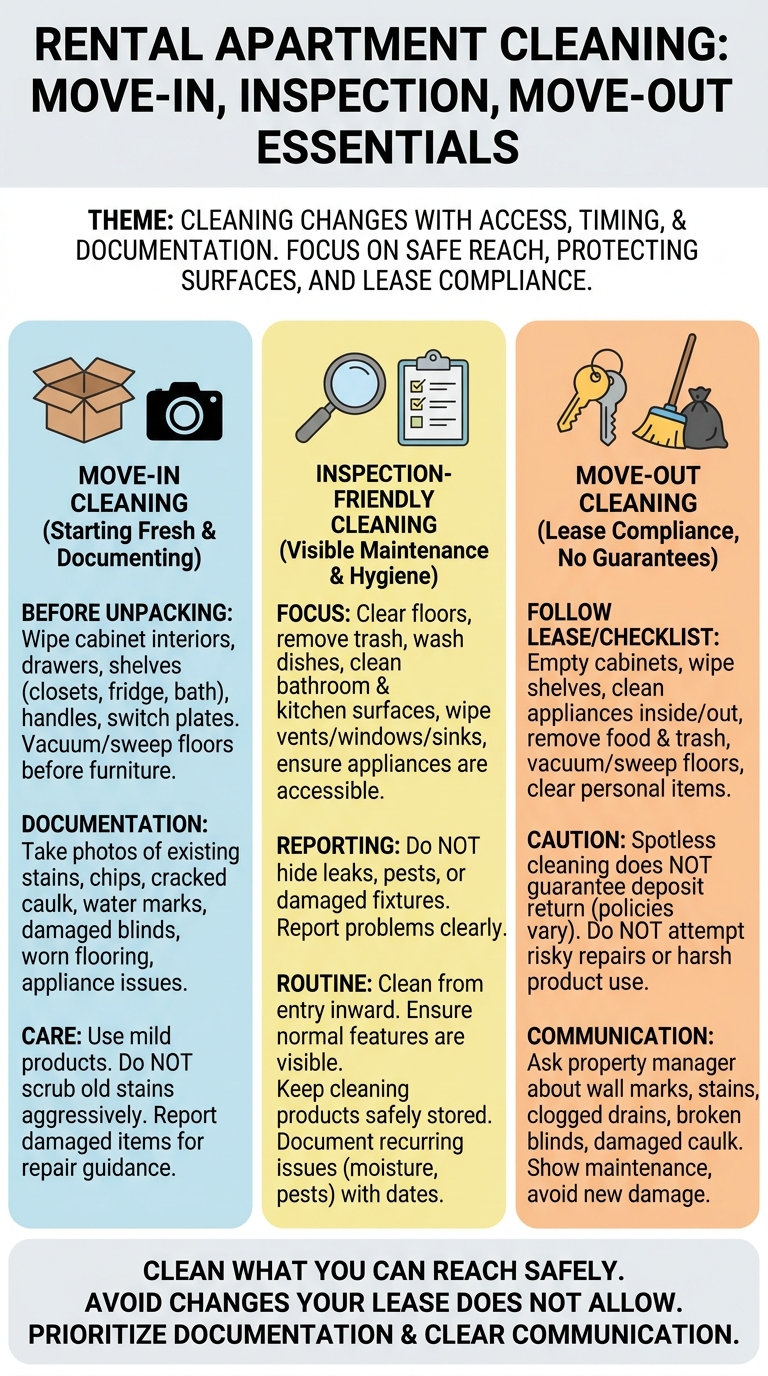
Apartment cleaning changes during move-in, inspection, and move-out periods. These are not the same as normal weekly upkeep because access, timing, and documentation matter. Clean what you can reach safely, protect rental surfaces, and avoid making changes that your lease does not allow.
Before unpacking
Before unpacking, clean the surfaces that will be covered later. Wipe cabinet interiors, drawers, closet shelves, bathroom shelves, fridge shelves, appliance handles, switch plates, and inside the bathroom vanity. Vacuum or sweep floors before rugs and furniture go down. Take photos of existing stains, chips, cracked caulk, water marks, damaged blinds, worn flooring, and appliance issues.
Use mild products first because you may not know the surface history. Do not scrub old stains aggressively on painted walls, tubs, counters, or floors. If something looks damaged before you move in, document it and ask for repair guidance. Move-in cleaning is about starting fresh and noticing issues, not restoring every old surface yourself.
Before a lease inspection
Before an inspection, focus on visible maintenance and hygiene: clear floors, take out trash, wash dishes, clean the bathroom, wipe the kitchen, remove mildew-like surface residue where safe, and make sure vents, windows, sinks, and appliances are accessible. Do not hide problems such as leaks, pests, or damaged fixtures. Report them clearly.
A good inspection-friendly routine is to clean from the entry inward. Clear the entry, living area, kitchen, bathroom, bedroom, and closets enough that normal apartment features can be seen. Keep cleaning products put away safely. If the apartment has a recurring issue, such as moisture or pests, keep a dated note of what you cleaned and when you reported it.
Before moving out without making promises about deposits
Move-out cleaning should follow your lease, building instructions, and move-out checklist from property management. Common tasks include emptying cabinets, wiping shelves, cleaning appliances, removing food, cleaning the bathroom, vacuuming or sweeping floors, taking out trash, and removing personal items. Do not assume that a spotless apartment guarantees any specific deposit outcome because policies, damage, and local rules vary. Use the move-in cleaning checklist when the apartment is empty and you still have access to cabinets, closets, and floor edges.
Clean before the final walkthrough if possible, but do not attempt risky repairs or use harsh products to erase old wear. If you are unsure about wall marks, carpet stains, clogged drains, broken blinds, or damaged caulk, ask the property manager what they prefer. A careful move-out clean should show that you maintained the apartment without creating new damage at the end. For the final empty-apartment handoff, switch to the move-out cleaning checklist.
Common Apartment Cleaning Mistakes
Most apartment cleaning mistakes come from trying to solve a small-space problem with too much product, too much water, or too little routine. The fix is usually simpler: clean sooner, ventilate when possible, use the right product for the surface, and stop when a problem looks like maintenance instead of dirt.
Using harsh products in tiny unventilated rooms
Strong products can feel like a shortcut in a small bathroom or kitchen, but they can also create fumes, damage finishes, or make the room unpleasant to use. Use products according to the label, never mix cleaners, and ventilate when the label calls for it. If you feel eye, nose, throat, or breathing irritation, leave the area and get fresh air.
Disinfectants are not needed for every surface every day. Many routine jobs only need cleaning to remove dirt, grease, and residue. Save disinfecting for appropriate high-touch surfaces, illness cleanup, raw-meat contact areas, or product-specific uses. More product is not better if it leaves residue, damages a surface, or makes the apartment harder to breathe in.
Letting trash and laundry create odors
Trash and laundry are the two biggest odor problems in many apartments. Food waste in a closed cabinet can smell quickly. Damp towels in a hamper can sour. Gym clothes, pet blankets, and dish cloths can make a clean room smell stale. If odors return after you clean counters and floors, check bins and fabrics first.
The fix is to reduce holding time. Take out food trash more often, wash bins after leaks, hang towels to dry, run laundry before hampers are packed tight, and wash kitchen cloths frequently. Keep one small basket for laundry overflow so clothes do not spread across chairs, floors, and closet corners.
Ignoring landlord or product instructions
Renter-safe cleaning means reading directions. Some leases restrict certain products, machines, adhesives, drain treatments, wall cleaning methods, or carpet cleaning methods. Product labels also tell you where a cleaner can be used, how long it should sit, whether it must be rinsed, and what surfaces to avoid.
When directions conflict, choose the safer path and ask before proceeding. This matters most for floors, countertops, stone, refinished tubs, painted cabinets, appliances, drains, and anything attached to plumbing or electricity. A clean apartment is not worth a damaged finish, a worsened clog, or a maintenance issue that should have been reported.
FAQ
These quick answers can help you adjust the checklist to your apartment size, schedule, and storage limits.
How often should I clean my apartment?
Do a small daily reset, a weekly cleaning session, and a monthly detail task. Daily tasks should handle dishes, trash, laundry, spills, and bathroom moisture. Weekly tasks should cover the bathroom, kitchen, floors, dust, and bedding. Monthly tasks should catch baseboards, vents, cabinet fronts, fridge shelves, bins, and hidden floor areas.
What is the fastest way to clean a small apartment?
Clean in the order that changes the room fastest: trash, dishes, laundry, surfaces, floors. Put loose items into their proper zones before wiping anything. Clean the kitchen and bathroom first because they affect smells and daily use. Finish with floors so crumbs, dust, and hair are removed after surfaces are clear.
What supplies do I need for an apartment?
Most apartments need a small kit: microfiber cloths, sponge, scrub brush, gloves, dish soap, mild all-purpose cleaner, toilet bowl cleaner, glass cleaner if needed, disinfectant for suitable uses, trash bags, vacuum or broom, and a mop that fits the floor type. Add specialty cleaners only when your lease, care label, or manufacturer manual says they are appropriate.
How do I keep an apartment from smelling stale?
Remove odor causes before adding fragrance. Take out food trash, wash bins, dry towels, run laundry, clean drains, wash bedding, vacuum rugs, and check pet areas. Ventilate when weather, safety, and building rules allow. If a musty smell returns after cleaning, check for dampness under sinks, around windows, in closets, near the shower, and behind the toilet.
Final Thoughts
A good apartment cleaning checklist should make small-space living easier, not more complicated. Keep the daily reset short, clean the kitchen and bathroom before they affect the whole apartment, rotate monthly detail tasks, and store supplies safely in one compact zone. Follow product labels, care tags, manuals, and rental rules whenever you clean a surface you do not own.
When something looks like moisture damage, plumbing trouble, failing caulk, spreading stains, pests, electrical issues, or a broken fixture, stop treating it like ordinary dirt. Clean what is safe, document what you see, and report maintenance problems through the proper rental process. The best apartment cleaning routine protects your time, your surfaces, and the place you live.

Ethan Carter is the Founder & Editor of HomeCleanSecrets. Based in the United States, he has 5 years of experience creating practical home cleaning, laundry care, stain removal, decluttering, and home organization content. His goal is to help everyday households clean smarter and build simple routines that are easier to maintain.
Read more about Ethan Carter on his author page: https://homecleansecrets.com/ethan-carter/