
Moisture absorbers for closets can help when a small enclosed space feels damp, smells musty, or holds shoes, coats, linens, or seasonal clothing that trap humidity. They are most useful in closets, wardrobes, armoires, storage cabinets, and other tight areas where a full dehumidifier would be too large or unnecessary. The best option depends on the closet size, how damp the space feels, whether spills would be risky, and how often you can check or replace the product.
A closet absorber is not a repair tool. It will not fix a roof leak, stop water entering an exterior wall, dry a wet carpet, or control humidity across a whole room. Treat it as a small-space helper. First remove wet items, create airflow, check for stains or soft surfaces, and measure humidity if possible. Then choose an absorber that fits the space and can sit safely away from clothing, children, pets, wood finishes, and anything that could be damaged by liquid or residue.

Quick Answer: When Closet Moisture Absorbers Make Sense
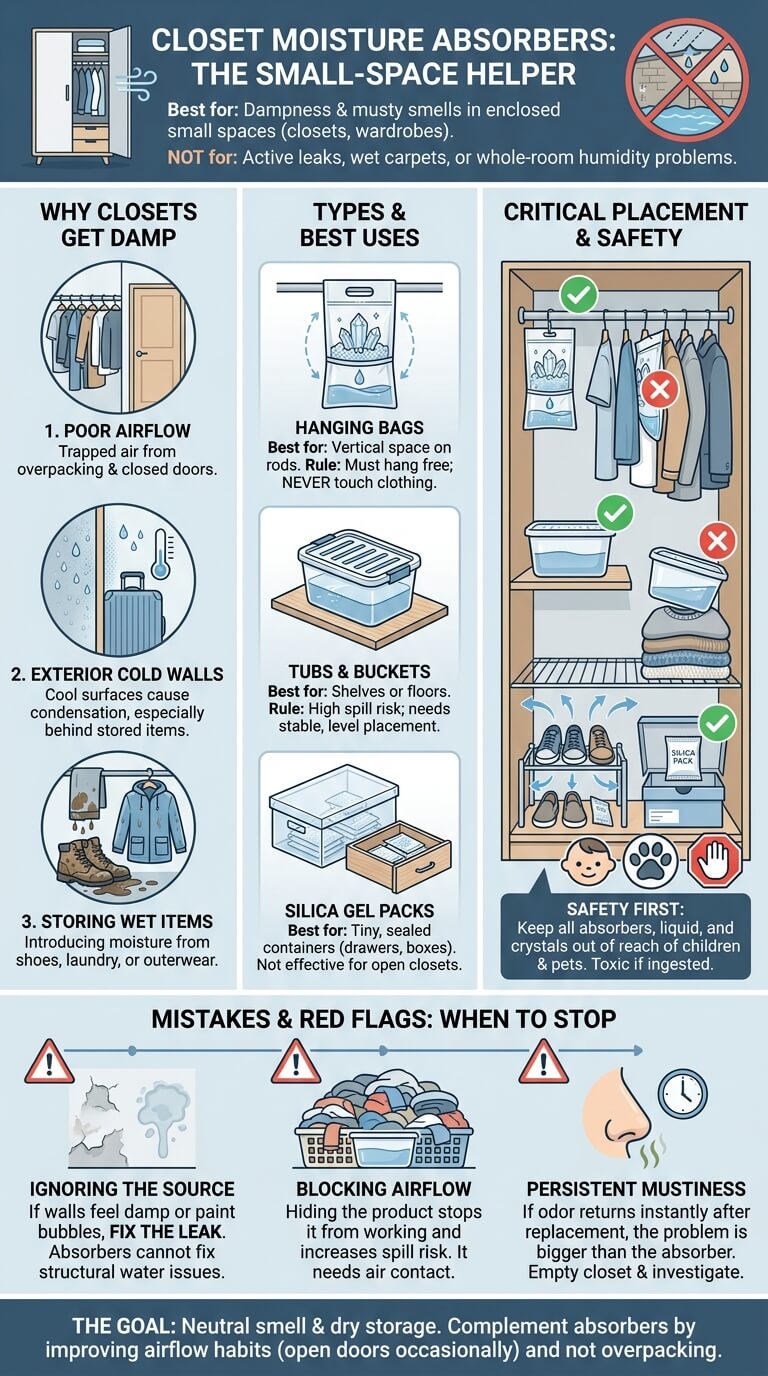
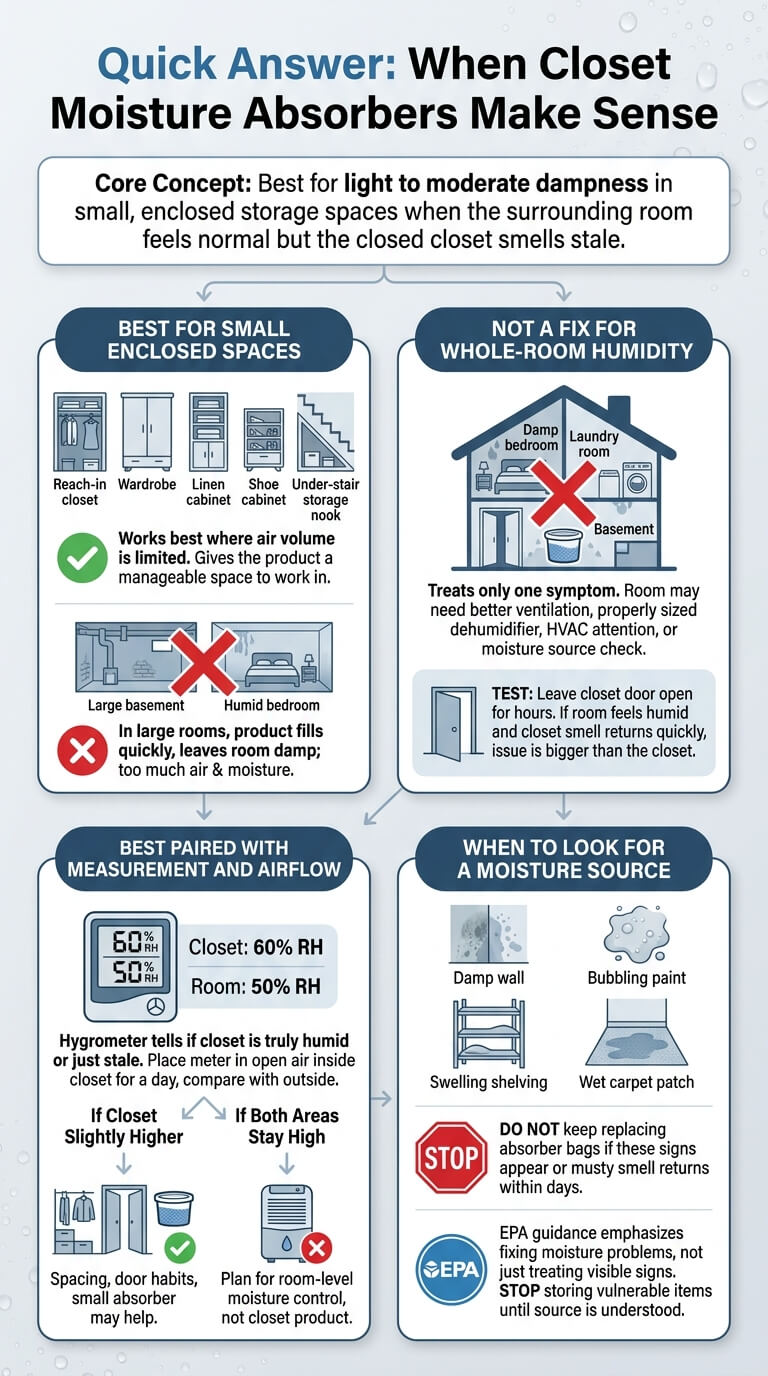
Closet moisture products make the most sense when the problem is light to moderate dampness inside a small storage space. They are especially useful when the surrounding room feels normal but the closed closet smells stale after a few days.
If the dampness is not limited to one enclosed storage area, compare the broader home moisture control products before relying on closet absorbers alone.
Best for small enclosed spaces
A passive absorber works best where air volume is limited. A reach-in closet, wardrobe, linen cabinet, shoe cabinet, under-stair storage nook, or coat closet gives the product a manageable space to work in. In a large basement or humid bedroom, the same product may fill quickly and still leave the room damp because there is too much air and moisture for a small container to handle.
Not a fix for whole-room humidity
If the entire bedroom, laundry room, or basement feels damp, a closet product is only treating one symptom. The room may need better ventilation, a properly sized dehumidifier, HVAC attention, or a moisture source check. A good test is to leave the closet door open for a few hours. If the room itself still feels humid and the closet smell returns quickly, the issue is probably bigger than the closet.
Best paired with measurement and airflow
A small hygrometer can tell you whether the closet is truly humid or simply holding stale air and odors. Place the meter in open air inside the closet for a day, then compare it with the room outside. If the closet is only slightly higher, spacing, door-opening habits, and a small absorber may help. If both areas stay high, plan for room-level moisture control instead of relying on a closet product.
If the surrounding room is also humid, the better fix may be placing a dehumidifier in the room rather than inside the closet.
When to look for a moisture source
Do not keep replacing absorber bags if the wall feels damp, paint bubbles, shelving swells, carpet stays wet, or the musty smell returns within days. The EPA mold and moisture guidance emphasizes fixing moisture problems rather than only treating visible signs. Stop storing vulnerable items in that closet until you understand where the dampness is coming from.
Why Closets Get Damp or Musty
Closets often have worse air movement than the rest of the room. A space can smell musty even when the bedroom looks clean because shoes, coats, baskets, boxes, and closed doors hold humidity in place.
Poor airflow
Many closets have no vent, no window, and no regular air exchange. When the door stays shut, moisture from shoes, outerwear, freshly washed laundry, or humid air has fewer ways to leave. The first improvement is often simple: open the door daily, avoid packing shelves wall to wall, and leave a gap between stored items and the back wall.
Exterior walls and cold spots
A closet on an exterior wall can run cooler than the room. Cool surfaces can make moisture problems more noticeable, especially behind boxes, suitcases, hanging clothes, or furniture pushed tight against the wall. Check corners, baseboards, shelf backs, and the wall behind long garments. If one area feels colder or shows staining, do not cover it with storage until it has been checked.
Wet shoes or laundry
Shoes, umbrellas, rain jackets, gym bags, towels, and not-quite-dry laundry can raise closet humidity quickly. A closet absorber may help with leftover moisture, but it should not be asked to dry wet items. Let damp items dry in open air first. Store shoes on a tray or rack where air can move around them, and avoid sealing sweaty gear into a small closet overnight.
Overpacked shelves
Closets get musty faster when every shelf and rod is packed tightly. Air cannot move between fabrics, boxes, and walls. Moisture then lingers in folds, corners, and the backs of shelves. A useful rule is to leave enough space that you can slide a hand between hanging groups and see the back wall without moving half the closet.
Seasonal humidity
Some closets only act up during humid summer weather, rainy weeks, or seasonal transitions when HVAC use changes. In those cases, a small absorber may be a reasonable seasonal tool. Mark the date you place it and check it during the first week. If it fills unusually fast, the closet may be receiving more moisture than expected.
Types of Closet Moisture Absorbers
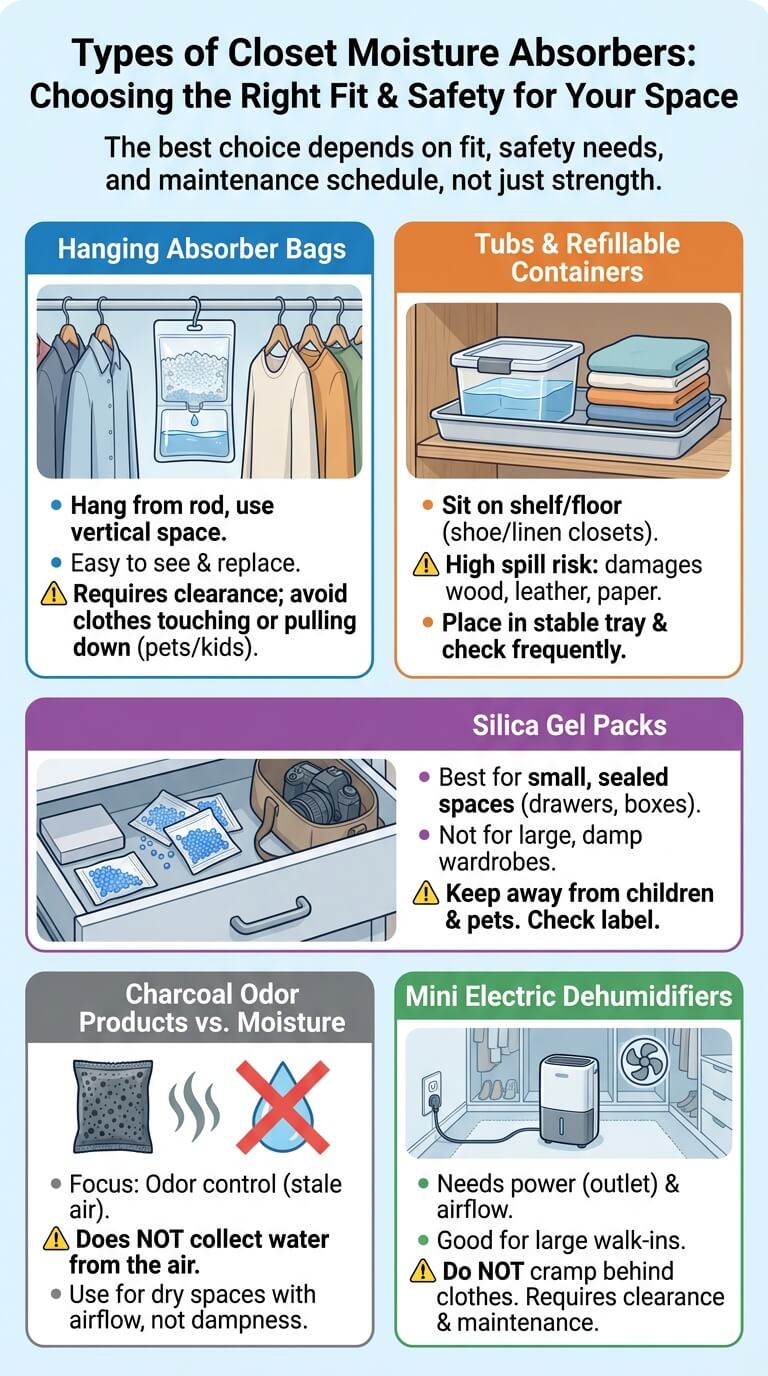
Most closet products fall into a few categories. The right choice is not always the strongest product. It is the one that fits your closet, your safety needs, and your ability to check it on schedule.
Hanging absorber bags
Hanging bags are common in clothes closets because they can hang from the rod and use vertical space. Many contain moisture-attracting crystals with a lower chamber that collects liquid. They are easy to see and replace, but they need enough clearance so clothes do not press against the bag. Do not hang one where a sleeve, hanger, pet, or child can pull it down.
Tubs and refillable containers
Tubs and refillable containers usually sit on a shelf or closet floor. They can be useful in shoe closets, linen closets, and storage cabinets, but spill risk matters. A tub of collected liquid should not sit where it can tip onto wood flooring, leather shoes, fabric bins, paper keepsakes, or painted shelving. If you use a tub, place it in a stable tray and check it before it is close to full.
Silica gel packs
Silica gel is best for small containers, drawers, camera bags, document boxes, craft bins, and tightly stored items rather than a large open closet. Packets are usually not enough to dry a damp wardrobe, but they can help protect small sealed spaces. Keep packets away from young children and pets, and follow the product label if the packet is rechargeable or disposable.
Charcoal odor products versus moisture products
Activated charcoal is often sold for odor control. It may help reduce smells, but it is not the same as a moisture absorber designed to collect water from the air. If your main issue is dampness, choose a product that clearly states it absorbs moisture and gives placement or replacement directions. If the closet is dry but stale, charcoal and better airflow may be more relevant.
Mini electric dehumidifiers and where they differ
Small electric units can be useful near a closet or inside a larger walk-in space with an outlet and safe clearance. They are different from disposable absorbers because they need power, airflow, maintenance, and safe placement. Do not squeeze an electric unit into a cramped closet behind clothing. Follow the manual for clearance, water removal, temperature limits, and electrical safety.
How to Choose a Closet Moisture Absorber
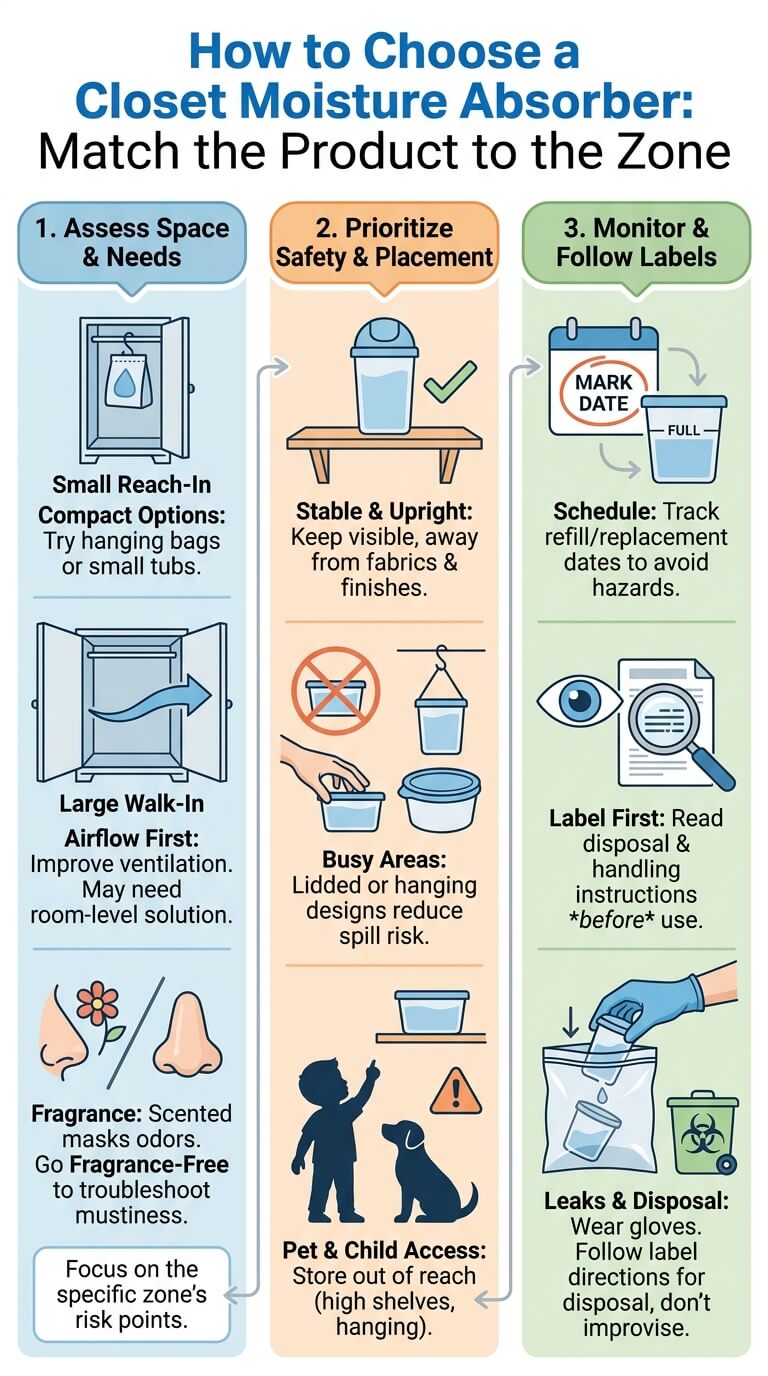
Choosing a closet absorber is less about buying the strongest product and more about matching the product to the storage zone. A damp shoe closet, a wardrobe with delicate clothing, and a linen closet near a bathroom do not have the same risk points.
When you move from disposable absorbers to an electric unit, compare the main features before you choose a dehumidifier.
Closet size and airflow
For a small reach-in closet, one hanging bag or a compact tub may be enough to test. A larger walk-in closet may need better airflow first, then a room-level solution if the whole area stays humid. If the closet has vents, leave them unblocked. If it has no airflow at all, opening the door daily may help more than adding several hidden products.
Spill risk and placement
Spill risk is one of the biggest buying factors. Products that collect liquid should sit upright, remain visible, and stay away from fabrics and finishes. Avoid flimsy shelves, narrow ledges, and crowded floors where shoes or baskets hit the container. A lidded or hanging design may be safer than an open tub in a busy family closet.
Fragrance-free versus scented
Scented products can make a closet smell fresher for a while, but fragrance can also cover up a moisture problem. If you are troubleshooting mustiness, start fragrance-free so you can tell whether the odor is improving. Scented products may also bother sensitive users or transfer smell to clothing and linens. Read the label before placing them near baby items, bedding, uniforms, or stored fabric.
Pet and child access
Any product that contains crystals, pellets, liquid, fragrance, or powder should be placed where children and pets cannot reach it. The Poison Control information on desiccants is a useful reminder that household drying products should still be handled carefully. Use closed doors, high shelves, hanging positions, and stable trays as needed, and discard damaged packaging right away.
Refill or replacement schedule
Before buying, check how you will know the product is done. Some hanging bags show collected liquid. Some tubs require refills. Some silica gel packs change color or need recharging. Mark the date on a calendar or on the container with removable tape. A forgotten absorber can become a spill hazard or simply stop helping.
Label warnings and disposal
Read the label for ingredients, placement limits, disposal directions, surface warnings, and refill instructions. Do not pour collected liquid into a sink or trash container unless the label says that is acceptable. Keep the package until you know how to replace or dispose of the product. If the product leaks, wear gloves, protect nearby items, and follow the label directions rather than improvising.
Placement Guide for Closets and Wardrobes
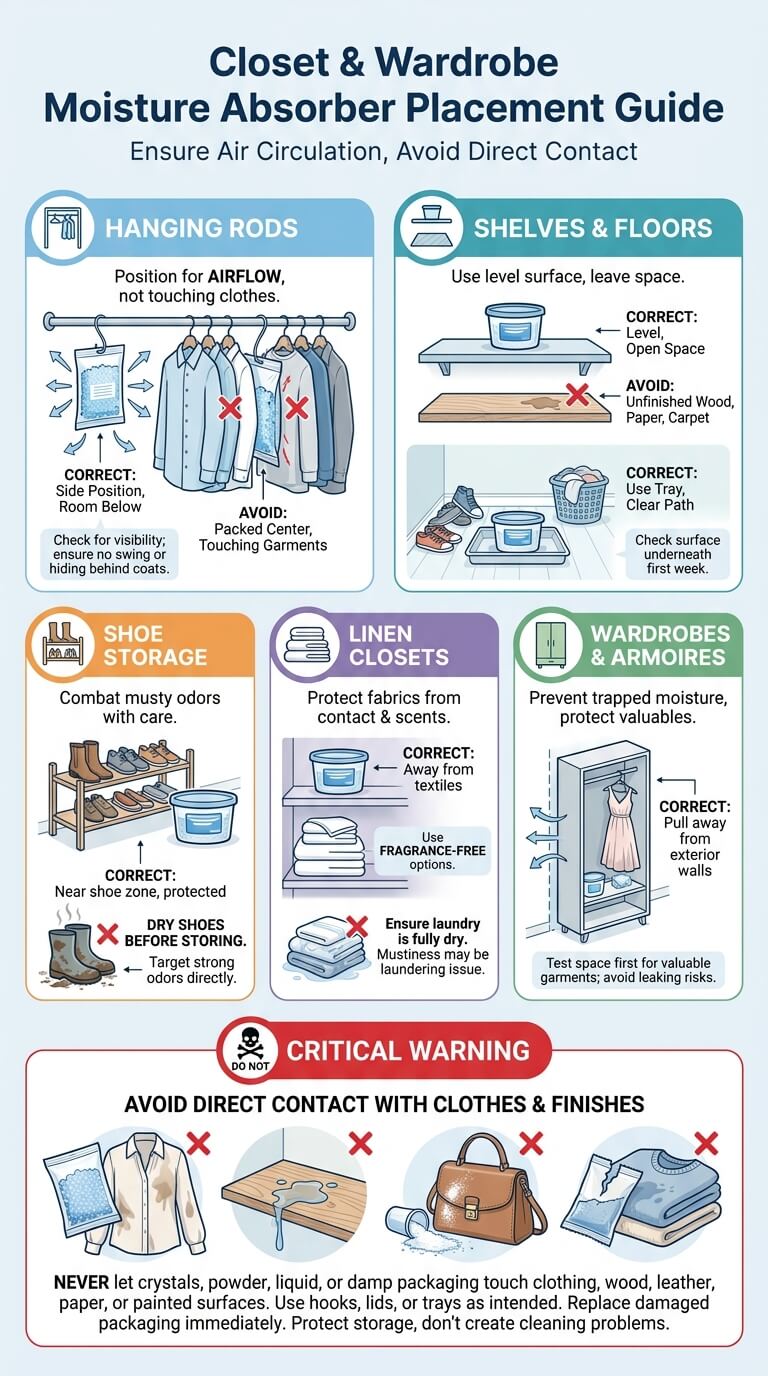
Good placement makes a closet absorber more useful and less risky. The product needs contact with air, not direct contact with clothing.
Hanging rod placement
Hang absorber bags where air can move around them and where clothing will not rub the pouch. A side position near the end of the rod is often better than the packed center. Leave space below the bag so the liquid chamber hangs straight. If the bag swings, touches garments, or gets hidden behind coats, move it to a more visible spot.
Shelf and floor placement
Shelf products should sit on a level surface with room around them. For floor placement, use a tray and keep the container away from foot traffic, laundry baskets, and shoe piles. Do not place liquid-collecting products directly on unfinished wood, carpet, leather, paper, or delicate painted surfaces. Check the surface underneath during the first week.
Shoe storage areas
Shoe closets often smell musty because footwear brings in sweat and outdoor moisture. Let damp shoes dry before storing them, then use racks that allow airflow. Place a tub or bag near the shoe zone but not where shoes can knock it over. If one pair smells strongly, clean or air out that pair instead of expecting a closet absorber to fix the whole closet.
Linen closets
In a linen closet, keep products away from towels, sheets, and pillowcases. Use fragrance-free options if linens touch skin or belong to children or guests. Make sure clean laundry is fully dry before folding. If towels smell musty after storage, the issue may be laundering, drying, or overpacking, not only closet humidity.
Wardrobes and armoires
Freestanding wardrobes and armoires can trap moisture because the back panel sits close to a wall. Pull the unit slightly away from exterior walls if space allows. Place small absorbers where they cannot touch fabric or wood finishes. For valuable garments, test the product in the space first and avoid scented or liquid-collecting products that could leak near delicate fabric.
Avoiding direct contact with clothes and finishes
Never let crystals, powder, collected liquid, or damp packaging touch clothing, wood, leather, paper, or painted shelves. If a product comes with a hanger, hook, lid, or tray, use it as intended. If packaging is torn or damp on the outside, remove it carefully and replace it. A moisture absorber should protect storage, not become a new cleaning problem.
Closet Moisture Control Checklist
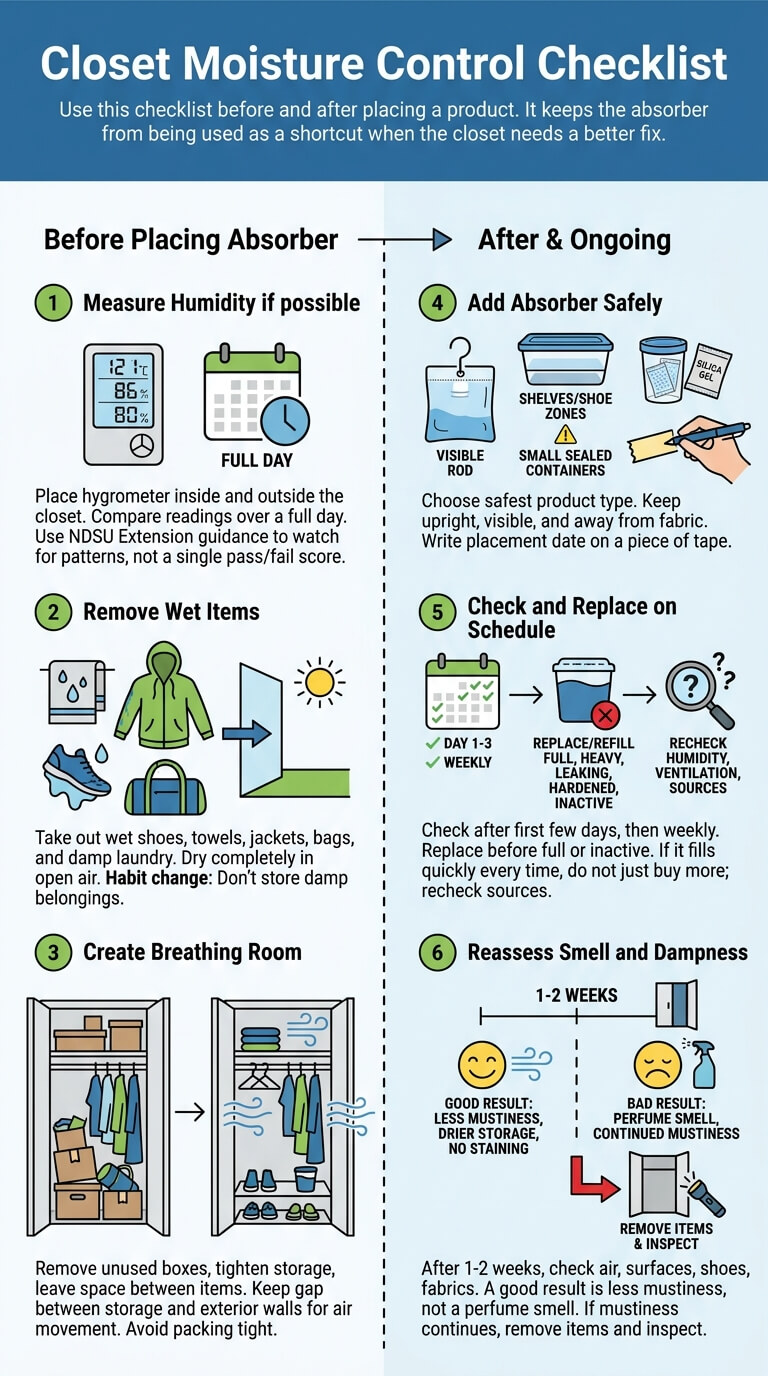
Use this checklist before and after placing a product. It keeps the absorber from being used as a shortcut when the closet needs a better fix.
Measure humidity if possible
Place a hygrometer in the closet and another in the room outside if you have two. Compare readings over a full day. The North Dakota State University Extension humidity guidance gives helpful context for watching indoor humidity and condensation. Use the numbers as a pattern check, not as a single pass or fail score.
Remove wet items
Take out wet shoes, damp towels, rain jackets, gym bags, and laundry that was folded too soon. Dry those items in open air before returning them. If the closet smells better after wet items are removed, a small absorber may help maintain the space, but the real habit change is not storing damp belongings.
Create breathing room
Remove unused boxes, tighten up shoe storage, and leave space between hanging items. Keep at least a small gap between storage and exterior walls. Air should be able to move around the product and around the items you want to protect. If the closet is packed tight again, the musty smell may return even with a new absorber.
Add absorber safely
Choose the safest product type for the closet. Use hanging bags for visible rod placement, stable tubs for shelves or shoe zones, and silica gel for small sealed containers. Keep products upright, visible, and away from fabric contact. Write the placement date on a small piece of tape so you know when to check it.
Check and replace on schedule
Look at the product after the first few days, then weekly until you understand how fast it fills. Replace or refill it before it is full, heavy, leaking, hardened, or inactive. If it fills quickly every time, do not just keep buying more. Recheck humidity, ventilation, and possible moisture sources.
Reassess smell and dampness
After one to two weeks, open the closet and check the air, surfaces, shoes, and fabrics. A good result is not a perfume smell. It is less mustiness, drier storage, and no new staining or damp surfaces. If mustiness continues, remove stored items and inspect the closet instead of adding another product behind the clutter.
Mistakes to Avoid
Most closet absorber problems come from using the right product in the wrong place, or using a small product for a problem that needs repair or room-level moisture control.
Using absorbers in a wet closet
A wet closet is not a normal use case. If carpet, drywall, baseboards, shelving, or stored items are wet, remove belongings and address the water source. A passive absorber is too slow and too small for active wetness. Using one in that situation can delay the repair and allow stored items to stay damp longer.
Letting liquid containers tip
Collected liquid can damage surfaces and fabrics. Do not place tubs where doors, shoes, vacuum cleaners, pets, or laundry baskets can hit them. Do not balance a container on a wire shelf unless the product is designed for that surface. Use a tray and keep the container visible so you notice when it needs attention.
Blocking all airflow
Do not push absorbers behind stacks of clothes, bins, or towels. The product needs air movement to be useful. If the closet is packed so tightly that air cannot reach the product, the answer is not more absorbers. The answer is fewer items, better spacing, and a storage layout that lets the closet dry between uses.
Hiding absorbers behind clothes
A hidden absorber is easy to forget. It may fill, leak, harden, or stop working without being noticed. Place it where you can see it when you open the door. If appearance bothers you, use a stable shelf location or a neat hanging spot rather than burying it behind long garments.
Ignoring a wall, roof, or plumbing moisture source
Recurring stains, soft trim, bubbling paint, or damp corners should not be treated with storage products alone. The HUD Healthy Homes program highlights moisture control as part of healthier housing. If closet dampness appears near plumbing, a roof line, an exterior wall, or a window, deal with the building condition before returning valuable stored items.
When a Closet Needs More Than a Moisture Absorber
A closet product should make a small enclosed space easier to manage. If the warning signs keep returning, stop treating the closet like a simple storage problem.
Repeated musty smell after replacement
If the odor returns after every replacement, remove everything and inspect the closet empty. Smell the wall, floor, shelving, bins, shoes, and fabrics separately. Sometimes the absorber is working, but one stored item is still musty. Other times, the odor is coming from the wall or floor, which needs a different response.
Damp walls or staining
Damp walls, dark stains, swollen trim, peeling paint, and soft shelving are reasons to pause. Do not cover the area with boxes or hanging clothes. Dry items in a separate space, document what you see if you rent, and get the moisture source checked. A closet product can hide the smell while the material problem continues.
High room humidity outside the closet
If a hygrometer shows that the whole room stays humid, manage the room before fine-tuning the closet. A nearby room dehumidifier, better ventilation, or HVAC adjustment may do more than several closet bags. Once the room improves, use a closet absorber only as a small backup for the enclosed space.
Visible growth or persistent condensation
Visible growth, recurring condensation on closet walls, or damp stored items should be handled carefully. Do not brush off growth inside a packed closet and keep using the space as usual. Remove belongings, avoid spreading debris, and follow appropriate cleanup guidance or get professional help when the area is beyond a small surface cleanup.
When to stop using stored items until evaluated
Pause storage when items feel damp, smell strongly musty, show spots, or sit against a suspicious wall. Wash washable fabrics before reuse if care labels allow. Keep paper, leather, wool, delicate clothing, and sentimental items out of the closet until conditions are stable. Protecting belongings often starts with taking them out, not adding another product.
Alternatives and Complements
Closet absorbers work better when they are part of a simple storage routine. The goal is to reduce trapped moisture before it becomes odor, staining, or fabric damage.
Hygrometer monitoring
A small humidity meter helps you decide whether the closet is improving. Check before adding a product, then again after a week. If the reading drops only when the door stays open, airflow is part of the solution. If readings stay high with the door open, the surrounding room may need attention.
Door and spacing habits
Open closet doors during dry parts of the day, especially after rain, laundry, or shower use nearby. Leave space on shelves and rods. Avoid storing plastic bags full of fabric, because they can trap odor and moisture. Use breathable garment bags for appropriate clothing, and keep heavy storage boxes slightly away from exterior walls.
Room dehumidifier nearby
If the whole room is humid, a properly placed room dehumidifier may help the closet indirectly. Keep the closet door open part of the time so drier room air can circulate. Do not put a full-size dehumidifier in a cramped closet unless the manual allows that use, the unit has safe clearance, and drainage can be handled without spills.
Better storage containers
Use sealed containers only for items that are completely dry and suitable for closed storage. For clothing and linens, breathable storage may be better when the closet itself needs airflow. For documents, photos, crafts, or small valuables, silica gel inside a sealed container can be more targeted than a large closet tub.
Cleaning before storing seasonal clothes
Body oils, sweat, dust, and odors can become more noticeable in a damp closet. Clean seasonal clothing before storing it, and make sure it is fully dry. Follow care tags, especially for wool, leather, down, silk, and specialty fabrics. A moisture absorber can help the air, but it cannot make dirty or damp clothing safe for long storage.
If the issue seems more like dust, smoke, or airborne odor than dampness, compare a dehumidifier vs air purifier before buying more closet products.
FAQ
These answers cover the closet-specific questions that usually come up after choosing a product type and deciding where it can sit safely.
Do closet moisture absorbers really work?
Yes, they can work in small enclosed spaces with light to moderate moisture. They are most helpful when the closet is slightly damp, poorly ventilated, or seasonally musty. They do not work well as the only solution for leaks, wet materials, basement humidity, or a whole room that stays humid.
Are moisture absorber bags safe near clothes?
They can be safe when used exactly as labeled and kept from touching clothes. Hang them where fabric cannot rub the bag, where the liquid chamber stays upright, and where children or pets cannot pull them down. Do not use damaged packaging near clothing or shelves.
How often should I replace a closet moisture absorber?
Follow the product label first. In a typical closet, check after the first few days, then weekly until you learn how quickly it fills or changes. Replace it when the label indicates, when the container is close to full, when crystals are spent, or when the product no longer appears active.
Can I use a dehumidifier in a closet?
A mini electric unit may work in a larger walk-in closet if the manual allows the setup, the unit has safe clearance, and you can empty or drain it properly. A full-size dehumidifier usually belongs in the room, not squeezed behind clothing. Never run an electric unit where fabric blocks airflow or water could spill onto cords.
What is better for a closet, silica gel or calcium chloride?
Silica gel is usually better for small sealed containers, drawers, boxes, and delicate storage zones where spill risk should be low. Calcium chloride products are often used for closets because they can collect more moisture, but many create liquid that must be contained safely. Choose based on the space size, spill risk, access by children or pets, and the product label.
Final Thoughts
Closet moisture absorbers are useful when you treat them as small-space helpers, not miracle fixes. Start by removing wet items, creating breathing room, checking for stains, and measuring humidity if possible. Then choose a product type that fits the closet and can be placed safely without touching fabric, finishes, shoes, or stored paper.
The best result is a closet that smells neutral, stays organized, and no longer traps dampness between items. If a product fills too fast, mustiness keeps returning, or surfaces feel damp, step back and look for a larger moisture issue. Passive absorbers can protect storage in the right situation, but persistent dampness deserves a closer look before valuable belongings go back inside.

Ethan Carter is the Founder & Editor of HomeCleanSecrets. Based in the United States, he has 5 years of experience creating practical home cleaning, laundry care, stain removal, decluttering, and home organization content. His goal is to help everyday households clean smarter and build simple routines that are easier to maintain.
Read more about Ethan Carter on his author page: https://homecleansecrets.com/ethan-carter/