
A sliding glass door collects several kinds of soil at once. The pane shows fingerprints and pet nose marks, the frame gathers dust, the threshold catches outdoor grit, and the narrow track can hold hair, insects, crumbs, and dried mud. Cleaning only the glass may improve the view while leaving the moving parts surrounded by abrasive debris.
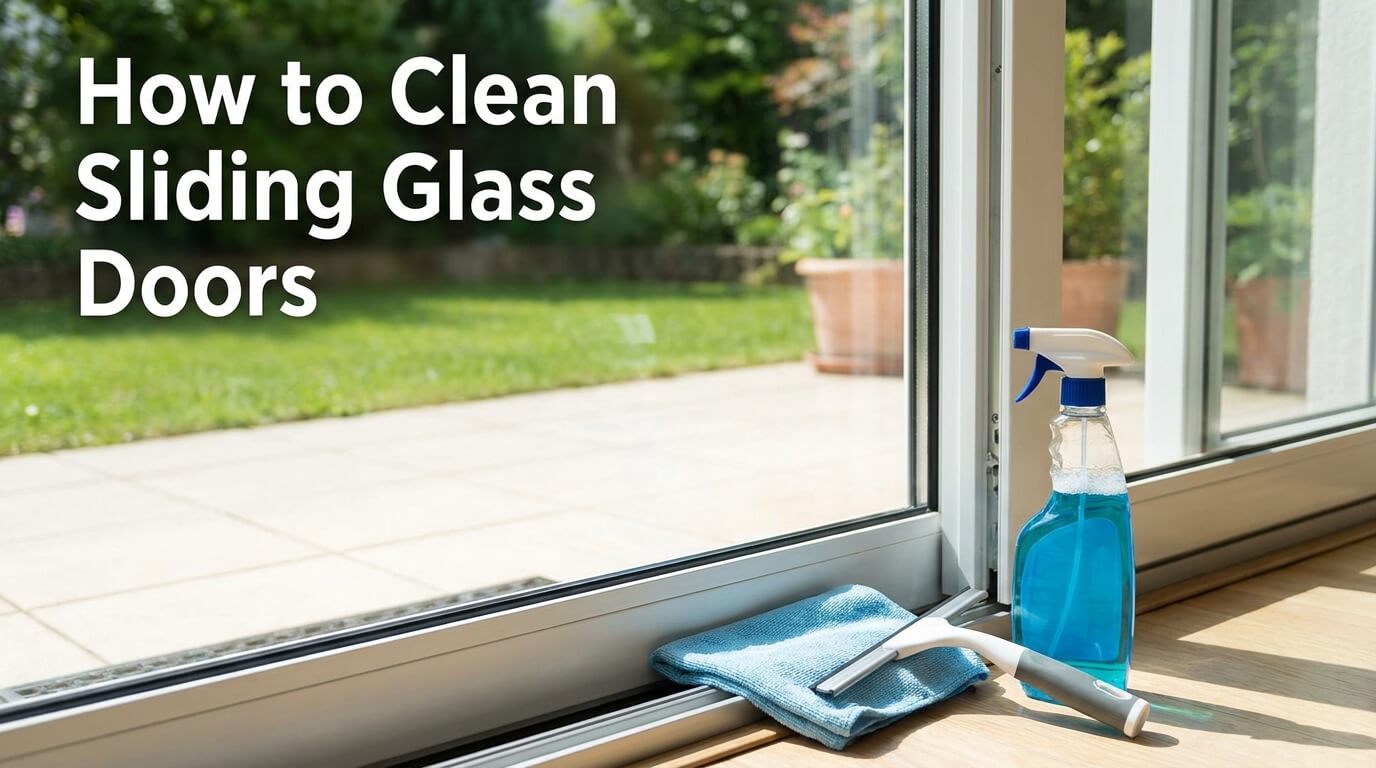
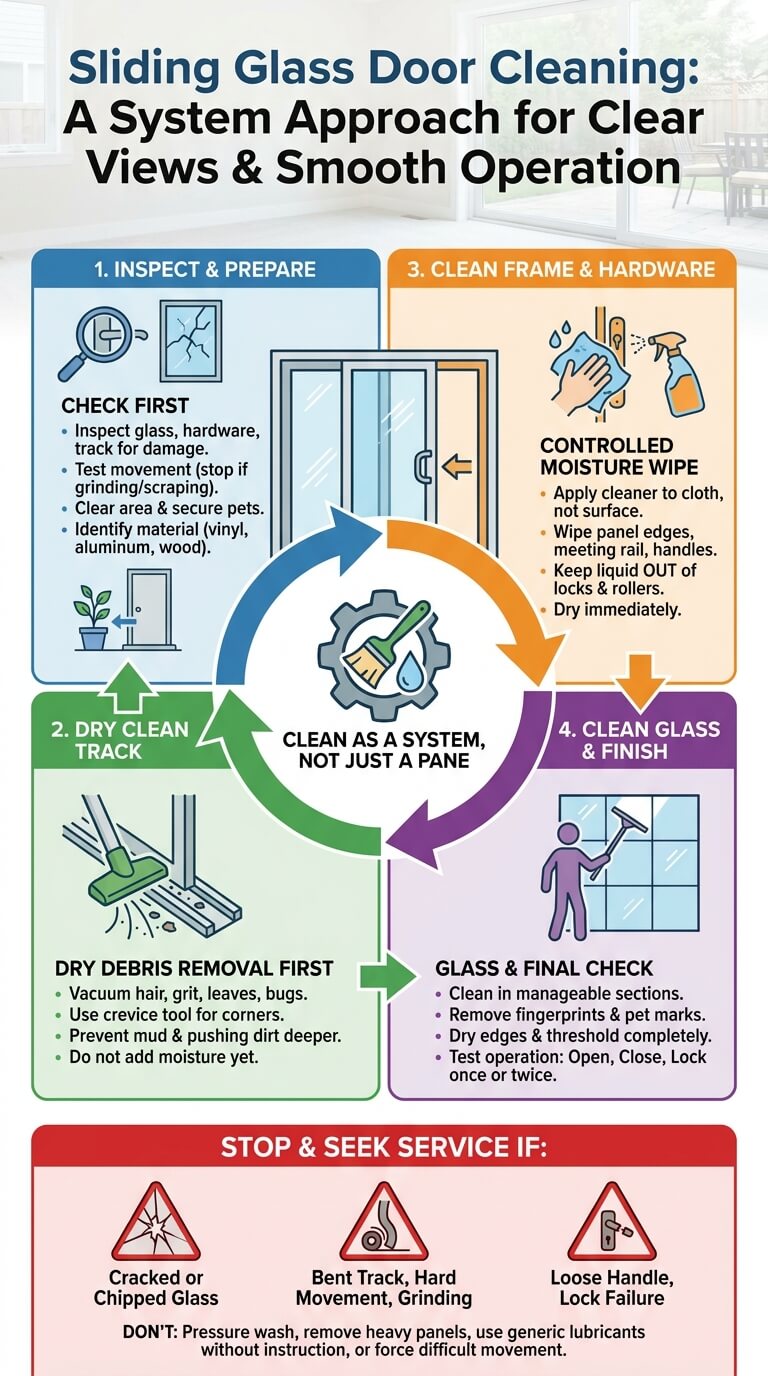
Clean the accessible door system in order: inspect the glass and hardware, remove dry debris, wipe the frame and touch points, clean the panels without flooding the lower channel, dry everything, and test opening and locking. Stop for cracked glass, loose hardware, track damage, lock failure, or resistance that remains after visible dirt is gone.
Sliding doors vary by frame material, glass coating, drainage design, and roller system. Check the owner’s manual and cleaner label before wetting an unfamiliar finish. Do not remove a heavy panel, reach into roller cavities, or mistake a mechanical fault for dirt.
Quick Answer: Clean the Door as a System, Not Just a Pane
Inspect for damage and difficult movement
Look across both glass panels for cracks, chips, loose glazing, and unusual gaps. Check the handle, lock, panel edges, visible track, threshold, and weatherstripping. Open the moving panel only through its normal range. Grinding, tilting, scraping, lock misalignment, or a loose handle should be documented before cleaning.
Remove dry debris from the threshold and track
Vacuum hair, grit, leaves, insects, and crumbs before adding moisture. Use a crevice attachment and a soft brush, working from open areas toward the vacuum nozzle. Dry removal prevents soil from turning into mud and reduces the chance of pushing abrasive particles under the moving panel.
Clean frames and touch points
Wipe panel edges, the meeting rail, frame faces, handles, and reachable lock surfaces with a cloth suited to the finish. Apply cleaner to the cloth rather than spraying the hardware. Keep liquid out of latch openings, roller cavities, electrical contacts, and drainage passages.
Clean the glass
Work on one manageable section at a time. Remove greasy nose marks and fingerprints with a compatible glass cleaner or the method specified by the door maker. Keep the applicator controlled near the bottom edge so runoff does not carry cleaner into the threshold. A sliding door is one part of the larger window and treatment area, where glass, tracks, sills, screens, and coverings need different cleaning methods.
Dry fully and test operation
Dry the frame, glass edges, threshold, and visible channel before moving the panel repeatedly. Open, close, and lock the door once or twice using normal pressure. Smooth movement confirms the cleaning is complete. Persistent resistance, scraping, or lock trouble needs product-specific service rather than more liquid or force.
Know the Sliding Door Components
Interior and exterior glass panels
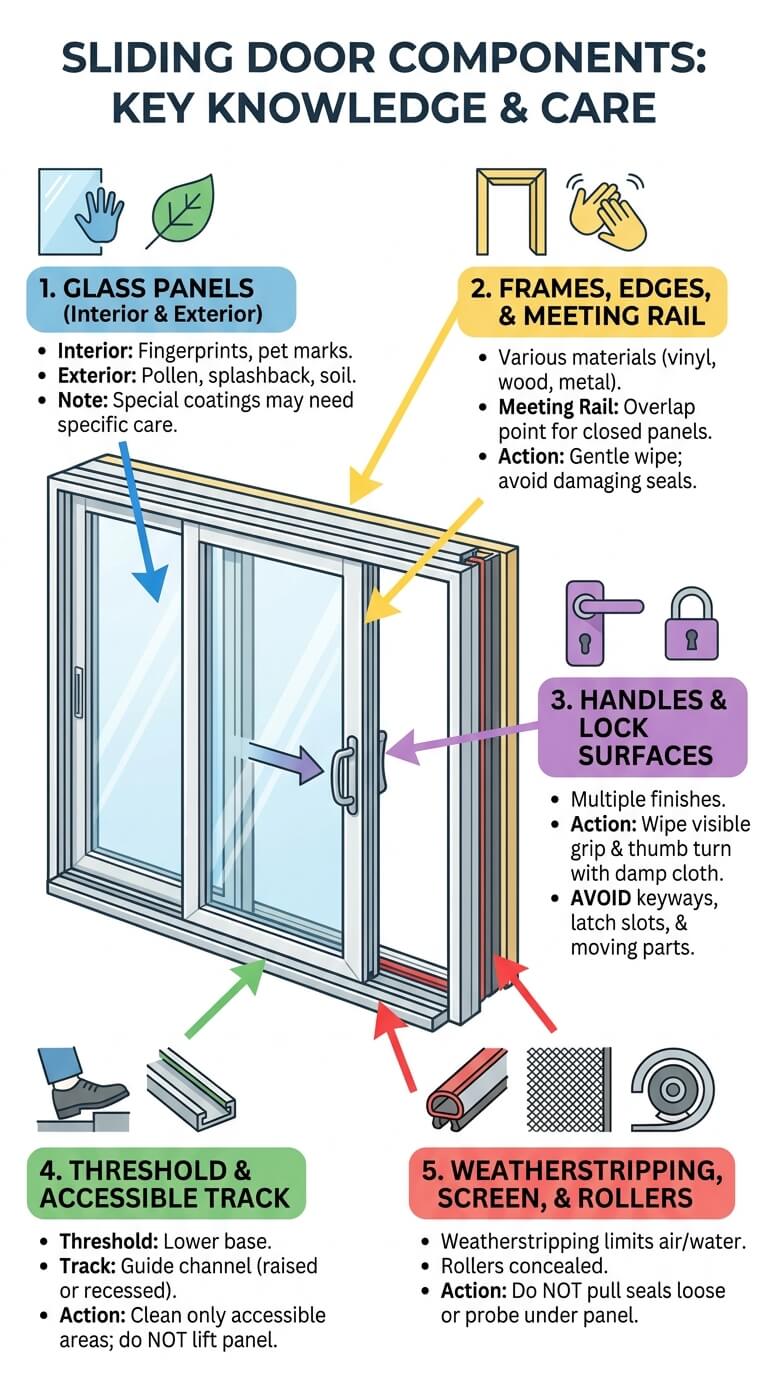
Many patio doors have one operating panel and one fixed panel, while larger systems may have several moving panels. Interior glass collects fingerprints and pet marks; exterior glass collects pollen, splashback, sprinkler residue, and wind-driven soil. Coatings or films may require special care.
Frames, panel edges, and meeting rail
The frame may be vinyl, fiberglass, aluminum, painted metal, finished wood, or mixed construction. The meeting rail is where closed panels overlap. Wipe these dusty, high-contact areas gently because they also contain seals and interlocking parts.
Handles and lock surfaces
Handles may have painted, plated, anodized, or powder-coated finishes. Wipe the visible grip and thumb turn with a lightly damp compatible cloth. Keep cloths, swabs, and cleaner out of keyways, latch slots, and moving lock parts.
Threshold and accessible track
The threshold is the lower base you step over; the accessible track or guide channel sits within or beside it. Some doors ride on a raised rail and others use recessed channels. Clean only what you can reach without lifting the panel or removing trim.
Weatherstripping, screen interface, and concealed roller area
Weatherstripping limits air and water movement, and a screen may run on a separate channel. Rollers usually sit beneath or within the moving panel and are not routine cleaning surfaces. Do not pull seals loose or probe under the panel.
When This Guide Applies and When to Stop
Fingerprints, nose marks, dust, pollen, pet hair, and patio grit
This method suits ordinary buildup on reachable panels and components, including handprints, pollen, dusty corners, hair, insects, and patio grit. These soils usually respond to dry removal followed by limited damp cleaning.
Light residue on frames and threshold
After removing grit, light splashes, rain marks, scuffs, and sticky film may loosen with a compatible cleaner. Test an inconspicuous spot, use minimal moisture, and dry promptly. Stop if color transfers or the sheen changes.
Cracked glass, loose handle, lock failure, bent track, or severe movement resistance
Do not clean aggressively around damaged glass or unstable hardware. Keep people and pets away from a cracked panel and arrange qualified assessment. A bent rail, panel that rocks, handle pulling away from the frame, or lock that will not engage is not a cleaning task.
Tools and Setup for Large Door Panels
Vacuum and crevice attachment
Choose a narrow vacuum attachment that fits the open channel without striking seals or panels. Check it for sharp edges and trapped grit. A handheld unit is often easier to control near a busy doorway.
Soft brushes and non-scratch cloths
Use a soft detailing brush for corners and textured frames. Keep separate lint-free cloths for frames, glass washing, glass drying, and hardware. A grit-loaded cloth can mark the pane.
Glass-cleaning tools sized for large panes
Use a clean microfiber applicator or nonabrasive sponge. A maintained squeegee can speed drying, but its rubber edge must be smooth. Keep metal off the glass and avoid blades or scrapers unless the glass supplier permits them.
Controlled-moisture applicators
Dampen the cloth or applicator away from the door. Dilute a product only as its label directs. Wring cloths thoroughly so they clean without releasing streams into hidden cavities.
Floor and threshold protection
Protect the interior floor with absorbent towels without creating a trip hazard. Keep runoff away from slippery exterior edges. Secure pets and keep children away from the glass, tools, cords, and open doorway.
Cleaning Order for a Sliding Glass Door System
Secure pets and clear the opening
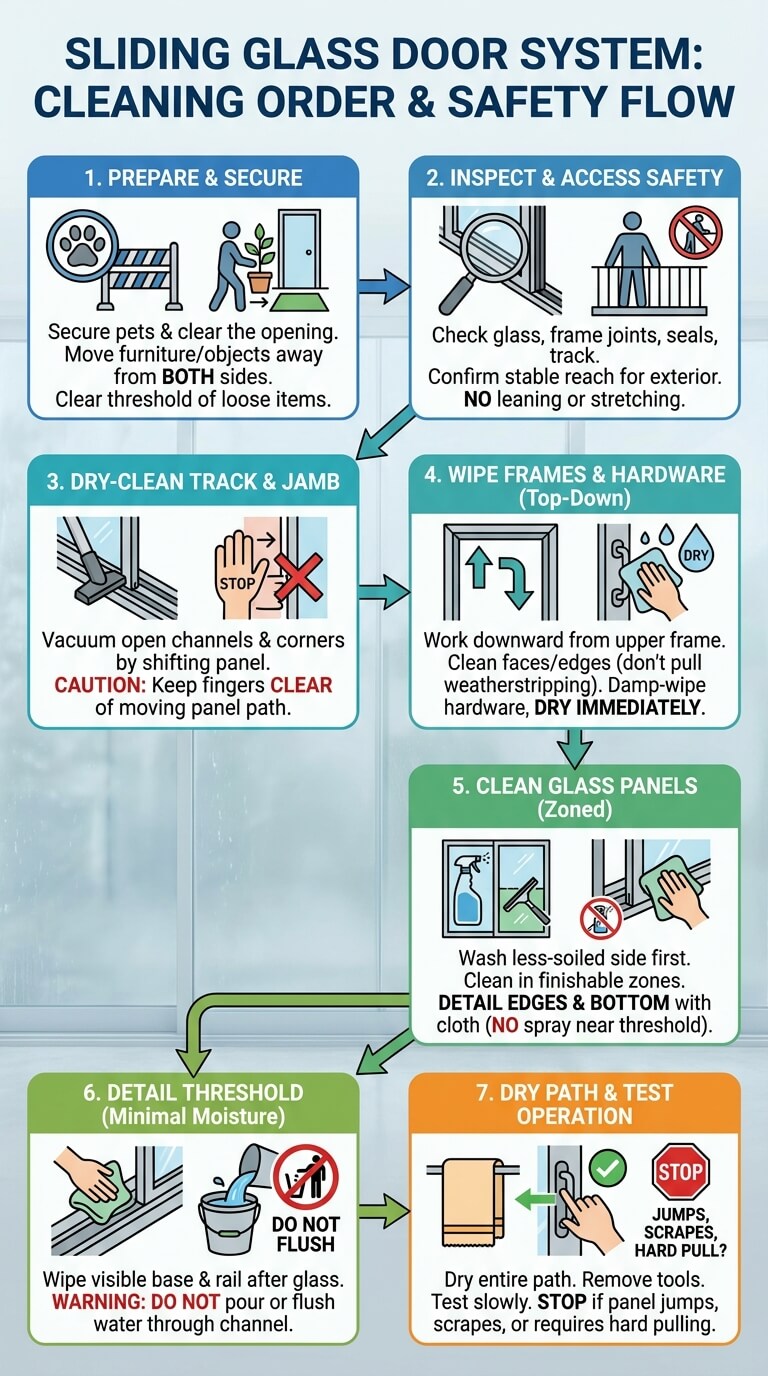
Move planters, mats, toys, curtains, and furniture away from both sides. Block pets from the opening and remove loose objects from the threshold before setting down tools.
Inspect panel condition and access
Check the glass in side light, then examine frame joints, seals, handle attachment, track shape, and screen condition. Confirm that you can reach the exterior face from a stable floor, patio, or balcony position. Do not lean over a railing or stretch around a fixed panel.
Dry-clean the threshold and accessible track
Open the operating panel enough to expose one section while keeping control of the doorway. Vacuum the open channel and jamb corner, close or shift the panel normally, then clean the newly exposed area. Never place fingers where the panel could roll or close onto them.
Wipe frames, panel edges, handles, and lock surfaces
Begin at the upper frame and work downward so loosened dust does not fall onto finished areas. Clean panel faces and edges without pulling weatherstripping. Use a separate lightly damp cloth for high-touch hardware, then dry it immediately to prevent residue around the lock.
Clean the glass panels
Wash the less-soiled interior or exterior face first according to access and weather. Divide each panel into zones that you can complete before cleaner dries. Detail the vertical edges and bottom area with a controlled cloth rather than spraying near the threshold.
Detail the threshold
After the glass is finished, remove any droplets or loosened soil that reached the lower frame. Wipe the visible base, raised rail, and open corners with minimal moisture. Do not pour rinse water through the channel or assume every opening is meant to be flushed.
Dry and test opening, closing, and locking
Dry the entire path used by the moving panel. Remove towels and tools, then operate the door slowly. It should move and latch with its usual effort. Stop if the panel jumps, scrapes, shifts vertically, or requires hard pulling after all visible debris has been removed.
Dry Debris Removal Around the Track
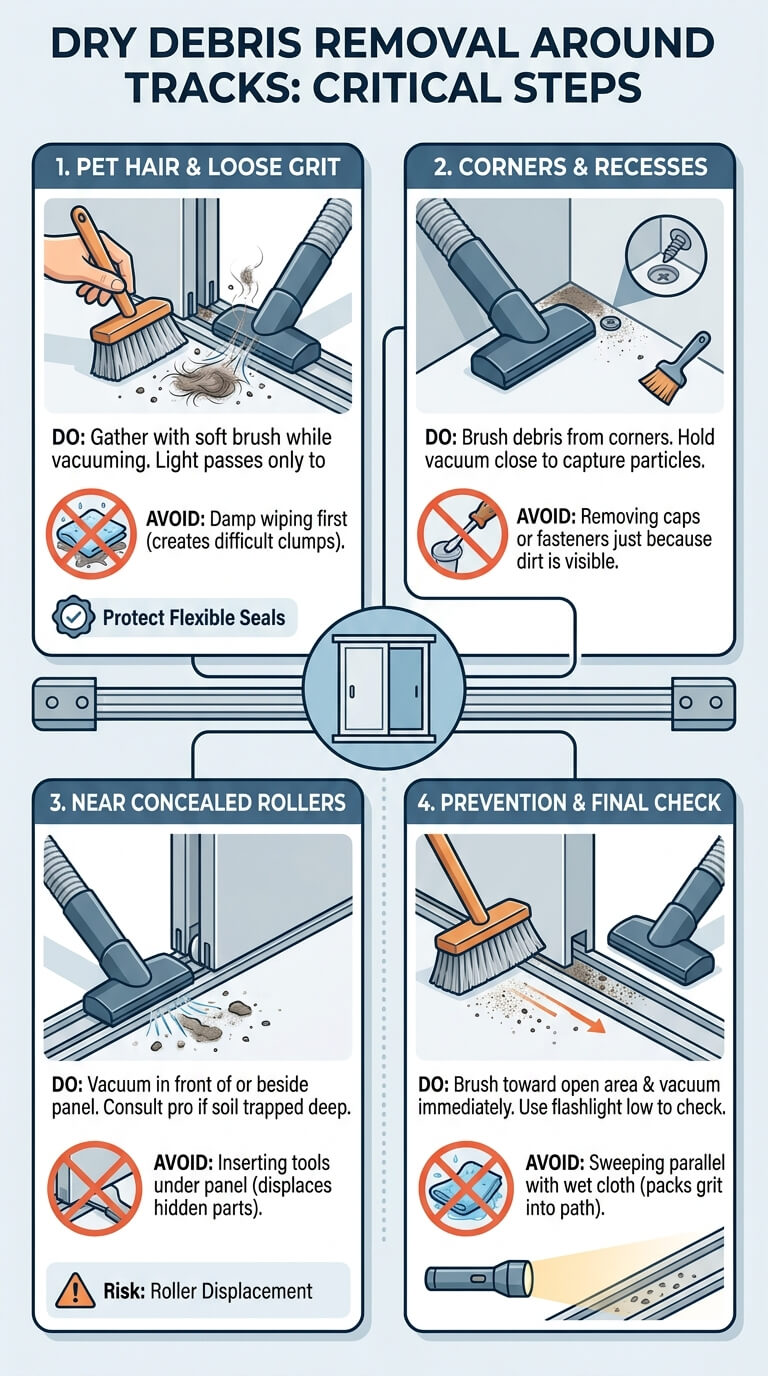
Pet hair and loose grit
Gather long hair with a soft brush while the vacuum captures it. Avoid wiping first, because damp pet hair forms clumps that lodge in corners. Make several light passes rather than pressing the nozzle against the rail, where suction can pull at flexible seals.
Corners and door-jamb intersections
Use the brush to move debris out of ninety-degree corners and screw recesses that are fully exposed. Hold the vacuum close so loosened particles do not scatter into the room. Do not remove caps, fasteners, or covers merely because dirt is visible around their edges.
Debris near but not inside concealed rollers
Vacuum debris in front of or beside the panel, but do not insert tools underneath it. Hidden rollers and adjustment parts can be displaced. Consult the manual or a service professional when soil is trapped beyond normal reach.
Preventing dirt from being pushed under the panel
Brush toward the open section and vacuum immediately. Avoid sweeping parallel to the rail with a wet cloth, which can pack grit into the roller path. A good check is to shine a flashlight low across the channel after vacuuming; remaining particles will cast visible shadows.
Minimal-Moisture Track and Threshold Cleaning
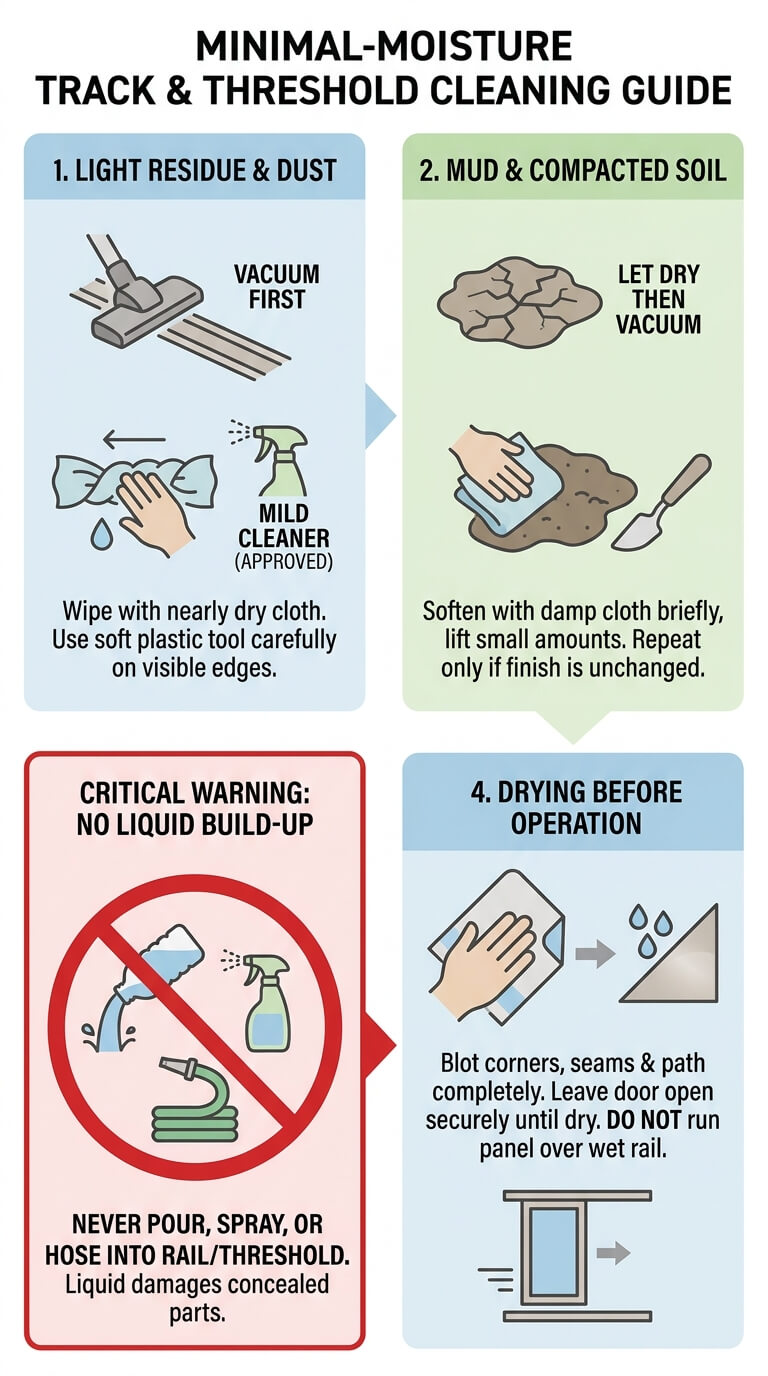
Light residue after vacuuming
Dampen a cloth with a manufacturer-approved mild cleaner and wring it nearly dry. Use a soft plastic detail tool only when its edge remains visible and cannot scratch. Wipe the exposed surface, refold the cloth as it soils, and dry.
Mud and compacted soil
Let mud dry enough to vacuum when possible. Soften a compacted patch with a damp cloth held briefly against it, then lift small amounts without flooding. Repeat after drying only if the finish remains unchanged.
Keeping liquid away from roller cavities and locks
Never pour water, spray cleaner along the rail, or direct a hose into the threshold. Liquid can carry dirt into concealed parts and may remain under the panel. Andersen’s product care information shows why track and screen instructions are product-specific rather than universal.
Drying before operation
Blot corners, seams, and the panel path until no beads remain. Leave the door open only when security, weather, pets, and insects are controlled. Do not run the panel repeatedly over a wet rail, because movement can redistribute residue and draw moisture beneath the panel.
Cleaning Frames, Handles, and Lock Surfaces
Frame material and finish check
Identify vinyl, fiberglass, painted metal, anodized aluminum, finished wood, or mixed construction. Start with a dry cloth and use only a compatible cleaner. Marvin’s care and maintenance guidance emphasizes removing sand and dirt from sills and tracks while following product-specific finish instructions.
High-touch handles
Remove loose dust around the handle base before wiping. Clean the grip and visible plate with a lightly damp cloth, then dry. If disinfecting is necessary for a household reason, verify that the product label permits the handle material and required contact time without damaging the finish.
Lock-area caution
Keep solution out of key cylinders, latch slots, thumb-turn gaps, and strike openings. Do not cycle the lock while wet. When the lock feels sticky after the surrounding surface is dry, stop cleaning and check the manual rather than adding oil or multipurpose spray.
Weatherstripping awareness
Dust exposed seals with a soft dry cloth and inspect for tears, detachment, brittleness, or compression. Do not pull a seal out to clean behind it. Strong solvents and stiff brushes can deform weatherstripping, affecting how the panels meet and close.
Cleaning Large Glass Panels Without Streaks
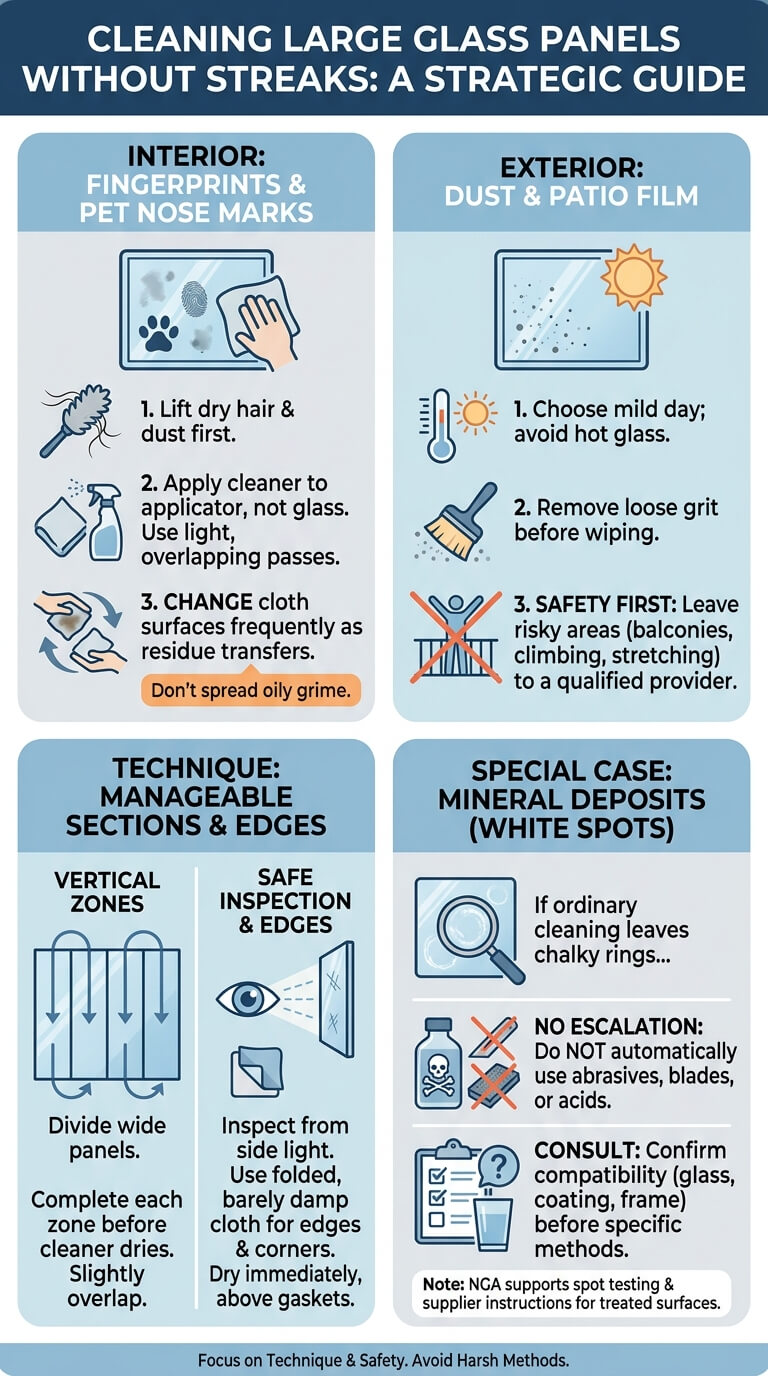
Interior fingerprints and pet nose marks
Lift dry hair and dust first. Apply compatible cleaner to a clean cloth or applicator and use light overlapping passes. Change cloth surfaces as oily pet residue transfers instead of spreading it across the pane.
Exterior dust and patio film
Choose a mild day when the glass is not hot. Remove loose grit before wiping. Leave any exterior face that requires leaning over a balcony, climbing on furniture, or stretching around a fixed panel to a qualified service provider.
Working in manageable sections
Divide a wide panel into vertical zones and complete each before cleaner dries. Slightly overlap the next zone. Inspect from different safe angles because marks that disappear head-on may show in side light. For the pane itself, use a streak-free window technique with clean tools and controlled product, then adapt the passes to the larger panel.
Edge detailing without flooding the threshold
Use a folded, barely damp cloth along the bottom edge and corners, keeping it above gaskets and frame joints. Dry immediately. The National Glass Association’s decorative glass guidance supports spot testing and supplier instructions for treated surfaces.
When persistent white spots are mineral deposits
If ordinary glass cleaning removes grease but leaves chalky rings or cloudy specks, repeated water exposure may have left mineral deposits. Do not escalate automatically to abrasives, blades, or acidic products. Confirm glass, coating, film, frame, and cleaner compatibility before attempting a deposit-specific method.
Screen-Door Interface Without Rewriting Screen Care
Inspecting the screen and frame
Look for torn mesh, bent corners, a loose pull, and a screen that drags or jumps. Remove only loose surface dust that interferes with the threshold cleaning. A damaged screen should not be forced through its track or used as support while reaching the glass.
Removing loose threshold debris
Vacuum the screen’s exposed lower channel separately from the glass-panel path. Note which rail belongs to which panel so tools do not catch a guide or seal. If the screen must be moved, use its normal handle and travel range without lifting or prying.
When the screen needs its own gentle cleaning workflow
A screen covered with pollen, cobwebs, greasy film, or embedded dirt needs a supported mesh-cleaning method, not hard brushing in place. Follow the screen maker’s instructions for removal, washing, rinsing, and drying. Avoid transferring a hose-based method to the glass-door threshold.
Torn mesh and bent-frame clues
Stop when mesh pulls from the spline, the frame bows, corners separate, or rollers no longer stay in the guide. Cleaning will not restore screen tension or alignment. Mark the damage so it is not mistaken for dirt during the next maintenance session.
Troubleshooting a Door That Still Moves Poorly
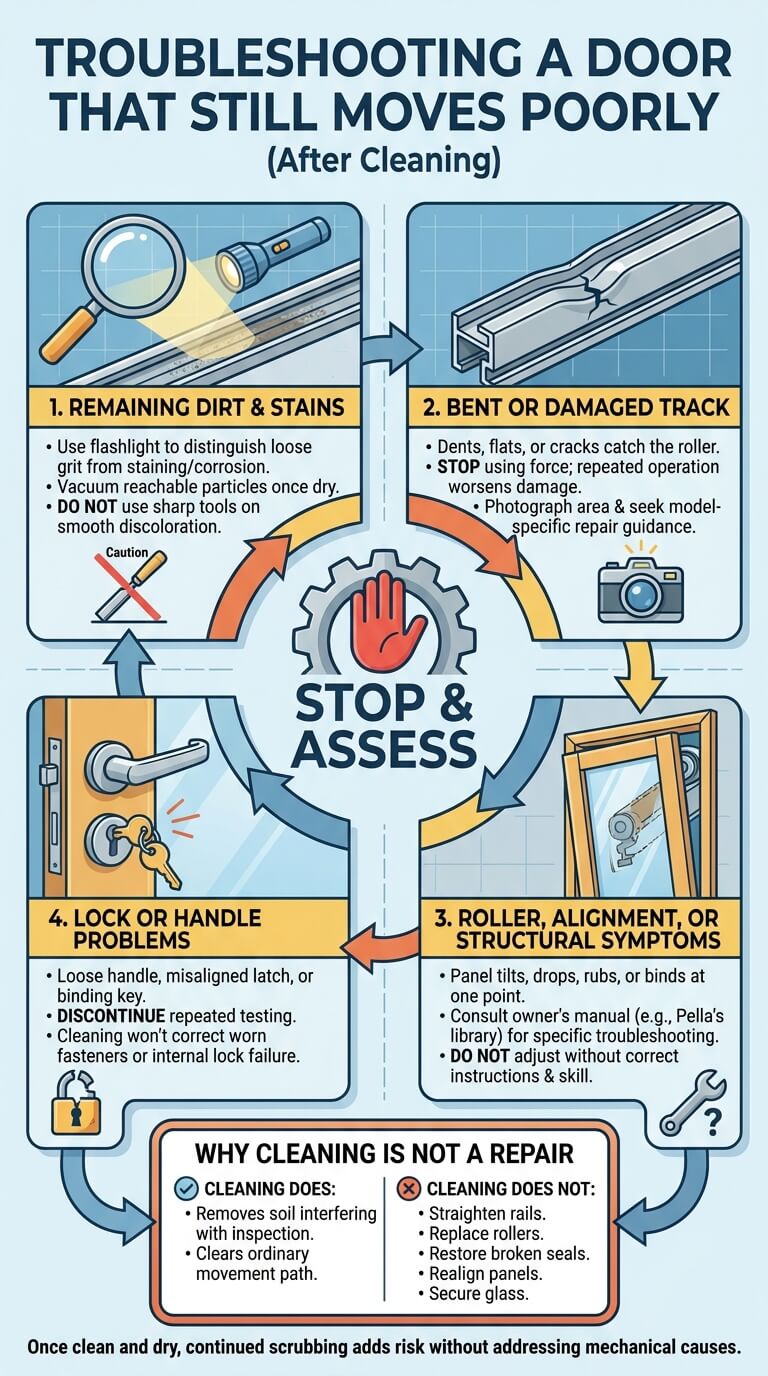
Dirt that remains visible
Use a flashlight to distinguish loose grit from staining, corrosion, worn finish, or material lodged beneath the panel. Vacuum reachable particles once more after the area dries. Do not chase discoloration with sharp tools when the surface already feels smooth and clean.
Bent or damaged track
A rail that is dented, flattened, cracked, or pulled away from the threshold can catch the roller even after cleaning. Stop using force. Repeated operation may worsen panel alignment or damage the roller. Photograph the area and seek model-specific repair guidance.
Roller, alignment, or structural symptoms
A panel that tilts, drops, rubs at one corner, or binds at the same point may have a roller or alignment problem. Pella’s owner’s manual library shows where product-specific troubleshooting belongs. Do not adjust rollers without the correct instructions and skill.
Lock or handle problems
If the handle is loose, the latch misses the strike, the key binds, or the thumb turn does not move normally, discontinue repeated testing. Surface cleaning may reveal the problem but cannot correct worn fasteners, misalignment, or internal lock failure.
Why cleaning is not a repair
Cleaning removes soil that interferes with inspection and ordinary movement. It does not straighten rails, replace rollers, restore broken seals, secure glass, or realign panels. Once the visible path is clean and dry, continued scrubbing adds risk without addressing a mechanical cause.
Maintenance for Frequently Used Doors
Pet and child contact
Wipe fresh nose marks and fingerprints before they trap dust. Vacuum visible hair from the lower channel. Keep cleaners, cords, and buckets inaccessible, and never leave an open doorway unattended around pets or children.
Patio, balcony, and outdoor exposure
Doors near gardens, unpaved areas, sprinklers, grills, or coastal air may soil faster. Watch for grit after storms, pollen seasons, windy days, and outdoor projects. Clean localized debris promptly rather than waiting for it to compact under regular traffic.
Routine threshold vacuuming
A brief dry vacuum is usually safer than frequent wet cleaning. Focus on the exposed rail, corners, and screen channel. Stop the vacuum if it catches flexible weatherstripping. The goal is to remove abrasive particles before they accumulate, not to dismantle the lower assembly.
Periodic full-system inspection
Several times a year, or when soil becomes visible, examine the glass, frame, handle, lock, seals, screen, threshold, and movement. Base the schedule on use and exposure rather than a rigid calendar. Record new damage so gradual wear is easier to recognize.
Common Sliding Door Cleaning Mistakes
Flooding the track
Pouring water through the threshold does not guarantee that hidden dirt will drain away. It can move grit into concealed areas, wet flooring, and leave residue beneath the panel. Use dry removal first and a wrung cloth for accessible surfaces.
Spraying locks, rollers, or seals
Direct spray is difficult to control and may carry cleaner into hardware or bonded seals. Apply the product to the cloth, follow the label, ventilate as directed, and never mix cleaning products unless the label specifically instructs you to do so.
Using pressure washing around the door
High-pressure water can drive moisture around seals, through joints, beneath siding interfaces, and into track cavities. It may also damage screens and finishes. Routine sliding-door care should use controlled hand tools unless the manufacturer provides a specific professional procedure.
Removing a heavy panel
A large glass panel is awkward, heavy, and connected to a product-specific roller and frame system. Do not lift it out for easier cleaning. Loss of control can injure people, break glass, damage flooring, or alter alignment.
Prescribing lubricant without manufacturer instructions
Some products permit a specific lubricant in a specific location; others warn against products that attract grit or affect materials. Cleaning and lubrication are separate decisions. Do not apply oil, silicone, wax, or multipurpose spray based on generic advice.
When to Stop DIY
Cracked or loose glass
Keep away from a cracked, chipped, shifting, or rattling panel and avoid pressing on it during cleaning. Sliding glass doors are covered by architectural glazing safety requirements, but existing glass can still be damaged. The CPSC tempered-glass safety information provides useful context for qualified assessment.
Damaged track or difficult movement
Stop when the rail is bent or the panel remains unusually hard to move after reachable dirt is removed. Do not pull harder, kick the frame, or use the handle as leverage. A service professional can inspect rollers, alignment, and support components safely.
Loose handle or lock failure
A loose handle can detach under load, and a failed lock affects security. Do not continue cycling the door to test it. Limit cleaning to stable surrounding surfaces, keep the door secured by an appropriate temporary measure, and arrange repair.
Inaccessible balcony exterior
Do not lean over railings, stand on furniture, climb onto ledges, or reach around the fixed panel. Clean only surfaces reachable from a stable approved floor position. Upper-level exterior faces may require a professional with suitable access equipment. If the outside face requires reach beyond a stable floor or balcony position, follow an exterior-window access plan rather than leaning around the panel.
Concealed roller or alignment problems
Grinding, repeated derailment, vertical play, or uneven gaps indicate more than surface soil. Do not remove covers, adjustment plugs, or the panel without exact instructions and suitable skill. Most households should use qualified service for concealed roller or alignment problems.
Sliding Glass Door FAQ
Should I clean the glass or track first?
Clean the accessible track and threshold before washing the glass. Dry debris removal prevents grit from mixing with runoff. After the glass is finished, wipe the threshold once more to collect any droplets or loosened soil that reached the lower frame.
Can I pour water into a sliding door track?
No universal track-flushing method is safe for every door. Drainage, rollers, seals, finishes, and flooring differ. Vacuum first, use minimal moisture on visible surfaces, and follow the exact manufacturer instructions for drainage openings or rinsing.
Why is the door still hard to slide after cleaning?
The cause may be a bent rail, worn roller, panel misalignment, damaged weatherstripping, structural movement, or debris hidden where routine tools cannot reach. Stop once visible surfaces are clean and dry. Additional force or liquid will not repair those conditions.
How do I handle pet nose marks on a large panel?
Remove hair and dry dust, then use a compatible glass cleaner with a clean microfiber cloth or applicator. Work in small sections and change cloth surfaces as oily residue transfers. Dry the edges without letting cleaner run into the threshold.
Can hard-water spots on patio-door glass be cleaned the same way as ordinary film?
Routine cleaning is the first test. White rings or cloudy specks that remain may be mineral deposits or etching. Confirm glass and coating compatibility before using a deposit remover, and avoid universal abrasive or acidic methods.
Final Thoughts
A clean sliding glass door requires more than clear panes. Inspect first, remove dry track debris, wipe frames and hardware with controlled moisture, clean the glass in sections, and dry the panel path before testing operation.
Keep liquid away from concealed rollers, locks, electrical parts, and drainage cavities. Do not remove the panel, pressure wash the assembly, or apply lubricant without product-specific instructions. When movement, locking, glass condition, or access remains unsafe, stop cleaning and arrange qualified service.

Ethan Carter is the Founder & Editor of HomeCleanSecrets. Based in the United States, he has 5 years of experience creating practical home cleaning, laundry care, stain removal, decluttering, and home organization content. His goal is to help everyday households clean smarter and build simple routines that are easier to maintain.
Read more about Ethan Carter on his author page: https://homecleansecrets.com/ethan-carter/