
Quick answer
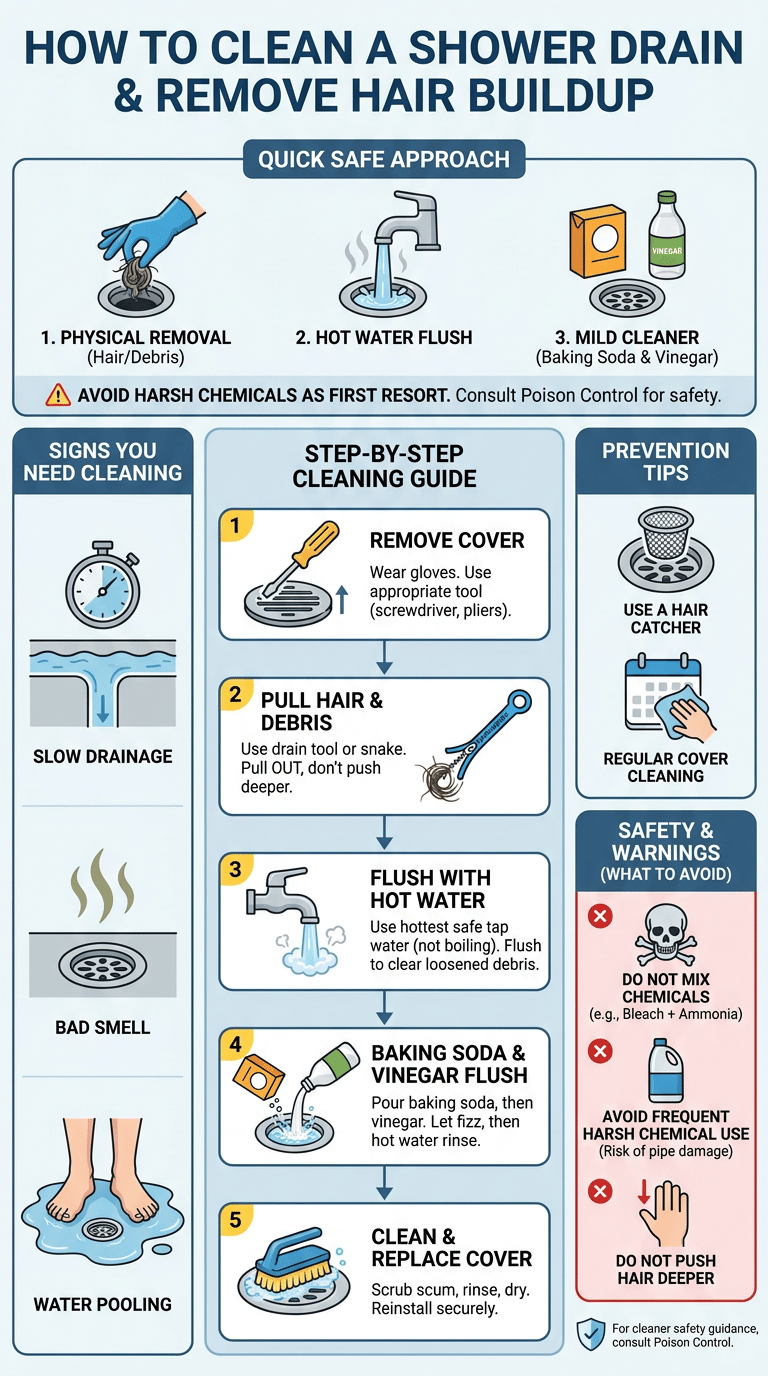
A safe approach is to start with physical removal of hair and debris, clean the drain cover, then flush with hot water. If a mild enzymatic or homemade cleaner is needed, a baking soda and vinegar flush can be used as a follow-up. Reserve harsh chemical drain cleaners as a last resort and consult Poison Control’s guidance on household cleaner exposure if you have questions about cleaner risks or mixing products: Poison Control’s guidance on household cleaner exposure.

What to do first
- Put on gloves and remove the drain cover.
- Pull out visible hair and gunk by hand or with a purpose-made drain tool.
- Rinse with the hottest water safe for your pipes to clear loosened debris.
- If needed, follow with a baking soda and vinegar flush, then a final hot-water flush.
What to avoid
- Avoid pushing hair deeper into the drain when tugging at clogs.
- Do not mix household cleaners, especially bleach and ammonia-containing products.
- Avoid pouring boiling water into unknown or plastic plumbing; very hot tap water is generally safer.
- Do not repeatedly rely on harsh chemical drain cleaners; frequent use can damage pipes and present exposure risks. For cleaner safety and exposure guidance, see Poison Control’s information on household cleaning products.
Why shower drains get clogged
Hair collects in the drain
Hair often causes shower clogs. Strands gather around the drain lip or snag on rough edges and can form a mat that traps soap residue, skin particles, and small debris.
Soap scum traps debris
Soap, shampoo, and body oils mix with hard water minerals to form a sticky film called soap scum. That film catches loose hair and tiny particles and helps them adhere to pipe walls, making removal harder over time.
For a related walkthrough, see our guide to how to clean washing machine.
For a related walkthrough, see our guide to how to clean shower glass.
For a related walkthrough, see our guide to how to clean shower head.
Mineral buildup narrows the pipe
In areas with hard water, mineral deposits can collect on pipe walls. Over months and years this narrows the drain opening and reduces flow, making clogs more likely and slowing drainage even without a full blockage.
Signs your shower drain needs cleaning
Water drains slowly
Slow drainage is an early sign. If water takes noticeably longer than usual to clear, some obstruction is forming inside the drain or pipe.
Bad smell from the drain
Decomposing organic material such as hair, skin cells, and soap scum trapped in the drain can produce unpleasant odors. Regular cleaning reduces the chance of smells developing.
Water pools around your feet
If water starts to pool while you shower instead of quickly flowing away, the drain is partially blocked and needs attention before a full clog develops.
Gurgling sounds
Bubbling or gurgling sounds when water goes down other fixtures can indicate slower flow or partial blockages in shared drain lines. Addressing the shower drain and nearby fixtures can help identify the source.
Step 1: Remove the drain cover
How to lift or unscrew the cover
Identify whether your drain cover is a pop-up, screw-on, or snap-fit type. For screw-on covers, use a screwdriver sized to the screw. For pop-up covers, you may need to twist and lift or lift a small retainer lever. Some covers simply lift out after clearing a locking tab.
Tools that may help
- Screwdriver (flat or Phillips)
- Needle-nose pliers for lifting stubborn covers or manipulating retaining clips
- A putty knife or old butter knife to gently pry up a stuck cover
- A flashlight to look inside the drain opening
Avoid scratching the shower floor
Place a towel in the basin under and around the cover while prying. Use plastic or wooden tools when possible rather than metal in areas with delicate finishes. Work slowly to avoid slipping and scratching the tub or shower surface.
Step 2: Pull out hair and debris
Use gloves
Wear disposable or reusable cleaning gloves to protect your skin from grime and any chemicals you may later use. Gloves also make it easier to grip slippery hair and gunk.
Use a drain tool
Options for reaching and removing hair include:
- Flexible plastic “zipper” tools designed to fish hair from drains
- A drain snake or auger for deeper clogs (use gently to avoid damaging fixtures)
- A straightened wire coat hanger with a small hook for shallow pulls
- Long tweezers or needle-nose pliers for grabbing clumps just below the cover
Insert the tool, feel for hair or debris, hook it, and pull slowly to avoid tearing the hair into smaller pieces that are harder to remove.
Dispose of debris properly
Wrap the removed hair and gunk in paper or place it in a small sealed bag and dispose of it in the trash. Do not push debris back into the drain or flush it down the toilet, which can cause blockages elsewhere in your plumbing.
Step 3: Flush the drain with hot water
How hot the water should be
Use the hottest tap water that is safe for your pipes and finishes. Avoid pouring boiling water into unknown or plastic plumbing; very hot tap water is generally safer.
How long to flush
Run hot water down the drain for a short period after removing debris to help dissolve and carry away remaining soap films and small particles that hand removal missed.
When hot water is not enough
If the drain still runs slowly after hand removal and a hot-water flush, the obstruction may be deeper in the trap or pipe. Use a longer flexible drain snake, a wet-dry vacuum set to suction, or proceed to a baking soda and vinegar step. If you suspect a major blockage, recurring clogs, or a sanitary sewer issue, contact a plumber. Avoid aggressive chemical drain cleaners as a first option because of exposure risks and possible pipe damage; consult Poison Control for cleaner exposure guidance.
Step 4: Baking soda and vinegar
How to use
- Pour about half a cup of baking soda down the drain.
- Follow with half a cup to one cup of white vinegar.
The pairing creates a fizzy action that can help loosen grime and soap film.
How long to let it fizz
Let the reaction sit in the drain for a while, then follow with a hot-water flush. For tougher buildup, allowing more time before flushing may help.
Rinse afterward
After waiting, rinse the drain with hot tap water to flush loosened debris. If flow improves, repeat as a preventive step. If the drain remains slow, mechanical removal or professional service may be needed.
Do not combine this treatment with commercial cleaners, bleach, or acids. If you have concerns about chemical exposure or accidental mixing, consult Poison Control’s guidance.
Step 5: Clean and replace the drain cover
Scrub soap scum
Use a small brush, old toothbrush, or non-abrasive pad with warm soapy water to remove soap scum, mildew, and mineral spots from the drain cover and visible drain opening. For metal covers, a mild paste of baking soda and water can help remove stubborn spots without harsh chemicals.
Rinse and dry
Rinse the cover and surrounding area with clean water. Dry the cover and the lip of the drain with a towel to discourage mildew growth. Use a cotton swab or small brush to dry small crevices.
Reinstall securely
Replace the cover and tighten screws as needed without overtightening. For snap-fit covers, ensure clips line up and snap into place. A properly seated cover helps prevent larger debris from entering and makes future cleaning easier.
How to prevent shower drain clogs
Use a hair catcher
Install a hair catcher or strainer over the drain. There are many styles: flat strainers, basket strainers, silicone cap catchers, and in-line hair traps. These devices catch most hair before it enters the drain and are easy to clean regularly.
Clean the drain cover regularly
Make it a habit to remove visible hair from the cover and catcher regularly. Even a quick wipe prevents buildup and reduces the need for deeper cleanings.
Avoid washing heavy residue down the drain
Try not to rinse thick oils, grease-based hair products, or large quantities of particulate matter down the shower drain. Wipe excess product off hands and hair into the trash before rinsing when possible.
Shower drain mistakes to avoid
Using harsh chemicals too often
Frequent use of caustic drain cleaners can irritate skin and eyes and may damage pipe finishes over time. If you must use a chemical product, follow label directions exactly and take recommended safety precautions. For general guidance on cleaner safety and exposure, see Poison Control’s information on household cleaning products.
Ignoring slow drainage
Small slowdowns can worsen. Addressing slow drainage promptly with mechanical removal or a safe flush prevents more extensive buildup and reduces the chance of a complete blockage.
Pushing hair deeper into the drain
Avoid pushing hair or debris further down when clearing clogs. Pull hair toward the drain opening rather than pushing tools deep. If you cannot reach the obstruction, use a longer flexible snake or call a plumber.
Forgetting the drain cover
Not reinstalling or replacing damaged drain covers removes an easy barrier that keeps hair out. Replace worn covers and use a dedicated hair catcher to reduce maintenance.
Shower drain maintenance checklist
Weekly
- Remove visible hair from the drain cover and hair catcher.
- Wipe the drain cover and surrounding area to remove soap film.
- Run hot tap water briefly to clear loose residue.
Monthly
- Remove the drain cover and inspect the drain opening.
- Use a drain tool to fish out any trapped hair under the cover.
- Perform a baking soda and vinegar flush and follow with a hot-water rinse if flow is slower than normal.
When to call a plumber
- Repeated clogs recur despite regular cleaning.
- Multiple fixtures in the house drain slowly or show gurgling noises.
- There is sewage backup, persistent foul odors that do not improve after cleaning, or visible leaks.
- You suspect damaged or corroded pipes, a broken trap, or a problem beyond surface buildup.
Plumbers have camera inspection tools and equipment to locate and correct deeper issues safely.
Frequently asked questions
How often should I clean my shower drain?
A quick regular check to remove surface hair plus a periodic deeper inspection and flush is a practical routine. Homes with long hair or heavy product use may need more frequent attention.
What dissolves hair in a shower drain?
Some enzymatic cleaners are designed to break down organic matter over time, but physical removal is still the most reliable immediate fix. Avoid using strong caustic or acidic chemicals frequently because of exposure risks and potential pipe damage. Consult product labels and Poison Control for safety guidance.
Can baking soda and vinegar unclog a shower drain?
Baking soda followed by vinegar can help loosen soap scum and minor buildup and is a gentle option for routine maintenance. It may not clear a large or deep obstruction. If the clog persists after this treatment and mechanical removal, consider a plumber.
Why does my shower drain smell bad?
Smells usually come from trapped organic matter such as hair, soap scum, and skin oils that are decomposing in the trap or pipe. Regular cleaning of the drain opening and trap, plus periodic hot-water flushes, typically reduce odors. Persistent smells that resist cleaning may indicate deeper buildup, mold in damp areas, or plumbing venting issues; ventilating the bathroom and addressing excess moisture can help. For mold prevention and cleanup basics, see the EPA’s guidance on mold: EPA: Mold.
When should I call a plumber?
Call a plumber when you cannot clear a clog with reasonable DIY steps, when multiple fixtures are affected, if sewage is backing up, or if you suspect damaged pipes. Also contact a professional for recurring clogs despite regular maintenance, strange noises, or visible leaks.
Final thoughts
Most shower drain problems are preventable with simple, regular maintenance focused on catching hair before it enters the pipe and removing early buildup. Start with safe physical removal, clean the drain cover, use hot water flushes, and apply a baking soda and vinegar treatment when needed. Reserve strong chemical cleaners and professional services for persistent or severe problems. When using any cleaning product, follow safety instructions and consult Poison Control for exposure guidance and the CDC for general cleaning recommendations: CDC guidance on cleaning and disinfecting.

Ethan Carter is the Founder & Editor of HomeCleanSecrets. Based in the United States, he has 5 years of experience creating practical home cleaning, laundry care, stain removal, decluttering, and home organization content. His goal is to help everyday households clean smarter and build simple routines that are easier to maintain.
Read more about Ethan Carter on his author page: https://homecleansecrets.com/ethan-carter/